If I Upload a Photo of My Face, What Features Should I Look at Before Choosing a Korean Skin Treatment?
Introduction
A facial photo can be useful for identifying visible concerns before a Korean dermatology consultation, but it should not be treated as a diagnosis. Lighting, camera angle, facial expression and image quality can significantly change how pores, wrinkles, pigmentation, redness, hollowness and sagging appear.
The most useful approach is to examine a photo systematically rather than immediately searching for a treatment. Look at skin quality, pigmentation, redness, texture, volume, facial contours, laxity and symmetry. These observations can help you describe your concerns more clearly to a dermatologist and understand which treatment categories might be relevant.
For international patients planning a dermatology visit in Seoul, reviewing your face this way can also help you avoid choosing a procedure simply because it is popular.
Start With a Neutral Photo
Before evaluating your face, make sure the photograph is reasonably representative.
Ideally, use:
- Natural or evenly distributed lighting
- A relaxed facial expression
- A straight-on view
- A left or right side profile
- Minimal makeup
- No beauty filter
- No extreme camera angle
- A camera positioned approximately at face level
A close-up selfie taken from below can make the lower face appear heavier, while strong overhead lighting can make wrinkles and hollows look deeper.
A photo is therefore best used as a screening and communication tool, not as a substitute for an examination.
Look at Skin Texture First
The first question is whether the problem is primarily on the surface of the skin.
Look for:
- Enlarged pores
- Rough texture
- Fine lines
- Uneven reflectance
- Small acne scars
- Crepey areas
- Dull-looking skin
Texture can make a face appear older even when the facial shape has changed very little.
If the main issue is texture rather than sagging or volume loss, your dermatologist may consider treatments aimed at skin rejuvenation, collagen remodeling or acne-scar improvement rather than immediately focusing on lifting.
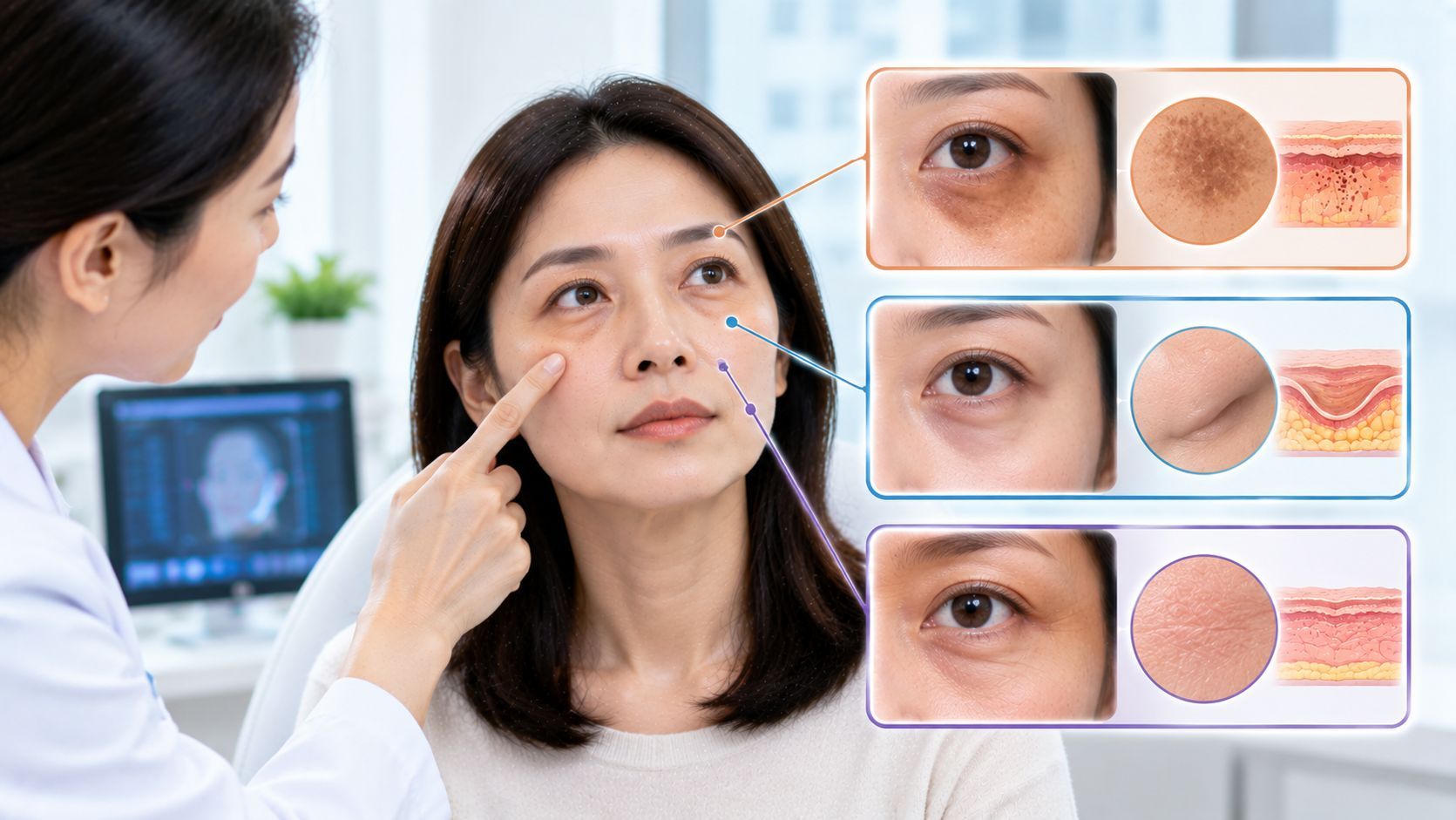
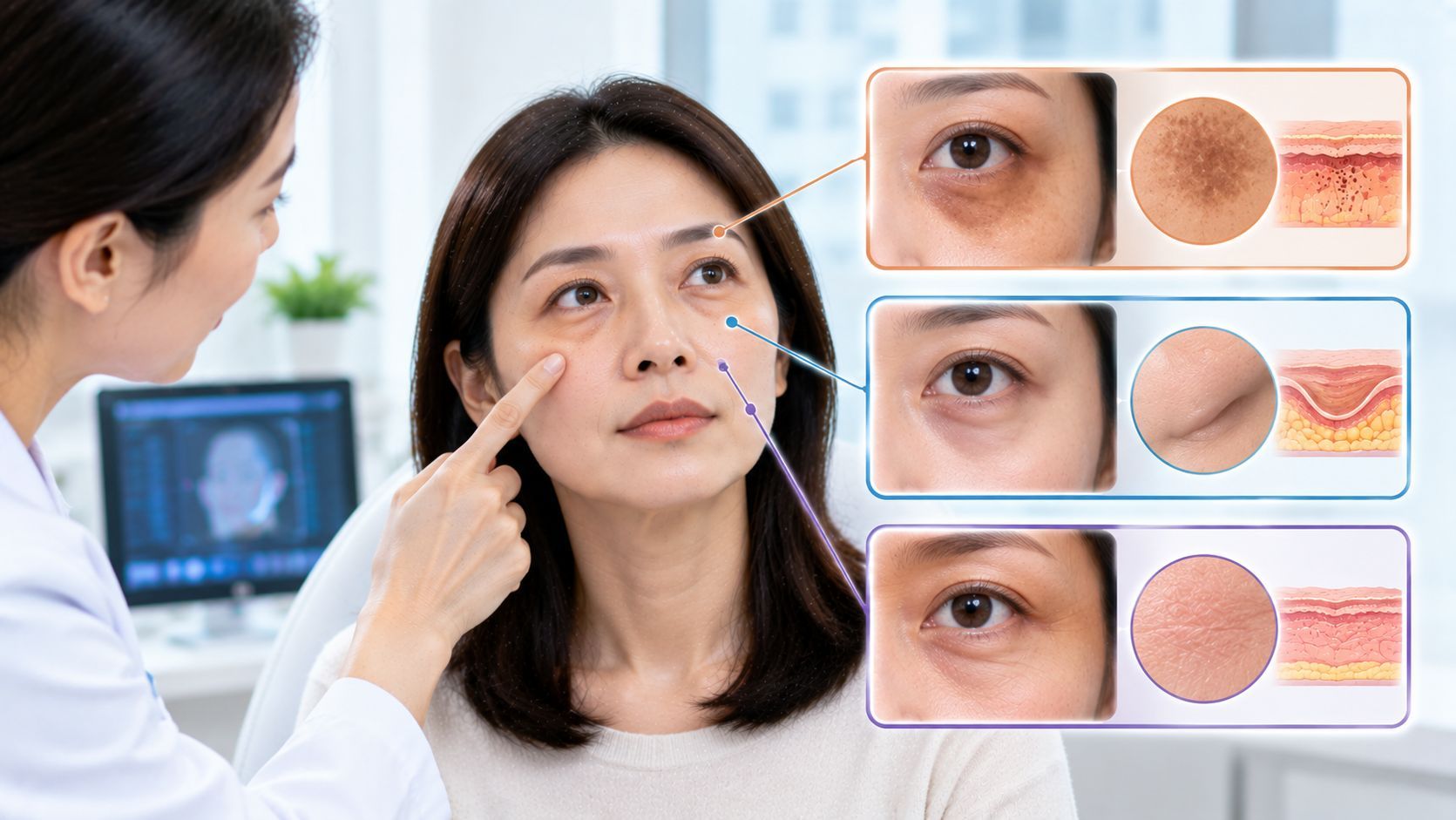
Look for Pigmentation and Uneven Color
Next, examine whether the skin has areas of different coloration.
Common patterns include:
- Brown spots
- Freckles
- Melasma-like patches
- Post-acne pigmentation
- Uneven overall skin tone
- Darker areas around the mouth or eyes
It is important to distinguish brown pigmentation from redness.
A pink or red acne mark and a brown acne mark are not the same problem and may respond differently to treatment.
If you have darker or melanin-rich skin, tell your dermatologist about any history of pigmentation after acne, wounds or previous procedures. Post-inflammatory hyperpigmentation is particularly relevant when evaluating cosmetic procedures in darker skin types. (pubmed.ncbi.nlm.nih.gov)
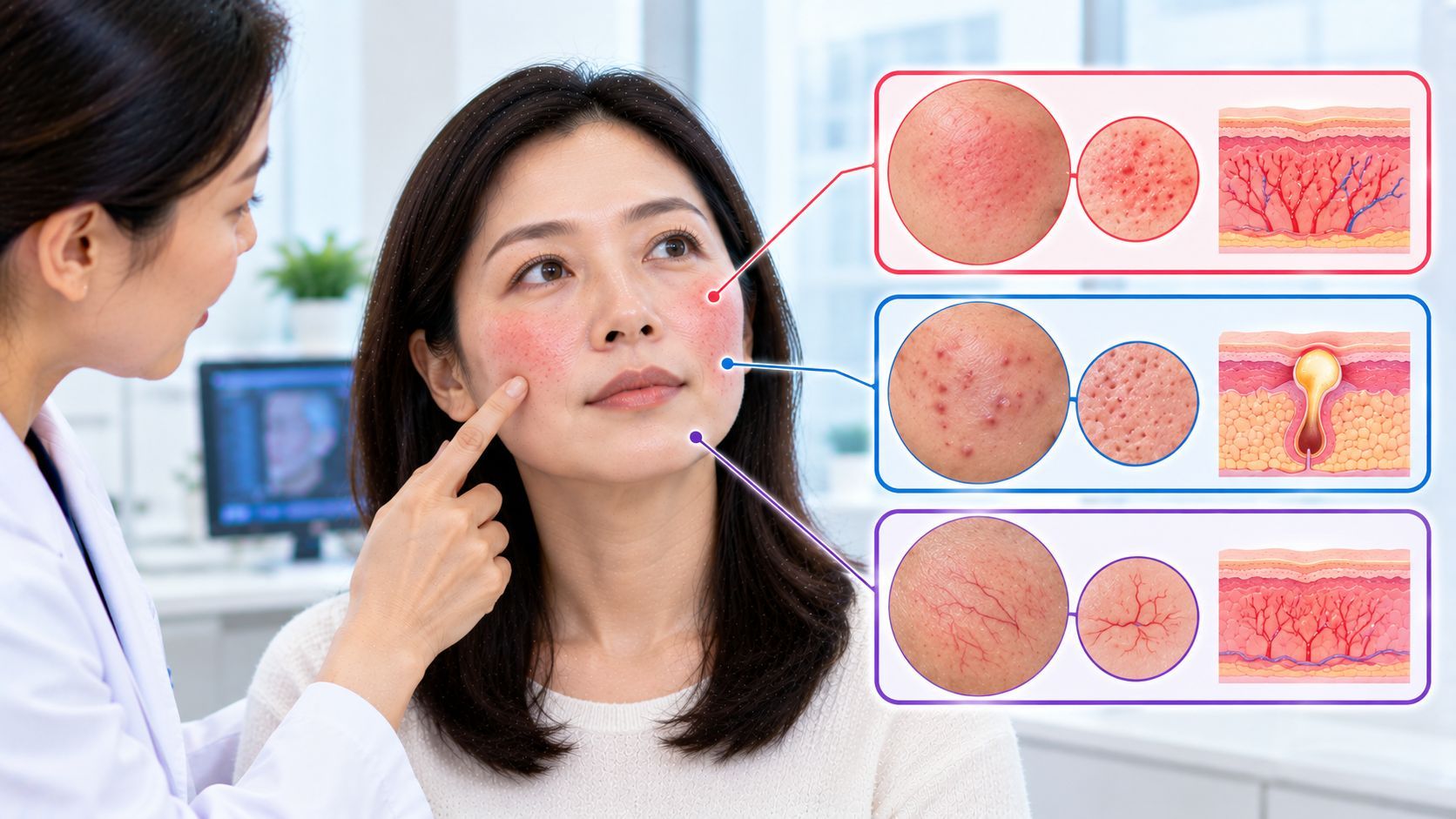
Check for Redness
Look at the cheeks, nose and areas around the mouth.
Ask yourself:
- Is the redness diffuse or localized?
- Does it follow previous acne?
- Are individual blood vessels visible?
- Does it appear stronger in certain lighting?
- Does your face regularly flush?
- Does the skin burn or sting?
These distinctions can matter because persistent facial redness may have different causes, including rosacea, post-acne erythema and visible superficial blood vessels.
A photograph can show the pattern, but it generally cannot establish the cause by itself. Rosacea diagnosis relies on clinical features and medical history. (pubmed.ncbi.nlm.nih.gov)
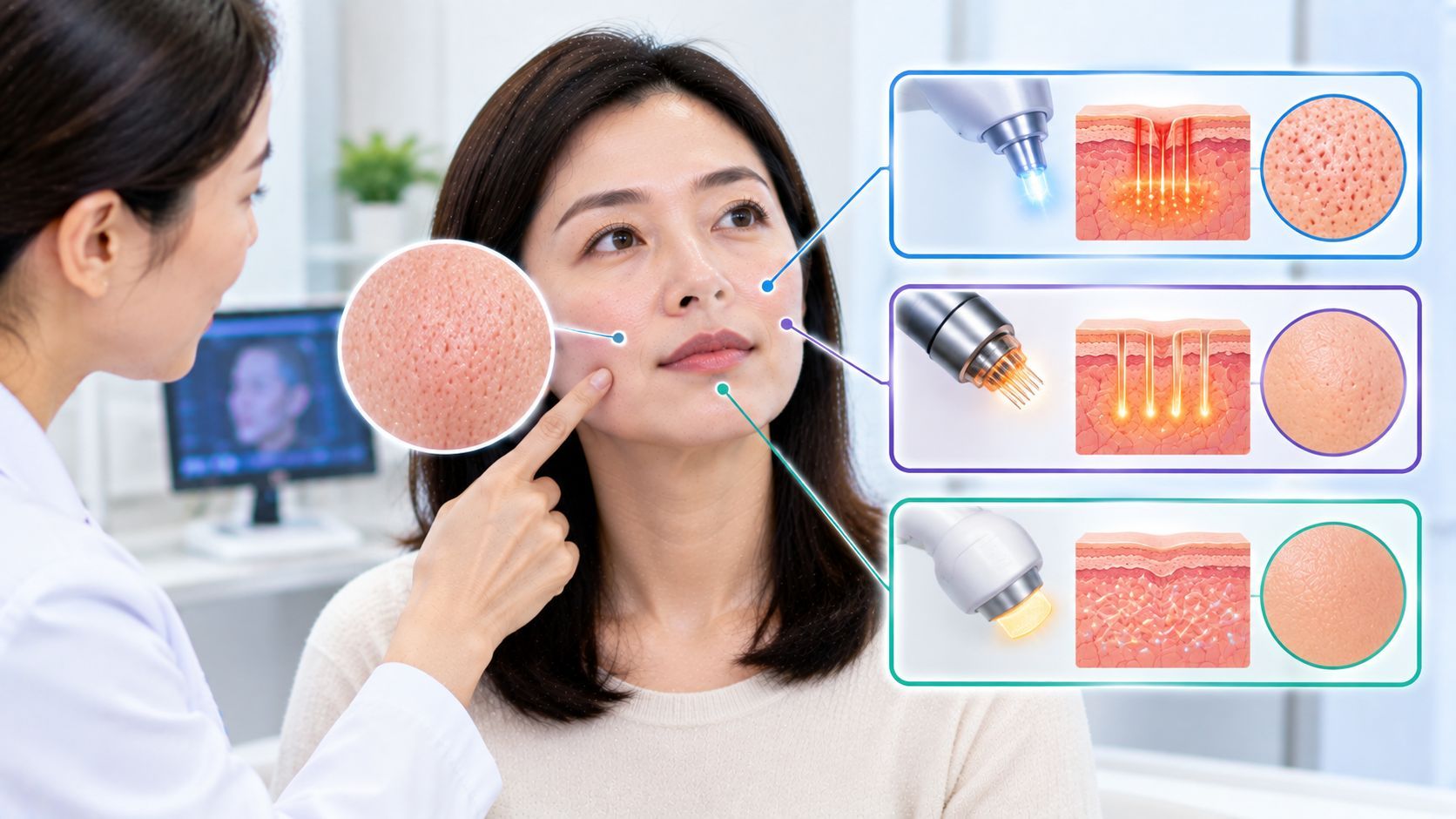
Look at Your Pores
Pores are another feature that photographs can exaggerate.
Rather than simply asking, “Are my pores large?”, consider where and why they appear prominent.
Enlarged facial pores have multiple contributing factors, including increased sebum production, reduced skin elasticity and changes involving the hair follicle. (pubmed.ncbi.nlm.nih.gov)
Look for whether your pores are most noticeable:
- On the nose
- Around the nose
- On the inner cheeks
- Across the entire cheek
- In areas with acne scars
- In areas where the skin appears less firm
This information can help differentiate a primarily oily/congested concern from a texture or elasticity-related concern.
Look at Acne Scars Separately From Pores
Acne scars can make pores look larger than they actually are.
Check whether you see:
- Rolling depressions
- Small narrow pits
- Wider box-like depressions
- Uneven skin surface
- Red or brown marks without actual indentation
The distinction is important because active acne, post-acne marks and atrophic acne scars are different problems.
A person may need acne control before scar treatment, while another person may have no active acne but significant textural scarring.
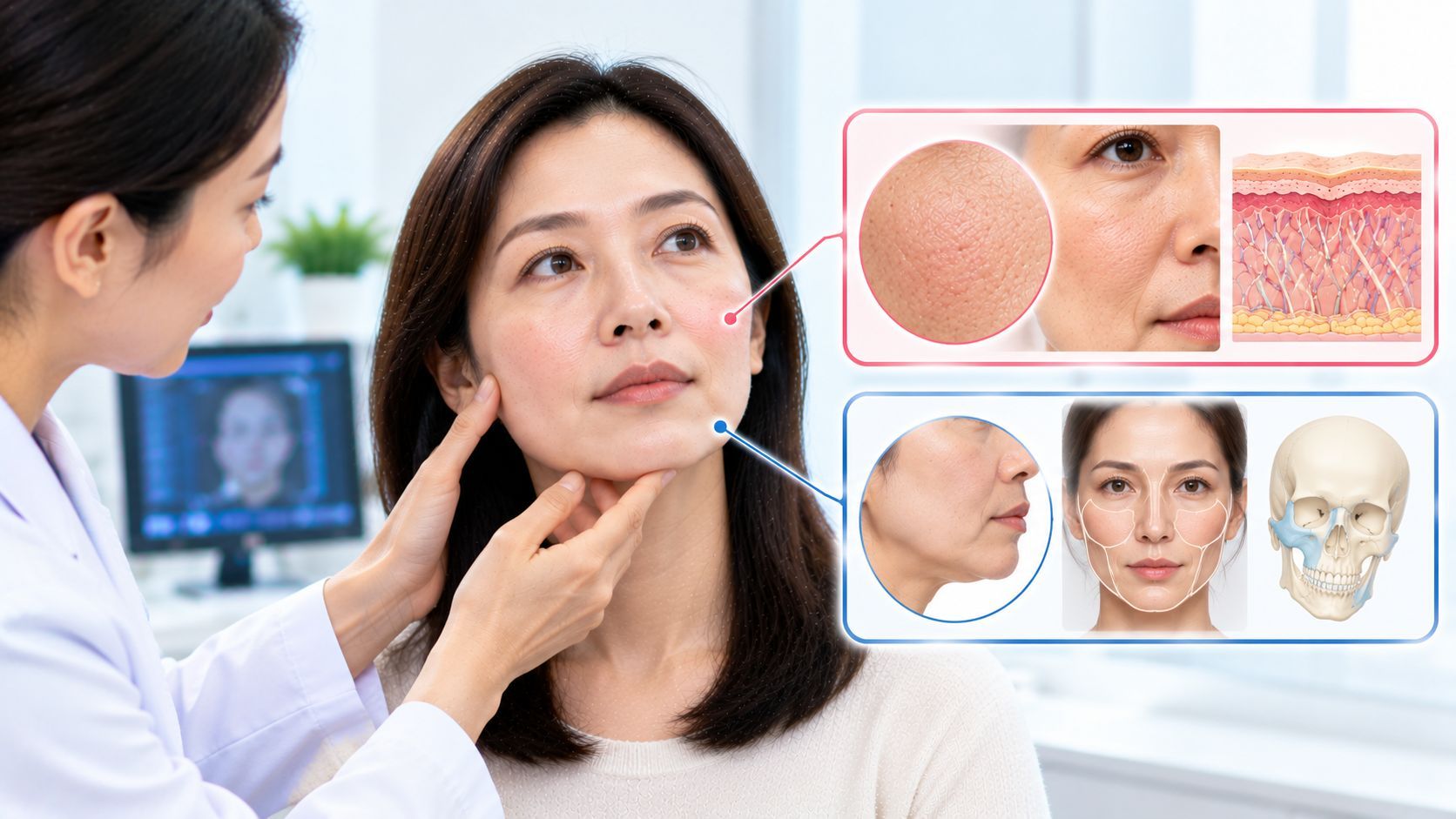
Evaluate Your Face From the Front
Now move beyond the skin surface.
Look at the overall facial shape.
Ask:
- Has my face become wider or narrower?
- Are my cheeks flatter than before?
- Does the lower face look heavier?
- Has my jawline become less defined?
- Do I see new jowls?
- Does one side look different from the other?
These observations can indicate that facial aging involves more than skin quality.
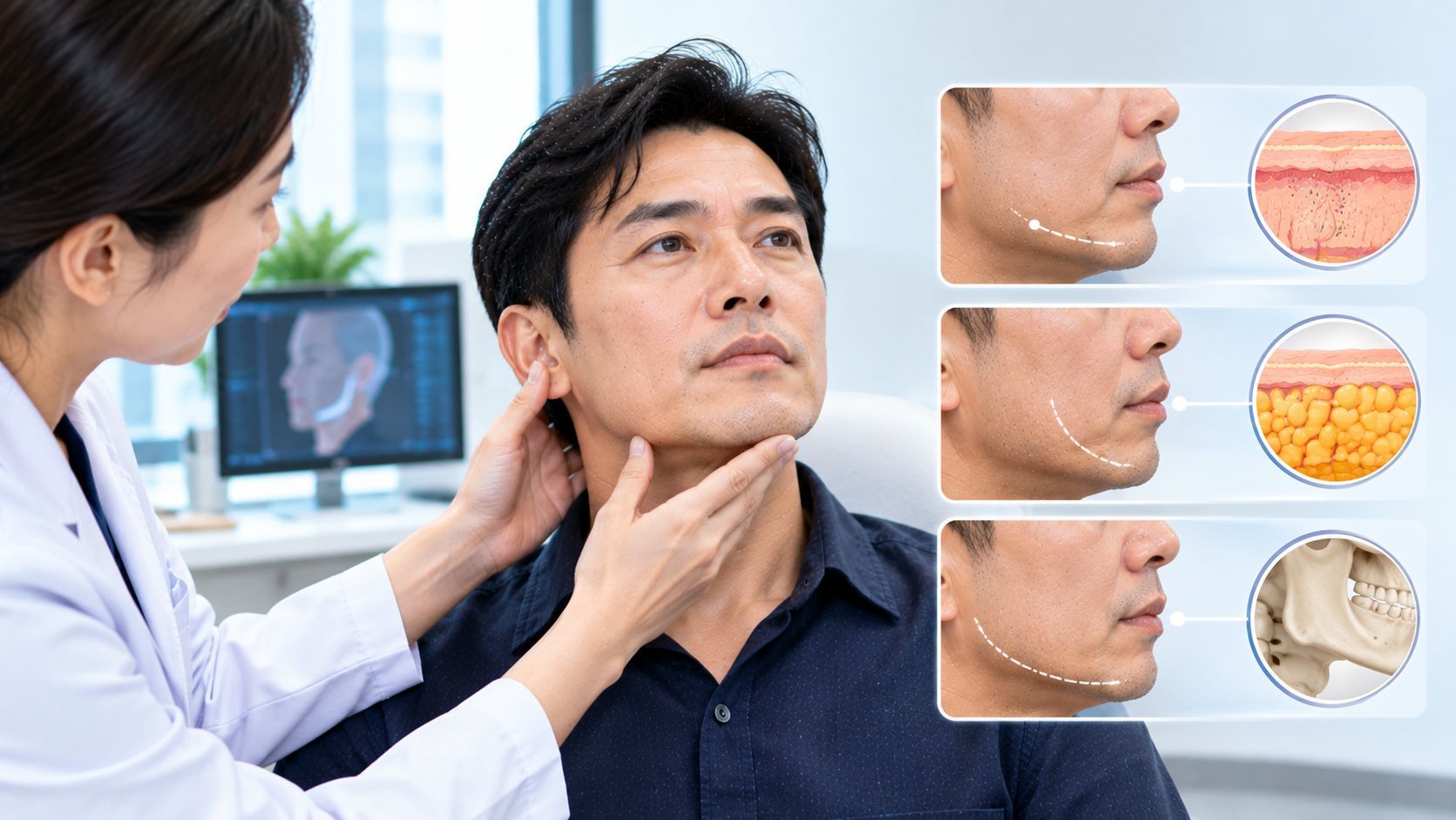
Facial aging can involve changes in skin, fat compartments, ligaments, muscles and skeletal structures. (pubmed.ncbi.nlm.nih.gov)
Check Your Profile
A side photograph can reveal features that are difficult to evaluate from the front.
Look at:
- Chin projection
- Jawline definition
- Neck-to-jaw transition
- Midface projection
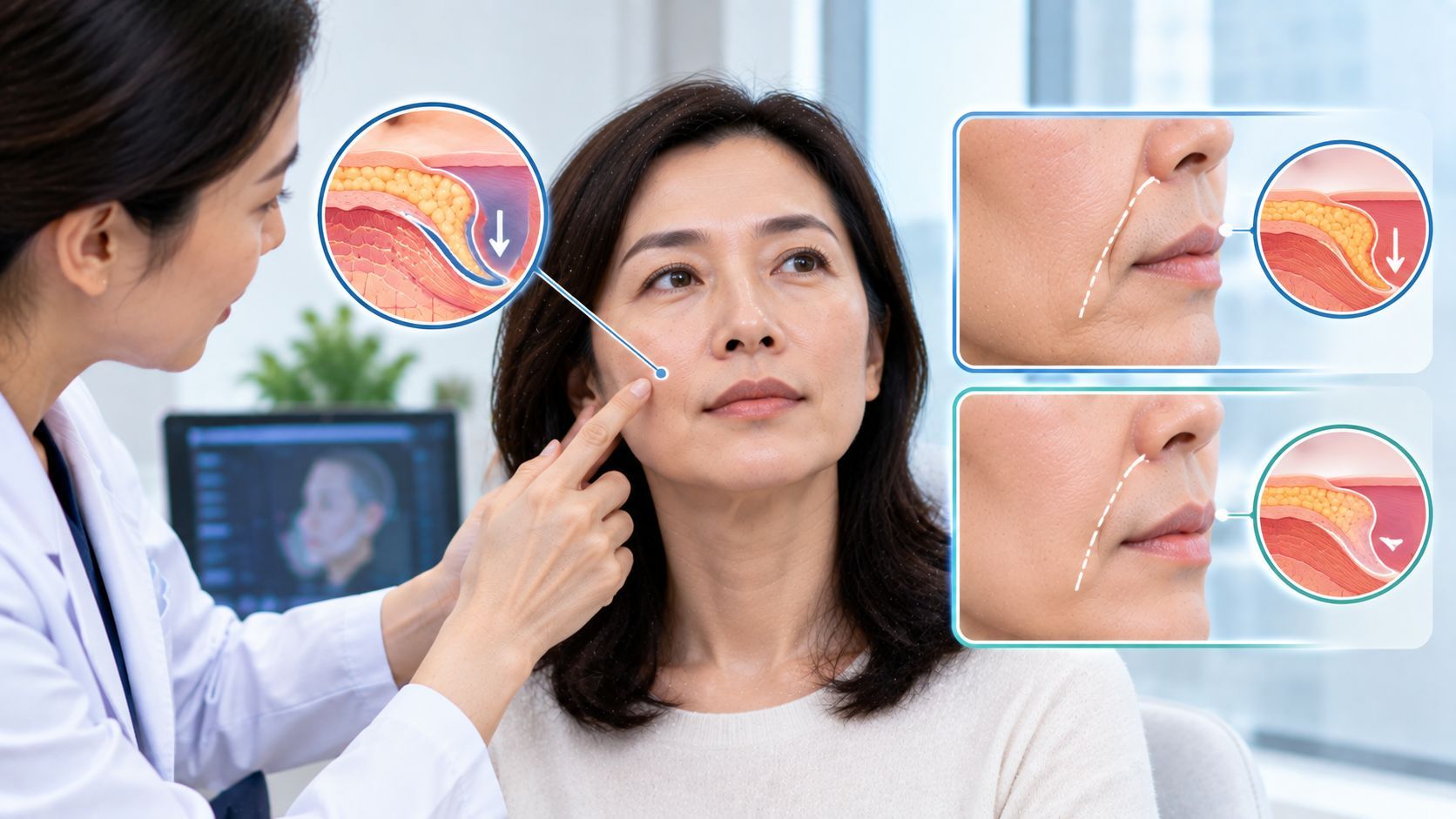
- Nasolabial fold prominence
- Submental fullness
- Overall facial balance
For example, a weak or recessed chin can make the lower face appear less defined even when there is not substantial skin laxity.
Similarly, a double chin may reflect a combination of submental fat, skin laxity and underlying chin anatomy.
This is why a treatment chosen solely from a frontal selfie may not address the actual reason a contour looks different.
Look for Volume Loss
Facial volume should be evaluated separately from skin laxity.
Look around:
- Temples
- Upper cheeks
- Midface
- Under-eyes
- Around the mouth
- Chin
Ask whether these areas appear genuinely hollow or simply shadowed by lighting.
Age-related changes in facial fat can include both volume loss and redistribution, contributing to changes in facial contours. (pubmed.ncbi.nlm.nih.gov)
This distinction is particularly important if you are considering treatments such as fillers or biostimulatory approaches. Not every shadow represents missing volume.
Look at Skin Laxity
Laxity is another feature to examine.
Possible clues include:
- Loose skin along the jaw
- Early jowling
- Crepey skin on the neck
- Reduced definition between jaw and neck
- Skin that appears to drape rather than simply look full
However, a photograph cannot reliably determine how much of a contour change comes from skin, fat or deeper structures.
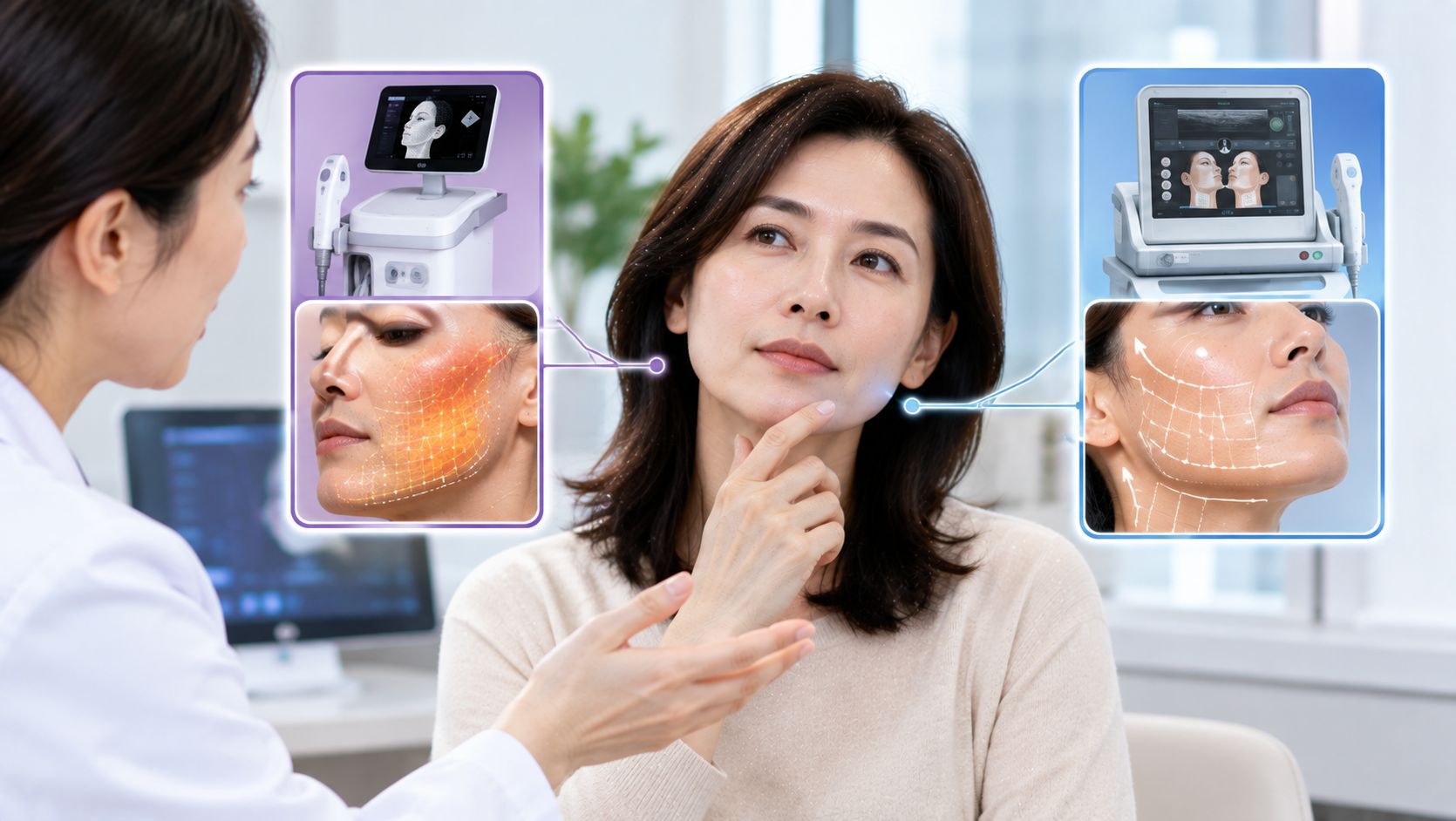
If you have significant laxity, a dermatologist may assess whether non-surgical tightening is appropriate. Non-invasive tightening is generally intended for selected patients with appropriate degrees of laxity rather than substantial excess skin.
Don't Mistake Shadows for Aging
One of the biggest problems with facial photographs is shadow.
A shadow can make:
- Nasolabial folds appear deeper
- Under-eyes look darker
- Jowls look larger
- Cheeks appear hollow
- Jawlines appear less defined
- Wrinkles appear more prominent
Try comparing photographs under consistent lighting before deciding that a particular feature has changed.
If a “problem” disappears when the lighting changes, it may be partly an optical effect rather than a major anatomical change.
Check Facial Symmetry
Almost every face has some degree of asymmetry.
Look for differences in:
- Eyebrow height
- Eye opening
- Cheek fullness
- Nasolabial folds
- Jawline
- Chin position
- Lip position
Do not assume that every difference requires correction.
The purpose of identifying asymmetry is to help your dermatologist understand your baseline anatomy before recommending a treatment.
This is especially relevant for treatments that can alter muscle activity, facial volume or tissue contraction.
Use the Photo to Describe Problems, Not Choose Devices
A useful photo assessment might produce a description such as:
“My main concerns are enlarged pores, mild cheek redness and early jawline laxity.”
That is much more useful than:
“I think I need RF.”
The first statement identifies visible problems. The dermatologist can then determine whether RF, laser, ultrasound, injectables, skincare or another approach is actually appropriate.
Different devices can target overlapping concerns, and treatment selection depends on factors that photographs cannot fully show.
What to Bring to a Korean Dermatology Consultation
If you are traveling to Seoul, consider bringing several useful photographs rather than relying only on one selfie.
Helpful images can include:
- Current front-facing photo
- Current side profile
- Relaxed expression
- Smiling expression when relevant
- Older photographs if you are concerned about age-related changes
- Photos showing a concern under consistent lighting
Older photographs can be particularly useful when you are unsure whether something represents genuine aging or simply your normal facial anatomy.
You should also tell the dermatologist about previous cosmetic procedures, medications or skincare products that could affect treatment decisions.
Questions to Ask Before Choosing a Treatment
Once your dermatologist examines you, useful questions include:
What is actually causing this feature?
Ask whether the problem is primarily related to:
- Skin quality
- Pigmentation
- Redness
- Acne
- Fat
- Volume loss
- Skin laxity
- Facial structure
- A combination
What is this treatment supposed to change?
Ask what specific feature the procedure is targeting.
A treatment recommendation becomes easier to understand when you know exactly what it is intended to improve.
Could the treatment change my facial shape?
This is particularly important if you want natural-looking results.
Some patients want better skin quality or mild tightening without changing their facial proportions. That preference should be discussed before treatment.
Do I actually need treatment for this feature?
Not every visible difference requires correction. A good consultation should distinguish a meaningful treatment concern from normal anatomy, lighting effects or minor asymmetry.
Conclusion
If you upload a facial photo before choosing a Korean skin treatment, focus first on what you can actually observe, not on which device you think you need.
Evaluate your skin texture, pigmentation, redness, pores and acne scars. Then look deeper at facial volume, laxity, jawline, chin, cheeks and overall facial proportions. Compare the front and side views, and remember that lighting and camera angles can dramatically alter the appearance of facial features.
The goal of a photo review should be to create a clearer description of your concerns—not to make a definitive diagnosis or select a treatment without an examination.
For patients considering dermatology treatment in Seoul, this approach can make the consultation more productive and help ensure that the proposed procedure is connected to an actual anatomical or skin concern.
FAQs
Can a dermatologist diagnose my skin condition from a photo?
A photograph can provide useful visual information, but many dermatologic diagnoses require medical history and an in-person examination. Facial redness, pigmentation and similar concerns can have multiple causes.
Should I use a selfie to decide which Korean treatment I need?
A selfie can help identify visible concerns, but it should not be used to select a specific device or procedure by itself. Lighting, camera angle and image processing can distort facial features.
Should I upload front and side photos?
If you are using photographs to discuss facial aging or contours, both front and side views can provide more useful information than a single frontal selfie.
How can I tell if I have volume loss or just shadows?
Compare the feature under consistent, neutral lighting and from more than one angle. A dermatologist can assess whether an apparent hollow or fold reflects actual volume deficiency, normal anatomy or lighting.
Can photos show whether I need Thermage, Ultherapy or RF microneedling?
Photos may show visible laxity or texture concerns, but they generally cannot determine which specific device is appropriate. Treatment selection requires assessment of skin thickness, laxity, anatomy, goals and other clinical factors.