How Can I Tell Whether My Jowls Are Caused by Skin, Fat or Facial Structure?
Introduction
Jowls are one of the most common reasons the lower face starts to look less defined with age. The area beside the corners of the mouth and along the jawline can become heavier, softer, or less sharply separated from the neck. But the visible jowl is not necessarily caused by one thing.
Skin laxity, changes in facial fat, loss or redistribution of soft-tissue volume, and the underlying jaw and chin structure can all contribute. Research on facial aging shows that these tissues change together rather than independently, which is why simply looking at a jowl does not always reveal its true cause.
This distinction matters when considering Korean dermatology treatments. A treatment designed to tighten loose skin may not address substantial fat, while reducing fat may not improve a jowl that is primarily related to lax skin or a relatively weak jawline.
The goal is therefore not to identify a treatment from the mirror alone, but to understand which factors may be contributing before choosing a procedure.
What Exactly Is a Jowl?
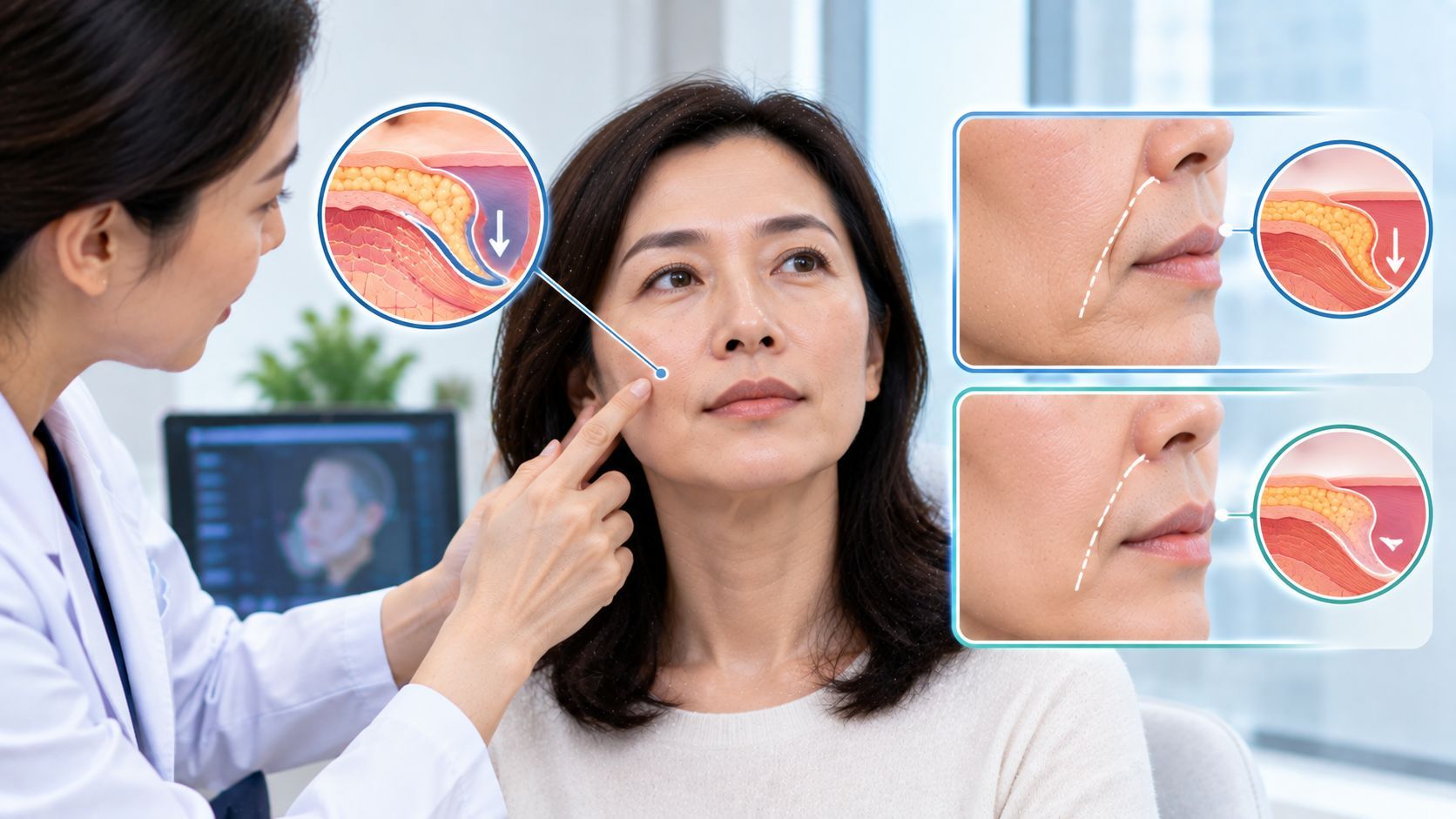
A jowl is the fullness or soft-tissue descent that becomes visible along the lower cheek and mandibular border, often making the jawline appear less continuous.
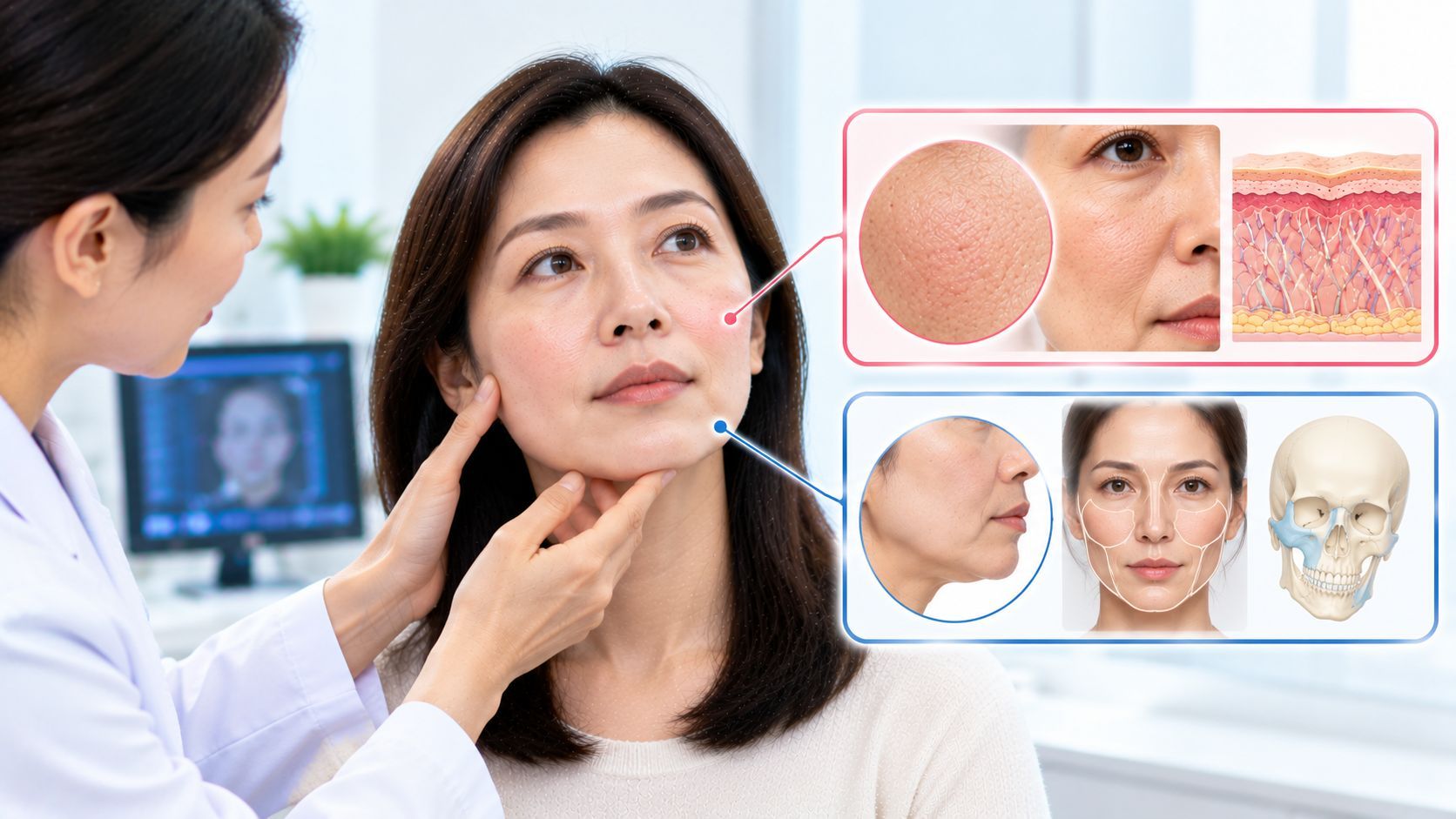
Several anatomical changes can contribute. Reviews of jowl formation describe combinations of skin laxity, fat redistribution or accumulation, muscle dynamics, and changes in underlying support.
Recent research also suggests that changes occur across multiple tissue layers, including the skin, subcutaneous tissue, and structures anchoring those tissues. This helps explain why a jowl cannot always be classified as simply “loose skin” or “extra fat.”
Clues That Your Jowls May Be Mainly From Loose Skin
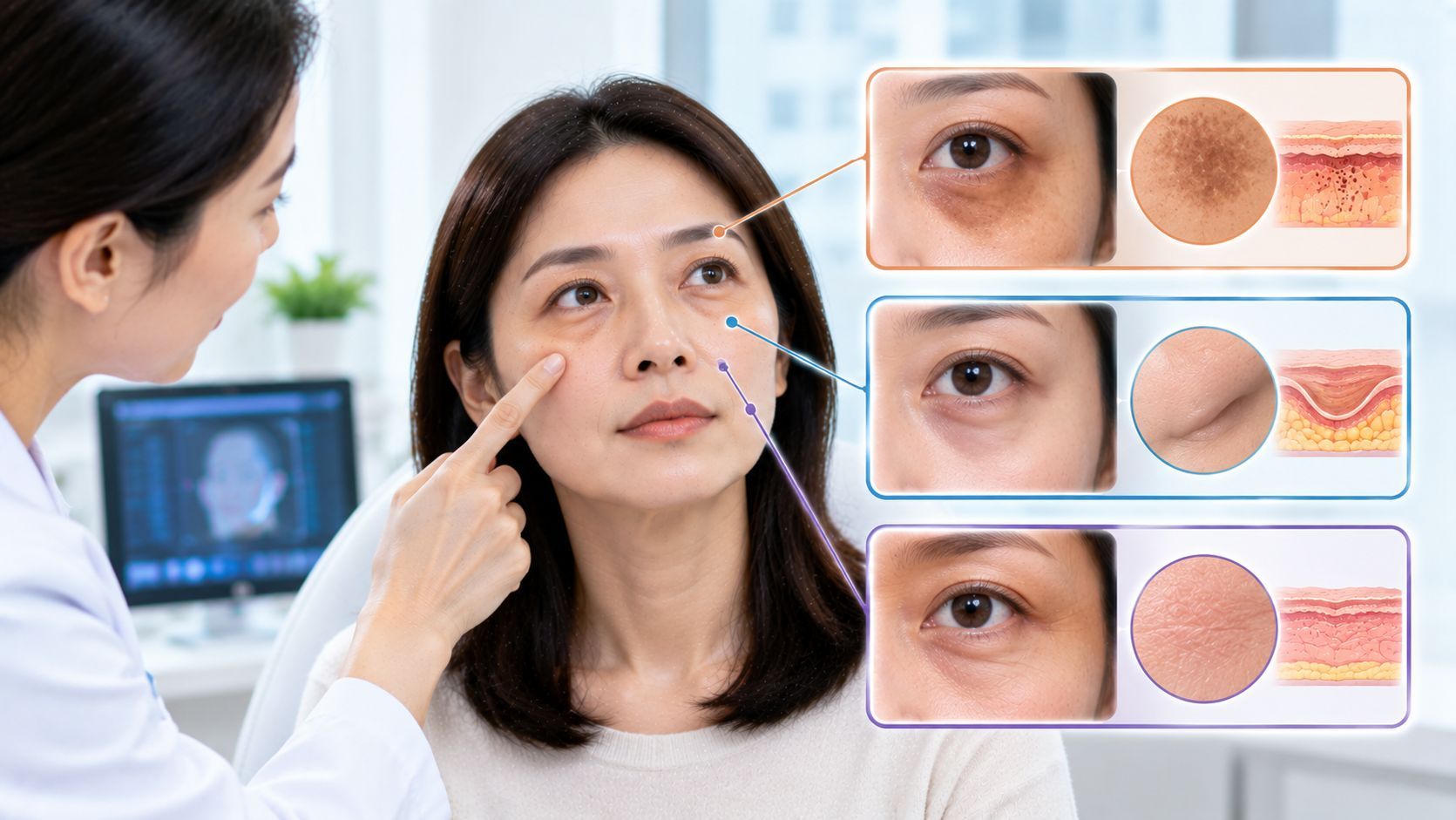
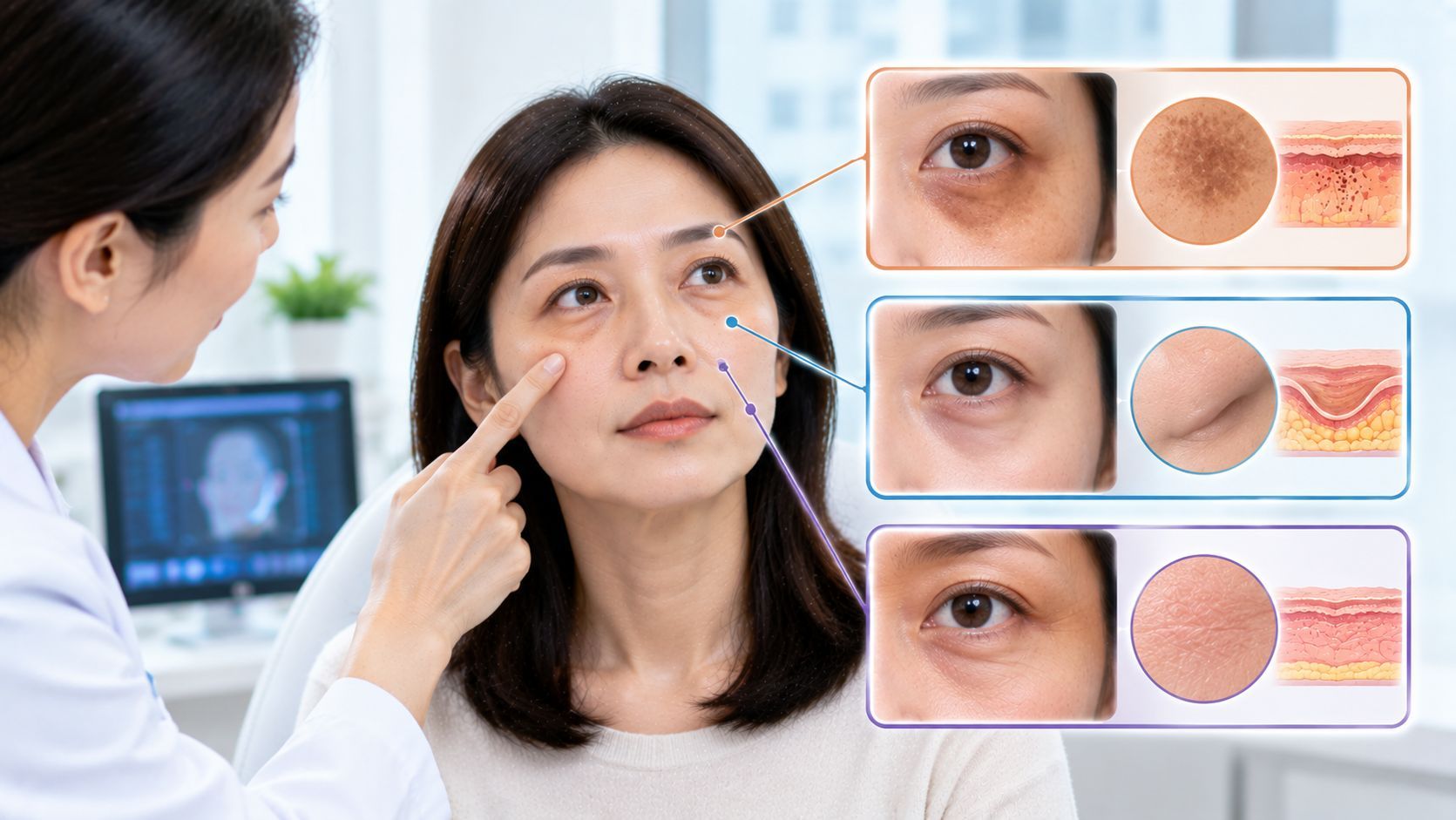
Skin may be a major contributor when the lower face looks relatively normal in volume but the skin has become less firm.
Common clues include:
- The skin appears loose or draped along the jaw.
- Fine lines or crepey texture accompany the jowl.
- The jawline looked sharper when you were younger, even without major weight changes.
- Pulling the skin gently upward temporarily improves the contour.
- The jowl becomes more noticeable when you tilt your head downward.
- There is relatively little soft, bulky tissue underneath the skin.
However, the “pull the skin upward” test is not a diagnostic test. Almost any face can look different when manually repositioned.
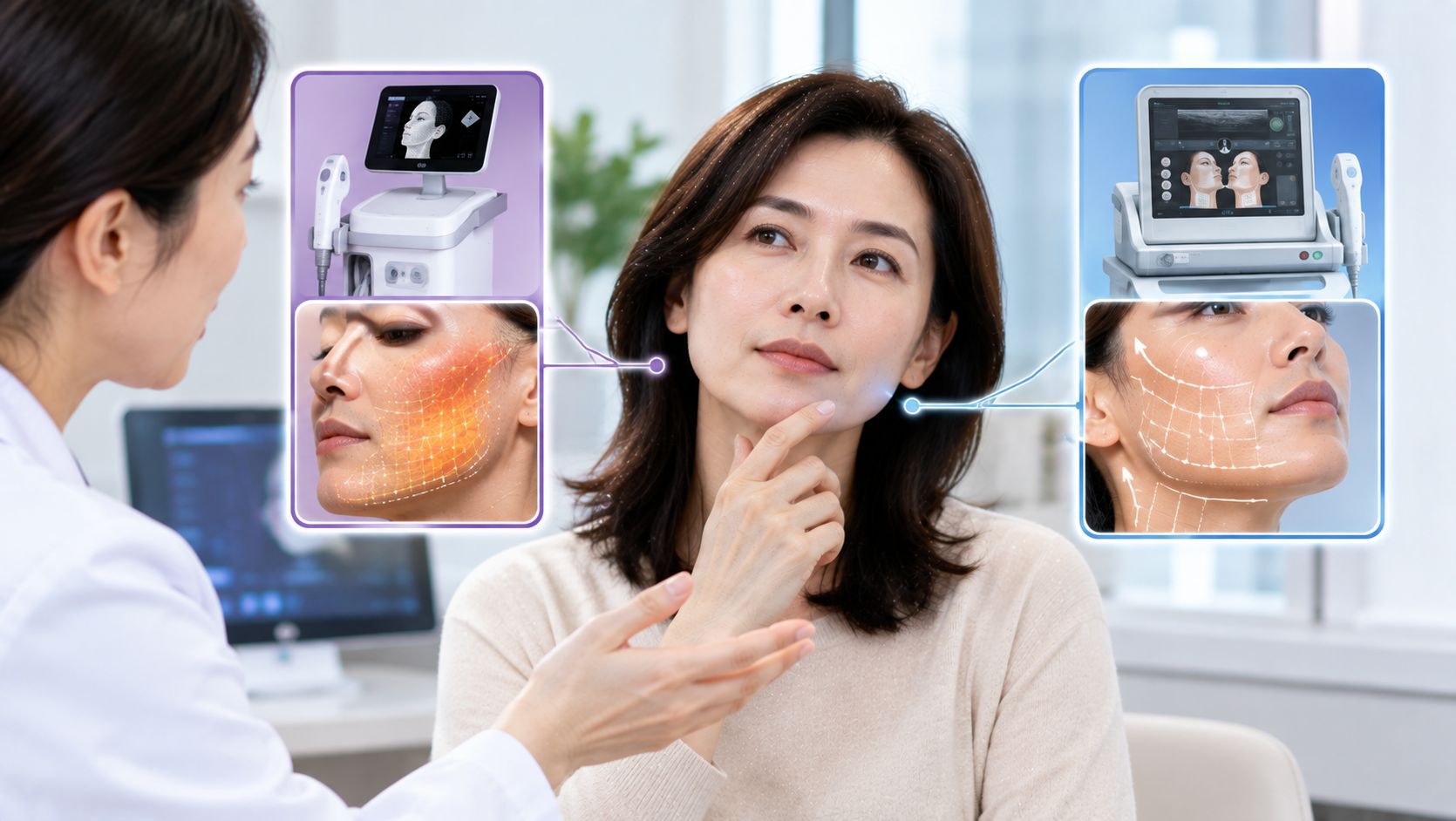
If laxity is an important component, non-surgical skin-tightening approaches such as radiofrequency or ultrasound may be considered. The American Academy of Dermatology notes that these procedures can produce modest tightening and lifting, particularly when the amount of sagging is relatively limited.
When there is substantial excess skin, however, non-surgical tightening may not provide the degree of correction a person expects.
Clues That Fat May Be Contributing to Your Jowls
Fat-related fullness can look different from simple skin laxity.
You may notice:
- A soft, rounded fullness along the lower cheek or jaw.
- A relatively thick layer of tissue when the area is gently pinched.
- Fullness that remains even when the skin itself does not appear particularly loose.
- A heavier lower face after weight gain.
- Fullness beneath the jaw or toward the upper neck in addition to the jowl.
- A more obvious change when comparing periods of different body weight.
Importantly, facial fat does not simply increase everywhere with age. Facial fat exists in separate anatomical compartments, and aging can involve both volume loss and redistribution of fat.
That means a person can have volume loss in one part of the face and excess or displaced fullness in another.
This is one reason aggressive fat reduction can be inappropriate for some aging faces. Removing volume from an already volume-deficient face may change proportions rather than simply “remove the jowls.”
Clues That Facial Structure May Be Part of the Problem
Sometimes what looks like a jowl is partly a problem of facial projection and proportion.
A relatively weak or recessed chin, less prominent mandibular contour, or changes around the prejowl region can make the lower face appear less defined even without a large amount of excess skin or fat.
Look at your face from the side as well as from the front.
Structural contribution may be worth considering when:
- The chin appears relatively recessed in profile.
- The jawline has limited forward or lateral projection.
- The lower face looks less defined despite relatively little excess soft tissue.
- The contour changes significantly depending on head position.
- The same basic lower-face shape has existed since younger adulthood.
- The area immediately in front of the chin appears indented or lacks support.
Research on facial aging has shown that changes in the facial skeleton, including the mandible, can influence the overlying soft tissues. In some people, skeletal proportions can contribute substantially to the appearance of premature aging.
This does not mean that everyone with jowls needs structural treatment. It means the underlying framework should be considered before assuming that tightening or fat reduction alone will solve the contour.
What If My Jowls Are Caused by More Than One Thing?
This is extremely common.
For example, someone in their 40s or 50s might have:
- Mild skin laxity
- Some redistribution of lower-face fat
- Reduced midface volume
- A naturally less prominent chin
- Age-related changes in the mandibular framework
Together, these can create a much more obvious jowl than any single factor would produce.
A recent review of jowl rejuvenation specifically emphasizes individualized assessment because multiple mechanisms can contribute to lower-face aging.
This is why asking, “Which treatment removes jowls?” may be less useful than asking, “What is actually creating my jowl?”
A Simple Self-Assessment Before Seeing a Korean Dermatologist
You can gather useful observations without trying to diagnose yourself.
1. Look at your face from three angles
Take photographs from the front, three-quarter view, and side profile under similar lighting.
The side profile is particularly useful for assessing chin and jaw projection.
2. Compare your face at different ages
Older photographs can help show whether the lower-face shape has changed primarily through:
- Increasing laxity
- Increasing fullness
- Loss of volume elsewhere
- A structural feature that has always been present
3. Observe your face while relaxed
Don't judge the jowl only while smiling or making facial expressions. Muscle movement can temporarily change the lower-face contour.
4. Look at the whole lower face
Don't examine the jowl in isolation. Consider the cheeks, prejowl area, chin, jawline, and upper neck together.
5. Notice whether weight changes affect it
If substantial weight changes make the lower-face fullness change considerably, fat may be contributing. But weight-related changes do not prove that fat is the only cause.
How the Findings Can Influence Treatment Categories
Main findingTreatment category that may be consideredMild-to-moderate loose skinNon-surgical skin tighteningLocalized excess fatFat-reduction approachesWeak chin or jaw projectionStructural/contouring evaluationVolume loss around the cheek or chinVolume-restoration evaluationCombination of laxity and fullnessIndividualized combination approachSignificant excess skinSurgical consultation may be appropriate
These categories are not prescriptions. A person can appear to have one problem while actually having several.
For example, adding volume to a structurally weak chin may alter the apparent jawline, but that does not mean it will correct loose skin. Similarly, reducing localized fat does not necessarily tighten significant skin laxity.
Why an In-Person Assessment Matters
A dermatologist or qualified facial-aesthetics clinician can evaluate the tissues dynamically rather than relying on a photograph.
During a consultation, the clinician may assess:
- Skin elasticity
- Thickness and distribution of soft tissue
- Jaw and chin projection
- Fat distribution
- Symmetry
- Facial movement
- Degree of skin laxity
- Changes in the profile and three-quarter view
In selected situations, additional assessment or imaging may be useful.
This is particularly important before combining treatments. A procedure that makes sense for fat-dominant fullness may not be appropriate when the main problem is thin, lax tissue.
What Should I Ask at a Korean Clinic?
If you are considering treatment in Seoul or elsewhere in Korea, ask the clinician to explain the diagnosis before discussing a package or combination of procedures.
Useful questions include:
- Is my jowl mainly skin, fat, structure, or a combination?
- What do you see from my side profile?
- Would reducing fat risk making my face look hollow?
- Would tightening address the actual cause of my jowl?
- Is my chin or jaw projection contributing to the appearance?
- What happens if I treat only one component?
- How much improvement can realistically come from a non-surgical approach?
- Would you recommend treating the jowl itself or another area that is contributing to the appearance?
A good consultation should explain why a treatment is being considered, not simply identify a device or injection.
Conclusion
Jowls are rarely as simple as “too much skin” or “too much fat.” Facial aging involves multiple layers, including skin, subcutaneous tissue, fat compartments, muscles, ligaments, and the underlying facial skeleton.
Loose skin is more likely when laxity and draping dominate. Fat may contribute when localized soft fullness is prominent. Structural factors deserve attention when chin or jaw projection affects the overall contour.
But mixed causes are common.
Before choosing Thermage, Ultherapy, fat reduction, filler, collagen stimulation, or another Korean treatment, the most useful first step is determining which anatomical factors are actually creating the jowl.
FAQs
Can jowls be caused only by loose skin?
Yes, skin laxity can be an important contributor, but jowls can also involve fat redistribution, soft-tissue changes, and structural factors. Multiple causes frequently overlap.
Does pinching my jowl tell me if it is fat?
It can show that there is movable soft tissue, but it cannot distinguish normal subcutaneous tissue, fat distribution, and skin laxity reliably. A clinical examination is more useful.
Can tightening treatment remove fat from jowls?
Skin-tightening treatments primarily target tissue laxity and collagen remodeling. They should not automatically be considered substitutes for a treatment specifically intended to reduce localized fat.
Could a weak chin make my jowls look worse?
Yes. Facial projection and skeletal proportions can influence how the overlying soft tissue is perceived. Changes around the mandible can contribute to lower-face contour changes.
Should I lose weight before treating jowls?
That depends on your current weight, whether it is stable, and what is actually causing the jowl. Significant weight changes can alter facial fat and skin, so the timing of treatment should be discussed individually.
Can Korean non-surgical treatments completely remove jowls?
Non-surgical treatments may improve selected components of jowling, but results depend on the underlying anatomy and degree of laxity or fullness. Significant excess skin may require discussion of surgical options rather than expecting a device-based treatment to reproduce a facelift result.