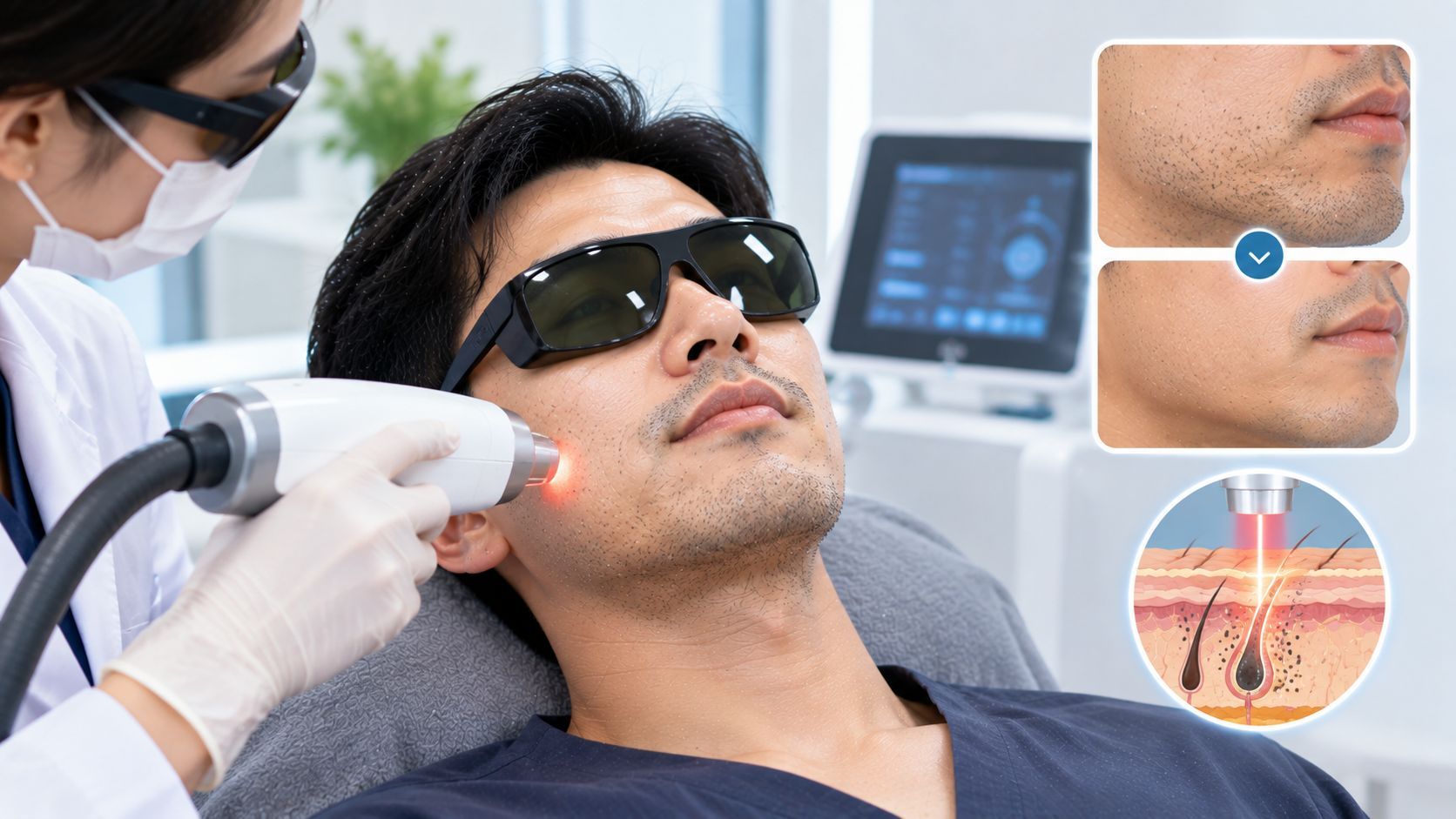
How Do I Know if My Large Pores Need Laser, RF Microneedling or Collagen Stimulation?
Introduction
Large pores can be frustrating because they often remain visible even when your skin is otherwise clear. But enlarged pores are not caused by one single problem. Sebum production, reduced elasticity around the pore, increased follicle size, acne, aging, genetics, and sun exposure can all contribute.
That means the right treatment is not automatically “the strongest pore treatment.” A person with oily skin and enlarged pores may need a different approach from someone with relatively dry skin whose pores have become more visible because of collagen loss and reduced elasticity.
In Korean dermatology clinics, treatments such as fractional lasers, picosecond lasers, RF microneedling, and other collagen-stimulating procedures may all be discussed. The important question is what is making your pores look large in the first place?
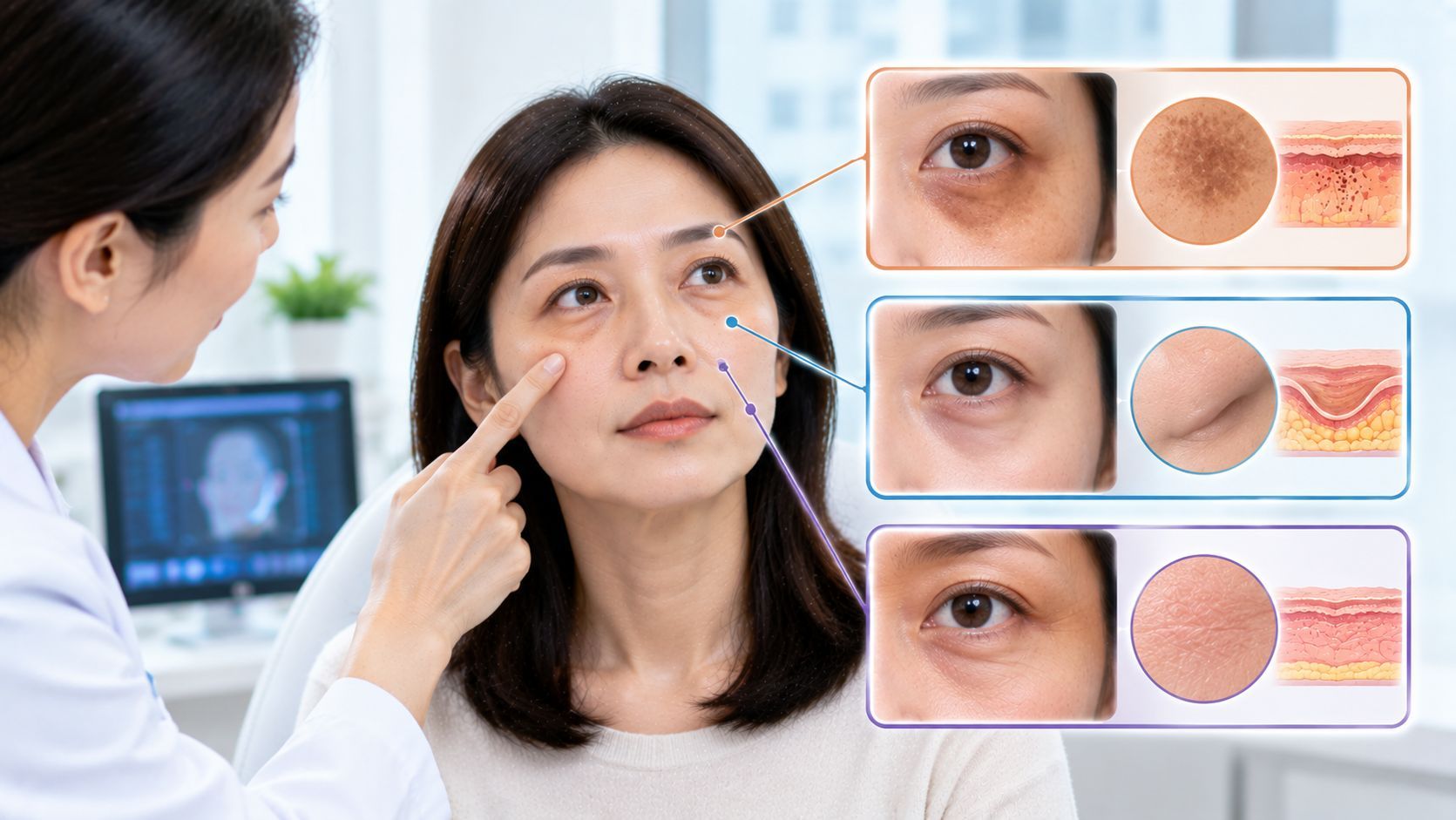
What Actually Makes Facial Pores Look Large?
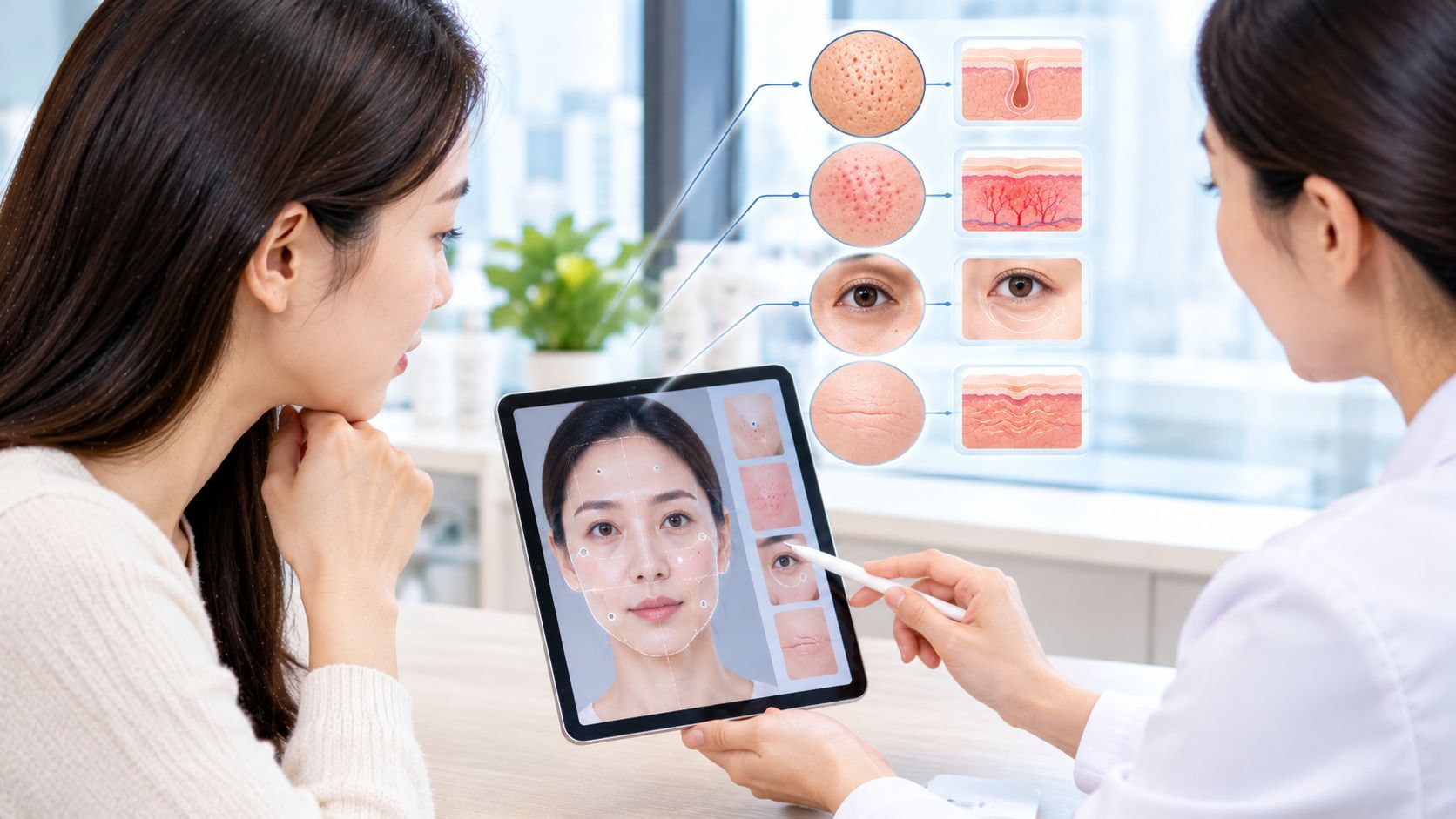
Pores are openings of pilosebaceous follicles. They can become more visible when the follicle is larger, when more sebum is produced, or when the surrounding skin loses elasticity.
A review of enlarged facial pores identified three major contributing factors:
- Increased sebum production
- Reduced elasticity around the pore
- Increased hair-follicle volume
Acne, hormones, genetics, aging, UV exposure, and skincare habits can also contribute.
This is why simply looking at pore size does not tell you which treatment category is appropriate.
Clues That Your Pores May Be Mainly Related to Oily Skin
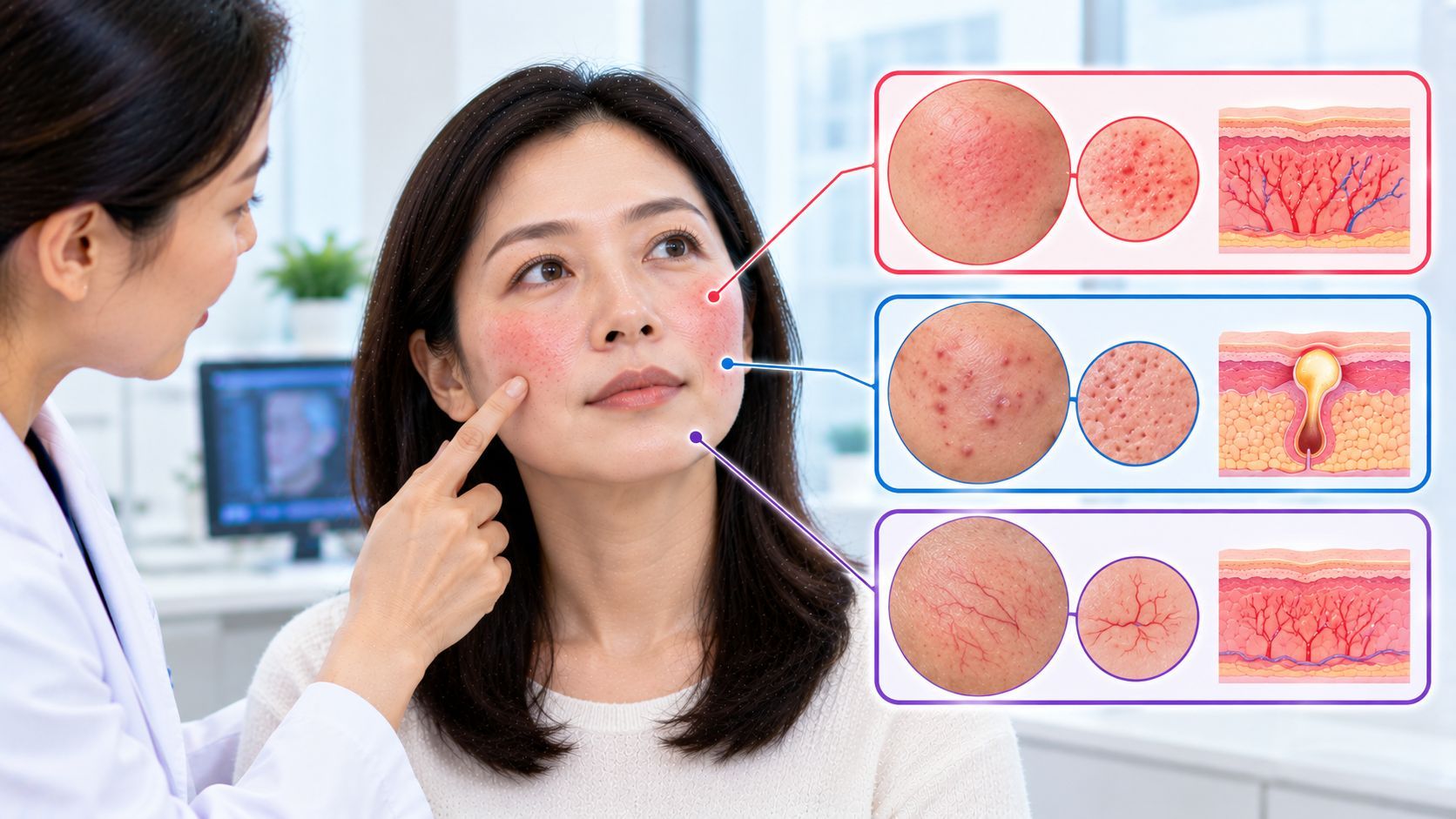
If your skin becomes shiny quickly and pores are most noticeable in areas such as the nose, inner cheeks, and forehead, excess sebum may be an important factor.
You may notice:
- Oiliness several hours after cleansing
- Visible sebaceous filaments
- Pores becoming more obvious during periods of increased oil production
- Frequent congestion or blackheads
- Acne occurring alongside enlarged pores
- Pores appearing smaller when oil production is controlled
Research has found a relationship between sebum output and pore size, with sebum production showing a particularly strong association in one clinical study.
In this situation, immediately choosing an aggressive laser or collagen procedure may not address the main driver.
Managing oil production, congestion, and acne may be an important part of the treatment plan.
Clues That Loss of Elasticity Is Making Your Pores Look Larger
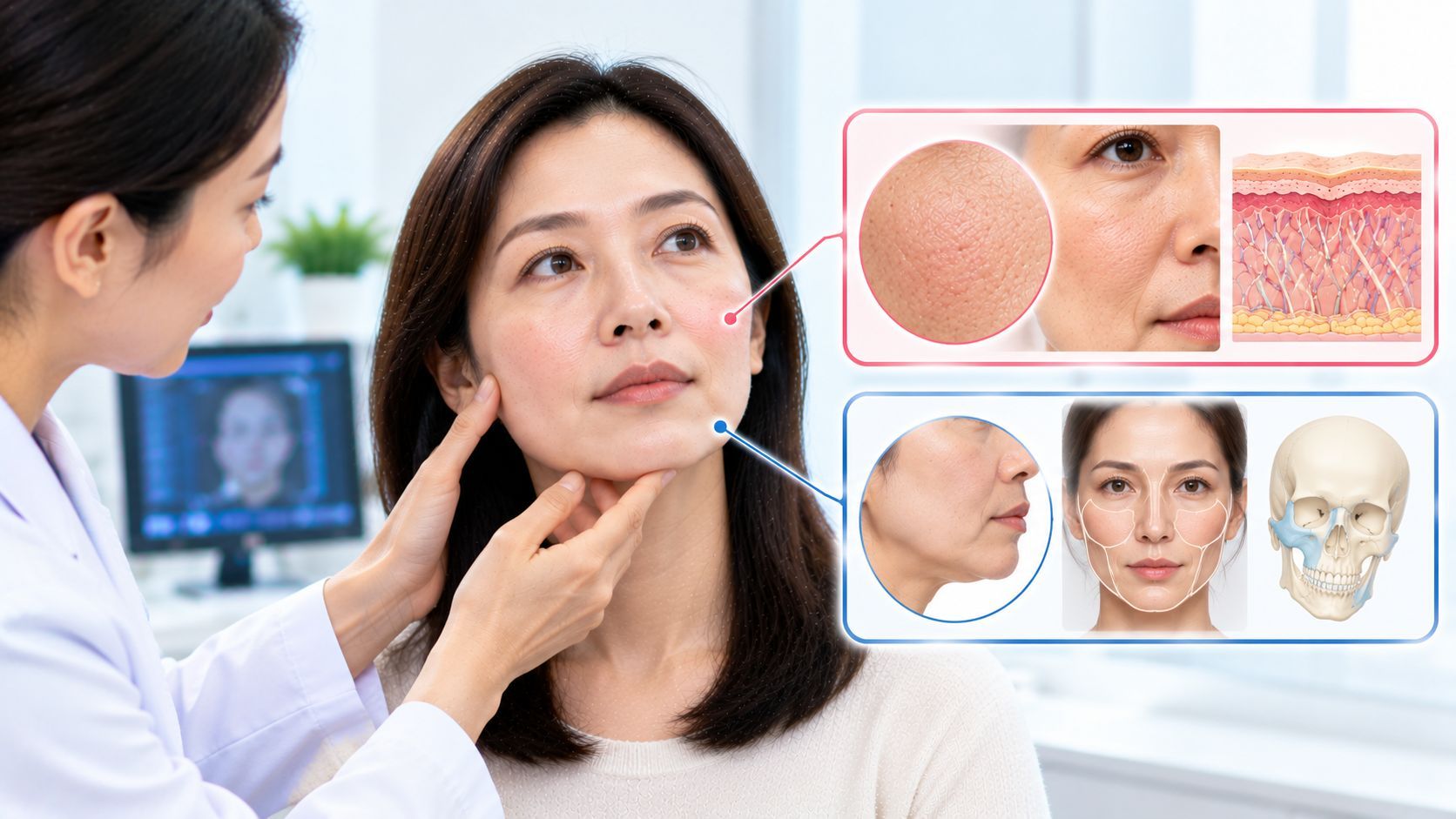
Pores can become more noticeable as the surrounding skin loses firmness.
This may be more relevant when:
- Your pores were smaller when you were younger.
- Your skin has become less firm.
- The cheeks look slightly looser.
- Fine lines and enlarged pores appear together.
- Pores are more visible in areas exposed to the sun.
- Your skin is not particularly oily but the pores still look prominent.
Reduced elasticity around the pore is one of the recognized mechanisms behind enlarged pores.
This is where collagen-stimulating treatments may become more relevant than simply focusing on oil control.
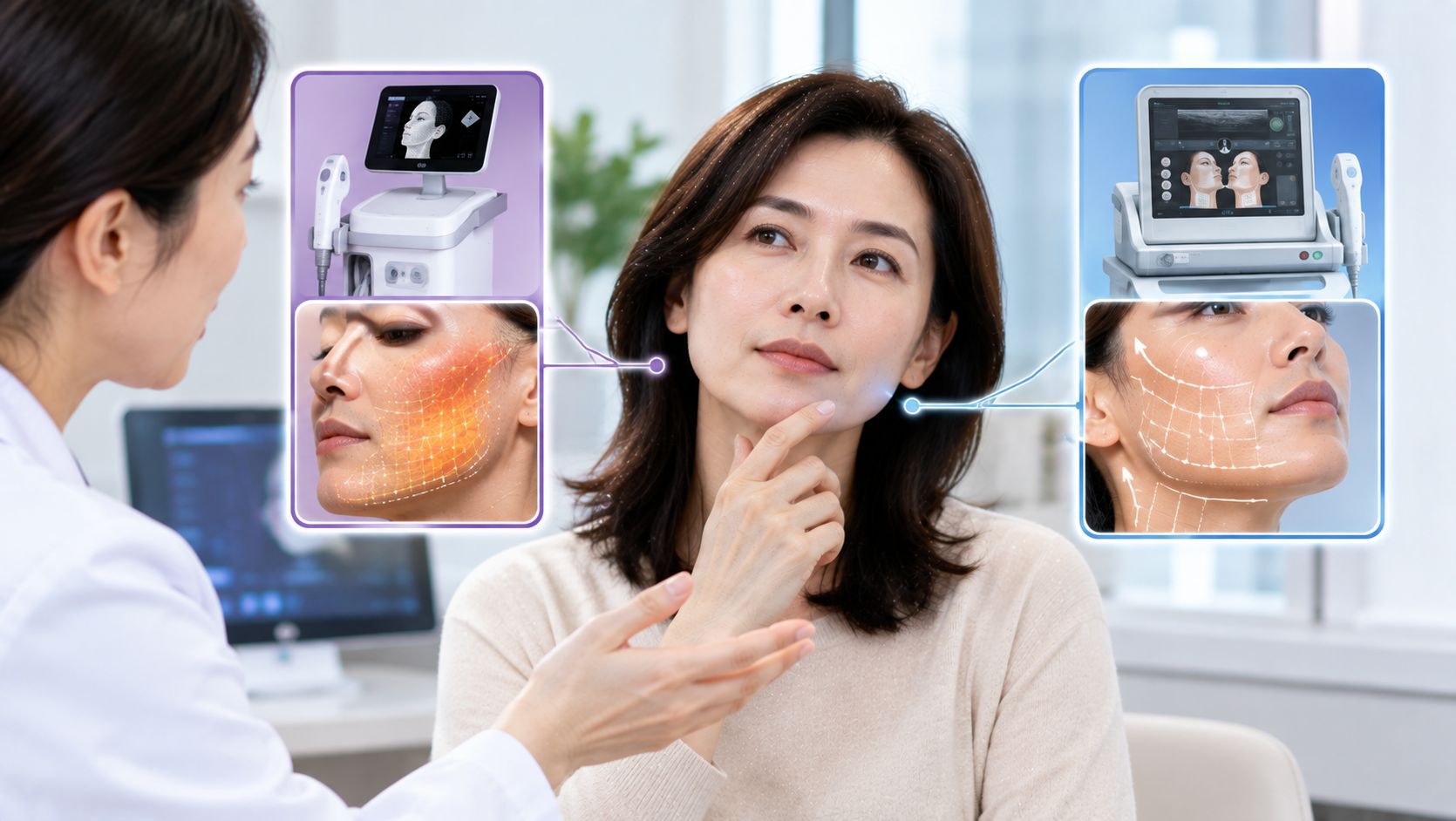
When Might a Laser Be Considered?
Laser treatment may be considered when enlarged pores are associated with changes in skin texture, photoaging, acne scarring, or reduced collagen support.
Different lasers target different tissue characteristics, so “laser for pores” is not one specific treatment.
For example, studies have evaluated fractional non-ablative lasers and picosecond lasers for enlarged pores. A randomized split-face study found that both a 1064-nm picosecond laser with a microlens array and a 1565-nm non-ablative fractional laser reduced pore number, with comparable clinical outcomes in that study.
Other research has also found improvement in pore appearance after fractional non-ablative laser treatment.
Laser may therefore be worth discussing when your pore concern is part of a broader texture or photoaging problem.
When Might RF Microneedling Make More Sense?
RF microneedling combines controlled microneedling with radiofrequency energy delivered into the skin.
It may be considered when enlarged pores occur alongside:
- Reduced skin firmness
- Uneven texture
- Fine lines
- Acne scars
- Mild laxity
- General loss of skin quality
A 2026 systematic review of RF microneedling found consistent improvements in aesthetic outcomes, particularly skin texture and tightening, across the studies reviewed. Most reported adverse effects were mild and temporary, such as redness and swelling.
Another systematic review found RF microneedling useful across several dermatologic conditions, while also emphasizing that differences between devices and treatment protocols make direct comparisons difficult.
So RF microneedling may be particularly relevant when your “large pores” are really part of a broader texture and collagen-support problem.
When Is General Collagen Stimulation the More Useful Concept?
Sometimes the issue is not simply pore diameter.
You may notice that your skin has become:
- Less firm
- Less smooth
- More textured
- More reflective in certain areas
- More visibly uneven under strong lighting
In these situations, focusing only on making individual pores smaller may miss the bigger issue.
Collagen-stimulating treatments aim to improve the overall quality and structure of the skin rather than simply treating each pore as an isolated opening.
This distinction becomes increasingly relevant with age because enlarged pores can be associated with both sebum production and reduced skin elasticity.
A Simple Way to Compare the Three Categories
Main concernTreatment category that may be consideredVery oily skin and congestionOil-control/acne-focused treatmentPores plus uneven textureLaser or resurfacing approachPores plus reduced firmnessRF microneedling or collagen stimulationPores plus acne scarsResurfacing or RF microneedling evaluationPores plus photoagingLaser or collagen-focused treatmentPores with several contributing factorsIndividualized combination approach
This is a framework rather than a prescription. The exact laser, RF device, energy level, and number of sessions can substantially change both results and side effects.
What If I Have Acne Scars and Large Pores?
This is an important distinction.
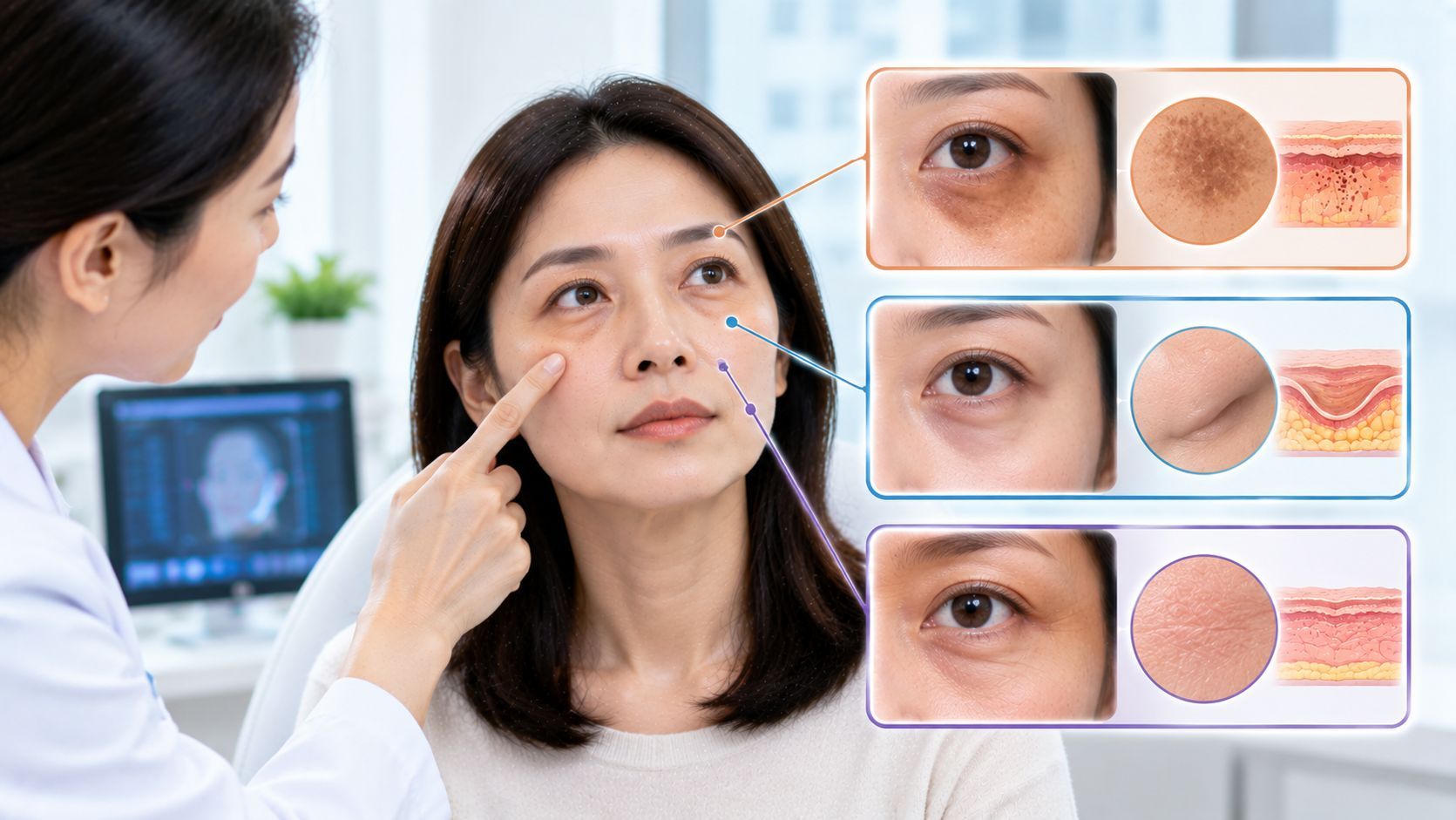
Atrophic acne scars can create depressions and irregular texture that make pores appear larger than they actually are.
If your cheeks contain both acne scars and visible pores, the clinician may need to determine whether the main problem is:
- Actual enlarged pores
- Atrophic acne scars
- Uneven skin texture
- Sebum-related follicular enlargement
- Reduced collagen support
- A combination
Some studies have evaluated fractional picosecond lasers for both acne scars and enlarged pores. One study involving patients with atrophic acne scars and conspicuous pores reported improvement in pore counts after treatment, although pore diameter did not significantly change after one session.
This illustrates why “pore treatment” does not necessarily mean that every visible pore will literally shrink.
What If My Skin Is Oily and Aging at the Same Time?
This is common.
You can have high sebum production while simultaneously developing reduced elasticity.
In that situation, controlling oil alone may not make the pores appear as small as you want.
Conversely, repeatedly stimulating collagen without addressing significant oiliness or congestion may leave an important part of the problem untreated.
A 2023 review of facial-pore treatments concluded that treatment should account for the patient's age and contributing factors, with younger patients often requiring more attention to sebum control and older patients potentially benefiting from rejuvenation combined with sebum management.
Can Skincare Be Enough?
Sometimes.
If oil production, congestion, or acne is a major contributor, medical skincare can be an important first step.
Topical retinoids, for example, have been included among approaches studied for enlarged pores. Other treatment options reviewed in the literature include chemical peels, medications, lasers, and energy-based devices.
This does not mean skincare will completely eliminate visible pores.
Pores are normal anatomical structures. The realistic goal is usually to make them less noticeable, not to permanently erase them.
What About Combining Treatments?
Combination treatment can sometimes be useful because enlarged pores have multiple possible causes.
A person might have:
- Excess sebum
- Mild acne
- Reduced elasticity
- Sun-related skin changes
- Acne scars
Treating only one component may produce limited improvement.
A review of clinical trials found that combination approaches can improve pore area and number, although individual responses and side effects vary.
However, combining several procedures does not automatically mean better results. More treatment can also mean more irritation, downtime, and risk of pigmentation or other adverse effects.
What Should I Ask a Korean Dermatologist?
If you are considering pore treatment in Seoul, ask the clinician to identify the dominant cause first.
Useful questions include:
- Are my pores mainly caused by oil, reduced elasticity, or both?
- Do I actually have enlarged pores or acne-scar texture?
- Would laser address my main concern?
- Would RF microneedling be more appropriate for my skin quality?
- Do I need collagen stimulation or mainly oil control?
- What level of downtime should I expect?
- What is the risk of post-inflammatory pigmentation for my skin type?
- How many sessions would normally be evaluated before changing the plan?
This can help prevent choosing a treatment simply because it is marketed as a “pore tightening” procedure.
What About Darker or Melanin-Rich Skin?
Skin tone is important when considering laser or energy-based treatments.
Certain procedures can cause inflammation, and post-inflammatory hyperpigmentation is a relevant concern for people who are prone to pigmentation.
The appropriate wavelength, settings, cooling, treatment interval, and aftercare need to be individualized.
If you have previously developed dark marks after acne, burns, or cosmetic procedures, tell the clinician before treatment.
Conclusion
Large pores do not automatically mean you need laser, RF microneedling, or another collagen-stimulating procedure.
If your pores are strongly associated with oily skin and congestion, controlling sebum and acne may be an important part of the solution. If pores are accompanied by photoaging and uneven texture, a laser-based approach may be considered. If reduced firmness, acne scars, and overall texture changes are prominent, RF microneedling or another collagen-focused treatment may be relevant.
Research supports several treatment approaches for enlarged pores, but it also emphasizes that pore size has multiple possible causes and treatment should therefore be individualized.
For Korean dermatology treatment, the most useful question is not “Which pore treatment is strongest?”
It is:
“Why do my pores look large, and which treatment addresses that specific cause?”
FAQs
Can lasers permanently close large pores?
No. Pores are normal anatomical structures and cannot simply be permanently closed. Treatments aim to reduce their visible appearance.
Are large pores always caused by oily skin?
No. Sebum is an important contributor, but reduced elasticity, follicle size, acne, aging, genetics, and sun exposure can also contribute.
Is RF microneedling good for large pores?
RF microneedling may help when enlarged pores occur alongside texture changes, acne scars, or reduced skin firmness. Recent systematic-review evidence supports improvements in skin texture and tightening, although results vary between devices and treatment protocols.
Which laser is best for large pores?
There is no single laser that is best for everyone. Studies have evaluated different fractional, picosecond, and Nd:YAG approaches, with outcomes depending on the treatment protocol and the patient's skin characteristics.
Can acne scars make my pores look larger?
Yes. Depressed acne scars and uneven texture can make the surface of the cheek appear more porous even when the actual pore size is not the only problem.
Should I treat oily skin before doing a pore laser?
If excess sebum or active acne is a major contributor, addressing those factors may be important. A dermatologist can determine whether oil control, resurfacing, collagen stimulation, or a combination should come first.