How Do I Know Whether My Face Looks Older Because of Skin Quality or Facial Structure?
Introduction
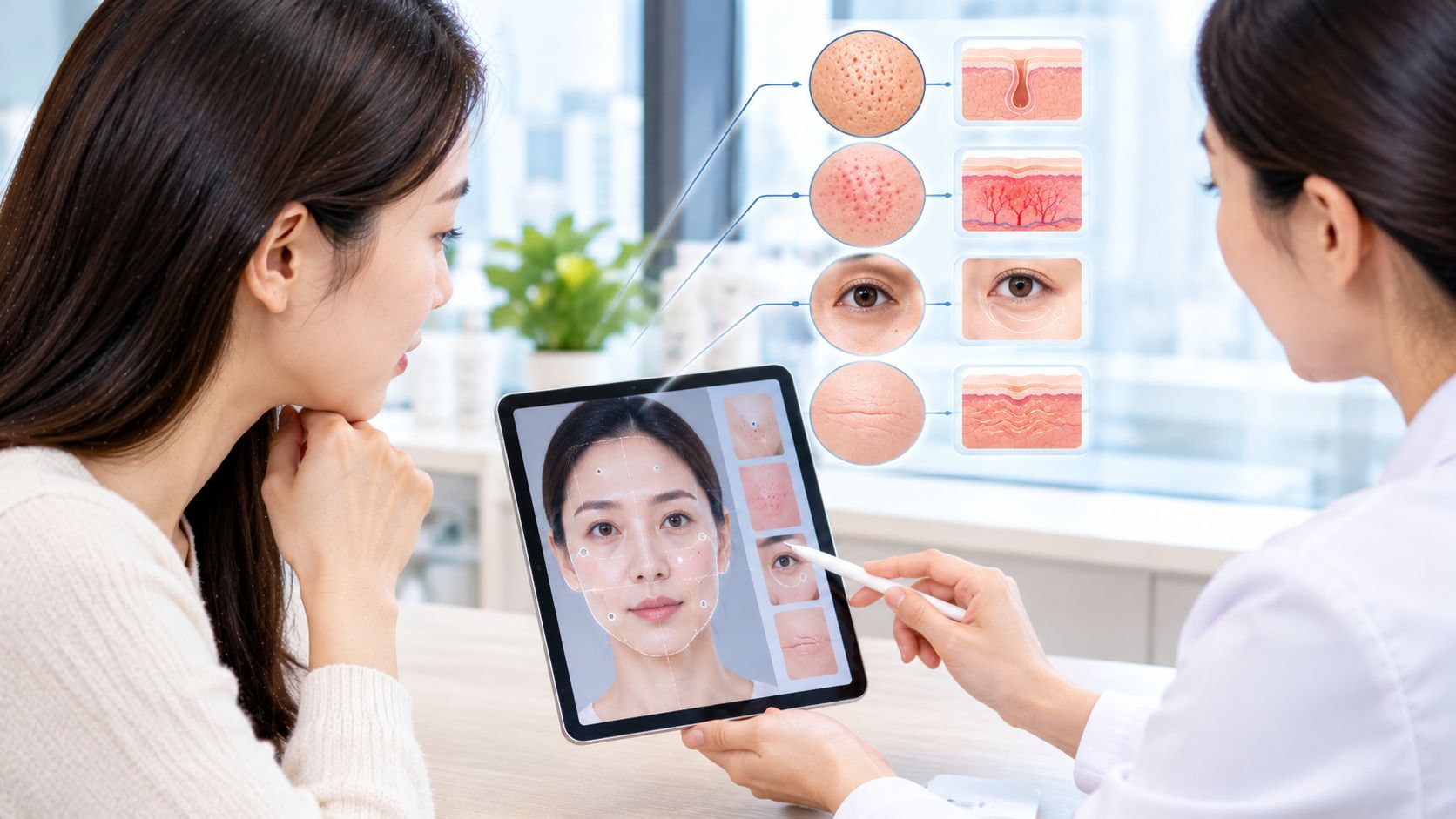
When your face starts looking older, it is easy to assume the problem is simply wrinkles or sagging skin. But facial aging is more complicated than that. Changes can occur simultaneously in the skin, fat compartments, muscles, ligaments and underlying facial bones, and the visible result can be a combination of texture changes and altered facial shape.
This distinction matters when considering treatments in Korea. A person whose main issue is rough, dull or thin-looking skin may need a very different treatment strategy from someone whose face has lost structural support, projection or youthful contours.
A useful starting question is:
Does my face look older because the surface has changed, because the underlying shape has changed, or because both have changed?
What Does “Skin Quality” Mean?
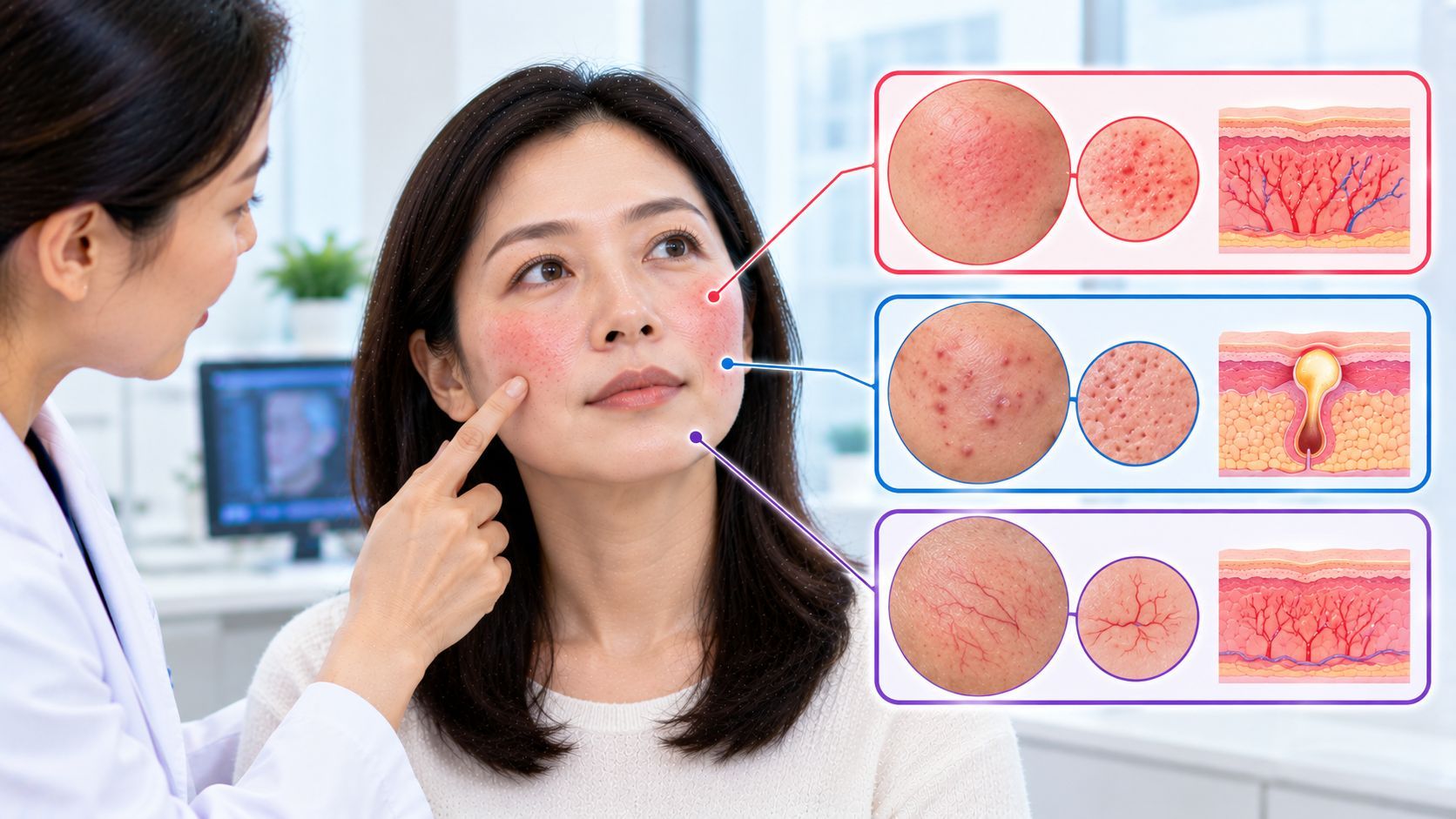
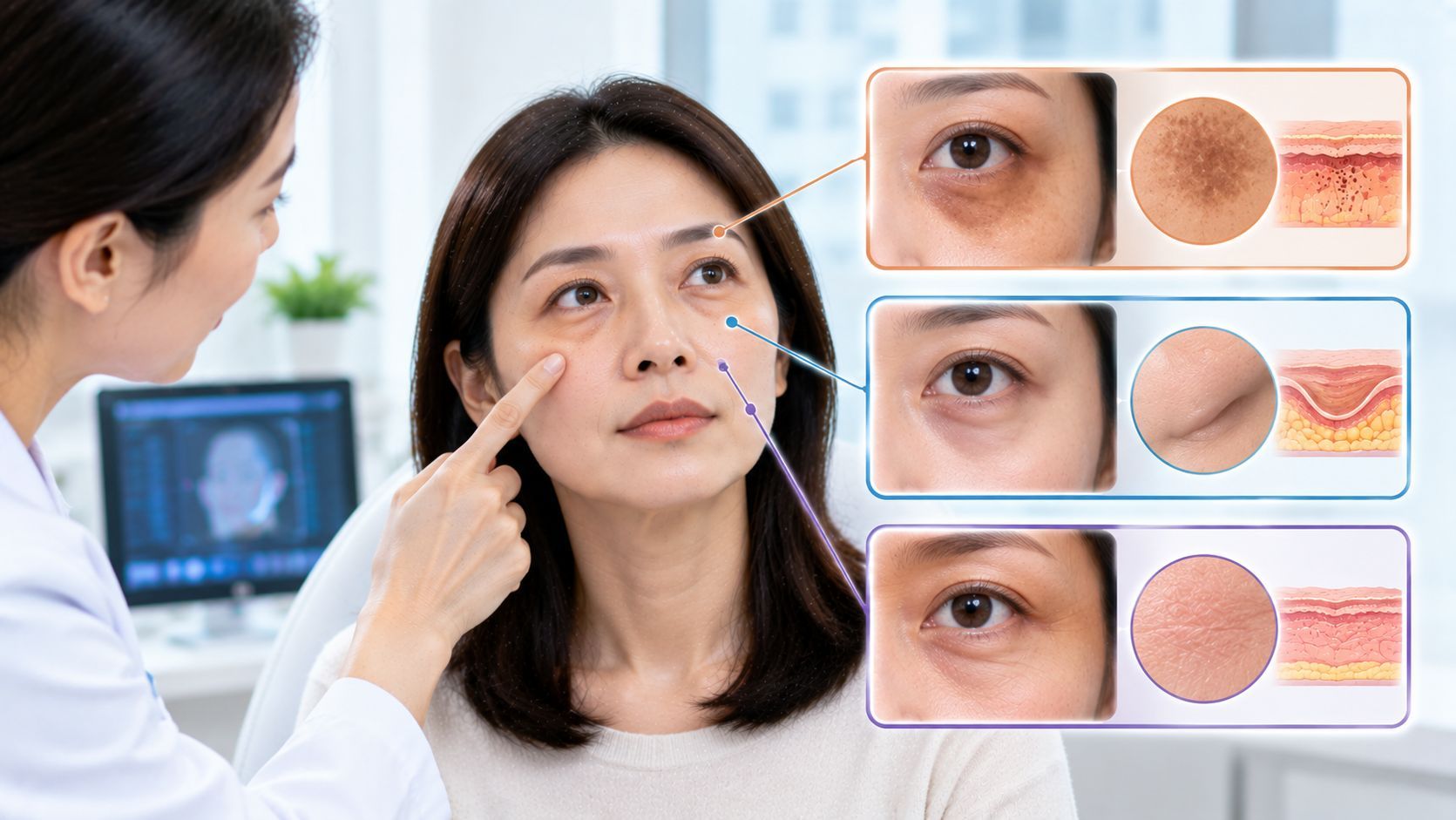
Skin quality refers mainly to characteristics you can observe at the surface or within the skin itself.
Common signs include:
- Fine lines and wrinkles
- Rough or uneven texture
- Enlarged pores
- Dullness
- Uneven pigmentation
- Loss of radiance
- Reduced elasticity
- Crepey or thin-looking skin
- Uneven reflectance in photographs
Skin aging involves changes in collagen, elastin, epidermal and dermal structure, pigmentation and other skin functions. Environmental exposure, particularly ultraviolet exposure, can contribute to visible aging.
If your facial shape still looks relatively similar but the surface looks less smooth, firm or luminous than it used to, skin quality may be a major part of the problem.
What Does “Facial Structure” Mean?
Facial structure is broader than skin.
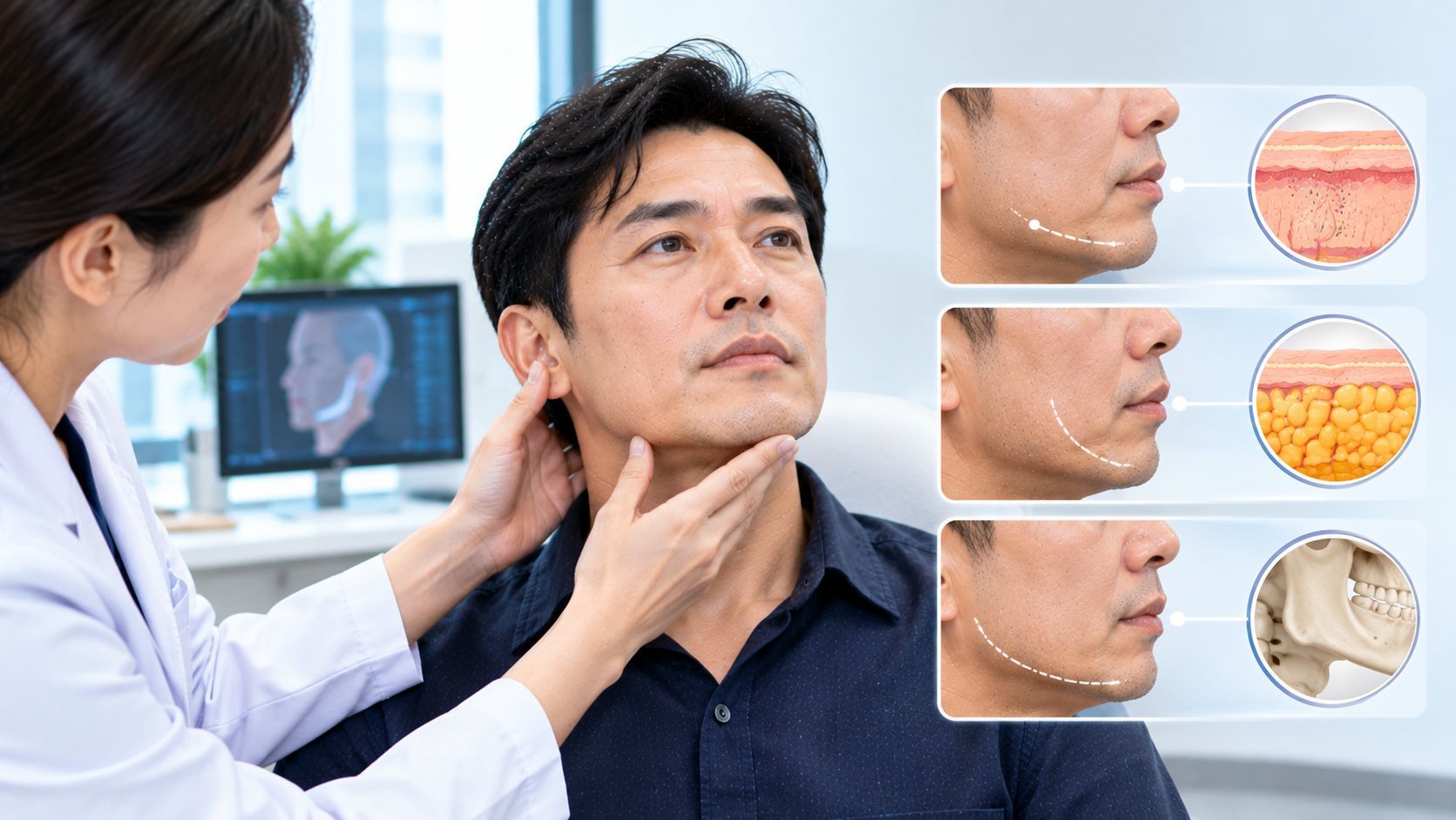
It includes the underlying:
- Facial bones
- Fat compartments
- Muscles
- Ligaments
- Deep and superficial soft tissues
- Overall distribution of facial volume
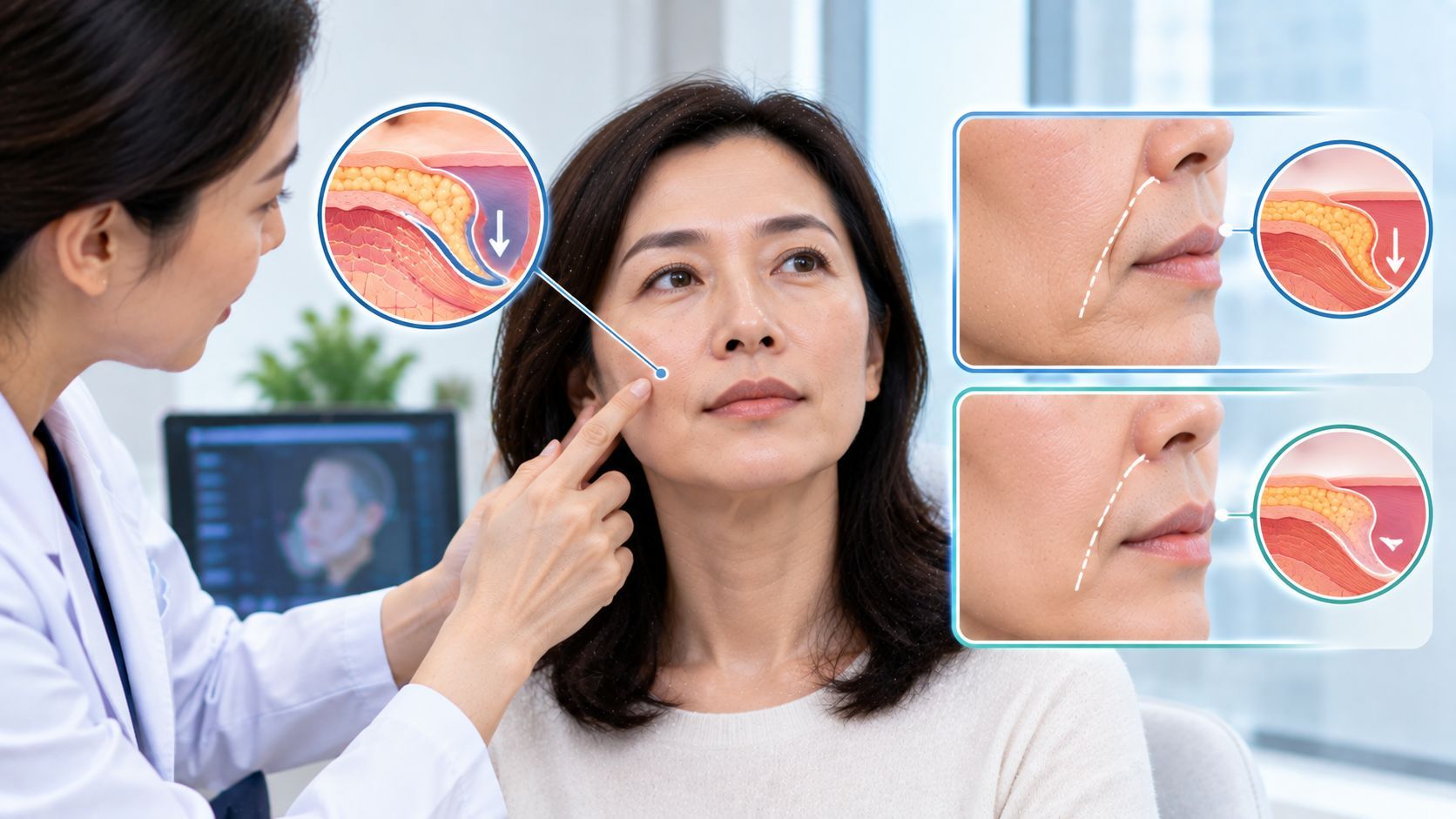
Research on facial aging shows that these structures change over time. Facial fat can atrophy or reposition, muscles can change, ligaments can weaken, and the facial skeleton can remodel.
This means someone can develop an older-looking appearance without having particularly severe wrinkles.
For example, the face may appear:
- Flatter through the cheeks
- Less projected around the midface
- Less defined around the jaw
- Heavier in the lower face
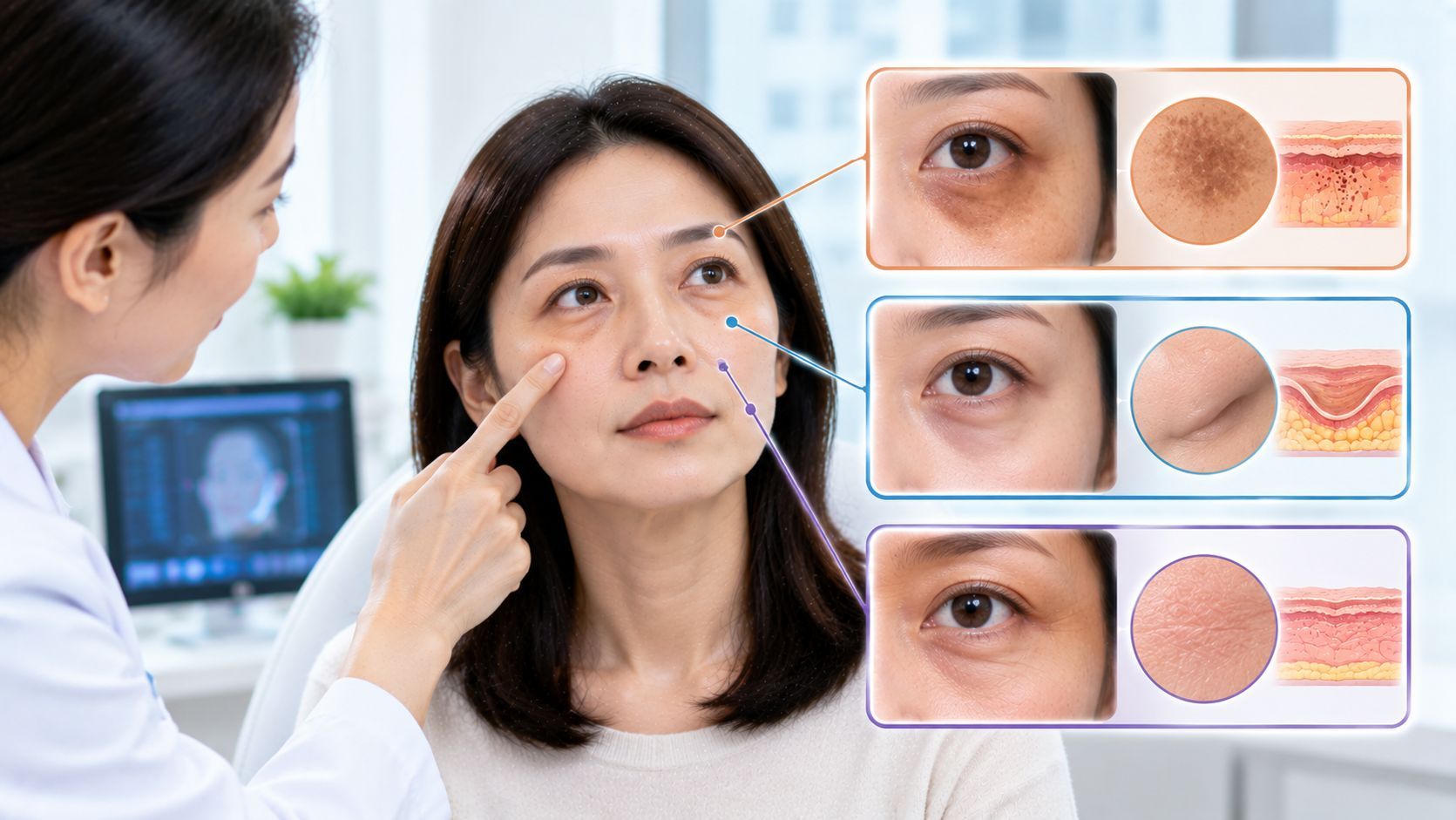
- More hollow around the temples or eyes
- Less supported around the mouth
- Different in profile
These are structural or volumetric changes rather than purely surface-level skin problems.
Signs That Skin Quality May Be the Main Issue
Look closely at your face under neutral lighting.
Your Facial Shape Is Still Similar
If your cheekbones, chin, jawline and overall facial proportions look relatively similar to several years ago, but your skin looks more tired, rough or lined, skin quality may be contributing more than structural change.
Your Main Complaint Is Texture
Someone who says:
“My skin looks old even though my face shape hasn't changed.”
may be describing a predominantly skin-quality concern.
Fine lines, enlarged pores, dullness, uneven pigmentation and reduced elasticity can all contribute to this perception.
Your Face Looks Better With Good Lighting
If your face appears considerably fresher under soft, even lighting but looks rough or tired under harsh overhead light, surface texture and light reflection may be important factors.
This does not prove that skin quality is the only issue, but it can provide a useful clue.
You Have Little Volume Loss
If your cheeks, temples and under-eye areas have not noticeably become hollow and your facial projection remains similar, aggressive volume restoration may not address the main concern.
Signs That Facial Structure May Be More Important
Structural aging often becomes more apparent when you compare your face from different angles.
Your Face Shape Has Changed
Perhaps your face used to look more:
- Oval
- Defined
- Projected
- Balanced
- Firm around the lower third
but now appears broader, flatter or heavier in certain areas.
That suggests looking beyond the skin.
Your Profile Looks Different
A side view can reveal changes that are difficult to notice from the front.
For example, reduced chin projection, changes around the midface or altered jaw contours can influence how old the face appears even when the skin itself is relatively smooth.
You Have Noticeable Volume Loss
Facial fat is divided into different compartments, and age-related changes can affect multiple regions. Volume loss can occur in areas such as the cheeks, temples, forehead, chin and around the mouth.
If your face has become noticeably flatter or more hollow, the issue may not be solved by improving skin texture alone.
Your Lower Face Looks Heavier Despite Reasonably Good Skin
Sometimes the skin itself is not extremely wrinkled, but the lower face has changed shape.
Changes in soft tissues, fat distribution, ligaments and underlying structure can contribute to altered facial contours.
In this situation, treating only the surface may produce less noticeable improvement than expected.
What If Your Face Has Both Problems?
This is probably the most important point.
Skin quality and facial structure are not competing explanations. They can age together.
For example, someone in their 40s may have:
- Fine lines and reduced elasticity
- Mild cheek volume loss
- Early jowling
- Less defined jawline
- Uneven pigmentation
Treating only one layer may leave the person feeling that the result was incomplete.
Facial aging is considered a multidimensional process precisely because changes occur across several anatomical layers rather than in the skin alone.
A Simple Way to Evaluate Your Face Before a Korean Dermatology Consultation
Instead of asking immediately, “Which treatment should I get?”, break your concerns into three categories.
Look at the Surface
Ask:
- Are my main problems wrinkles?
- Is my texture rough?
- Are my pores more visible?
- Does my skin look dull?
- Do I have pigmentation?
- Does my skin feel thinner or less elastic?
If most answers are yes, skin quality deserves attention.
Look at Volume
Ask:
- Have my cheeks become flatter?
- Are my temples more hollow?
- Are my under-eyes more sunken?
- Has my face become thinner after weight loss?
- Do areas that once looked full now look depleted?
If several answers are yes, volume changes may contribute.
Look at Shape and Support
Finally ask:
- Has my jawline changed?
- Do I have new jowls?
- Does my chin look less projected?
- Has my lower face become heavier?
- Does my profile look different?
- Does my face look older even without many wrinkles?
These clues suggest that facial structure and soft-tissue distribution may need evaluation.
What Treatments Correspond to Each Problem?
There is no single treatment category that is appropriate for every aging face.
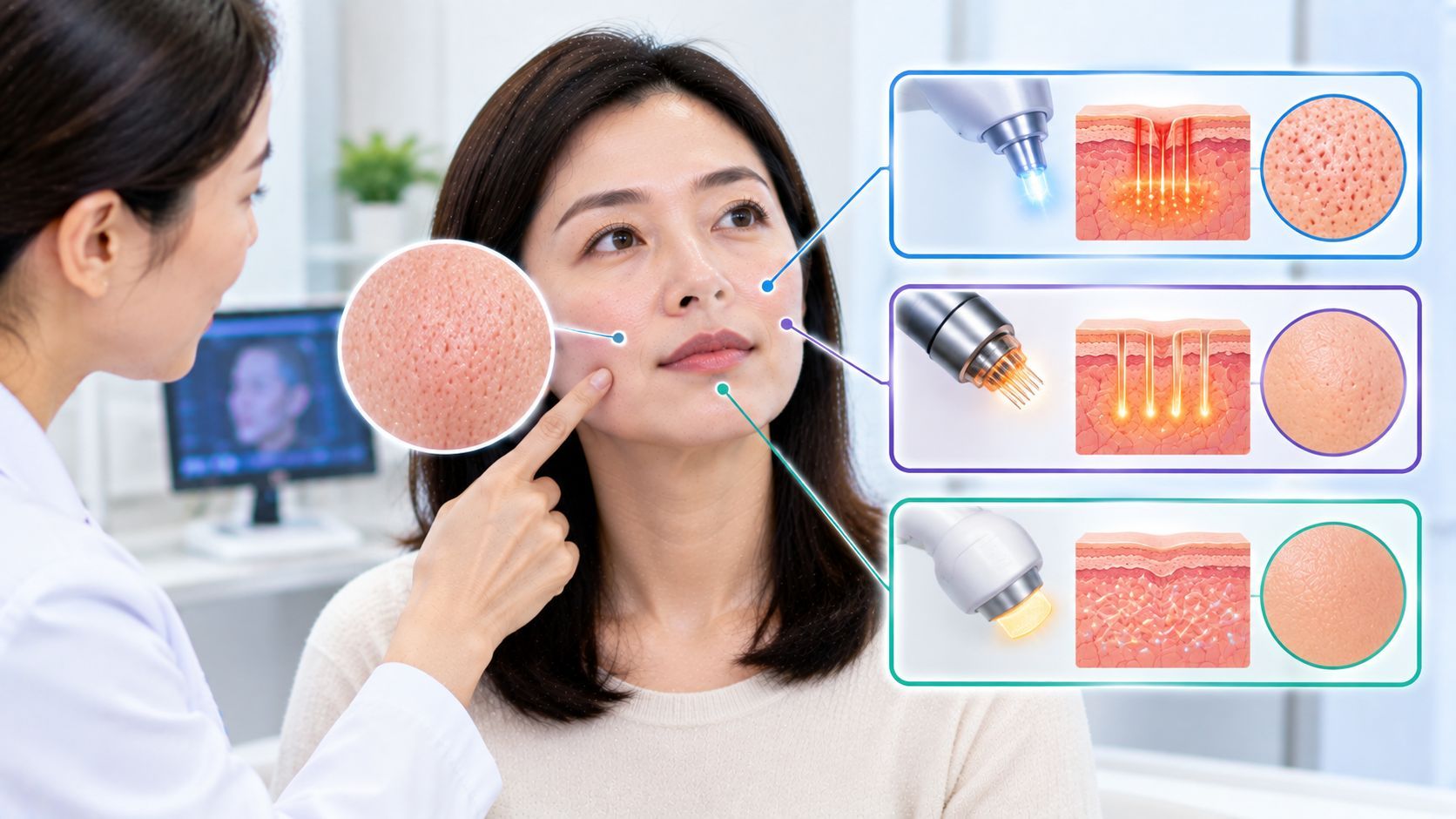
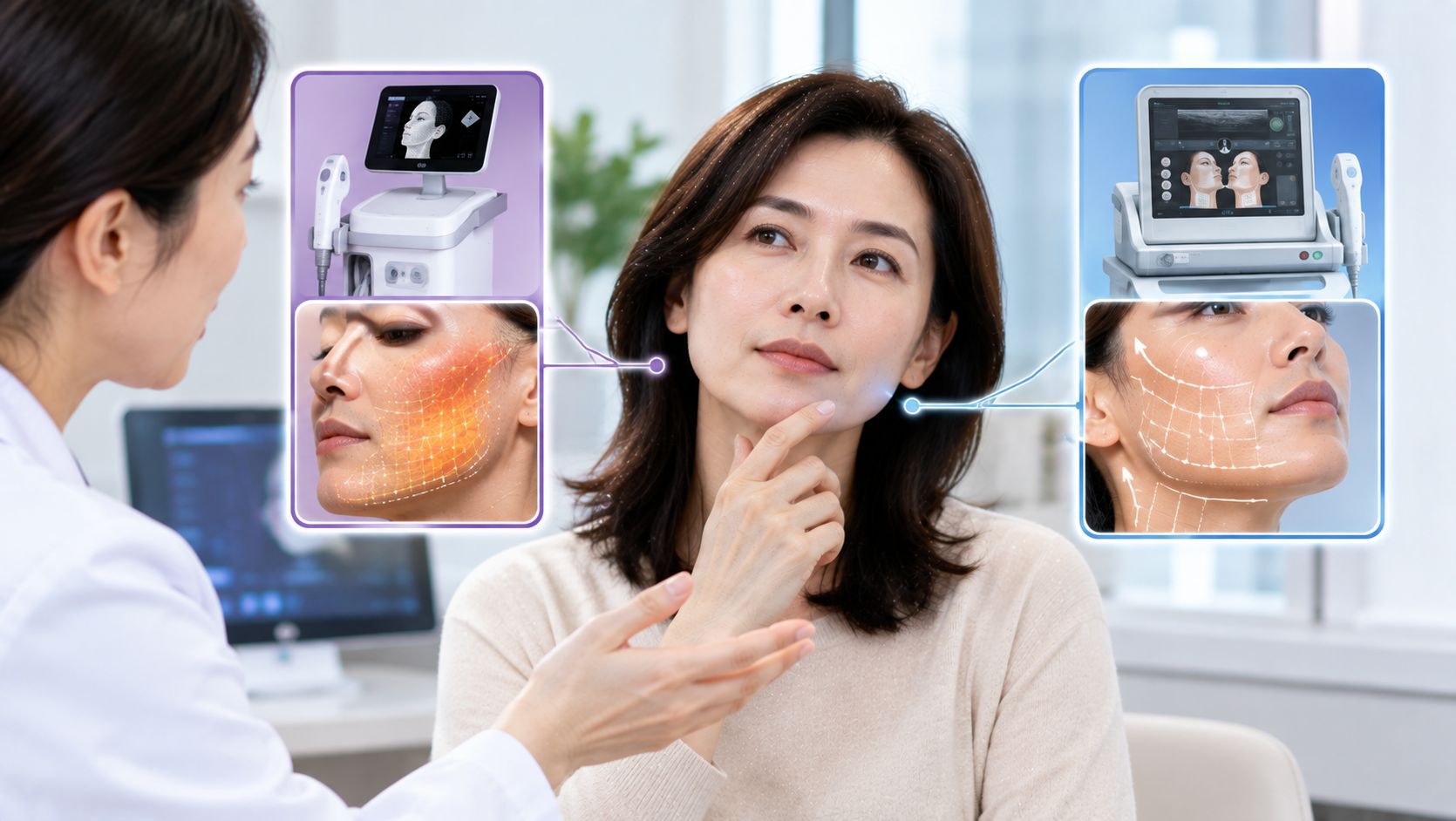
Main concernTreatment category that may be evaluatedFine lines and rough textureSkin-rejuvenation proceduresPigmentationPigment-focused treatmentReduced elasticityCollagen-stimulating or tightening approachesMild skin laxityEnergy-based tighteningLocalized volume deficiencyVolume-restoration approachesExcess facial fatFat-reduction evaluationStructural chin/jaw deficiencyStructural assessmentSignificant skin excessSurgical consultation may be appropriate
The table describes treatment categories, not prescriptions. The same visible symptom can have different causes in different patients.
For example, a nasolabial fold might relate to skin laxity, volume distribution, midface changes or a combination of factors. Treating the fold itself without understanding the surrounding anatomy can produce an incomplete plan.
Why More Treatment Is Not Necessarily Better
A common mistake is to assume that if aging involves several layers, every layer should be treated.
That is not necessarily the case.
If your main problem is poor skin texture, adding substantial volume may unnecessarily change your facial proportions.
If your primary issue is volume loss, repeated surface treatments may improve texture without restoring the missing contour.
If the main issue is structural, a skin-tightening procedure alone may not reproduce the facial proportions you are trying to restore.
Modern facial-aging literature emphasizes individualized assessment because aging affects different anatomical structures at different rates and to different degrees.
Why Photos Can Be Misleading
Before choosing a treatment based on photographs, remember that cameras can exaggerate some features.
Lighting can make:
- Pores appear larger
- Nasolabial folds look deeper
- Under-eyes appear darker
- Skin texture look rougher
- Shadows make the jaw appear less defined
Conversely, flattering lighting can hide texture and laxity.
For this reason, a proper consultation should ideally evaluate the face in person, from the front and side, and with attention to movement, tissue quality, volume and facial proportions.
What Should You Ask at a Seoul Dermatology Consultation?
Instead of asking only, “What treatment makes me look younger?”, consider asking:
- Is my main concern skin quality, volume, laxity or facial structure?
- What changes do you see from the front and side?
- Would improving skin quality alone address most of my concern?
- Do I actually have meaningful volume loss?
- Would tightening change my facial shape?
- What problem is each recommended treatment intended to address?
- What happens if I treat only the most obvious feature?
These questions can help you understand why a treatment is being proposed rather than simply choosing a device based on popularity.
Conclusion
A face can look older because of skin quality, facial structure, volume changes, or a combination of these factors. Skin-quality aging is more likely to show through texture, fine lines, pigmentation, dullness and reduced elasticity. Structural aging becomes more apparent when facial proportions, projection, volume distribution or contours change.
The distinction is important because improving the skin cannot necessarily replace lost volume or altered structure, while changing facial volume will not automatically correct poor skin texture.
For people considering Korean dermatology treatments, the most useful approach is therefore to identify which layer is actually contributing most to the aged appearance before selecting a procedure. A personalized assessment can then determine whether the appropriate focus is skin rejuvenation, tightening, volume restoration, fat reduction, structural correction or simply a conservative combination.
FAQs
Can I have facial aging even if I don't have many wrinkles?
Yes. Aging can involve changes in facial fat, bone, muscles, ligaments and overall facial shape in addition to skin changes.
Does sagging always mean my skin needs tightening?
No. Apparent sagging can be influenced by changes in fat distribution, volume, structural support and skin elasticity. A consultation should determine which factors are actually involved.
Does facial volume loss always require filler?
No. Volume loss can be assessed separately from the choice of treatment. Depending on the location and degree of volume deficiency, different approaches may be considered.
Can skin-quality treatments improve facial shape?
They may improve the appearance of skin firmness or texture, but they cannot necessarily reproduce structural projection or replace significant volume loss.
Why does my face look older in photos than in the mirror?
Lighting, camera angle, lens characteristics and shadows can exaggerate wrinkles, pores, folds and contour changes. Comparing photographs taken under consistent conditions is more useful than comparing random images.