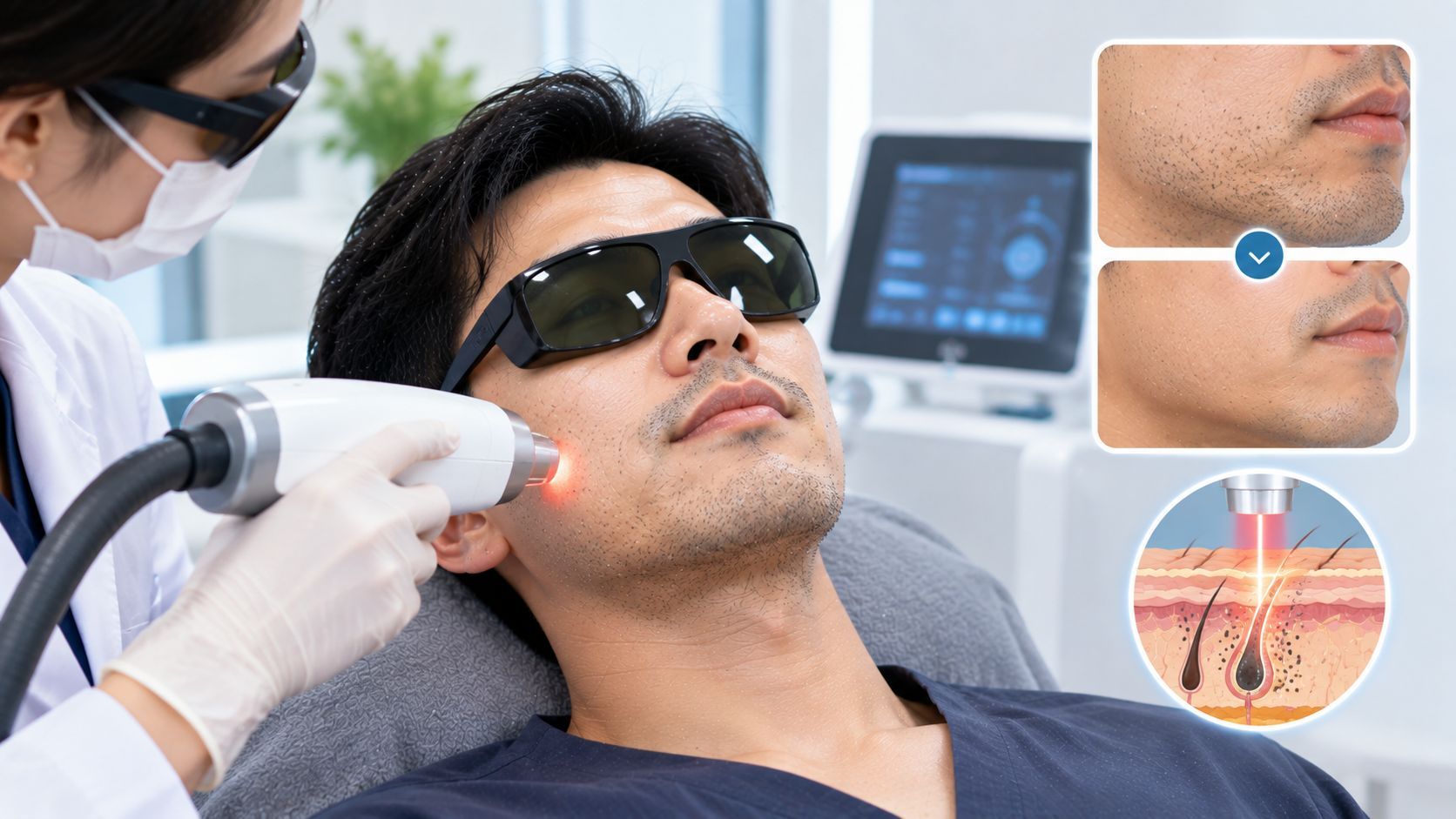
How Do I Know if My Face Needs Thermage Rather Than Ultherapy?
Introduction
Thermage and Ultherapy are both used for non-surgical facial tightening, but they are not identical technologies. If your face is beginning to look less firm, the more useful question is not simply which device is more popular. It is what type of laxity you have, where it is located, and what kind of change you want.
Thermage uses radiofrequency energy, while Ultherapy uses microfocused ultrasound. Both can stimulate tissue remodeling and improve the appearance of lax skin, but they interact with tissue differently. Clinical research has found that both monopolar radiofrequency and microfocused ultrasound can improve facial laxity, without establishing one as universally superior.
Therefore, choosing between them should be based on your anatomy, treatment goals, skin condition, tolerance, and the clinician's assessment rather than the device name alone.
What Is the Main Difference Between Thermage and Ultherapy?
The simplest distinction is their energy source and how that energy is delivered.
Thermage uses monopolar radiofrequency. Radiofrequency produces controlled heating within tissue and has been studied for improvements in skin laxity, elasticity, collagen remodeling, and overall facial appearance.
Ultherapy uses microfocused ultrasound, which can deliver focused thermal energy at selected tissue depths. Studies have evaluated it for lifting and tightening areas such as the brow, lower face, and submental region.
This does not mean one device automatically works better for every face. In a randomized split-face clinical trial, both monopolar radiofrequency and microfocused ultrasound improved facial and neck laxity over six months, with no statistically significant difference between the two sides on the primary laxity scale.
When Might Thermage Make More Sense?
Thermage may be considered when the main concern is generalized skin laxity and firmness, particularly when you want an overall tightening or skin-quality effect rather than simply targeting one specific lifting vector.
Potential clues include:
- Your skin feels less firm than it used to.
- Fine lines and mild laxity occur together.
- The lower face is beginning to look softer but is not dramatically sagging.
- You want a gradual, relatively subtle improvement.
- You are concerned about overall skin firmness rather than only the jawline.
- You do not have substantial excess skin.
Radiofrequency research supports improvements in skin laxity and elasticity, although study methods and devices vary considerably. A systematic review found evidence of improved laxity, elasticity, collagen-related remodeling, and overall aesthetic appearance with RF treatments.
That makes the pattern of your aging more important than simply deciding that Thermage is a “skin tightening machine.”
When Might Ultherapy Make More Sense?
Ultherapy, as a microfocused ultrasound treatment, may be considered when the concern is more specifically related to lifting or deeper tissue tightening.
It has been studied for areas including:
- Lower face
- Jawline
- Submental area
- Brow
- Neck
A systematic review found that microfocused ultrasound can improve mild-to-moderate facial skin laxity, although results vary according to treatment protocols and patient characteristics.
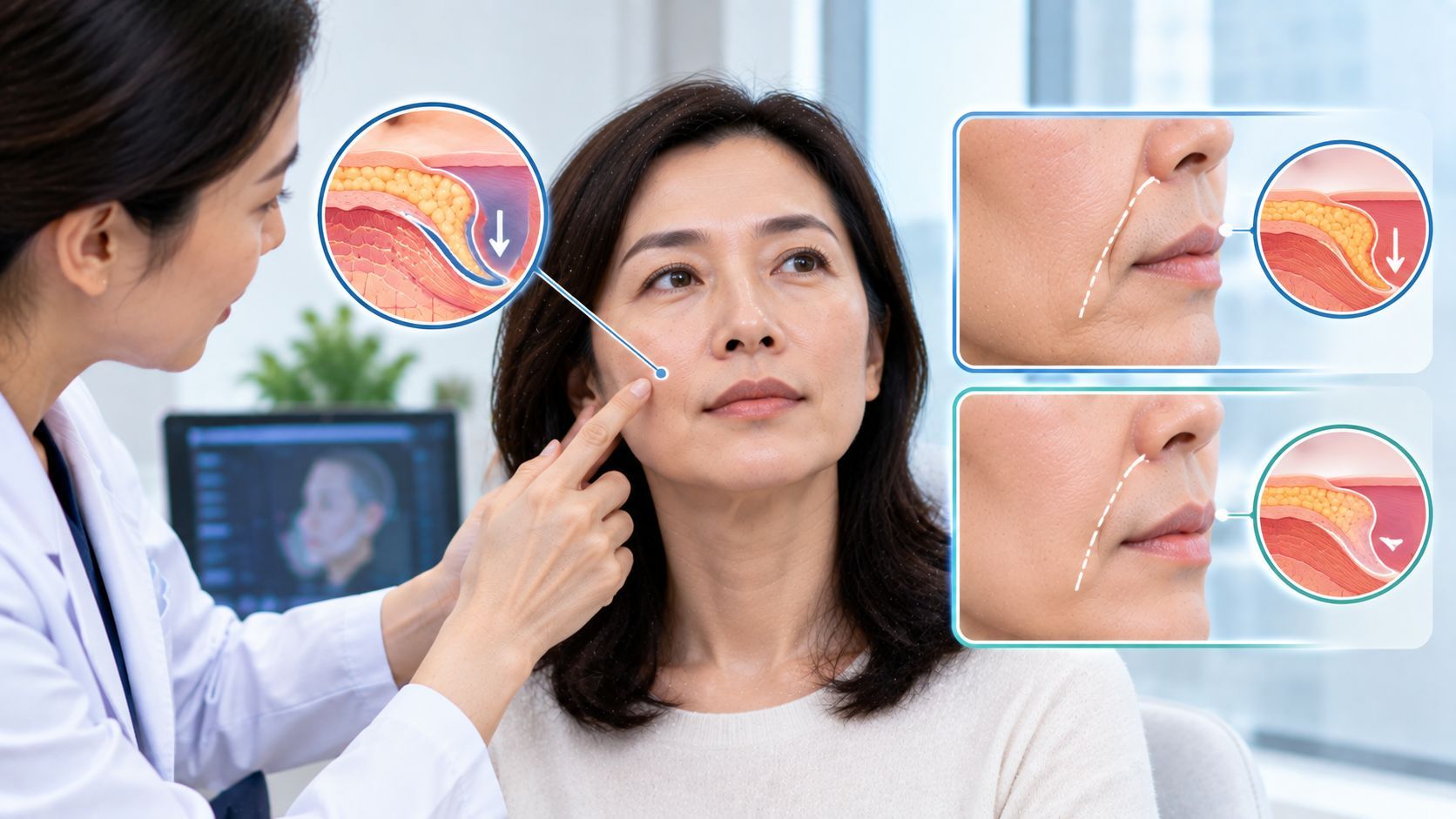
If your primary concern is that the lower face has started to descend and the jawline has become less defined, a clinician may consider whether a deeper, more targeted ultrasound approach fits your anatomy.
However, this does not mean that every person with jowls should choose Ultherapy.
What If I Have a Thin Face?
This is an especially important consideration.
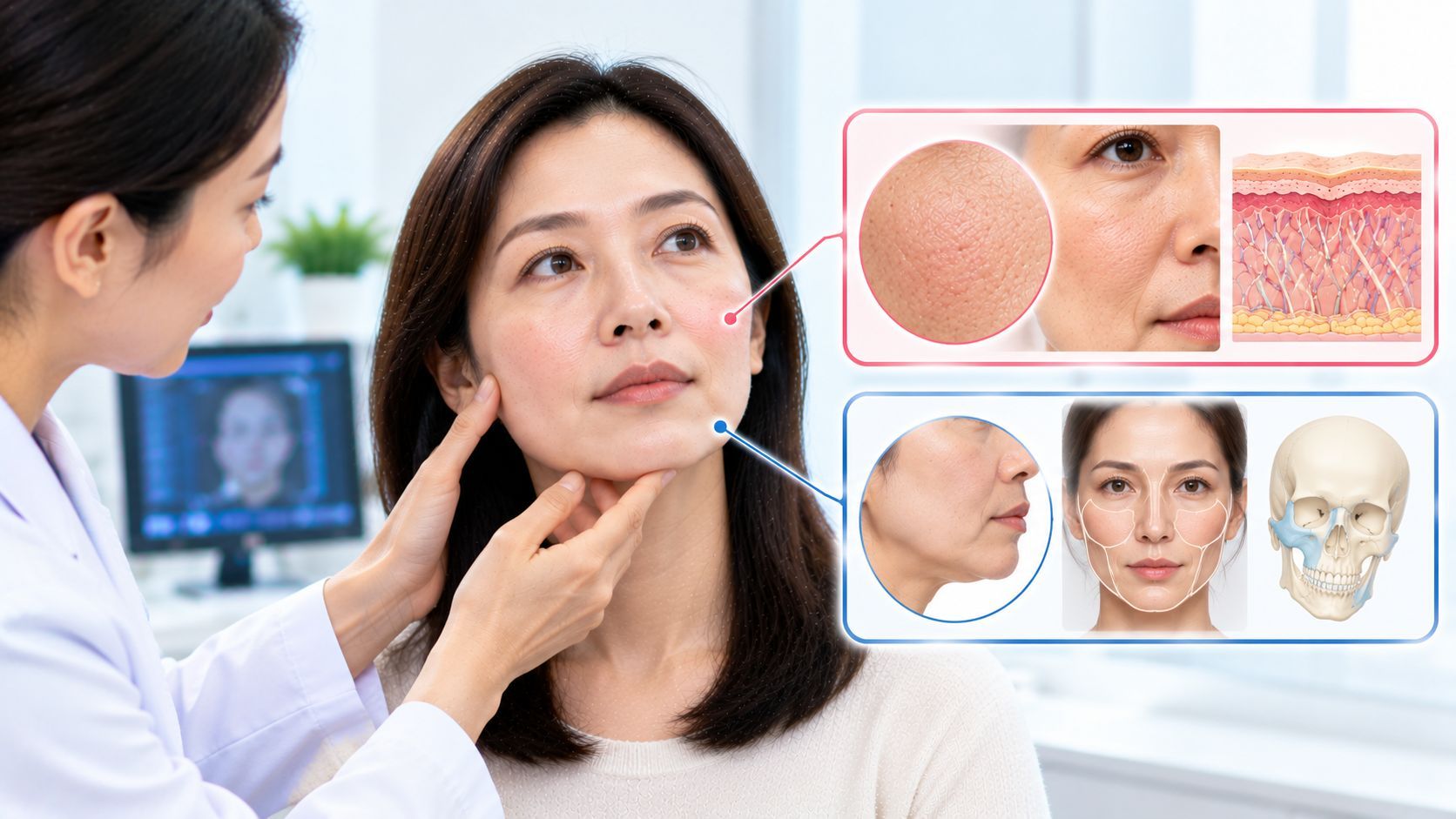
A person with a thin face may have very little excess soft tissue but still notice mild laxity. In that situation, the treatment plan needs to account for the amount and distribution of facial fat.
The literature on microfocused ultrasound includes reports of adverse effects such as temporary sensory changes and, rarely, subcutaneous atrophy. A systematic review of MFU-V adverse events found that significant complications were uncommon in the peer-reviewed literature but included a reported case of subcutaneous atrophy.
This does not mean Ultherapy necessarily causes unwanted fat loss in a typical treatment. It means that tissue depth, energy settings, treatment area, and patient anatomy matter.
Similarly, RF devices can have effects on facial fat depending on the technology and treatment parameters. A systematic review of radiofrequency treatments reported volumetric fat changes in some studies as well as improvements in skin laxity.
If your face is already narrow or volume-deficient, tell the clinician that preserving facial volume is a priority.
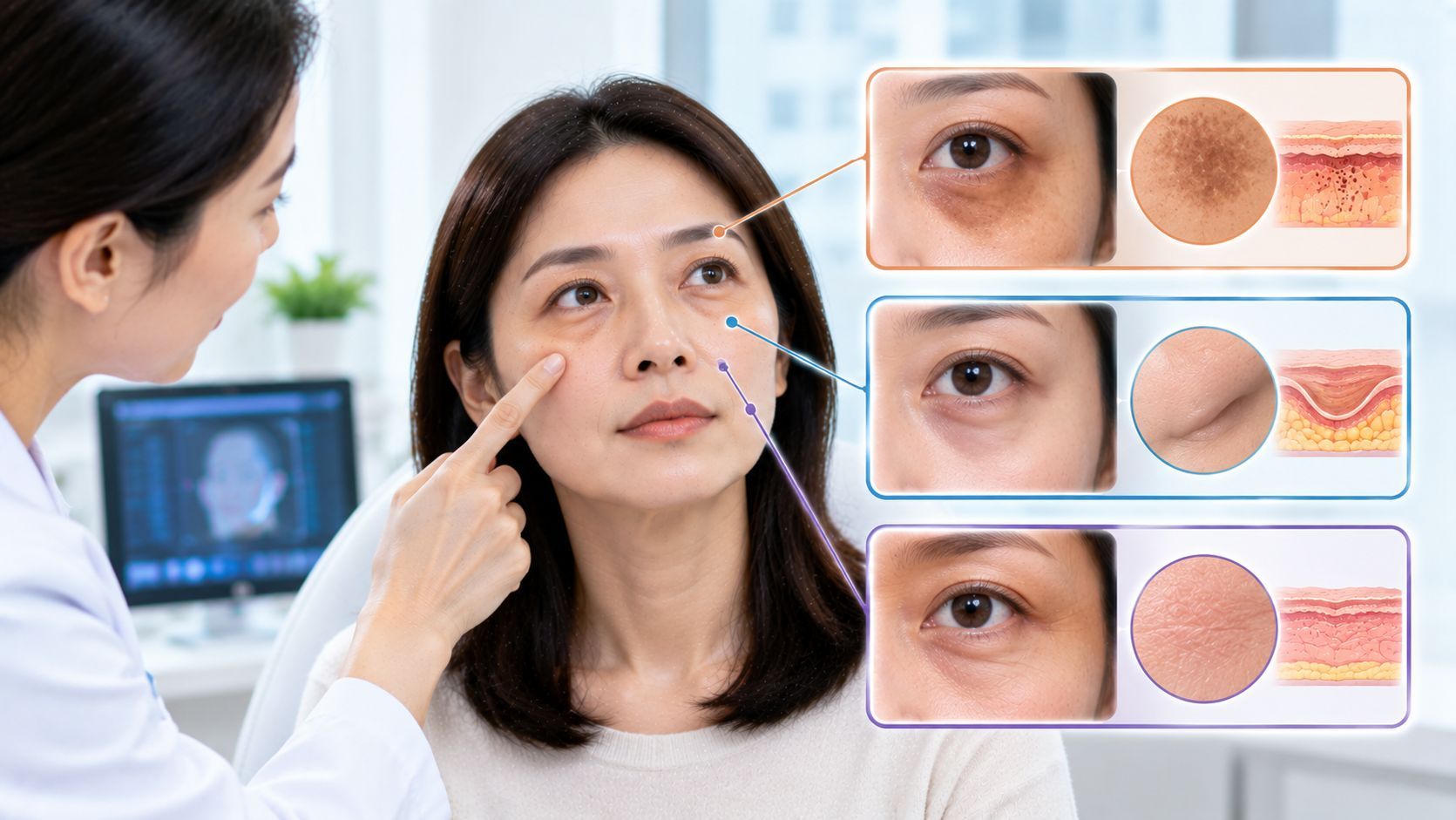
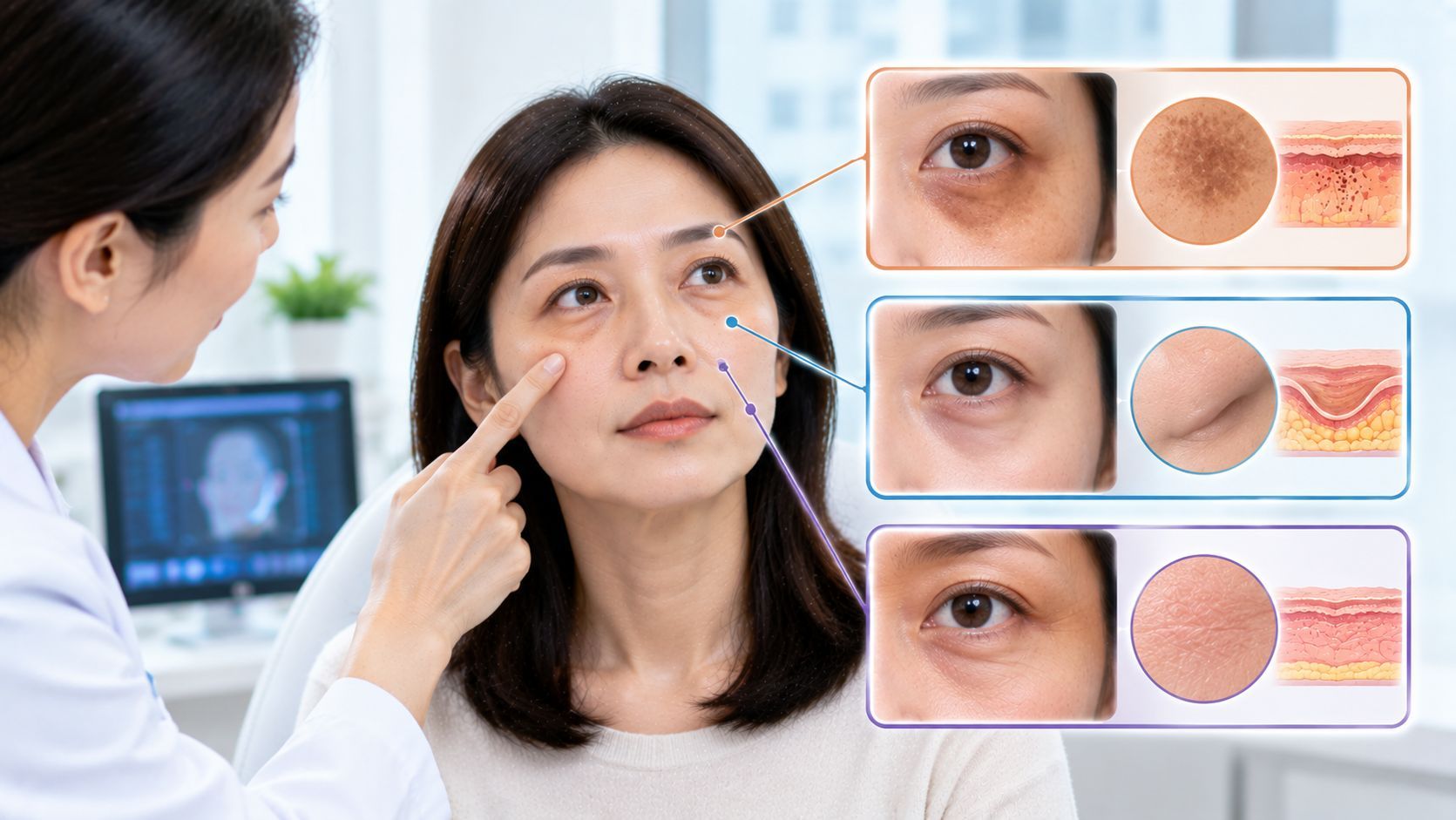
What If My Main Problem Is Skin Texture Rather Than Sagging?
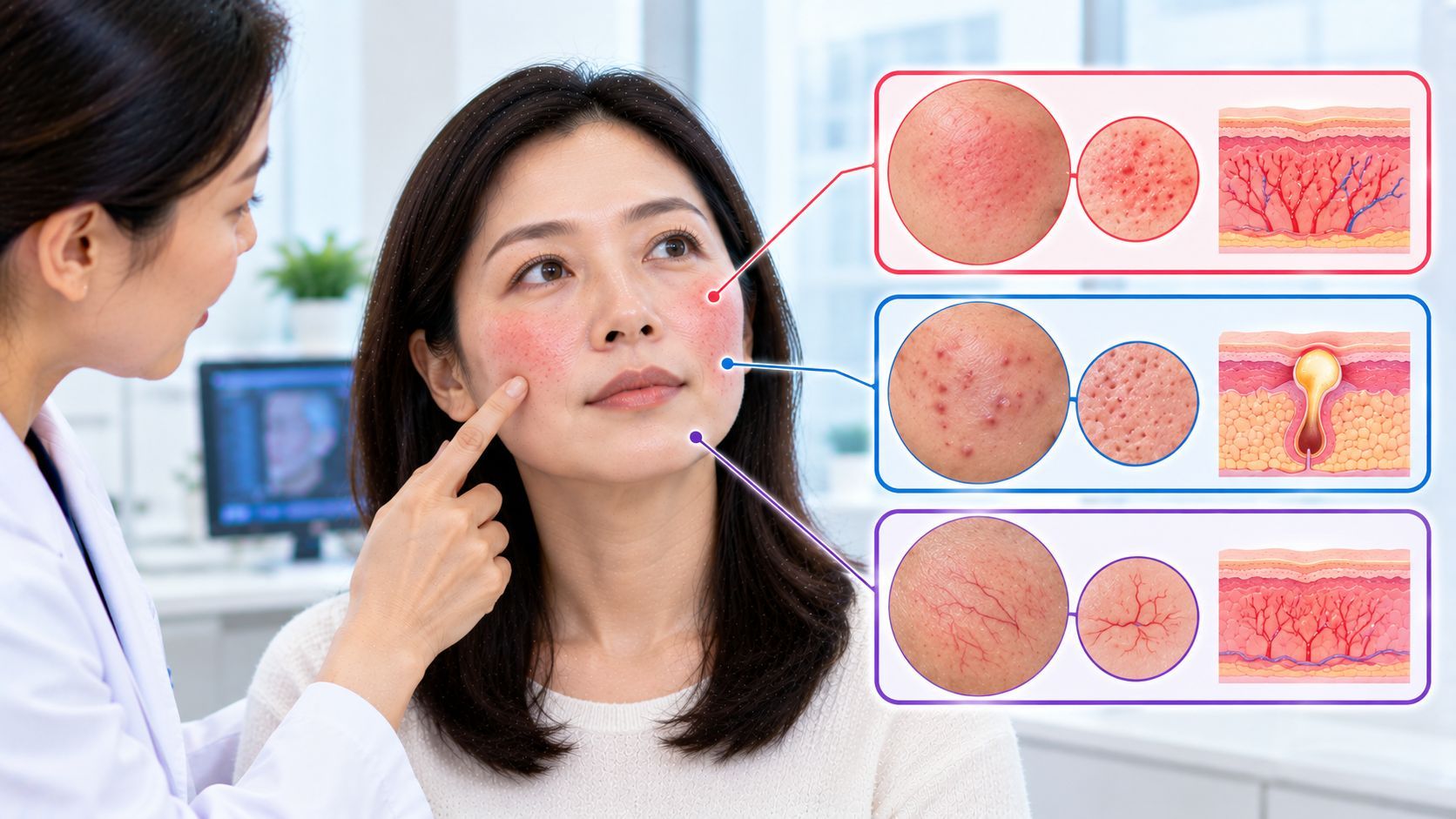
If your biggest concern is:
- Enlarged pores
- Uneven texture
- Acne scars
- Fine lines
- Roughness
- Mild laxity
then the decision may not simply be Thermage versus Ultherapy.
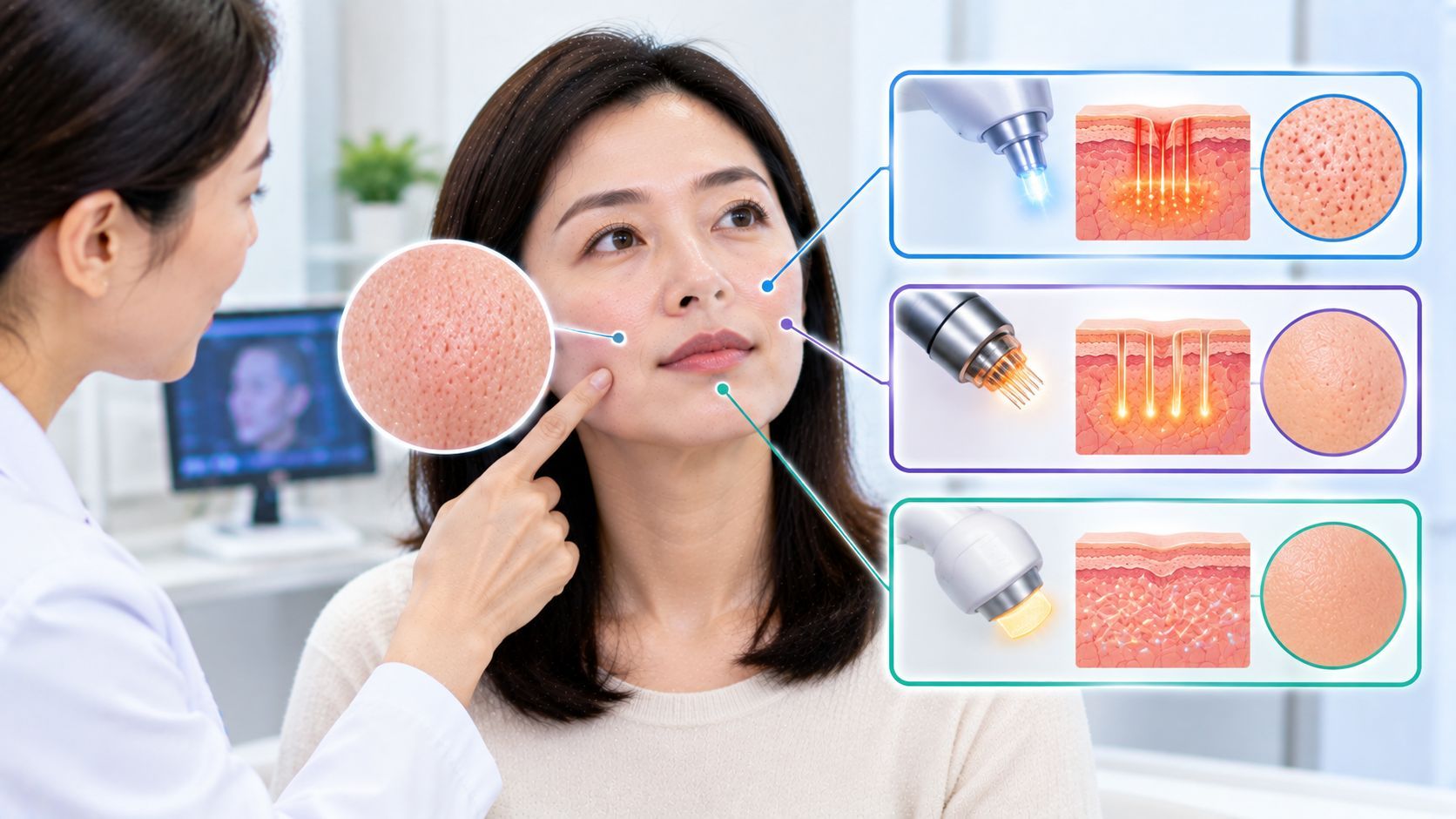
Other treatments, including fractional laser, RF microneedling, or other collagen-stimulating procedures, may address different aspects of skin quality.
For example, recent systematic-review evidence suggests RF microneedling can improve facial skin texture and tightening, although treatment protocols and individual outcomes vary.
So if your face does not actually have significant laxity, choosing a lifting device simply because you are noticing early aging may not address your main concern.
How Can You Tell What Type of Laxity You Have?
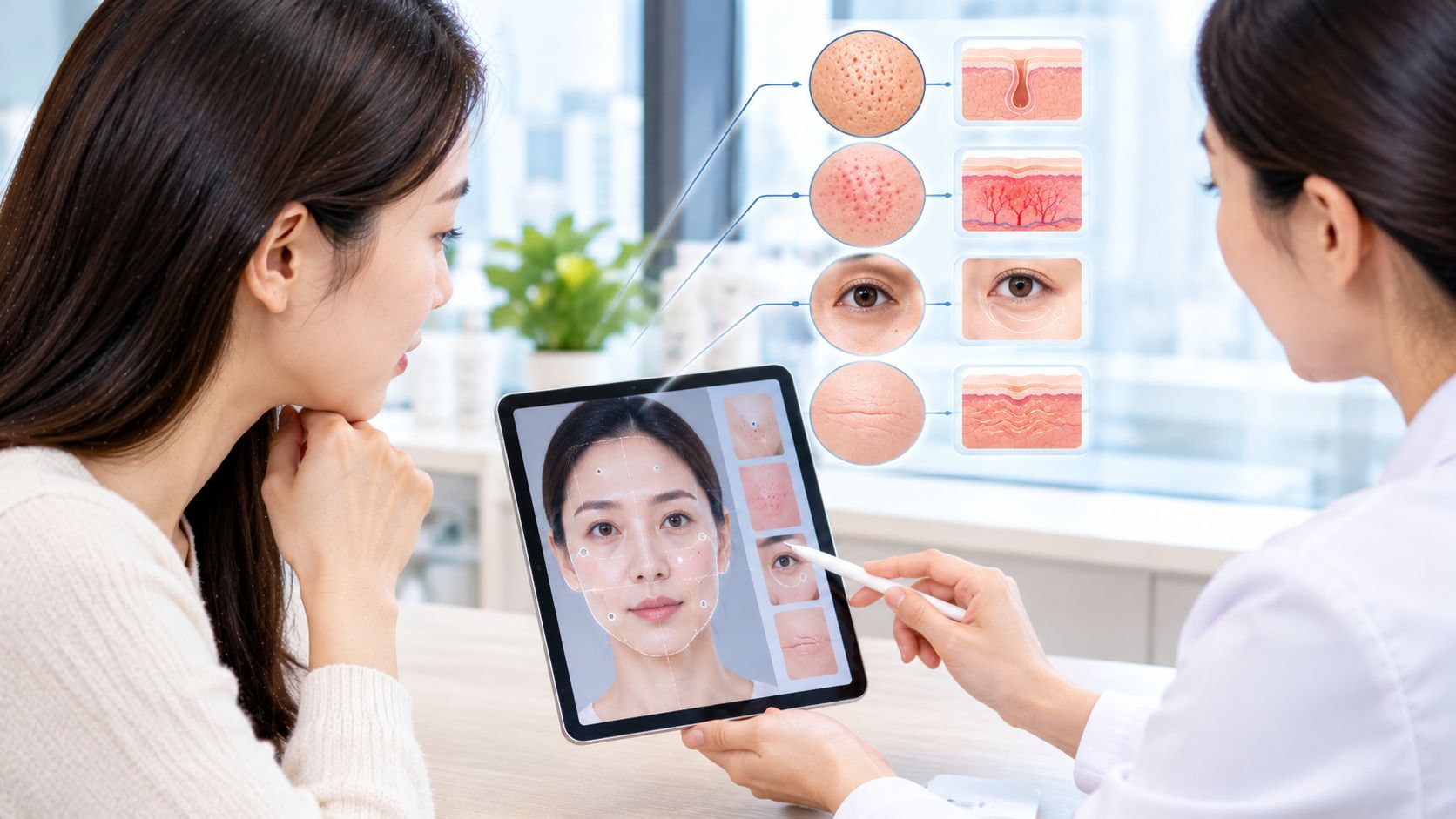
Before choosing between Thermage and Ultherapy, examine your face in several ways.
Look at Your Face From the Front
Ask whether the problem is primarily:
- Loss of firmness
- Jowling
- Lower-cheek descent
- Fine lines
- General skin looseness
Look at Your Profile
Your side profile can reveal whether the jawline and chin are losing definition because of soft-tissue descent or because of facial structure.
A recessed chin, for example, cannot be corrected simply by tightening the skin.
Look at Your Three-Quarter View
This often shows lower-face asymmetry, cheek descent, and jowl formation more clearly than a straight-on photograph.
Compare Older Photographs
If your face was previously fuller and has become thinner, volume loss may be contributing to the appearance.
If your overall volume is similar but the skin has become looser, laxity may be more prominent.
A Simple Comparison
ConcernThermage may be consideredUltherapy may be consideredGeneral skin firmness✓✓Mild facial laxity✓✓Fine lines with laxity✓PossibleLower-face lifting concernPossible✓Jawline definitionPossiblePossibleSubmental/lower-face laxityPossible✓Thin facial structureRequires careful assessmentRequires careful assessmentMajor excess skinLimited roleLimited role
This table is a general framework, not a treatment recommendation. Both technologies have different devices, settings, protocols, and treatment approaches.
Does More Energy Mean Better Results?
Not necessarily.
Energy-based treatments have treatment parameters that need to be adapted to the individual. The microfocused-ultrasound literature specifically notes differences between devices, treatment protocols, and energy settings.
More aggressive treatment is not automatically more appropriate.
If you have a thin face, little laxity, previous energy-based treatments, or concerns about preserving facial volume, these factors should be discussed before treatment.
The objective should be appropriate tissue remodeling, not simply maximizing energy delivery.
What If I Have Significant Sagging?
Neither Thermage nor Ultherapy should automatically be viewed as a replacement for surgery.
Non-surgical tightening tends to be more appropriate when laxity is relatively mild to moderate. The evidence for microfocused ultrasound, for example, is strongest in people with mild-to-moderate laxity; excessive laxity is associated with less favorable results.
If you have substantial excess skin, pronounced jowls, or major neck laxity, a consultation may need to include surgical as well as non-surgical options.
That does not mean you need surgery. It means the treatment should match the degree of tissue change.
What Should You Ask a Korean Dermatologist?
If you are considering treatment in Seoul, don't begin by asking only, “Do you recommend Thermage or Ultherapy?”
Instead, ask:
- What type of laxity do I actually have?
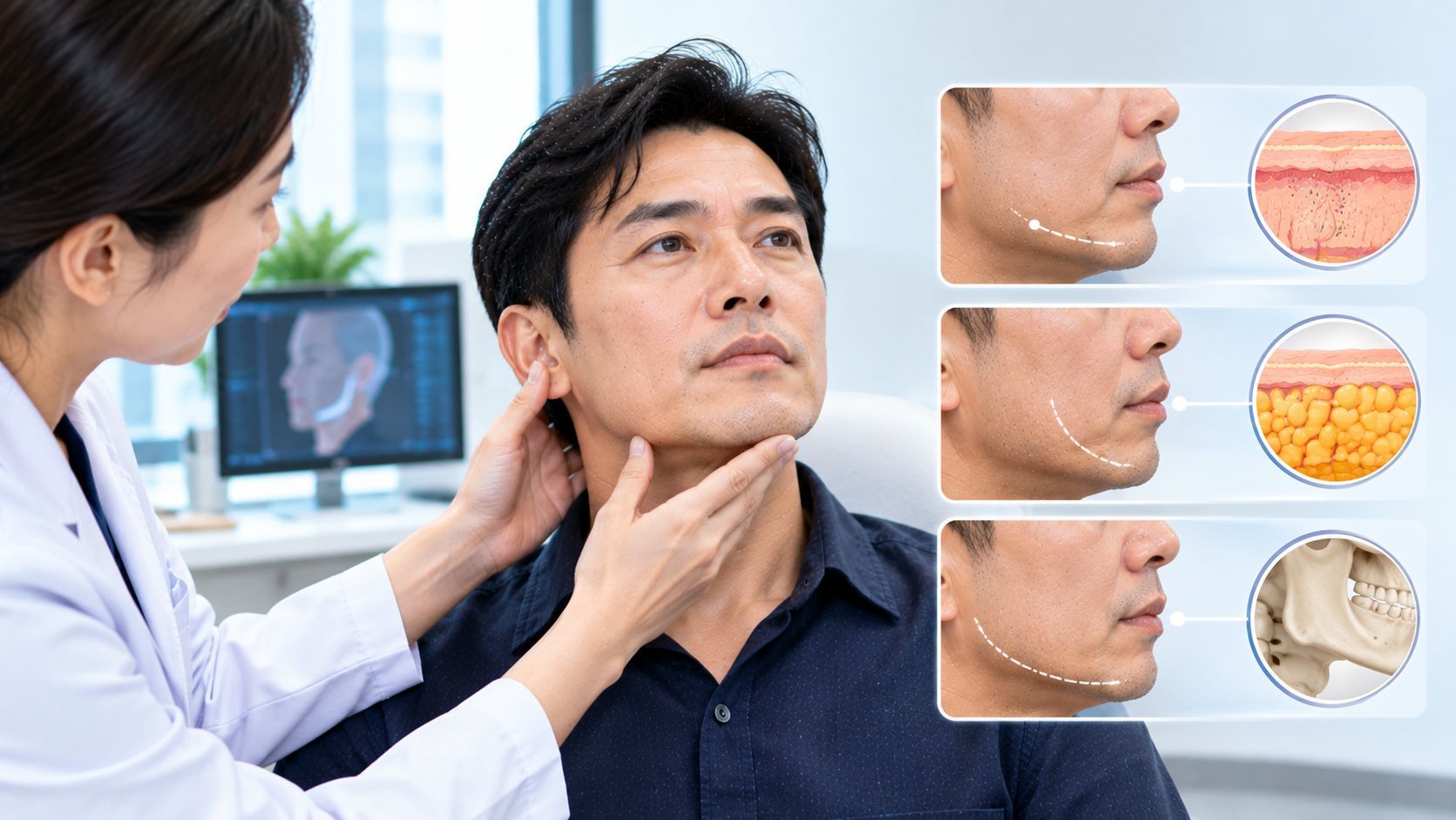
- Is my problem primarily skin, fat, volume, or structure?
- Which tissue layer are you trying to change?
- Is preserving facial volume important in my case?
- Would Thermage or Ultherapy address my main concern?
- What improvement is realistic for my degree of laxity?
- Would another treatment category make more sense?
- How should previous energy-based treatments affect today's plan?
A consultation that explains the anatomical reason for the treatment is more informative than choosing a procedure based only on its brand name.
Conclusion
There is no universal rule that says Thermage is better for one face and Ultherapy is better for another.
Thermage uses radiofrequency and may be considered when overall firmness, skin laxity, and gradual remodeling are important goals. Ultherapy uses microfocused ultrasound and may be considered when targeted lifting and deeper tissue tightening are relevant. Both have clinical evidence supporting facial tightening, and comparative research has not established one as universally superior.
The most important step is identifying what is actually making your face look older.
If the issue is mild generalized laxity, either technology may be discussed. If the problem is significant lower-face descent, volume loss, excess fat, or facial structure, a different or combined strategy may need to be considered.
For Korean anti-aging treatment, the device should follow the diagnosis—not the other way around.
FAQs
Is Thermage stronger than Ultherapy?
“Stronger” is not a useful way to compare them. They use different forms of energy and can target tissue differently. Treatment settings and individual anatomy also affect results.
Is Ultherapy better for jowls?
Ultherapy has been studied for lower-face and submental lifting, so it may be considered when laxity contributes to jowling. However, jowls can also involve fat, volume changes, and facial structure, so tightening alone may not address every case.
Can Thermage make a thin face thinner?
Radiofrequency treatments can have different effects depending on the device and settings, and some studies have reported volumetric fat changes. If preserving facial volume is important, this should be specifically discussed during consultation.
Can I get Thermage and Ultherapy together?
Combining energy-based treatments should not be assumed to produce better results. The appropriate sequence, areas, energy settings, and recovery considerations should be determined by a qualified clinician.
How long do results take?
Both treatments generally produce gradual rather than immediate remodeling. Studies of microfocused ultrasound have evaluated improvement over several months, with some improvement continuing over longer follow-up periods.
What if I barely have any sagging?
If your main issue is pigmentation, pores, acne scars, dullness, or loss of skin quality rather than laxity, a tightening procedure may not be the most relevant treatment category. A consultation should first identify the dominant concern.