How Do I Know Whether I Need Tightening, Volume Restoration or Fat Reduction?
Introduction
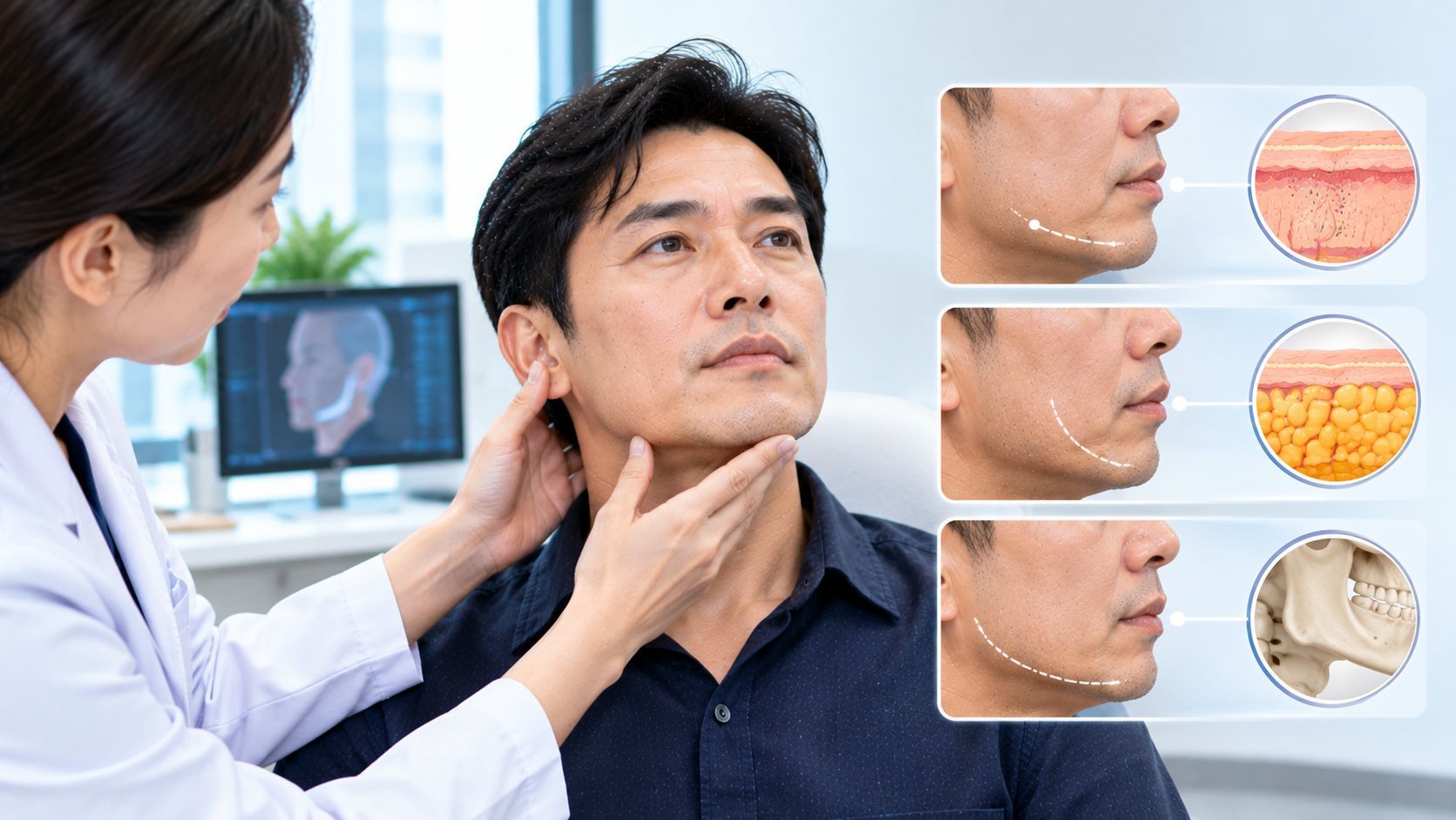
When the face starts looking heavier, older, less defined, or more tired, it can be difficult to know what actually needs treatment. A softer jawline might look like loose skin, but it could also be caused by facial fat. Hollow cheeks might suggest volume loss, while the same face could have both volume loss and sagging at the same time.
This is why choosing a treatment based only on what you see in the mirror can be misleading.
Tightening, volume restoration, and fat reduction address different problems. Tightening is intended for lax or less firm tissue. Volume restoration is used when loss of facial fullness contributes to an aged or hollow appearance. Fat reduction is considered when localized excess fat is creating unwanted fullness.
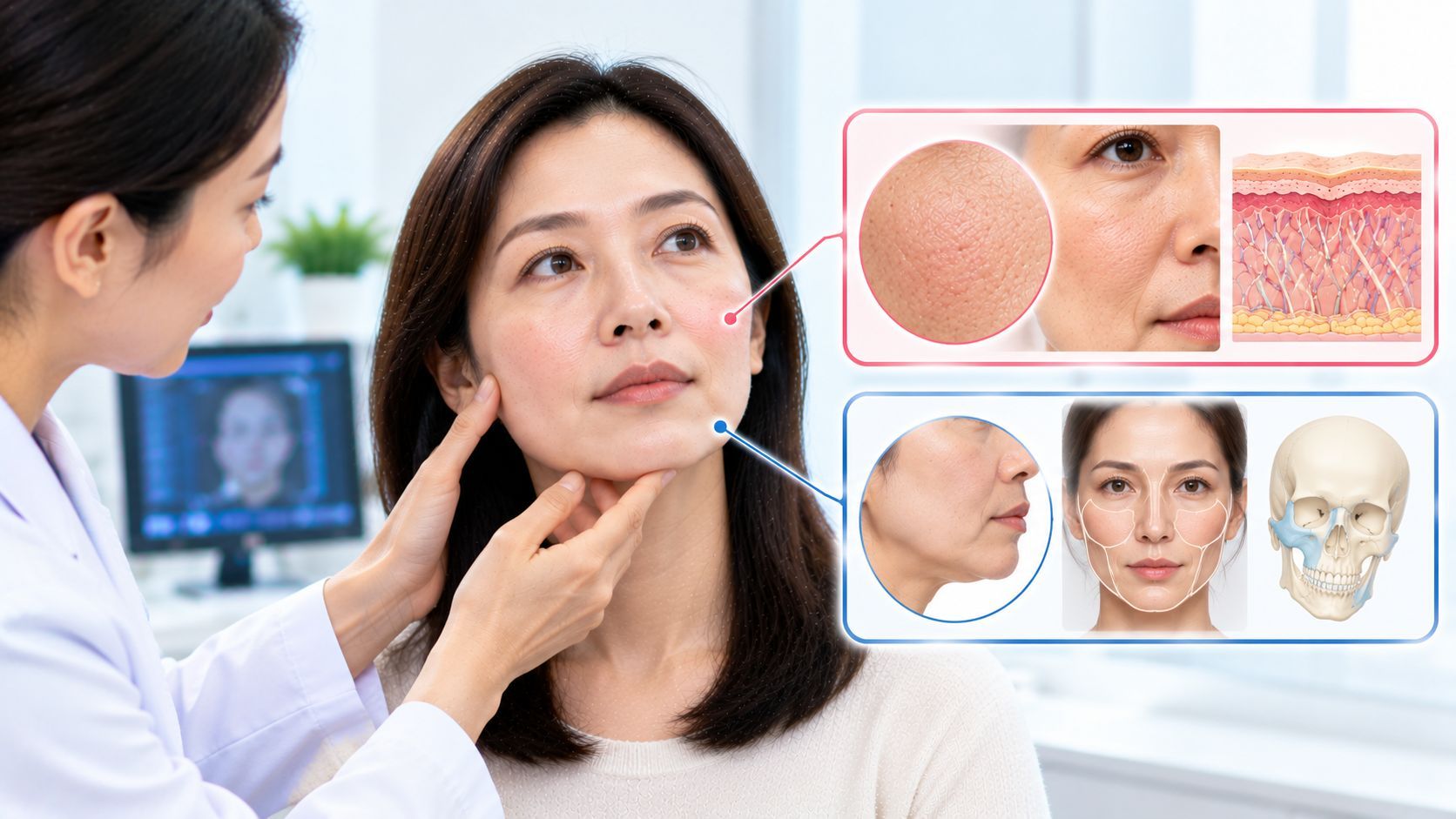
Facial aging is actually a combination of changes involving the skin, soft tissues, facial fat, and underlying structures. Research on facial anatomy shows that these changes can occur together rather than independently.
For someone considering Korean aesthetic treatment, the first step should therefore be determining what is creating the appearance you want to change.
Why Is It So Difficult to Tell What Your Face Needs?
The face is a three-dimensional structure.
A change in one area can make another area appear different even when that second area has not changed substantially.
For example, loss of cheek volume can make the lower face appear heavier by contrast. Conversely, excess lower-face fat can make the cheeks appear relatively hollow.
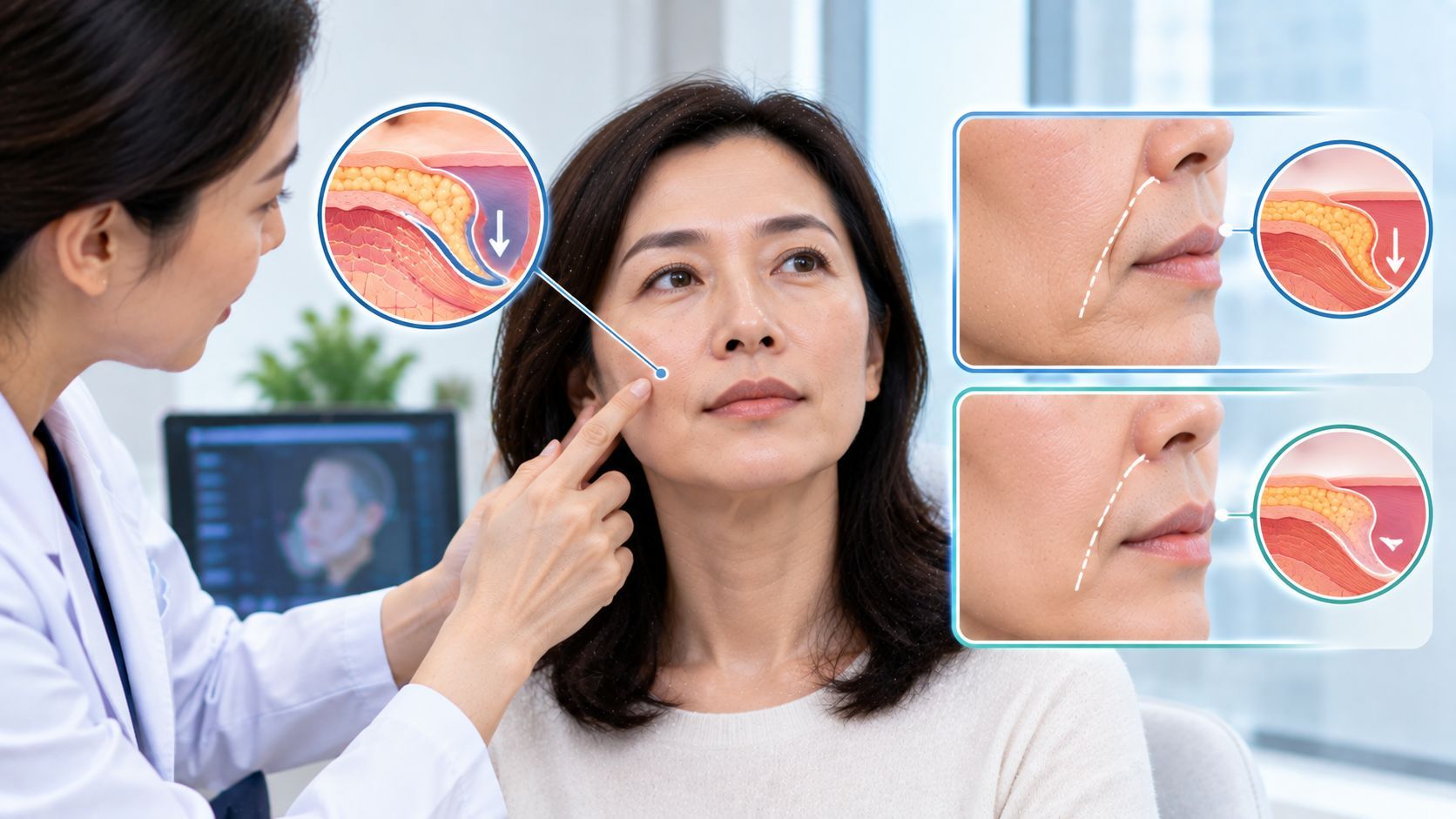
A jowl may involve:
- Skin laxity
- Fat accumulation
- Redistribution of facial fat
- Loss of structural support
- Changes in muscle dynamics
- Several of these factors simultaneously
A recent review of jowl formation similarly describes the interaction between skin laxity, localized fat, muscle dynamics, and loss of support.
This is why there is rarely a single visual clue that definitively tells you which treatment you need.
When Does Tightening Make More Sense?
Tightening becomes more relevant when the primary problem is loose or less elastic skin.
You may notice:
- Skin that looks slightly loose when the face is relaxed
- Early jowling
- A jawline that has become less crisp
- Loose skin underneath the chin
- Neck laxity
- Fine wrinkles associated with reduced firmness
- Skin that moves or folds more easily than it used to
One useful clue is what happens when you gently stretch the skin.
If the underlying facial shape remains relatively good but the skin itself appears loose, a tightening approach may be worth discussing.
Non-invasive RF and ultrasound treatments can produce modest tightening and lifting in appropriately selected patients, with results developing gradually rather than immediately.
However, manually pulling the skin tighter is not a diagnostic test. A dermatologist needs to assess the underlying tissues rather than relying on this simple observation.
What Does a Face That Needs Volume Restoration Look Like?
Volume restoration is more relevant when the face has become hollow, deflated, or less supported.
Possible signs include:
- Hollow cheeks
- Temple hollowing
- Deeper tear troughs
- Pre-jowl hollows
- A flatter midface
- Increased visibility of facial bones
- A face that appears thinner than before
- Wrinkles or folds that become more prominent because surrounding volume has decreased
Research on facial fat compartments shows that aging can involve volume loss in multiple areas of the face, including the cheeks, temples, chin, and jowl region.
In these situations, adding more tightening is not necessarily the answer.
If the face is already relatively lean, aggressively tightening or reducing tissue may not address the underlying reason the face looks older.
Does a Hollow Face Always Need Filler?
No.
Volume restoration and filler are not synonymous.
Depending on the situation, a dermatologist may discuss different approaches, including:
- Hyaluronic acid filler
- Biostimulatory treatments
- Skin-quality treatments
- Fat grafting in appropriate circumstances
- Conservative combination treatment
Dermal fillers can restore lost fullness in areas such as the cheeks and under-eyes, but they are medical procedures and require an assessment to determine whether they are actually appropriate.
If you specifically want to avoid added volume, tell the dermatologist before treatment. There may be other ways to address the overall appearance depending on the cause.
When Does Fat Reduction Make More Sense?
Fat reduction becomes more relevant when excess localized fat is contributing substantially to the appearance.
Common areas include:
- Double chin
- Submental fullness
- Localized lower-face fullness
- Certain areas of the cheeks in selected patients
A useful clue is that the fullness remains even when the skin itself does not appear particularly loose.
However, fat and skin are often confused.
Someone may see a heavy jawline and assume there is too much fat when the actual problem is loose skin. Conversely, someone may assume they need tightening when excess fat is creating the heaviness.
That distinction matters because reducing fat in a face that already has lax or thin skin could potentially make looseness more apparent.
Can You Need More Than One of These Treatments?
Absolutely.
Facial aging is rarely a single-process problem.
Someone might have:
- Mild skin laxity
- Some cheek volume loss
- Moderate submental fat
In that situation, treating only one component may produce an incomplete result.
Another person might have:
- Good facial volume
- Minimal fat
- Mild skin laxity
That person may have little reason to pursue volume restoration or fat reduction.
A third person might have:
- Significant volume loss
- Loose skin
- Very little facial fat
That situation requires a different strategy again.
The goal is not to select one category because it is popular. It is to determine which tissue is actually responsible for the concern.
How Can You Check Your Face Before a Korean Consultation?
You can perform a basic visual assessment before seeing a dermatologist, although it cannot replace an examination.
Look at your face straight on
Ask:
- Does my face look wider because of fullness?
- Do my cheeks look hollow?
- Is the jawline blurred?
- Is there obvious asymmetry?
Look from the side
A profile view can help you notice:
- Submental fullness
- Chin projection
- Jawline definition
- Neck laxity
- Facial projection
Look at your face while relaxed
If the concern mainly appears when you are completely relaxed, it may involve static skin changes, volume, or fat rather than facial movement.
Look while smiling
Some folds and hollows are strongly affected by facial movement.
This can help show whether a concern is primarily dynamic or structural, although it still cannot establish a diagnosis.
Compare older photographs
Previous photographs can be surprisingly useful.
If your face was previously fuller and now appears hollow, volume loss may be relevant.
If your facial volume looks similar but the skin has become looser, laxity may be more important.
If your overall face has become fuller, localized fat may deserve assessment.
Photographs should be taken from similar angles because lighting, camera lenses, and facial expression can dramatically alter perceived facial proportions.
What Does Pinching the Skin Tell You?
People sometimes try to diagnose facial fat or skin laxity by pinching the skin.
This is unreliable.
The tissue you can pinch may include skin, subcutaneous fat, and other soft tissue. It does not tell you precisely which layer is responsible for a particular contour.
Similarly, having a thick layer of tissue under the jaw does not automatically mean that fat reduction is needed.
A dermatologist can assess the distribution of soft tissue more appropriately during an examination.
What If My Face Looks Both Saggy and Heavy?
This is one of the most confusing situations.
A sagging lower face can create the impression of excess fat because tissue descends toward the jawline.
The result can look like:
“I have too much fat around my jaw.”
when the underlying issue is actually:
“Some of my existing facial tissue has shifted downward.”
This is why fat reduction should not be selected simply because the lower face looks heavy.
A recent review of jowl anatomy specifically describes the combined influence of laxity, fat distribution, muscle factors, and loss of support.
What If My Face Is Thin but I Still Have Jowls?
This is an important situation.
A thin person can still develop jowls.
If there is little excess fat, further fat reduction may be inappropriate. The visible jowl may instead be related to skin laxity, fat redistribution, or structural changes.
In a lean face, a treatment plan should also consider preservation of existing facial volume.
This is one reason a dermatologist should examine the whole face rather than treating only the area that looks problematic.
How Do Thermage and Ultherapy Fit Into This Decision?
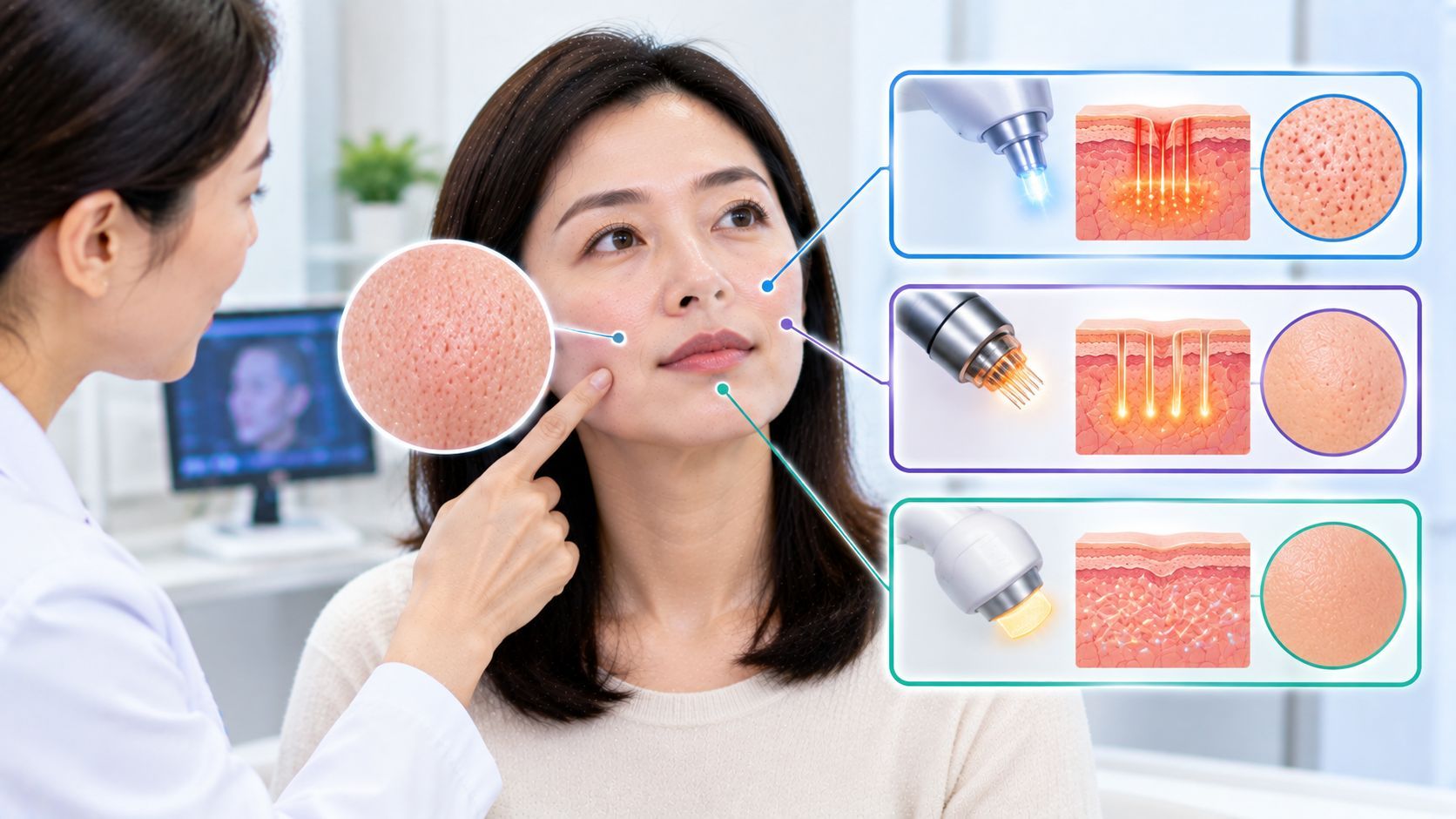
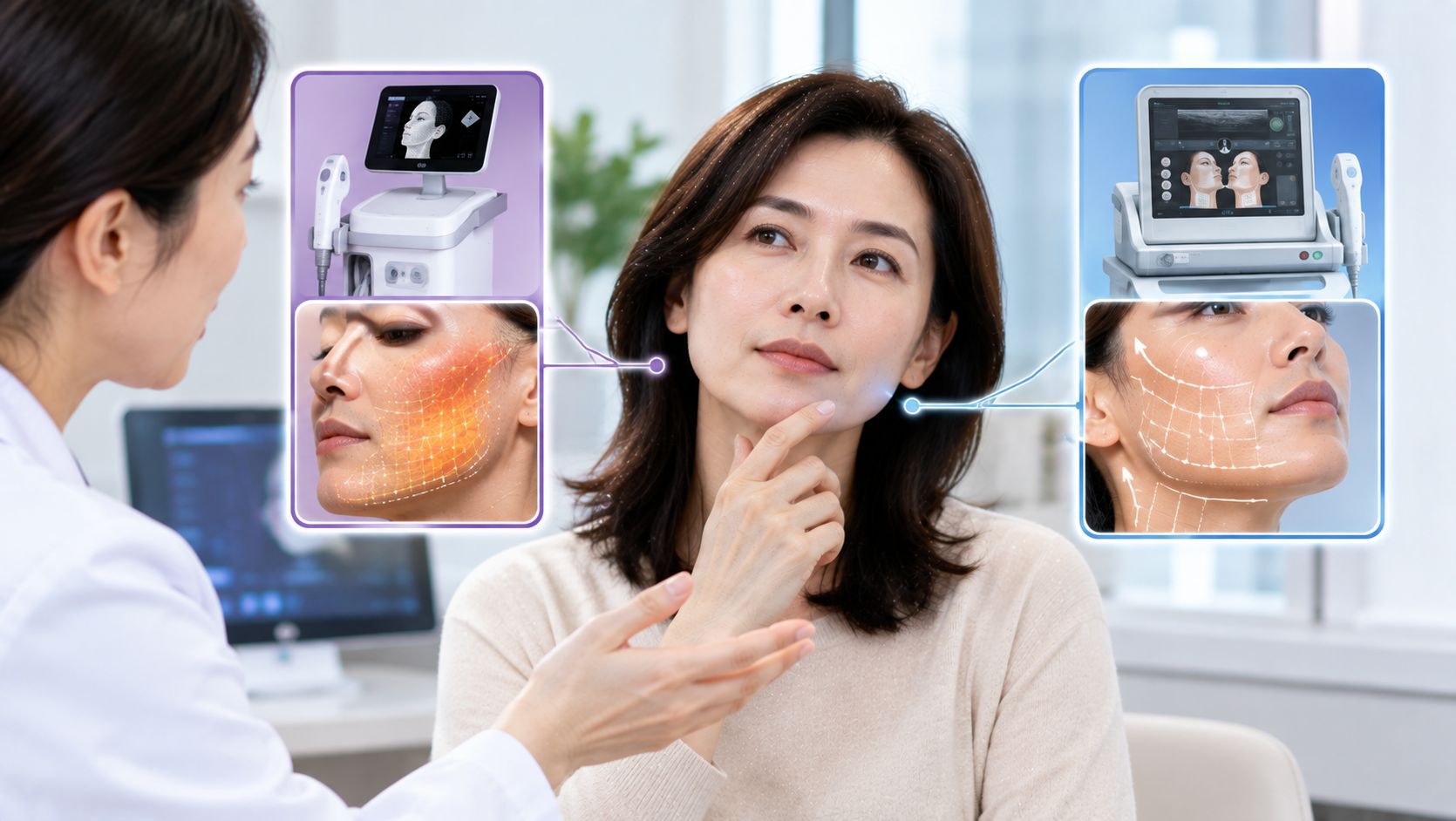
Both are tightening-oriented treatments rather than volume-restoration procedures.
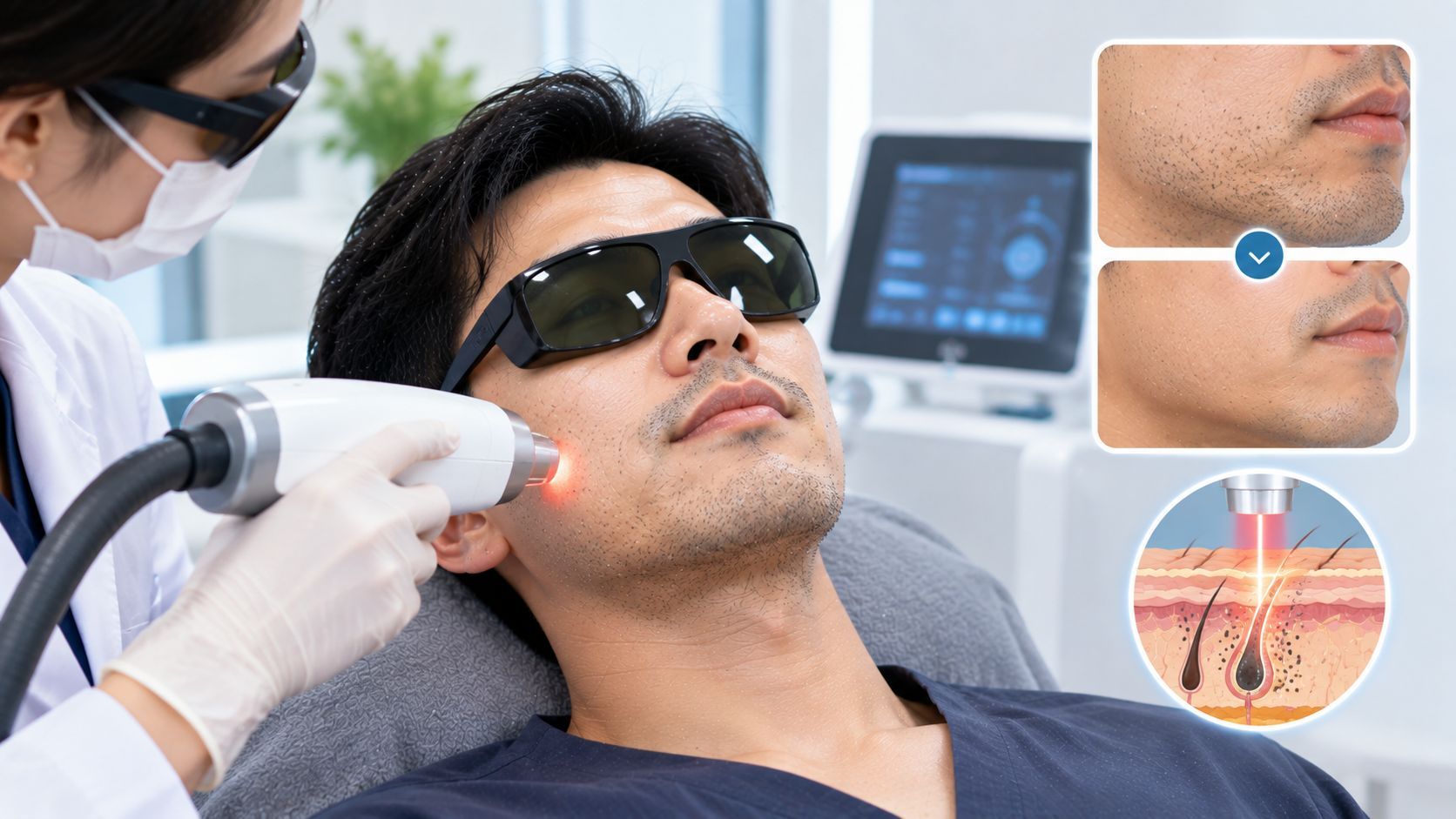
RF-based treatments such as Thermage are designed to heat tissue and stimulate collagen remodeling. Ultrasound-based treatments can deliver focused energy into deeper tissue layers.
The AAD describes both radiofrequency and ultrasound as non-invasive approaches that can provide gradual tightening, although results are generally more modest than surgical lifting.
Neither should automatically be chosen simply because someone has a sagging-looking face.
If excess fat or significant volume loss is the dominant problem, tightening alone may not address the main issue.
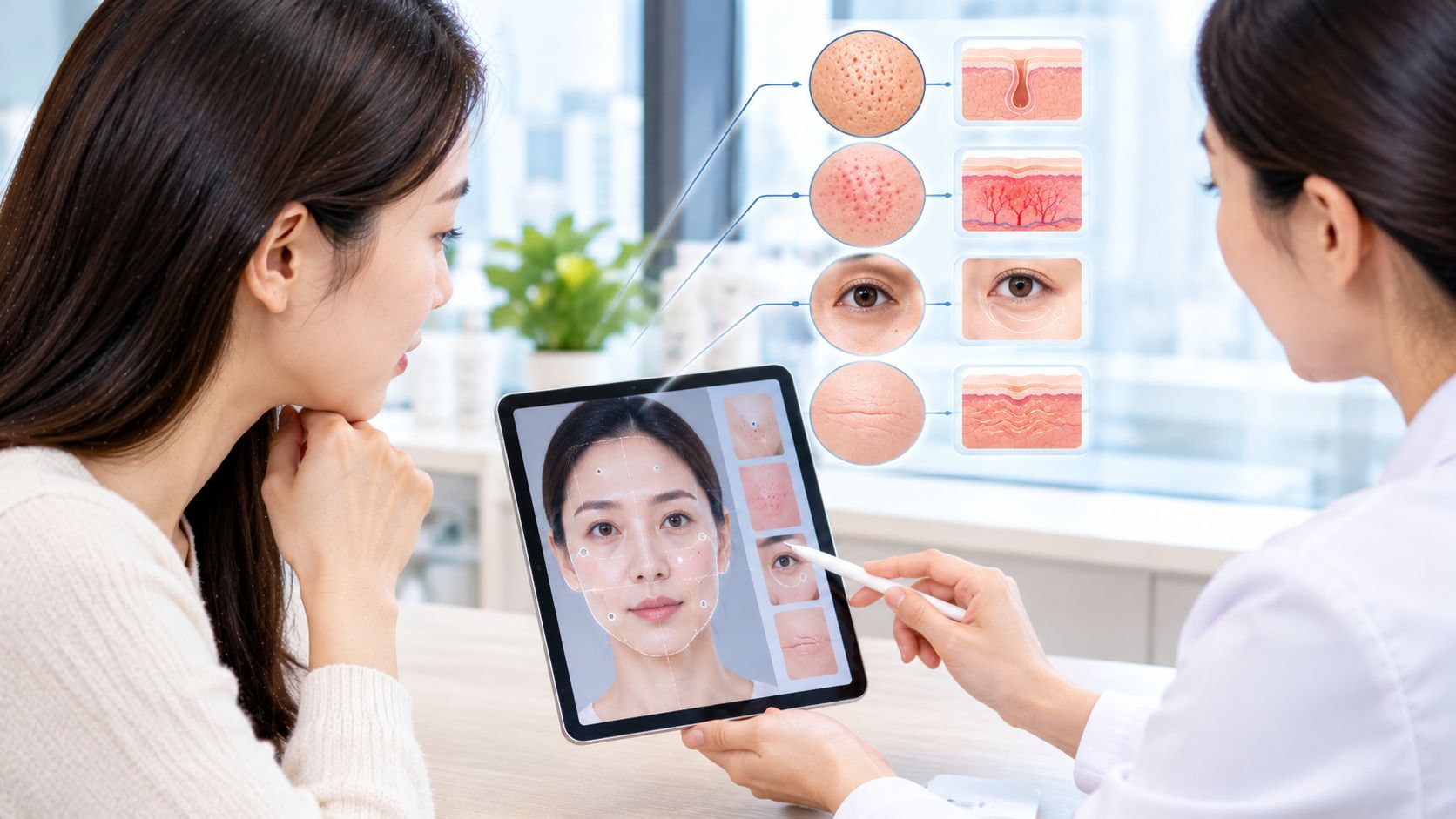
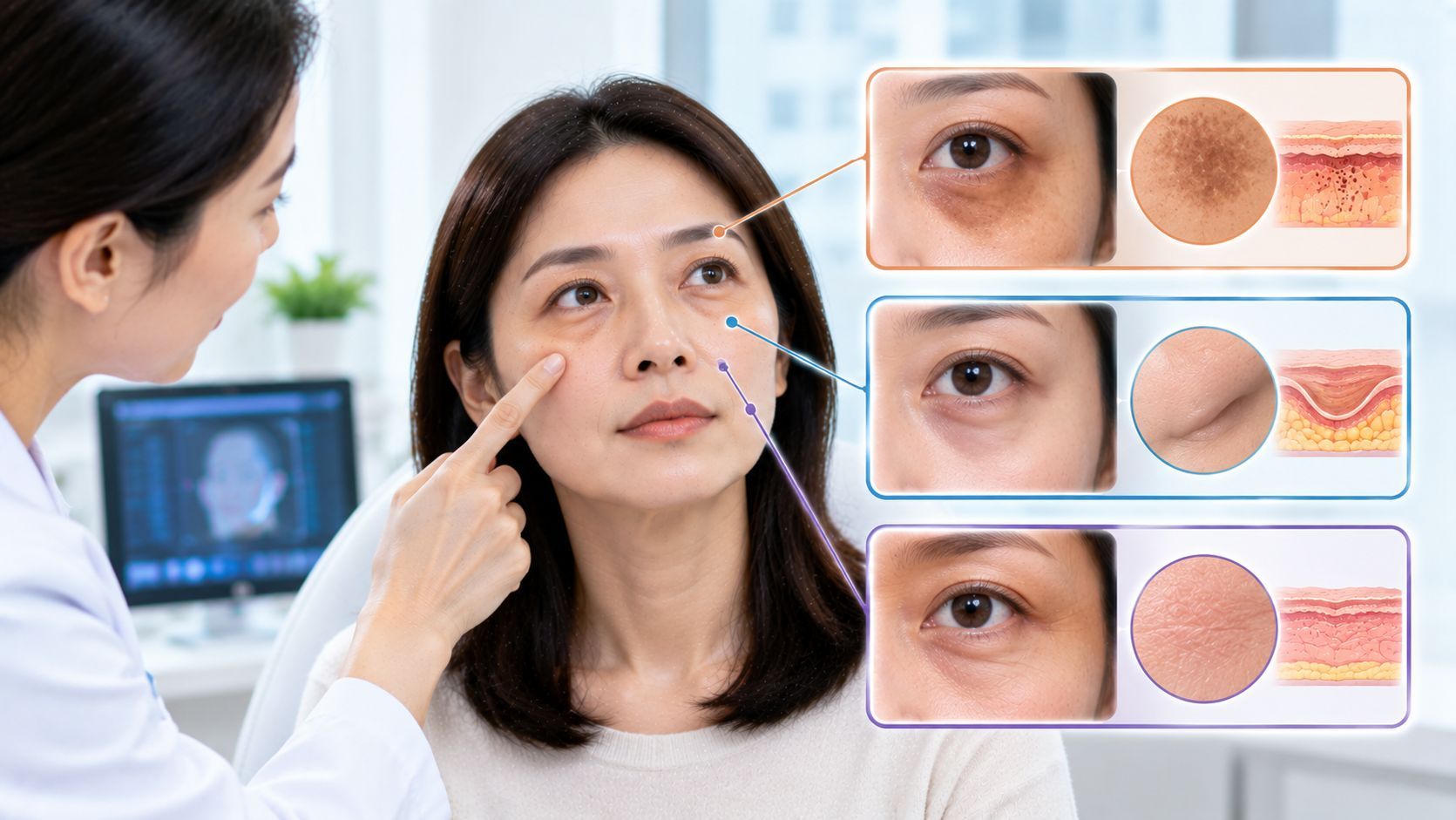
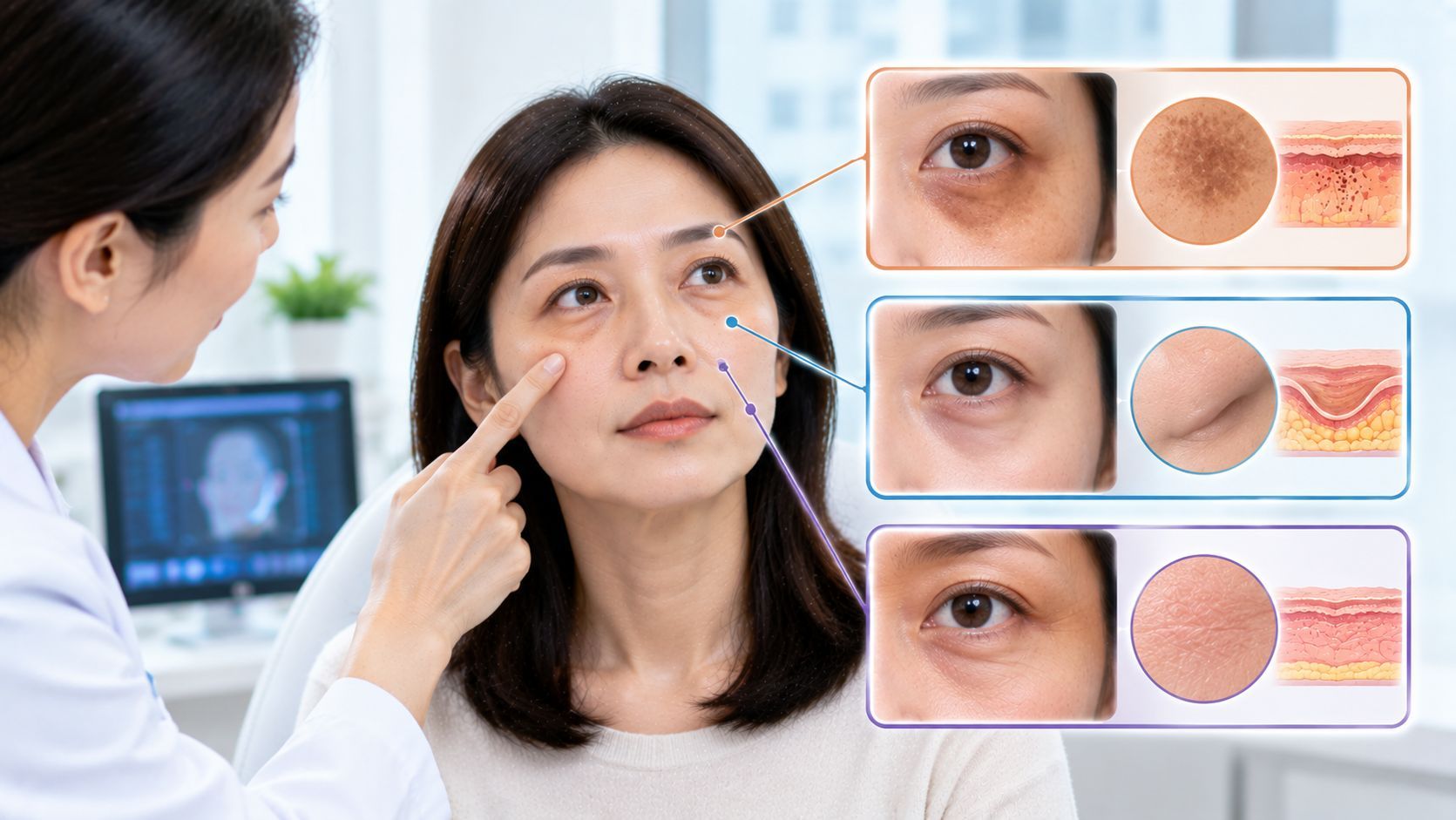
Can Skin Quality Be the Real Problem?
Yes.
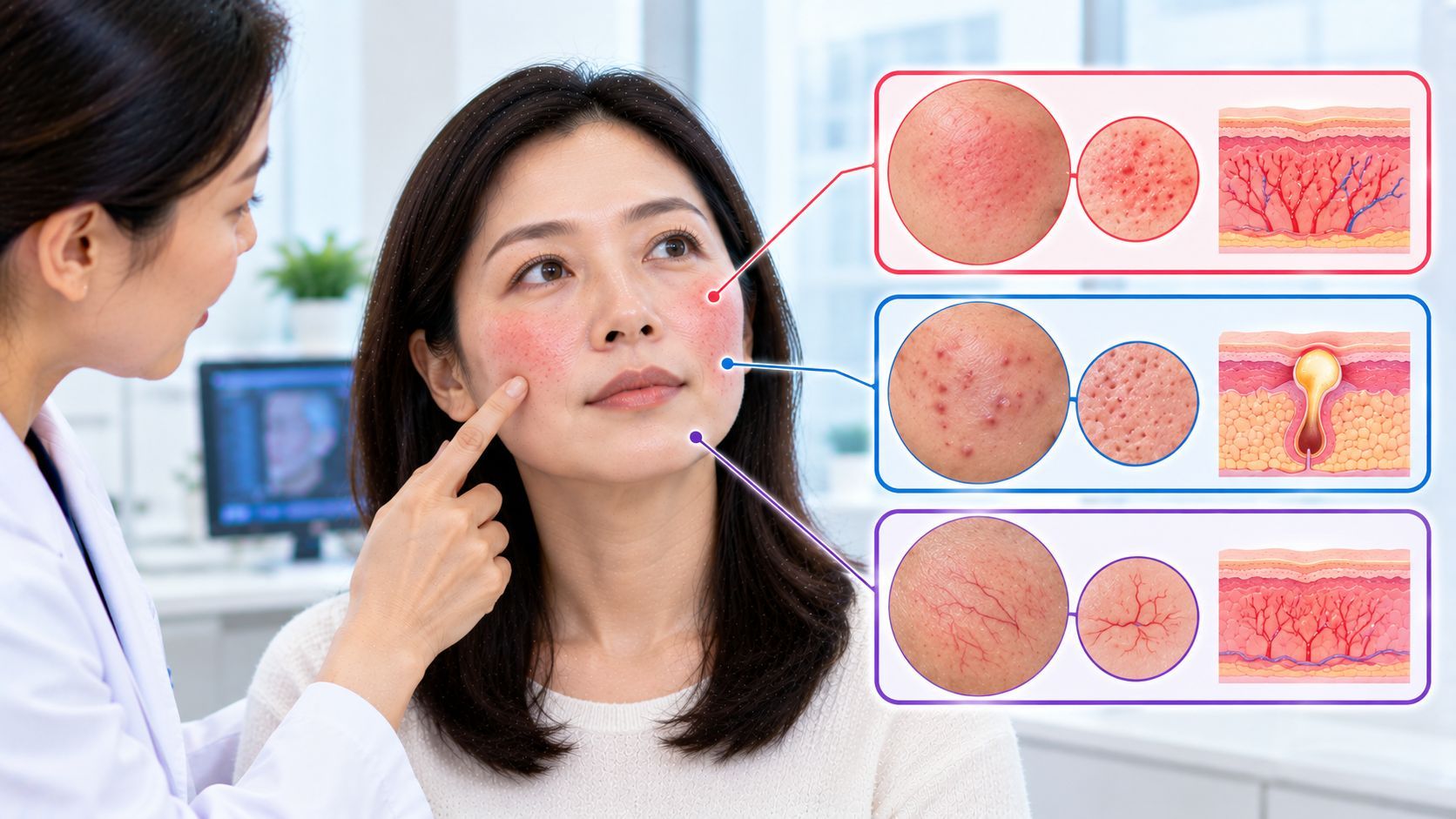
Sometimes a person thinks their face needs lifting when the real issue is poor skin quality.
The face may have:
- Dullness
- Fine lines
- Dehydration
- Rough texture
- Enlarged pores
- Uneven pigmentation
- Reduced elasticity
In that situation, treatments directed at skin quality may make more sense than adding volume or reducing fat.
The AAD notes that dermatologic evaluation can help determine which cosmetic treatment is appropriate for the specific concern rather than assuming one procedure fits everyone.
What Should You Ask a Korean Dermatologist?
If you are visiting Seoul for treatment, consider asking:
- Is my main problem skin laxity, volume loss, or excess fat?
- Do I have more than one contributing factor?
- Would tightening make my face look thinner?
- Would reducing fat make my loose skin more obvious?
- Do I actually have enough volume to justify restoration?
- Could improving skin quality address part of the problem?
- What happens if we treat only one component first?
- What changes to my facial shape should I expect?
- How much downtime is involved?
- Would you recommend treating one area first and reassessing?
The AAD also recommends discussing expectations, risks, previous cosmetic treatments, and whether another procedure may be more appropriate before undergoing filler or other cosmetic procedures.
What Is the Biggest Mistake to Avoid?
The biggest mistake is choosing a procedure before identifying the tissue causing the problem.
For example:
“My jawline is blurry, so I need HIFU.”
Not necessarily.
“My face looks heavy, so I need fat reduction.”
Not necessarily.
“My cheeks look older, so I need filler.”
Not necessarily.
“My face is sagging, so I need the strongest tightening treatment.”
Again, not necessarily.
The same visible concern can have different underlying causes in different people.
A Simple Way to Think About the Three Options
You can think of the categories this way:
Main findingTreatment category to discussLoose skin with relatively preserved volumeTighteningHollow or deflated areasVolume restorationLocalized excess fullnessFat reductionPoor texture or dullnessSkin-quality treatmentSeveral problems togetherIndividualized combination plan
This is only a starting framework, not a diagnosis.
Conclusion
Knowing whether you need tightening, volume restoration, or fat reduction starts with identifying what has actually changed in your face.
If the main problem is loose skin, tightening may be relevant. If facial areas have become hollow or deflated, volume restoration may deserve consideration. If localized excess fat is creating unwanted fullness, fat reduction may be discussed. And if the face looks older mainly because of texture, dehydration, pigmentation, or reduced skin quality, none of these three categories may be the primary solution.
Facial aging involves interconnected changes in skin, fat, soft tissue, and underlying structures, so more than one factor can be responsible at the same time.
For someone considering a Korean dermatology treatment, the most useful approach is to diagnose first and choose the procedure second. A detailed consultation can help determine which tissue needs attention—and, just as importantly, which tissue should be left alone.
FAQs
How do I know if I need skin tightening or filler?
If the main problem is loose skin with relatively preserved facial fullness, tightening may be considered. If the face has genuine hollowing or loss of fullness, volume restoration may be more relevant. Many people have a combination of both.
How do I know if my face has too much fat?
Visible fullness does not automatically mean excess fat. A dermatologist needs to distinguish fat from loose skin, descended soft tissue, muscle, and structural anatomy before recommending fat reduction.
Can I need tightening and volume restoration at the same time?
Yes. Facial aging can involve both laxity and volume loss. Treatment can sometimes address both, but the sequence and extent should be individualized.
Can fat reduction make my face look older?
It can potentially make existing laxity or hollowing more noticeable if excess fat is removed from a face that does not actually have substantial excess fat. This is why the source of facial fullness should be assessed first.
Should I get an ultrasound or scan before treatment?
Imaging is not necessary for every cosmetic consultation. Whether imaging is useful depends on the specific concern, previous procedures, anatomy, and what the clinician needs to determine.
What should I do before choosing a Korean aesthetic treatment?
Take clear photographs from the front and side, identify what you want changed and what you want preserved, and bring information about previous treatments. Then ask the dermatologist whether your primary issue is laxity, volume, fat, skin quality, or a combination.