My Forehead Looks Heavy After Botox. What Happened?
Introduction
If your forehead looks heavy, low, or unusually flat after Botox, the change can be unsettling—especially if your face looked more open before treatment. A heavy forehead after Botox can happen when the injected muscles become weaker and the balance between the forehead, eyebrows, and eyelids changes. In some cases, swelling or temporary changes after treatment can also contribute.
Botox is commonly used to reduce forehead lines by temporarily weakening specific facial muscles. Because those muscles also influence eyebrow position and forehead movement, treatment needs to be carefully planned around your natural anatomy. A heavy-looking forehead does not necessarily mean that the Botox was permanently damaging or that something went seriously wrong, but persistent or significant changes should be assessed by a qualified medical professional. (fda.gov)
Why Can Your Forehead Look Heavy After Botox?
The Forehead Muscles Have Become Weaker
The frontalis muscle is an important muscle for raising the eyebrows and creating horizontal forehead movement.
When Botox reduces frontalis activity, the forehead may look smoother, but the eyebrows can also become less mobile.
If your forehead previously relied heavily on this muscle to keep the eyebrows elevated, weakening it may make the upper face appear heavier.
Your Eyebrow Position May Have Changed
Botox does not simply remove wrinkles. It changes muscle activity.
The position of the eyebrows is influenced by opposing muscles. The forehead muscles help elevate the brows, while muscles around the eyes and glabella can pull them downward.
If treatment changes this balance, you may notice:
- Lower-looking eyebrows
- A heavier upper face
- Reduced forehead movement
- A flatter forehead
- A tired or more serious appearance
- Increased hooding around the upper eyelids
This is one reason Botox treatment should be individualized rather than based only on the number of forehead lines.
Could the Botox Have Been Injected Too Strongly?
The amount and distribution of Botox matter.
If too much frontalis activity is reduced, or if injections are placed in a way that does not account for the patient's baseline eyebrow position, the resulting change can be more noticeable.
However, it is not possible to determine from appearance alone whether the dose was excessive.
Other factors—including natural eyebrow anatomy, eyelid structure, previous Botox, and the strength of surrounding muscles—can influence the outcome.
What If My Forehead Looks Heavy but My Eyebrows Look Normal?
A heavy-looking forehead does not always mean eyebrow drooping.
Other possibilities include:
- Temporary swelling
- Changes in forehead muscle movement
- Reduced facial animation
- Existing upper-eyelid hooding becoming more noticeable
- Natural changes in facial volume or skin laxity
- A combination of these factors
A clinician can compare your pre-treatment photographs with your current appearance to help identify what changed.
How Long Does Forehead Botox Last?
Botox effects are temporary.
The FDA prescribing information for Botox Cosmetic describes the effect as lasting for months, although the exact duration varies according to treatment area, dose, individual muscle activity, and other factors. (fda.gov)
If your forehead looks heavy because of excessive muscle weakening, the appearance generally changes as muscle activity gradually returns.
This means that immediate corrective procedures are not always necessary.
Should I Wait for the Botox to Wear Off?
Sometimes, yes.
If you are otherwise well and the main concern is cosmetic heaviness, observation may be appropriate while the Botox effect gradually decreases.
However, waiting is not the right response to potentially serious symptoms such as significant difficulty swallowing, breathing problems, widespread weakness, or other unusual reactions.
The timing of any corrective treatment should be determined by a clinician who can assess your specific situation.
Can Another Botox Treatment Fix a Heavy Forehead?
Sometimes adjustments to surrounding muscles may be considered, but more Botox is not automatically the solution.
If the forehead already looks heavy because the frontalis is weakened, additional injections into the same functional area could potentially make the problem worse.
A clinician may instead evaluate whether the surrounding muscle balance can be adjusted safely.
This is particularly important if the original treatment was extensive or involved multiple areas of the upper face.
What About Brow Lift Treatments?
The appropriate approach depends on why your forehead looks heavy.
If the problem is primarily muscle balance after Botox, changing injection strategy may be considered once the anatomy and treatment history are understood.
If genuine eyebrow or upper-eyelid laxity is present independently of Botox, other approaches may be discussed.
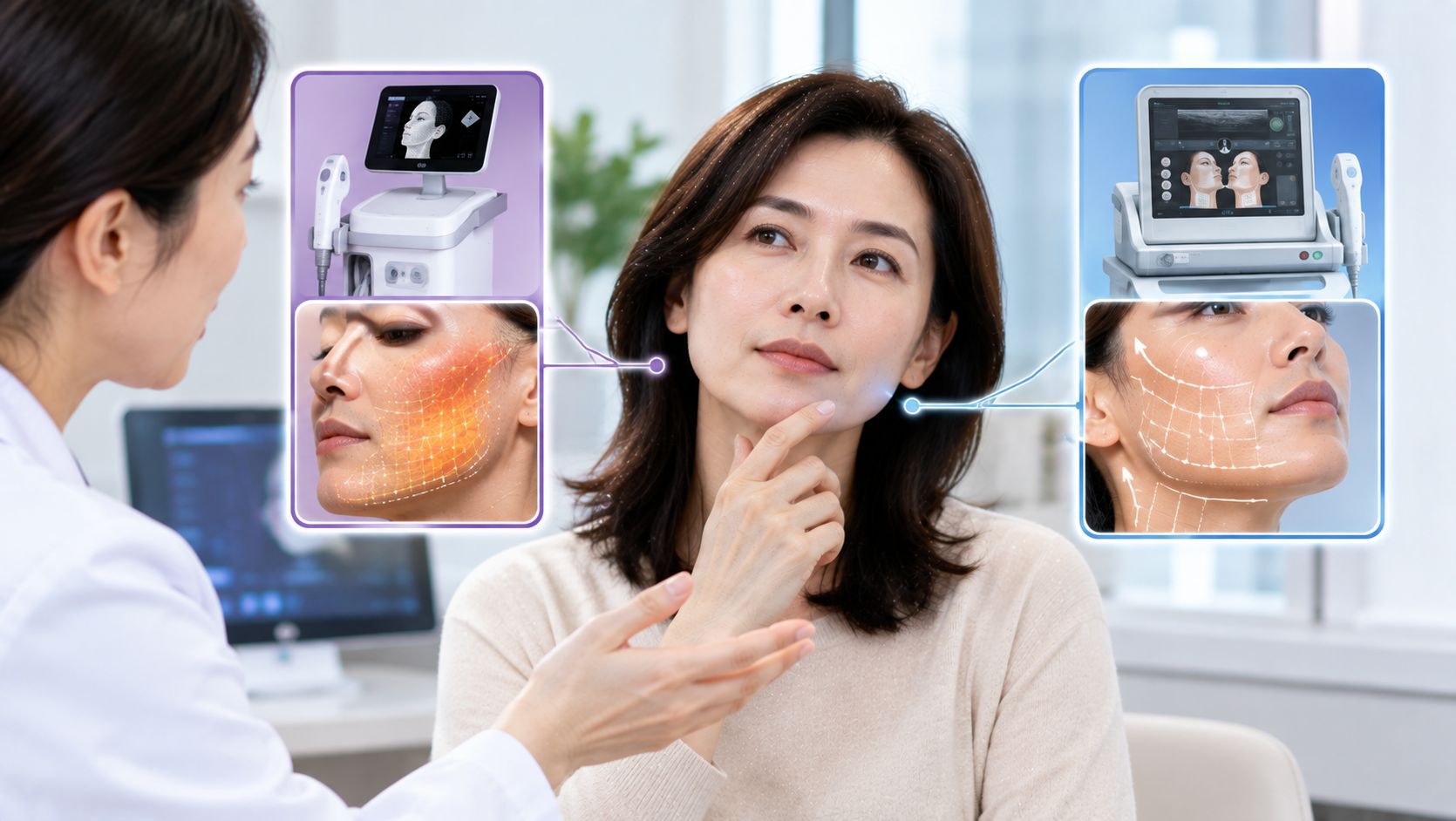
Non-surgical skin-tightening procedures such as radiofrequency or microfocused ultrasound are sometimes used for selected skin laxity, but they do not directly reverse Botox-induced muscle weakness.
Surgical brow or eyelid procedures are different considerations and are generally reserved for structural concerns that cannot be adequately addressed with non-surgical treatment.
Could Botox Make Existing Eyelid Hooding More Noticeable?
Yes.
If your eyebrows naturally sit relatively low or you already have some upper-eyelid hooding, reducing forehead muscle activity can make that anatomy more apparent.
This does not necessarily mean Botox created new excess skin.
Instead, the treatment may have changed the amount of muscular support contributing to your usual brow position.
That is why people with low-set brows or significant eyelid hooding may require particularly conservative forehead treatment.
What If I Also Had Glabella Botox?
Treating the glabella—the area between the eyebrows—can change eyebrow dynamics as well.
The glabellar muscles contribute to downward and inward eyebrow movement, while the frontalis contributes to elevation.
When multiple areas are treated together, the balance between these muscles becomes more important.
A result that looks excellent in one person may produce a different eyebrow position in another because facial anatomy and muscle patterns vary.
Can Filler Correct a Heavy Forehead After Botox?
Filler is generally not the first answer to a forehead that looks heavy after Botox.
Injecting filler simply to compensate for altered eyebrow movement could add unnecessary volume and potentially create another cosmetic problem.
If the concern involves genuine volume loss or structural changes unrelated to Botox, filler might have a role in an appropriately selected patient. But the underlying cause should be established first.
What Should You Do If Your Forehead Looks Heavy After Botox?
Compare Before-and-After Photos
Use photographs taken before Botox and compare them with your current appearance.
Try to use:
- Similar lighting
- Similar facial expression
- Similar camera distance
- Similar head position
Look specifically at eyebrow height, forehead movement, upper-eyelid exposure, and symmetry.
Record Your Botox Details
If possible, find out:
- Product used
- Treatment date
- Approximate amount injected
- Injection areas
- Number of treatment sites
- Whether the glabella, forehead, or crow's feet were treated
This information can help another clinician understand what happened.
Avoid Immediately Adding More Treatments
If your face looks heavier after Botox, rushing into additional Botox, filler, HIFU, RF, or another cosmetic treatment may make it more difficult to determine the original cause.
An assessment should come first.
When Should You Contact a Doctor Urgently?
Most cosmetic eyebrow or forehead changes are not emergencies. However, Botox products can rarely cause effects beyond the injection site.
Seek urgent medical attention if you experience symptoms such as:
- Difficulty swallowing
- Difficulty breathing
- Significant generalized muscle weakness
- Severe or unusual weakness
- Problems speaking
- Vision problems
- Severe allergic-type reactions
The FDA prescribing information warns about the possibility of distant spread of botulinum toxin effects, although these reactions are uncommon when Botox Cosmetic is used appropriately. (fda.gov)
For International Patients in Seoul
If you had forehead Botox in Seoul and then noticed a heavy forehead after returning home, keep your treatment information.
Ask the clinic for the product used, treatment date, areas injected, and available treatment records.
If you plan to seek correction from another dermatologist or aesthetic physician, provide this information rather than simply saying that you received "forehead Botox."
For international patients, photographs taken before treatment can also be extremely useful because they give the next clinician a baseline for comparison.
Conclusion
A heavy-looking forehead after Botox can result from reduced frontalis activity, altered eyebrow balance, pre-existing low brows or eyelid hooding becoming more noticeable, temporary changes, or a combination of factors.
The effect is generally temporary because Botox gradually wears off. If the problem is mild and you are otherwise well, observation may be reasonable. If the change is significant or persistent, a clinician can assess your eyebrow position, muscle activity, treatment pattern, and pre-treatment photographs before deciding whether anything needs to be done.
The key is to identify which muscles and structures changed rather than automatically adding another cosmetic treatment.
Frequently Asked Questions
Why does my forehead look heavier after Botox?
Botox can reduce frontalis muscle activity, which may decrease eyebrow elevation and make the upper face appear heavier. Existing low brows or eyelid hooding can also become more noticeable.
Will a heavy forehead after Botox go away?
Because Botox is temporary, muscle activity generally returns gradually. The timing varies between individuals and treatment patterns.
Can more Botox fix a heavy forehead?
Not necessarily. Additional Botox may worsen heaviness if the frontalis is already too weak. A clinician should assess the muscle balance before considering further injections.
Can filler fix a heavy forehead after Botox?
Filler is not usually the first solution for Botox-related forehead heaviness. Adding volume without identifying the cause could create another unwanted change.
Is a heavy forehead after Botox dangerous?
A cosmetic change in eyebrow or forehead position is generally different from serious Botox complications. However, difficulty swallowing, breathing problems, generalized weakness, or other significant symptoms require urgent medical attention. (fda.gov)
What should I do if my forehead still looks heavy months after Botox?
Consider an assessment with a qualified dermatologist, plastic surgeon, or other appropriately trained medical professional. Bring your pre-treatment photographs and Botox treatment details so the clinician can evaluate what changed.