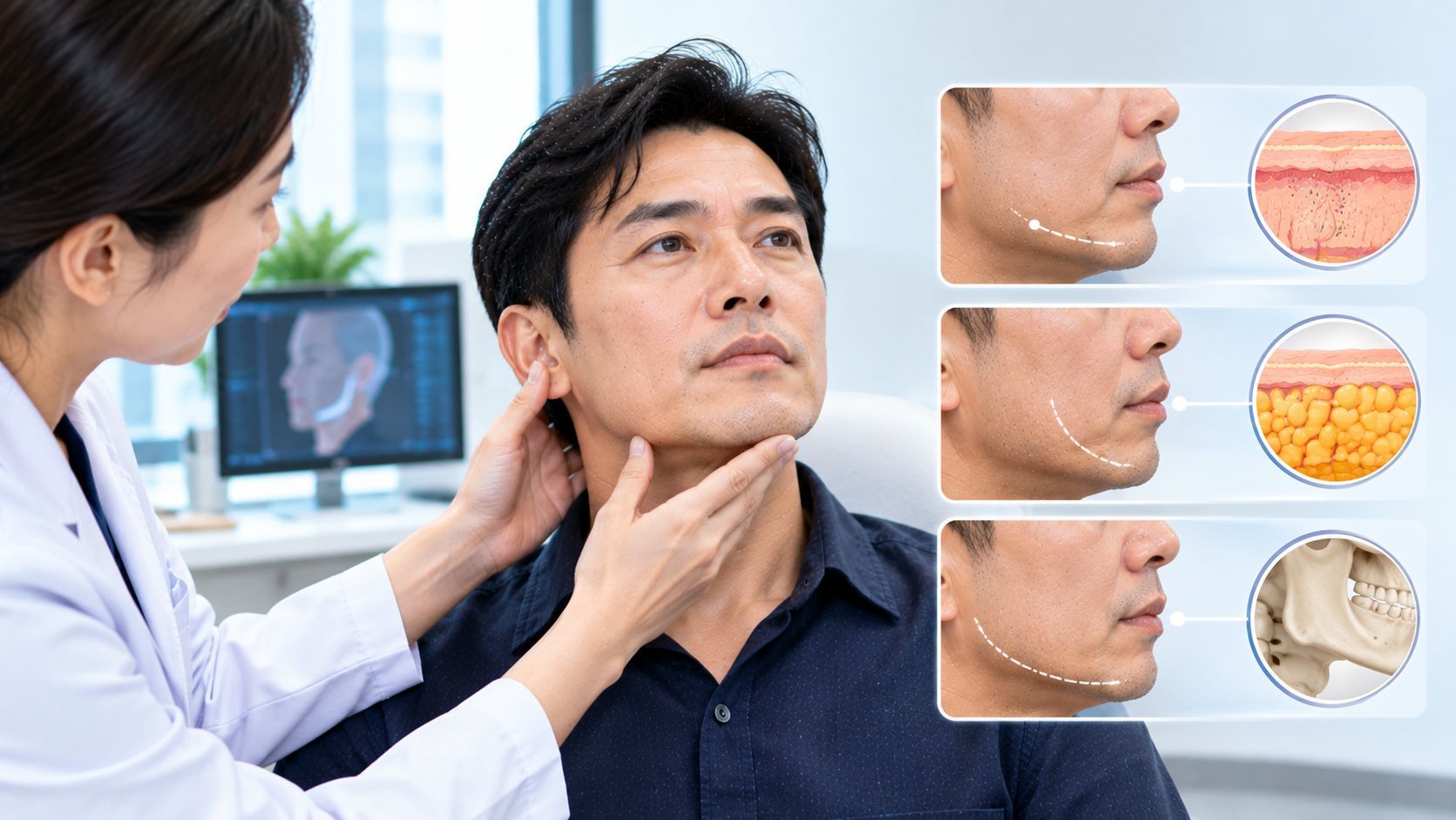
What Treatments Can Make a Middle-Aged Man's Face Look Healthier Without Changing His Features?
Introduction
Many middle-aged men do not necessarily want to look younger, tighter, or dramatically different. They simply want their face to look healthier, fresher, and less tired while still looking like themselves.
That distinction changes the treatment strategy.
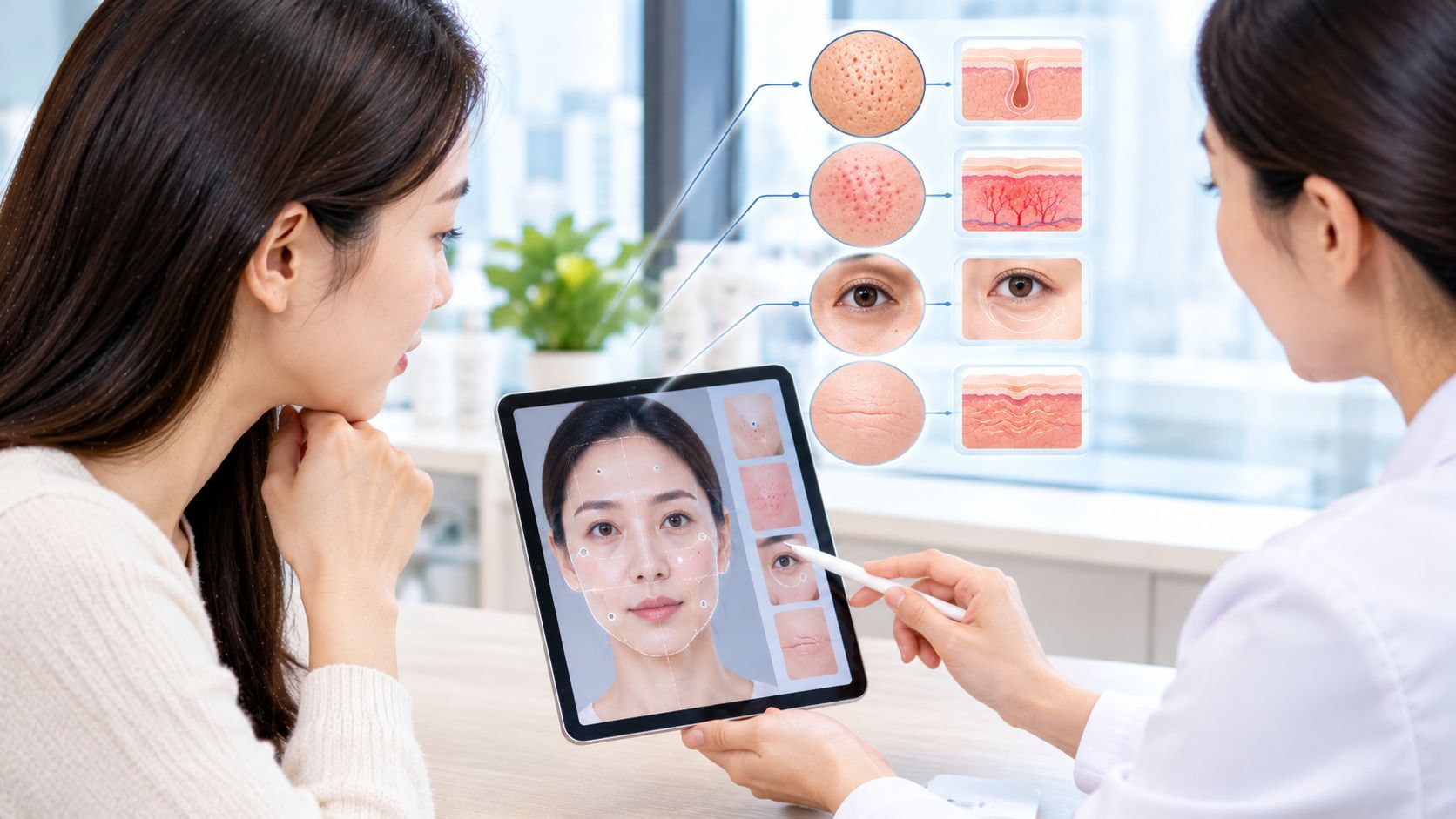
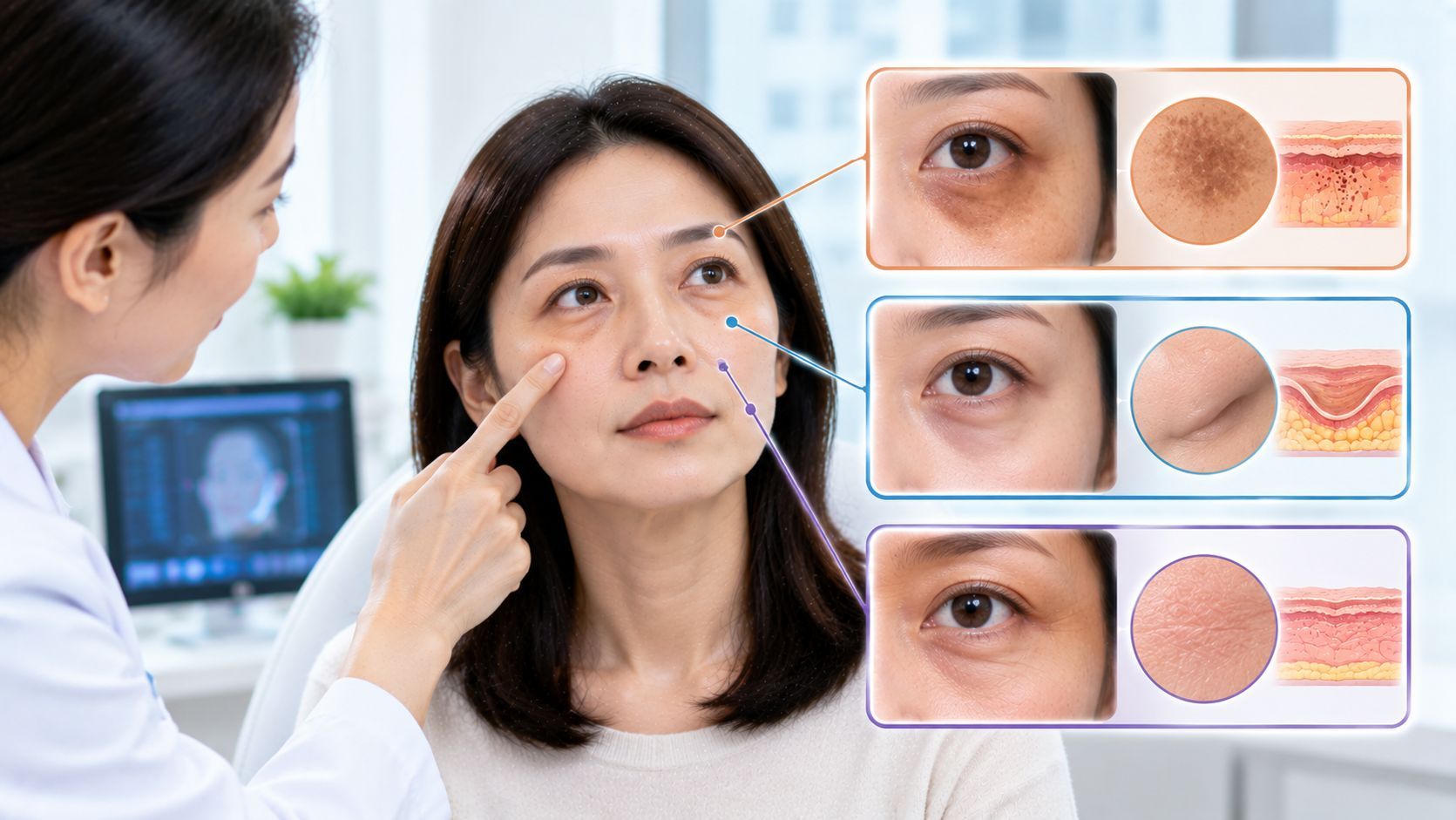
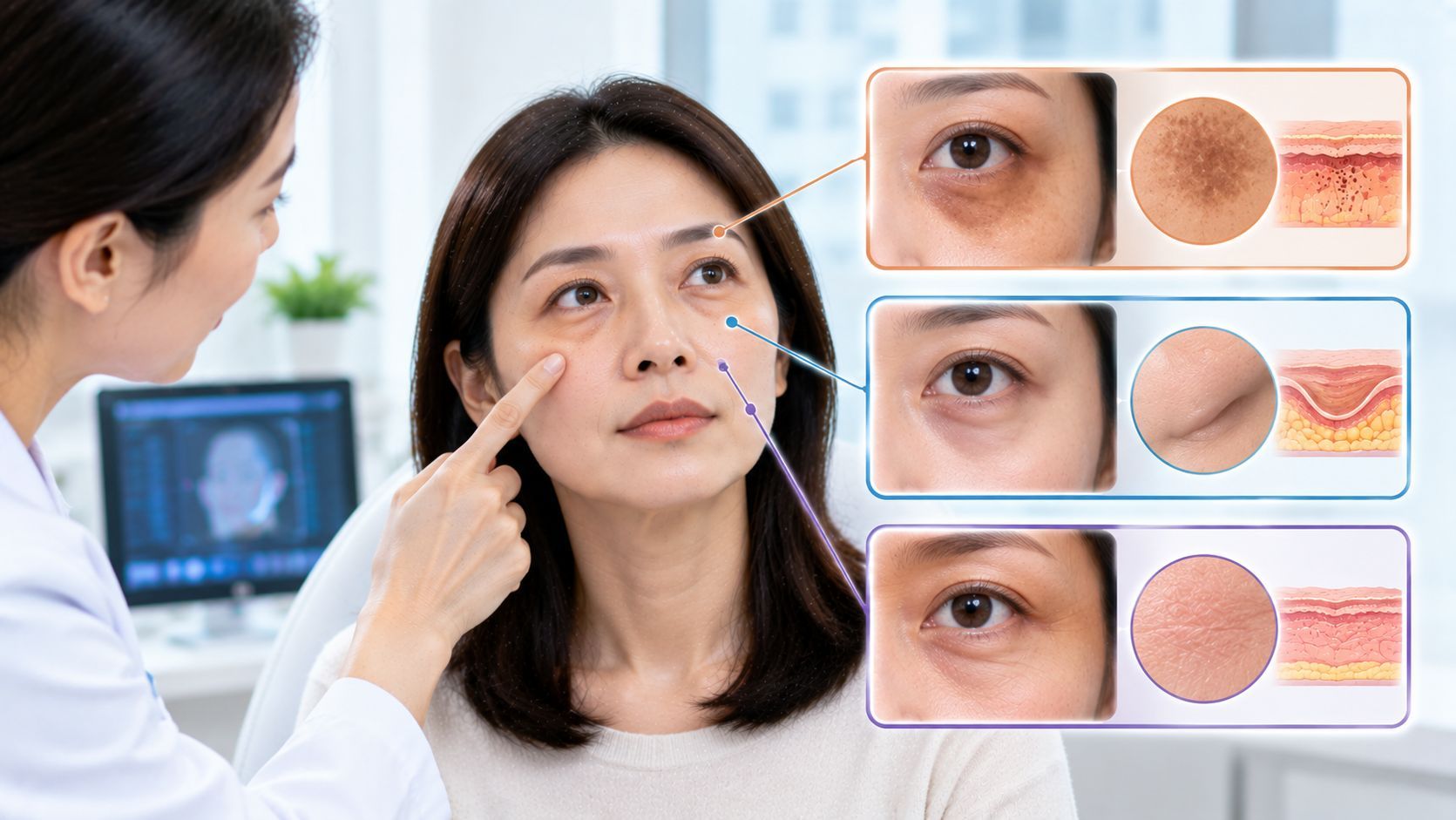
A face can look older or unhealthy-looking because of dull skin, dehydration, uneven texture, enlarged pores, redness, sun damage, reduced firmness, facial volume changes, or a combination of several subtle factors. Treating only one issue—especially with an aggressive procedure—may not produce the natural result a man is looking for.
For men considering aesthetic treatment in Korea, a conservative plan can focus on skin quality, subtle collagen remodeling, carefully selected tightening, and preservation of natural facial proportions rather than changing facial shape.
What Does a “Healthier” Face Actually Mean?
When people say they want to look healthier, they often mean they want several small improvements rather than a completely different appearance.
Common concerns include:
- Dull or tired-looking skin
- Rough texture
- Enlarged pores
- Uneven complexion
- Mild pigmentation
- Fine lines
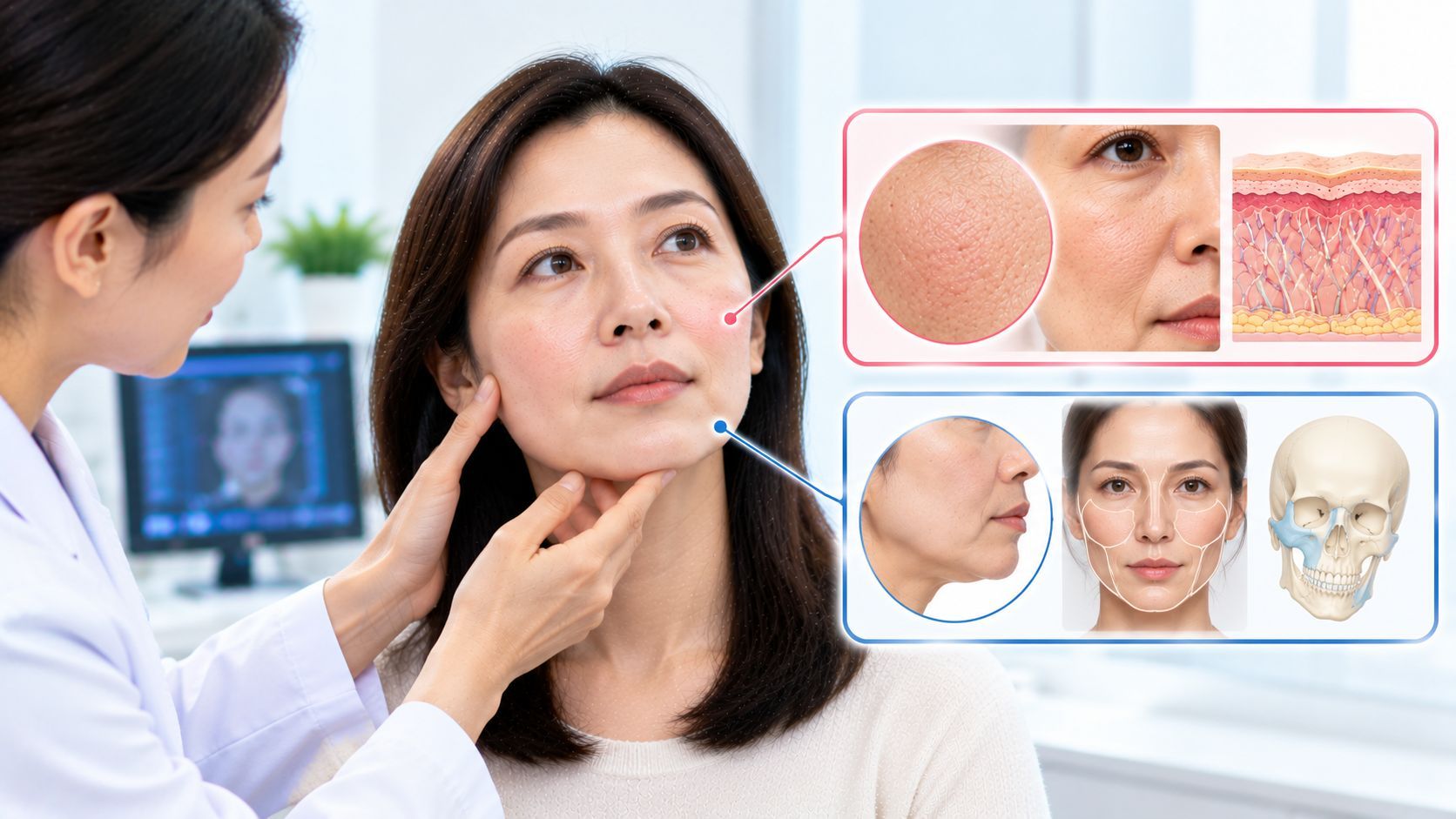
- Loss of firmness
- Dehydrated skin
- Early jawline laxity
- Under-eye tiredness
- A generally less refreshed appearance
These problems do not necessarily require filler, dramatic lifting, or major facial reshaping.
The first step is identifying what is actually making the face look tired.
Can Improving Skin Quality Make a Man Look Healthier?
Yes.
Skin quality can have a major effect on how the face is perceived.
A face with relatively few wrinkles can still look tired if the skin has:
- Uneven texture
- Poor light reflection
- Dehydration
- Roughness
- Excessive oiliness
- Enlarged pores
- Uneven pigmentation
In these situations, improving the skin rather than changing the facial structure may be more consistent with a natural-looking goal.
The American Academy of Dermatology recommends individualized approaches to cosmetic skin concerns and emphasizes that treatment choice depends on the specific condition and the patient's goals. (aad.org)
What Korean Treatments Can Improve Skin Quality?
Rejuran and Other Skin-Quality Treatments
Some men consider injectable skin treatments such as Rejuran when their main concern is skin quality rather than facial volume.
These treatments are generally discussed in the context of improving characteristics such as hydration, texture, and overall skin appearance rather than creating a new facial shape.
However, results vary, and these procedures should not be treated as interchangeable with Botox, filler, or lifting devices.
A consultation should determine whether the concern is actually related to skin quality.
Skin Boosters
Some injectable skin boosters are designed primarily to improve hydration and skin quality rather than add substantial structural volume.
They may be considered when the skin looks:
- Dry
- Crepey
- Dehydrated
- Dull
- Less elastic
For a man who specifically does not want his facial features changed, the distinction between skin-quality treatment and volumizing treatment is important.
Could RF Microneedling Be Useful?
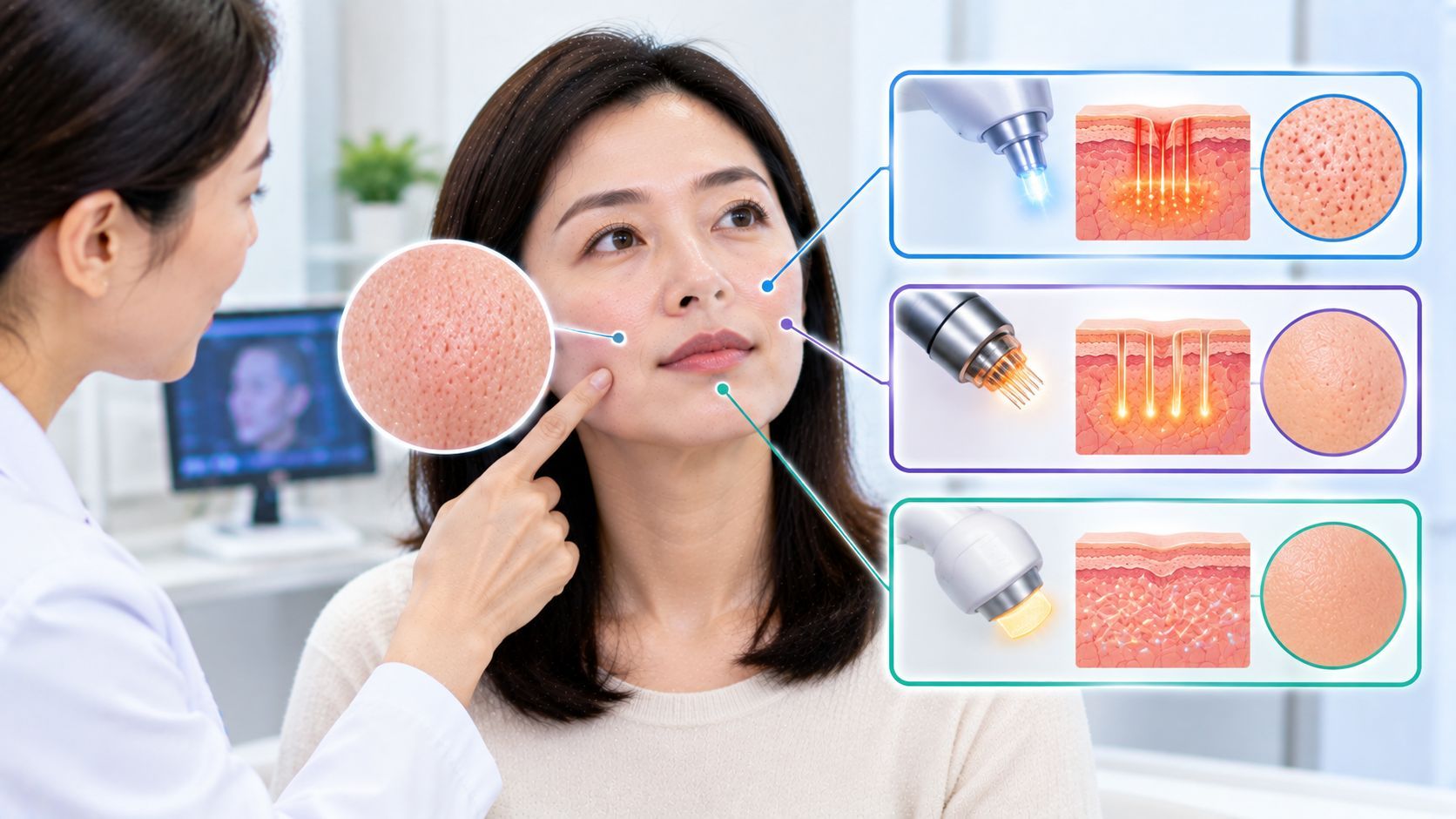
RF microneedling may be an option when skin quality and mild laxity occur together.
It combines microneedling with radiofrequency energy delivered into the skin at controlled depths. Depending on the device and settings, it may address concerns such as:
- Fine lines
- Uneven texture
- Enlarged pores
- Acne-scar texture
- Mild laxity
It does not primarily work by adding volume or changing the underlying facial structure.
That can make it relevant for men who want a gradual improvement in skin quality while maintaining their existing facial proportions.
However, downtime varies depending on treatment intensity, and redness, swelling, and temporary sensitivity can occur.
What If My Main Problem Is Dullness or Uneven Tone?
A skin-brightening treatment may be more appropriate than a lifting treatment.
Depending on the cause, a dermatologist may consider:
- Topical medical skincare
- Chemical peels
- Selected pigment lasers
- Fractional laser treatments
- Other energy-based procedures
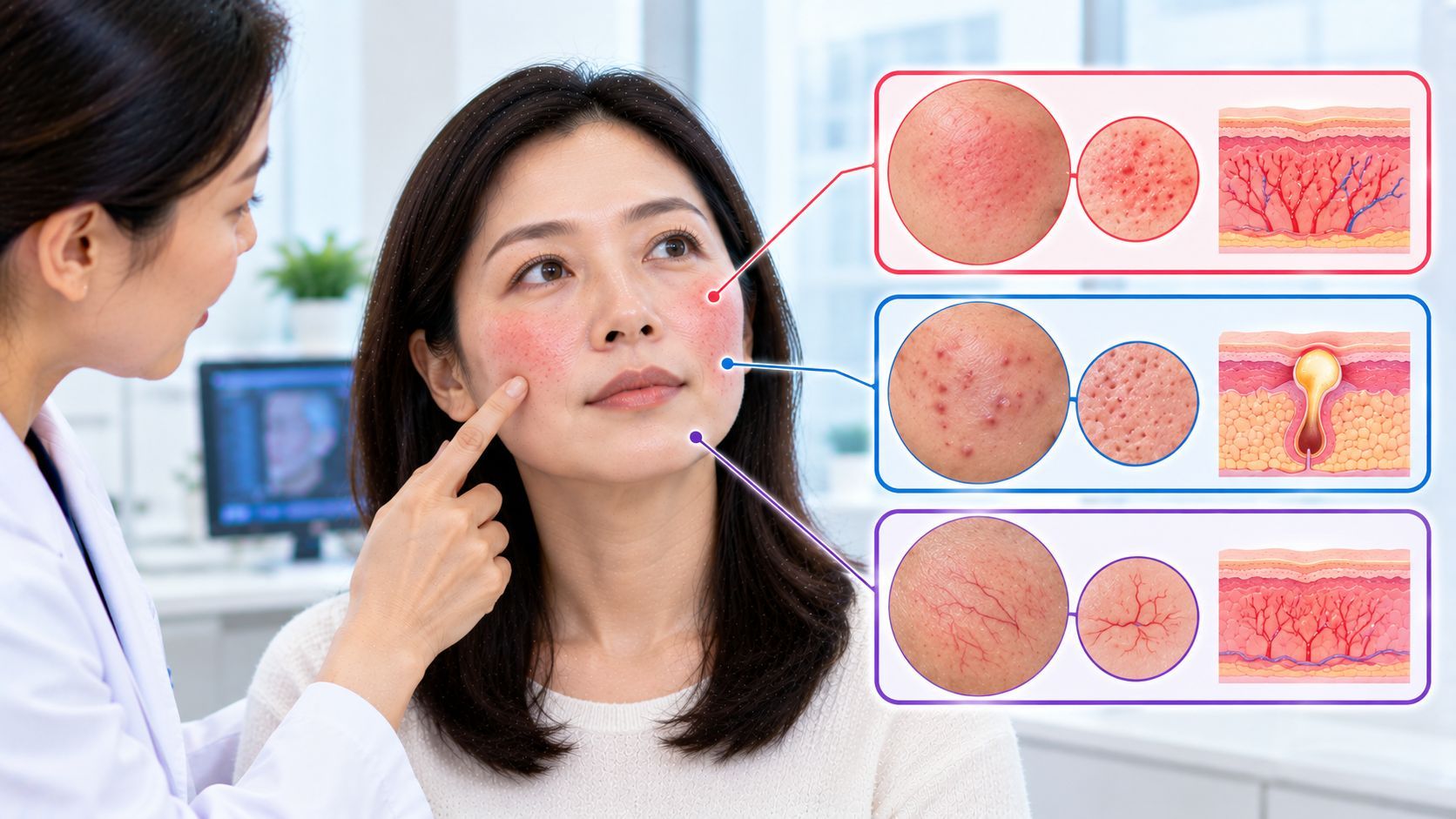
The correct approach depends on whether the uneven appearance comes from pigmentation, redness, vascular changes, texture, dehydration, or a combination.
This distinction is especially important for men with darker skin or a history of post-inflammatory hyperpigmentation because some procedures can cause unwanted pigmentary changes.
Can Laser Treatment Make a Man Look Healthier Without Changing His Face?
Potentially, yes.
Laser treatment can target certain surface and pigment-related concerns without intentionally altering the overall facial structure.
For example, depending on the diagnosis, a dermatologist may consider laser treatment for:
- Sun-related pigmentation
- Uneven complexion
- Certain textural irregularities
- Acne scars
- Fine lines
But “laser” is not one treatment.
Different lasers target different problems, and an inappropriate laser or overly aggressive setting can create complications.
A dermatologist should therefore determine the actual skin condition before selecting a device.
What About Thermage or RF Skin Tightening?
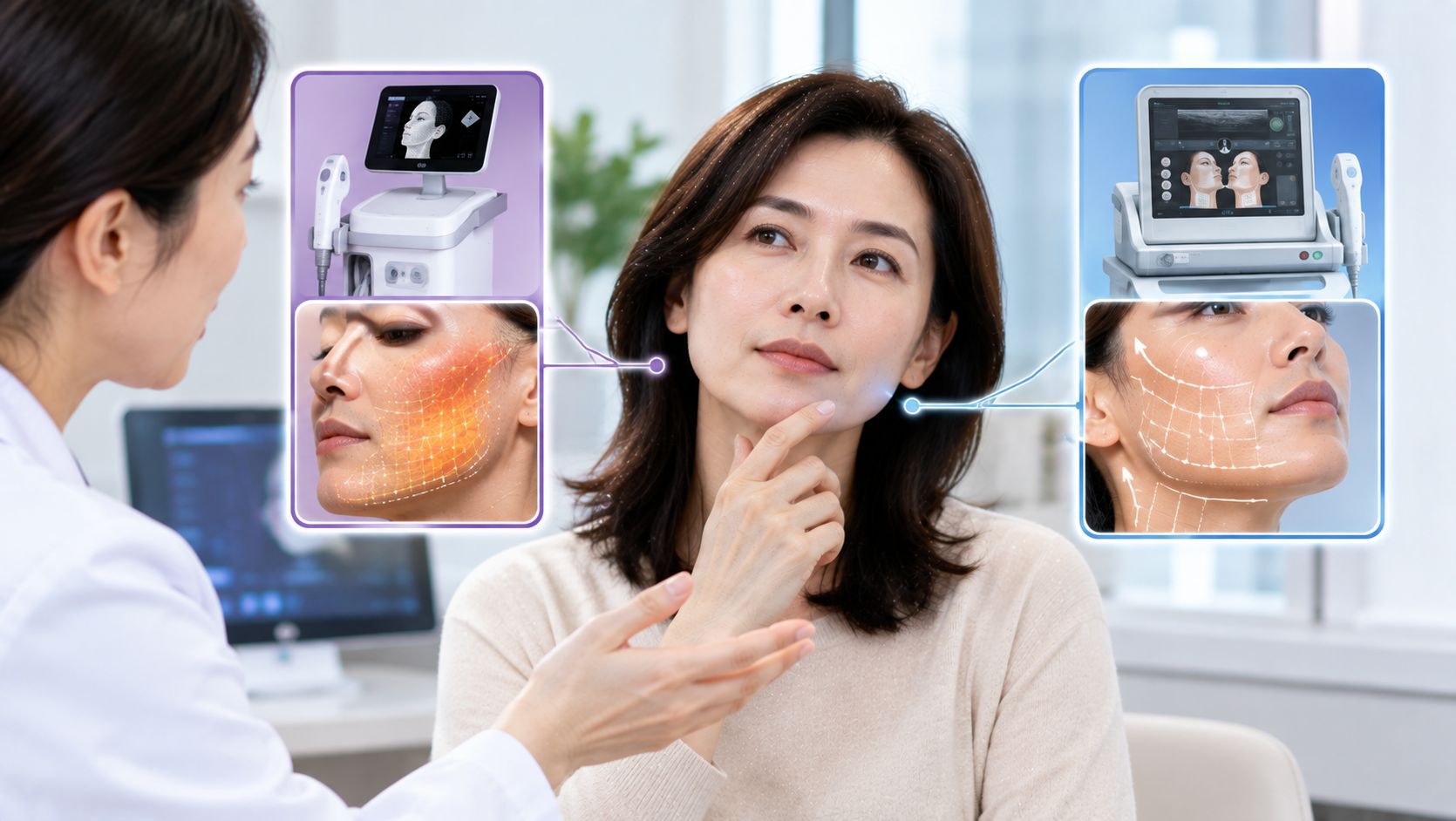
If the problem is early laxity, RF tightening may be considered.
Thermage is a non-invasive RF treatment designed to heat deeper tissue and stimulate collagen remodeling. RF-based skin tightening generally produces gradual rather than immediate changes. The AAD describes RF treatments as an option for tightening mildly loose skin, with results developing over time. (aad.org)
For a middle-aged man who wants to maintain his existing facial features, the treatment should be focused on actual laxity rather than trying to make the entire face smaller.
This distinction can be particularly important if the face is already lean.
Does Ultherapy Make Sense If I Don't Want My Features Changed?
Microfocused ultrasound can be considered for selected patients with facial or neck laxity.
Unlike volumizing treatments, it does not add material to the face. Instead, focused ultrasound energy is delivered to selected tissue depths.
Clinical studies have reported improvements in facial and neck laxity following microfocused ultrasound treatment, although results vary between patients and treatment protocols. (pubmed.ncbi.nlm.nih.gov)
For a man who wants a subtle result, the important question is not whether the device can produce a dramatic change. It is whether the amount and location of tightening are appropriate for his existing anatomy.
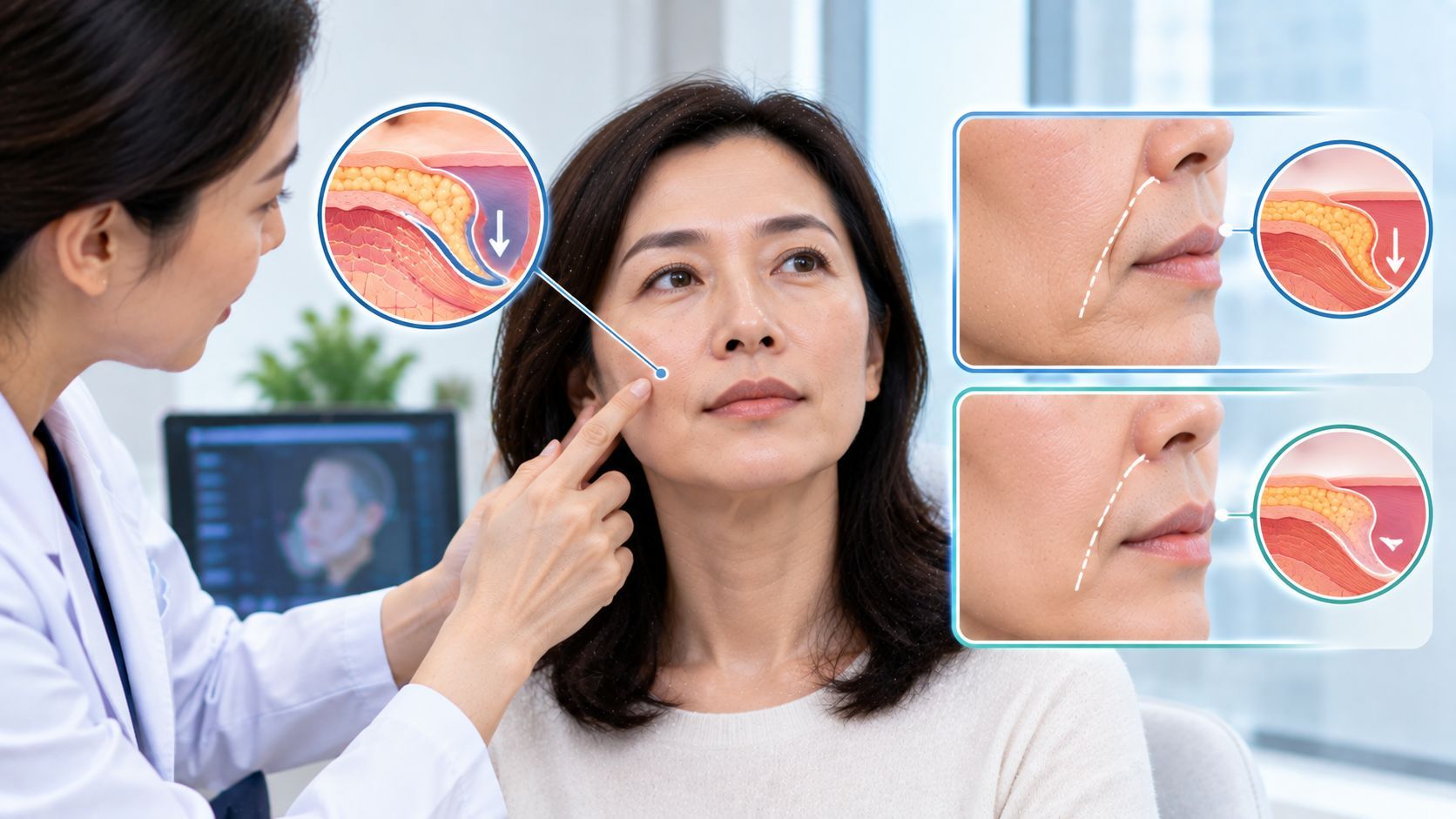
What If My Face Looks Older Because It Lost Volume?
This is where treatment becomes more complicated.
A middle-aged man may have:
- Less cheek fullness
- Temple hollowing
- Under-eye volume changes
- Pre-jowl hollowing
- General facial volume loss
In that situation, tightening the skin alone may not address the entire reason the face looks older.
However, adding filler is not automatically necessary.
A man who does not want his facial features changed can discuss alternatives such as collagen-stimulating or skin-quality approaches where appropriate.
The goal should be to determine whether the problem is actually volume deficiency or whether it is primarily skin quality and laxity.
Can Botox Make a Man Look Healthier Without Changing His Features?
Botox can be useful when facial muscle activity contributes to a tired or tense appearance.
For example, strong frown-line activity can make the upper face look more tense even when the person feels relaxed.
Carefully planned botulinum toxin can soften excessive muscle movement without necessarily eliminating all facial expression.
The AAD notes that botulinum toxin temporarily relaxes targeted muscles and that maintaining natural facial expression is an important part of appropriate treatment. (aad.org)
For men, conservative treatment can be particularly relevant when the goal is to look rested rather than obviously treated.
What About Masseter Botox?
This is an area where caution is important.
Masseter Botox can reduce the activity and size of the masseter muscles over time, which can make the lower face appear narrower.
That may be appropriate for someone specifically seeking a slimmer jaw, but it does not necessarily fit the goal of maintaining existing facial features.
If your goal is simply to look healthier, fresher, or less tired, reducing the width of your jaw may be unnecessary.
This is a good example of why treatment should be based on the patient's actual objective rather than what a procedure is capable of doing.
Should Men Get Filler If They Want a Natural Result?
Not necessarily.
Filler can restore or add volume, but it also has the potential to change facial contours.
For someone who specifically says:
“I don't want my features changed.”
the dermatologist should first determine whether volume loss is actually a major contributor.
If it is not, filler may not be necessary.
If volume loss is significant, the discussion should focus on whether subtle restoration is appropriate, rather than automatically adding volume to multiple facial areas.
What If I Have a Thin Face?
A thin face requires particularly careful treatment planning.
A man can have loose skin while having relatively little facial fat.
In this situation, aggressive attempts to tighten or reduce tissue may potentially make the face appear more hollow.
The treatment objective should therefore be firmness without unnecessary volume reduction.
This may mean prioritizing skin-quality treatments or using conservative tightening rather than combining multiple aggressive procedures.
What Is a Natural Treatment Plan for a Middle-Aged Man?
There is no single plan that fits every man, but a conservative strategy can be organized around the dominant concern.
If skin looks dull
Focus on diagnosis of pigmentation, dehydration, texture, or sun damage.
If pores and texture are the main problem
Microneedling, RF microneedling, selected lasers, or medical skincare may be considered.
If the skin has become mildly loose
RF or microfocused ultrasound may be options depending on anatomy.
If facial expression makes the face look tense
Carefully planned Botox may help selected dynamic lines.
If the face has lost volume
Discuss whether true volume restoration is necessary before deciding on filler or other approaches.
If several issues are present
A dermatologist may recommend treating them sequentially rather than performing everything during one visit.
Why “Natural” Should Be Discussed Specifically
“Natural” can mean different things to different patients.
For one man, it may mean retaining facial movement.
For another, it may mean keeping the same jaw width.
Someone else may primarily want to avoid added facial volume.
Before treatment in Korea, explain exactly what you do not want changed.
For example:
- “I don't want my jaw narrower.”
- “I don't want more facial volume.”
- “I want to keep my forehead movement.”
- “I don't want my face to look tighter than it naturally does.”
- “I want people to notice that I look rested, not that I had a procedure.”
These preferences can help guide treatment selection.
How Should International Patients Plan Treatment in Korea?
If you are traveling to Seoul for treatment, avoid building your itinerary around the assumption that several procedures should be performed simultaneously.
A consultation should come first.
Bring information about previous treatments, medications relevant to the procedure, allergies, previous reactions, and your desired outcome.
Also ask about:
- Expected downtime
- Number of sessions
- When results appear
- Possible swelling or bruising
- Pigmentation risk
- Whether the treatment affects facial volume
- Whether facial movement will change
- What happens if the result is not what you expected
- Follow-up arrangements after returning home
This is especially important when you have limited time in Korea.
Conclusion
A middle-aged man does not necessarily need a dramatic lifting procedure, filler, or facial reshaping to look healthier.
If the goal is to look fresher while preserving recognizable facial features, treatment can focus on the specific factors creating the tired appearance. Skin-quality treatments may be appropriate for dullness, dehydration, or texture; RF or microfocused ultrasound may be considered for selected laxity; Botox can address certain expression lines; and volume treatments should be considered only when volume loss is actually contributing to the problem.
The most important principle is treat the cause, not the age.
A good Korean dermatology consultation should identify what is changing the appearance of the face and then determine how much intervention is appropriate. The objective is not to create a different face—it is to improve the features that have changed while preserving the characteristics that already make the face yours.
FAQs
What is the best Korean treatment for a middle-aged man's face?
There is no single treatment for every man. The appropriate option depends on whether the main concern is skin quality, pigmentation, wrinkles, laxity, volume loss, or facial muscle activity.
Can men improve their appearance without getting filler?
Yes. Depending on the concern, options can include medical skincare, skin boosters, microneedling, RF microneedling, laser treatments, RF tightening, ultrasound tightening, or carefully selected Botox.
Will Thermage change the shape of my face?
Thermage is primarily intended to tighten and remodel tissue rather than add volume. However, treatment planning should consider facial fat and existing facial proportions, particularly in lean faces.
Can Botox make a man look more rested without freezing his face?
It can. Conservative treatment can reduce excessive muscle activity while preserving some facial movement. The final effect depends on the muscles treated, product, dose, and individual anatomy. (aad.org)
Do men need different anti-aging treatments than women?
Not necessarily different categories of treatment, but facial anatomy, muscle strength, skin characteristics, facial hair, and aesthetic goals can differ. Treatment should therefore be individualized rather than based solely on sex.
How can I avoid looking overtreated?
Tell your dermatologist what you specifically want to preserve. Conservative treatment, addressing the dominant concern first, and allowing enough time to evaluate results before adding further procedures can help keep the treatment plan focused.