My Under-Eye Filler Looks Puffy in the Morning. Why?
Introduction
If your under-eye filler looks puffy when you wake up but improves later in the day, several factors may be responsible. Temporary fluid retention, the properties of hyaluronic acid filler, the anatomy around the lower eyelid, filler placement, and your natural tendency toward morning facial swelling can all contribute. Under-eye filler is particularly sensitive to these issues because the periocular area has thin skin and complex anatomy.
Morning puffiness does not automatically mean that your filler has gone wrong. However, persistent swelling, new swelling long after treatment, lumps, discoloration, or changes that progressively worsen deserve assessment by a qualified medical professional. Recent literature also documents delayed eyelid swelling associated with HA filler, including cases where the original filler was placed away from the eyelid.
Why Does Under-Eye Filler Look Puffier in the Morning?
Overnight Fluid Retention
One common explanation is normal overnight fluid accumulation. When you are lying down for several hours, fluid distribution can change, and the thin tissues around the eyes can make even modest swelling highly visible.
If the puffiness is most noticeable immediately after waking and gradually decreases as you become upright, fluid retention may be contributing.
However, the pattern alone cannot determine whether filler itself is responsible.
Hyaluronic Acid Can Affect Water Retention
Many under-eye fillers contain hyaluronic acid, a substance that interacts with water. The properties of the specific filler, including its formulation and placement, can influence how the area looks.
The periocular region is especially prone to edema and contour irregularities, and malar edema is a recognized delayed complication of filler treatment around the eyes.
The Under-Eye Area Has Very Thin Skin
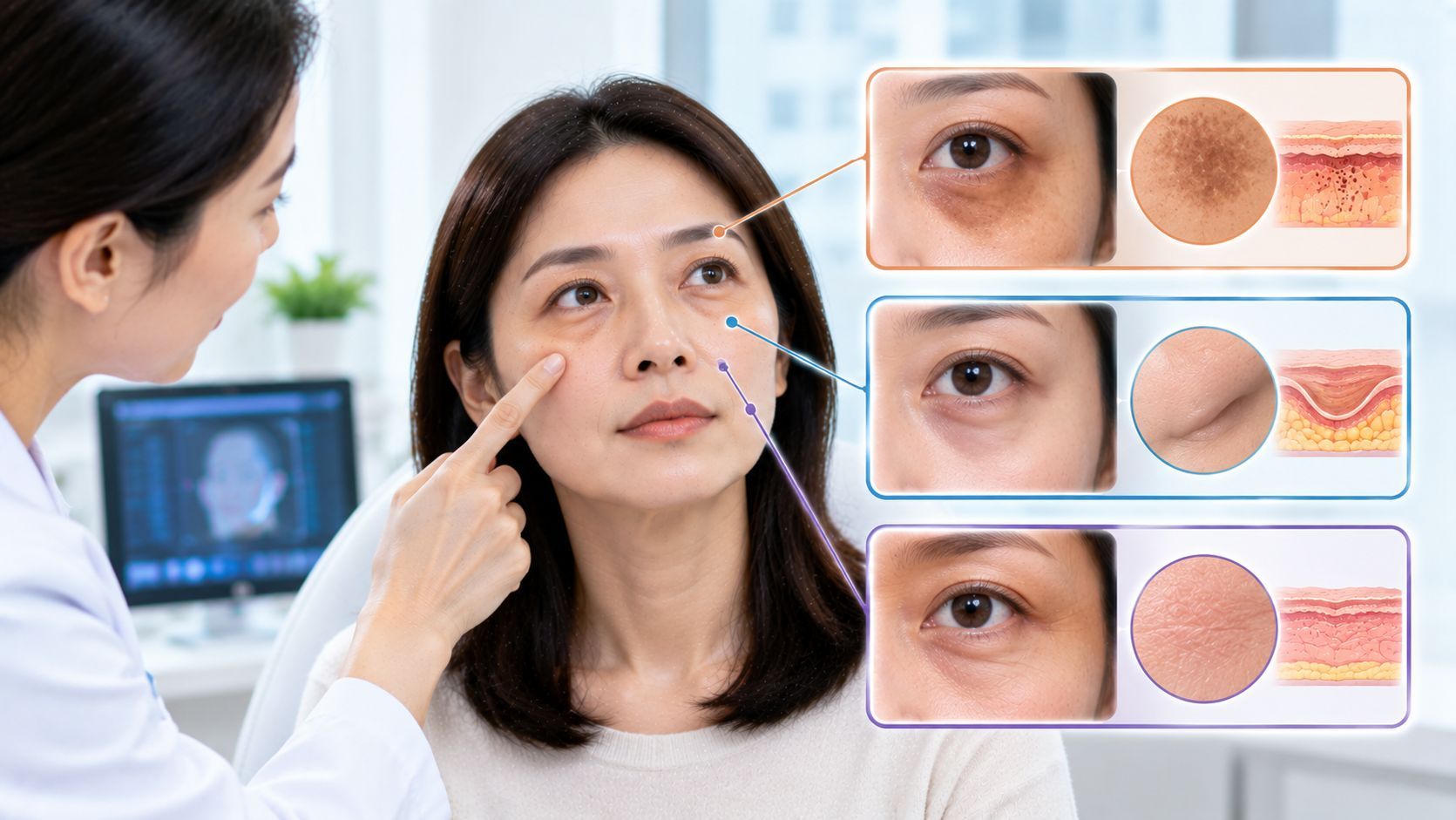
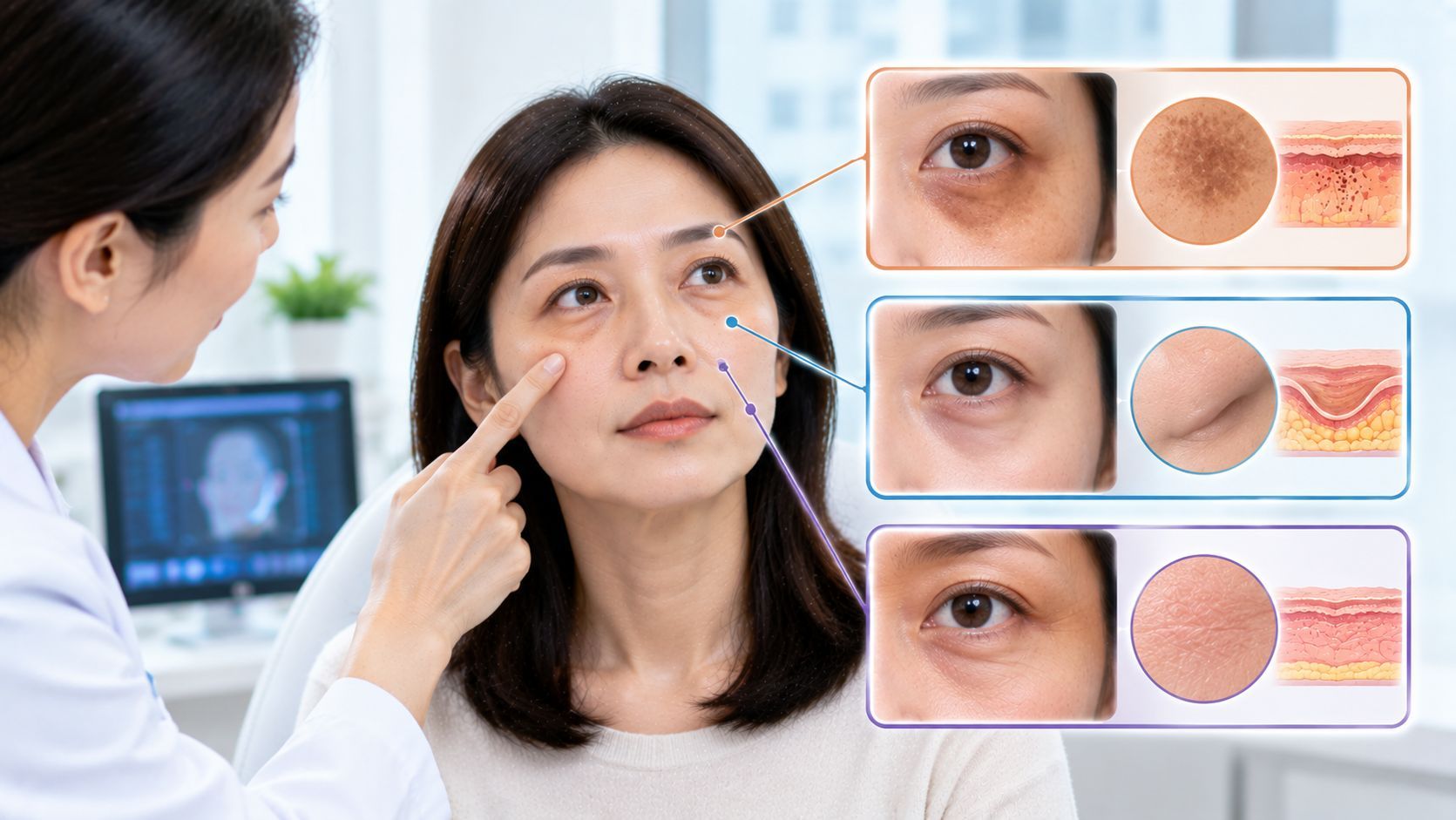
The skin around the eyes is thin and can reveal small changes in volume or fluid more easily than thicker facial skin.
This means a relatively subtle amount of swelling can create the impression of:
- Puffy lower eyelids
- Bags under the eyes
- Heavier-looking tear troughs
- Uneven contours
- A tired appearance
The problem may therefore be more noticeable visually than it is physically.
Could the Filler Be Too Superficial?
Yes, placement can influence the appearance.
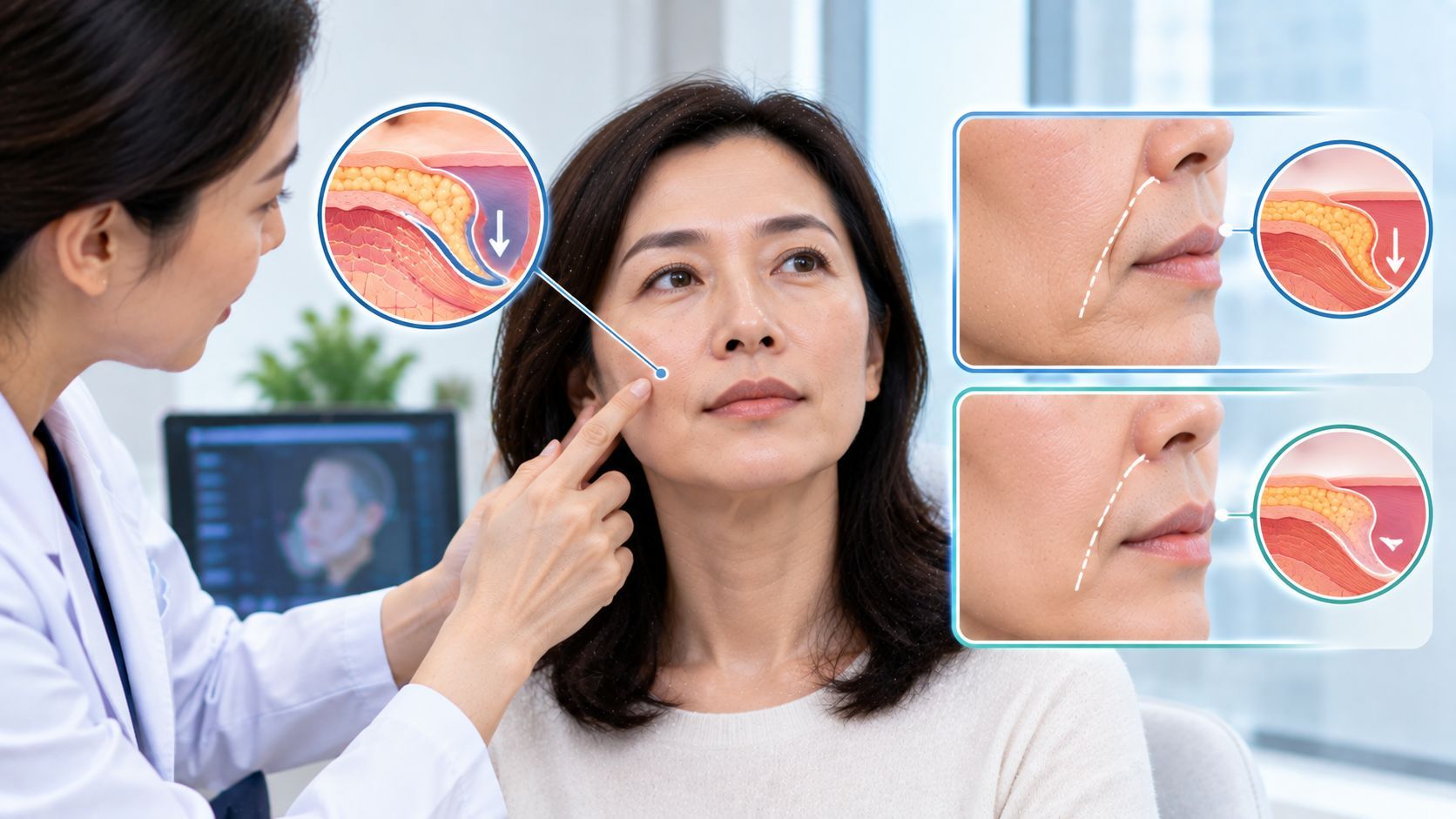
HA filler placed too superficially in the under-eye area may produce visible irregularities or a bluish-gray appearance sometimes referred to as a Tyndall effect. Periocular filler literature identifies edema, migration, contour irregularity, and other complications as considerations when treating this anatomically delicate area.
This does not mean that every puffy under-eye is caused by superficial filler. An examination is needed to distinguish filler-related swelling from normal anatomy and other causes.
Why Does It Improve Later in the Day?
If your under-eye area looks significantly better several hours after waking, possible contributors include:
- Overnight fluid accumulation
- Normal daily changes in facial swelling
- Temporary post-treatment inflammation
- Filler-related water retention
- Existing under-eye bags becoming more noticeable when swollen
- A combination of filler and natural anatomy
The timing is useful information for a clinician, so consider taking photographs at consistent times—for example, immediately after waking and later in the afternoon.
How Long Has It Been Since Your Filler Treatment?
Timing matters considerably.
If the Filler Was Injected Recently
Swelling and tenderness are common after filler injections. The American Academy of Dermatology notes that minor redness, swelling, tenderness, and occasional bruising commonly occur after filler and often resolve within days to around two weeks.
If your filler is very recent, your final appearance may not yet be established.
If the Puffiness Started Months Later
Delayed swelling deserves a different evaluation.
Delayed complications involving HA filler can occur, and recent literature describes delayed eyelid edema even after filler was placed in the temporal area rather than directly underneath the eye.
That does not mean delayed swelling is always caused by filler. Allergic or inflammatory reactions, infection, other medical conditions, and normal changes in facial tissues can also produce swelling.
Could Under-Eye Filler Be Migrating?
Filler migration is one possible explanation for an unusual or newly appearing contour, but it should not be assumed simply because the area looks puffy.
A clinician may consider:
- Where the original filler was placed
- Which product was used
- How much was injected
- How long ago it was injected
- Whether the swelling is localized
- Whether there are palpable lumps
- Whether the appearance changes throughout the day
A detailed treatment history can be particularly useful when evaluating delayed symptoms.
Should You Dissolve Under-Eye Filler?
Not automatically.
If the filler is hyaluronic acid and the clinician determines that unwanted filler is contributing to the problem, hyaluronidase may sometimes be considered. Periocular filler literature describes hyaluronidase as one management option for HA-related malar edema.
But dissolving should not be based solely on the fact that your eyes look puffy in the morning.
A clinician may first determine whether the issue is:
- Normal morning fluid retention
- Recent treatment swelling
- Excess filler
- Filler placement
- Filler migration
- Existing under-eye bags
- Skin laxity
- Another medical or inflammatory cause
If the filler is appropriate but only part of it is causing a problem, targeted correction may sometimes be considered rather than automatically removing everything.
What If the Puffiness Is Actually Your Natural Under-Eye Anatomy?
Filler cannot eliminate every cause of under-eye puffiness.
Some people naturally have:
- Prominent orbital fat
- Tear-trough depressions
- Malar bags
- Lower-eyelid laxity
- Skin laxity
- Fluid-retention tendencies
Adding filler to camouflage a structural issue can occasionally make the area look heavier rather than smoother.
This is one reason an assessment of the entire lower eyelid and midface is important rather than evaluating only the indentation being treated.
What About Skin Boosters or Polynucleotides Instead?
If your concern is mainly thin, dry, or crepey under-eye skin rather than loss of structural volume, a clinician may discuss skin-quality treatments instead of adding more filler.
Recent research comparing HA fillers with polynucleotides for periorbital rejuvenation notes that HA remains useful for structural volume correction, while polynucleotides have been investigated for parameters such as hydration, elasticity, and fine wrinkles. However, the evidence remains heterogeneous and these treatments are not interchangeable.
The important distinction is that improving skin quality does not necessarily remove true under-eye bags or replace missing structural volume.
When Is Under-Eye Swelling an Emergency?
Most morning puffiness is not an emergency. However, certain symptoms following filler require urgent medical assessment.
Seek immediate medical attention if you experience:
- Severe or increasing pain
- Significant skin discoloration
- Pale, gray, blue, or mottled skin
- Rapidly increasing swelling
- Blistering or skin injury
- Vision changes
- Loss or reduction of vision
- New neurological symptoms
Vascular complications from facial filler can rarely affect the eye and vision. A 2025 review of reported filler-related vision loss found that accidental intravascular injection was associated with serious ocular complications, with HA being the most frequently implicated filler material in the reviewed cases.
These symptoms should never be treated as ordinary post-filler puffiness.
What Should You Do If Your Under-Eye Filler Is Puffy Every Morning?
A practical approach is to document the pattern before changing the treatment.
Take Consistent Photos
Take photographs:
- Immediately after waking
- Several hours later
- In similar lighting
- From the same angle
- Without makeup
This can help show whether the swelling changes throughout the day.
Find Out What Was Injected
If possible, obtain your treatment record and confirm:
- Product name
- Whether it was HA
- Amount injected
- Injection location
- Treatment date
- Injector or clinic details
This becomes especially important if you are considering correction at another clinic.
Get an Examination Before Adding More Filler
Adding additional filler to an already puffy under-eye can increase volume and potentially make the problem more noticeable.
An assessment should determine whether the issue is primarily fluid, filler, anatomy, skin quality, or a combination.
For International Patients in Seoul
If you received under-eye filler in Seoul and are now experiencing persistent morning puffiness, keep your treatment documentation before visiting another clinic.
If you are traveling internationally, tell the clinician exactly when the filler was injected and whether the swelling appeared immediately or developed later.
If the original clinic can provide the product name, injection map, amount, and treatment records, keep these with your medical information. This can make subsequent assessment much more straightforward.
Conclusion
Under-eye filler that looks puffy in the morning can have several explanations. Overnight fluid retention may make swelling more visible, while HA filler characteristics, placement, existing under-eye anatomy, or delayed filler-related edema can also contribute.
If the puffiness is mild and improves during the day, it may not mean that the filler needs to be removed. If it persists, worsens, develops months after treatment, or is accompanied by lumps or other changes, a medical assessment can help determine the cause.
Most importantly, avoid automatically adding more filler or dissolving the existing product without first identifying what is producing the puffiness.
Frequently Asked Questions
Is it normal for under-eye filler to look puffier in the morning?
It can happen because the area around the eyes is sensitive to fluid changes and swelling. However, persistent or worsening puffiness should be assessed rather than automatically considered normal.
Can under-eye filler cause long-term puffiness?
It can contribute to delayed or persistent edema in some cases. Periocular filler literature describes malar edema and other delayed complications, although these are not the explanation for every case of morning puffiness.
Can hyaluronidase fix puffy under-eye HA filler?
It may help when HA filler is contributing to unwanted swelling or volume. The decision and dosage require professional assessment because the cause of the swelling must first be established.
Should I dissolve my under-eye filler if it is puffy every morning?
Not necessarily. The clinician should determine whether the puffiness is caused by filler, fluid retention, anatomy, or another condition before deciding whether dissolution is appropriate.
Can filler migration cause under-eye swelling?
Migration is a recognized possible complication, but swelling alone does not prove migration. Examination and, in selected cases, imaging may be necessary to understand what is happening.
Can under-eye filler cause vision problems?
Rarely, filler injections can cause serious vascular complications affecting vision. Any new vision loss or significant visual disturbance after filler requires immediate medical attention.