What's the Best Treatment for a Man's Sagging Jawline?
Introduction
For a man with a sagging jawline, there is no single treatment that is automatically best. The right option depends on why the jawline has become less defined.
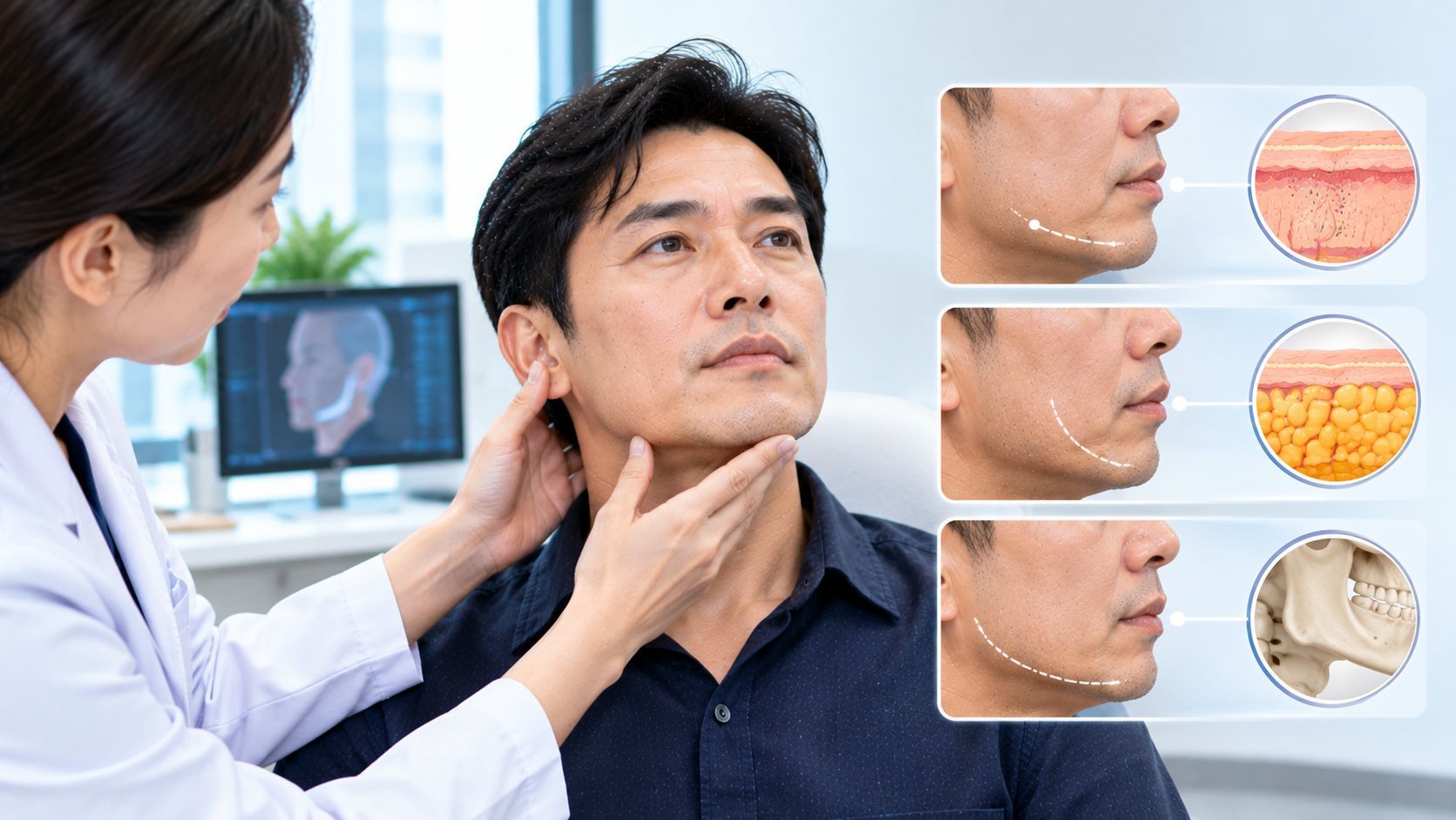
Skin laxity, jowls, facial-volume changes, excess fat under the chin, muscle anatomy, weight loss, and the natural shape of the jaw can all create a similar appearance. Non-surgical treatments such as radiofrequency, microfocused ultrasound, and other collagen-stimulating procedures can improve mild to moderate laxity, but they cannot reproduce the correction of a surgical facelift or change the underlying bone structure.
For a man who wants to maintain a strong, natural-looking face, the goal should generally be better definition without unnecessarily slimming or reshaping the entire face.
Why Does a Man's Jawline Start to Sag?
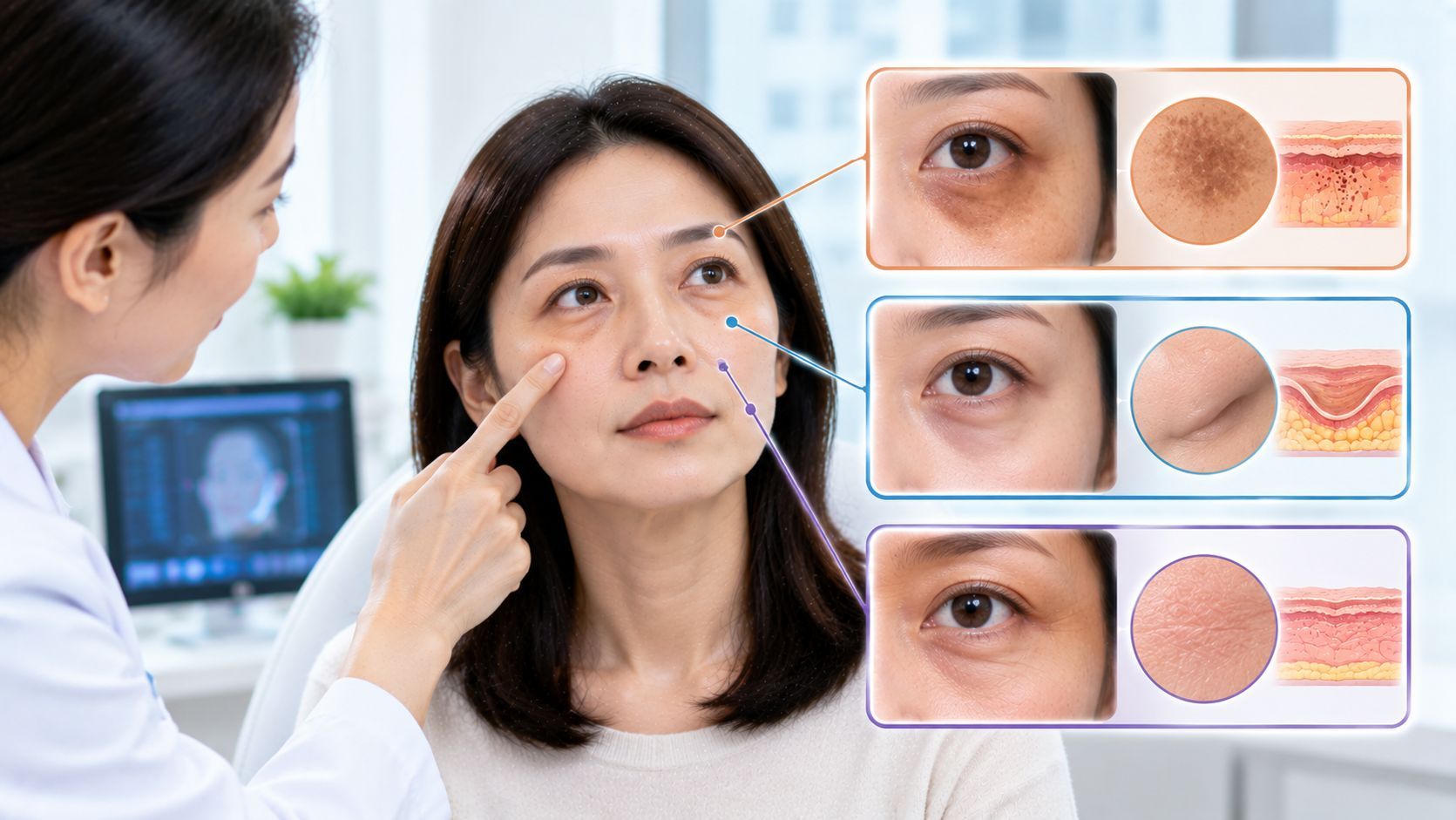
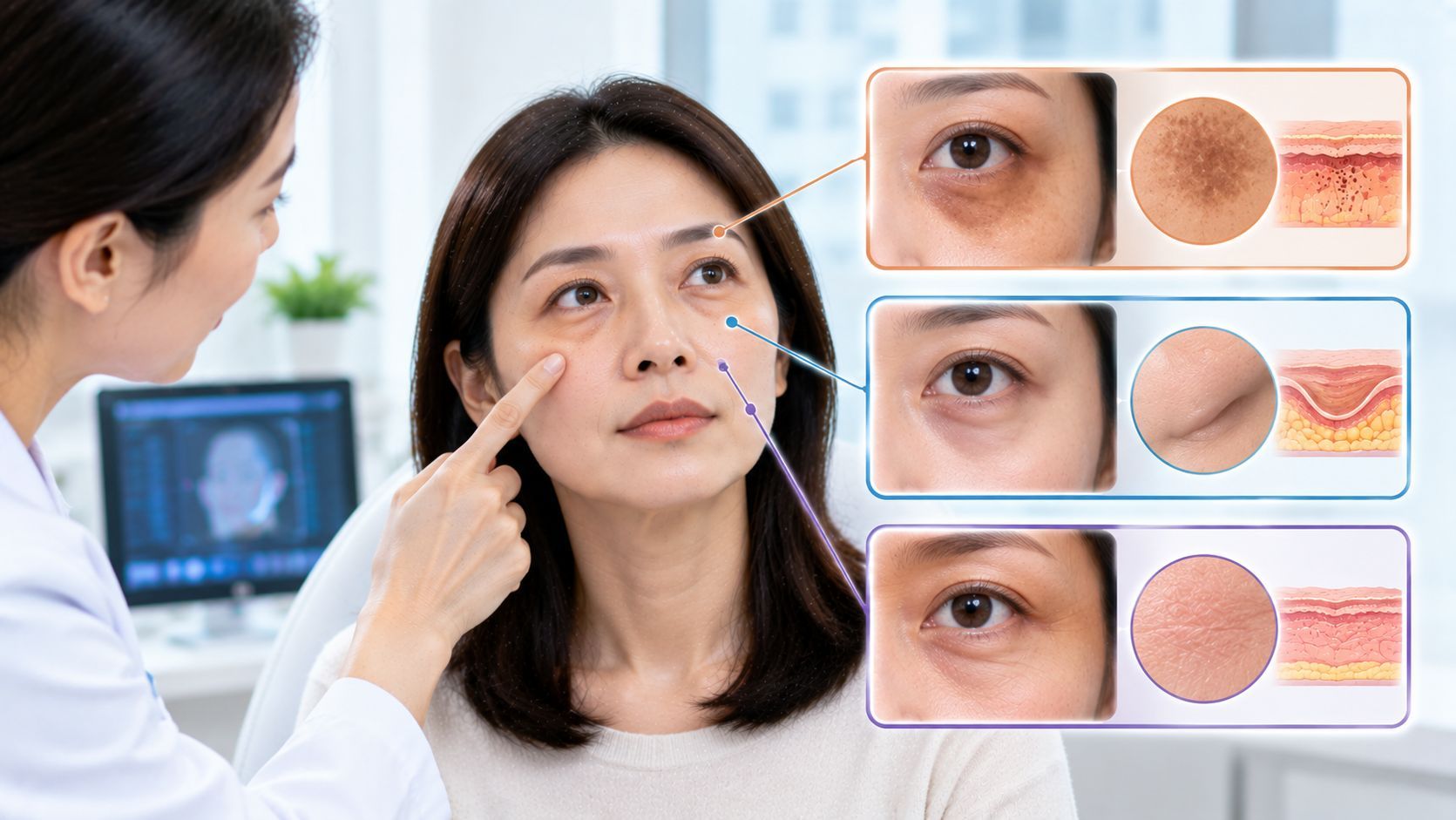
Skin Laxity
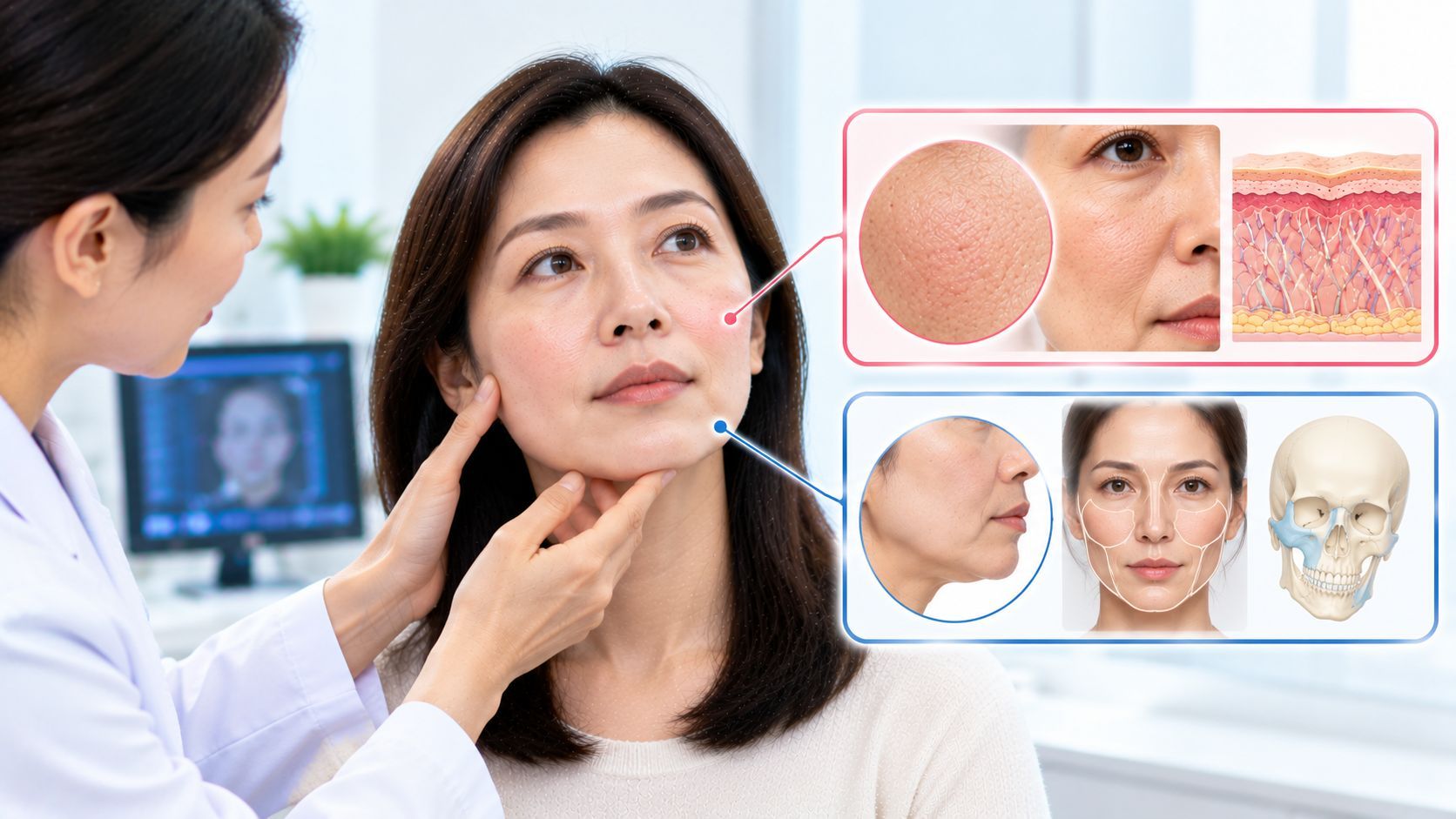
As skin ages, collagen and elastin change. The skin may gradually become less firm and begin to hang lower around the cheeks, jaw, and neck.
This can create:
- Early jowls
- Softer jawline definition
- Loose skin below the chin
- Less separation between the jaw and neck
Radiofrequency and ultrasound-based treatments are among the non-surgical technologies used for facial and neck laxity.
Facial-Volume Changes
Aging can also change the distribution and amount of facial soft tissue.
If a man's face has become thinner with age or after weight loss, simply tightening the skin may not completely restore the appearance of the jawline.
This is why a dermatologist should determine whether the problem is primarily loose skin, loss of volume, excess fat, or a combination.
Submental Fat
Some men have a defined jawbone but a noticeable amount of fat beneath the chin.
In that situation, tightening the skin alone may not produce the expected contour.
Fat reduction and skin tightening are different treatment objectives.
Jaw Structure
A naturally recessed chin or less prominent mandibular structure can make the jawline appear weak even when the skin is relatively tight.
No skin-tightening treatment can create new bone projection.
What Is the Best Non-Surgical Option for Mild Sagging?
If skin laxity is the primary issue, several non-invasive technologies may be considered.
Radiofrequency Skin Tightening
Radiofrequency heats tissue beneath the skin and is used to stimulate collagen remodeling.
Clinical literature supports RF as a non-surgical option for mild facial laxity, although the degree of improvement varies and the evidence differs between devices and protocols.
The American Academy of Dermatology describes non-invasive RF as a treatment that can gradually improve skin tightening, with results developing over time as collagen remodeling occurs.
For a man who wants a subtle improvement rather than a dramatic facial change, this gradual approach may be attractive.
Thermage
Thermage is a form of monopolar radiofrequency treatment.
It may be considered when reduced firmness is contributing to a softer jawline.
The objective is not to create a new jaw shape. Instead, the goal is to improve skin firmness so that existing facial contours are more clearly defined.
Ultherapy and Microfocused Ultrasound
Microfocused ultrasound can deliver energy at selected depths beneath the skin.
Research describes its use for lifting and tightening facial and neck skin in patients with mild-to-moderate laxity.
A randomized split-face trial comparing monopolar RF with microfocused ultrasound found improvement in facial and upper-neck laxity with both approaches over six months, without a statistically significant difference between the two in the study's standardized outcomes.
This illustrates why there is not necessarily one universally superior technology.
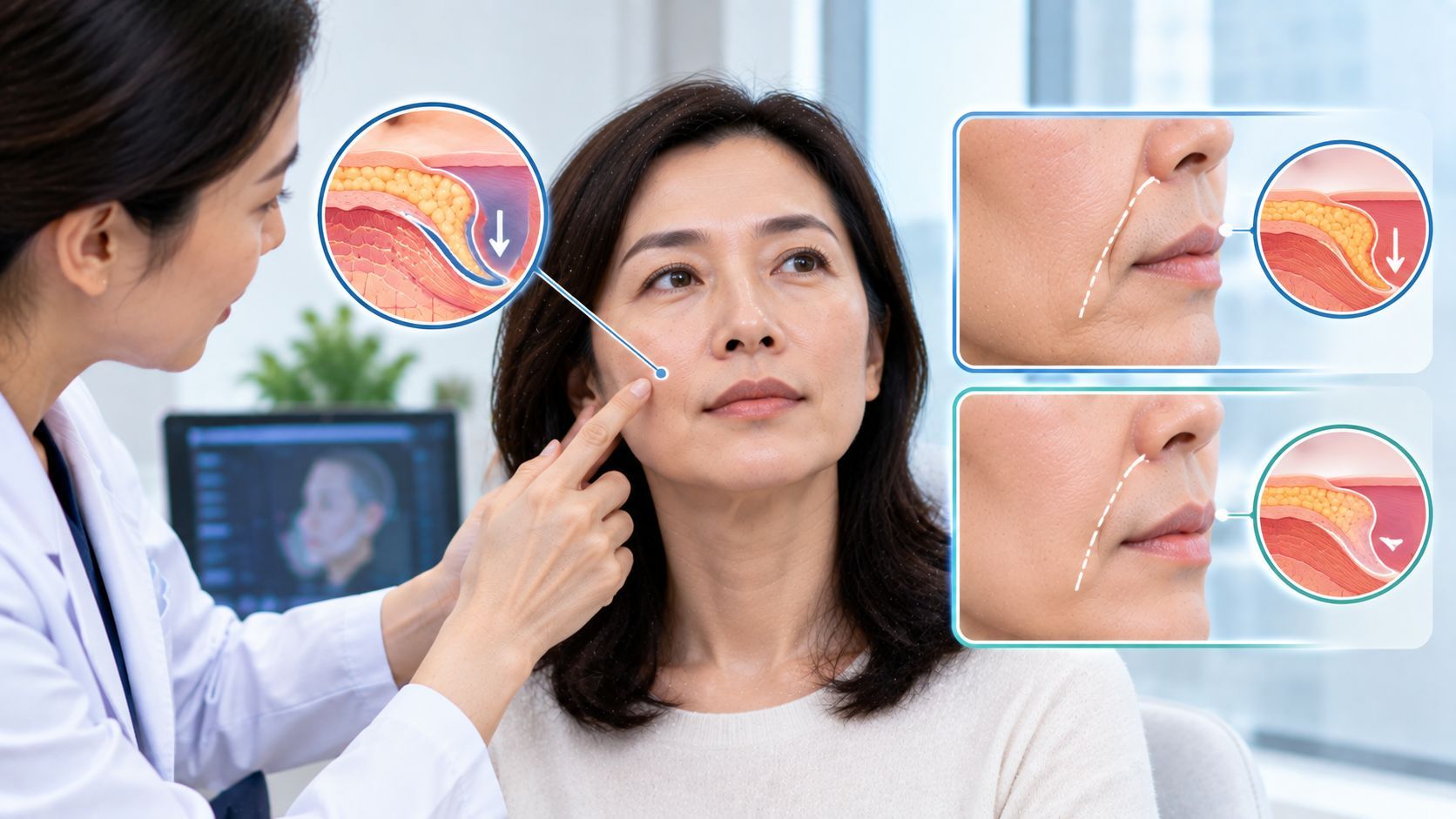
What If the Main Problem Is Jowls?
Jowls are not simply "loose skin."
They can reflect a combination of:
- Skin laxity
- Changes in facial fat
- Ligament and connective-tissue changes
- Loss of youthful cheek support
- Aging around the lower face
If the jowls are mild, a tightening treatment may improve their appearance.
If they are substantial, however, a non-surgical procedure may provide only limited correction.
A dermatologist should examine the face from the front and side rather than selecting a treatment based only on a photograph.
What If the Skin Is Loose but the Face Is Already Thin?
This is one of the most important situations to discuss.
A thin-faced man may see sagging because the skin has lost support, but aggressive attempts to make the face smaller are not necessarily appropriate.
Your treatment goal might instead be:
preserve volume + improve firmness + maintain facial proportions.
This is particularly relevant after major weight loss.
Radiofrequency literature includes evidence of volumetric fat changes with some RF approaches, so the specific device and protocol matter when preserving facial fullness is a priority.
Tell the dermatologist if you are concerned about losing facial volume.
What If I Have a Double Chin Too?
A sagging jawline and a double chin can occur together, but they should not automatically be treated as the same problem.
Mostly fat
A fat-reduction strategy may be considered.
Mostly loose skin
Skin tightening may be more relevant.
Fat + loose skin
A combination approach may sometimes be discussed.
Weak chin structure
Neither fat reduction nor skin tightening addresses the underlying skeletal projection.
Correctly identifying the cause can prevent you from undergoing a treatment that targets the wrong tissue.
What About RF Microneedling?
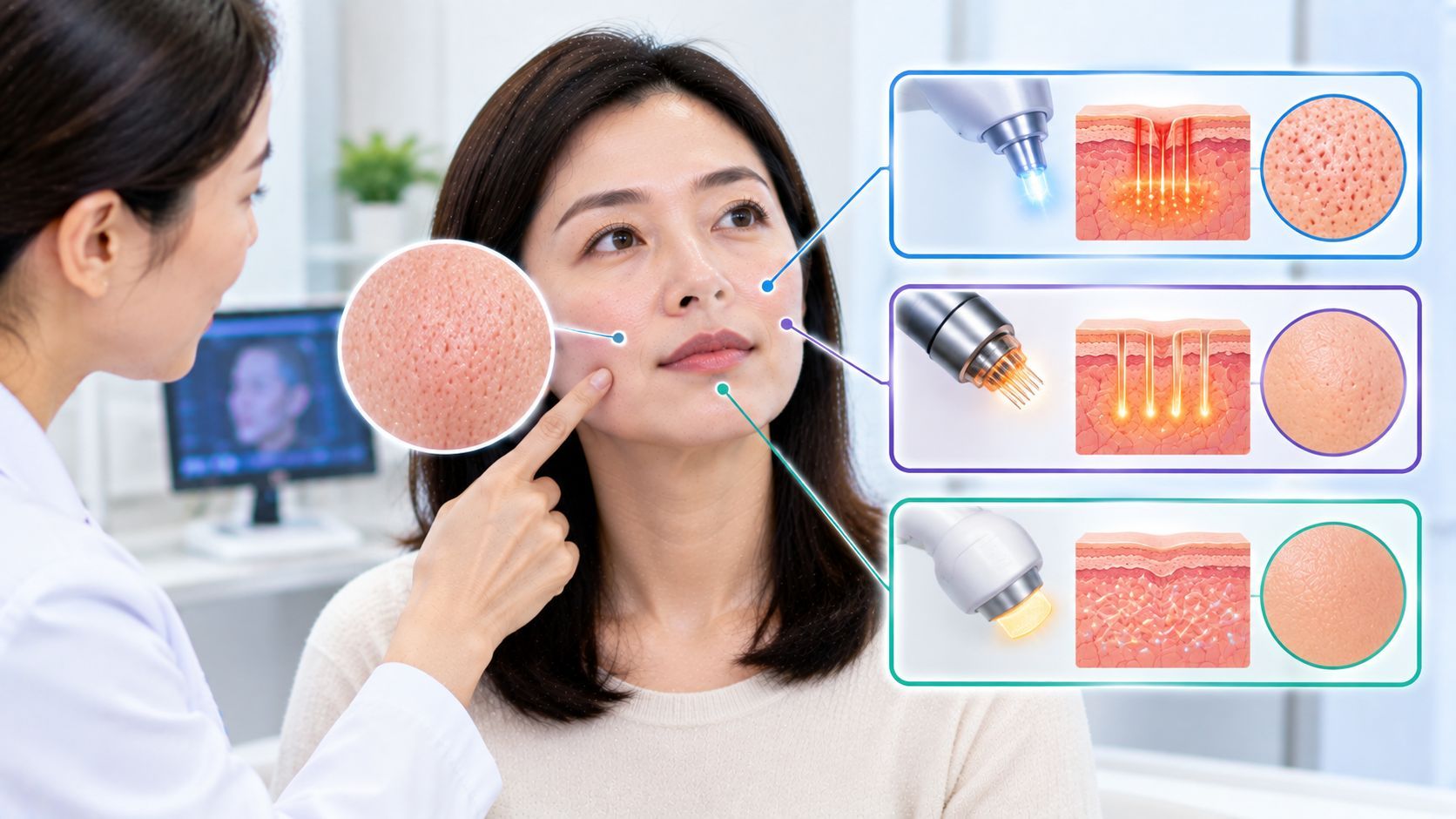
RF microneedling combines controlled needle placement with radiofrequency energy.
It may be considered when the patient has a combination of:
- Skin laxity
- Uneven texture
- Acne scars
- Enlarged pores
- Mild lower-face aging
However, RF microneedling is not automatically a better choice than non-invasive RF.
The treatment depth, energy, needle configuration, and target tissue differ.
For someone whose only concern is mild jawline laxity, a dermatologist may recommend a different technology.
Can Botox Improve a Sagging Jawline?
Sometimes the appearance of the lower face is influenced by muscle activity, but Botox does not directly tighten loose skin.
Masseter Botox, for example, reduces masseter muscle activity and size. It is primarily used when masseter hypertrophy is contributing to a wider lower face.
If your goal is a stronger, more defined masculine jawline, deliberately reducing the masseter may not be what you want.
This is an important distinction:
jawline definition is not always the same as facial slimming.
Can Filler Define a Man's Jawline?
Filler can alter contour by adding volume in selected areas.
For some men with structural volume deficiency, this may be discussed.
However, filler is not necessarily appropriate if your main concern is loose skin.
And if you specifically want to avoid changing your facial shape or adding volume, tell your dermatologist.
A natural-looking male jawline does not require everyone to receive jawline filler.
When Is HIFU Better Than RF?
There is no universal answer.
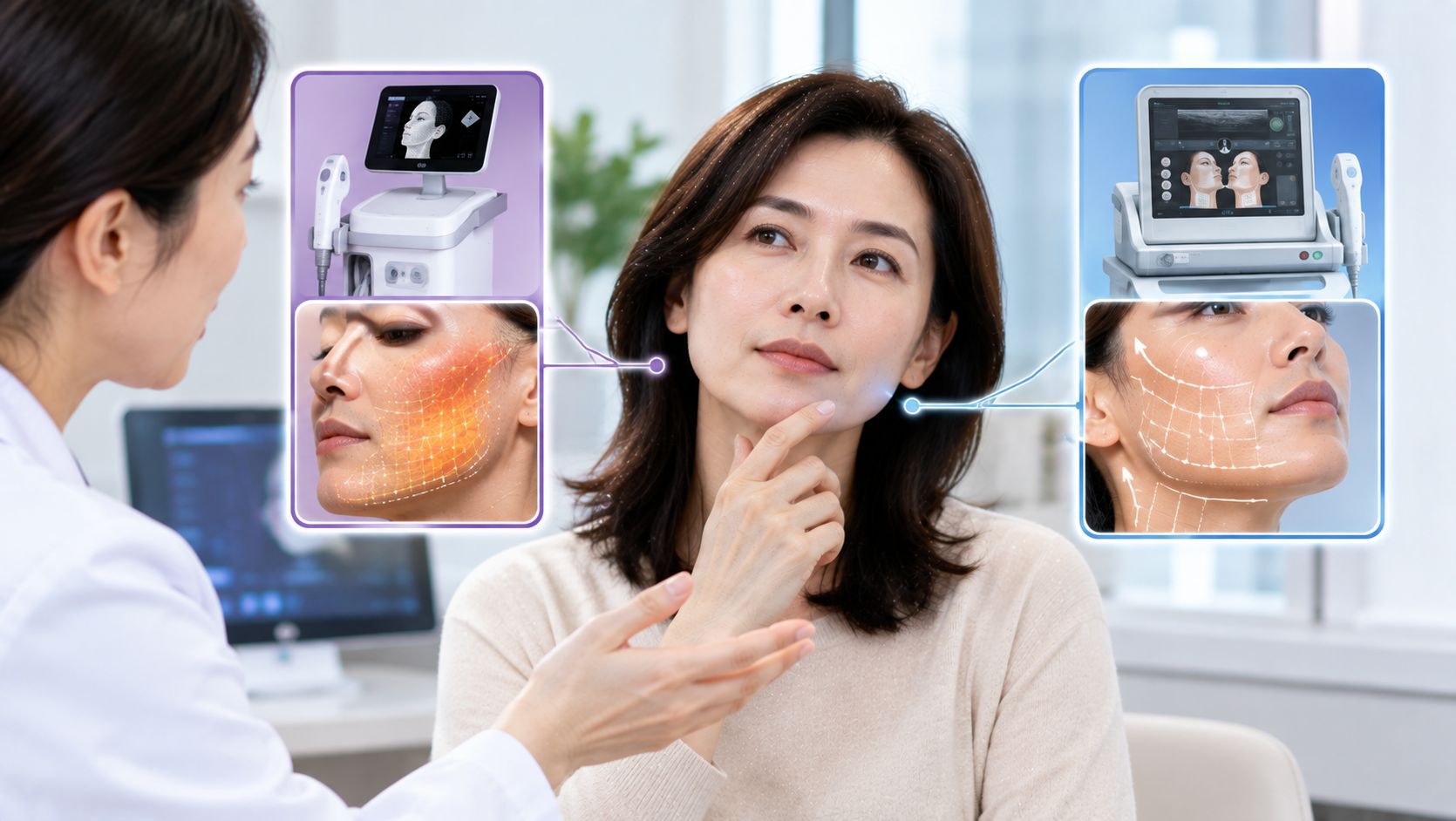
Both RF and microfocused ultrasound can be used for non-surgical facial tightening, and studies have demonstrated improvement with both approaches.
The more useful question is:
Which technology and treatment depth are appropriate for my anatomy?
A dermatologist may consider:
- Amount of laxity
- Skin thickness
- Facial-fat distribution
- Jawline anatomy
- Treatment area
- Desired degree of lifting
- Previous procedures
The treatment should be selected around your anatomy rather than around a device's popularity.
What If the Sagging Is Severe?
Non-surgical treatments have limits.
The AAD notes that non-invasive tightening provides modest lifting and tightening, while surgical procedures such as a facelift or neck lift can provide substantially greater correction for significant laxity.
If you have substantial hanging skin, pronounced jowls, or significant neck laxity, repeatedly increasing the intensity of non-surgical treatments may not produce the result you expect.
A consultation with an appropriately qualified dermatologist or facial plastic surgeon can clarify the available options.
What About a Man Who Wants a Very Natural Result?
This should be stated explicitly.
You might tell your Korean dermatologist:
"I want my jawline to look firmer, but I don't want my face to become narrower or noticeably different."
That communicates an important distinction.
Your desired result may be:
- Less loose skin
- Better separation between jaw and neck
- Reduced appearance of early jowls
- Preserved facial width
- Natural facial movement
- No exaggerated V-line
A conservative treatment plan may be more consistent with these goals.
How Should You Choose a Korean Treatment?
A useful framework is:
Main problemTreatment category to discussMild skin laxityRF or ultrasound tighteningEarly jowlsTargeted tighteningLoose skin + texture problemsRF microneedling may be consideredDouble chin from fatFat-reduction optionsThin face + laxityConservative tightening and volume-preservation strategyWeak chin structureStructural evaluationSevere loose skinSurgical consultation may be appropriate
These are categories, not prescriptions. A medical examination is needed to determine which actually applies.
What Should You Ask at a Seoul Dermatology Consultation?
Before treatment, ask:
- What is actually causing my jawline to sag?
- Is this skin laxity, fat, volume loss, or anatomy?
- Would RF or ultrasound be more appropriate for me?
- Could treatment affect facial volume?
- Do I need my entire face treated?
- Can we focus specifically on the jaw and neck?
- How much improvement is realistic?
- How long will results take to develop?
- What happens if the treatment does not provide enough correction?
These questions are especially useful when comparing clinics in Seoul.
Conclusion
There is no single "best" treatment for every man's sagging jawline.
If mild skin laxity is the main problem, radiofrequency or microfocused ultrasound may be appropriate non-surgical options. If texture and laxity coexist, RF microneedling may be considered. If excess fat, volume loss, or jaw structure is the main issue, a different strategy may be more relevant.
For men, preserving facial character can be just as important as improving laxity.
The goal should not simply be the tightest possible jawline. It should be a jawline that looks firmer and more defined while still looking like your own face.
Frequently Asked Questions
What is the best treatment for a man's sagging jawline?
For mild-to-moderate skin laxity, RF and microfocused ultrasound are commonly considered non-surgical options. The appropriate choice depends on the cause and degree of sagging.
Is Thermage good for men's jawlines?
Thermage may be considered when skin laxity is contributing to reduced jawline definition. It does not correct every cause of a weak or sagging jawline.
Can HIFU tighten a man's jawline?
Microfocused ultrasound can improve selected cases of facial and neck laxity. It is generally more appropriate for mild-to-moderate laxity than severe excess skin.
Can RF make a man's face too thin?
Some RF technologies have been associated with volumetric fat changes, so the device, depth, energy, and treatment plan matter—especially for men with naturally thin faces.
Should men get jawline filler instead of tightening treatment?
Not necessarily. Filler adds volume, while tightening treatments primarily address laxity. The correct approach depends on whether the jawline problem comes from volume, skin, fat, or structural anatomy.
Can non-surgical treatment fix severe jowls?
Non-surgical procedures can provide modest improvement, but substantial skin laxity may require a surgical approach for a more significant correction.