I'm a Man With Very Thick Skin. Do Lifting Treatments Work Differently?
Introduction
Men with naturally thick or dense facial skin often wonder whether non-surgical lifting treatments will work as well for them. It is a reasonable question because facial anatomy differs considerably between individuals, and treatment response depends on more than simply being male or having “thick skin.”
Thicker skin does not automatically mean that Thermage, radiofrequency (RF), Ultherapy, HIFU, or other lifting treatments will not work. However, skin thickness, facial fat, muscle size, bone structure, degree of laxity, and the depth targeted by the device can all influence treatment planning.
For men seeking treatment in Korea, the important issue is usually not finding the strongest possible treatment. It is choosing an energy source, treatment depth, and treatment intensity that address the actual cause of sagging without unnecessarily changing the natural masculine structure of the face.
Does Thick Skin Make Lifting Treatments Less Effective?
Not necessarily.
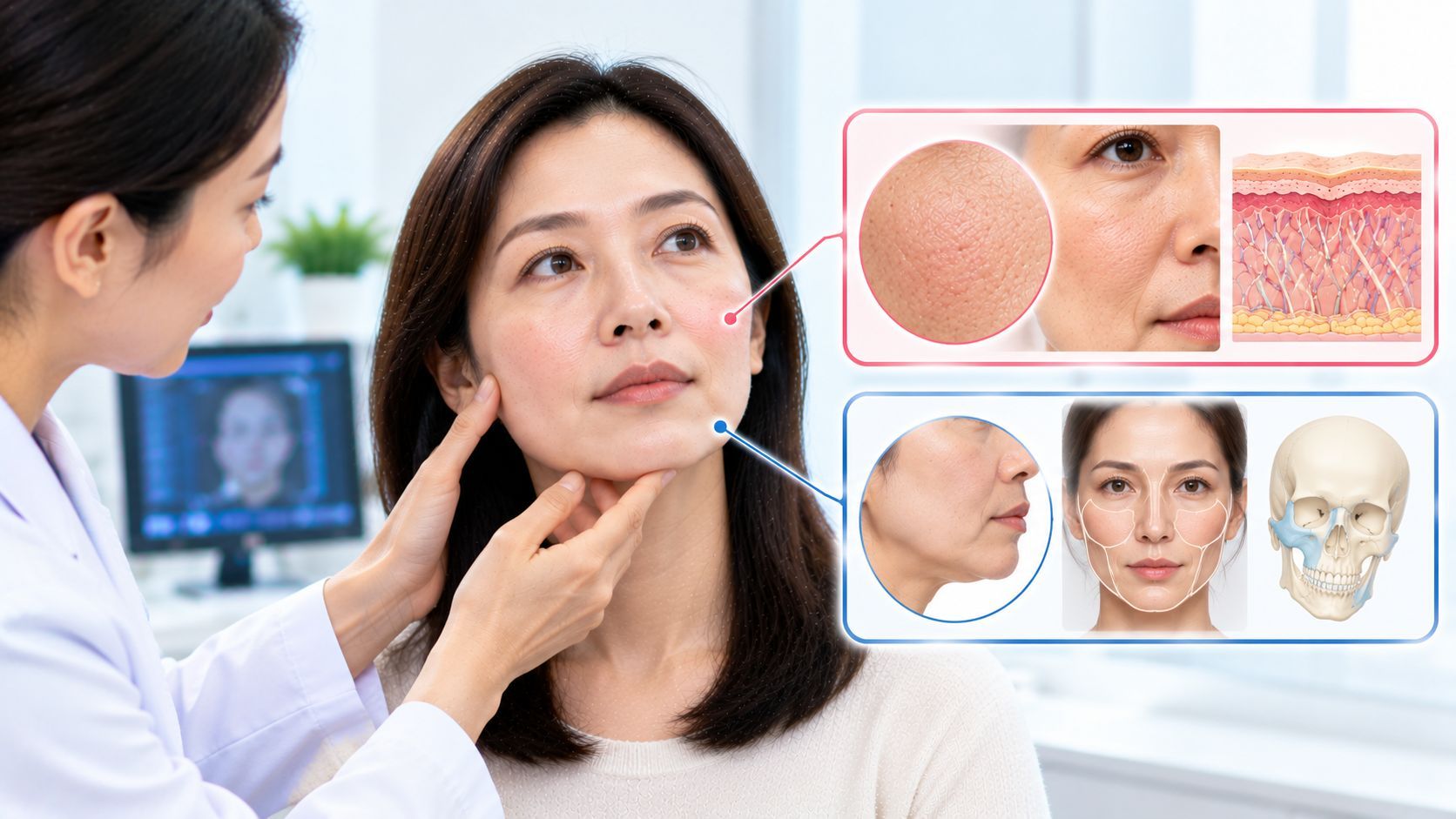
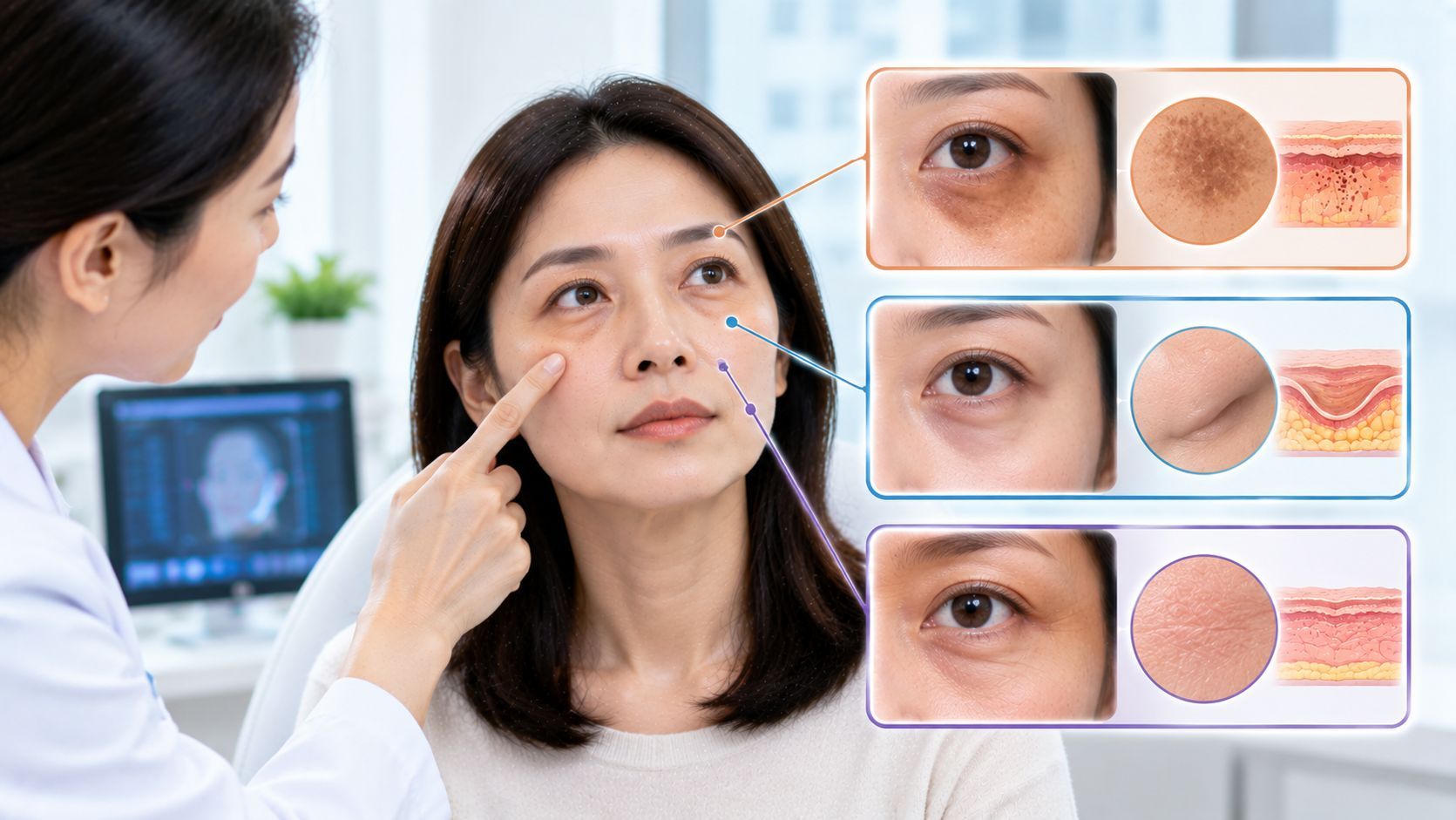
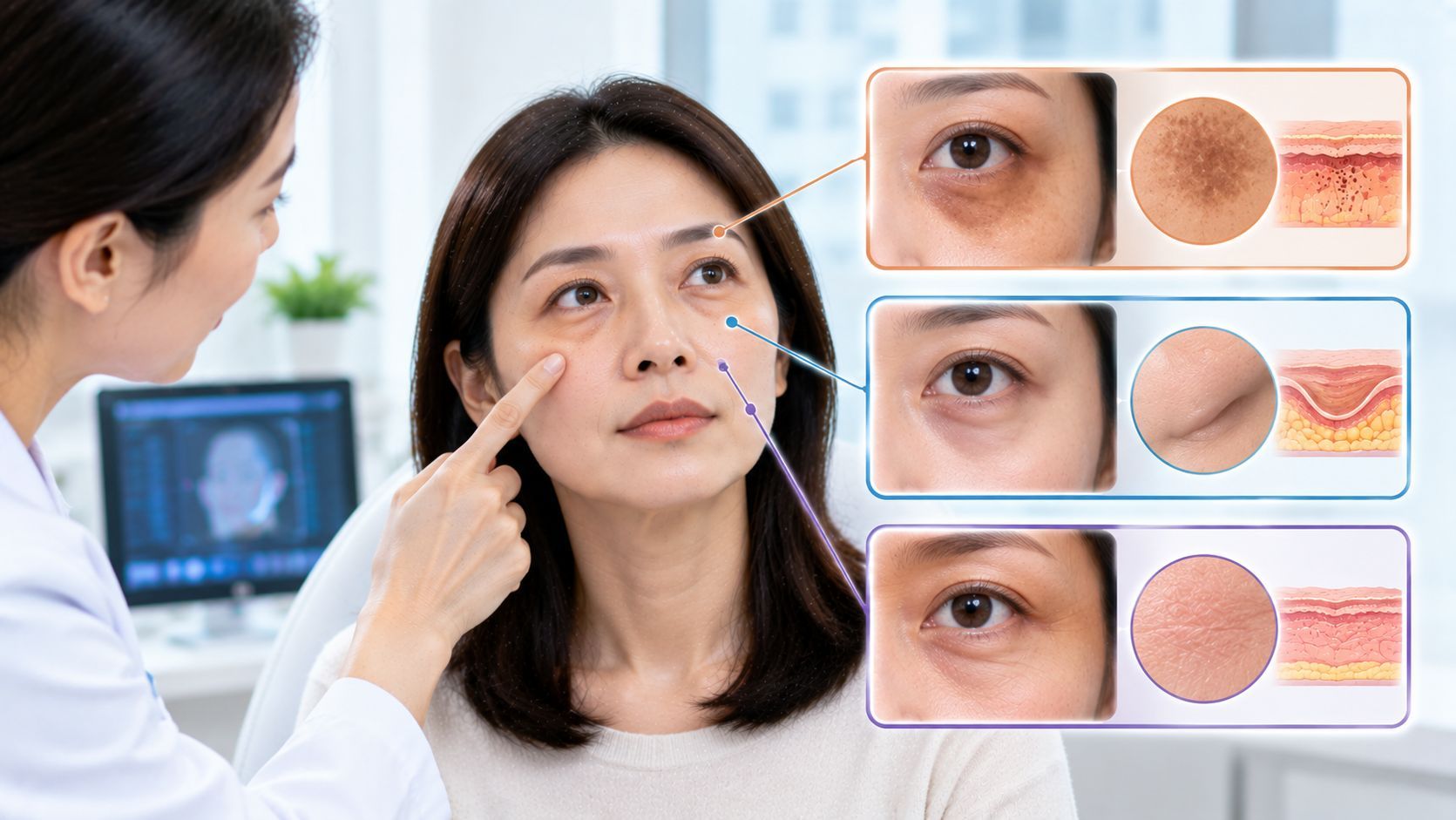
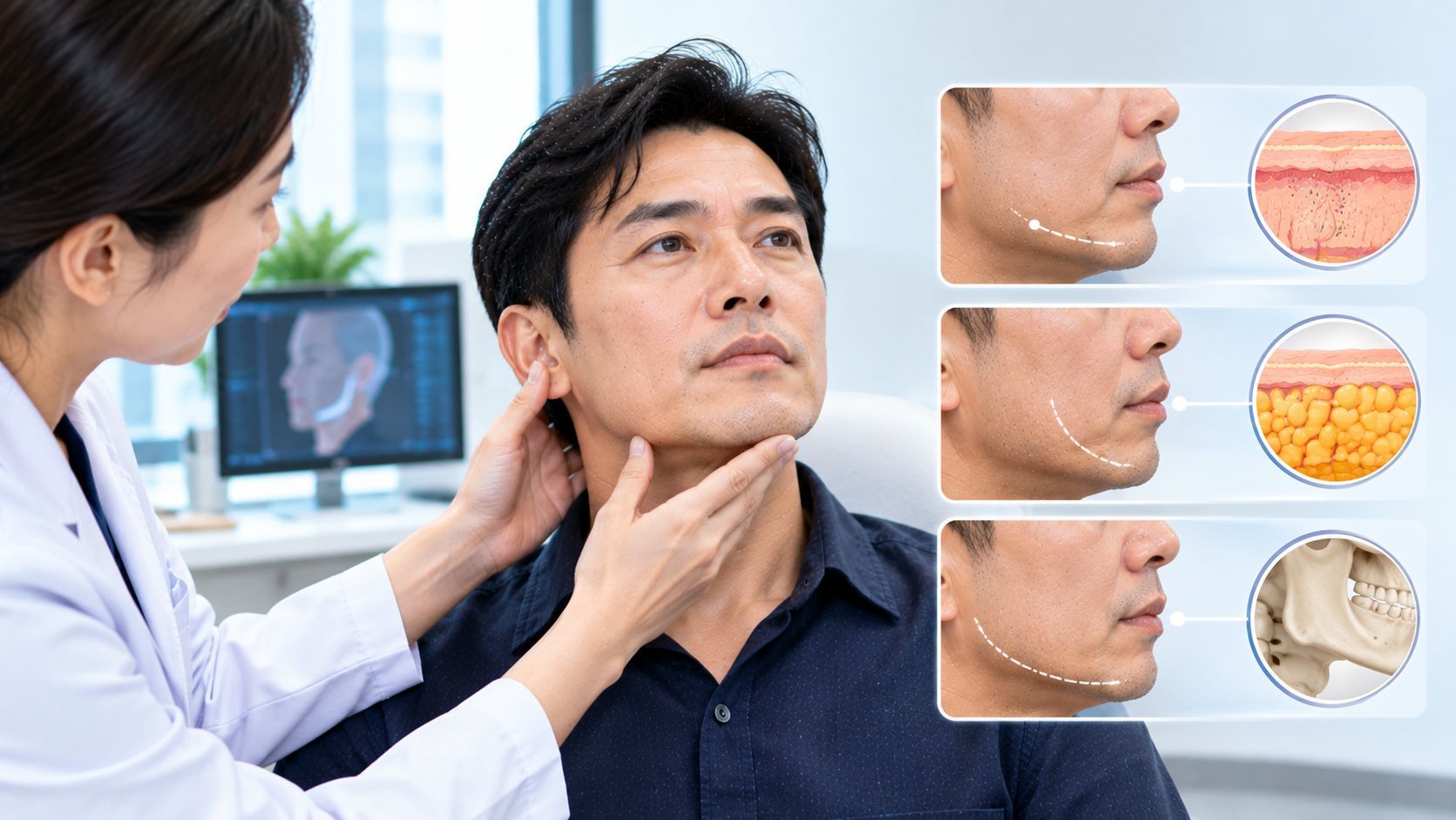
“Thick skin” can refer to several different things. A man may have a thicker dermis, more sebaceous activity, denser connective tissue, a larger facial skeleton, or simply more substantial facial soft tissue.
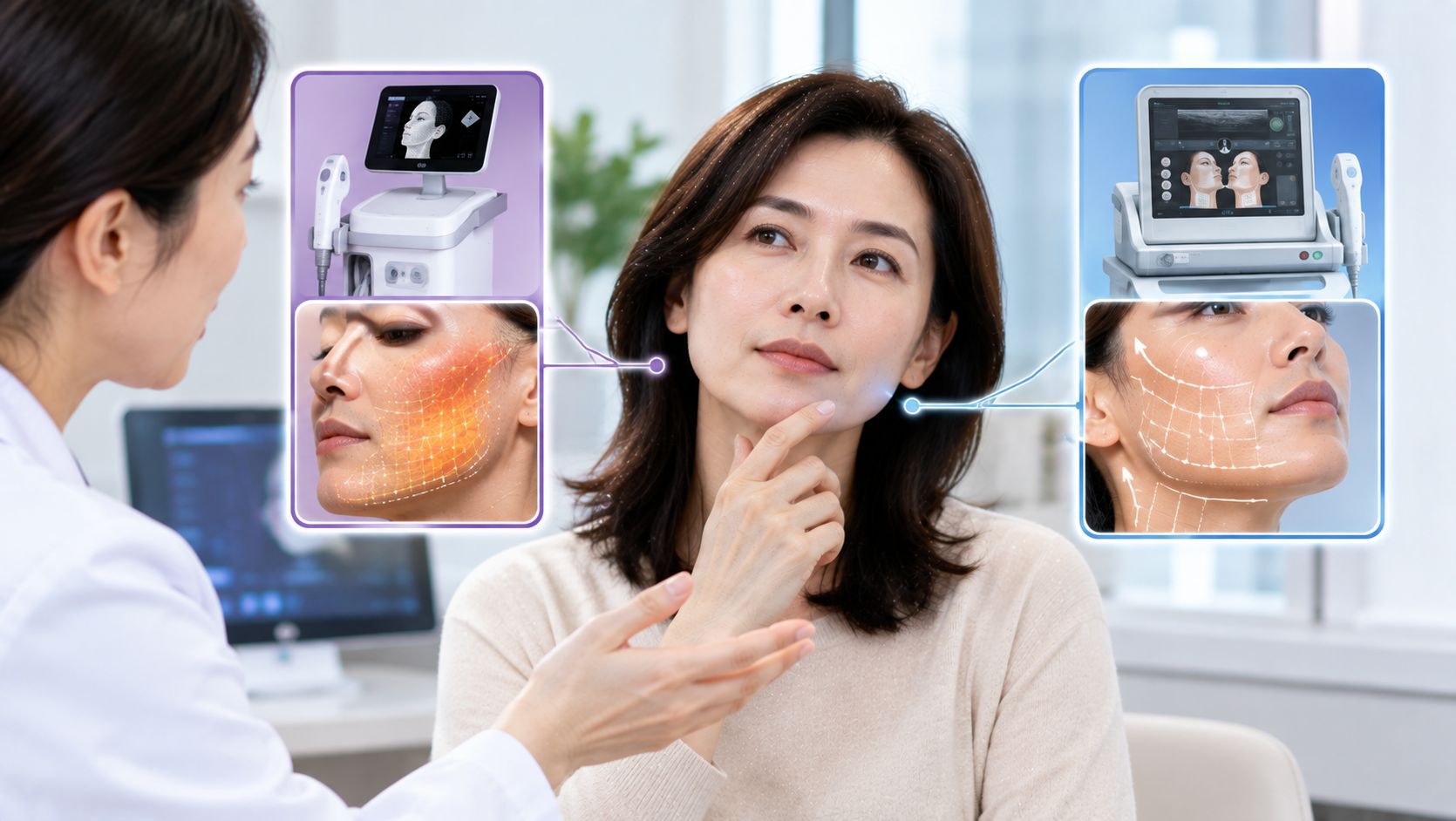
Non-surgical lifting devices work by delivering controlled energy into selected tissue layers. RF treatments heat tissue to stimulate remodeling, while microfocused ultrasound delivers focused energy at specific depths. These approaches are intended to encourage collagen remodeling and improve skin laxity rather than simply shrinking the surface of the skin.
Therefore, a man with thicker skin may still respond well. The question is whether the treatment is reaching the appropriate tissue layer and whether skin laxity is actually the main reason the face looks less defined.
Why Men's Facial Anatomy Matters
A man's face is not simply a larger version of a woman's face.
Many men have:
- Thicker facial skin
- Greater sebaceous gland activity
- More prominent facial muscles
- Stronger underlying bone structure
- Different patterns of facial fat distribution
- A wider or heavier lower face
- More substantial jaw and chin anatomy
These characteristics can affect how aging appears.
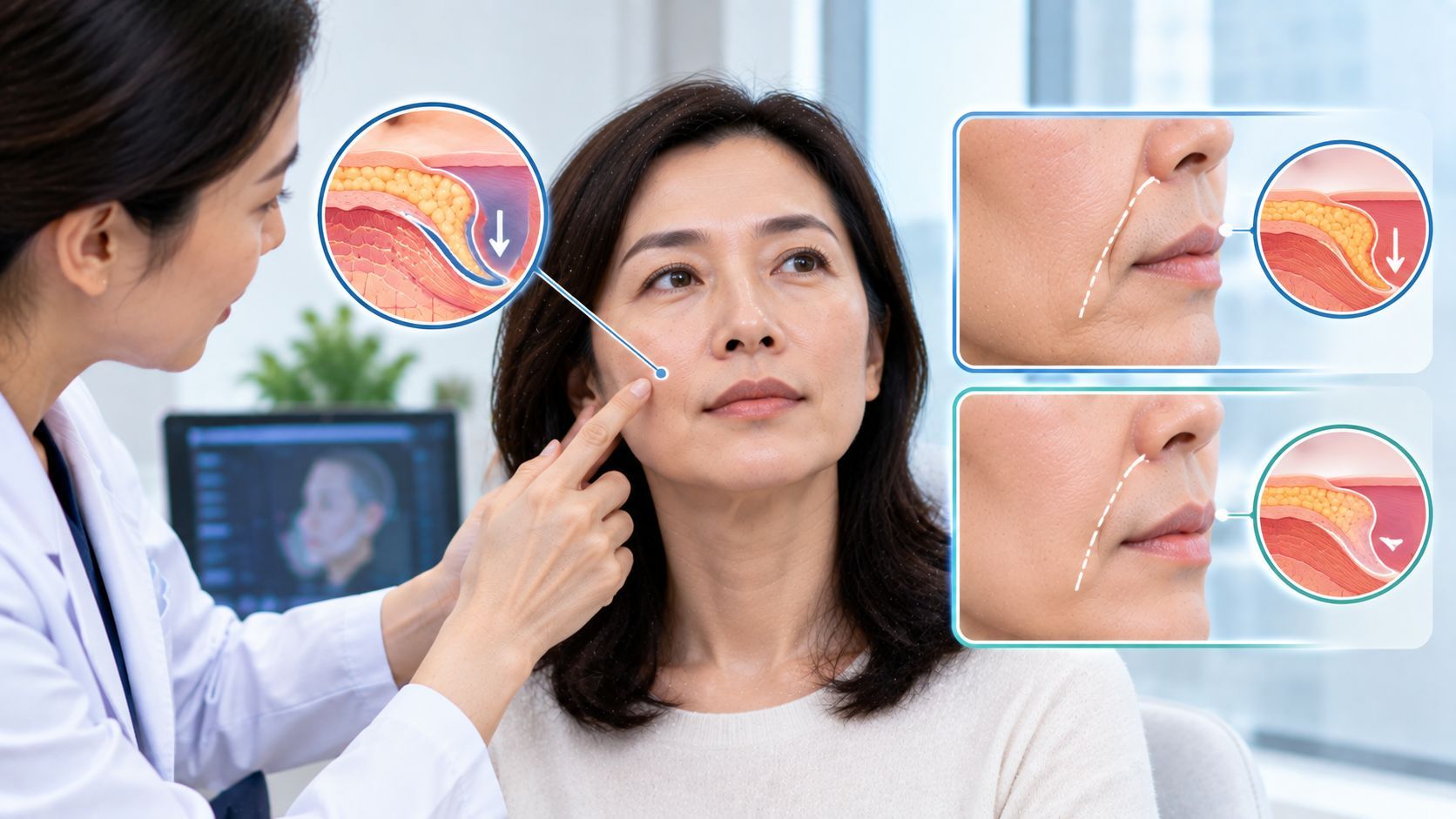
For example, a man with a strong jawbone may still have a good underlying framework but develop lax skin around the jawline. Another man may have a heavy lower face because of muscle or fat rather than loose skin.
This distinction matters because tightening skin will not necessarily correct every cause of an undefined jawline.
Which Lifting Treatments Can Be Used for Thick Male Skin?
Radiofrequency Treatments
RF is commonly used for non-surgical skin tightening. The device heats tissue beneath the surface and can stimulate collagen remodeling over time. The American Academy of Dermatology notes that radiofrequency tightening generally produces gradual improvement, with the best results developing over several months.
A systematic review of RF treatments for facial rejuvenation also found evidence of improvements in skin laxity, elasticity, and overall facial appearance, although treatment devices and protocols vary considerably.
For a man with thicker skin, RF may be considered when the primary problem is:
- Mild to moderate skin laxity
- Loss of firmness
- Early jawline blurring
- Loose neck skin
- Reduced skin elasticity
The important point is that stronger RF is not automatically better. Excessive heating or inappropriate treatment parameters can create unwanted effects, so treatment should be individualized.
Thermage and Other Non-Invasive RF Options
Thermage is one example of non-invasive RF technology used for skin tightening.
For men, the objective is generally not to make the face dramatically smaller or sharper. Instead, treatment can be planned around areas where laxity is actually present, such as the lower face, jawline, or neck.
A man with thick skin may require careful treatment mapping rather than simply increasing energy.
This is particularly important if the face is already lean.
Ultherapy and Microfocused Ultrasound
Microfocused ultrasound works differently from surface-level heating because it delivers focused energy into selected deeper tissue planes.
Evidence supports its ability to produce modest lifting and tightening in appropriately selected patients with facial or neck laxity. However, systematic reviews also emphasize that results depend on patient selection, treatment settings, and the degree of laxity.
Interestingly, a recent systematic review and meta-analysis included both women and men and found promising improvement in skin sagging, while also noting that better-quality standardized research is still needed.
For a man with thick skin, ultrasound may therefore be useful when the problem involves deeper tissue laxity rather than simply poor surface texture.
Does Thick Skin Mean You Need Higher Energy?
This is one of the biggest misconceptions.
A thicker face does not automatically mean that the doctor should use the highest energy setting.
Treatment parameters depend on much more than skin thickness. A dermatologist may consider:
- Skin thickness
- Facial fat volume
- Bone structure
- Degree of laxity
- Treatment area
- Previous procedures
- Age-related volume loss
- Muscle size
- Desired degree of change
- Risk of unwanted volume reduction
The goal is controlled treatment, not maximum energy.
RF literature shows that different devices and treatment protocols can produce different outcomes, and there is considerable variation in the parameters used in studies.
What If My Face Is Thick Because I Have a Lot of Facial Fat?
This is different from having thick skin.
If a man's lower face looks heavy because of substantial facial fat, tightening alone may not create the desired jawline.
Similarly, if the lower face is bulky because of large masseter muscles, an energy-based tightening treatment may not address the main source of width.
A proper consultation should distinguish among:
Loose skin: tightening may be useful.
Facial fat: fat management may need to be considered.
Large masseter muscles: muscle-related width may require a completely different approach.
Weak chin or jaw structure: structural considerations may be more important.
Combination of problems: several conservative treatments may sometimes be considered rather than increasing the intensity of one procedure.
This is why simply asking for “the strongest lifting treatment” is not always helpful.
Can Thick Skin Require More Than One Treatment?
Sometimes.
Non-surgical lifting generally produces more subtle changes than surgery. The AAD notes that ultrasound and RF treatments can provide gradual tightening and that some patients benefit from additional treatments.
However, the appropriate number of treatments depends on the device, indication, and patient's response.
A man with mild laxity may need relatively little intervention. Someone with significant laxity may require a different strategy altogether.
Repeating treatments too aggressively simply because the first result was subtle is not necessarily appropriate.
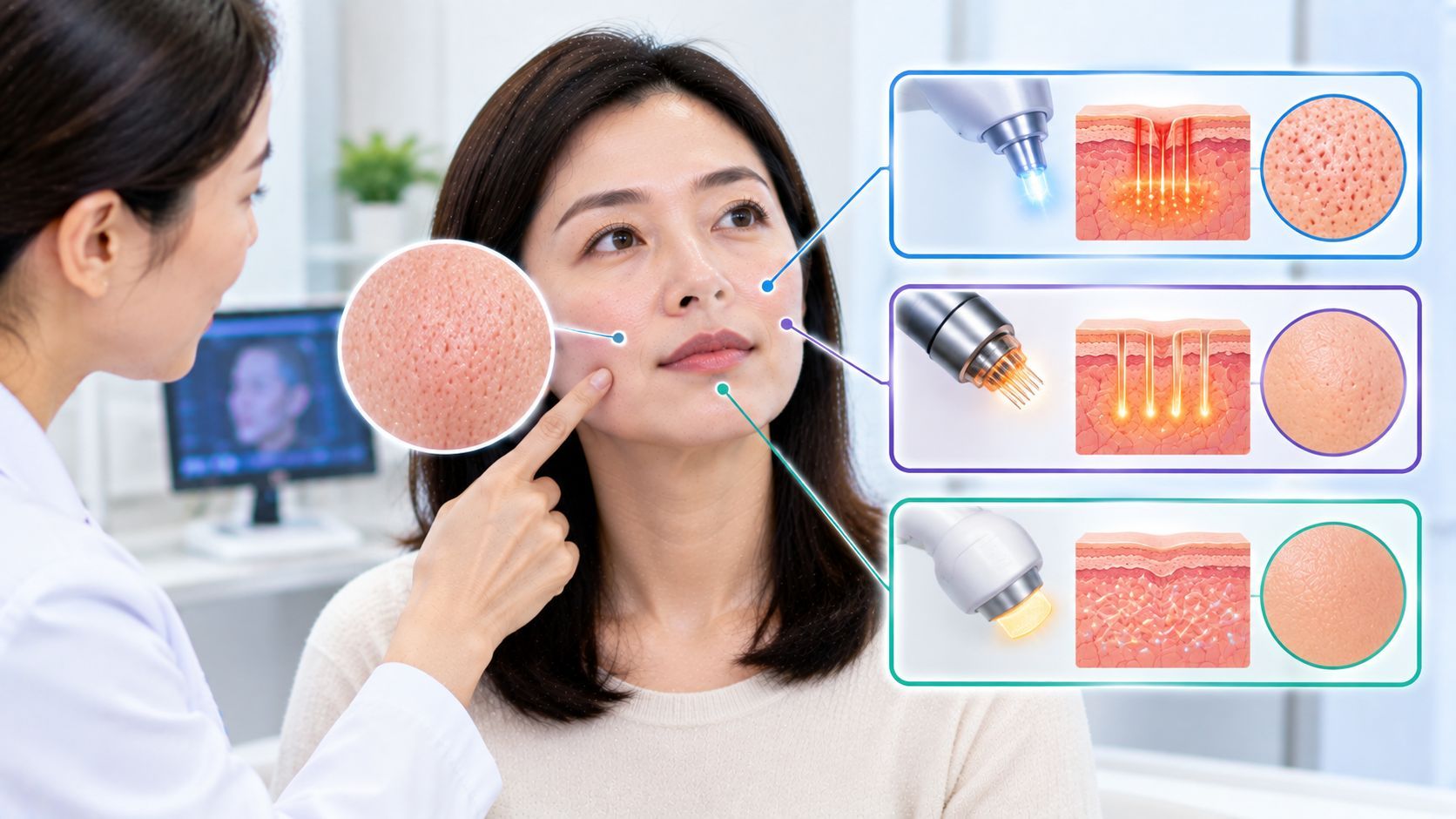
What About RF Microneedling for Thick Male Skin?
RF microneedling combines controlled needle placement with radiofrequency energy.
It may be considered when a patient has both:
- Skin laxity
- Texture concerns such as enlarged pores, acne scars, or uneven skin
Because the energy is delivered through needles into selected tissue depths, treatment can be customized more precisely than some surface treatments.
However, it is not automatically the best option for every man with thick skin. If the primary concern is significant jawline laxity rather than texture, another modality may be more appropriate.
Could Aggressive Tightening Make a Thin Male Face Look Worse?
Yes, this is an important consideration.
A man can have thick skin but relatively little facial fat.
These are two different characteristics.
If someone has a lean face, hollow cheeks, prominent cheekbones, or previous facial volume loss, treatment planning should account for the possibility that unnecessary treatment of deeper tissues could affect facial fullness.
Reports of adverse events following microfocused ultrasound include transient swelling and redness, while rare events such as subcutaneous atrophy have also been reported in the literature.
That does not mean these treatments routinely cause facial volume loss. It means facial anatomy and treatment parameters matter, particularly when preserving natural facial volume is important.
How Should a Korean Dermatologist Plan Treatment for Thick Male Skin?
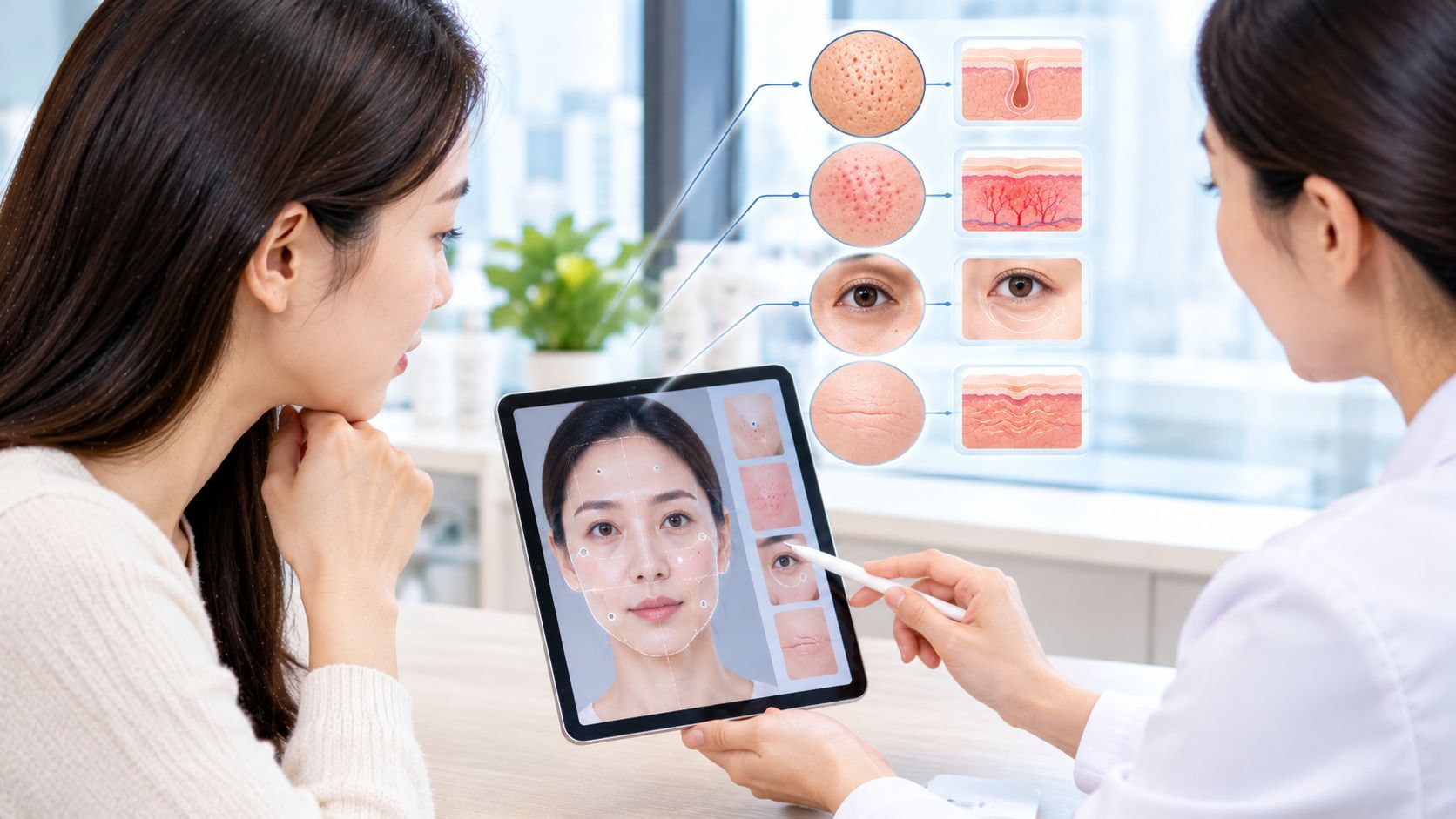
A consultation should ideally assess the face from several angles rather than focusing only on skin thickness.
The dermatologist may evaluate:
- Skin laxity — Is the skin actually loose?
- Skin thickness — How substantial is the dermal tissue?
- Facial fat — Is excess or insufficient volume contributing to the appearance?
- Muscle size — Particularly around the masseter and lower face.
- Jaw and chin structure — Does the underlying skeleton provide adequate support?
- Skin quality — Are pores, acne scars, or rough texture also concerns?
- Previous treatments — Including Botox, filler, HIFU, RF, or other procedures.
- Desired result — Subtle improvement versus more noticeable tightening.
This assessment is particularly valuable for international patients visiting Seoul because there may be pressure to combine several procedures into a short trip. More treatment is not necessarily better treatment.
Will Thick Male Skin Need a Stronger Treatment Than Female Skin?
There is no universal rule.
Some men may need treatment that reaches deeper tissue or requires more carefully selected parameters because of their anatomy. But sex alone should not determine the energy level or number of treatments.
Research on microfocused ultrasound has historically included many more female than male participants, although newer evidence includes substantial numbers of men. This means some treatment decisions for men still require individualized clinical judgment rather than relying on a simple “male setting.”
The same principle applies to RF.
What Is the Most Natural Approach for a Man With Thick Skin?
If the goal is to look fresher without changing facial identity, the best strategy is usually targeted correction rather than maximum tightening.
For example:
- Mild skin laxity → conservative RF or ultrasound may be considered.
- Deeper jawline laxity → microfocused ultrasound may be considered.
- Laxity plus poor texture → RF microneedling may have a role.
- Heavy lower face from muscle → assess whether muscle is contributing.
- Heavy lower face from fat → evaluate the fat component.
- Lean face with mild laxity → avoid unnecessarily aggressive treatment.
- Significant skin excess → discuss whether non-surgical treatment can realistically provide enough improvement.
The objective should be to improve the specific problem while preserving the patient's natural facial proportions.
Conclusion
Men with very thick skin can still benefit from non-surgical lifting treatments. Thick skin does not mean that Thermage, RF, Ultherapy, HIFU, or similar technologies will automatically be ineffective.
What changes is the importance of individual treatment planning.
Skin thickness is only one part of the equation. Facial fat, muscle, bone structure, laxity, skin quality, and previous treatments may be equally or more important. Evidence supports both RF and microfocused ultrasound for selected patients with facial laxity, but outcomes vary and treatment protocols are not interchangeable.
For a man seeking treatment in Korea, the most useful consultation is therefore not simply “Which lifting machine is strongest?” but “What is actually making my face look less defined, and which tissue layer should be treated?”
FAQs
Does thick male skin respond to Thermage?
Yes. Thick skin does not automatically prevent RF-based tightening from working. Treatment parameters should be selected according to anatomy, laxity, and the desired result.
Is HIFU better for men with thick skin?
Not necessarily. Microfocused ultrasound can target deeper tissue, but RF and ultrasound have different mechanisms and applications. A dermatologist should determine which tissue layer is contributing to laxity.
Do men need stronger lifting treatments than women?
There is no universal male-versus-female energy setting. Facial anatomy and the degree of laxity matter more than sex alone.
Can lifting treatments make a man's face look smaller?
Some energy-based treatments can affect deeper tissue, and rare reports of subcutaneous atrophy exist. This is particularly relevant when treating a lean face, so preserving facial volume should be discussed beforehand.
Can RF microneedling work on thick skin?
It can be considered, particularly when laxity occurs alongside texture concerns. However, it is not automatically the right choice simply because the skin is thick.
How long does non-surgical lifting take to show results?
Results are generally gradual. The AAD notes that ultrasound tightening can become more noticeable over roughly 2–6 months, while RF results can continue developing over several months as collagen remodeling occurs.