Can Removing Chin Fat Make Loose Skin Worse?
Introduction
Yes, removing submental fat can sometimes make loose skin appear more noticeable, particularly when the skin has limited elasticity. Fat provides some volume beneath the skin, so reducing it can reveal laxity that was previously less obvious. This is especially relevant after significant weight loss, with aging, or when the skin has already become thin and less elastic.
However, removing chin fat does not automatically cause loose skin. The outcome depends on how much fat is present, how elastic the skin is, the person's age and genetics, the amount of fat removed, and whether other structural factors contribute to the appearance of the double chin.
Before choosing a fat-reduction treatment, it is therefore important to determine whether the fullness under the chin is actually fat, loose skin, chin structure, or a combination.
Why Can Fat Removal Make Loose Skin More Noticeable?
Submental fat occupies space underneath the skin. When some of that volume is reduced, the skin has to adapt to the new contour.
Younger skin with good elasticity may contract relatively well after gradual fat reduction. Skin with reduced elasticity may not tighten to the same degree.
This can create a situation where the person has less fullness but notices:
- More visible folds
- Crepey texture
- A softer neck contour
- Mild hanging skin
- Less definition beneath the jaw
In other words, the fat may have been partly masking an existing skin-laxity problem.
Who Is More Likely to Notice Loose Skin After Fat Reduction?
There is no single age at which this becomes a concern. Skin quality varies considerably between individuals.
Factors that can increase the likelihood of visible laxity include:
Significant Weight Loss
After substantial weight loss, the skin may have been stretched for a prolonged period. The neck and under-chin area can therefore retain excess or lax skin even after the underlying fat decreases.
This is particularly important if the person has already noticed loose skin elsewhere on the body.
Aging
Collagen and elastin gradually decrease with age. As the skin becomes less resilient, it may have more difficulty adapting after volume reduction.
Naturally Thin or Loose Skin
Some people naturally have relatively thin skin or weaker connective-tissue support. They may develop visible laxity even without major weight changes.
Large-Volume Fat Reduction
The greater the change in underlying volume, the more important skin elasticity becomes.
This does not mean that removing less fat is always better. It means the amount of fat present should be evaluated together with the condition of the overlying skin.
How Can I Tell if My Double Chin Is Mostly Fat or Loose Skin?
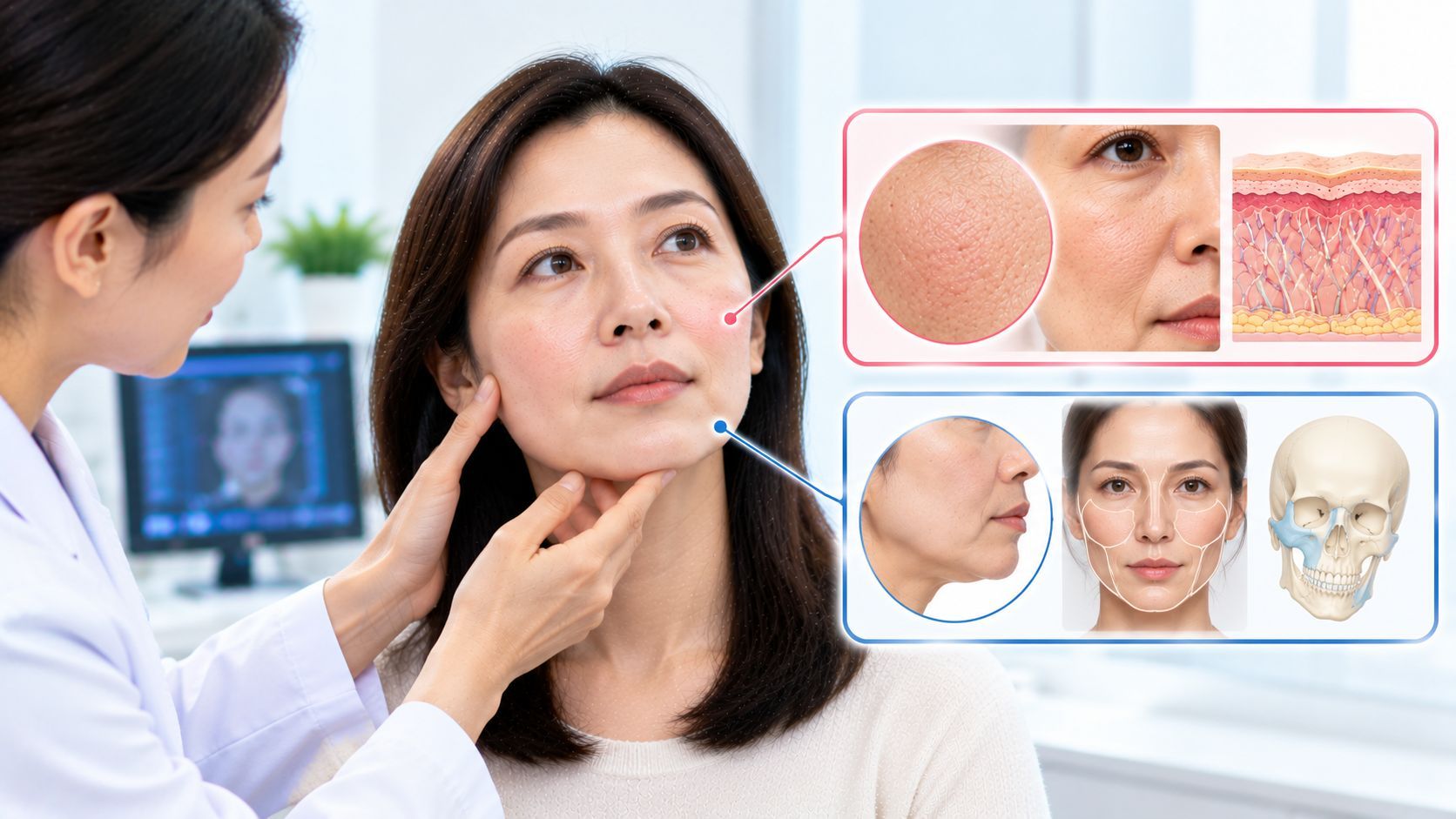
A clinical assessment is more reliable than trying to diagnose the problem from a selfie.
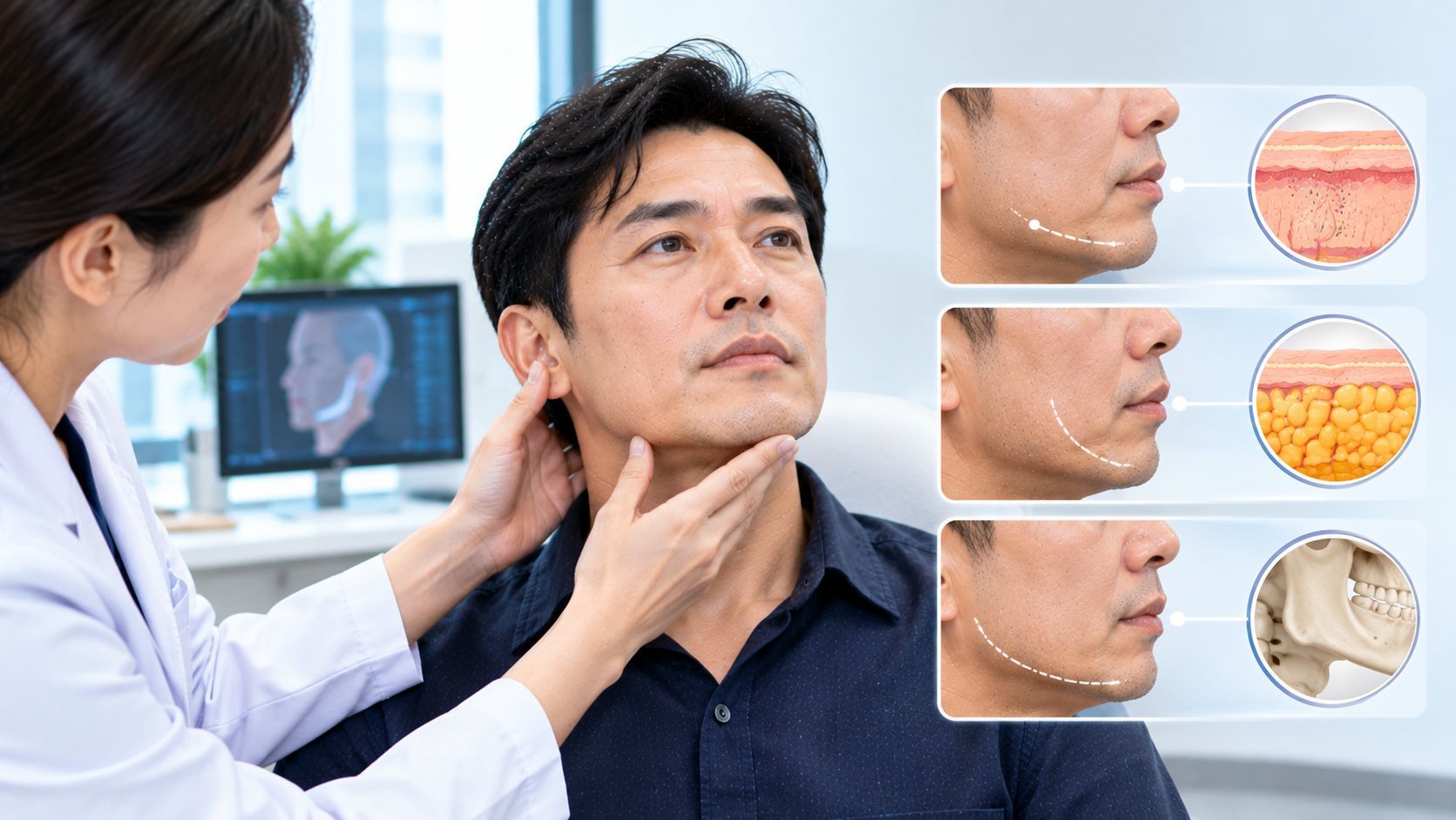
Submental fat often creates a relatively soft fullness beneath the chin. Loose skin may instead appear as thin, crepey or hanging tissue.
Some people have both.
A useful assessment considers:
- Thickness of the tissue under the chin
- Skin elasticity
- Degree of skin laxity
- Chin projection
- Jawline structure
- Neck anatomy
- Changes after weight loss
- Appearance in neutral and dynamic positions
If the chin itself is recessed, the profile may look less defined even without substantial fat.
Why Is This Especially Important After Weight Loss?
Weight loss can change facial and neck contours in several ways.
Some people lose submental fat and develop a sharper jawline. Others lose volume but are left with stretched or lax skin.
There may also be a combination of:
less fat + loose skin + reduced facial support.
In that situation, continuing to remove fat may not produce the expected improvement.
For someone who has recently lost substantial weight, the clinician may first determine whether weight has stabilized and whether the remaining concern is predominantly fat, skin, or structural anatomy.
What Happens If I Remove Fat When I Already Have Loose Skin?
The result depends on the degree of laxity and the treatment used.
If the skin has reasonable elasticity, it may contract enough that the final contour still looks smooth.
If laxity is significant, reducing the underlying fat may make the excess skin more apparent.
This does not necessarily mean the treatment was performed incorrectly. Rather, removing one component of the problem does not automatically correct another.
For example, a patient may successfully reduce submental fat but still need a separate approach to address skin laxity.
Can Skin Tightening Be Combined With Fat Reduction?
In selected patients, clinicians may combine or sequence treatments targeting different components of the double chin.
Fat reduction addresses excess fat.
Skin-tightening treatments are intended to address mild to moderate laxity.
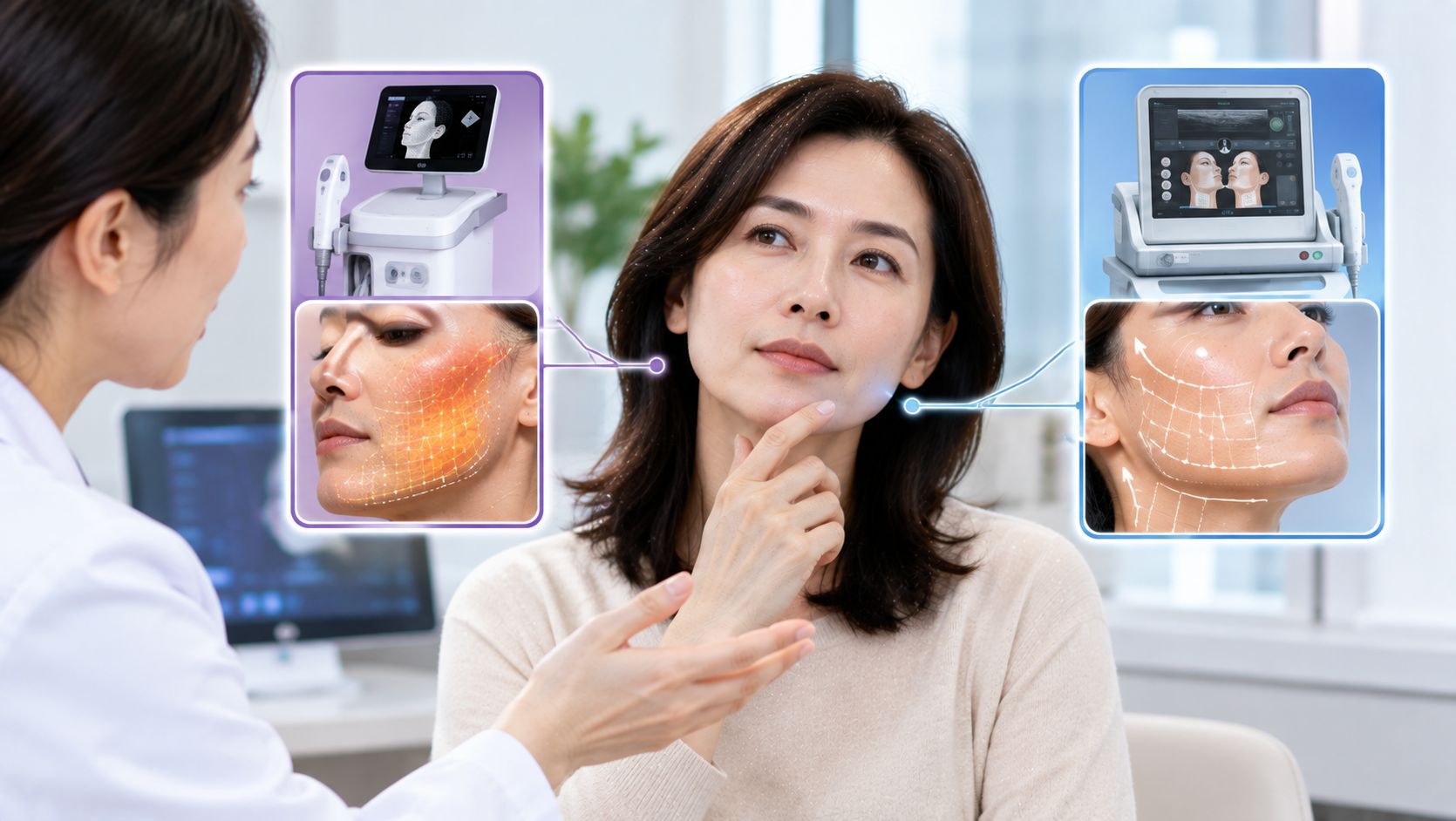
Depending on the individual's anatomy, options may include radiofrequency-based treatments or ultrasound-based energy treatments.
Some technologies are designed primarily around tightening, while others are used for fat reduction. The choice should depend on the tissue characteristics rather than simply selecting the strongest available treatment.
What If My Skin Is Very Loose?
When there is substantial excess skin, non-surgical tightening may have limitations.
Energy-based treatments can sometimes improve mild or moderate laxity, but they cannot reliably reproduce the result of removing significant excess skin surgically.
For substantial neck or under-chin skin excess, a surgical consultation may be more appropriate.
The important distinction is between skin tightening and skin removal.
Tightening attempts to improve the appearance and contraction of existing tissue. Surgery can remove excess tissue and reshape the area more directly.
Can Fat-Reduction Treatments Tighten the Skin Too?
Some treatments used for submental contouring may produce some degree of skin contraction or remodeling, but the extent varies considerably.
It is better not to assume that a fat-reduction procedure will automatically provide enough tightening to correct significant laxity.
A treatment plan should identify the primary problem first.
If the main issue is loose skin rather than fat, selecting a procedure solely because it reduces fat may lead to an unsatisfying result.
What About a Double Chin Caused by a Recessed Chin?
Not every double-chin appearance is caused by fat or loose skin.
A recessed chin can make the area beneath the jaw appear fuller because there is less forward projection separating the chin from the neck.
In such cases, removing more fat may not solve the underlying proportion.
Depending on the anatomy, a clinician may instead discuss options that improve chin projection, such as carefully selected chin filler or surgical chin augmentation.
This is another reason why the entire side profile should be assessed before fat reduction.
Should I Get Fat Reduction or Skin Tightening First?
There is no universal sequence that applies to everyone.
If substantial submental fat is present and the skin has good elasticity, fat reduction may be the primary concern.
If fat is limited but laxity is the main issue, tightening may make more sense.
If both are significant, a clinician may recommend treating them separately or combining approaches depending on the patient's anatomy.
If the chin is recessed, structural correction may also be relevant.
The objective should be to avoid treating the wrong tissue.
What Should International Patients Ask a Seoul Clinic?
If you are traveling to Seoul for double-chin treatment, ask the clinic to explain what they believe is causing your fullness before agreeing to a procedure.
Useful questions include:
- How much of my under-chin fullness is actually fat?
- Do I already have loose skin?
- Will reducing the fat make my laxity more noticeable?
- How elastic is my neck skin?
- Is my chin projection contributing to the appearance?
- Would tightening, fat reduction, or a combination be more appropriate?
- What happens if the skin does not contract sufficiently?
It is also useful to provide information about previous weight loss, previous cosmetic treatments and any prior procedures in the same area.
How Can I Reduce the Risk of an Unwanted Result?
A thoughtful assessment is more important than choosing the most aggressive treatment.
Before treatment, consider:
- Whether your weight is relatively stable
- Whether you have significant skin laxity
- Whether your chin is recessed
- How much submental fat is actually present
- Whether you want subtle or substantial contour change
- Whether you would accept a surgical option if non-surgical tightening is insufficient
Taking standardized photographs before treatment can also help evaluate changes more accurately than comparing random selfies.
Conclusion
Removing chin fat can improve a double chin when excess submental fat is the main problem, but it does not automatically correct loose skin. If the skin already has reduced elasticity, fat reduction may make laxity more visible because the tissue has less underlying volume.
This is particularly important after major weight loss and with age-related skin changes.
The safest planning approach is to distinguish fat, loose skin, chin projection and neck anatomy before selecting treatment. Depending on the findings, the appropriate strategy may involve fat reduction, skin tightening, structural chin correction, surgery, or a combination.
For patients considering treatment in Seoul, a detailed assessment before treatment can help prevent the common mistake of treating every double chin as a fat problem.
Frequently Asked Questions
Can losing chin fat cause sagging skin?
It can make existing laxity more noticeable, particularly when the skin has limited elasticity. Fat reduction itself does not guarantee that skin will become loose.
Does chin fat removal tighten the skin?
Some treatments may produce some degree of skin contraction or remodeling, but the amount varies. Significant loose skin may require a dedicated tightening approach or, in advanced cases, surgery.
Is loose skin common after weight loss under the chin?
It can occur after substantial weight loss, especially when the skin was stretched considerably. The degree varies from person to person.
Should I avoid fat reduction if I have loose skin?
Not necessarily. The amount of fat, degree of laxity and skin elasticity all matter. A clinician should determine whether fat reduction is likely to improve or worsen the overall contour.
Can skin tightening fix loose skin after chin fat removal?
Mild to moderate laxity may sometimes improve with appropriate tightening treatments. Significant excess skin may not respond sufficiently to non-surgical treatment.
Can a weak chin make loose skin look worse?
Yes. A recessed chin can reduce the visual separation between the chin and neck, making the area appear fuller even when the amount of loose skin or fat is relatively limited.