How Do I Know if My Double Chin Is Fat or Loose Skin?
Introduction
A double chin is not always caused by excess fat. Submental fat and loose skin can look similar, and many people have a combination of both. The distinction matters because fat-reduction treatments and skin-tightening treatments address different problems.
If the area beneath your chin feels soft and full, localized fat may be contributing. If the skin appears thin, crepey, or hangs downward when you move your head, laxity may be more important. A recessed chin or jaw structure can further complicate the appearance.
Before choosing a treatment, the goal should be to determine whether you are primarily dealing with fat, loose skin, structural anatomy, or a combination.
What Does a Fat-Related Double Chin Look Like?
Submental fat is localized fatty tissue underneath the chin.
Common characteristics include:
- Soft fullness beneath the jaw
- A noticeable pocket that can be pinched
- Relatively smooth skin over the fullness
- Fullness that remains when the head is upright
- A less-defined chin-to-neck transition
You can be otherwise slim and still have submental fat. Genetics strongly influence where the body stores fat, so body weight alone cannot determine whether a double chin is fat-related.
Does Pinching the Area Prove It Is Fat?
No.
Pinching the skin beneath the chin also captures skin and other tissues. A soft fold does not automatically prove that excess fat is the cause.
A professional assessment is more reliable than a simple pinch test.
What Does a Skin-Related Double Chin Look Like?
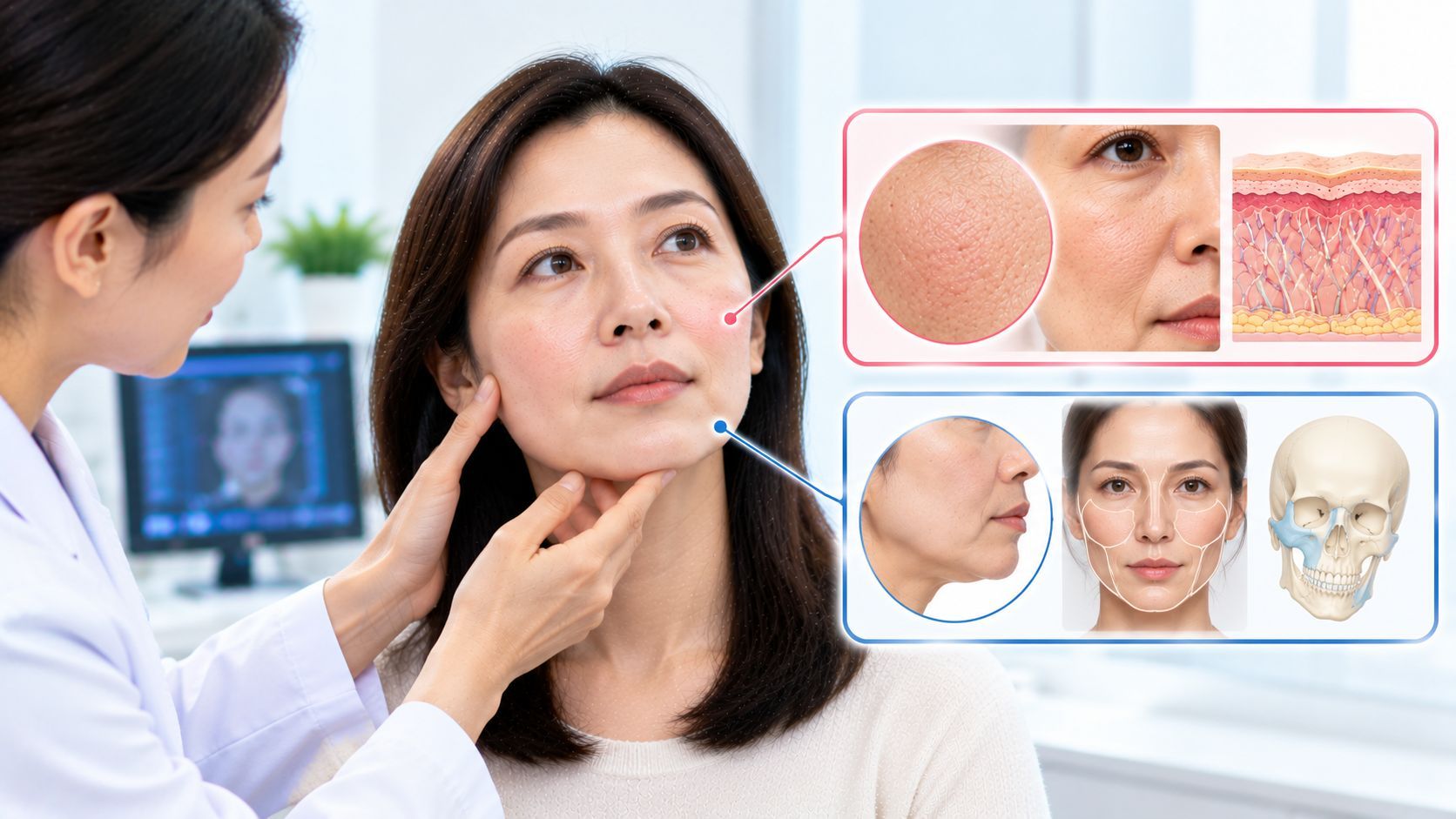
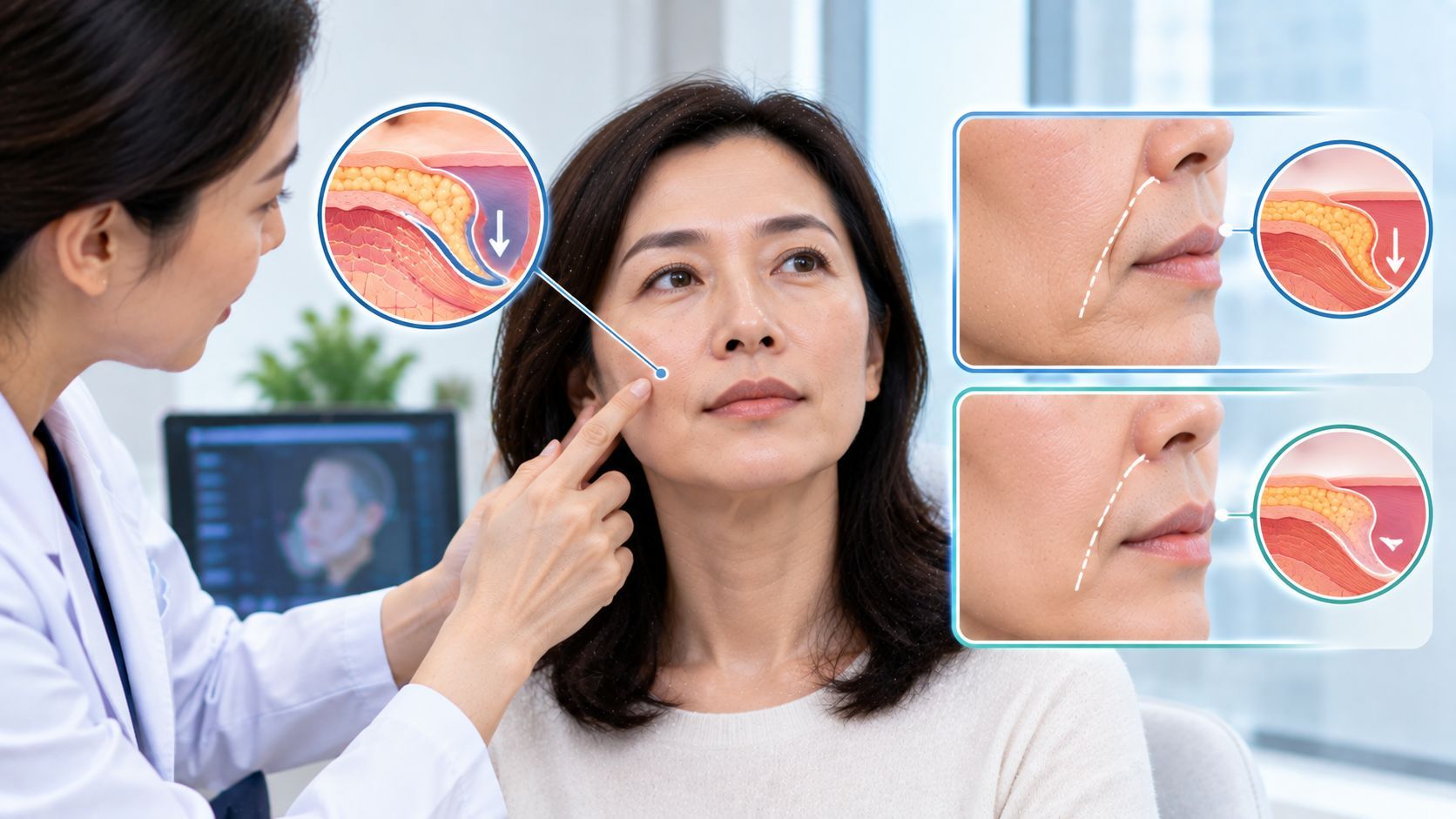
Loose skin tends to behave differently from a primarily fat-related fullness.
Possible signs include:
- Thin or crepey skin
- Hanging tissue beneath the jaw
- Fine wrinkles
- Skin that folds easily when the neck bends
- Less firmness than the surrounding skin
- A relatively small amount of underlying fullness
Skin laxity becomes particularly relevant after significant weight loss and as the skin loses elasticity with age.
If you have little fat but substantial laxity, removing more fat may not create the sharper jawline you expect.
Can Fat and Loose Skin Occur Together?
Absolutely.
This is common.
A person may have:
- Moderate submental fat
- Mild-to-moderate skin laxity
- A naturally small chin
- Some degree of neck muscle activity
In that situation, treating only one factor may produce an incomplete result.
For example, removing fat can reduce fullness but leave residual loose skin. Tightening the skin can improve firmness but cannot remove a substantial fat pocket.
How Does a Recessed Chin Affect the Appearance?
The chin itself can influence whether the neck appears full.
A relatively small or recessed chin may create less separation between the chin and neck. This can make the area look like a double chin even when there is not much excess fat.
This is one reason why a profile examination is important.
A person may look as though they need fat reduction when the more relevant issue is actually chin projection and facial proportions.
What Happens When You Look Down?
Everyone develops some degree of skin folding when the neck bends.
Looking down compresses the tissues beneath the chin and can make both fat and loose skin appear more prominent.
Therefore, evaluating your chin only while looking down can exaggerate the problem.
A better assessment considers the area:
- Looking straight ahead
- From the side
- With the neck relaxed
- With the chin in a neutral position
- During natural facial movement
Can You Tell From a Photograph?
Photographs can provide useful information, but they have limitations.
Lighting, lens distortion, camera height, facial expression, and head position can all change the appearance of the chin and neck.
For example, a photograph taken from below can make the area beneath the chin appear fuller than it looks in person.
If you are comparing before-and-after photographs, keep the conditions as consistent as possible.
What Treatments Target Submental Fat?
If localized fat is the primary cause, several approaches may be discussed.
Non-Surgical Fat Reduction
Certain injectable or energy-based approaches can reduce localized submental fat in appropriately selected patients.
The appropriate treatment depends on factors such as:
- Amount of fat
- Skin elasticity
- Anatomy
- Medical history
- Treatment goals
Not every person with a double chin is a suitable candidate for fat reduction.
Submental Liposuction
For appropriate surgical candidates, liposuction can directly remove localized fat beneath the chin.
However, removing fat does not automatically tighten significantly loose skin. Skin elasticity needs to be considered beforehand.
What Treatments Target Loose Skin?
If laxity is the dominant problem, the goal is generally to improve firmness rather than remove fat.
Radiofrequency Treatments
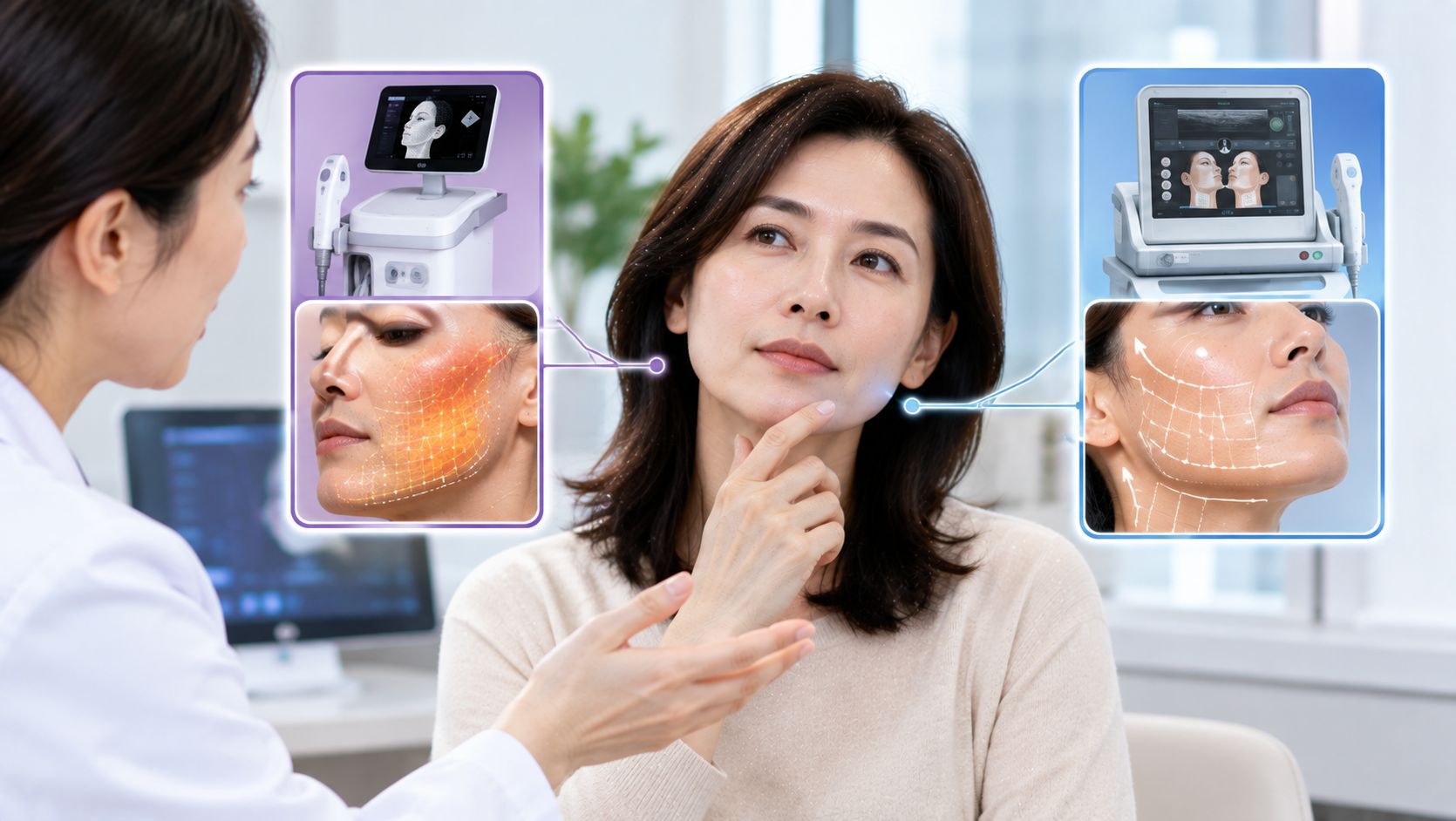
RF-based procedures use controlled heat to stimulate tissue remodeling and may improve mild-to-moderate laxity in selected patients.
Ultrasound-Based Tightening
Focused ultrasound treatments can target deeper tissue planes and may be considered for certain patterns of lower-face or neck laxity.
RF Microneedling
RF microneedling may help improve skin texture and firmness in appropriate patients.
The treatment does not simply remove a pocket of fat, so it may be more relevant when skin quality is part of the problem.
Surgical Neck Procedures
If there is substantial skin excess or tissue descent, surgical treatment may be more direct than non-surgical tightening.
The appropriate procedure depends on the individual's anatomy.
What If I Have Both Fat and Loose Skin?
This is where treatment planning becomes particularly important.
A clinician may determine that reducing a modest amount of fat while improving skin firmness provides a more balanced approach.
However, the sequence and combination of treatments matter.
For example, aggressively removing fat from an area with poor skin elasticity could leave the skin looking less supported.
The objective should not be to remove as much fat as possible. It should be to create an appropriate chin-to-neck contour.
Could Treating the Fat Make Loose Skin More Noticeable?
Yes, particularly when the skin has limited elasticity.
If the skin is already hanging, removing additional volume underneath it may reveal or accentuate the laxity.
This does not mean fat reduction is always inappropriate. It means skin quality should be assessed before deciding how much tissue to remove.
What About Botox for the Neck?
Botulinum toxin can be useful for certain neck-muscle concerns, such as prominent platysmal bands or specific muscle-related patterns.
However, Botox does not remove submental fat or tighten loose skin in the same way as a fat-reduction or skin-tightening treatment.
If the main concern is a soft pocket of fat, Botox is not a substitute for fat treatment.
How Can a Seoul Dermatology Clinic Determine the Difference?
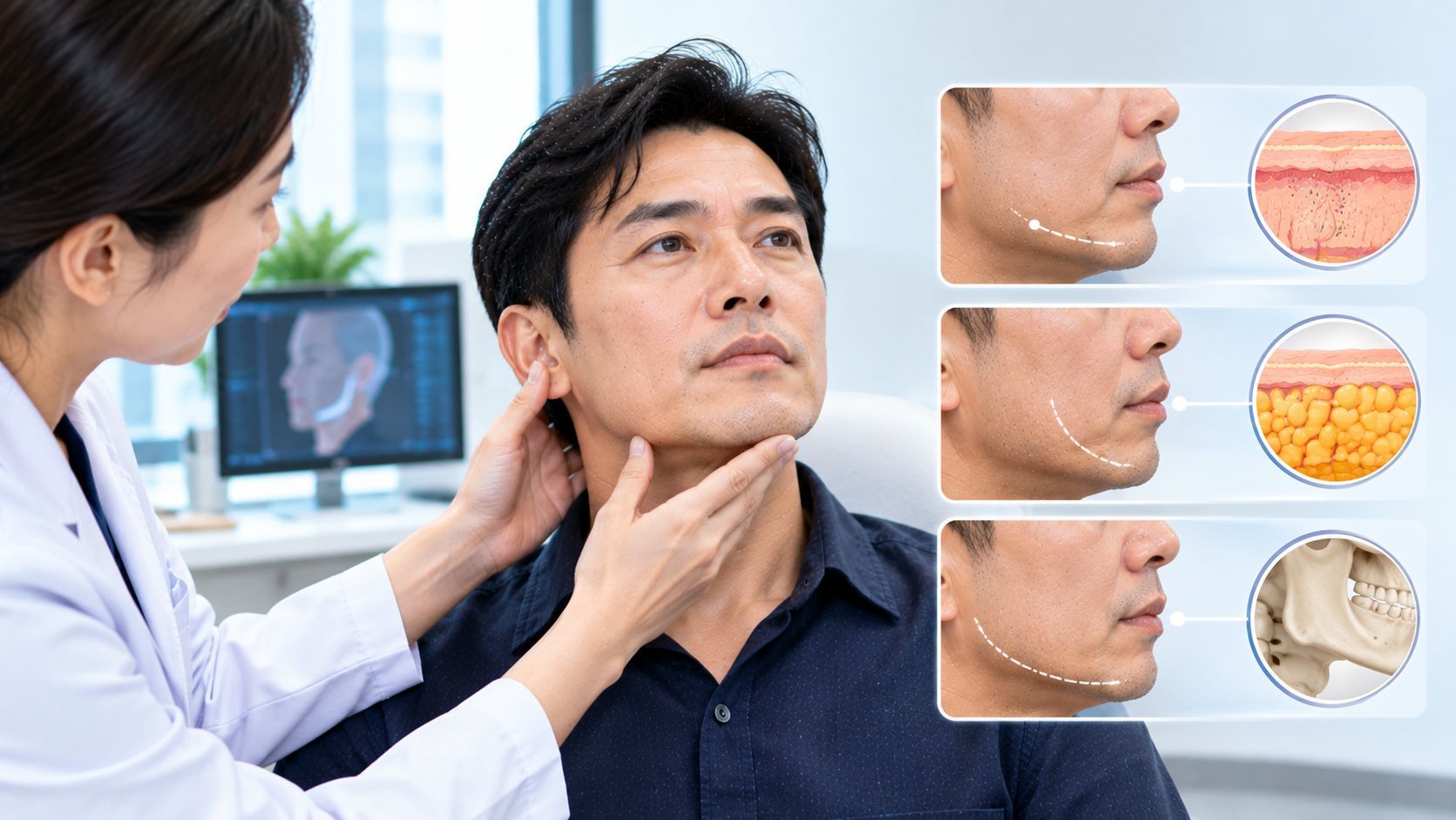
A proper assessment should look at the area from multiple angles and evaluate both static and dynamic appearance.
A clinician may assess:
- Skin thickness and elasticity
- Amount and distribution of submental fat
- Chin projection
- Jawline definition
- Neck muscle activity
- Degree of skin laxity
- Previous cosmetic procedures
- Weight changes
If you are an international patient, tell the clinic about previous fillers, fat-reduction procedures, weight loss, or tightening treatments.
Questions to Ask Before Treatment
Before choosing a procedure in Seoul, consider asking:
- Is my fullness primarily fat or loose skin?
- How much submental fat do I actually have?
- Is my skin elastic enough for fat reduction?
- Would removing fat make my loose skin more visible?
- Does my chin projection affect the appearance?
- Would tightening be more appropriate?
- Do I need treatment for the neck muscles?
- What result is realistic without changing my facial proportions?
These questions can help prevent treating the wrong anatomical problem.
What If I'm Not Sure Which Problem I Have?
You do not need to diagnose yourself before a consultation.
In fact, trying to determine whether every fold is fat or skin from a mirror or photograph can be misleading.
A useful consultation should explain what tissue is creating the appearance and why the proposed treatment is targeting it.
If a clinic immediately recommends fat removal without discussing skin quality or chin structure, it is reasonable to ask how those factors were evaluated.
Conclusion
A double chin can be caused by submental fat, loose skin, a recessed chin, neck anatomy, or a combination of factors.
Fat generally creates soft fullness beneath the chin, while loose skin tends to create hanging or crepey tissue. But these characteristics can overlap, and a simple pinch test cannot reliably distinguish them.
The difference matters because fat-reduction treatments remove or reduce fat, while tightening treatments are intended to improve skin firmness. If your chin is naturally small or recessed, structural correction may also be relevant.
For the most natural result, the goal should not simply be to remove everything beneath the chin. It should be to understand the anatomy and choose an approach that improves the relationship between the chin, jawline, and neck.
FAQs
How can I tell if my double chin is fat or skin?
Soft fullness may suggest a fat component, while thin, crepey, hanging tissue suggests skin laxity. However, many people have both, so a professional assessment is more reliable than looking at the area yourself.
Can a thin person have loose skin under the chin?
Yes. Skin laxity can occur independently of overall body weight and may become more noticeable with aging or after weight loss.
Will losing weight tighten loose skin under my chin?
Not necessarily. Additional weight loss may reduce fat but cannot guarantee that already-loose skin will tighten.
Can RF tighten a double chin without removing fat?
RF treatments are primarily designed to improve tissue firmness and remodeling. They may be useful when laxity contributes to the appearance but are not equivalent to fat removal.
Should I remove chin fat if my skin is already loose?
Not automatically. Skin elasticity should be evaluated first because reducing volume can make existing laxity more noticeable in some patients.
Can a small chin make me look like I have a double chin?
Yes. A recessed or relatively small chin can reduce the visual definition between the chin and neck, creating a fuller-looking profile even when submental fat is limited.