I Have Fine Lines Directly Under My Eyelashes. What Can Treat Them?
Introduction
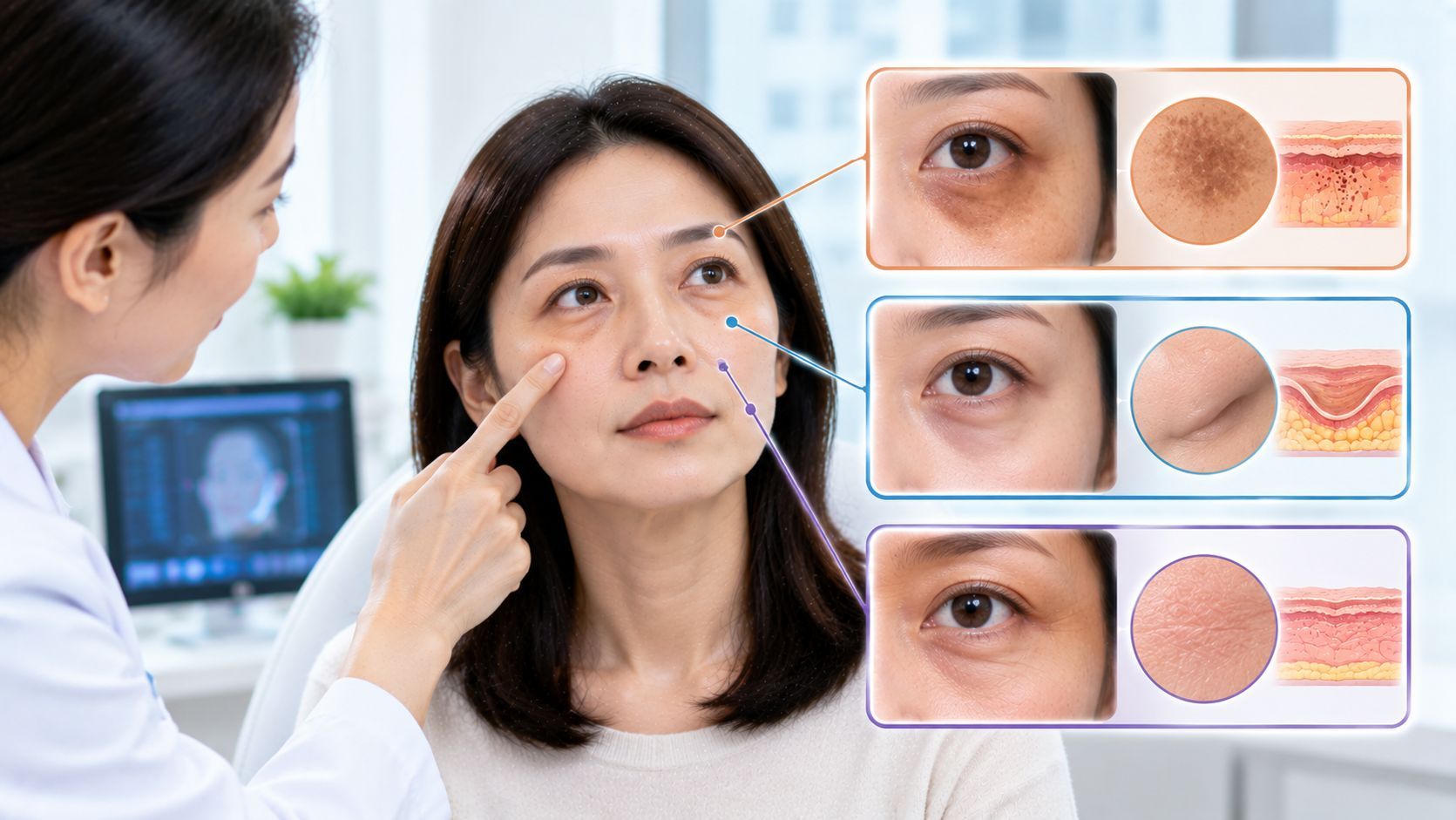
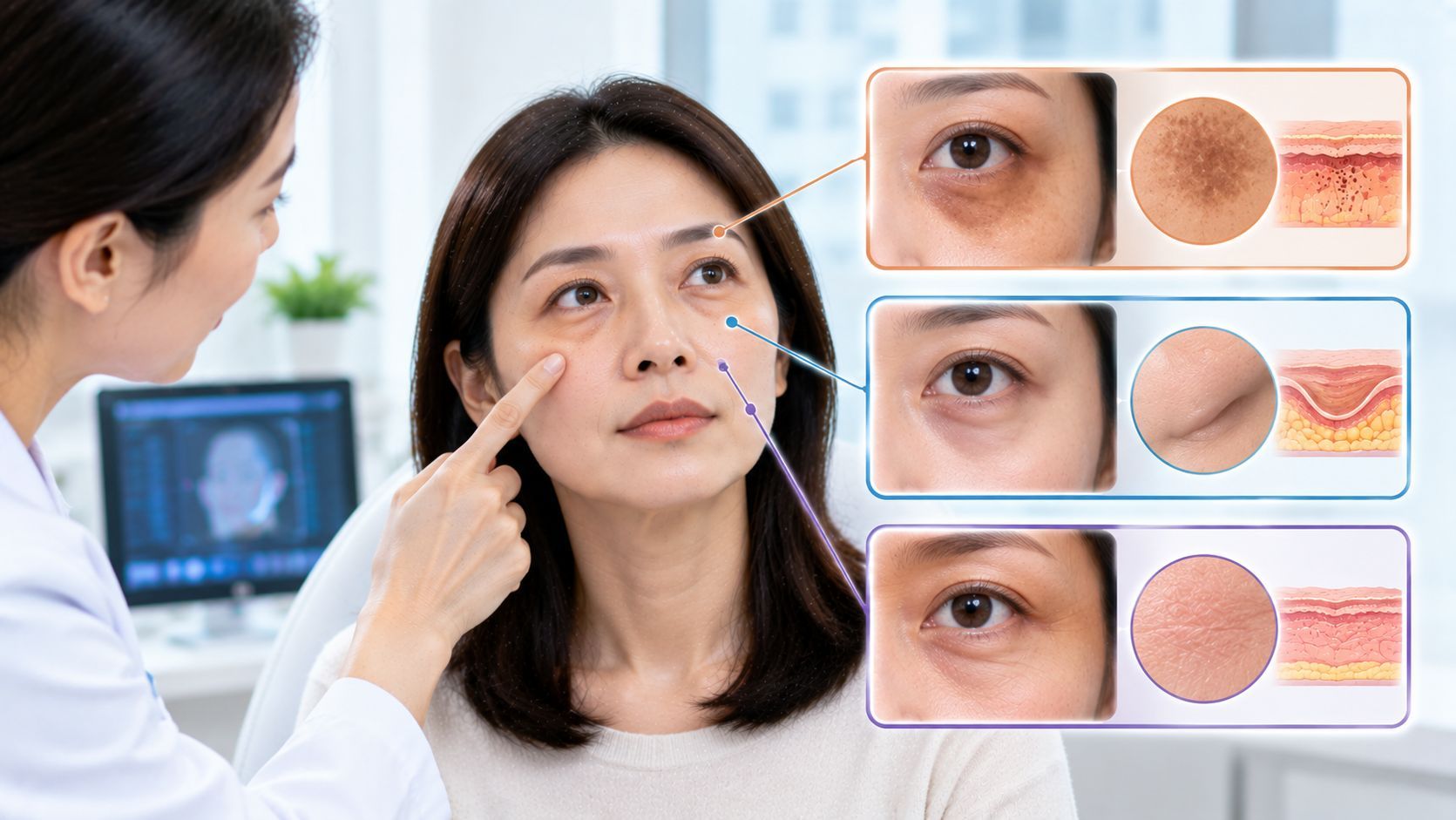
Fine lines directly beneath the eyelashes can be surprisingly difficult to treat because the skin in this area is extremely thin and delicate. These lines may become more visible when you smile, squint, apply makeup, or gently pull the lower eyelid skin. They can also become noticeable with age as collagen, elasticity, and skin hydration change.
The right treatment depends on what is creating the lines. If they are mainly expression lines, treatment may differ from lines caused by crepey skin, dryness, pigmentation, or lower-eyelid laxity. Importantly, this area should not automatically be treated with filler simply because it looks wrinkled.
Why Do Fine Lines Appear Directly Under the Eyelashes?
Dynamic Movement
The orbicularis oculi muscle surrounds the eye and contracts when you smile or squint. Repeated movement can create fine lines that are barely visible when the face is relaxed but become prominent during expression.
These are often called dynamic wrinkles.
Thinning Skin With Age
As skin ages, changes in collagen, elastin, hydration, and supporting tissues can make the lower eyelid look increasingly delicate.
Fine lines may therefore become visible even when you are not making an expression.
Dryness
Dehydrated skin can make tiny surface lines much more obvious. Makeup can also settle into these lines, making them appear deeper than they actually are.
Sun Exposure
Cumulative ultraviolet exposure contributes to photoaging and can accelerate the development of fine lines and changes in skin texture.
Lower-Eyelid Anatomy
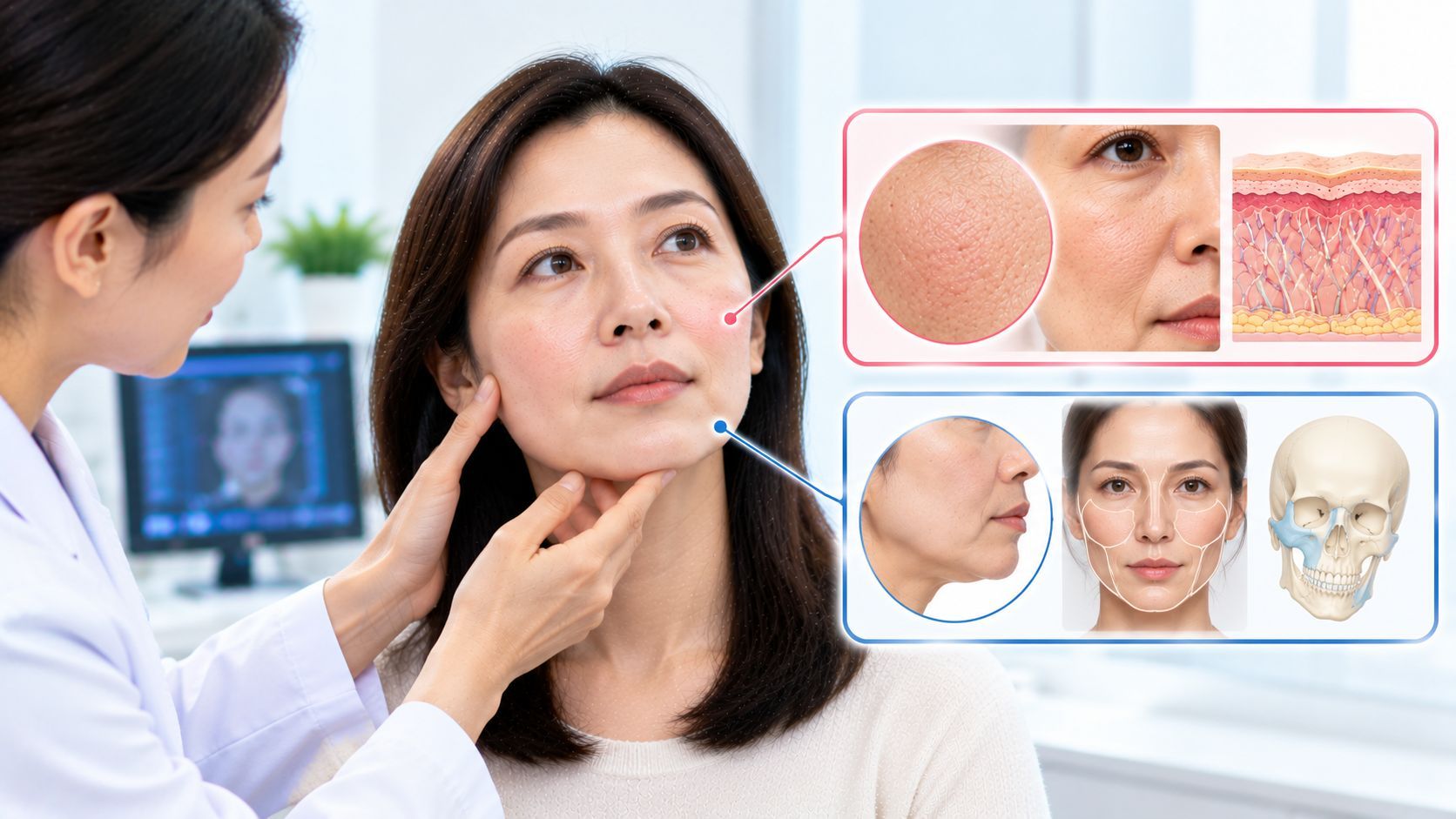
The appearance of the lower eyelid is affected by skin, muscle, fat, connective tissue, and the underlying orbital and cheek structures. What looks like a simple wrinkle may actually be a combination of skin crepiness and underlying anatomical changes.
Which Treatment Is Appropriate?
There is no single treatment that works for every type of line directly beneath the eyelashes.
A dermatologist or appropriately trained aesthetic physician should first determine whether the problem is primarily movement, skin texture, volume, laxity, or a combination.
Botox for Dynamic Lines
Small amounts of botulinum toxin can reduce muscle activity and may soften selected dynamic wrinkles around the eyes.
However, injections very close to the lower eyelid require considerable anatomical precision. Too much reduction of muscle activity or inappropriate placement can affect eyelid function or expression.
Botulinum toxin therefore isn't simply a matter of putting a few injections directly under the eyelashes.
It may be more appropriate when the lines are clearly expression-related rather than primarily caused by loose or crepey skin.
Laser for Fine Lines and Texture
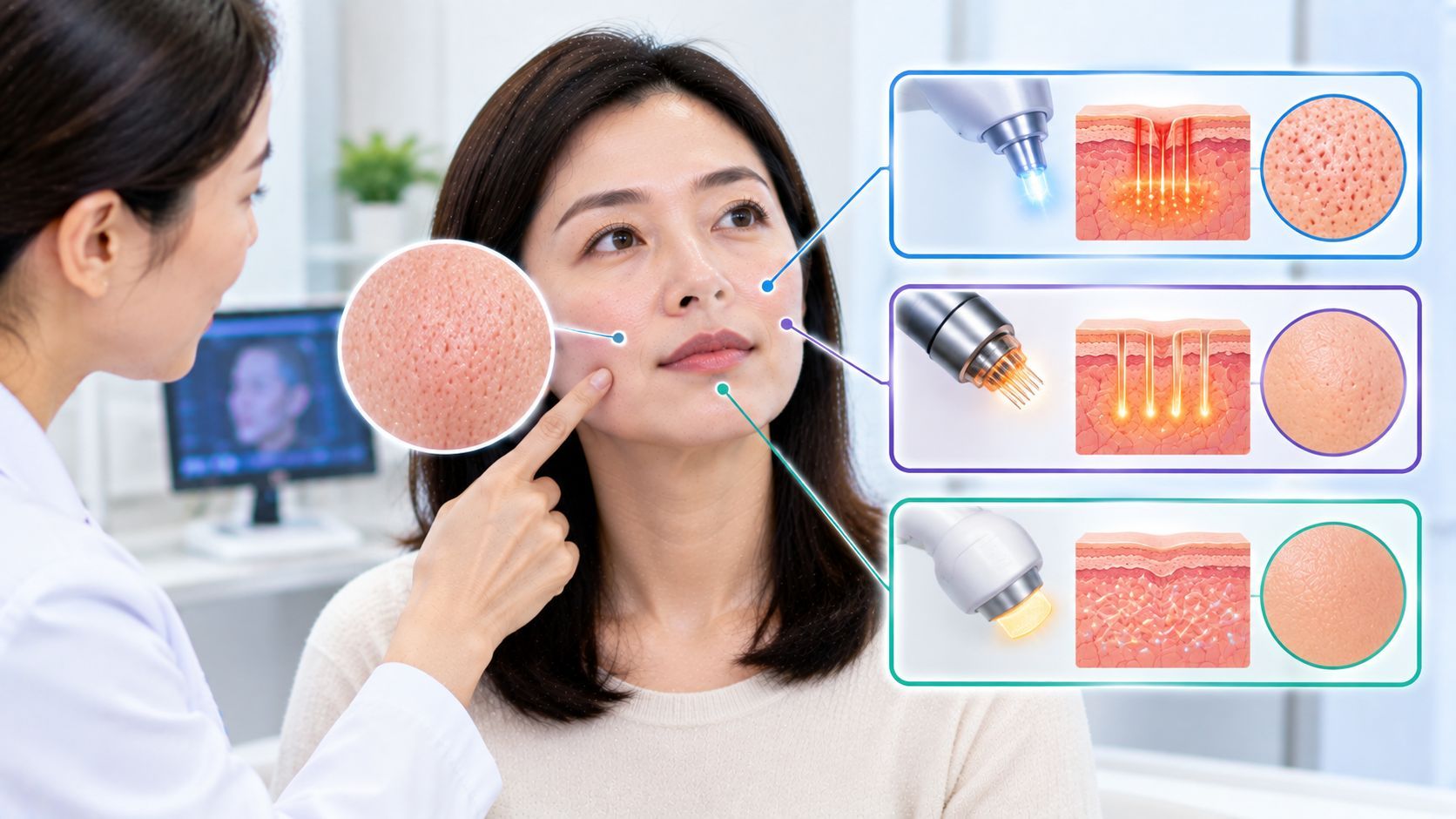
Certain lasers can improve photoaging, fine lines, and skin texture.
Depending on the device and treatment intensity, laser resurfacing can stimulate remodeling of the skin and improve surface irregularities.
However, the lower eyelid is a high-sensitivity area. Treatment parameters must be selected carefully, particularly for patients who are prone to post-inflammatory pigmentation.
Laser also does not eliminate every type of under-eye wrinkle. If the main problem is orbital fat, significant laxity, or muscle movement, another approach may be necessary.
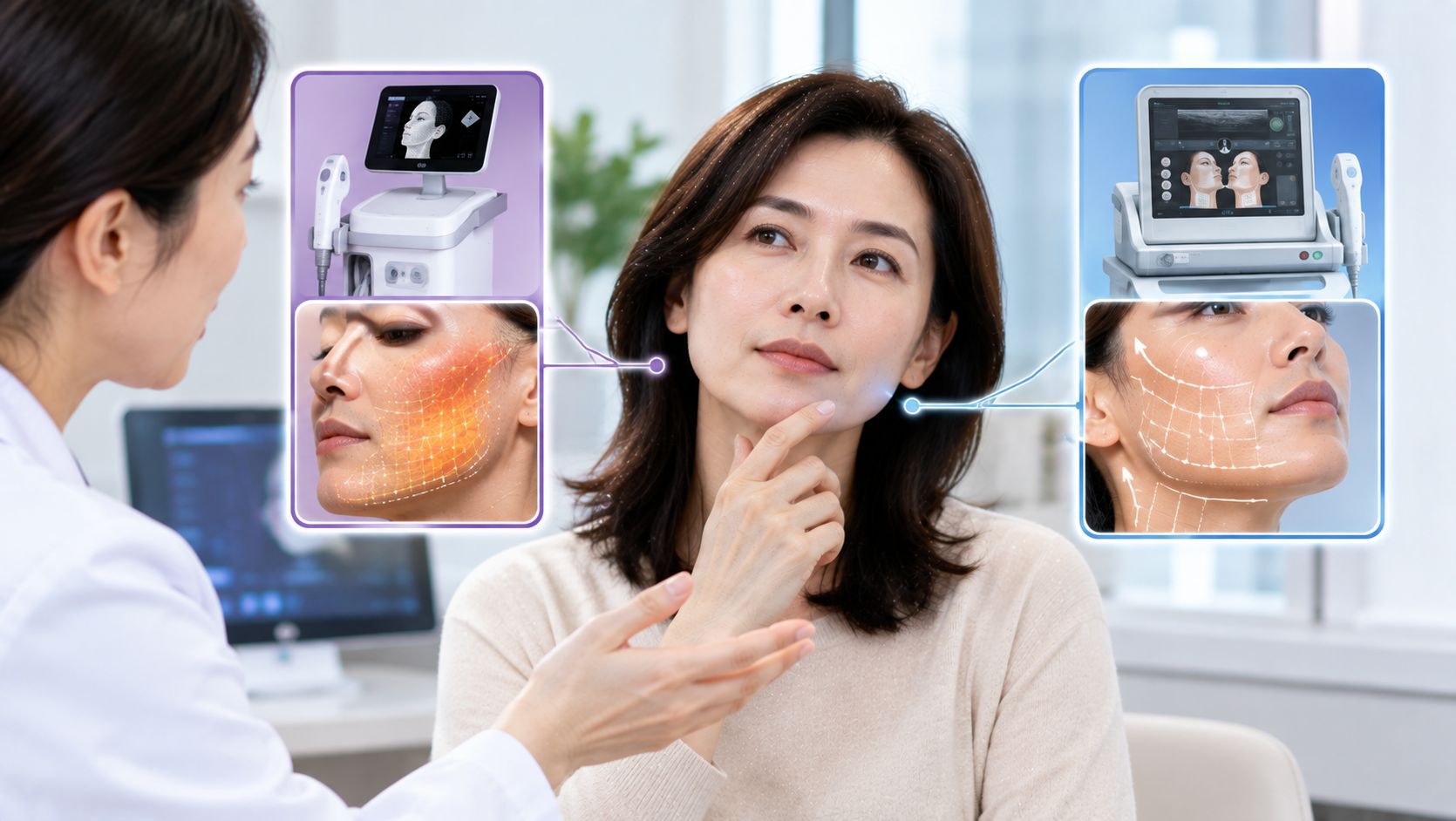
Radiofrequency Treatments
Some radiofrequency-based treatments are designed to improve skin quality and mild laxity through controlled heating.
They may be considered when the main concern is mild crepiness or reduced skin firmness rather than a deep structural depression.
The exact device and treatment depth matter. A treatment appropriate for the cheek cannot automatically be used around the eyes in the same way.
Skin-Quality Treatments
If the lower eyelid looks dry, thin, or finely creased, the treatment goal may be improving overall skin quality rather than adding volume.
Depending on the patient and the physician's assessment, options may include carefully selected skin boosters or regenerative treatments.
Emerging approaches such as polynucleotides are being studied for periocular skin quality, but evidence is still developing and they should not be presented as a guaranteed method of eliminating wrinkles. Recent reviews describe potential improvements in skin quality while also noting variability in the available evidence.
What About Under-Eye Filler?
Filler is usually not the first answer to fine lines directly beneath the eyelashes.
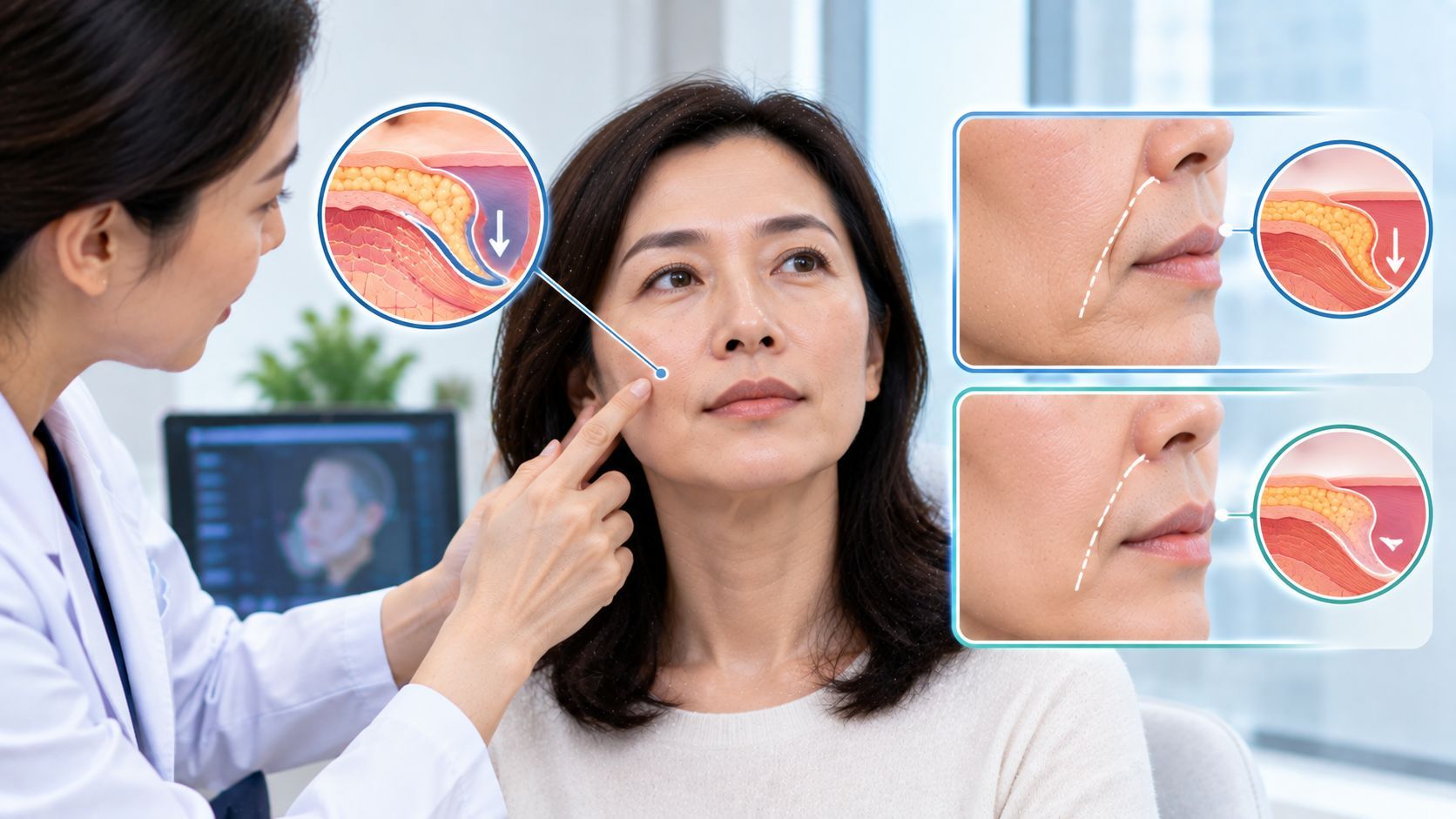
Hyaluronic acid filler is primarily a volume-restoration treatment. It can be useful when a genuine tear-trough depression or structural volume deficiency is contributing to a shadow.
But a fine line sitting directly below the eyelashes is not necessarily caused by a lack of volume.
Adding filler where there is no meaningful volume deficiency could create unwanted fullness or contour changes.
The infraorbital region is also particularly sensitive to swelling, edema, contour irregularities, and discoloration. Studies of tear-trough filler have documented complications including swelling and blue-gray discoloration.
Therefore, “I have wrinkles” does not automatically mean “I need filler.”
What If the Lines Appear Only When I Smile?
This is an important distinction.
If the skin looks relatively smooth when you are relaxed but develops multiple fine lines when you smile, muscle movement may be a major contributor.
In that situation, a carefully considered botulinum toxin treatment may sometimes be discussed.
But if the lines remain visible at rest and the skin looks thin and crinkled, reducing muscle movement alone may not address the underlying skin changes.
Many patients have both dynamic and static components, meaning a combined strategy may be considered.
What If the Skin Looks Like Crepe Paper?
Crepey lower-eyelid skin is different from one or two expression lines.
It may look:
- Thin and translucent
- Finely wrinkled across a wider area
- Loose when the face is relaxed
- More obvious when makeup is applied
- More noticeable under strong lighting
In this situation, treatment generally focuses on skin quality and laxity, rather than simply relaxing the muscles.
A physician may consider laser resurfacing, selected energy-based treatments, or other skin-quality approaches depending on skin type, anatomy, and tolerance for downtime.
Can Skincare Help?
Yes, particularly when dryness and photoaging are contributing.
A basic approach may include:
- Gentle cleansing
- Regular moisturization
- Daily broad-spectrum sunscreen
- Avoiding unnecessary rubbing around the eyes
- Carefully selected anti-aging ingredients when tolerated
Retinoids can improve photoaged skin over time, but the skin around the eyes is sensitive. Products should be introduced cautiously and according to medical advice if irritation occurs.
Skincare is unlikely to completely remove established dynamic wrinkles or significant eyelid laxity, but it can support overall skin quality.
How Is the Best Treatment Chosen?
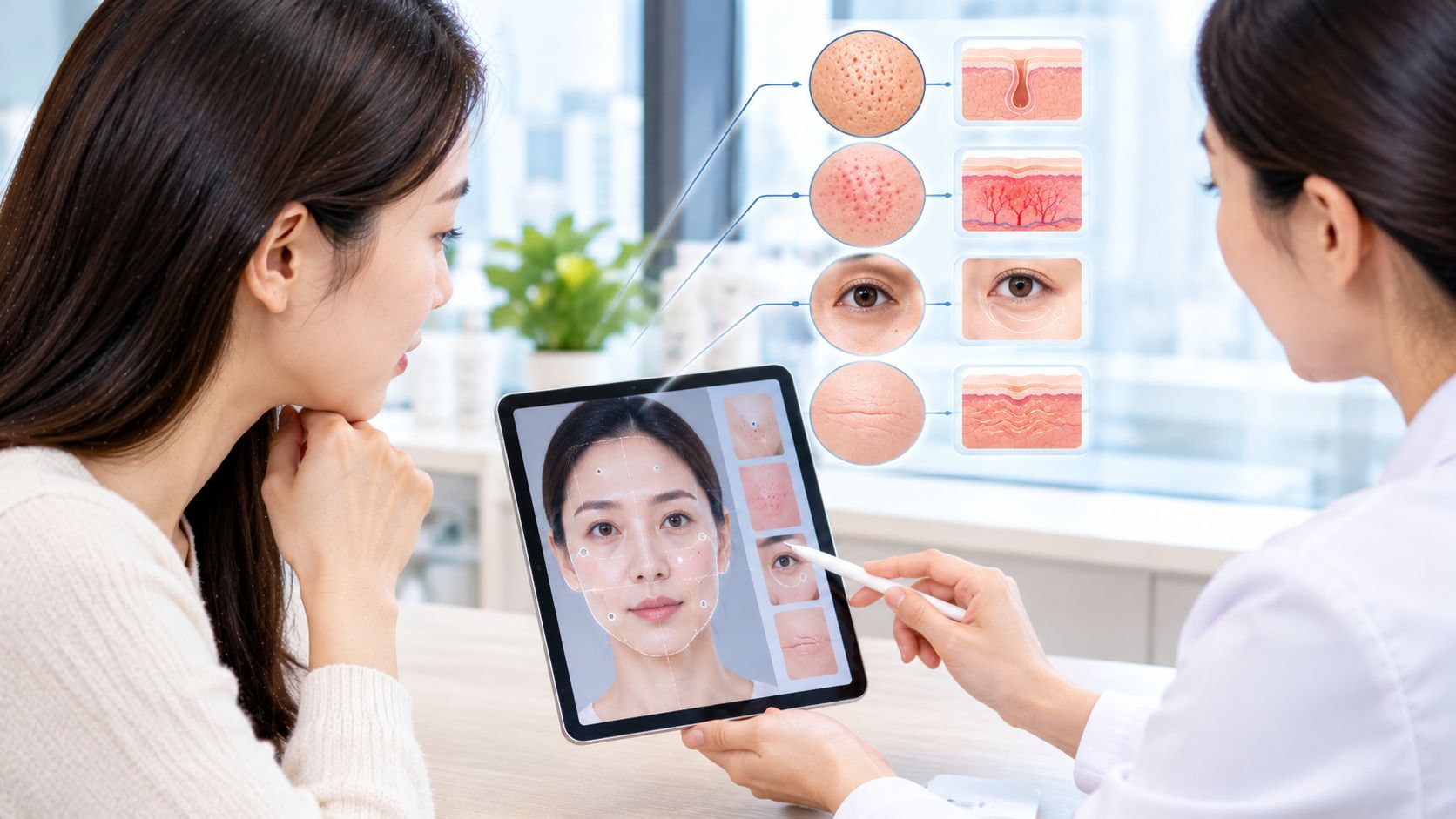
During a consultation, the doctor may assess the lower eyelid:
At rest: Are the lines already present?
While smiling: Do they become dramatically deeper with muscle contraction?
With gentle facial movement: Is the problem primarily skin creasing or muscle activity?
Under different lighting: Are shadows exaggerating the appearance?
From different angles: Is there laxity, puffiness, or structural hollowing?
With treatment history: Have you previously had Botox, filler, laser, RF, or other procedures?
This assessment is particularly important if you are considering treatment in Seoul and have limited time available for follow-up.
What Should International Patients Ask a Seoul Clinic?
Before undergoing lower-eyelid treatment, consider asking:
- What is actually causing these lines?
- Are they dynamic wrinkles or crepey skin?
- Is there any genuine volume loss?
- Would Botox be appropriate for my anatomy?
- Would laser or another skin-quality treatment be safer or more appropriate?
- What downtime should I expect?
- What pigmentation risks apply to my skin type?
- How close to the eyelashes will the treatment be performed?
- Who provides follow-up if swelling or another complication develops?
A good consultation should focus on diagnosis rather than automatically recommending a specific procedure.
When Should You Be More Careful?
Seek medical evaluation rather than cosmetic treatment if the area has sudden swelling, significant redness, pain, discharge, a new one-sided change, or vision symptoms.
These findings are not typical cosmetic aging concerns and may require medical assessment.
Conclusion
Fine lines directly beneath the eyelashes can come from muscle movement, skin aging, dryness, photoaging, crepiness, or lower-eyelid structural changes.
If the lines appear mainly when you smile, carefully administered botulinum toxin may be considered in selected patients. If the skin is thin and crepey, laser, radiofrequency, or other skin-quality approaches may be more relevant. If a genuine tear-trough hollow is present, filler could have a role—but filler should not be used simply because fine lines are visible.
For patients considering treatment in Seoul, the most useful first step is a detailed lower-eyelid assessment that identifies the actual cause before choosing a procedure.
Frequently Asked Questions
Can Botox remove fine lines directly under the eyelashes?
Botulinum toxin may soften dynamic lines caused by muscle contraction, but it does not directly repair thin or crepey skin. Lower-eyelid injections require particularly careful assessment.
Is filler good for under-eye wrinkles?
Not usually as a first-line treatment for isolated fine lines. Filler is primarily intended to restore volume and may be inappropriate when there is no meaningful hollow.
Can laser improve fine lines under the eyes?
Selected laser treatments can improve fine lines and photoaged skin. The treatment must be appropriately chosen and carefully performed because the lower eyelid is delicate.
Why do my under-eye lines look worse after makeup?
Foundation and concealer can collect in tiny creases and reduce the reflection of light from the skin, making existing lines appear more prominent.
Can skincare prevent lower-eyelid wrinkles?
Sun protection, moisturization, and appropriately selected anti-aging skincare can support skin quality and reduce photoaging, although they cannot completely prevent normal age-related changes.
What is the best under-eye treatment in Seoul?
There is no single best treatment for everyone. The appropriate option depends on whether your main issue is dynamic wrinkles, skin texture, pigmentation, laxity, volume loss, or a combination.