Why Does My Jawline Disappear When I Look Down?
Introduction
Your jawline can look sharp when you are standing upright but seem to disappear when you look down. This is usually normal and happens because bending the neck changes the position and compression of the skin, fat, muscles and other soft tissues beneath the jaw.
Looking down can make almost anyone appear to have a softer jawline or even a temporary double chin. However, if your jawline also looks poorly defined when your head is in a neutral position, other factors such as submental fat, loose skin, chin projection or neck anatomy may contribute.
The important question is not whether your jawline disappears when you look down, but what your jawline looks like in a neutral position and why.
What Happens to the Jawline When You Look Down?
When you tilt your head forward, the skin and soft tissues under the chin become compressed.
Several changes occur at the same time:
- The chin moves closer to the neck.
- Skin folds naturally.
- Submental tissues become compressed.
- The cervicomental angle becomes less defined.
- Neck muscles and soft tissue change position.
- Existing fat or loose skin becomes more visible.
This can create a temporary fold beneath the chin that is not necessarily present when your head is upright.
It is therefore normal for your jawline to look different when you look down.
Why Does Looking Down Create a Double-Chin Appearance?
The appearance of a double chin depends partly on the relationship between the chin and neck.
When you look down, the angle between these structures becomes smaller. The skin underneath the chin bunches together, making the area appear thicker.
Even someone with very little submental fat can develop a visible fold in this position.
This is why photographs taken from above or while looking downward can make the lower face look substantially different from how it appears in everyday conversation.
Is It Normal if My Jawline Only Disappears When I Look Down?
Usually, yes.
If your jawline is clearly defined when:
- Your head is upright
- Your neck is relaxed
- You are looking straight ahead
- You are photographed from a normal distance
then a temporary loss of definition when looking down is generally not evidence of a cosmetic problem by itself.
The human face and neck are dynamic structures. They are not expected to maintain the same contour in every position.
Trying to eliminate every fold that appears when the neck is compressed can lead to unnecessary treatment.
When Could It Indicate a Real Jawline Concern?
A different situation exists when the jawline remains poorly defined even in a neutral position.
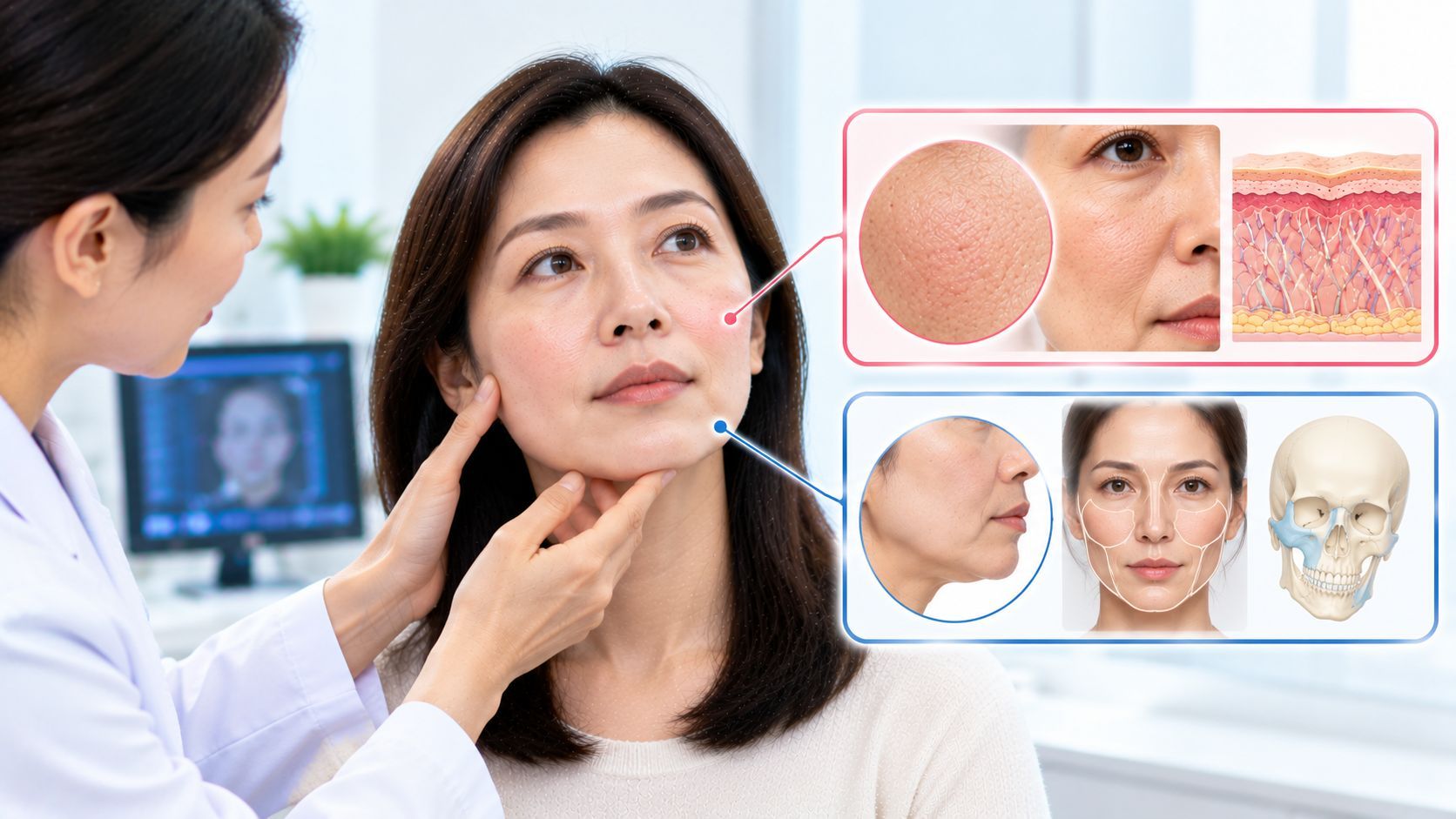
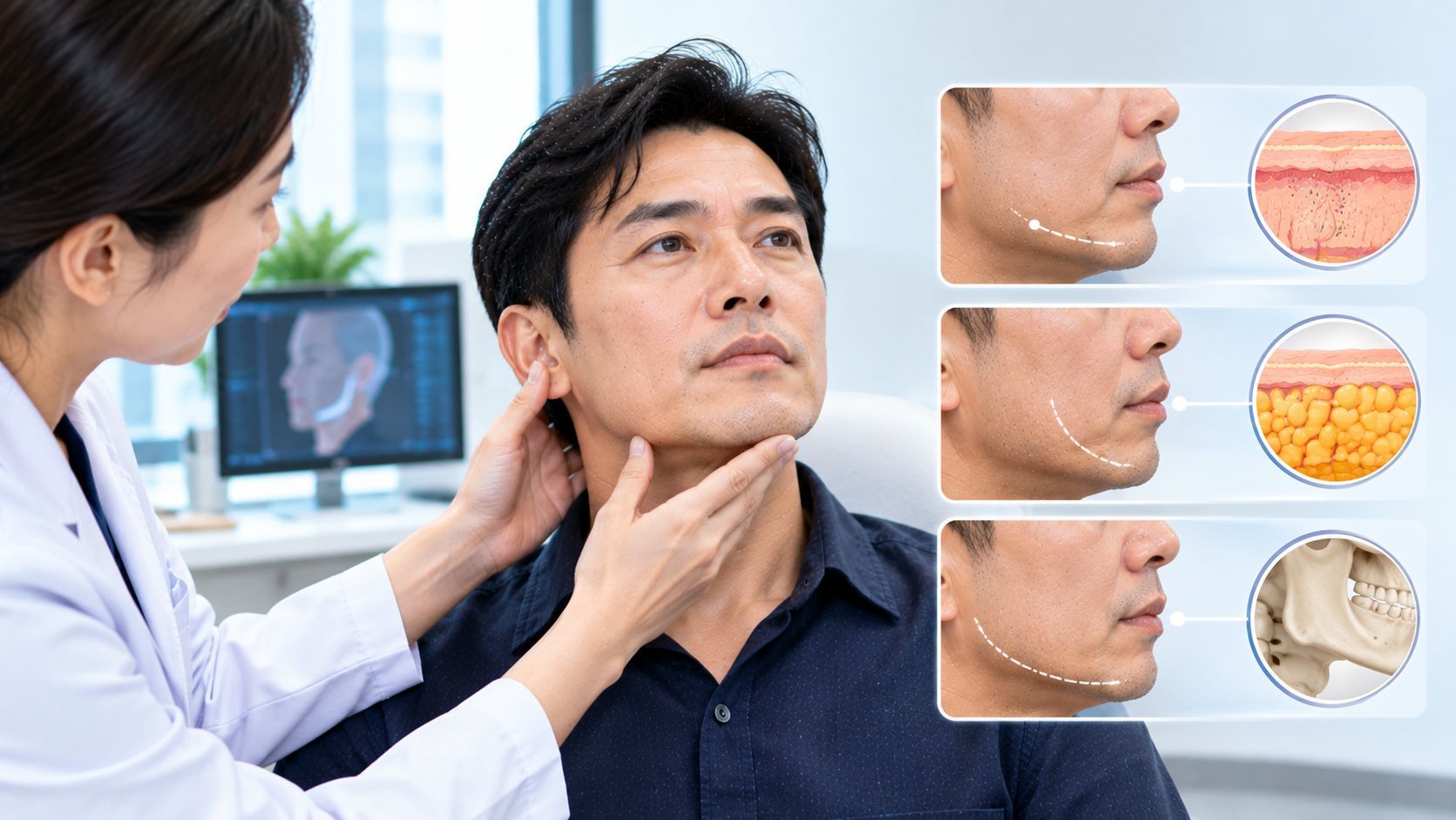
Possible contributing factors include:
Submental Fat
Fat beneath the chin can create persistent fullness.
This may occur in people of many body types and is influenced partly by genetics and fat distribution.
Loose Skin
Reduced skin elasticity can create hanging or crepey tissue under the jaw.
This becomes more common with aging and may also occur after significant weight loss.
A Recessed Chin
A chin that sits farther back can make the neck appear fuller by reducing forward projection.
Someone with a relatively slim face can therefore have a less defined jawline because of facial structure rather than excess fat.
Neck Anatomy
The shape and position of deeper tissues can also influence the appearance of the neck and jawline.
A Combination of Factors
It is common for mild fat, skin laxity and structural factors to coexist.
How Should I Check My Jawline at Home?
You can get a more useful idea by comparing several consistent positions rather than relying on one photograph.
Take photographs with:
- Head facing straight ahead
- Neck relaxed
- Head turned slightly to each side
- Side profile
- Head tilted upward
- Head tilted downward
Keep the lighting, distance and camera height as consistent as possible.
If the jawline is defined in the neutral position but disappears mainly when looking down, positional compression is likely contributing substantially.
If fullness remains obvious from the front and side while upright, another factor may be involved.
This is not a diagnostic test, but it can help you understand why different photographs look so different.
Can Posture Affect Jawline Definition?
Yes.
Forward-head posture can change the relationship between the chin and neck. When the head sits forward rather than directly over the shoulders, the soft tissues of the neck may appear more compressed or relaxed.
Improving posture may make the profile look better in some people.
However, posture does not remove submental fat or loose skin.
If a double-chin appearance remains clearly visible with a neutral posture, posture is probably only one component rather than the entire explanation.
Can Chin Structure Affect What Happens When I Look Down?
Yes.
A recessed or relatively small chin can make the jawline appear less prominent even before you move your head.
When you look downward, the lack of forward chin projection may become even more noticeable because the chin and neck move closer together.
This is one reason why treating every under-chin concern as a fat problem can produce disappointing results.
If there is little fat but the chin lacks projection, a clinician may consider whether structural correction would provide a more meaningful improvement.
Can Losing Weight Prevent the Jawline From Disappearing?
Not necessarily.
If excess submental fat is contributing to poor definition, weight loss may reduce fullness for some people.
However, a jawline can still disappear when looking down because the skin naturally folds and the chin-neck angle changes.
After significant weight loss, the situation can become more complicated. Reduced fat may improve fullness while leaving loose skin underneath the jaw.
Therefore, further weight loss is not automatically the solution.
Would Skin Tightening Help?
If your jawline is already good in a neutral position and the only problem appears when you look down, treatment may not be necessary.
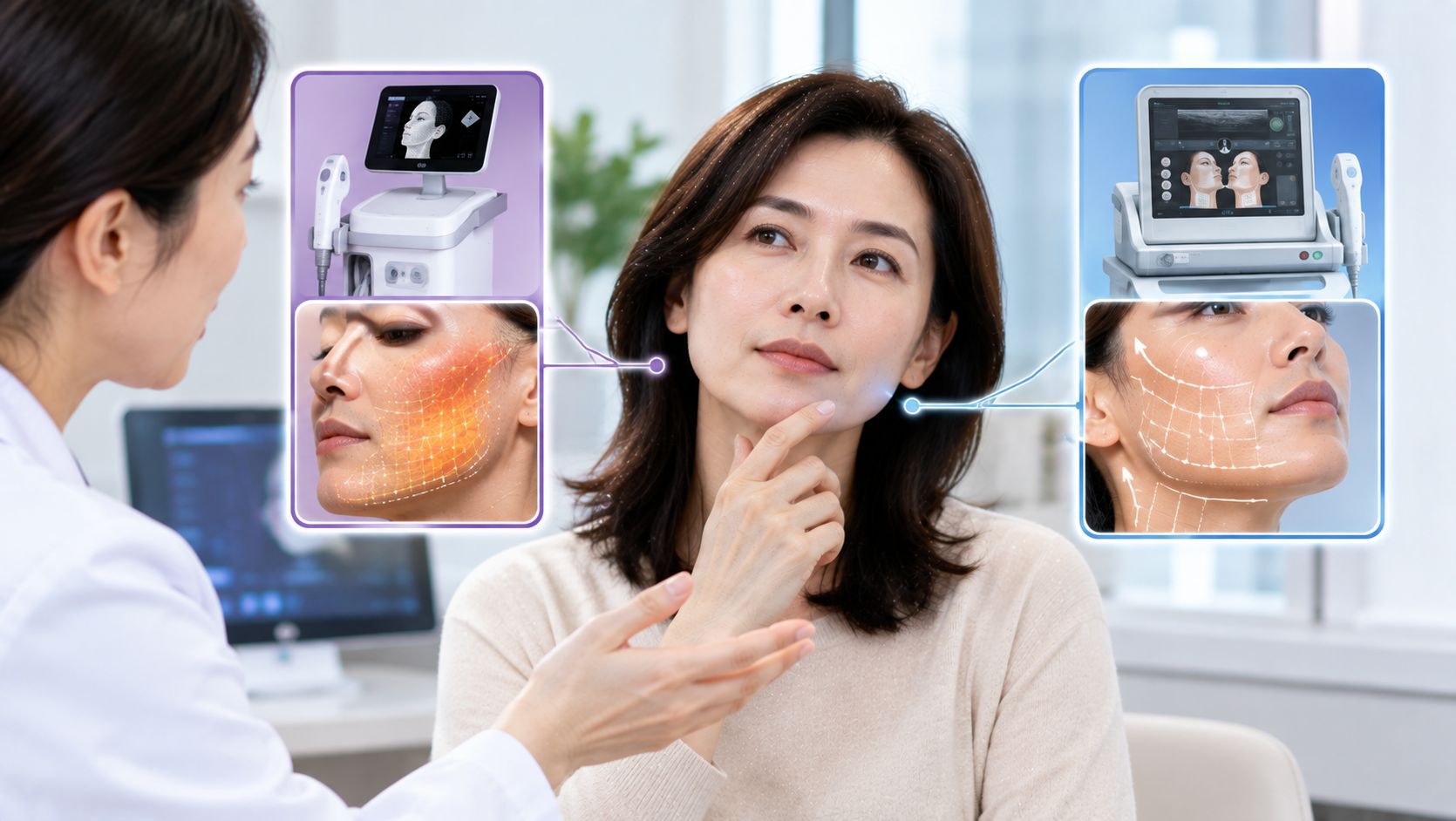
If you have persistent laxity while upright, treatments such as radiofrequency or ultrasound-based skin tightening may be considered for appropriate patients.
These treatments aim to improve firmness and collagen remodeling.
They cannot prevent normal skin folding when the neck is strongly flexed, however.
What About Submental Fat Treatment?
If there is genuine submental fat, several treatment approaches may be considered depending on the amount of fat, skin elasticity and anatomy.
Non-surgical fat-reduction approaches may be suitable for selected patients with localized fullness.
Submental liposuction is another option for appropriate candidates and can directly remove fat.
However, fat reduction should be approached carefully when skin laxity is already present. Removing fat does not automatically tighten loose skin.
Can Botox Help My Jawline?
Botox can be useful for certain muscle-related concerns but is not a general treatment for a jawline that disappears when you look down.
For example, Botox may be used for selected platysmal banding or muscle activity in the neck.
It does not remove submental fat, reposition a recessed chin or eliminate excess skin.
The treatment should therefore match the underlying cause rather than the appearance alone.
What If My Jawline Looks Good Standing but Bad in Photos?
Photography can exaggerate changes in the jaw and neck.
Camera height, focal length, distance, lighting and head position can all affect facial proportions.
A camera positioned below or above the face can make the chin-neck relationship look different from what people see in person.
If you are evaluating treatment based primarily on photographs, compare standardized images rather than isolated selfies.
This is particularly important before considering irreversible or invasive procedures.
When Should I Consider a Professional Assessment?
Consider an assessment if your jawline:
- Looks poorly defined even with a neutral head position
- Has persistent under-chin fullness
- Has significant loose skin
- Changed noticeably after weight loss
- Appears asymmetric
- Has developed new swelling or a lump
- Remains a concern despite maintaining a stable weight
A clinician can examine the tissue directly and determine whether fat, skin, muscle or skeletal structure is contributing.
What Should I Ask a Seoul Clinic?
For international patients considering jawline treatment in Seoul, useful consultation questions include:
- Does my jawline disappear because of normal neck movement or because I have excess tissue?
- Do I have submental fat?
- Is loose skin contributing?
- Is my chin projection affecting my profile?
- Would fat reduction make my skin look looser?
- Would tightening be appropriate for my skin quality?
- Do I actually need treatment if my neutral jawline is already well defined?
These questions can help prevent treatment based solely on a single photograph or unfavorable viewing angle.
Conclusion
Your jawline disappearing when you look down is usually a consequence of normal anatomy and movement. Bending the neck compresses the skin and soft tissues and changes the angle between the chin and neck.
The more important assessment is how your jawline looks when your head is upright and relaxed.
Persistent fullness in that position may be related to submental fat, loose skin, chin projection, neck anatomy or a combination of factors. Depending on the cause, options can include fat reduction, skin tightening, chin contouring or, in more significant cases, surgery.
For patients considering treatment in Seoul, understanding the underlying anatomy before choosing a procedure is more useful than trying to eliminate every temporary fold that appears when looking down.
Frequently Asked Questions
Why does my double chin appear only when I look down?
Looking down compresses the skin and soft tissues beneath the chin. This can create a temporary fold even when there is little excess fat.
Does looking down cause a permanent double chin?
No. Looking down does not create permanent submental fat or loose skin. It temporarily changes the position and compression of existing tissues.
Should I treat a jawline that disappears when I look down?
Not necessarily. If your jawline is well defined with your head upright and relaxed, the change when looking down may simply be normal anatomy.
Can posture improve my jawline?
Better posture may improve the appearance in some people by changing the head and neck position, but it cannot remove fat or significant loose skin.
Can chin filler improve a weak jawline?
For selected patients with limited chin projection, filler can temporarily increase projection and alter lower-face proportions. It does not remove fat or loose skin.
Can skin tightening stop my jawline from disappearing when I look down?
Skin tightening may improve persistent laxity, but it cannot prevent normal skin compression when you significantly bend your neck.