I'm a 40-Year-Old Man With Large Pores and Oily Skin. What Korean Treatment Makes Sense?
Introduction
For a 40-year-old man with oily skin and visibly large pores, the most useful Korean dermatology treatment is usually not a single “pore-shrinking” procedure. The better approach is to determine why the pores look enlarged and then combine oil control, texture improvement, and—when appropriate—collagen-stimulating treatment.
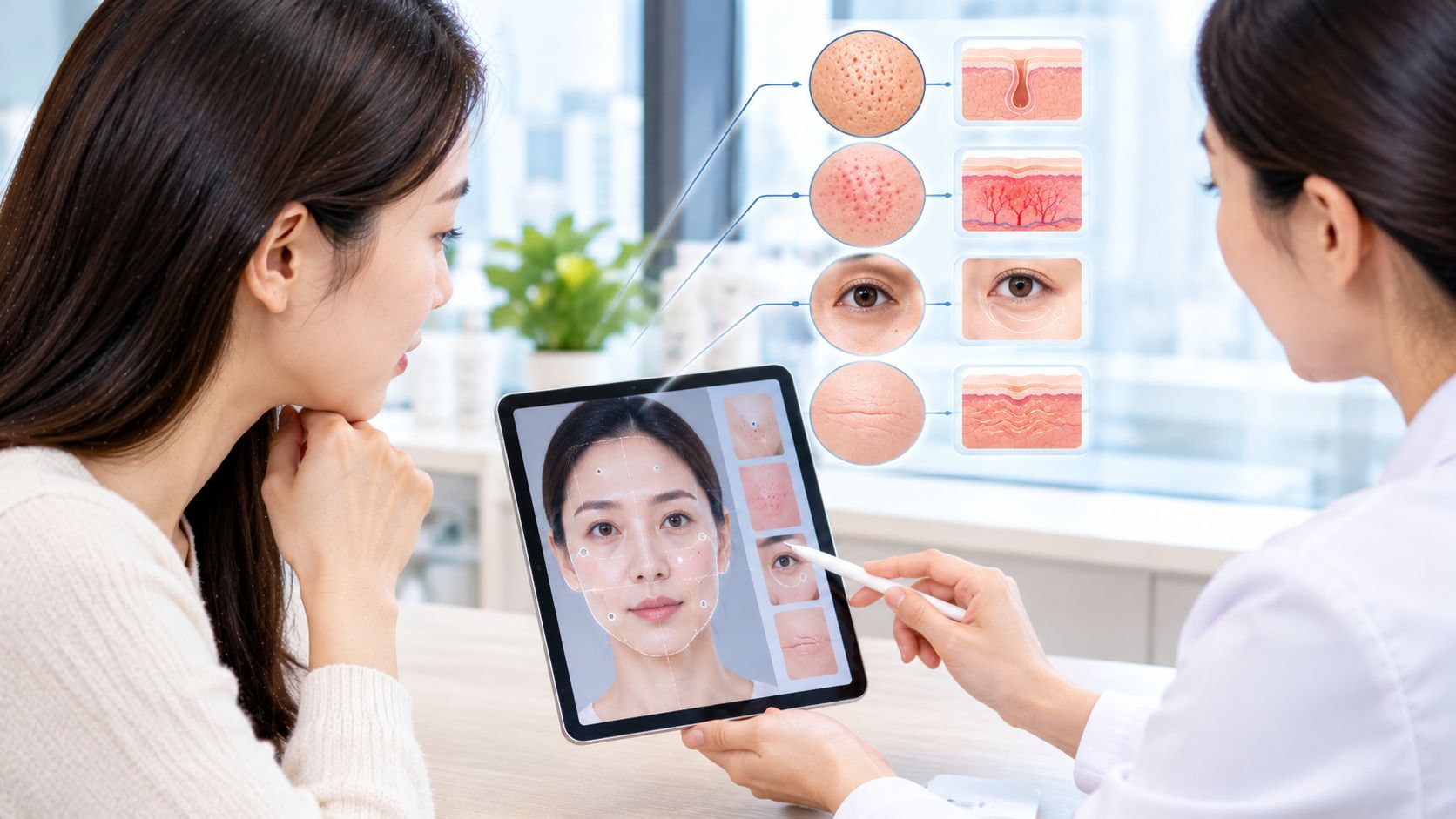
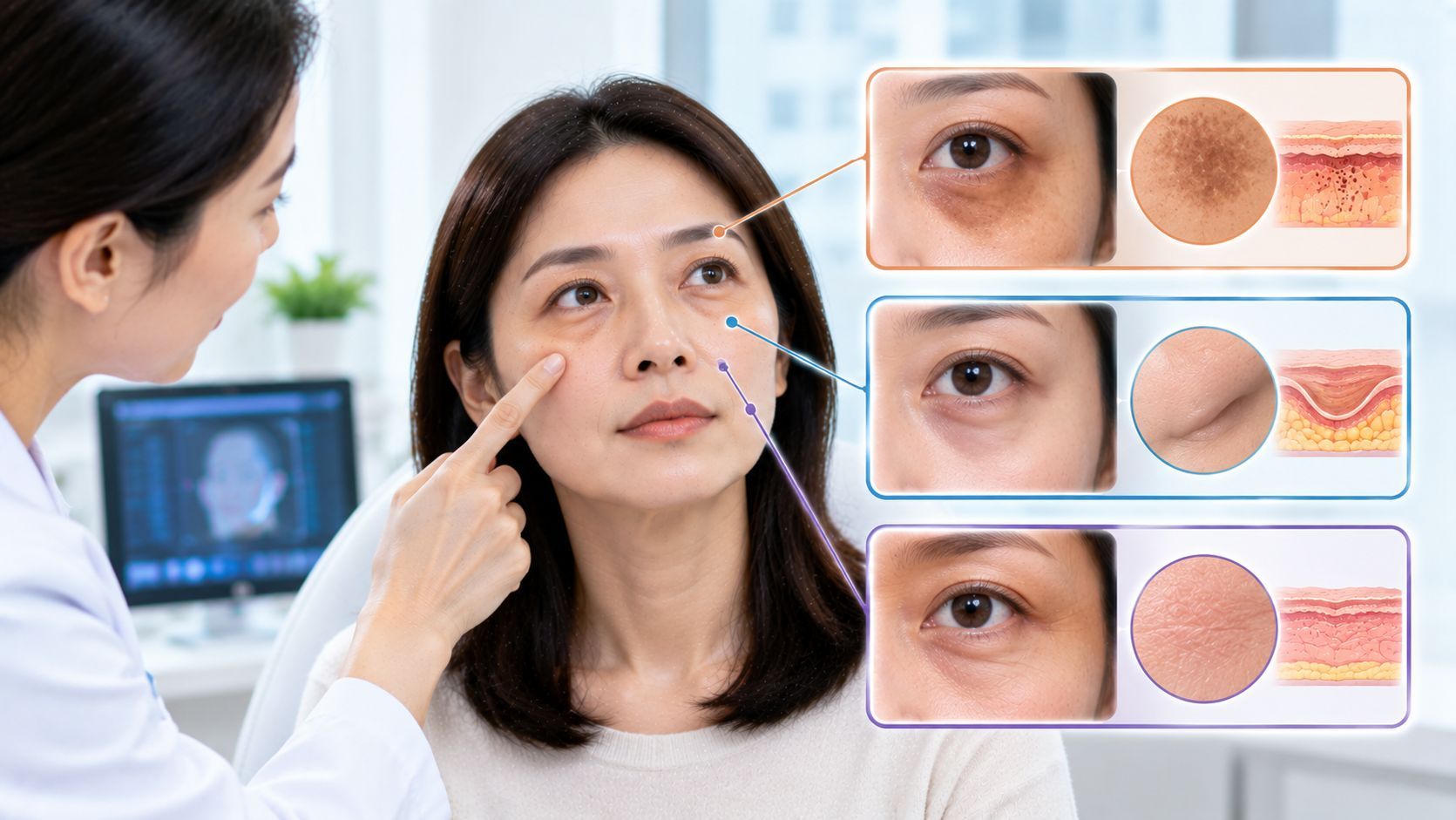
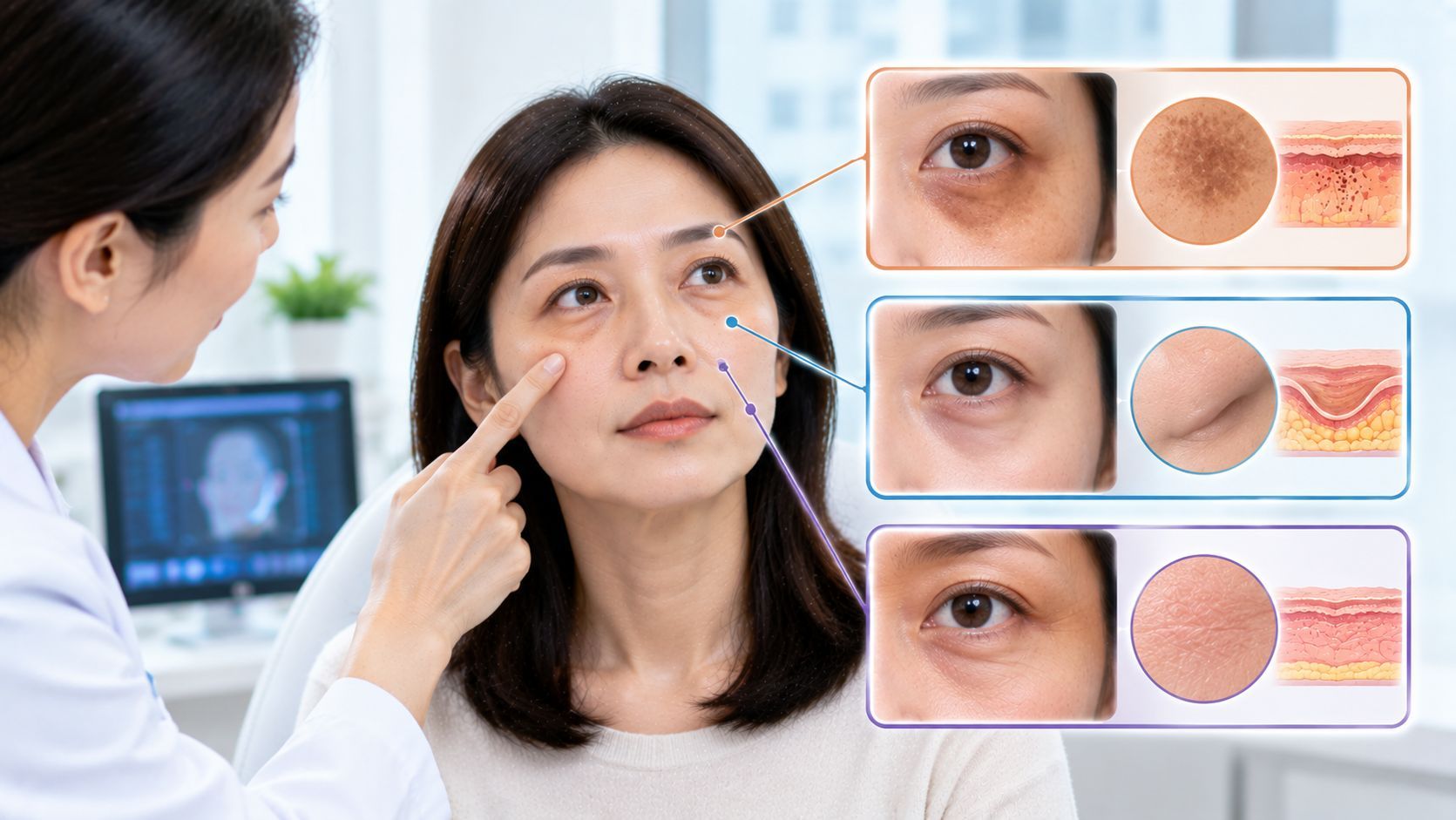
Pores can appear larger because of excess sebum, clogged pores, reduced skin elasticity, acne scarring, sun damage, or naturally larger follicular openings. Oily skin can also make pores more noticeable. The American Academy of Dermatology notes that non-comedogenic skincare, appropriate cleansing, and controlling oil can make enlarged pores less noticeable.
For a man in his 40s, the treatment plan may also need to consider something that younger patients do not: skin aging and loss of firmness. Treating pores while ignoring declining elasticity may produce only a temporary improvement in appearance.
What Causes Large Pores in Men?
Oily Skin and Excess Sebum
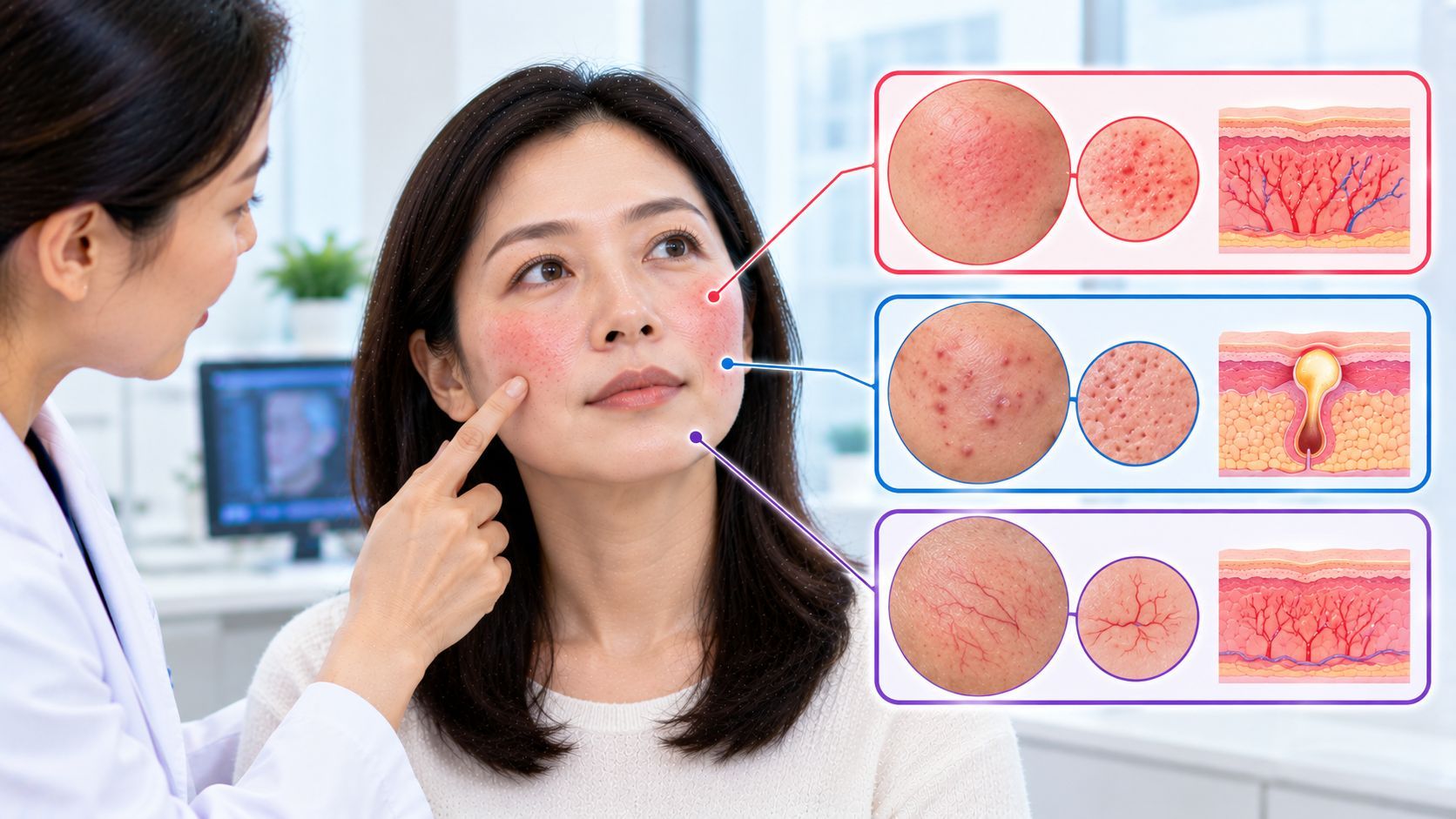
Sebum can accumulate around follicular openings and make pores appear more prominent. Oily skin may also be associated with clogged pores and breakouts.
This is why aggressive scrubbing is usually not the answer. Irritating the skin can make the overall appearance worse. A dermatologist may instead recommend a controlled skincare routine containing appropriate ingredients such as salicylic acid or a retinoid, depending on your skin and medical history.
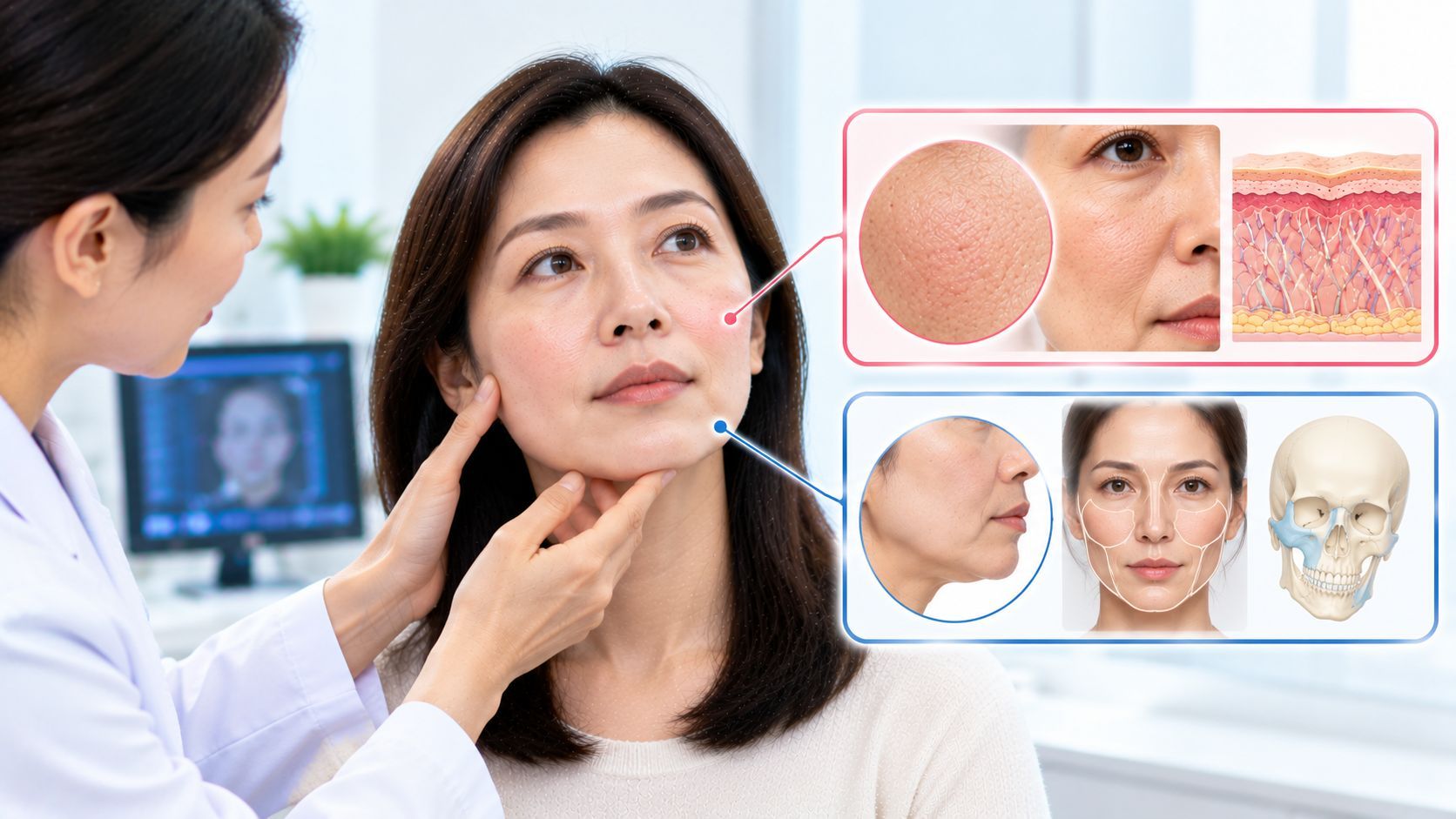
Aging Skin
At 40, enlarged pores may no longer be purely an oil problem.
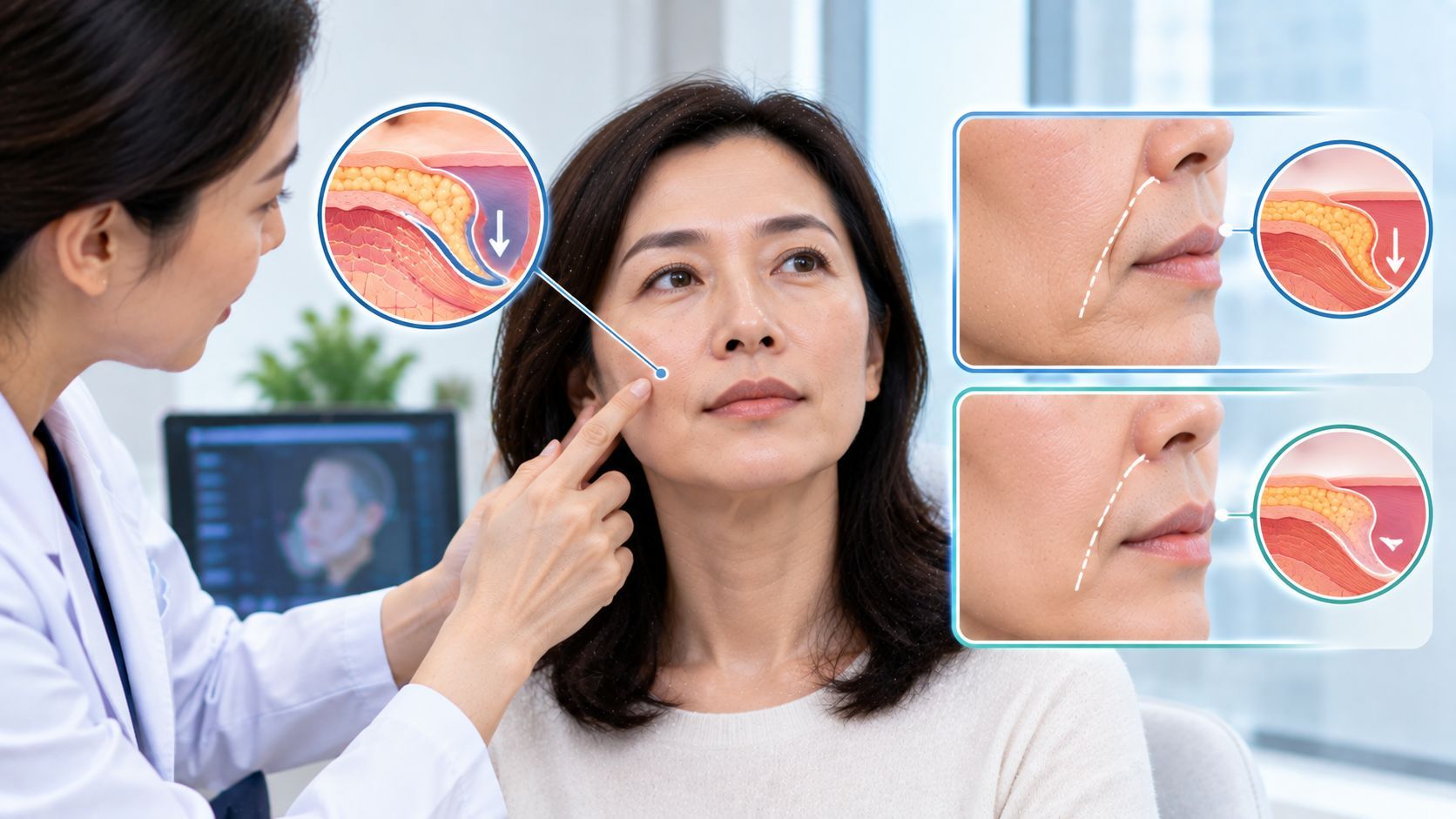
As collagen and elastin change with age, the skin surrounding the pore can lose some of its structural support. Sun exposure can also contribute to changes in texture and elasticity.
This is where a treatment designed to improve skin quality and collagen remodeling may make more sense than repeatedly trying to dry out the skin.
Acne and Previous Skin Damage
Previous acne can leave behind uneven texture and depressed scars that make pores look larger.
If the “large pores” are actually shallow acne scars, treating the underlying texture may produce more meaningful improvement than simply treating oiliness.
Which Korean Treatments May Make Sense?
There is no universally best Korean treatment for large pores. The appropriate choice depends on whether oil, congestion, texture, scarring, or laxity is the dominant problem.
1. Medical Skincare for Oily Skin
This may be the starting point rather than an injectable or device treatment.
A dermatologist may recommend products that help regulate oil, reduce congestion, and prevent clogged pores. Non-comedogenic products are particularly useful when pore visibility is related to congestion.
For some men, getting the skincare foundation right can make subsequent procedures more effective and reduce the temptation to repeatedly undergo aggressive treatments.
2. Chemical Peels
Superficial chemical peels may be considered when oiliness, congestion, and uneven texture are significant.
They generally provide a different type of improvement from energy-based tightening treatments. A dermatologist can select the peel according to skin type, pigmentation tendency, acne activity, and treatment goals.
A peel may be particularly relevant when the main complaint is oily, congested-looking skin rather than loose skin.
3. Microneedling
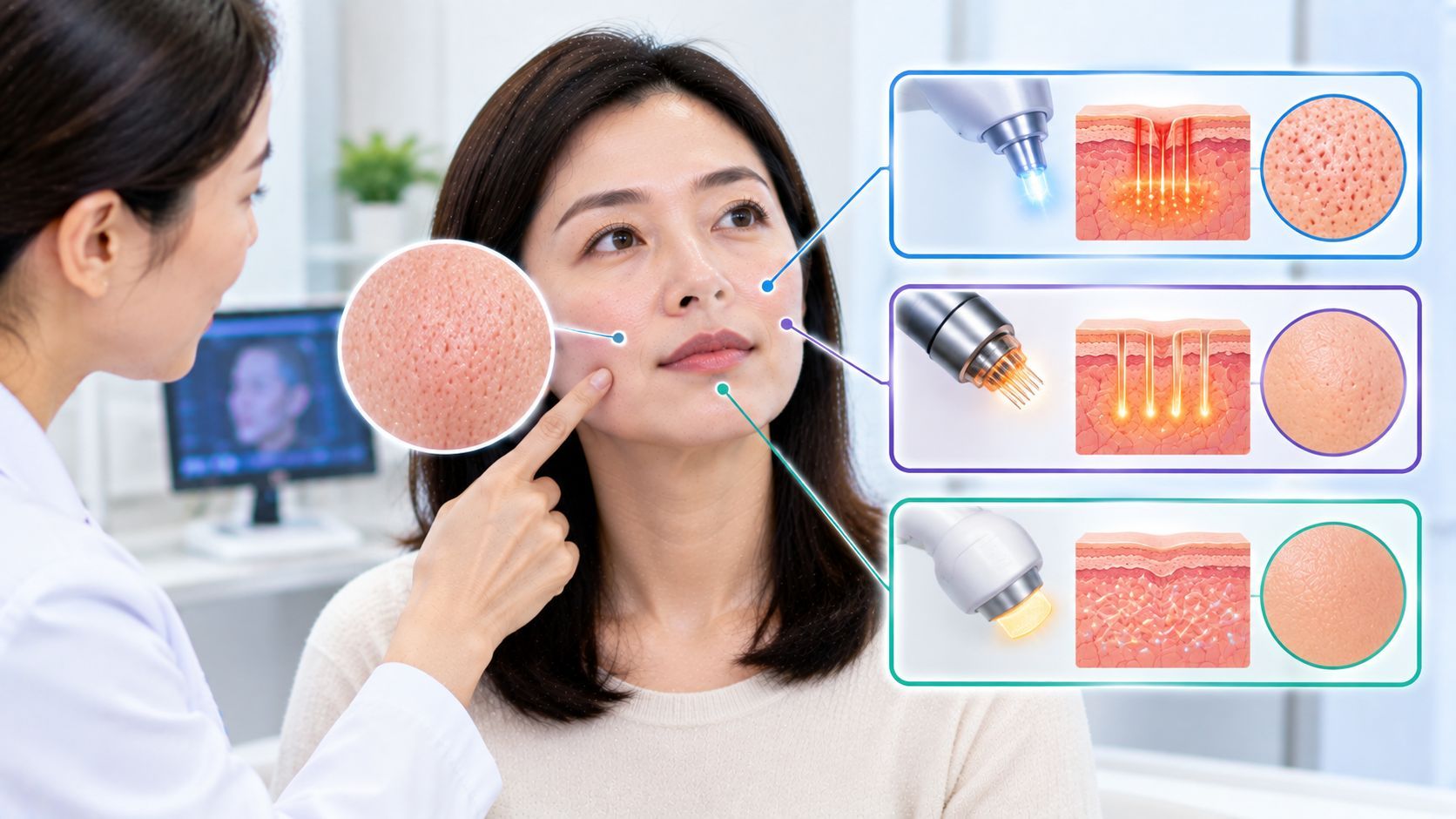
Microneedling creates controlled microscopic injuries that stimulate wound-healing processes and collagen production.
The AAD notes that microneedling can improve acne scars and is considered safe for all skin tones when appropriately performed.
For a 40-year-old man with enlarged pores plus mild textural irregularity, this may be worth discussing.
However, it is not a permanent pore-erasing treatment. Multiple sessions may be needed, and results depend on the underlying cause.
4. RF Microneedling
RF microneedling combines microneedling with radiofrequency energy delivered into the skin.
This may be considered when a patient has a combination of:
- Enlarged-looking pores
- Uneven texture
- Mild acne scarring
- Reduced firmness
- Early signs of facial aging
The advantage is that the treatment can address more than one concern at once. However, the depth and energy settings matter, particularly in a man who wants to preserve a naturally strong facial structure.
5. Fractional Laser Treatments
Fractional lasers can remodel portions of the skin and stimulate new collagen formation.
They may be useful when enlarged pores are associated with acne scars, rough texture, or photodamage. Laser treatment can improve the appearance of acne scars, although it does not literally erase scars or guarantee perfectly smooth skin.
Downtime varies substantially depending on the laser and settings. More aggressive resurfacing can mean more redness, peeling, and recovery.
6. Pico Laser
Pico laser is frequently discussed in Korean dermatology for pigmentation and overall skin appearance. However, it should not automatically be considered the best treatment for oily, enlarged pores.
If your primary problem is pore size and texture, your dermatologist may recommend another modality—or a combination—depending on what is actually causing the appearance.
What If I Have Oily Skin and Sagging at the Same Time?
This is particularly important at age 40.
If you have large pores and early facial laxity, simply reducing oil may not address the whole problem.
A dermatologist might consider a broader plan involving:
- Oil and congestion control
- Texture treatment
- Collagen stimulation
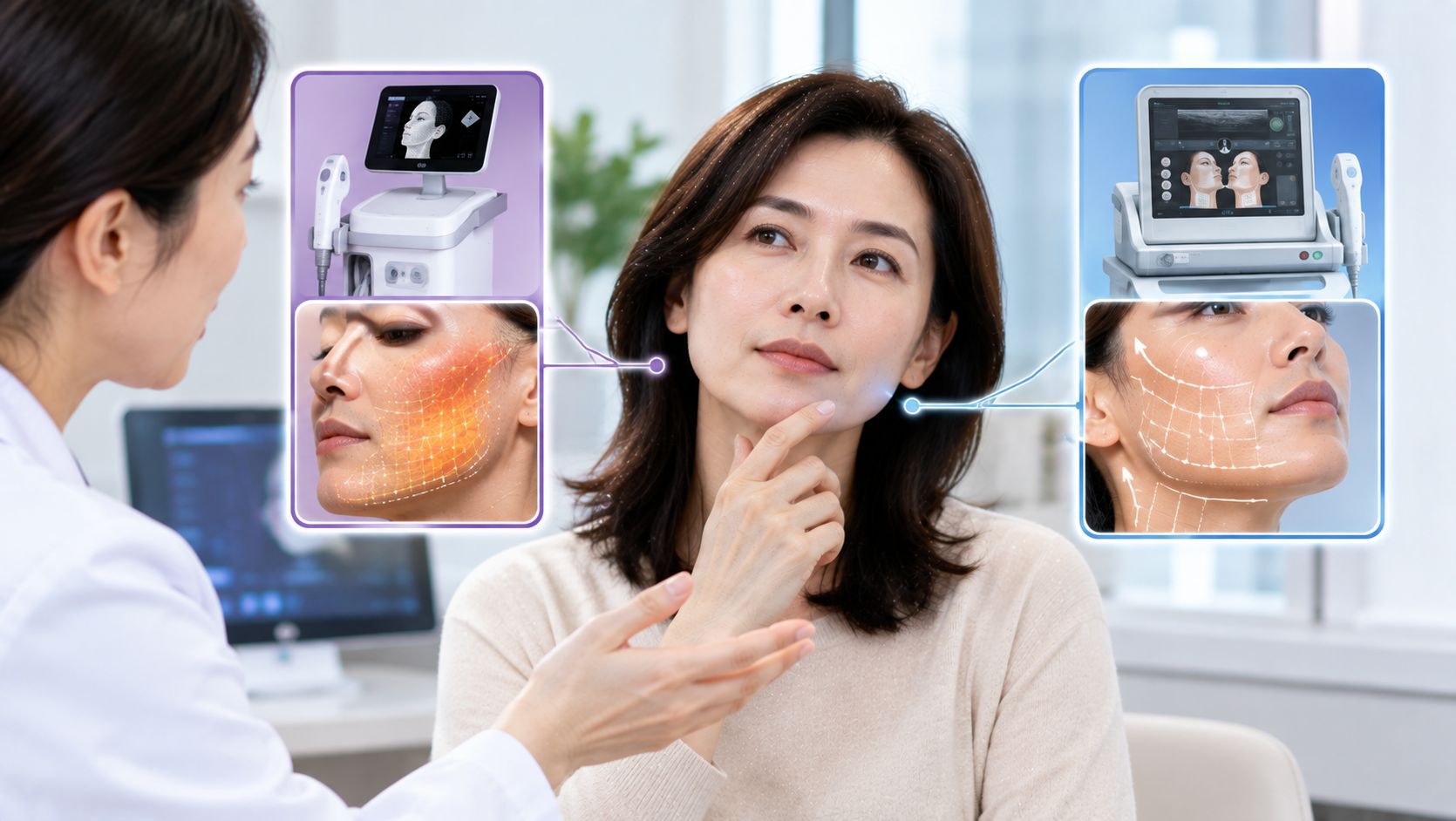
- Appropriate skin tightening
- Sun protection
- Long-term medical skincare
The goal should not necessarily be to make the skin extremely dry or aggressively tighten the face.
Over-treatment can create irritation without necessarily producing better-looking pores.
Should a Man Choose RF Microneedling, Laser, or Skin Tightening?
Think about the dominant problem.
Main concernTreatment category to discussExcess oil and congestionMedical skincare, appropriate peelsEnlarged pores + textureMicroneedling or RF microneedlingPores + acne scarsMicroneedling, RF microneedling, selected lasersPores + sun damageSelected laser/light treatmentsPores + early laxityCollagen stimulation and/or tighteningMainly pigmentationPigment-focused treatmentMultiple concernsIndividualized combination plan
This is why choosing a treatment simply because it is popular in Seoul may not be the best strategy.
What About Korean Treatments for Men With Thick or Oily Skin?
Men can have relatively thick, sebaceous skin, but skin thickness varies significantly between individuals.
A dermatologist should assess your actual skin rather than assuming that because you are male, you need stronger treatment.
The same principle applies to darker skin tones. Lasers can be used across skin types, but darker skin has a greater risk of burns and post-treatment dark marks with some laser procedures, making appropriate device selection and settings important.
How to Approach a Seoul Dermatology Consultation
If you're traveling to Korea specifically for pore treatment, don't simply tell the clinic, “I want smaller pores.”
Explain what bothers you:
“I'm 40, my skin is oily, and my pores are most visible around my nose and cheeks. I also want to improve texture without making my face look overly treated.”
Then ask:
- Are my pores mainly caused by oil, texture, acne scars, or loss of elasticity?
- Would skincare alone be sufficient initially?
- Would microneedling, RF microneedling, or laser be more appropriate?
- How much downtime should I expect?
- Could the treatment worsen pigmentation or irritation?
- How many sessions would normally be considered?
- What should I avoid before and after treatment?
A proper consultation is especially important before laser treatment because treatment settings need to account for individual skin characteristics and pigmentation risk.
Can You Permanently Shrink Pores?
Not literally.
The realistic goal is to make pores less noticeable, not permanently eliminate them.
Pore visibility can change depending on oil production, hydration, lighting, skin texture, collagen support, and age. Even successful treatment does not prevent normal skin aging.
A sustainable plan therefore usually combines appropriate skincare with procedures only when they address an identifiable problem.
What Would a Sensible Plan Look Like?
For a typical 40-year-old man with oily skin and enlarged pores, a dermatologist might first establish whether the main issue is oil and congestion.
If so, medical skincare may be the foundation.
If texture remains problematic, microneedling, RF microneedling, or selected laser treatment could be considered.
If early laxity is also present, the plan may need to include collagen remodeling or skin tightening rather than repeatedly treating the pores themselves.
The important point is that more aggressive treatment is not automatically better treatment.
Conclusion
For a 40-year-old man with large pores and oily skin, the most sensible Korean treatment depends on what is actually making the pores visible.
If oil and congestion dominate, start with appropriate medical skincare. If texture or acne scars are significant, microneedling, RF microneedling, or selected laser treatments may be worth discussing. If aging and laxity are contributing, a broader collagen and skin-firming strategy may make more sense.
The goal should be healthier-looking, more even skin—not unnaturally poreless skin. A dermatologist can determine whether your main problem is sebum, congestion, scarring, texture, pigmentation, or age-related structural change and build the treatment around that finding.
Frequently Asked Questions
Can Korean dermatology treatments permanently remove large pores?
No. Treatments can make pores less noticeable, but pores are normal skin structures and cannot simply be permanently erased.
Is RF microneedling good for men's large pores?
It can be useful when enlarged pores are accompanied by uneven texture, acne scarring, or reduced firmness. Whether it is appropriate depends on your skin and treatment goals.
Is laser better than microneedling for large pores?
Not necessarily. The better option depends on whether your main problem is pore visibility, acne scars, pigmentation, rough texture, or laxity.
Can oily skin make pores look larger?
Yes. Excess oil and clogged pores can make pores more noticeable. Appropriate cleansing and non-comedogenic skincare can help reduce their appearance.
How many treatments will I need in Seoul?
There is no universal number. Treatment frequency and the number of sessions depend on the procedure, your skin condition, response, and recovery.