My Jawline Looks Sharp on One Side and Soft on the Other. What Can Be Done?
Introduction
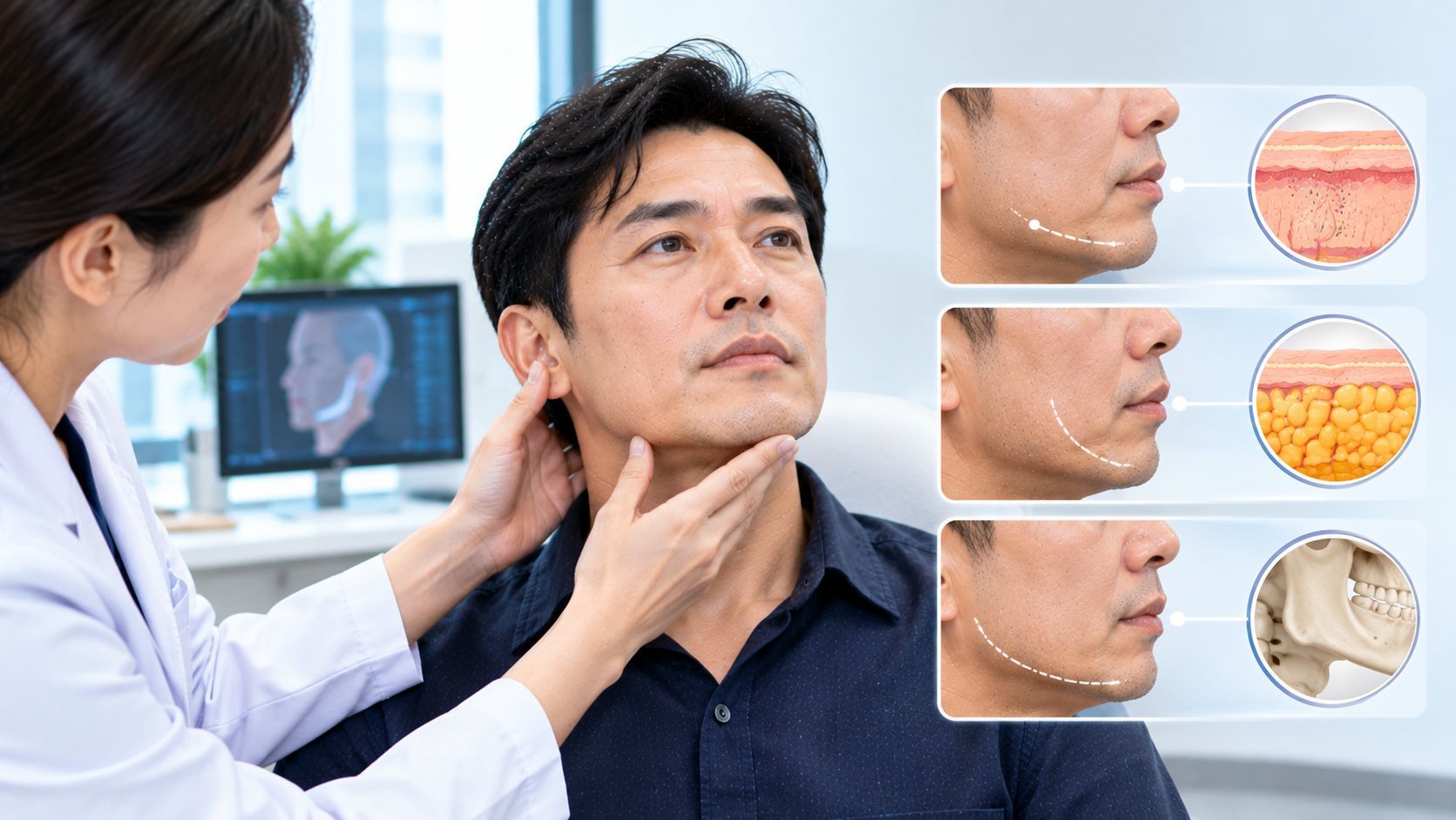
A jawline that looks sharp on one side and softer on the other is a common type of facial asymmetry. It can become more noticeable with age, changes in facial volume, skin laxity, muscle activity, or simply because the underlying facial structure was never perfectly symmetrical.
The best treatment depends on why the two sides look different. If the softer side is mainly caused by skin laxity, a skin-tightening treatment may help. If the difference comes from muscle activity, volume, or bone structure, a different approach may be more appropriate. Treating both sides identically is not always the best way to improve the balance.
Why Does One Side of the Jawline Look Sharper?
Natural facial asymmetry
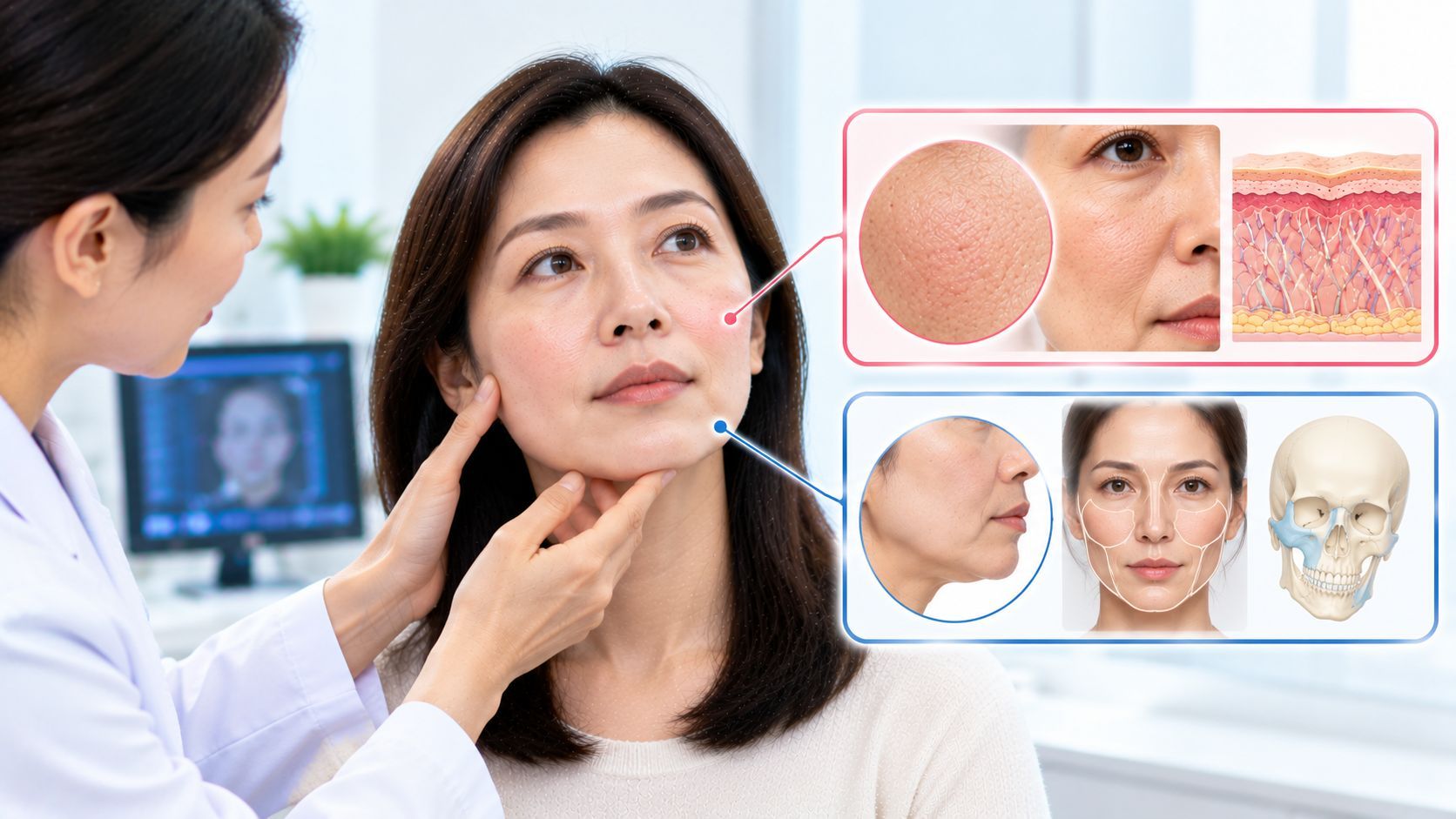
Almost everyone's face has some degree of asymmetry. The jawbone, cheekbones, muscles, fat distribution, and soft tissues can differ from one side to the other.
A small difference may have been present for years but become more noticeable as facial aging changes the surrounding tissues.
Uneven skin laxity
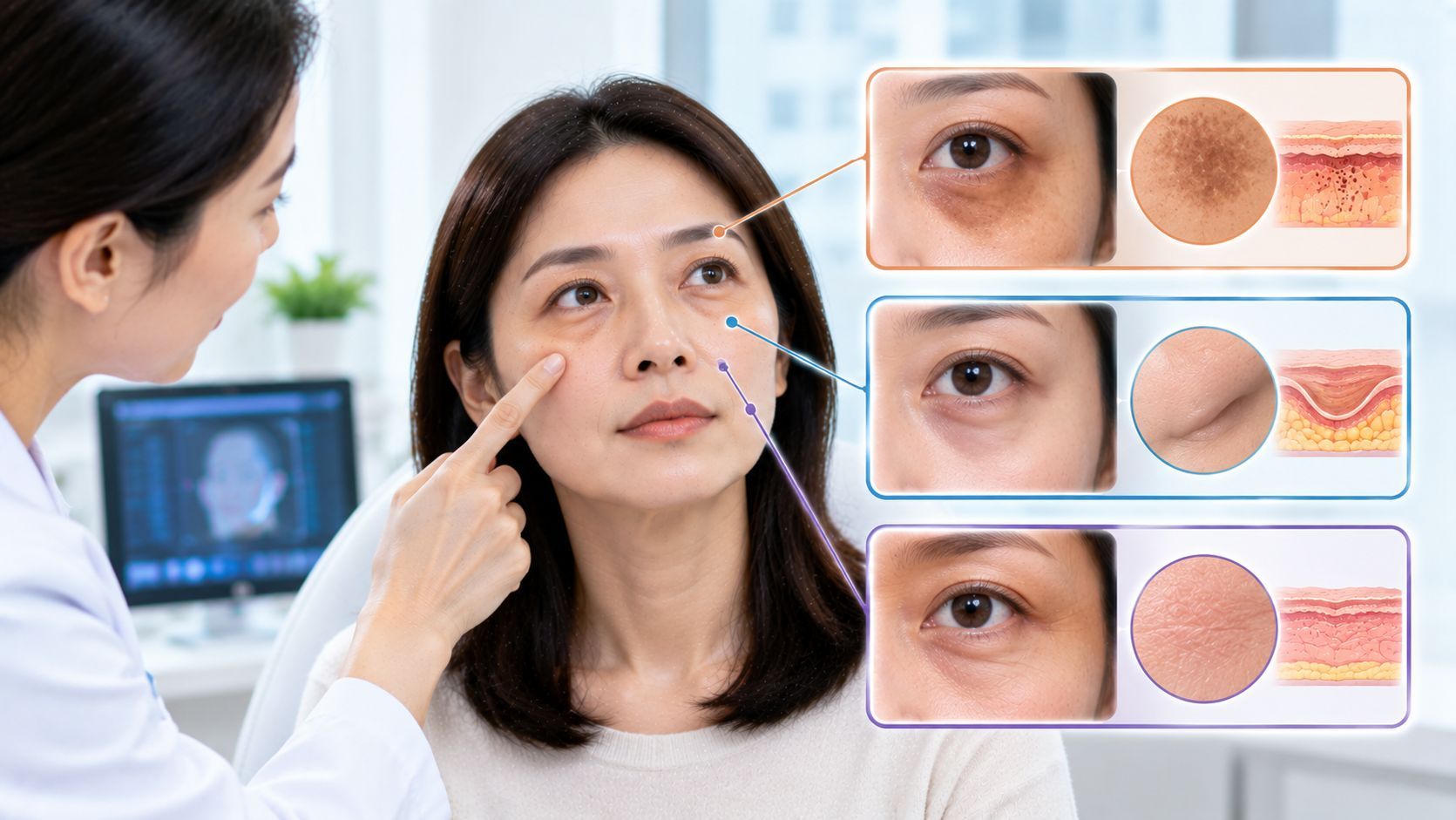
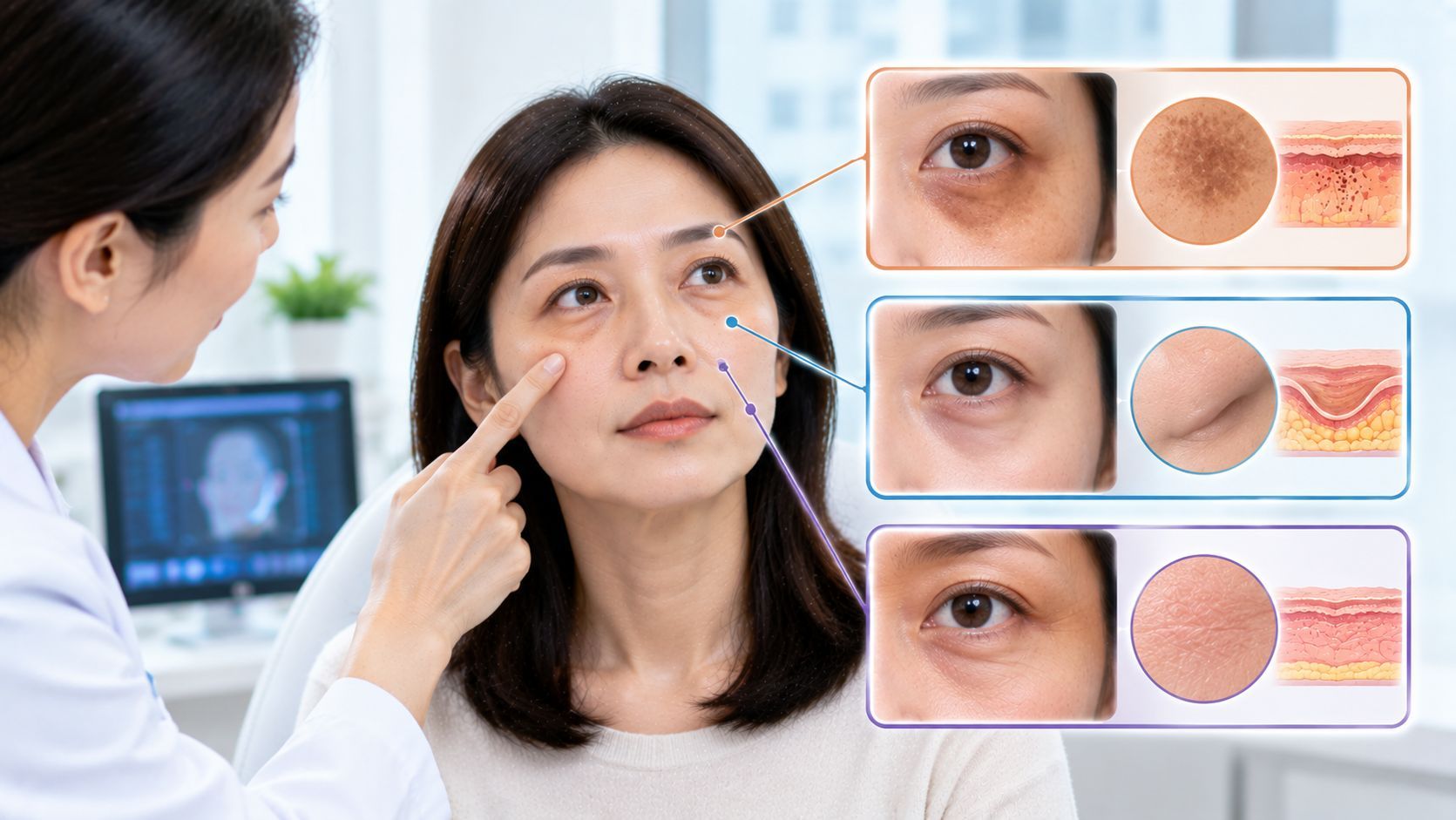
One of the most common cosmetic reasons for a softer jawline is loose or less firm skin.
As skin loses elasticity, the lower face can become less defined. If this happens more on one side, the jawline may appear sharper on one side and softer on the other.
The American Academy of Dermatology notes that non-invasive skin-tightening procedures can be useful for people with a smaller amount of sagging skin, while significant sagging may require a different approach.
Different facial volume
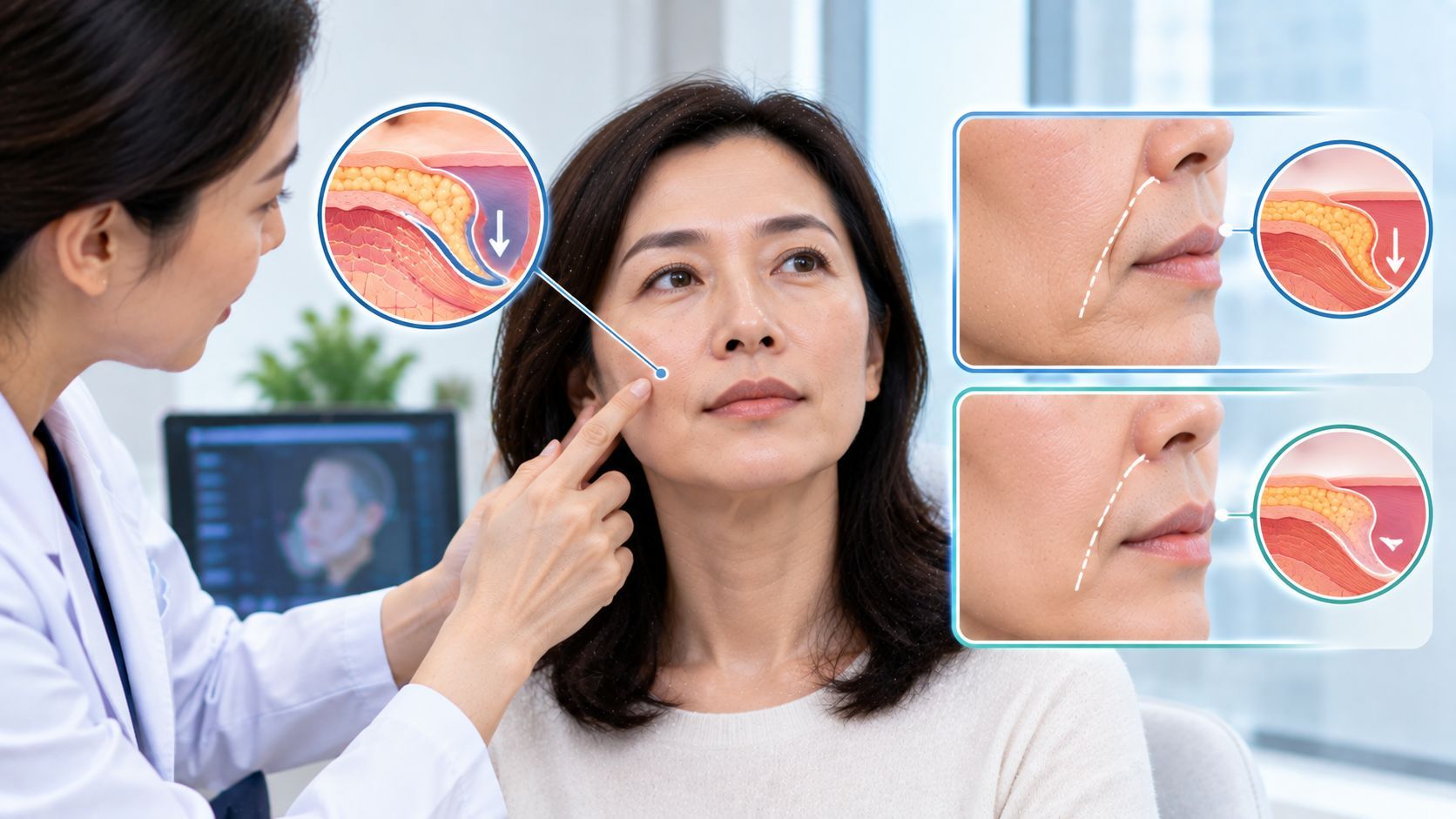
The two sides may also have different amounts of facial fat or soft-tissue volume.
For example, one side may naturally have a fuller cheek or lower-face area. In that situation, simply tightening the skin may not completely correct the difference.
Differences in muscle activity
The masseter and other facial muscles can influence the appearance of the lower face.
If one side has stronger or more active muscles, the jawline may look different even when the skin itself is relatively similar.
Botulinum toxin works by temporarily relaxing targeted muscles, so it can be relevant when muscle activity contributes to facial shape.
Jaw and bone structure
Sometimes the sharper side is not actually "better lifted." The underlying jawbone or facial structure may simply be different.
A cosmetic skin treatment cannot change the underlying bone structure, so identifying the cause is important before choosing a procedure.
Can Skin Tightening Improve an Uneven Jawline?
Potentially, yes.
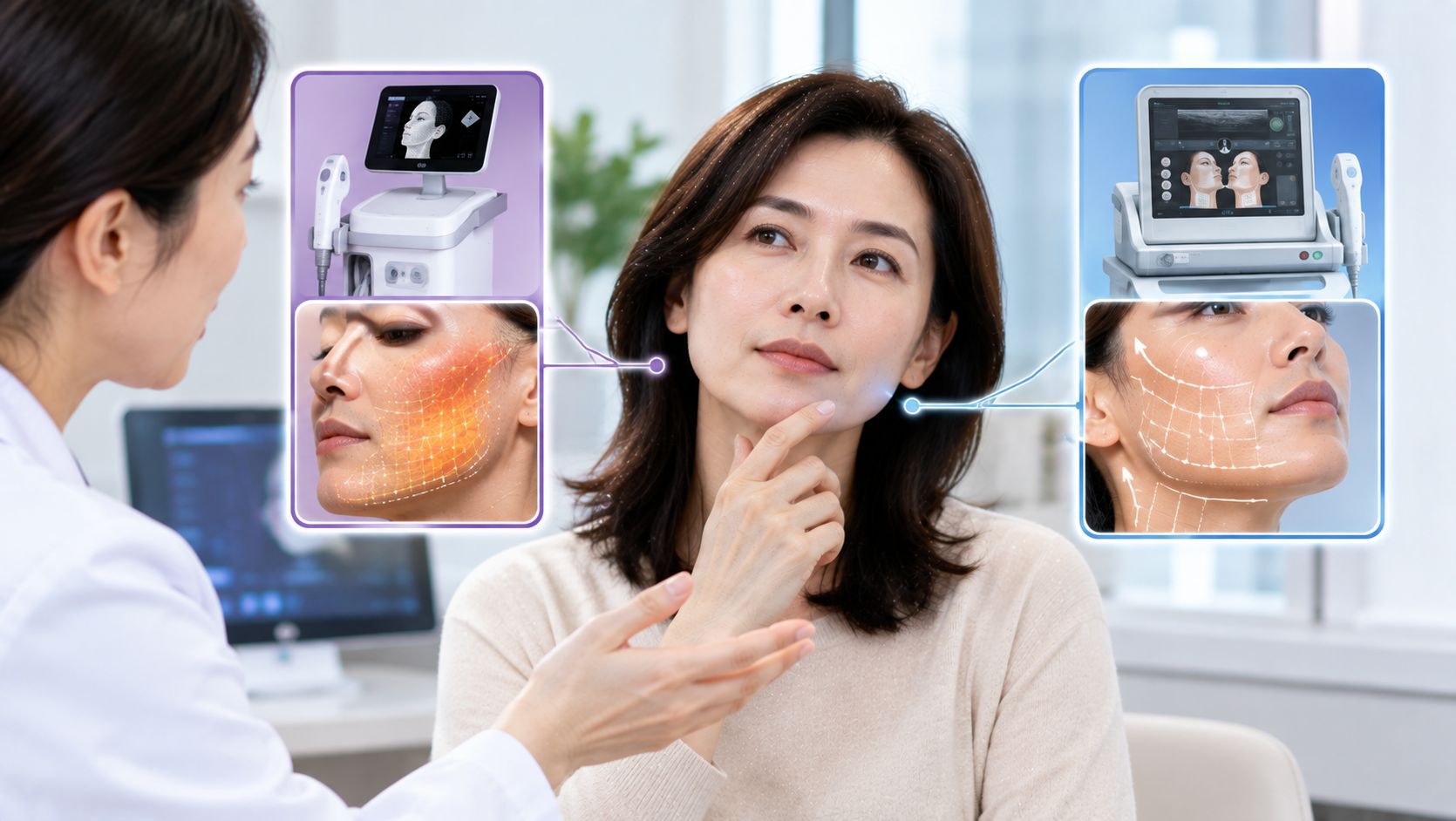
If the softer side has more skin laxity, a non-invasive skin-tightening treatment may improve firmness and make the jawline appear more defined.
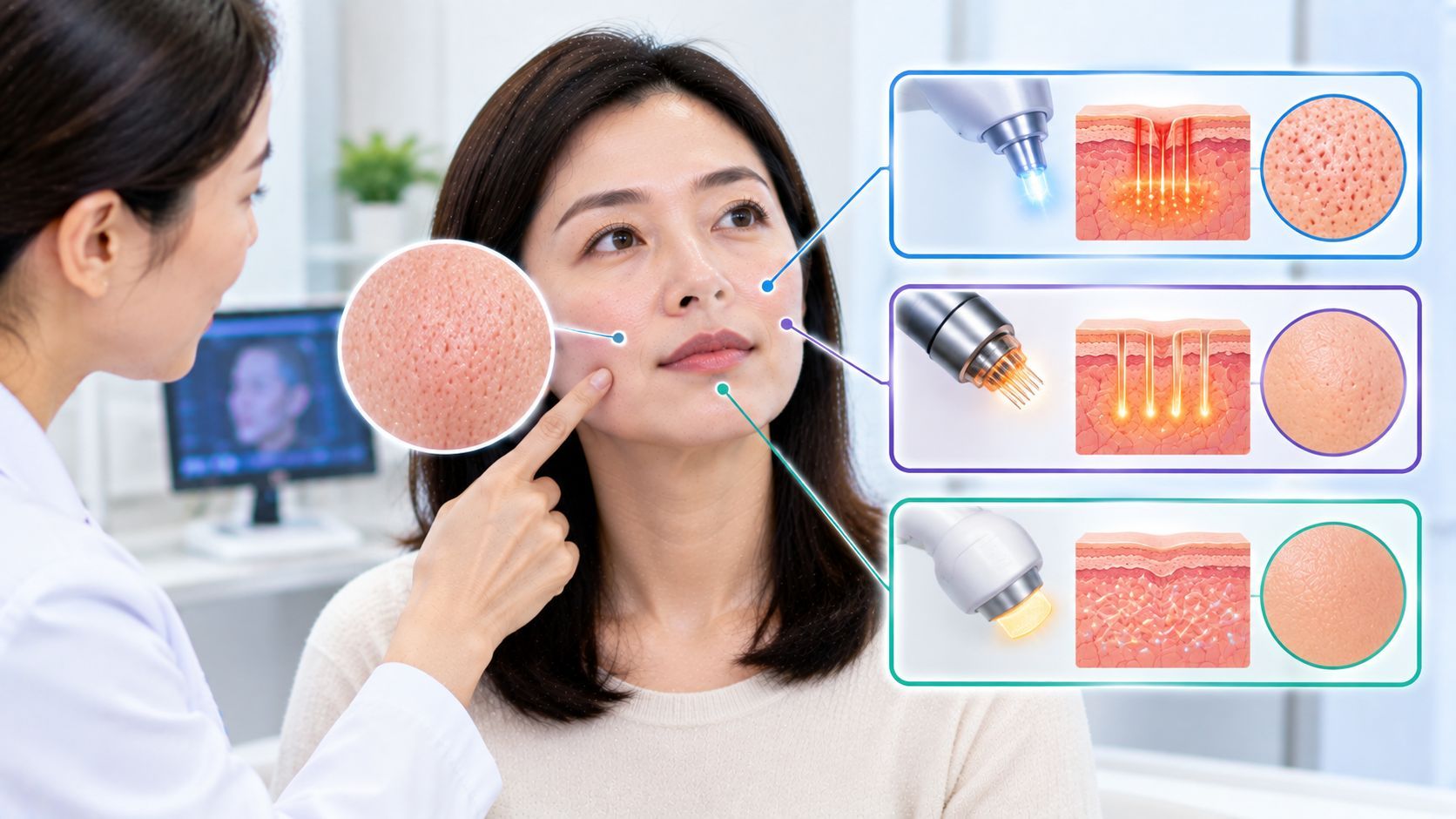
Options may include radiofrequency or ultrasound-based treatments, depending on the patient's anatomy and degree of laxity.
However, skin tightening should not be viewed as a way to physically reshape the jawbone. The AAD recommends professional assessment to determine which skin-tightening approach is appropriate and emphasizes that people with substantial sagging may not get the desired result from non-invasive treatment.
Could Thermage Help?
Thermage is a radiofrequency-based skin-tightening treatment that may be considered when laxity contributes to a softer jawline.
If one side has noticeably more lax skin, the practitioner can assess the two sides separately and determine whether the treatment plan needs to account for that difference.
The goal should not necessarily be to treat the softer side aggressively. Instead, the practitioner should determine:
- Whether laxity is actually causing the difference
- Which parts of the jawline need treatment
- Whether both sides should be treated
- Whether the degree of treatment should differ
- Whether another treatment would address the underlying cause better
This is especially important when the asymmetry is subtle.
Could Ultherapy Help?
Ultrasound-based skin tightening may also be considered when mild facial laxity contributes to an uneven jawline.
As with radiofrequency treatments, the important question is not simply which side looks softer. The practitioner needs to determine why it looks softer.
If the issue is mainly loose skin, tightening may improve the appearance. If the difference comes from volume or bone structure, the effect may be limited.
What If One Side Has More Muscle?
If the sharper or wider side is related to muscle activity rather than loose skin, a muscle-targeting treatment may be considered.
For example, botulinum toxin can temporarily relax selected facial muscles. The AAD explains that dermatologists use carefully targeted injections to weaken specific muscles while attempting to preserve natural facial expression.
This does not mean Botox is automatically the answer for an uneven jawline.
Too much treatment or incorrect muscle selection can produce an unwanted change in facial movement or contour. The appropriate treatment depends on the specific anatomy.
What If One Side Is Fuller?
If one side is fuller because of soft-tissue volume, skin tightening may not be enough.
The assessment may instead focus on whether the difference comes from:
- Cheek volume
- Lower-face fat distribution
- Muscle size
- Previous filler
- Swelling
- Natural facial structure
A volume-related problem should not automatically be treated as a skin-tightening problem.
Should Both Sides Receive the Same Treatment?
Not necessarily.
This is one of the most important points when treating facial asymmetry.
If the right side has more laxity than the left, the treatment plan may need to account for that difference. But if the right side looks softer because of volume or bone structure, treating it with more tightening may not solve the problem.
A good consultation should compare both sides at rest and during movement.
Compare the face from multiple angles
A practitioner may assess the face:
- Straight on
- From the left and right
- From slightly above
- From slightly below
- At rest
- While smiling
- While talking
- While clenching the jaw
This can help distinguish a skin-laxity problem from a muscle or structural issue.
Can Aging Make One Side Look Softer?
Yes.
Aging involves changes in the skin and underlying facial tissues. Loss of subcutaneous fat and other age-related changes can contribute to looseness and changes in facial contour.
These changes do not necessarily happen identically on both sides.
Daily habits may also make asymmetry more noticeable, but it is usually too simplistic to blame one factor such as sleeping position for a visible difference.
What If the Asymmetry Is New?
A newly developing or rapidly worsening facial asymmetry deserves more attention than a stable difference that has existed for years.
If one side suddenly becomes weak or droopy, particularly with difficulty speaking, weakness elsewhere, vision changes, severe headache, or other neurological symptoms, seek urgent medical attention rather than arranging a cosmetic treatment.
Facial paralysis can result from nerve problems and can cause weakness or drooping on one side of the face.
Similarly, Cleveland Clinic advises medical evaluation for new or worsening facial changes, particularly when changes develop rapidly or are accompanied by neurological or functional symptoms.
What Treatments May Be Considered?
The appropriate treatment depends on the cause.
Main causePossible approachMild uneven skin laxityRadiofrequency or ultrasound skin tighteningMuscle-related differenceCarefully targeted botulinum toxin when appropriateVolume differenceVolume-based treatment or other individualized approachStructural jaw asymmetrySpecialist assessment; cosmetic skin treatments may have limited effectTemporary swellingObservation and treatment of the underlying causeSignificant tissue saggingConsultation about surgical or other lifting options
This table is only a general guide. A clinician needs to examine the face before deciding what is appropriate.
What About Combining Treatments?
Sometimes facial asymmetry has more than one cause.
For example, one side may have slightly more skin laxity while the other side has a difference in muscle activity or volume. In such situations, combining treatments may be considered.
However, combining procedures simply because the face looks uneven can lead to overtreatment.
A conservative strategy is often more appropriate when the goal is a natural result.
What Should International Patients Ask a Korean Clinic?
If you are considering facial rejuvenation in Korea, explain the asymmetry clearly during your consultation.
Useful questions include:
- Why does one side of my jawline look softer?
- Is the difference caused by skin laxity, muscle, volume, or structure?
- Would Thermage or Ultherapy actually address the cause?
- Should both sides receive the same treatment?
- Could treating only one side make the asymmetry worse?
- Would Botox be appropriate if muscle activity is involved?
- Do I need filler or another volume-based treatment?
- What result is realistic?
- How long should I stay in Korea after treatment?
- What follow-up is available if I return home?
If possible, bring older photographs. Comparing your current face with previous photographs can help determine whether the asymmetry is longstanding or relatively new.
How Can You Get a Natural-Looking Result?
The goal should usually be balance, not perfect symmetry.
Trying to make both sides completely identical can lead to unnecessary treatment. A small amount of natural asymmetry is normal.
A conservative treatment plan should focus on the feature that actually creates the imbalance rather than treating every difference that can be seen in a photograph.
This is particularly important for people who want to look refreshed without making their facial features look dramatically different.
Conclusion
If your jawline looks sharp on one side and soft on the other, the right treatment depends on the underlying cause.
Uneven skin laxity may respond to treatments such as radiofrequency or ultrasound-based skin tightening. Muscle-related differences may sometimes be addressed with carefully targeted botulinum toxin, while volume or structural differences may require a different approach.
The most important step is a proper assessment of both sides of the face. Do not assume that the softer side simply needs more tightening. A personalized treatment plan is more likely to produce a balanced, natural-looking result.
FAQs
Why is my jawline sharper on one side?
Possible reasons include natural facial asymmetry, differences in skin laxity, facial volume, muscle activity, or underlying jaw structure.
Can Thermage fix an uneven jawline?
Thermage may help if uneven skin laxity is contributing to the difference, but it cannot correct asymmetry caused primarily by bone structure or facial volume.
Can Ultherapy improve jawline asymmetry?
Ultrasound-based skin tightening may help when the asymmetry is related to uneven skin laxity. It is less likely to correct differences caused by muscle, volume, or bone structure.
Could Botox help if one side of my jaw looks wider?
It may help in selected cases where muscle size or activity contributes to the difference. Botulinum toxin temporarily relaxes targeted muscles, so accurate assessment and conservative treatment are important.
Should I treat only the softer side?
Not automatically. Treating only one side may be appropriate in some situations, but the decision should be based on the cause of the asymmetry rather than appearance alone.
When should facial asymmetry be medically evaluated?
A new or rapidly worsening asymmetry, particularly when accompanied by facial weakness, difficulty speaking, vision problems, severe headache, or other neurological symptoms, should be medically evaluated promptly.