Can Thermage Improve Facial Asymmetry?
Introduction
Facial asymmetry is normal, but it can become more noticeable with age. One side of the face may develop a lower jowl, looser cheek skin, or a less defined jawline than the other. This can lead people to wonder whether Thermage can improve facial asymmetry without changing their overall facial shape.
Thermage may improve the appearance of facial asymmetry when uneven skin laxity is an important cause, but it cannot correct every type of asymmetry. Thermage FLX uses radiofrequency energy to heat tissue and support collagen remodeling, helping improve the appearance of wrinkles, skin firmness, and contour over time. The treatment can be customized to the areas being treated, but the correct approach depends on why the two sides of the face look different.
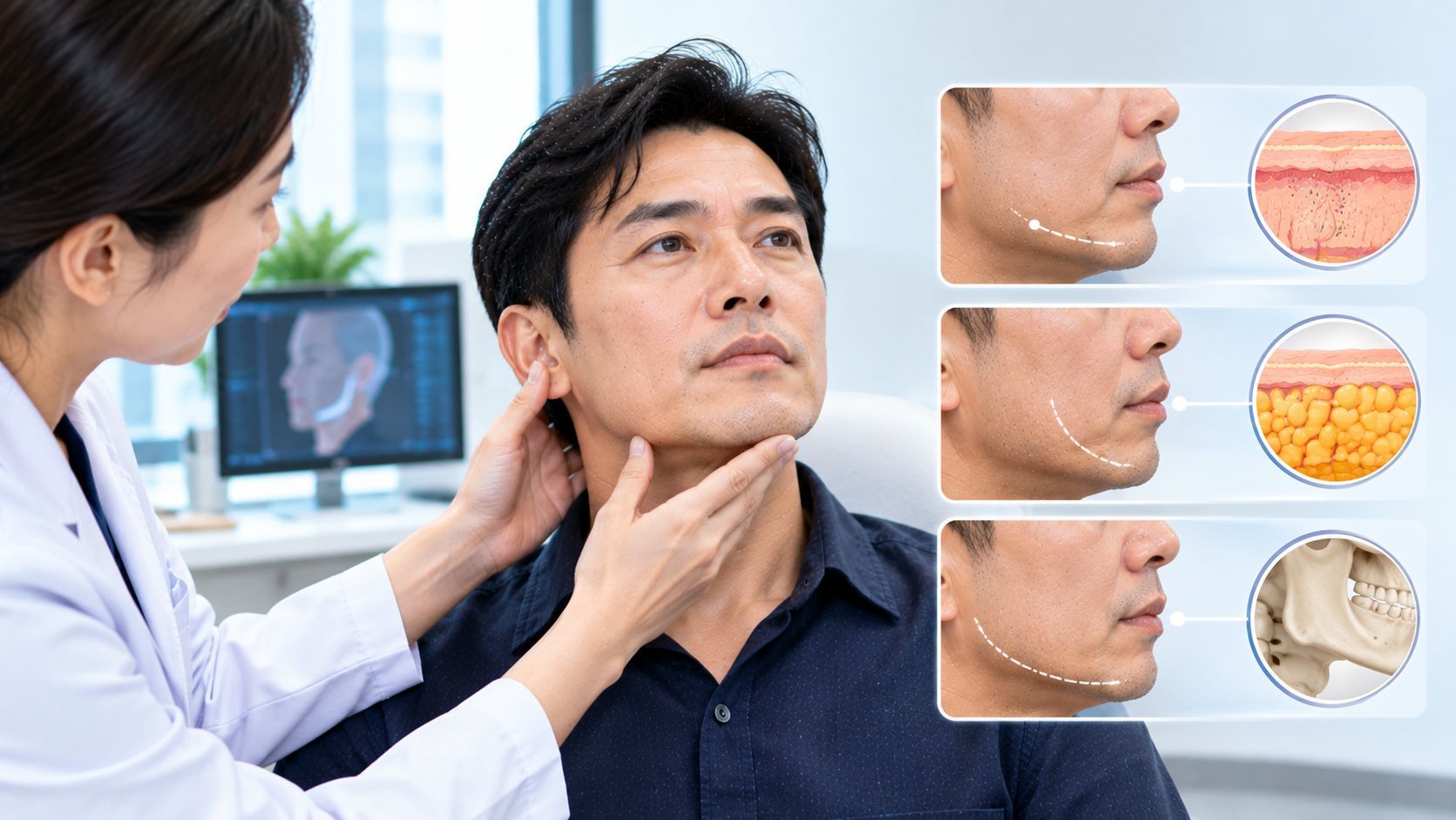
Why Does Facial Asymmetry Become More Noticeable With Age?
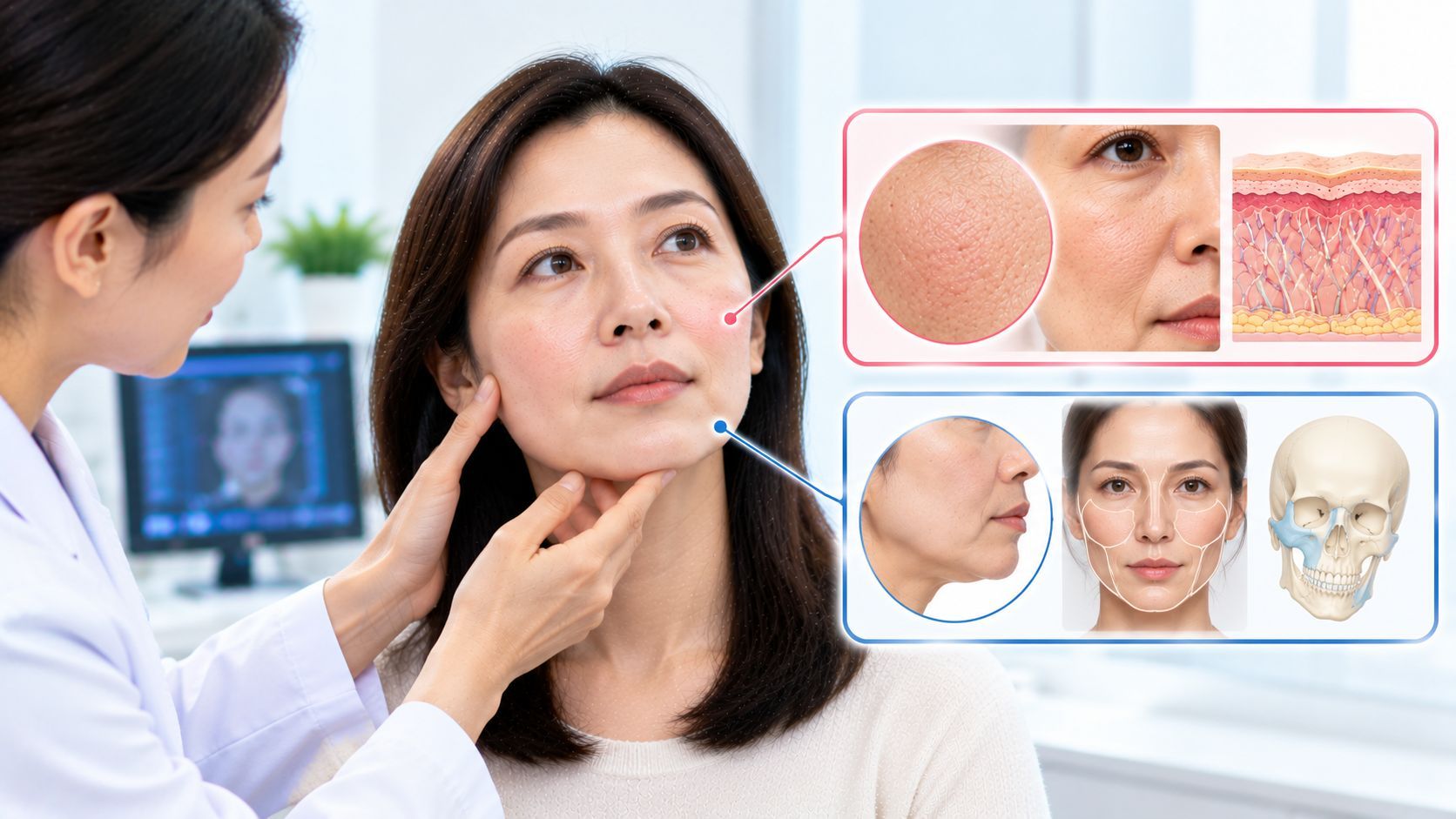
Aging does not necessarily affect both sides of the face in exactly the same way.
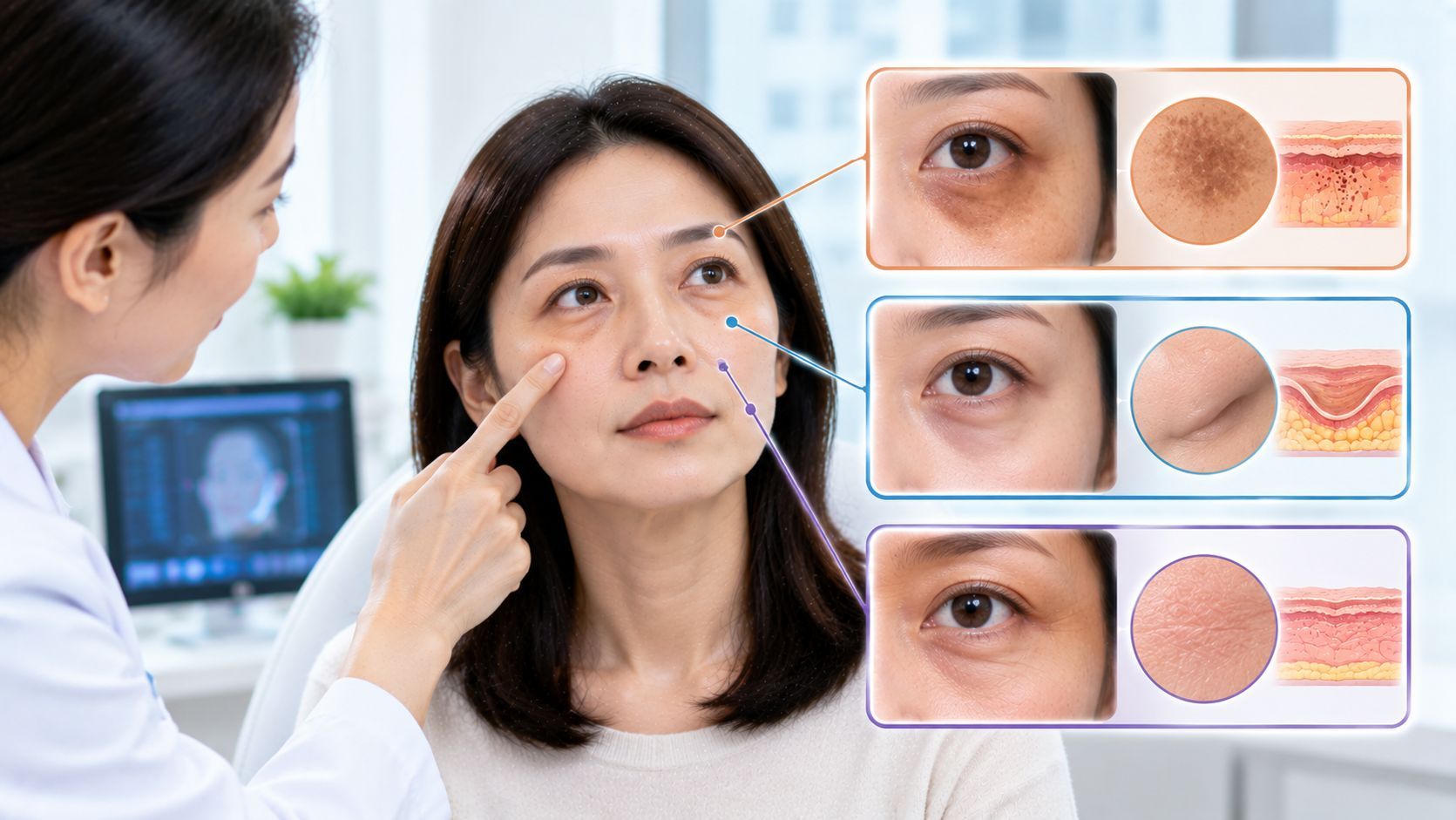
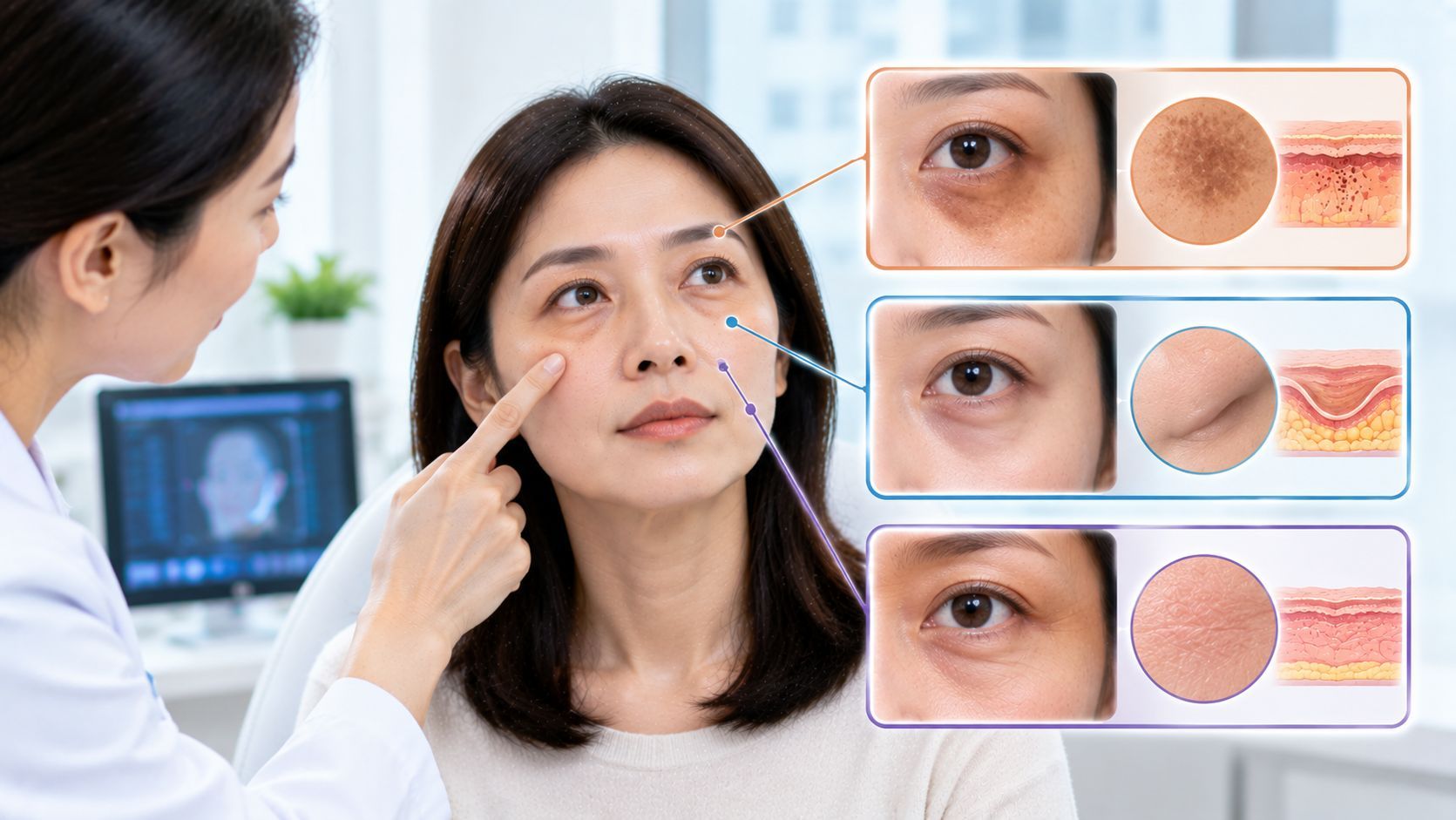
Uneven skin laxity
One side may develop more looseness around the cheek, jawline, or jowl. When this happens, the lower face can appear less defined on one side.
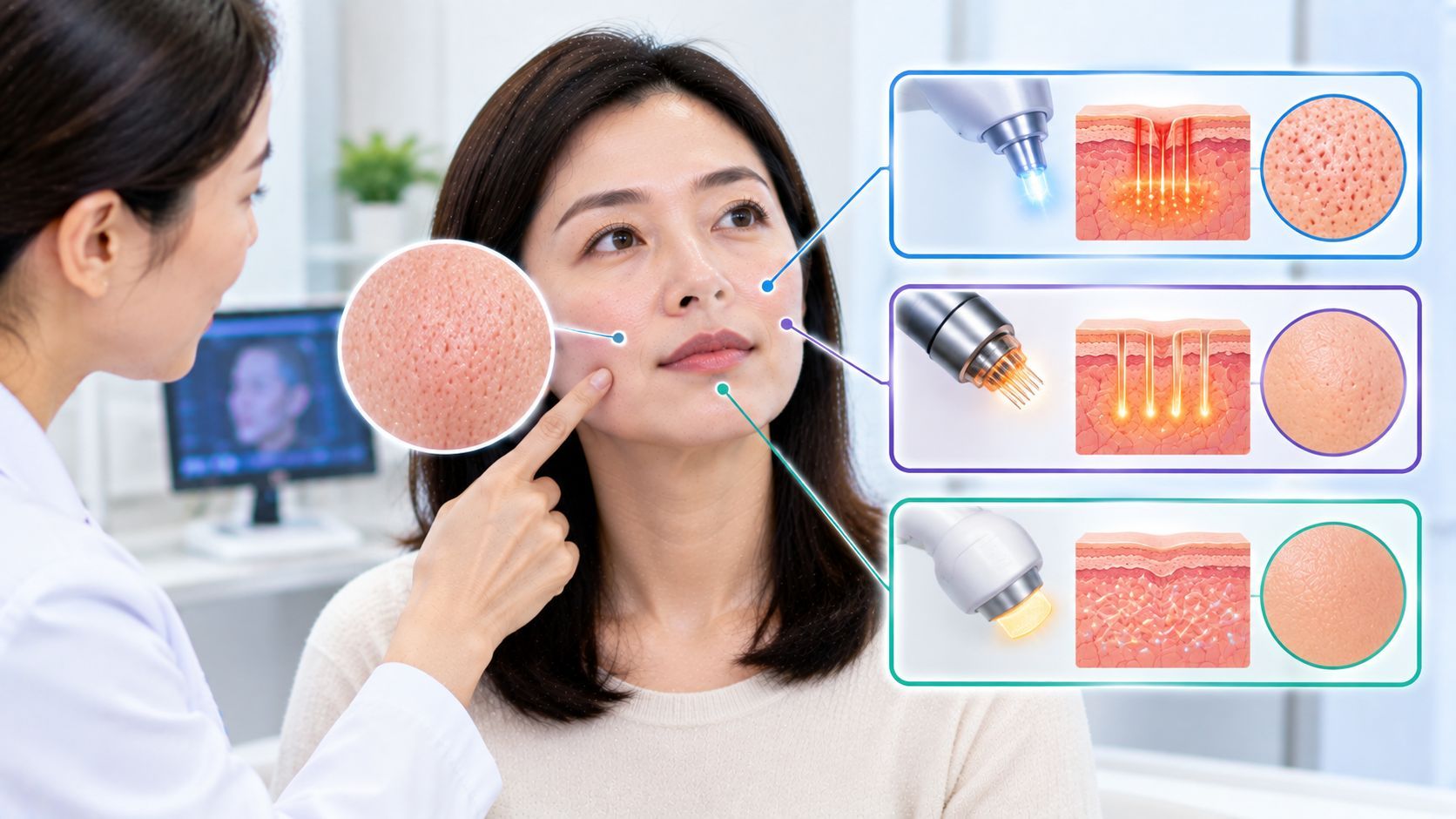
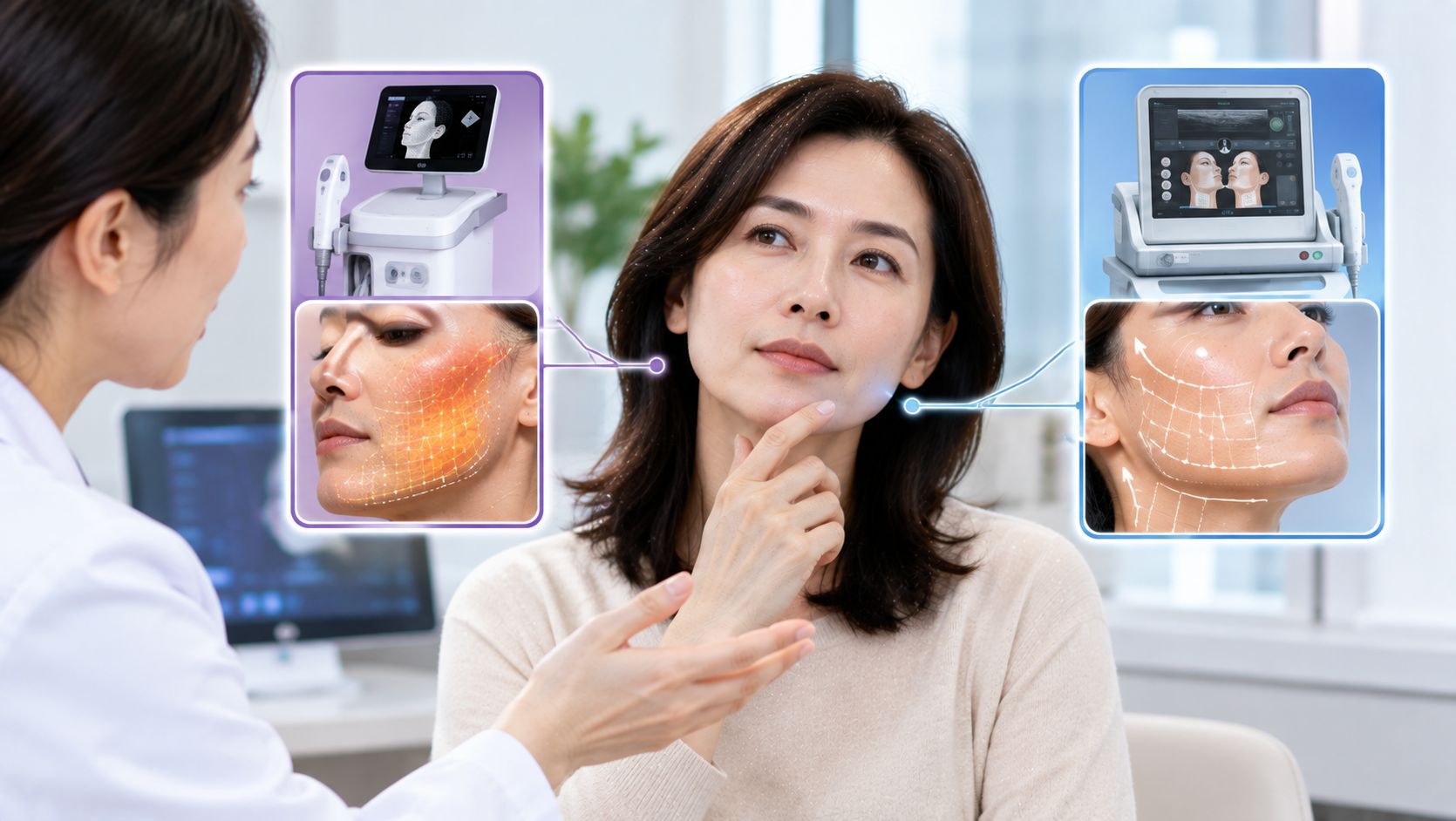
Radiofrequency skin tightening may be useful when laxity is the main contributor. The American Academy of Dermatology explains that radiofrequency treatments heat tissue beneath the skin and can stimulate collagen production, with results developing over time.
Different facial volume
Asymmetry can also result from different amounts of fat or other soft-tissue volume.
For example, one cheek may naturally be fuller than the other. Thermage is not a volume-reduction or volume-addition procedure, so tightening the skin may not correct the underlying difference.
Muscle differences
Muscle activity can make one side of the face appear stronger or more prominent, especially when smiling, talking, or clenching.
Thermage does not primarily treat muscle activity, so another treatment may be more appropriate when muscle movement is the main cause.
Bone structure
The cheekbones, jaw, chin, and other facial structures are naturally different from one side to the other in many people.
Thermage cannot reshape underlying bone. A consultation should therefore determine whether the perceived asymmetry is actually related to skin laxity.
Can Thermage Be Used Differently on Each Side?
Potentially, yes.
Thermage FLX treatment is personalized to the patient's skin and treatment areas. The manufacturer describes targeted treatment options for areas including the cheeks, jawline, area around the mouth, forehead, and under the chin.
That means a practitioner can assess the left and right sides separately and determine where treatment is actually needed.
However, this does not mean that one side should automatically receive substantially more energy simply because it looks lower.
A thoughtful treatment plan may involve:
- Treating both sides but focusing on different areas
- Giving greater attention to a more lax jowl
- Treating the jawline while avoiding areas that do not need tightening
- Using a similar treatment pattern when the asymmetry is primarily structural
- Choosing another treatment when Thermage is unlikely to address the cause
The objective should be balanced improvement, not making the treatment mathematically identical or aggressively correcting one side.
When Might Thermage Help Facial Asymmetry?
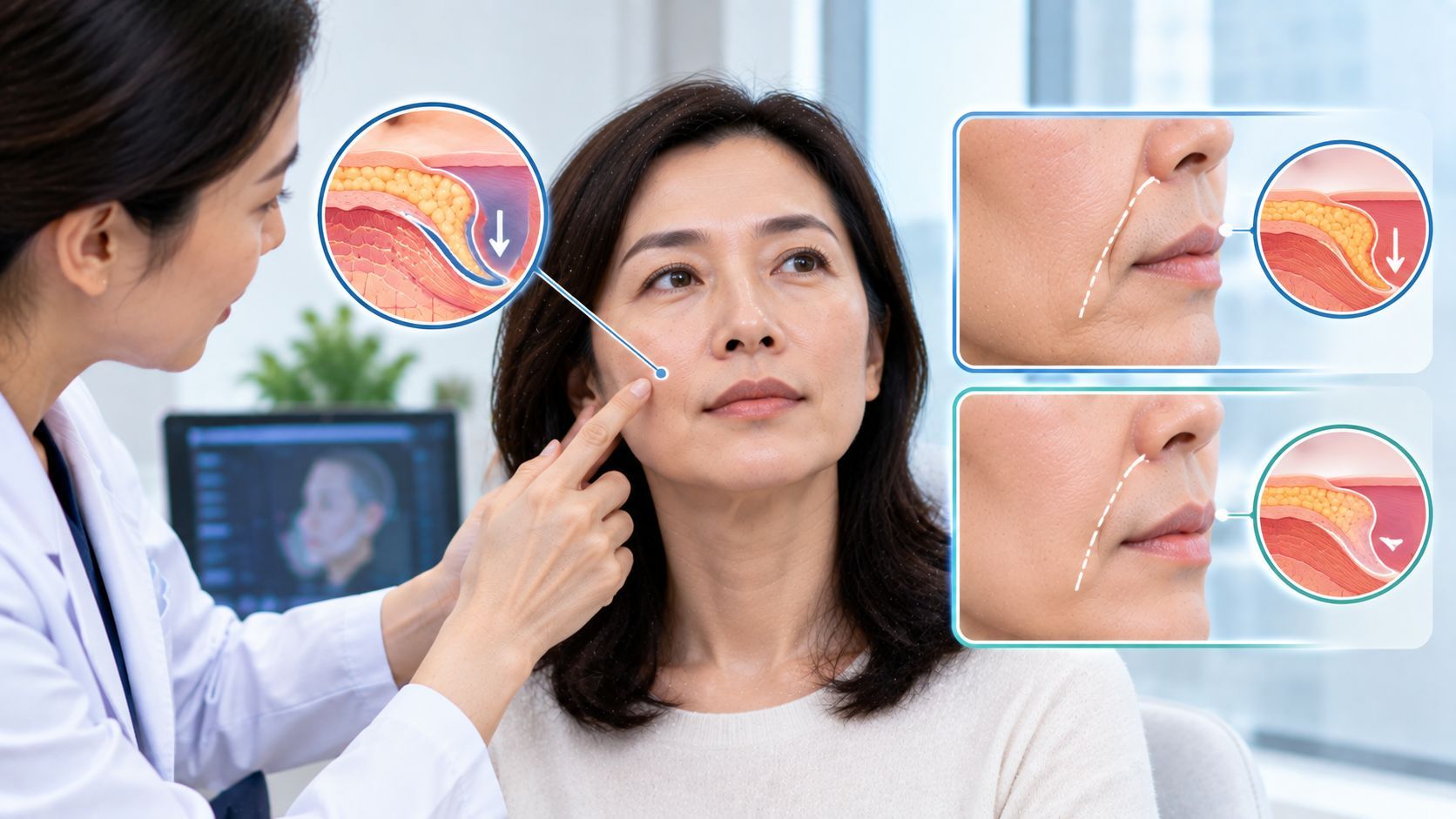
One jowl is lower because of skin laxity
This is one situation where Thermage may be worth considering.
If one side has visibly looser skin and the other side is relatively firm, improving overall skin firmness may make the difference less noticeable.
Thermage's official materials specifically describe treatment of the full face and targeted zones such as the cheeks and jawline to address visible signs of aging and skin laxity.
One side of the jawline looks softer
A softer jawline can result partly from lax skin. If that is the main issue, collagen remodeling and skin tightening may improve definition gradually.
However, jawline appearance can also be affected by facial volume, bone structure, and muscle anatomy.
One cheek appears slightly lower
If the difference is mainly related to tissue laxity rather than cheek volume, skin tightening may make the two sides appear more balanced.
The expected result should still be modest rather than equivalent to surgical repositioning.
When Is Thermage Unlikely to Fix the Problem?
The difference is caused by facial volume
If one side is substantially fuller, tightening the skin will not necessarily make the underlying volume symmetrical.
The asymmetry is caused by bone structure
Thermage cannot change the shape of the jawbone or cheekbone.
Muscle movement is responsible
If the face looks symmetrical at rest but becomes uneven when smiling or speaking, muscle activity may be contributing more than skin laxity.
There is substantial sagging
Non-invasive tightening has limitations. The AAD notes that people with significant sagging may not obtain the desired degree of lifting from non-invasive skin-tightening procedures.
In such cases, a consultation may identify a different procedure as more appropriate.
Should Both Sides Receive the Same Thermage Treatment?
Not necessarily.
A practitioner should first determine whether the difference is actually caused by uneven skin laxity.
For example, suppose the right jowl is lower than the left. There are several possibilities:
Possible causeCould Thermage help?Uneven skin laxityPotentiallyDifferent cheek volumeUsually not the main solutionBone asymmetryNoMuscle imbalanceUsually not the primary solutionTemporary swellingTreatment may not be appropriateSignificant tissue descentMay require another approach
This is why asking for “more Thermage on the lower side” is not necessarily the best strategy.
Can Over-Treating One Side Create a New Problem?
It is possible for an overly aggressive approach to produce an undesirable result.
The goal of treatment should not be to force both sides to look identical immediately. Natural faces have asymmetry, and trying to eliminate every small difference can sometimes make the result look less natural.
Thermage itself emphasizes individualized treatment and notes that results vary between patients. Temporary redness or swelling can also occur after treatment.
For this reason, treatment decisions should be made by a qualified medical professional after evaluating the entire face.
What Happens During Thermage?
Thermage FLX uses radiofrequency energy delivered through a treatment handpiece. The manufacturer describes integrated cooling and vibration intended to help with comfort, while energy delivery is customized during treatment.
The treatment can be used for areas such as:
- Cheeks
- Jawline
- Lower face
- Under the chin
- Forehead
- Skin around the eyes, when appropriate
Treatment time varies according to the area being treated. The manufacturer states that many treatments take approximately 30–60 minutes, although actual appointment time varies.
When Will Thermage Results Appear?
Thermage is not simply a temporary tightening effect.
The treatment is intended to support collagen remodeling, so results can develop gradually.
According to the manufacturer, some patients notice an initial tightening effect followed by continued improvement over the following two to six months.
The AAD similarly explains that radiofrequency skin tightening can produce some immediate tightening, with the best results developing over time as the body produces new collagen.
Individual results vary considerably.
Is Thermage a Good Option for Subtle Facial Asymmetry?
It can be, if skin laxity is the main problem and the desired improvement is subtle.
Someone who wants a natural-looking change may prefer gradual skin tightening rather than an aggressive attempt to reshape the face.
However, Thermage should not be selected simply because one side looks different. The cause of the asymmetry matters more than the appearance alone.
What Should You Ask a Clinic in Korea?
If you are considering Thermage in Korea, especially as an international patient, ask the clinic to evaluate each side independently.
Useful questions include:
- Is my asymmetry actually caused by skin laxity?
- Would Thermage address the cause of my asymmetry?
- Should both sides receive the same treatment?
- Would you focus more on one particular area?
- Could treatment make my asymmetry more noticeable?
- What degree of improvement is realistic?
- When should I expect the final result?
- What should I do if I am concerned about the result after returning home?
It is also useful to bring previous treatment records or photographs if you have had Botox, fillers, thread lifting, Ultherapy, Thermage, or other facial procedures.
Thermage vs Other Approaches for Facial Asymmetry
Thermage is only one possible option.
If asymmetry is primarily caused by skin laxity, radiofrequency or ultrasound-based tightening may be considered. If volume is the main issue, a volume-based treatment may be more relevant. If muscle activity is responsible, a muscle-targeting treatment may be considered.
The important point is that facial asymmetry is a problem to diagnose, not simply a contour to tighten.
Conclusion
Thermage can potentially improve the appearance of facial asymmetry when uneven skin laxity contributes to the difference between the two sides. It may help improve firmness and definition gradually, particularly around areas such as the cheeks and jawline.
However, Thermage cannot correct asymmetry caused primarily by bone structure, facial volume, or muscle activity. Treating one side more aggressively is also not automatically better.
For the most natural result, the best approach is to assess the left and right sides separately, identify the actual cause of the asymmetry, and create a conservative treatment plan around that cause.
FAQs
Can Thermage fix an uneven face?
Thermage may improve an uneven appearance when uneven skin laxity is an important contributing factor. It cannot correct every type of facial asymmetry.
Can Thermage be customized for each side of the face?
Treatment can be personalized according to the areas being treated and the patient's skin. A practitioner can assess each side separately rather than assuming that both sides have identical needs.
Can Thermage lift one jowl more than the other?
A practitioner may focus treatment on areas with greater laxity, but the amount and pattern of treatment should be medically determined. Treating one side more aggressively does not guarantee a more symmetrical result.
Will Thermage change my facial shape?
Thermage is designed primarily to improve skin firmness, wrinkles, and the appearance of contour rather than dramatically reshape the face. Results are generally gradual.
How long does it take to see Thermage results?
Some people notice initial tightening, while further improvement can develop over approximately two to six months as collagen remodeling occurs.
Is Thermage better than Ultherapy for facial asymmetry?
Neither is automatically better. Both are non-invasive skin-tightening approaches, but the appropriate choice depends on the cause of the asymmetry, the areas involved, skin laxity, and the clinician's assessment.