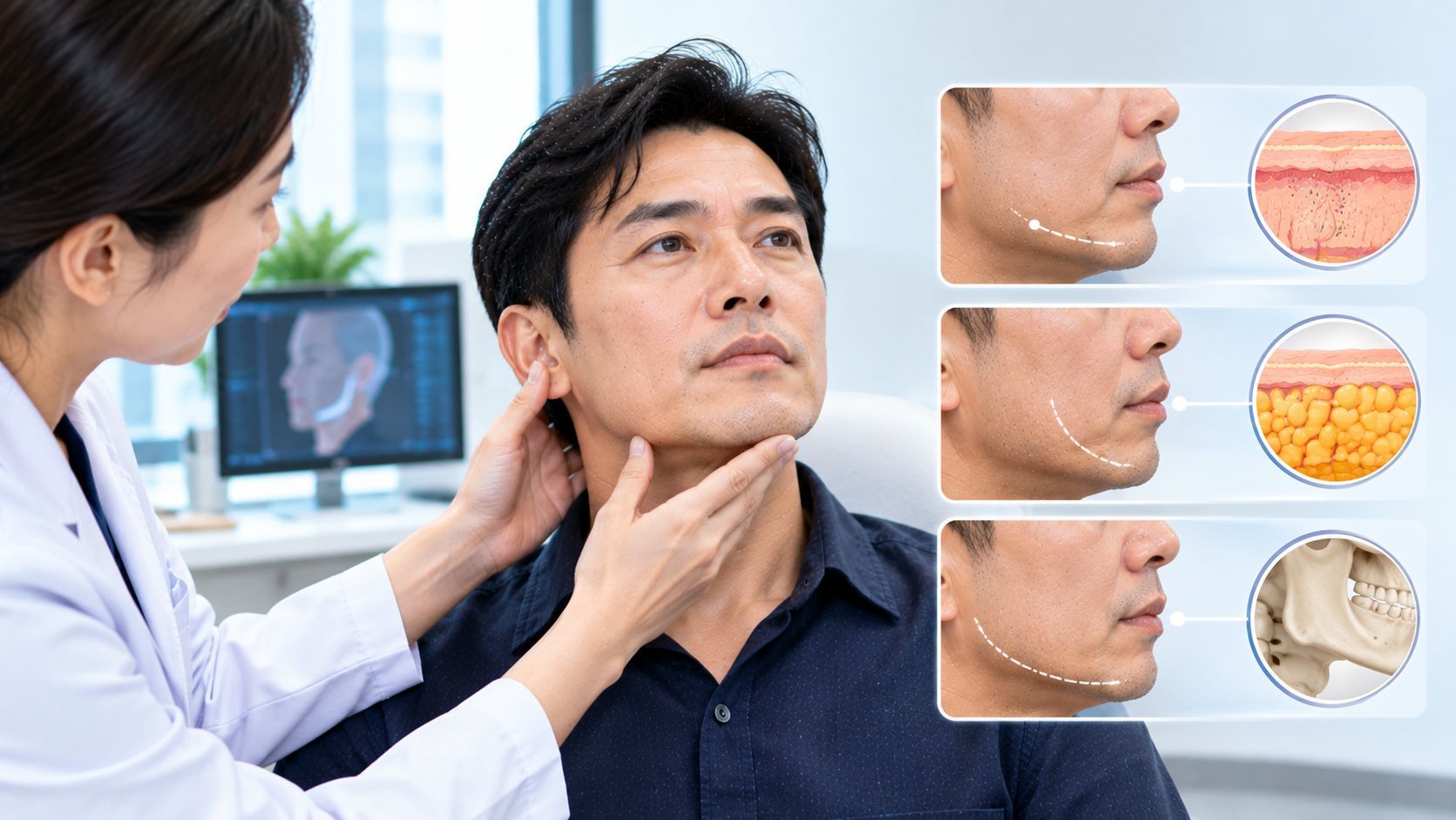
One Side of My Face Aged Faster. Is That Normal?
Introduction
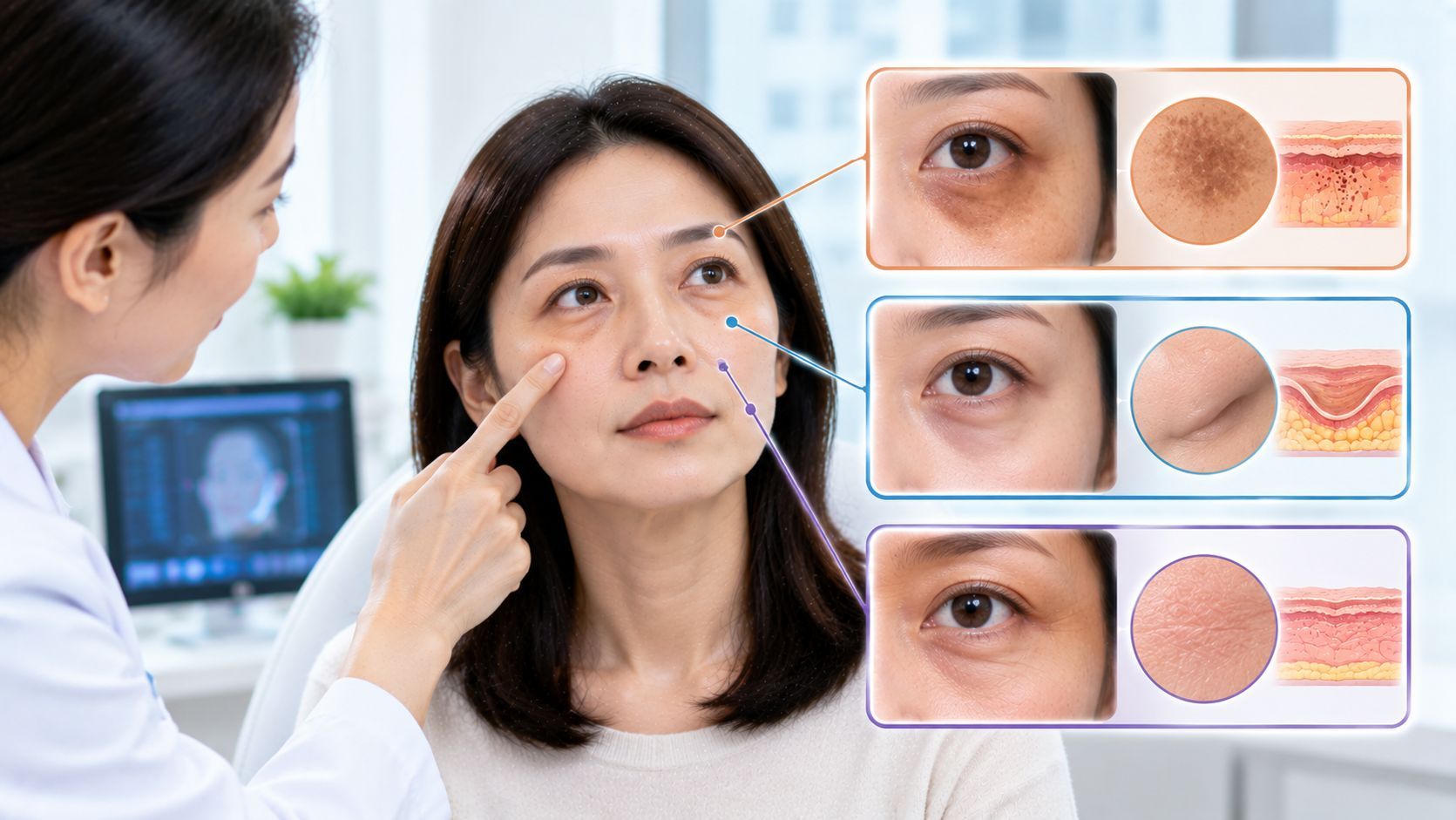
It can be surprising to notice that one side of your face appears older than the other. One cheek may look lower, one jowl may be more visible, or wrinkles and skin laxity may seem more pronounced on one side.
Yes, it can be normal for one side of the face to show signs of aging earlier or more noticeably than the other. Facial aging is not perfectly symmetrical, and differences in sun exposure, sleeping habits, muscle activity, facial volume, skin laxity, and underlying anatomy can all contribute.
The important question is whether the difference is a gradual cosmetic change or a sudden new change that could indicate an underlying medical issue.
Why Can One Side of the Face Age Faster?
Natural facial asymmetry
No human face is perfectly symmetrical.
The two sides can differ in:
- Bone structure
- Facial muscles
- Fat distribution
- Skin thickness
- Cheek volume
- Jawline shape
- Brow position
As you age, these pre-existing differences can become more noticeable.
A small difference that was barely visible in your 20s may become much easier to see later because changes in skin elasticity and facial volume make the underlying asymmetry more obvious.
Uneven sun exposure
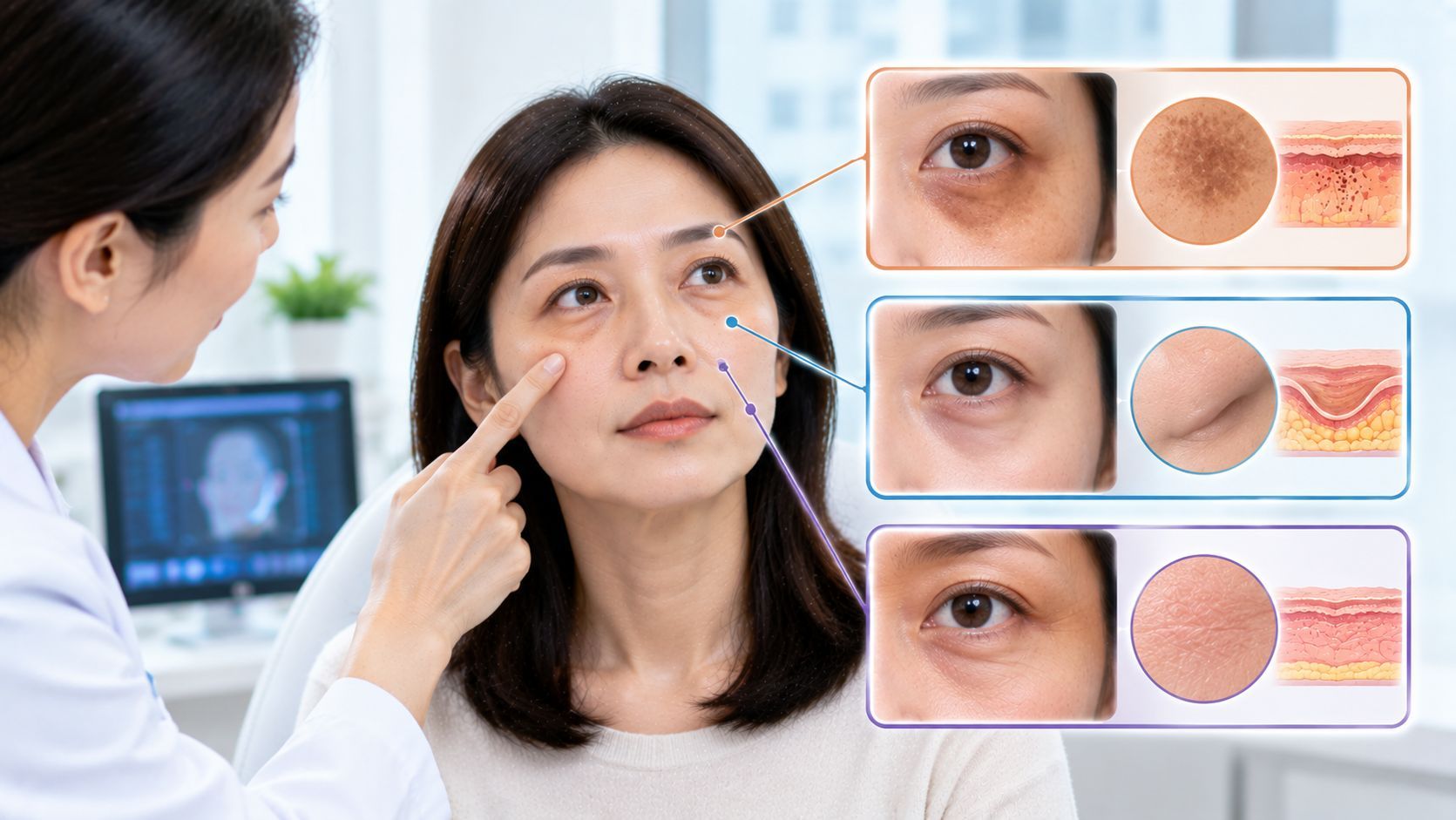
Sun exposure is one of the major contributors to visible skin aging.
If one side of your face receives more cumulative ultraviolet exposure, that side may develop more:
- Fine lines
- Wrinkles
- Uneven pigmentation
- Texture changes
- Loss of elasticity
The American Academy of Dermatology explains that repeated sun exposure contributes to premature skin aging and recommends broad-spectrum sunscreen and other sun-protection measures.
For drivers, for example, one side of the face may receive more sunlight through a car window over many years.
Differences in sleeping position
People sometimes notice that the side they sleep on appears different.
Pressure and friction may contribute to temporary creasing, but it is too simplistic to say that sleeping on one side automatically causes that side to age faster.
Long-term facial aging is influenced by many factors, including genetics, ultraviolet exposure, skin quality, facial anatomy, and the natural aging process.
Differences in muscle activity
Your facial muscles are not necessarily equally active on both sides.
One side may move more when you:
- Smile
- Frown
- Squint
- Raise an eyebrow
- Chew
- Talk
Over time, repeated muscle movement can contribute to dynamic facial lines.
Botulinum toxin can temporarily reduce the activity of selected facial muscles and is sometimes used to soften dynamic wrinkles.
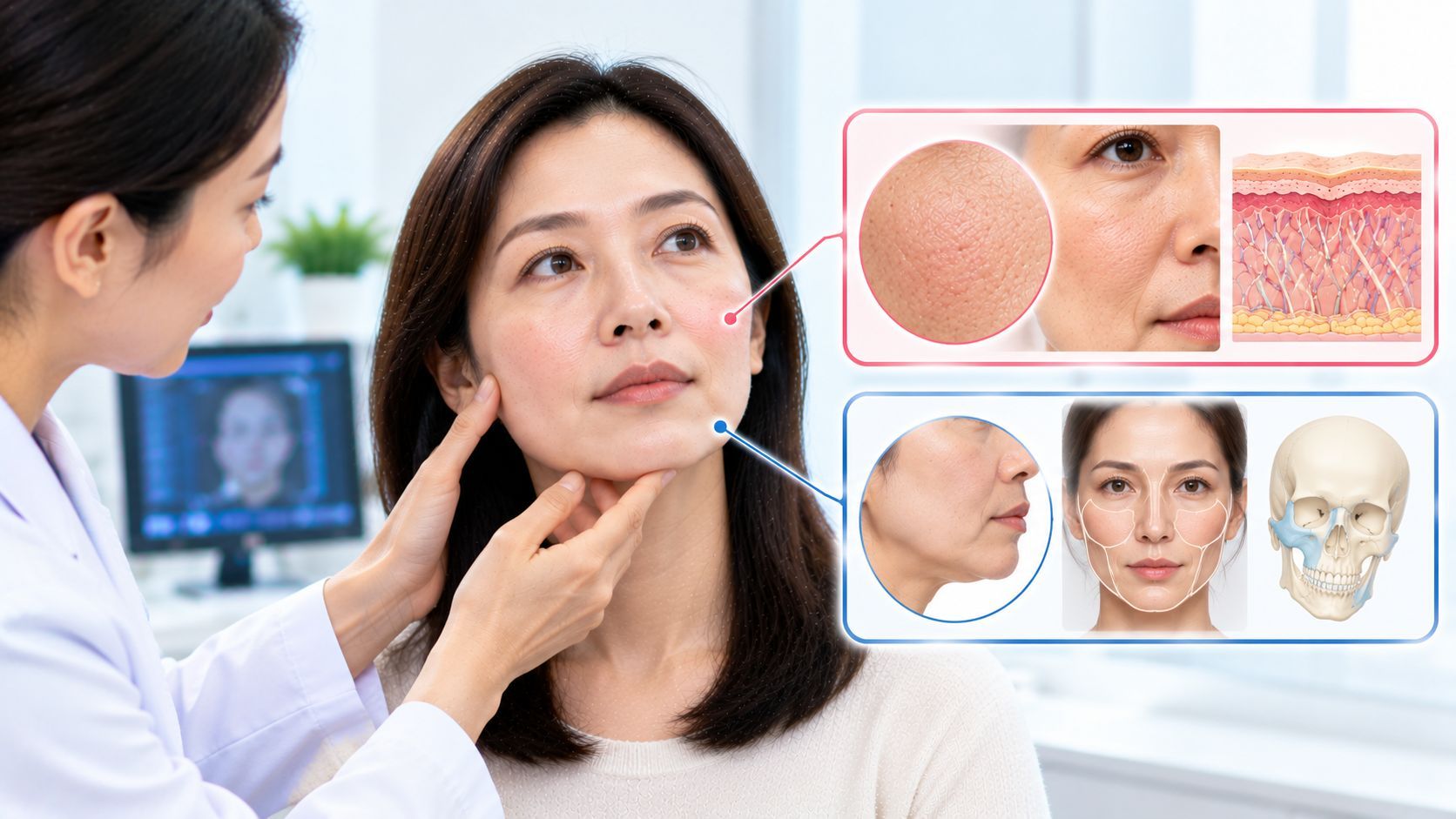
Uneven changes in facial volume
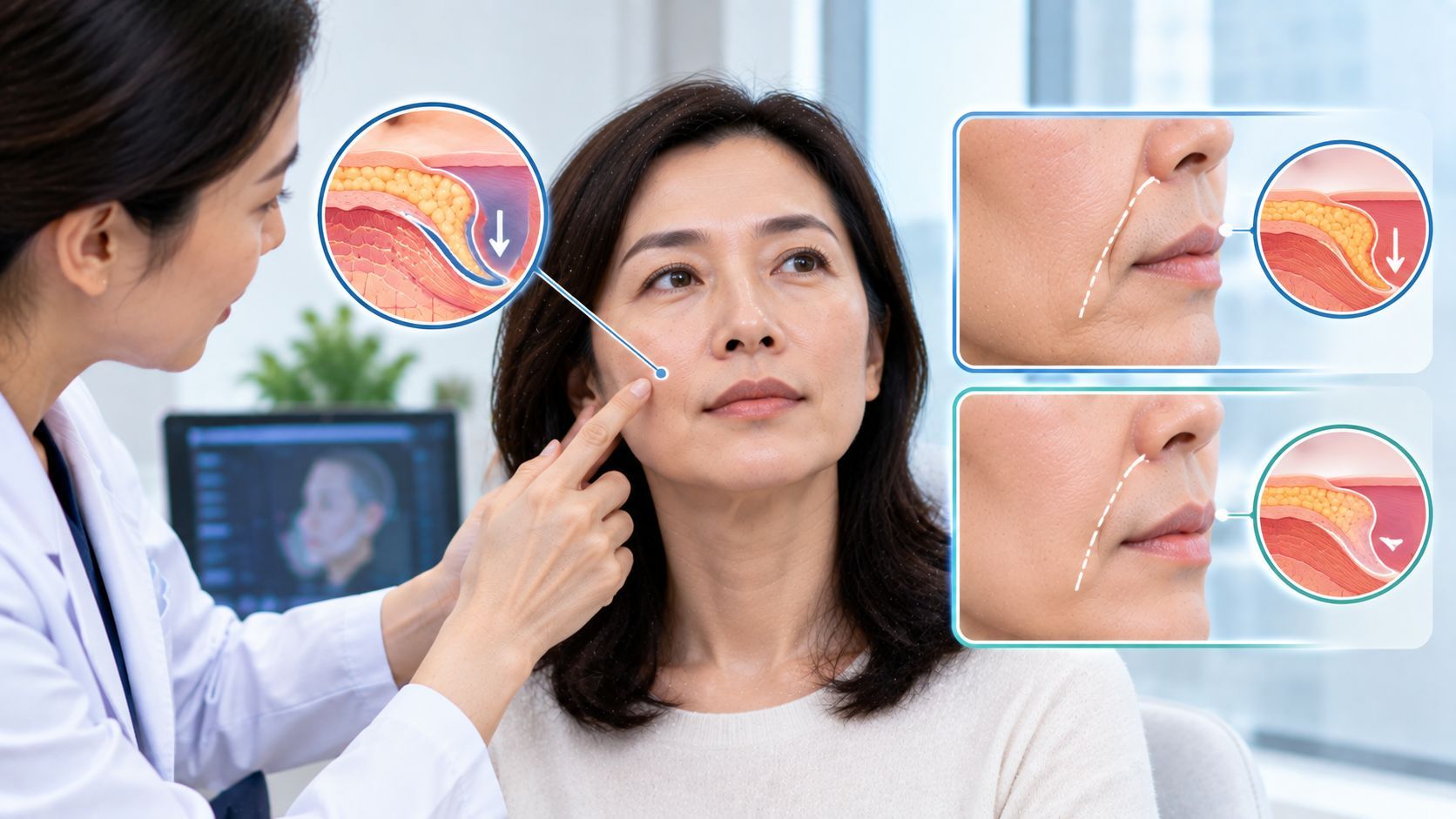
Facial volume does not necessarily change identically on both sides.
One cheek may appear flatter while the other remains fuller. One side may develop a more pronounced hollow or jowl.
This can create the impression that one side has "aged faster" even when the difference involves volume rather than skin quality alone.
Is Facial Asymmetry With Aging Normal?
Mild and gradual facial asymmetry is generally normal.
Aging can make asymmetry more visible because the skin and underlying tissues change over time.
For example, one side might gradually develop:
- A lower cheek
- A more noticeable nasolabial fold
- A deeper marionette line
- A softer jawline
- More visible wrinkles
- Slightly lower brow position
These changes do not necessarily mean anything is wrong.
The goal of cosmetic treatment should therefore not be to eliminate every difference.
When Is One-Sided Aging More Concerning?
A sudden change is different from gradual aging.
If one side of your face suddenly becomes weak or droopy, especially if it affects your smile or eyelid, this should not simply be assumed to be normal aging.
Sudden facial weakness can have neurological causes that require prompt medical evaluation.
Seek urgent medical attention if facial asymmetry appears suddenly and is accompanied by symptoms such as:
- Difficulty speaking
- Arm or leg weakness
- Severe headache
- Vision changes
- Confusion
- Trouble walking
- Significant facial numbness
Cosmetic treatment should come after medical causes have been considered when the change is new or rapid.
Can Skin Tightening Treat One Side That Looks Older?
Sometimes.
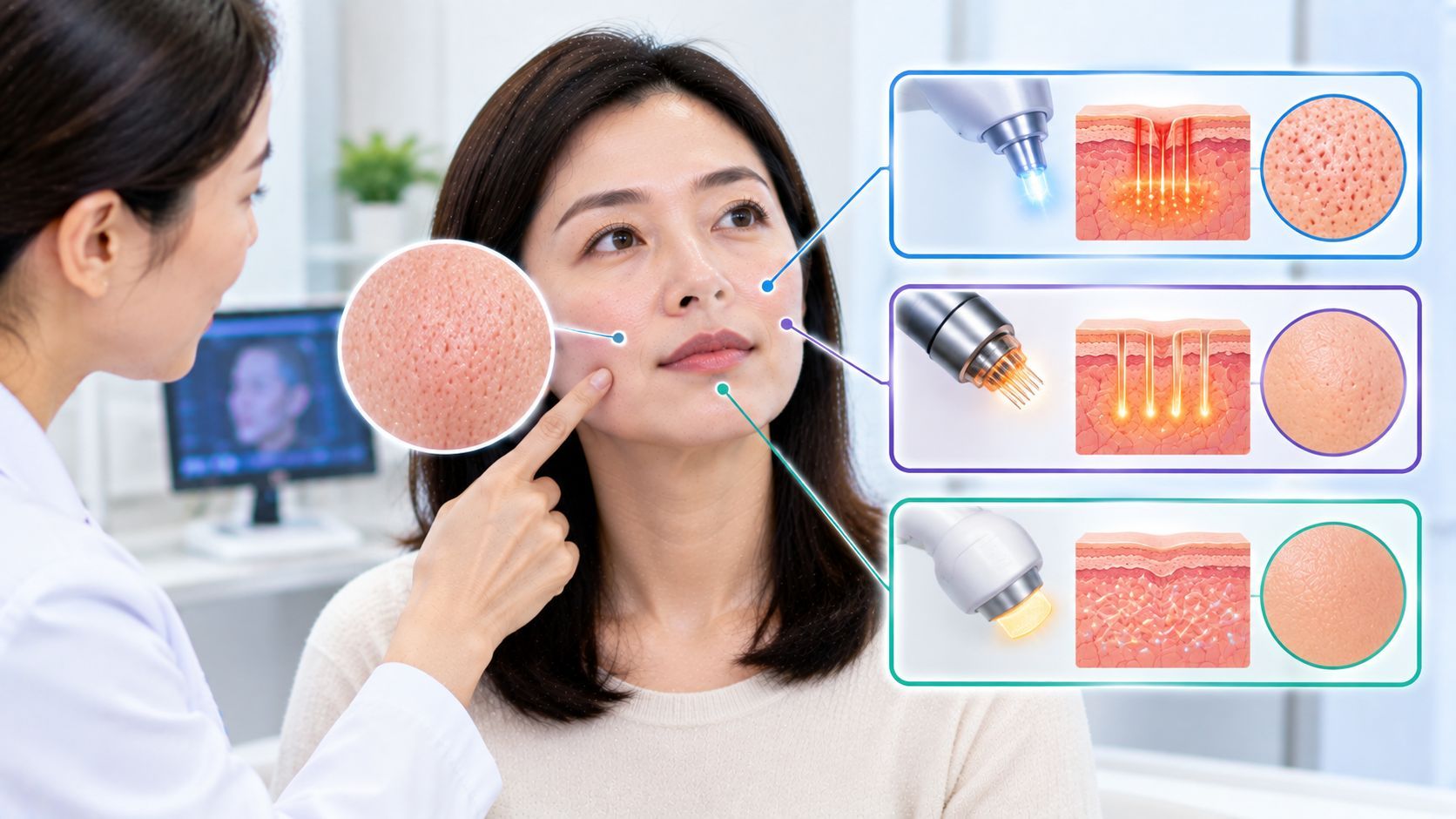
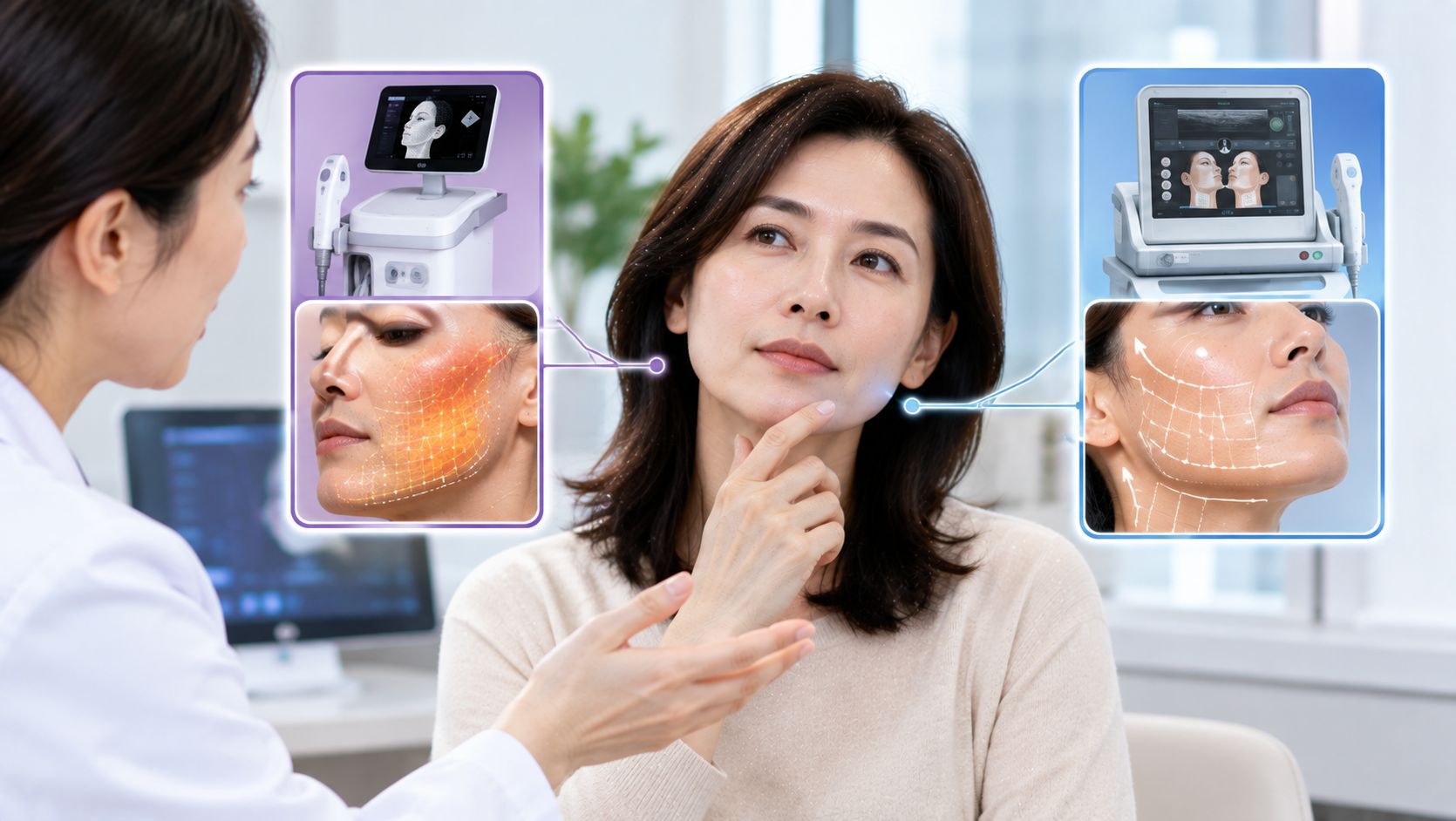
If the main difference is uneven skin laxity, a clinician may consider non-invasive skin-tightening treatments.
Radiofrequency and ultrasound-based treatments can stimulate collagen remodeling and improve the appearance of mild skin laxity. The AAD notes that non-invasive skin tightening can produce gradual improvement, although results depend on the degree of sagging and individual factors.
Treatment may be planned around the areas that actually need improvement rather than automatically treating both sides identically.
Could Thermage Help?
Thermage uses radiofrequency energy to heat tissue and encourage collagen remodeling.
If one side of the lower face has more laxity, a practitioner may evaluate whether radiofrequency skin tightening could improve firmness and make the asymmetry less noticeable.
However, Thermage cannot correct asymmetry caused mainly by:
- Bone structure
- Significant differences in facial volume
- Muscle activity
- Facial nerve problems
A consultation should therefore focus on the cause rather than simply the visible difference.
Could Ultherapy Help?
Ultrasound-based skin tightening may also be considered when mild laxity contributes to uneven facial aging.
The AAD explains that ultrasound skin-tightening treatments can produce gradual lifting and tightening, with results developing over time.
Again, this is most relevant when the problem is actually related to skin laxity.
What If One Side Has More Wrinkles?
If one side has more dynamic wrinkles, Botox may sometimes be considered.
Botulinum toxin works by temporarily reducing targeted muscle activity, which can soften certain expression lines.
However, treating both sides identically is not always appropriate when the muscle activity is different.
A qualified practitioner should assess your facial movement before deciding whether Botox is suitable.
What If One Side Has Lost More Volume?
Volume loss requires a different assessment.
Dermal fillers can restore lost fullness in selected areas, including cheeks and other facial regions. The AAD explains that fillers are used to restore lost fullness and soften certain signs of aging.
However, filler should not be used simply because one side appears older.
The clinician needs to determine whether the asymmetry is genuinely caused by volume loss and whether adding volume would improve the overall facial balance.
Should You Treat Only the Older-Looking Side?
Not necessarily.
It may sound logical to treat only the side that looks older, but facial anatomy is more complicated than a simple left-versus-right comparison.
For example:
- One side may have more laxity
- The other side may have less volume
- One side may have stronger muscle activity
- The underlying bone structure may differ
Treating only the visibly "older" side without understanding these differences can potentially create another imbalance.
A conservative treatment plan is usually more appropriate.
Can a Combination of Treatments Be Used?
Sometimes.
If multiple factors contribute to asymmetrical aging, a practitioner may consider different treatments for different problems.
For example:
Main concernPossible treatment categoryUneven skin laxityUltrasound or radiofrequency tighteningDynamic wrinklesBotulinum toxinLocalized volume lossDermal filler or another volume-restoring approachUneven pigmentationAppropriate pigment-focused treatmentSignificant saggingSurgical consultation may be consideredStructural asymmetrySpecialist assessment
These are examples rather than treatment recommendations for a particular individual.
What Should International Patients Ask a Korean Clinic?
If you are considering facial rejuvenation in Korea, tell the clinic that you are concerned about asymmetric aging, rather than simply asking for a stronger treatment on one side.
Useful questions include:
- Why does one side of my face look older?
- Is the difference caused by skin laxity, volume, muscle activity, or structure?
- Should both sides receive the same treatment?
- Would treating only one side create another imbalance?
- Would Thermage or Ultherapy help?
- Would Botox be appropriate for uneven wrinkles?
- Is filler actually necessary?
- How subtle can the result be?
- What happens if the two sides respond differently?
For international patients, it is also helpful to provide photographs from several years earlier when possible. This can help distinguish long-standing asymmetry from more recent changes.
How Can You Prevent Further Uneven Skin Aging?
You cannot completely prevent natural facial asymmetry, but you can reduce some modifiable contributors to premature skin aging.
Protect your skin from the sun
Use broad-spectrum sunscreen and other sun-protection measures consistently. The AAD considers sun protection an important part of preventing premature skin aging.
Avoid smoking
Smoking can accelerate visible skin aging and damage collagen and elastin.
Maintain a consistent skincare routine
Gentle cleansing, moisturization, and appropriate active ingredients can help support overall skin health.
Avoid chasing perfect symmetry
Trying to correct every tiny difference can lead to unnecessary procedures.
A natural face is usually somewhat asymmetrical.
What If One Side Suddenly Looks Much Older?
A sudden change should be assessed rather than automatically treated cosmetically.
For example, if one side of the face suddenly appears droopy or the smile changes abruptly, the issue may not be ordinary aging.
If you develop sudden facial weakness or other neurological symptoms, seek urgent medical care.
Conclusion
Yes, one side of your face can appear to age faster than the other, and gradual facial asymmetry is common. Differences in skin laxity, sun exposure, muscle activity, facial volume, and underlying anatomy can all contribute.
The most appropriate treatment depends on the cause. Skin tightening may help uneven laxity, Botox may help selected dynamic wrinkles, and volume-based treatments may be considered when true volume loss is responsible.
The key is not to assume that the side that looks older simply needs more treatment. A proper assessment of both sides can help identify what is actually creating the difference and support a more natural-looking result.
FAQs
Is it normal for one side of your face to age faster?
Yes. Mild facial asymmetry is common, and aging can make pre-existing differences more noticeable.
Why does one cheek look older than the other?
Possible reasons include uneven skin laxity, differences in facial volume, sun exposure, muscle activity, and natural facial structure.
Can sleeping on one side cause facial aging?
Sleeping position may contribute to temporary sleep lines and pressure on the skin, but it is too simplistic to say that sleeping on one side alone causes that side of the face to age faster.
Can Ultherapy or Thermage treat one side of the face?
These treatments may be considered when uneven skin laxity contributes to asymmetry. Treatment planning should be individualized rather than automatically treating one side more aggressively.
Can Botox correct one side that looks older?
Botox may help when dynamic wrinkles or muscle activity contribute to the difference. It will not correct structural asymmetry or volume loss.
When should facial asymmetry be medically checked?
A gradual difference is often cosmetic, but sudden facial weakness or drooping—especially with speech, vision, limb weakness, or other neurological symptoms—requires prompt medical evaluation.