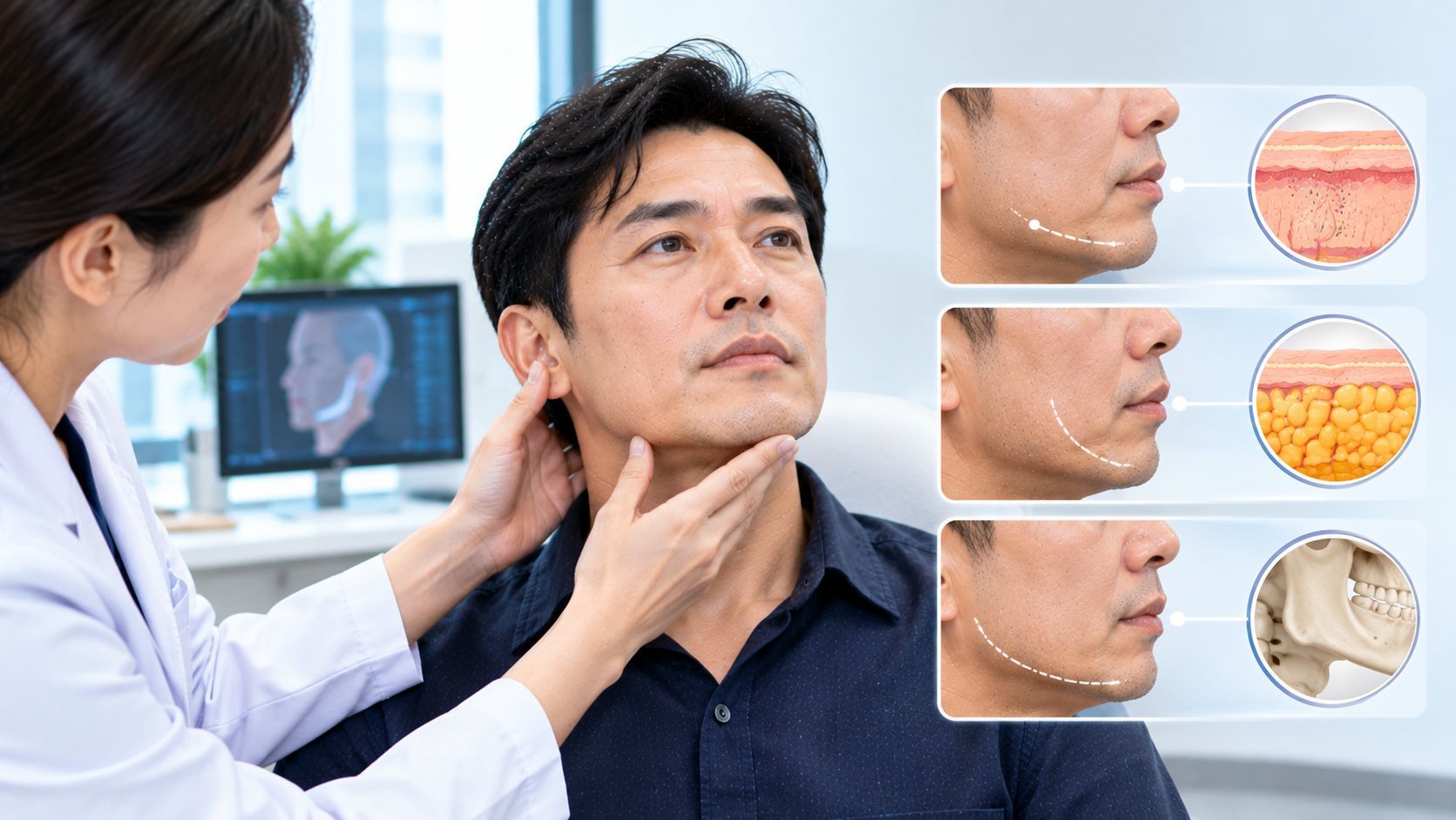
Can Sleeping on One Side Actually Cause Facial Asymmetry?
Introduction
If one side of your face looks slightly different from the other, you may wonder whether your sleeping position is responsible. This is especially common when one cheek seems flatter, one side has more visible lines, or one jowl appears lower.
Sleeping on one side may contribute to temporary sleep lines and repeated pressure on the skin, but it is unlikely to be the sole explanation for significant facial asymmetry. Facial asymmetry usually has multiple possible causes, including natural bone structure, facial muscles, soft-tissue distribution, skin aging, sun exposure, dental factors, and previous injuries or procedures.
If the difference is gradual and mild, it is often simply part of normal facial variation. If asymmetry develops suddenly, however, it should not automatically be blamed on sleeping position.
Why Does One Side of the Face Look Different?
Natural facial asymmetry
Almost every face is slightly asymmetric.
The left and right sides can differ in:
- Jaw shape
- Cheekbone position
- Brow height
- Facial muscle strength
- Fat distribution
- Skin thickness
- Soft-tissue volume
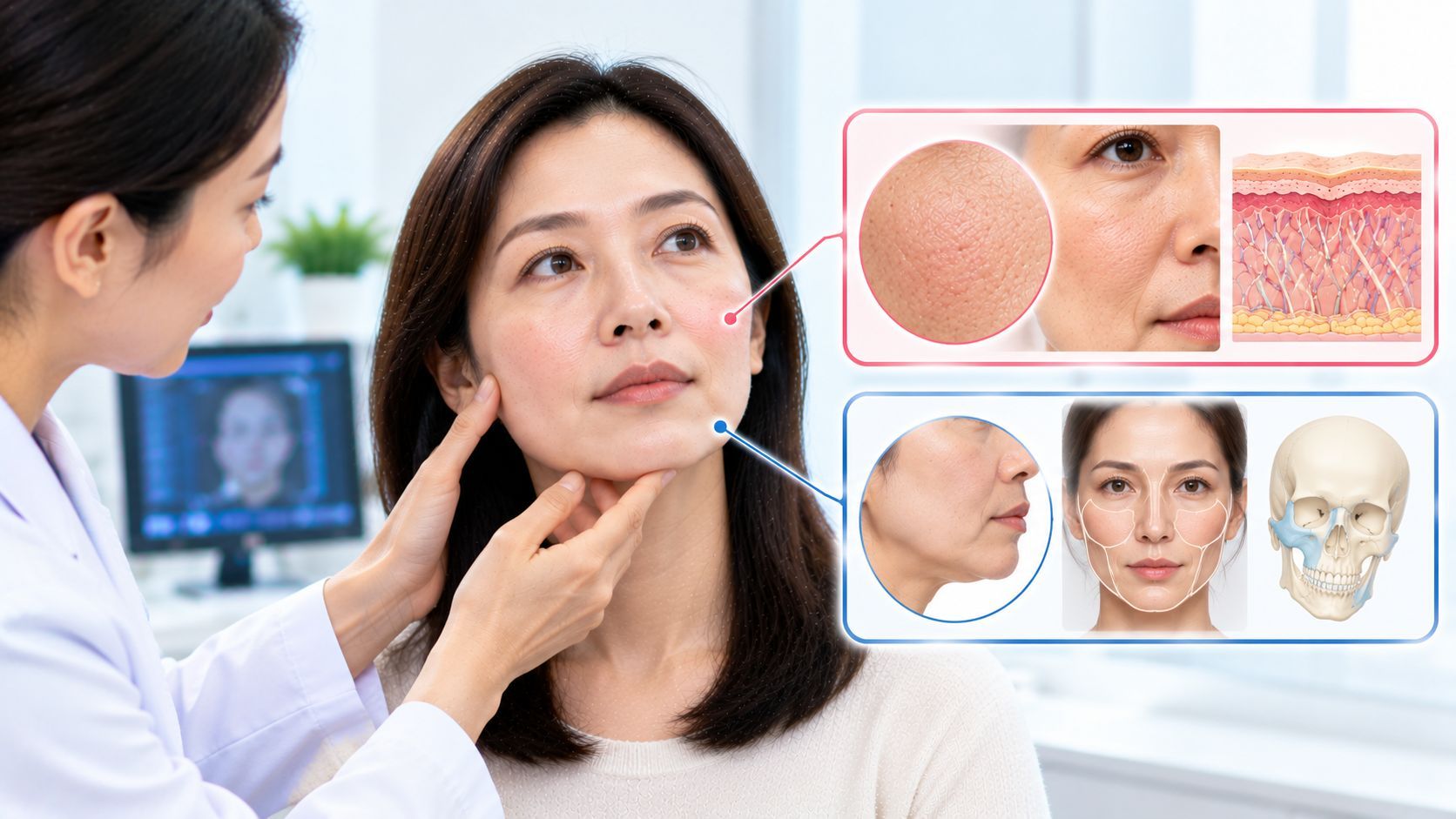
These differences can become more noticeable with age because changes in collagen, skin elasticity, and facial volume reveal underlying asymmetry.
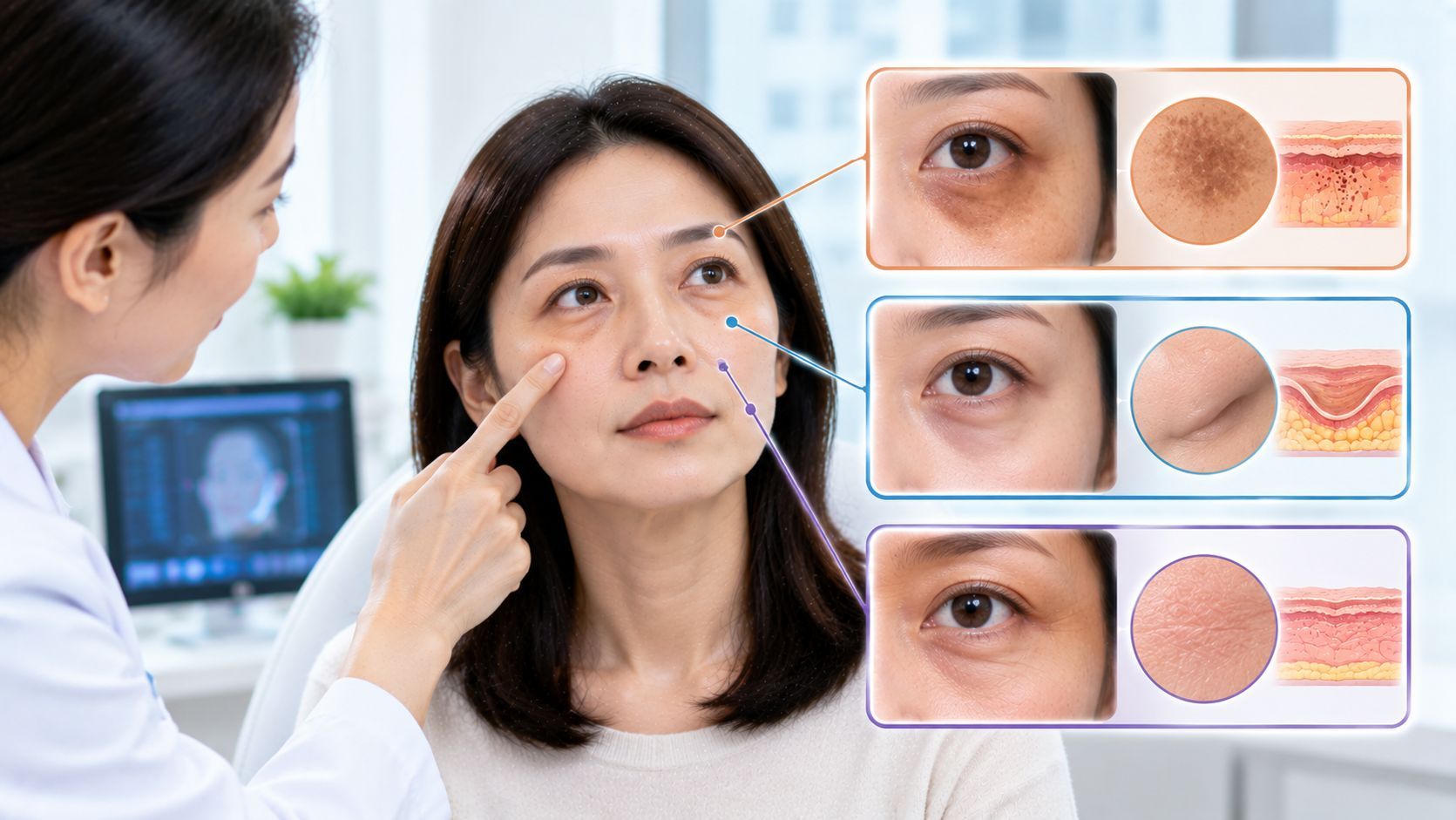
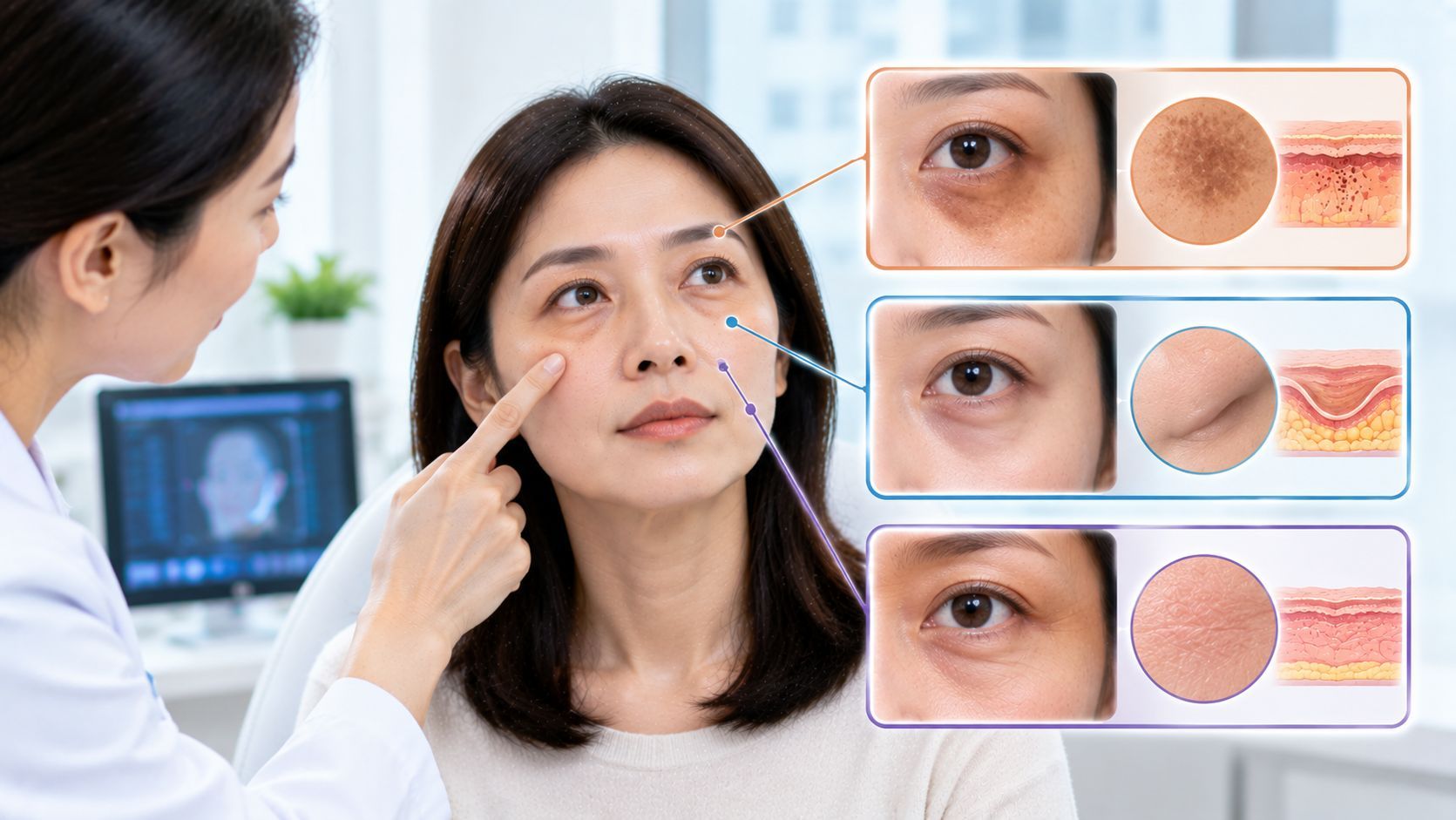
Uneven skin aging
One side may gradually develop more visible wrinkles or laxity.
Sun exposure is particularly important because cumulative ultraviolet exposure contributes to premature skin aging, including wrinkles, pigmentation, and changes in skin texture. The American Academy of Dermatology recommends consistent sun protection to reduce photoaging.
Muscle activity
One side of your face may naturally move more than the other.
You might:
- Smile more strongly on one side
- Raise one eyebrow more often
- Chew predominantly on one side
- Squint one eye more
- Clench one side of the jaw more
Over time, these differences can affect how the face appears at rest and during movement.
Can Sleeping on One Side Change Your Face?
It can affect how the skin looks temporarily, but the evidence is much less convincing for it causing major permanent facial asymmetry.
When you sleep on your side, part of your face is pressed against the pillow. This can produce temporary creasing and pressure-related marks.
Repeated mechanical pressure may contribute to sleep wrinkles over time, but facial aging is multifactorial. It would be inaccurate to assume that sleeping exclusively on one side will inevitably make that side permanently lower or older.
Factors such as genetics, ultraviolet exposure, collagen loss, facial anatomy, smoking, age, and facial movement generally have a much larger role in long-term skin aging.
What Are Sleep Lines?
Sleep lines are wrinkles or creases that appear after the face has been pressed against a pillow or another surface.
Unlike expression lines, which are produced primarily by repeated muscle movement, sleep lines are associated with mechanical compression and skin folding.
They may disappear after you wake up, particularly when they are relatively mild.
Over many years, repeated skin folding may contribute to visible lines in some people, but this does not mean that every facial difference is caused by sleeping position.
Can Sleeping on One Side Cause One Cheek to Become Flatter?
There is no simple rule that sleeping on one side permanently flattens the cheek.
A cheek can appear different because of:
- Natural fat distribution
- Age-related volume loss
- Bone structure
- Previous filler
- Dental changes
- Muscle development
- Skin laxity
- Temporary swelling
If one cheek has gradually become less full, it is better to determine which of these factors is responsible rather than assuming the pillow is the cause.
Can Sleeping Position Cause One Jowl to Be Lower?
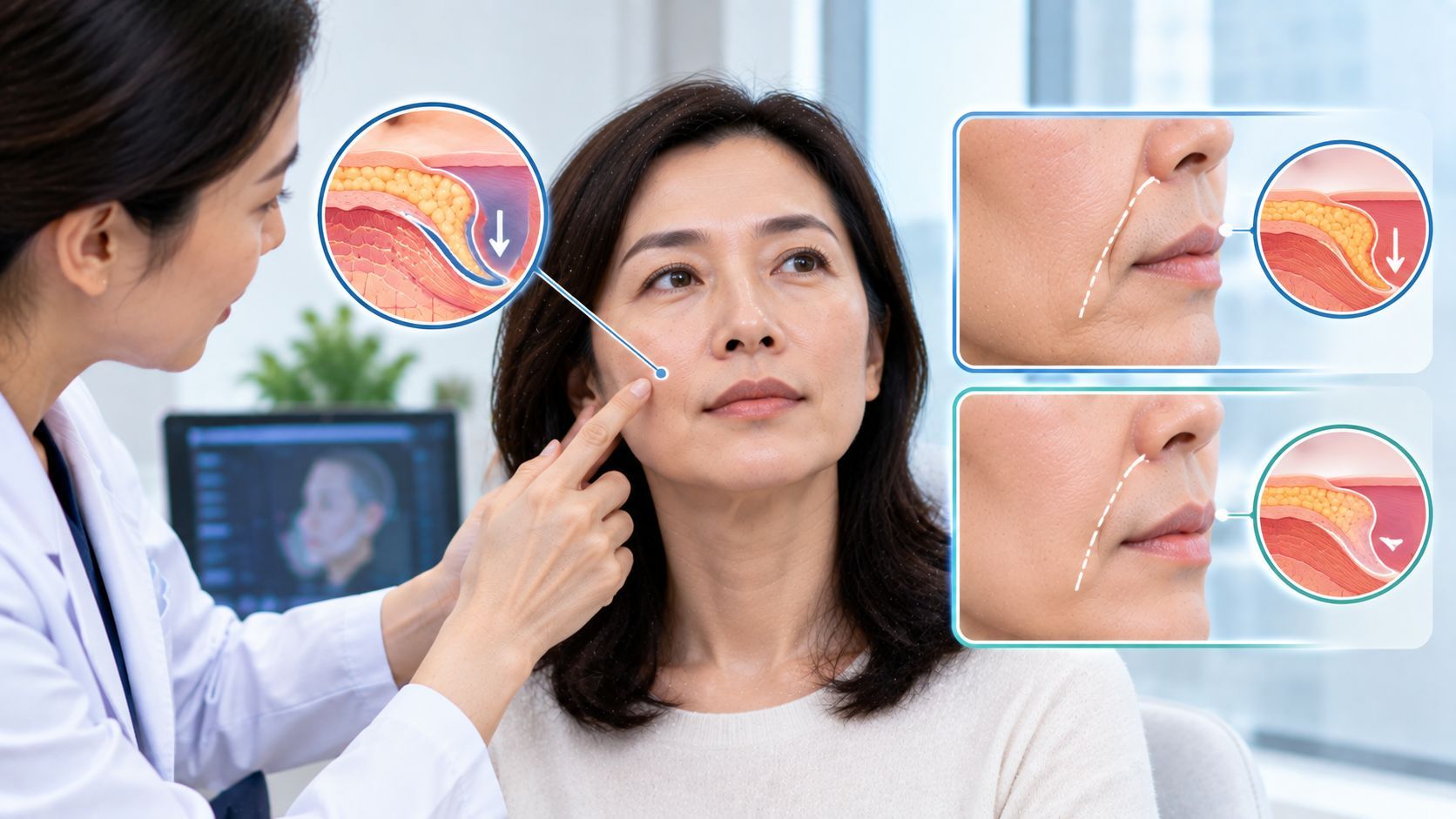
A lower jowl is more commonly related to the overall aging process, tissue laxity, facial structure, and soft-tissue changes than to sleeping position alone.
As skin loses elasticity, the lower face can become less defined. The AAD notes that non-invasive skin-tightening treatments may provide gradual improvement for people with mild skin laxity, although more substantial sagging may require other approaches.
If one jowl is lower than the other, the asymmetry should be assessed rather than automatically attributed to sleeping on that side.
What If I Always Sleep on the Same Side?
If you naturally sleep on one side every night, you may notice more temporary creasing on that side.
If you are concerned about facial aging, you can experiment with changing positions, but there is no guarantee that sleeping differently will correct an established facial asymmetry.
Other measures are generally more important for protecting skin quality.
Prioritize sun protection
UV exposure is a major contributor to premature skin aging. Broad-spectrum sunscreen and other protective measures can reduce cumulative sun damage.
Avoid smoking
Smoking accelerates visible skin aging and damages collagen and elastin.
Maintain healthy skin care habits
A consistent skincare routine can support the skin barrier and overall skin health.
Avoid excessive pressure on the face
If comfortable, changing your sleeping position or using a pillow that reduces direct facial pressure may reduce temporary morning creasing.
Should You Force Yourself to Sleep on Your Back?
Not necessarily.
Back sleeping can reduce direct pressure on the face, but comfort and sleep quality are also important.
If sleeping on your side is the only position in which you sleep comfortably, there is no strong reason to assume that you are permanently damaging one side of your face.
Instead, focus on the factors that have a clearer relationship with skin aging, particularly sun exposure and smoking.
What If One Side Really Is More Saggy?
If one side of the face is noticeably lower, consider other possible explanations before blaming your sleeping position.
Uneven skin laxity
One side may simply have more lax skin.
Different facial volume
One cheek may have less volume than the other.
Muscle imbalance
One side may have stronger or more active muscles.
Structural asymmetry
The underlying jaw or cheekbone may be different.
Previous cosmetic treatment
Botox, filler, threads, surgery, or other procedures can alter facial balance.
The appropriate treatment depends on the cause.
Can Facial Treatments Correct Asymmetry?
Sometimes, but the treatment should target the actual cause.
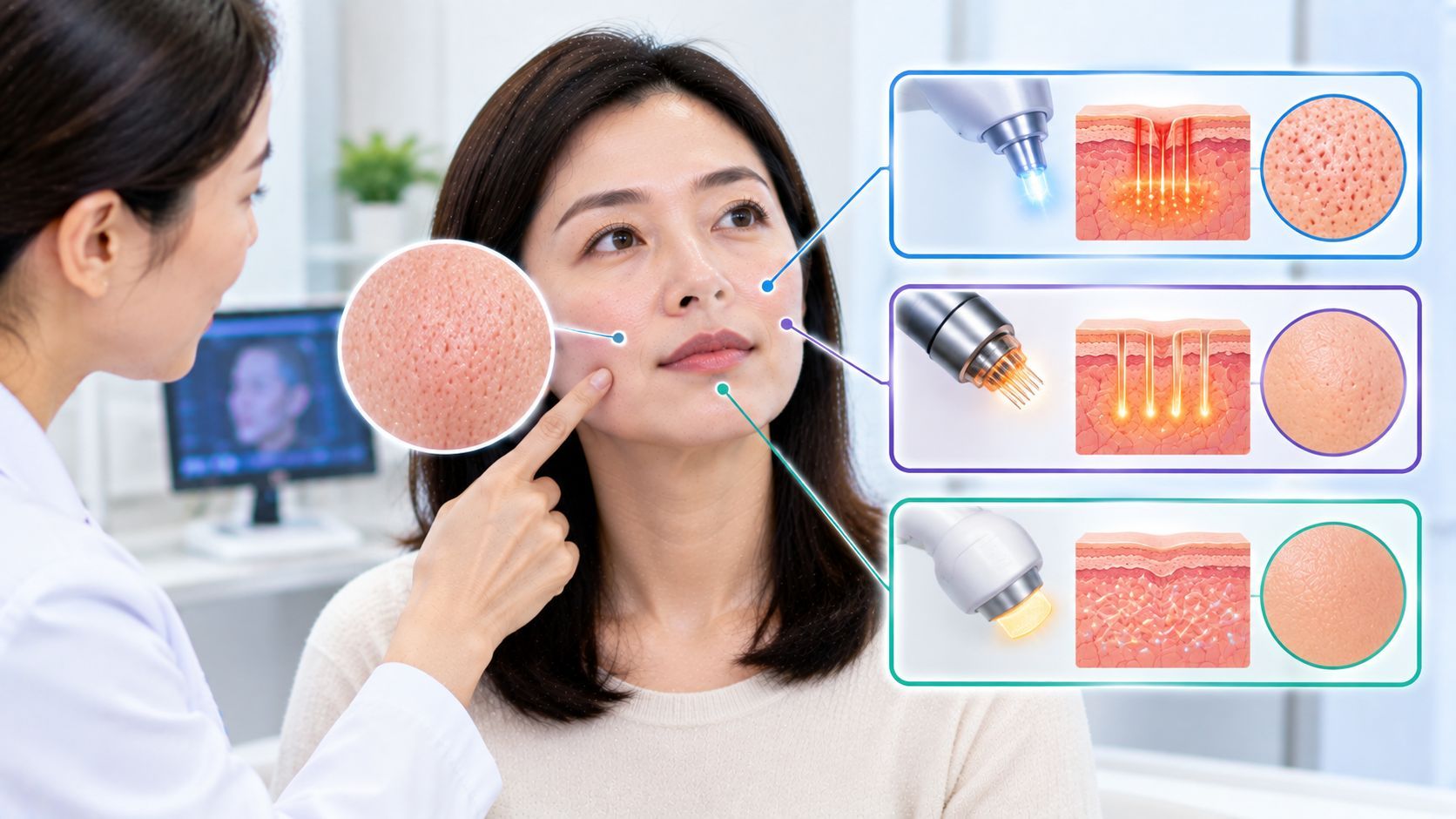
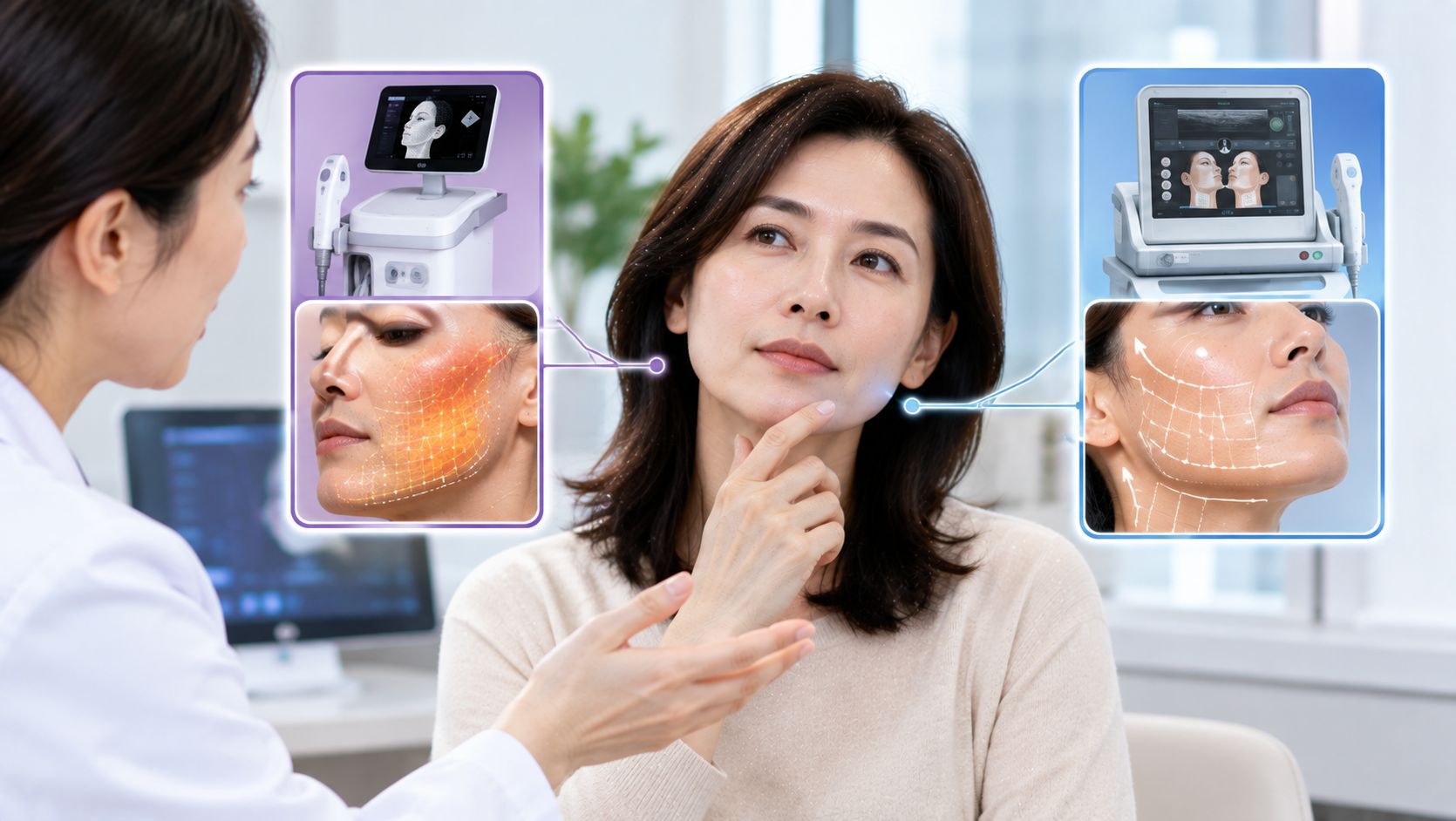
Ultherapy
Ultrasound-based skin tightening may be considered when mild skin laxity contributes to an uneven lower face. The AAD explains that ultrasound skin tightening can produce gradual lifting and tightening as collagen remodeling occurs.
Thermage
Radiofrequency skin tightening may be considered when reduced skin firmness contributes to a softer or lower-looking side.
Botox
If muscle activity contributes to asymmetry, carefully targeted botulinum toxin may sometimes help. Botox temporarily reduces activity in selected muscles, but it must be used conservatively around areas involved in facial expression.
Filler
If genuine volume loss is responsible for an asymmetry, a qualified practitioner may consider restoring volume. Dermal fillers can restore lost fullness in selected areas, but they are medical procedures with potential complications.
Should You Treat the Side You Sleep On?
Not automatically.
If one side looks older, lower, or fuller, the correct question is:
What is causing the difference?
Treating the side simply because it is the side you sleep on can result in unnecessary treatment.
A practitioner should compare both sides and determine whether the difference comes from skin, volume, muscle, structure, or another factor.
What If the Asymmetry Is New?
A sudden change should not be blamed on sleeping position.
If one side of your face suddenly droops or becomes weak, especially if you also experience difficulty speaking, arm or leg weakness, severe headache, vision problems, or confusion, seek urgent medical attention.
Sudden facial weakness can have neurological causes and requires medical assessment.
What Should International Patients Ask a Korean Clinic?
If you are considering facial asymmetry treatment in Korea, explain that you want to understand the cause of the asymmetry, not simply make both sides identical.
Ask:
- Is my asymmetry related to skin laxity?
- Could facial volume be contributing?
- Is muscle activity different on each side?
- Does my jaw structure contribute?
- Would Ultherapy or Thermage actually help?
- Would Botox be appropriate?
- Would filler be necessary?
- Should both sides receive the same treatment?
- Could treating one side make the asymmetry worse?
- How subtle can the result be?
Photographs from several years earlier can also be useful because they can show whether the asymmetry is longstanding or has developed more recently.
Is Facial Asymmetry Usually a Problem?
Not necessarily.
A small amount of asymmetry is normal and often invisible to other people.
In fact, trying to completely eliminate natural asymmetry can sometimes make a person's face look less natural.
If your concern is primarily cosmetic, a conservative approach is generally preferable to aggressive correction.
Conclusion
Sleeping on one side may contribute to temporary facial creases and repeated pressure on the skin, but it is unlikely to be the only or primary cause of significant facial asymmetry.
Natural anatomy, aging, sun exposure, muscle activity, facial volume, and skin laxity are often more important factors.
If one side of your face looks older, lower, or fuller, the best approach is to identify the actual cause before considering treatment. Depending on the cause, options such as skin tightening, Botox, or volume restoration may sometimes help.
And if facial asymmetry develops suddenly—particularly with facial weakness or other neurological symptoms—seek medical attention rather than assuming it is related to your sleeping position.
FAQs
Can sleeping on one side make your face uneven?
Side sleeping can cause temporary pressure and sleep lines, but it is unlikely to be the sole cause of significant permanent facial asymmetry.
Does sleeping on one side cause wrinkles?
Repeated pressure and folding may contribute to sleep lines, but facial wrinkles are also strongly influenced by aging, sun exposure, genetics, and repeated facial movement.
Should I sleep on my back to prevent facial asymmetry?
Back sleeping reduces direct facial pressure, but there is no guarantee that changing your sleeping position will correct existing asymmetry.
Why is one side of my face more saggy than the other?
Possible causes include natural anatomy, uneven skin laxity, facial volume differences, muscle activity, previous treatments, or other structural factors.
Can Ultherapy or Thermage fix asymmetry caused by sleeping?
They may help if the visible difference is actually caused by uneven skin laxity. They will not correct asymmetry caused primarily by bone structure or facial volume.
When should facial asymmetry be checked by a doctor?
Sudden facial drooping or weakness, especially with speech problems, limb weakness, severe headache, vision changes, or confusion, requires prompt medical evaluation.