What Can I Safely Get Two Weeks Before My Wedding?
Introduction
Two weeks before your wedding is a very different treatment window from three months or even one month before the event. At this stage, the priority should be predictability, minimal disruption, and allowing enough time for your skin to settle.
Some treatments may still be appropriate, particularly if you have had them before and know how your skin responds. However, this is generally not the ideal time for aggressive resurfacing, major treatment combinations, or completely unfamiliar procedures.
A dermatologist can help determine what fits your skin, previous treatment history, and exact wedding schedule. The American Academy of Dermatology recommends asking specifically about expected results, risks, recovery time, preparation, and when normal social activities can resume.
What Is Reasonable to Consider Two Weeks Before a Wedding?
The answer depends heavily on what you are trying to improve.
At two weeks, treatments may be considered when they have:
- A relatively predictable recovery for you
- A clear purpose
- A history of being tolerated well
- Enough time for temporary redness, swelling, or bruising to improve
- A realistic chance of producing a visible benefit by the wedding
The closer you get to the event, the less appropriate it becomes to experiment.
Botox May Still Be an Option
Botox can sometimes be performed around two weeks before an important event, particularly when the patient has previously received it and understands the expected response.
It may be used for selected:
- Forehead lines
- Frown lines
- Crow's feet
- Certain muscle-related facial concerns
However, Botox requires precise assessment of facial movement and anatomy. A first-time treatment is less predictable than a treatment you already know your face tolerates.
Two weeks also means there is less time to deal with an unexpected cosmetic effect. Therefore, conservative treatment may be more appropriate than trying to create a dramatic change immediately before wedding photographs.
What About Fillers?
Filler requires more caution this close to a wedding.
Dermal filler can produce temporary swelling, redness, tenderness, or bruising, and recovery varies depending on the product, injection area, amount used, and individual response. The AAD specifically recommends discussing expected recovery and possible side effects with your dermatologist.
If you have previously received a particular filler in the same area without complications, your dermatologist may consider whether another treatment is appropriate.
But two weeks is not a comfortable window for every filler procedure.
Areas such as the lips and under-eyes can be particularly sensitive to visible swelling. A patient who looks completely normal after a previous treatment may also respond differently on another occasion.
If filler is being considered, your doctor should have a clear reason for using it rather than treating it simply because the wedding is approaching.
Can I Get a Skin Booster Two Weeks Before?
This depends on the specific product and technique.
Injectable skin-quality treatments can sometimes cause:
- Small injection-site bumps
- Redness
- Swelling
- Tenderness
- Bruising
Some people settle quickly, while others need longer.
If you have previously used the same treatment successfully, your dermatologist may be able to better predict your response. A completely new injectable immediately before an important event carries more uncertainty.
Recent expert guidance emphasizes individualized skincare and treatment planning around injectable procedures, including neuromodulators, fillers, polynucleotides, and biostimulators.
What About Laser Treatment?
This is where the exact laser matters enormously.
A mild, non-ablative treatment may have a very different recovery profile from an aggressive resurfacing procedure.
Two weeks before your wedding, your dermatologist may consider a treatment only if its expected recovery is compatible with your skin and event schedule.
Factors that matter include:
- Your skin tone
- History of post-inflammatory hyperpigmentation
- Laser type
- Treatment settings
- Treatment area
- Existing irritation
- Previous response to lasers
For people prone to pigmentation changes, additional caution is important. Expert algorithms for patients with skin of color recommend pretreatment planning beginning approximately 2–4 weeks before energy-based procedures and continued follow-up afterward.
Therefore, two weeks before a wedding is generally not the moment to suddenly request an aggressive laser simply because you want brighter skin.
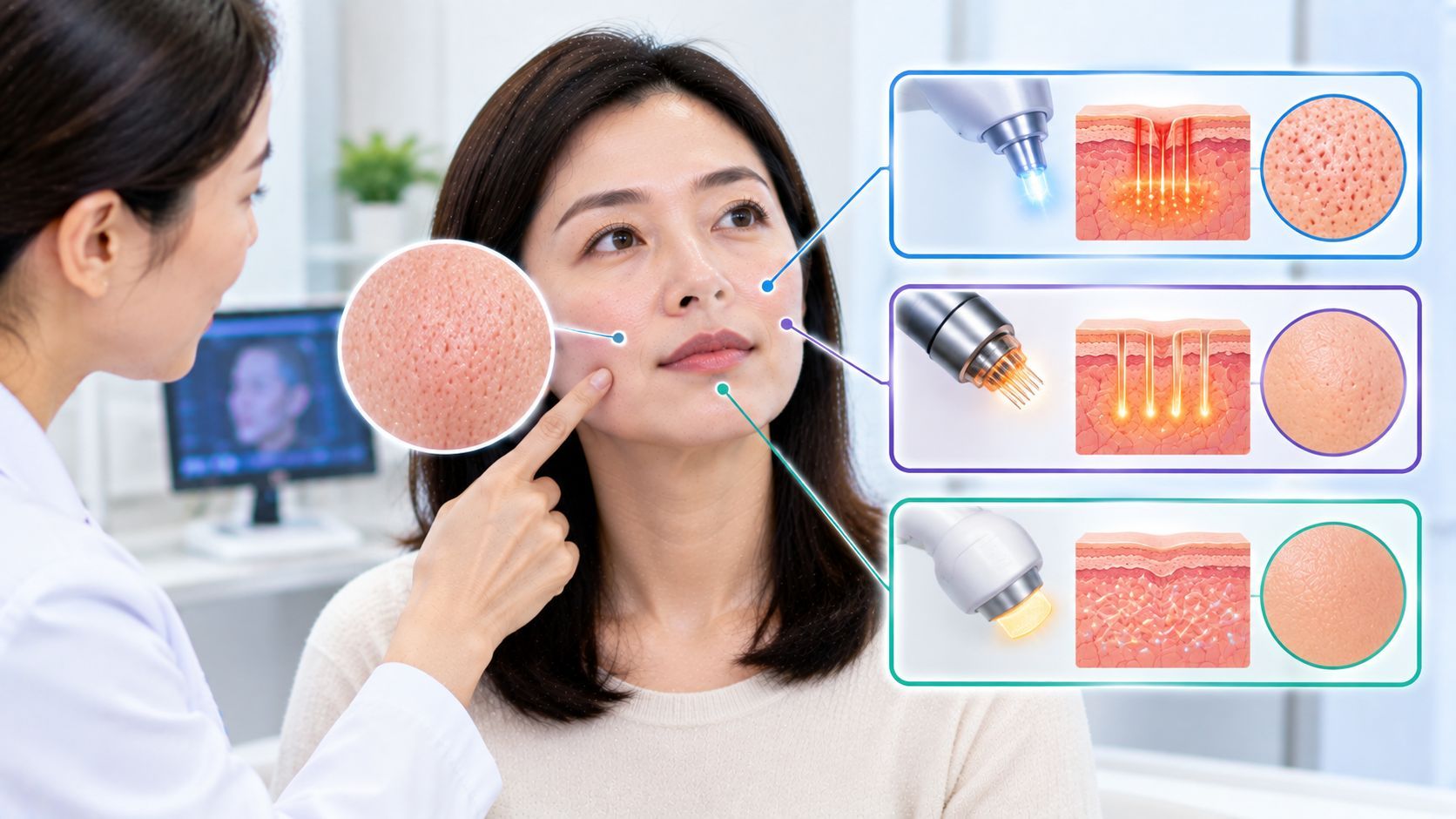
What About Microneedling or RF Microneedling?
Microneedling and RF microneedling can improve selected concerns such as texture, acne scars, and skin quality, but they are not necessarily ideal as a last-minute treatment.
Even when the visible downtime is short, the skin may continue changing after treatment.
If you have previously undergone the procedure and your dermatologist knows how your skin responds, the decision may be different.
If it is your first session, however, you should consider whether you are comfortable having only two weeks for recovery and unexpected reactions.
Treatments I Would Be Particularly Cautious About at Two Weeks
Two weeks before wedding photographs is generally not the time to experiment with:
Aggressive Laser Resurfacing
Ablative or strongly resurfacing treatments can require substantial healing. Redness, peeling, crusting, irritation, and pigment changes may persist beyond the period you expect.
Strong Chemical Peels
The recovery can vary considerably depending on the type and strength of the peel. A new peel immediately before a major event may create unnecessary uncertainty.
First-Time Injectable Treatments
Even commonly performed injectables can produce unexpected swelling, bruising, asymmetry, or other effects.
Major Multi-Treatment Sessions
Combining several procedures can make recovery more difficult to predict. Expert consensus on combined aesthetic treatments recommends individualized planning and notes that spacing consecutive treatments by 1–2 weeks can allow side effects to resolve and results to be evaluated.
What Can You Do for a Fresher Appearance Instead?
If your wedding is only two weeks away, you may get more value from skin stability than from adding another aggressive procedure.
Focus on:
- Keeping your skincare routine consistent
- Avoiding unnecessary exfoliation
- Protecting against UV exposure
- Maintaining adequate moisturization
- Avoiding products that have previously irritated your skin
- Following your dermatologist's post-treatment instructions
- Getting adequate sleep and maintaining normal routines
A 2025 consensus-based skincare review recommends a basic cleanser, moisturizer, and broad-spectrum SPF 50+ routine around aesthetic procedures, with active ingredients adjusted according to the individual's treatment and skin condition.
A 2026 international expert consensus also emphasizes tolerability and avoiding potentially irritating actives during the immediate healing period after procedures.
A Simple Two-Week Wedding Timeline
14 Days Before
If treatment is being considered, have the dermatologist evaluate whether the procedure has enough recovery time.
Do not assume that a treatment marketed as having “no downtime” means there is no possibility of visible redness, swelling, or other temporary changes.
10–7 Days Before
Let the skin settle. Avoid repeatedly adding new treatments because the first result does not look dramatic immediately.
One Week Before
Your priority should be maintaining calm, healthy skin.
Avoid aggressive exfoliation, unnecessary peels, and unfamiliar skincare products.
Three Days Before
This is generally a poor time for experimentation. If you need to make an appointment, it should primarily be for professional assessment or treatment already specifically planned by your dermatologist—not a last-minute attempt to transform your appearance.
The Day Before
Keep your routine simple and follow any specific instructions from your dermatologist.
What If You Are Traveling to Seoul?
International wedding travelers should build additional flexibility into their schedule.
If you are visiting Seoul for dermatology treatment, consider allowing enough time for:
- An initial consultation
- Medical assessment
- Treatment
- Recovery
- Follow-up
- Possible management of unexpected reactions
Bring information about previous Botox, fillers, lasers, skin boosters, medications, allergies, and previous adverse reactions.
If you do not know which filler or injectable you previously received, tell the dermatologist rather than guessing. Previous cosmetic treatments can affect treatment planning, and the AAD recommends informing your dermatologist about prior cosmetic procedures and medications.
The Bottom Line
Two weeks before your wedding, predictability matters more than intensity.
For some patients, previously tolerated Botox or carefully selected low-downtime treatments may fit this timeframe. Other procedures, especially aggressive resurfacing or unfamiliar injectables, may create more uncertainty than you want immediately before an important event.
Your dermatologist should evaluate your skin, treatment history, skin tone, procedure type, and exact wedding date before deciding whether there is enough recovery time.
The objective is not to make the biggest possible change. It is to arrive at your wedding with skin that looks healthy, settled, and natural.
FAQs
Can I get Botox two weeks before my wedding?
It may be possible, particularly if you have had Botox before and know how you respond. The appropriate timing and dose should be determined by your treating medical professional.
Is two weeks enough for filler before a wedding?
Not necessarily. Some people recover quickly, but swelling and bruising can vary. Filler should only be considered when your dermatologist believes the recovery window is appropriate.
Can I get a facial two weeks before my wedding?
A gentle, familiar facial may be reasonable for some people, but aggressive exfoliation or treatments that irritate the skin may be counterproductive. Your skin's history should determine what is appropriate.
Should I get laser treatment two weeks before my wedding?
It depends on the laser and your skin. Non-ablative procedures may have shorter recovery than aggressive resurfacing, but redness or pigment changes can still occur.
What is the biggest mistake two weeks before a wedding?
Trying a completely unfamiliar, aggressive treatment because you want rapid improvement. There is little time left to manage an unexpected reaction.
Conclusion
Two weeks before a wedding is primarily a refinement and maintenance period, not an experimentation period. If you are considering treatment in Seoul, choose a dermatologist who can evaluate your skin and explain realistic recovery times rather than relying solely on a treatment's advertised downtime.
When the deadline is close, a conservative plan that you already understand can be more practical than pursuing a dramatic last-minute change.