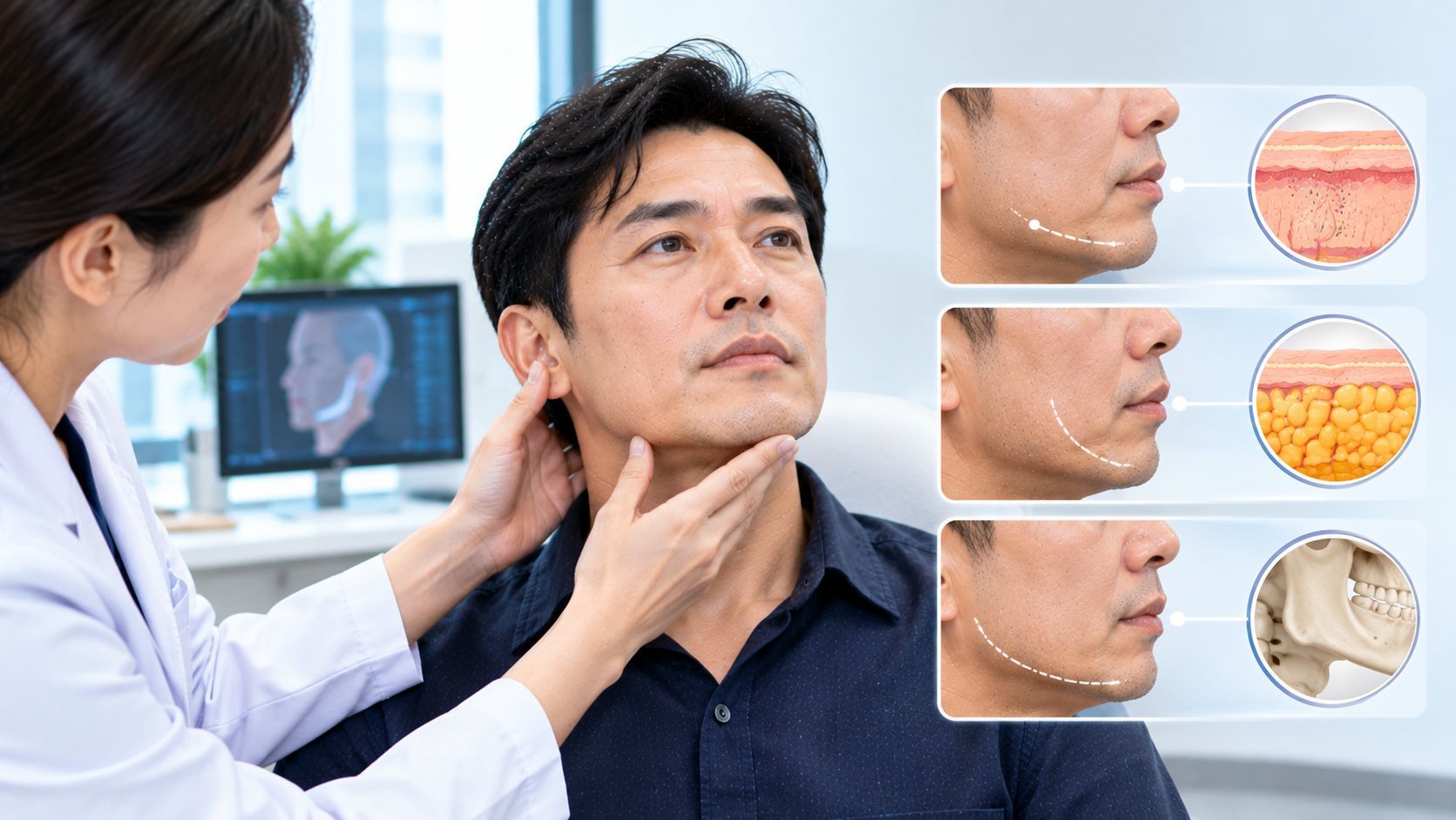
Can I Get Sofwave Over Areas Where I Have Filler?
Introduction
Yes, Sofwave may be possible over an area that contains facial filler, but it should not be assumed that every filler and every treatment setting can be combined without assessment. Sofwave uses focused ultrasound energy to heat targeted tissue layers, while dermal fillers remain within specific anatomical planes. The relationship between the energy and the filler depends on the filler material, location, depth, amount, and timing of both procedures.
Having filler therefore does not automatically mean you must avoid Sofwave. Instead, your dermatologist or qualified aesthetic clinician should determine whether the planned treatment area overlaps with existing filler and whether treatment parameters need to be modified.
For international patients considering Sofwave in Seoul, providing previous filler records can make this assessment much easier.
What Is Sofwave?
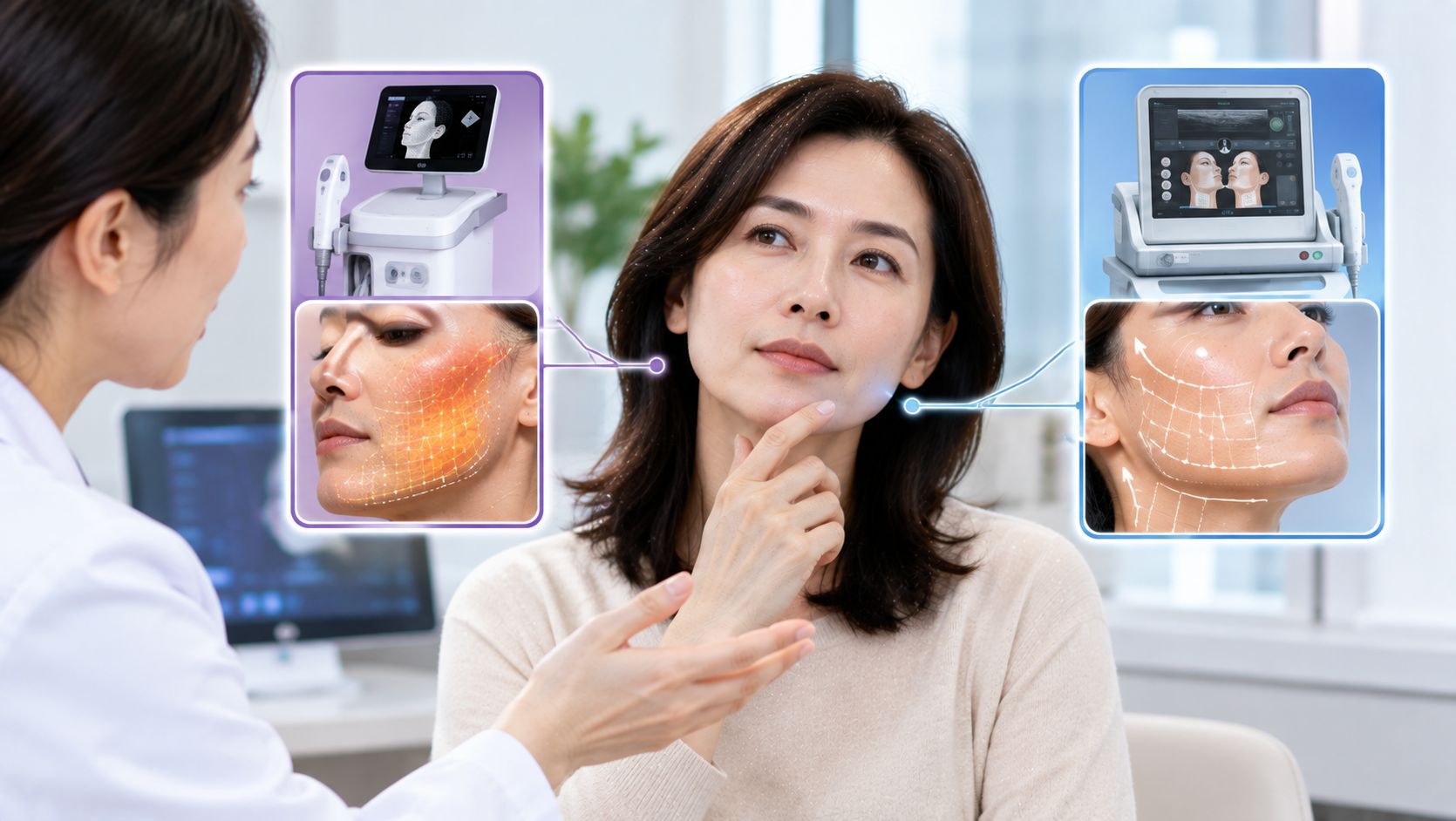
Sofwave is a non-invasive ultrasound-based skin-tightening technology designed to deliver controlled thermal energy within the mid-dermal tissue.
Its objective is different from dermal filler.
Sofwave: Primarily targets skin firmness and tissue remodeling.
Dermal filler: Adds volume or modifies facial contours.
This distinction is important because someone can have both skin laxity and volume loss at the same time. A tightening treatment and filler may therefore address different concerns.
However, the clinician needs to understand where existing filler is located before treating the area.
Can Sofwave Be Used Over Dermal Filler?
The answer depends on the specific clinical situation.
It would be inaccurate to say that Sofwave automatically destroys or dissolves all filler. It would also be inappropriate to assume that every filler can always be treated over without consideration.
Several factors matter:
- Filler composition
- Filler location
- Injection depth
- Amount of filler
- Age of the filler
- Sofwave treatment area
- Treatment parameters
- Patient anatomy
- Presence of existing swelling or nodules
The clinician should therefore assess the relationship between the treatment zone and the filler before proceeding.
Does Sofwave Melt Hyaluronic Acid Filler?
Hyaluronic acid (HA) filler is one of the most commonly used injectable fillers.
Patients sometimes worry that the heat generated by an energy-based treatment will simply melt the HA.
That description is overly simplistic.
Energy-based devices can produce thermal effects in tissue, but how those effects interact with a filler depends on the circumstances. Laboratory and clinical research on energy-based treatments and fillers has produced different findings depending on the device, energy delivery method, filler composition, and experimental conditions.
For this reason, you should not assume that Sofwave will either completely preserve or automatically destroy an HA filler.
Your clinician should consider the actual anatomy and treatment plan.
What If My Filler Is Very Old?
An old filler should not automatically be considered irrelevant.
Patients often assume that if filler was injected several years ago, nothing remains. However, filler persistence can vary significantly between products and individuals.
Some filler may remain detectable beyond the period patients commonly associate with its expected duration.
This becomes particularly important if you have:
- Multiple rounds of filler
- Filler from different clinics
- No treatment records
- Unexplained facial fullness
- Persistent lumps
- A change in facial contour
If you don't know what remains in your face, your clinician may need to assess the area before performing another procedure.
Can Sofwave Move My Filler?
There is no simple rule that Sofwave causes filler to move.
If a patient notices a change in facial appearance after a tightening procedure, several explanations may need to be considered.
Temporary Swelling
Post-treatment swelling can temporarily alter facial contours.
Changes in Skin Tightness
Tightening of the surrounding tissue can change the way existing volume is perceived.
Existing Filler Distribution
Previous filler may already have contributed to an unusual contour before the Sofwave treatment.
Natural Aging
Changes in facial fat, skin laxity, and structural support continue over time and can change the appearance of older filler.
Therefore, a changed appearance after Sofwave does not automatically establish that the filler has moved.
Should I Dissolve My Filler Before Sofwave?
Not automatically.
If your existing filler looks natural and you are happy with the volume, there may be no reason to dissolve it simply because you want Sofwave.
Dissolving is a separate decision that should have a specific reason.
If you have HA filler that is causing unwanted fullness, asymmetry, persistent edema, or another filler-related concern, your clinician may consider whether correction is appropriate.
However, hyaluronidase primarily targets hyaluronic acid. It should not be treated as a universal “filler remover” for every injectable material.
Before considering dissolution, identifying the filler type is therefore important.
What If I Don't Know Which Filler I Have?
This is common among international patients who have received aesthetic treatments at several clinics.
If you cannot remember the brand, do not guess.
Instead, tell your new clinic:
- Approximately when the filler was injected
- Where it was injected
- How many treatments you remember having
- Whether you had filler from multiple clinics
- Whether you have experienced swelling or lumps
- Whether you have any previous records or photographs
The clinician can then decide whether additional evaluation is necessary.
Can Ultrasound Help Locate Old Filler?
In selected situations, high-frequency ultrasound can help identify retained filler and its location.
This may be particularly useful if:
- Your filler history is incomplete
- You have multiple previous injections
- You don't know the product
- You have persistent lumps
- You have unexplained swelling
- Your facial contour has changed
- Sofwave will be performed close to the suspected filler
Ultrasound is not necessarily required for everyone who has had filler, but it can provide additional anatomical information when the history is uncertain.
What If My Face Already Looks Heavy From Filler?
This should be addressed before assuming Sofwave is the solution.
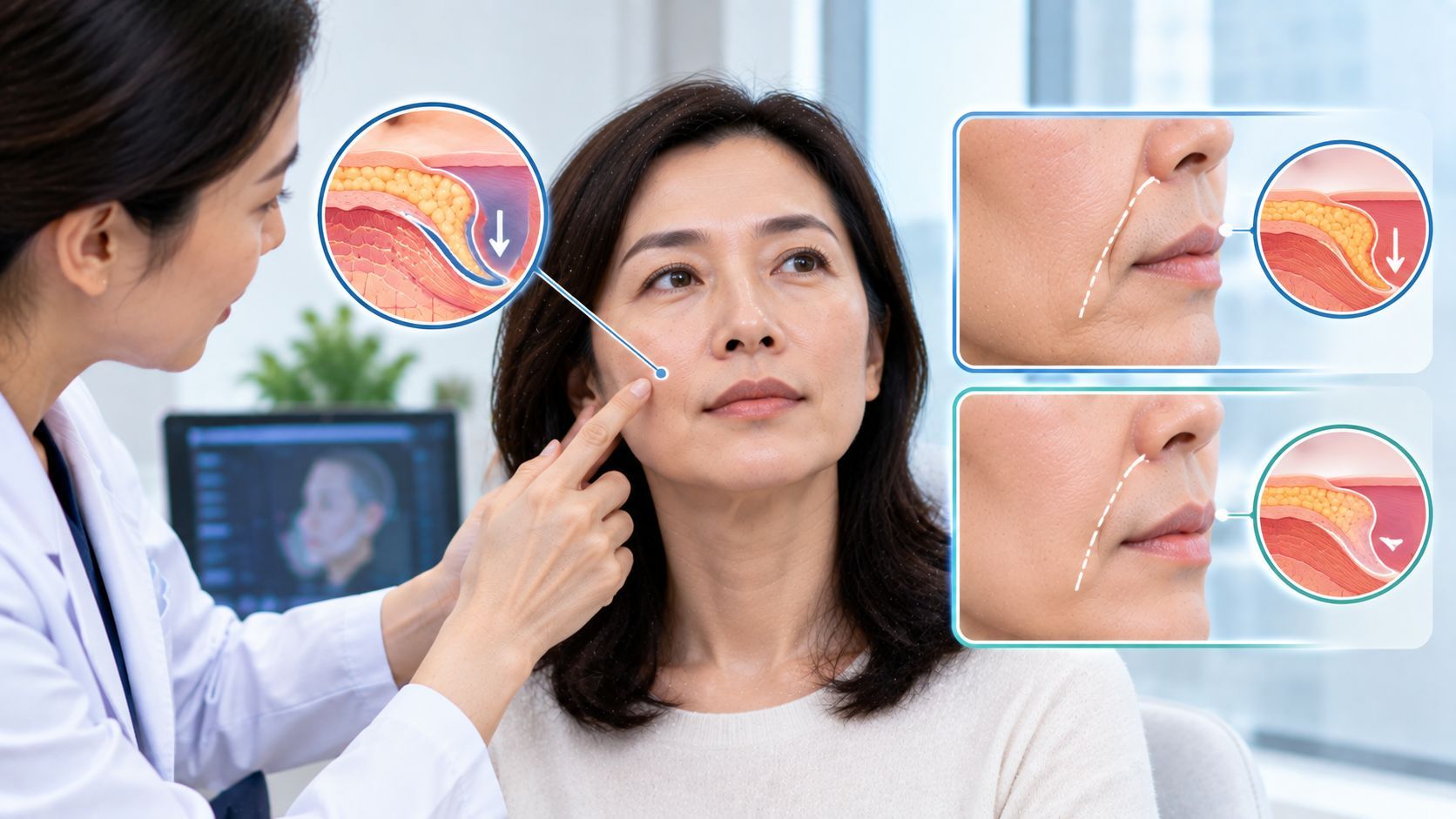
A heavy-looking lower face or cheek area may result from several different factors:
Residual filler: Previous injections may contribute to volume.
Edema: Fluid retention can create puffiness.
Fat: Natural or age-related fat distribution may contribute to fullness.
Laxity: Loose skin can make the lower face appear heavier.
Combination: More than one factor may be present.
If excess filler is the primary issue, tightening the skin may not remove the underlying volume.
A careful assessment can help distinguish these causes.
What About Sofwave After Recent Filler?
Recent filler requires additional consideration because the injection site may still be swollen or tender.
If you recently received filler and have:
- Significant swelling
- Bruising
- Tenderness
- Firmness
- Lumps
- Asymmetry
your clinician may recommend waiting until the area has settled.
There is no single waiting period that applies to every patient and every combination of filler and Sofwave.
The appropriate interval depends on the product, treatment area, degree of swelling, and planned Sofwave treatment.
Can Sofwave and Filler Be Part of the Same Treatment Plan?
They can sometimes be used as complementary treatments.
For example:
Skin laxity → Sofwave
Volume deficiency → filler
Skin texture → another appropriate skin-quality treatment
The important point is to identify the primary problem first.
Adding more volume when the real issue is laxity can create a heavier appearance. Conversely, tightening skin when the primary issue is substantial volume loss may not produce the desired contour.
A consultation should therefore establish whether the goal is lifting, tightening, contouring, restoring volume, or improving skin quality.
What Should International Patients Do Before Sofwave in Seoul?
If you are traveling to Korea for Sofwave, prepare your previous treatment history before your appointment.
Useful information includes:
- Filler brand
- Injection date
- Injection location
- Approximate amount
- Previous treatment records
- Photographs showing your face before filler
- Other energy-based treatments
- Any previous complications
If records are unavailable, simply tell the clinic.
Do not assume that an old filler has disappeared or that the clinic can identify its composition just by looking at your face.
When Should Sofwave Be Delayed?
Your clinician may recommend postponing treatment if there is an unresolved problem in the intended treatment area.
Examples include:
- Active infection
- Significant unexplained swelling
- Painful or changing nodules
- Significant inflammation
- Suspected filler complication
- Recent filler with substantial swelling
- Uncertain anatomy requiring further assessment
Treating an unresolved problem with another procedure can make it harder to determine what caused subsequent changes.
Questions to Ask Your Sofwave Clinic
Before treatment, consider asking:
- Can Sofwave be performed over my existing filler?
- Do you know which tissue depth the treatment will target?
- Does my filler location overlap the treatment area?
- Do you need my filler brand?
- Should any areas be avoided?
- Would ultrasound imaging be useful?
- Should I wait longer after my recent filler?
- Could my current facial fullness be caused by old filler?
- When should I evaluate my final Sofwave result?
These questions can help you understand how the treatment is being customized.
Conclusion
Sofwave may be performed in patients who already have facial filler, but the presence of filler should be disclosed and considered during treatment planning.
Existing filler does not automatically mean that Sofwave must be avoided. At the same time, it is not appropriate to assume that every filler can be treated over in exactly the same way.
The filler material, location, depth, age, and amount all matter. Recent swelling, unexplained lumps, or an uncertain filler history may justify additional assessment before proceeding.
For international patients visiting Seoul, bringing previous filler records and photographs can help the clinician understand your treatment history. When the location of old filler is uncertain, ultrasound may sometimes provide useful information.
FAQs
Can I get Sofwave if I already have cheek filler?
Possibly. Existing cheek filler does not automatically prevent Sofwave, but the clinician should evaluate the filler location and the planned treatment area.
Can Sofwave melt hyaluronic acid filler?
It should not be described as simply melting all HA filler. The interaction between energy-based treatments and filler depends on the treatment parameters, filler characteristics, and anatomical location.
Can Sofwave move facial filler?
There is no simple rule that Sofwave routinely moves filler. If your appearance changes after treatment, temporary swelling, skin tightening, existing filler distribution, and natural aging should also be considered.
Should I dissolve filler before Sofwave?
Not automatically. If your filler looks good and causes no problems, there may be no reason to dissolve it simply because you want Sofwave.
Do I need an ultrasound scan before Sofwave?
Not necessarily. Ultrasound can be useful when the filler location or material is uncertain or when you have unexplained swelling, lumps, or contour changes.
How long after filler can I get Sofwave?
There is no universal interval. Your clinician should consider the filler type, treatment area, degree of swelling, and planned Sofwave treatment before deciding on timing.