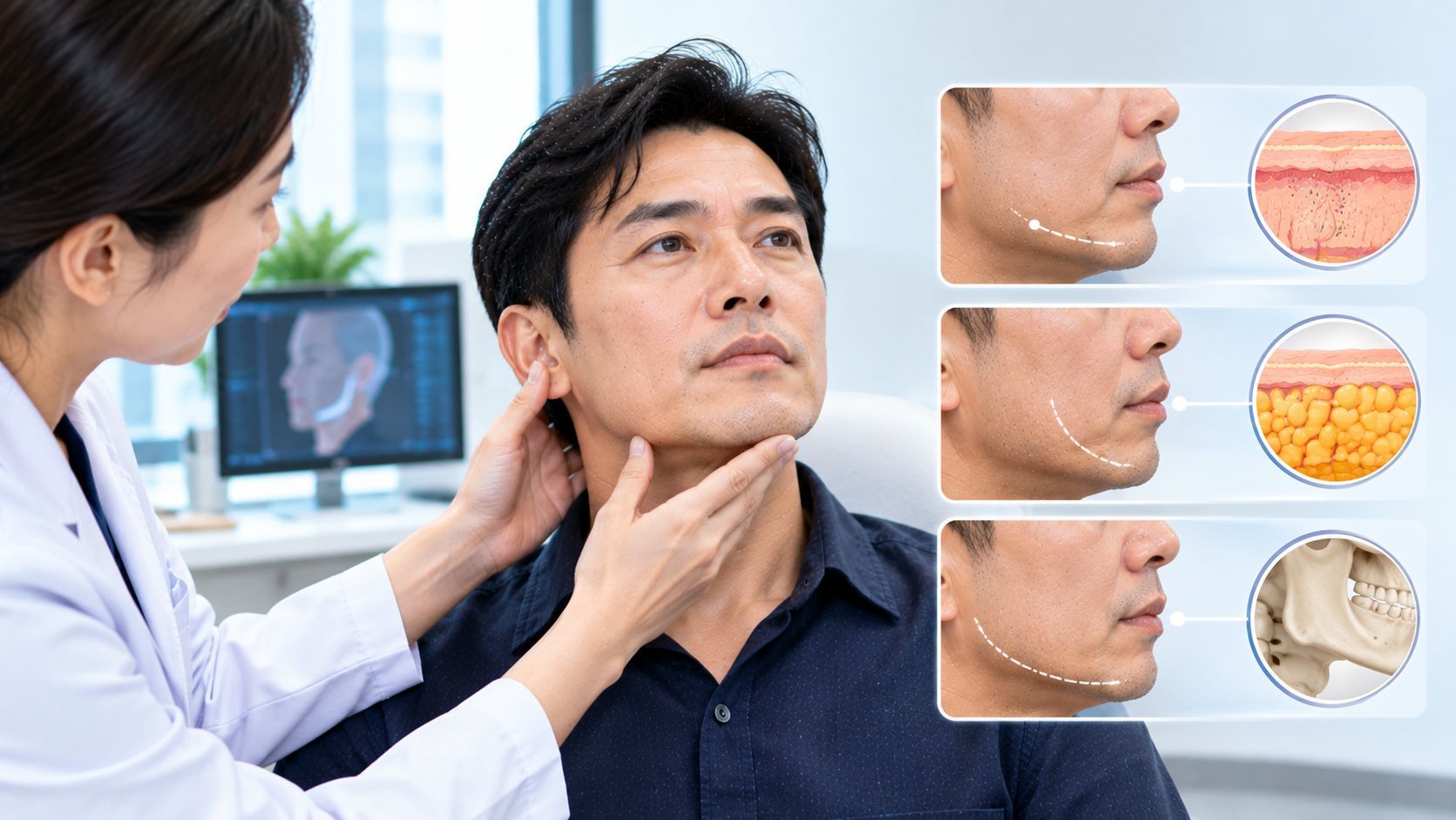
Can HIFU Melt or Move Facial Filler?
Introduction
If you have facial filler and are considering HIFU for skin tightening, one of the most common concerns is whether ultrasound energy can melt, dissolve, or move the filler. The answer is more nuanced than a simple yes or no.
HIFU, or high-intensity focused ultrasound, delivers concentrated ultrasound energy into selected tissue depths. Depending on the device and treatment settings, the energy can create localized thermal effects beneath the skin. Facial fillers, meanwhile, vary substantially in composition, depth, location, and longevity.
So, HIFU does not automatically melt or move every type of facial filler, but treatment should be planned with existing filler in mind. The specific device, treatment depth, energy settings, filler material, and anatomical location all matter.
For international patients considering HIFU in Seoul, telling the clinic about previous filler treatments is an important part of treatment planning.
What Is HIFU?
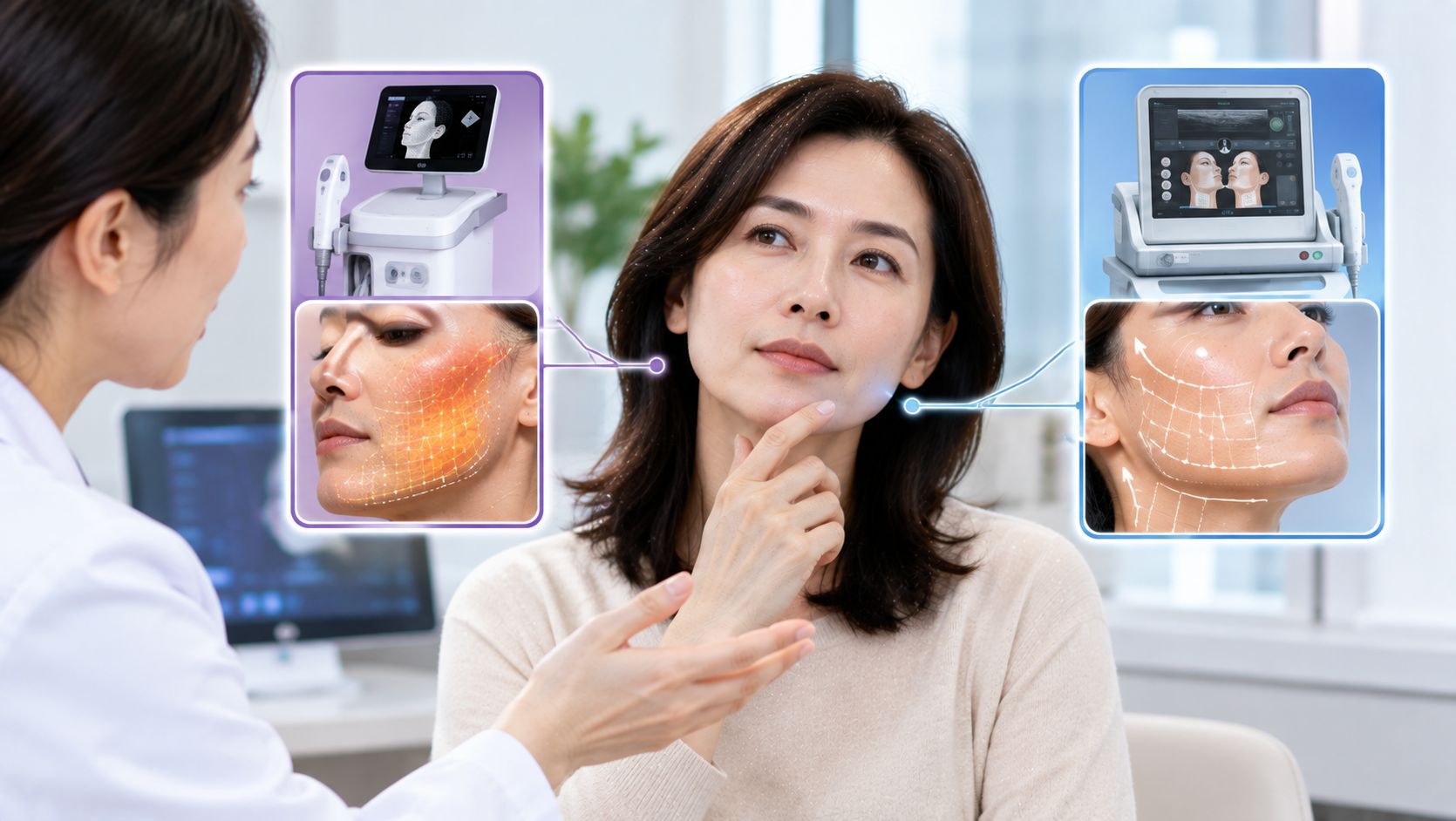
HIFU is an energy-based treatment that uses focused ultrasound to create controlled thermal effects at targeted depths.
Depending on the device and protocol, treatment may target deeper connective tissue and subcutaneous layers to encourage tissue remodeling and tightening.
HIFU is different from dermal filler:
HIFU: Uses ultrasound energy to stimulate tissue remodeling and tightening.
Dermal filler: Injects a material into specific tissue layers to add volume or modify contours.
Because they work differently, having filler does not automatically mean HIFU is prohibited.
However, the ultrasound energy should be delivered with an understanding of what lies underneath the skin.
Can HIFU Melt Facial Filler?
The word “melt” can be misleading.
HIFU does not literally melt every facial filler in the way heat would melt a solid material. Instead, focused ultrasound produces localized thermal effects in tissue, and the effect on a filler depends on the filler material, location, depth, and energy exposure.
Research investigating energy-based devices and fillers has produced mixed findings depending on the device and filler combination. Experimental studies cannot be directly generalized to every commercial HIFU device or every clinical situation.
For that reason, a clinic should not make a blanket assumption that all fillers behave identically under ultrasound energy.
What About Hyaluronic Acid Filler?
Hyaluronic acid (HA) is one of the most common facial filler materials.
If you have HA filler in your cheeks, lips, chin, nasolabial folds, or jawline, tell your clinician before HIFU.
Important information includes:
- Filler brand
- Date of injection
- Injection location
- Approximate amount
- Number of previous treatments
- Whether you had touch-ups
- Any history of lumps or swelling
- Any previous filler complications
The fact that filler is several years old does not necessarily prove that it has completely disappeared. Imaging studies have demonstrated that HA filler can sometimes persist much longer than patients expect.
Can HIFU Move Facial Filler?
There is no simple rule that HIFU causes filler to migrate.
Filler migration can have multiple possible contributing factors, including the original injection location, product characteristics, anatomy, injection technique, and time.
If your face already has an unusual contour after filler, it is important to establish what is actually causing the appearance before assuming HIFU moved the filler.
For example, a face can look fuller after HIFU because of:
- Temporary swelling
- Existing filler volume
- Natural facial fat
- Tissue laxity
- Changes in facial proportions
- Lighting or photography differences
A visible change after treatment does not automatically establish filler migration.
Why Does HIFU Treatment Depth Matter?
This is one of the most important considerations.
Facial filler can be placed at different tissue depths depending on the anatomical area and treatment objective.
HIFU devices may also have cartridges designed to target different depths.
If the planned treatment depth overlaps with the location of existing filler, the clinician needs to consider whether that area should be treated, modified, or avoided.
This is why simply saying “I have filler” is not enough information.
The clinician needs to know:
Where is the filler?
What is it made from?
How deep was it placed?
Which HIFU device and cartridge will be used?
Where will the ultrasound energy be delivered?
Can HIFU Affect the Appearance of My Filler?
Even when filler itself has not been displaced, the appearance of your face can change after tightening treatment.
For example, if you have cheek filler and HIFU produces tightening in surrounding tissue, the relationship between the skin and underlying volume may look different.
Temporary swelling can also make the face look:
- Fuller
- Puffier
- Uneven
- Tighter
- Slightly asymmetrical
These early changes should not automatically be interpreted as permanent filler movement.
It is generally more useful to evaluate the result after the expected recovery period rather than judging it immediately after treatment.
What If I Have Old Filler That I Don't Like?
This is different from simply having filler that you are happy with.
If your existing filler already makes your face look:
- Heavy
- Puffy
- Wide
- Uneven
- Overfilled
- Lumpy
HIFU may not address the underlying problem.
For example, if excess volume is the primary issue, adding a tightening treatment does not necessarily remove that volume.
A clinician may first need to determine whether the fullness comes from:
- Residual filler
- Fat
- Fluid retention
- Skin laxity
- Natural anatomy
- A combination of factors
Treating the wrong cause can lead to disappointing results.
Should I Dissolve My Filler Before HIFU?
Not automatically.
If your filler looks natural and you are satisfied with it, there may be no reason to dissolve it simply because you want HIFU.
If the filler is HA and is causing unwanted volume or another clinically appropriate reason for removal exists, hyaluronidase may sometimes be considered under medical supervision.
However, hyaluronidase specifically targets hyaluronic acid. It should not be assumed to dissolve every type of filler.
Therefore, determining the filler material is important before discussing dissolution.
Would an Ultrasound Scan Help?
In selected patients, ultrasound imaging can help identify retained filler and clarify its location.
This may be particularly useful if:
- You don't remember the filler brand
- You have received filler from multiple clinics
- You don't know exactly where injections were placed
- You have persistent swelling
- You have palpable nodules
- Your facial contour has changed unexpectedly
- You are planning treatment over an area that previously received filler
High-frequency ultrasound can sometimes help visualize filler deposits and surrounding structures, making it useful for treatment planning in appropriately equipped clinics.
It is not necessarily required for every patient with previous filler.
What If I Had Filler Very Recently?
Recent filler requires additional consideration.
If you still have significant:
- Swelling
- Bruising
- Tenderness
- Firmness
- Lumps
- Asymmetry
your clinician may recommend waiting until the area has settled before performing another procedure.
There is no single waiting period that applies to every filler and every HIFU device.
The appropriate timing depends on the product, location, treatment depth, clinical findings, and individual recovery.
Can HIFU Be Used Over Cheek Filler?
It may be possible in selected circumstances, but the clinician should determine whether the planned treatment overlaps the filler and whether modification is appropriate.
Cheek anatomy is particularly important because the area can contain different layers of fat, muscle, connective tissue, vessels, and previously injected material.
A treatment plan designed for someone without filler should not automatically be copied onto someone with multiple previous injections.
What About Lip Filler?
The lips are a different anatomical situation from the cheeks and jawline.
If you have lip filler, tell your clinician before facial ultrasound treatment.
Because lip filler is relatively superficial and the anatomy is highly vascular, treatment planning should be especially careful.
Do not assume that a treatment safe for one facial region can simply be applied to another.
What Should International Patients Tell a Seoul HIFU Clinic?
If you are traveling to Korea for HIFU, provide your clinic with as much previous treatment information as possible.
Bring:
- Filler product names
- Injection dates
- Treated areas
- Approximate amounts
- Previous treatment records
- Before-and-after photographs
- Details of previous energy treatments
- Information about any complications
If you do not know which filler was used, say so.
Guessing the product could lead to incorrect assumptions about how the existing material should be managed.
When Should HIFU Be Delayed?
A clinician may recommend postponing treatment if there is an unresolved problem in the proposed treatment area.
Examples include:
- Active infection
- Significant unexplained swelling
- Painful or rapidly changing lumps
- Significant inflammation
- A suspected filler complication
- Recent filler with substantial swelling
- Uncertain anatomy requiring further evaluation
In these situations, identifying the underlying problem should take priority over proceeding with another cosmetic procedure.
What Should I Ask Before HIFU?
Before treatment, consider asking:
- Which HIFU device are you using?
- Which treatment depths will be used?
- Do you need to know my filler brand?
- Does the treatment overlap my existing filler?
- Should any area be avoided?
- Would ultrasound imaging be useful?
- Could my current facial heaviness be caused by old filler?
- When should I assess the final HIFU result?
These questions can help you understand why a particular treatment plan is being recommended.
Conclusion
HIFU does not automatically melt or move facial filler, but the interaction between ultrasound energy and existing filler is not something that should be treated as identical for every patient.
The filler material, location, depth, age, and amount matter, as do the HIFU device and treatment parameters.
If you have satisfactory old filler, you may not need to dissolve it simply because you want HIFU. If you have unexplained swelling, lumps, facial heaviness, or an uncertain filler history, additional assessment may be appropriate before treatment.
For international patients visiting Seoul, bringing previous filler records and photographs can make the consultation much more useful. When the location of old filler is uncertain, ultrasound imaging may sometimes provide additional information for treatment planning.
FAQs
Can HIFU melt hyaluronic acid filler?
HIFU should not be described as simply “melting” all HA filler. Its effects depend on the ultrasound device, treatment depth, energy exposure, and location of the filler.
Can HIFU move cheek filler?
There is no simple evidence that HIFU routinely causes cheek filler to migrate. If your contour changes after treatment, swelling and other factors should also be considered.
Should I dissolve filler before HIFU?
Not necessarily. If your existing filler is satisfactory, dissolution may not be required. If the filler is causing unwanted volume or other problems, it should be assessed separately.
Can I have HIFU over old filler?
It may be possible depending on the location and depth of the filler and the planned HIFU treatment. Your clinician should determine whether the treatment overlaps the filler.
Should I get an ultrasound scan before HIFU?
Not everyone needs imaging. It can be particularly useful when the filler type or location is unknown or when you have unexplained swelling, lumps, or contour changes.
How long after filler can I get HIFU?
There is no universal waiting period. The appropriate timing depends on the filler, treatment area, degree of swelling, and planned HIFU treatment.