Why Do My Under-Eyes Look Hollow in Some Lighting but Puffy in Other Lighting?
Introduction
If your under-eyes look hollow in one mirror but puffy in another, you are not necessarily imagining the difference. The appearance of the lower eyelid can change dramatically with lighting, facial angle, expression, skin thickness, shadows, and the relationship between the eyelid and cheek.
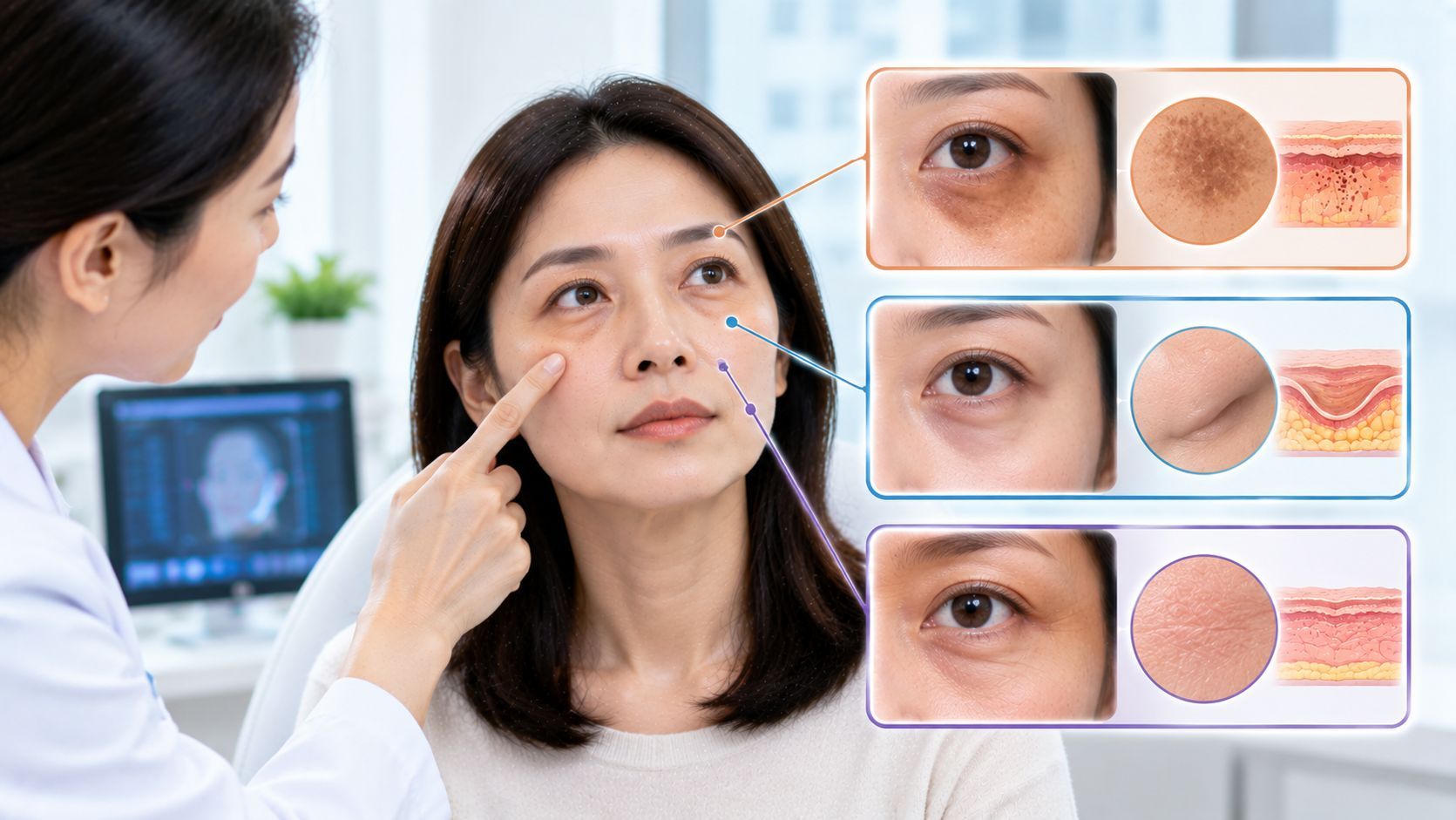
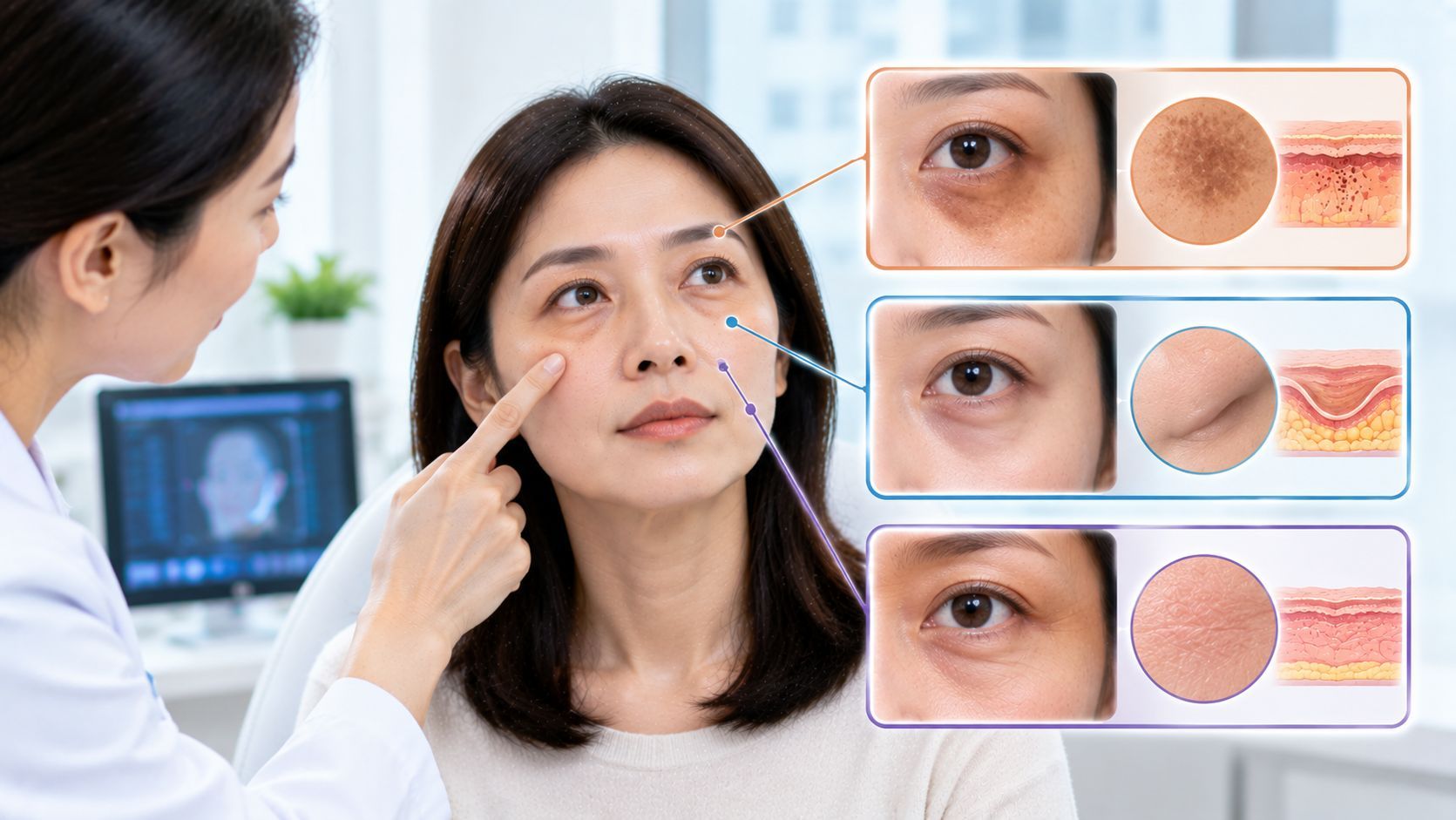
A hollow-looking under-eye and a puffy-looking under-eye can even exist at the same time. A recessed tear trough may create a dark shadow, while nearby orbital or cheek tissue creates a raised area. Depending on where the light comes from, one feature may become much more obvious than the other.
This is one reason under-eye treatment can be difficult. The goal is not simply to make the area look “fuller.” The clinician needs to determine whether the main issue is a true hollow, a shadow, fat prominence, swelling, thin skin, previous filler, or a combination.
Why Does Lighting Change the Appearance So Much?
The lower eyelid has complex contours rather than being a completely flat surface.
A small depression can cast a shadow, while a nearby raised area catches the light. Changing the direction of the light changes that relationship.
Overhead lighting
Light from above can create a shadow underneath the orbital rim or within the tear-trough area.
This can make the under-eye look:
- Deeper
- Darker
- More tired
- More hollow
Side lighting
Directional light from the side can emphasize small changes in surface texture and make hollows and wrinkles appear more pronounced.
Front-facing light
Soft, frontal lighting tends to reduce shadows and can make the same under-eye area appear considerably smoother.
This is why comparing your face in different bathrooms, hotel rooms, photographs, and outdoor environments can produce completely different impressions.
Can You Be Both Hollow and Puffy?
Yes.
This is one of the most important concepts in under-eye assessment.
Imagine a lower eyelid with:
- A depression near the inner tear trough
- A raised area farther toward the cheek
- Thin skin over the area
- Mild orbital fat prominence
From one angle, the depression may dominate and make the eye look hollow.
From another angle, the raised tissue may catch the light and make the area look puffy.
The underlying anatomy has not necessarily changed. The lighting has changed what your eye notices.
Anatomical studies describe several distinct infraorbital grooves and note that their appearance can be influenced by orbital fat, skin and soft-tissue volume, orbicularis oculi contraction, and changes in the underlying bone.
What Is a True Under-Eye Hollow?
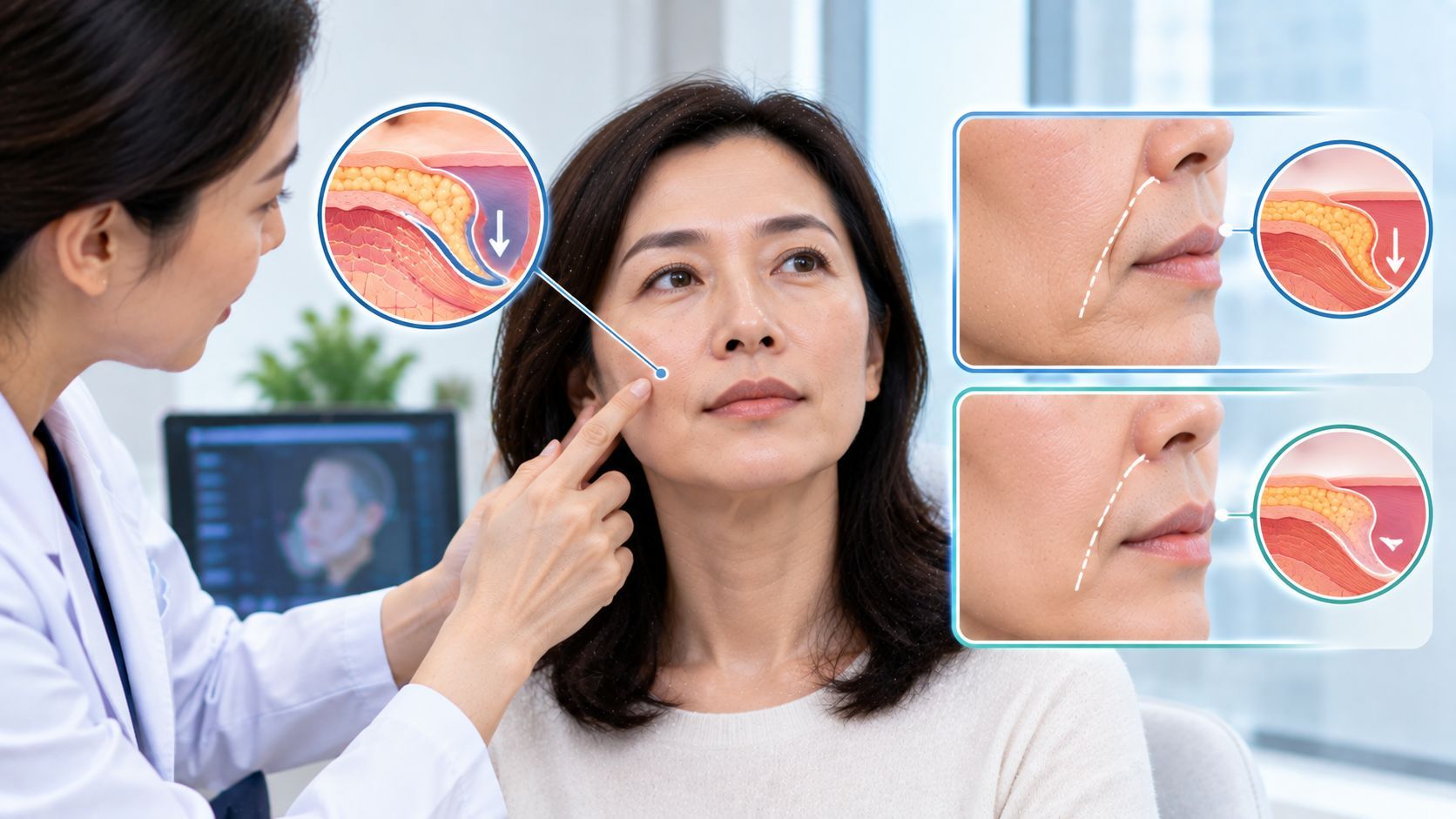
A hollow usually refers to a depression or loss of support along the lower eyelid-to-cheek transition.
It can be related to:
- Natural facial anatomy
- Reduced soft-tissue volume
- Age-related tissue changes
- Bone remodeling
- Ligamentous attachments
- Fat redistribution
A hollow often becomes more obvious when light creates a shadow across the depression.
Signs that may suggest a hollow
You may notice:
- A groove from the inner corner toward the cheek
- A shadow rather than a distinct raised lump
- A more tired appearance in overhead lighting
- A smoother appearance under soft frontal lighting
However, photographs alone cannot reliably determine whether you have true volume deficiency.
What Causes Under-Eye Puffiness?
Puffiness can have several causes.
Orbital fat
Fat around the eye provides structural protection. Changes in supporting tissues can make it more prominent.
Fluid retention
Fluid can collect around the lower eyelid and make the area look temporarily swollen.
Skin laxity
Looser skin can create folds or bags that catch the light differently.
Previous filler
Filler in the tear trough or nearby cheek can sometimes contribute to fullness, edema, contour irregularities, or a blue-gray appearance. Periocular filler has specific anatomical and complication considerations because the skin is thin and the region contains important structures.
Inflammatory changes
Persistent or delayed swelling can occur after filler in some patients. A systematic review of delayed tear-trough filler complications identified swelling and nodules among the reported complications.
Why Can the Same Under-Eye Look Hollow and Puffy in the Same Day?
Several factors can change its appearance.
Facial expression
Smiling and squinting change the position of the lower-eyelid tissues.
Sleep and fluid retention
Morning puffiness may temporarily make a previously hollow area look fuller.
Hydration and skin condition
Dry or crepey skin can emphasize fine lines and shadows.
Camera angle
A photograph taken slightly from above or below can dramatically alter the perceived depth of the tear trough.
Lighting direction
This may be the biggest factor in why your under-eyes appear dramatically different from one setting to another.
Does This Mean I Need Under-Eye Filler?
Not necessarily.
If the area is truly hollow, carefully selected filler can sometimes improve the transition between the lower eyelid and cheek.
But if the area is already puffy, adding more volume may make the problem worse.
Tear-trough filler requires careful patient selection and knowledge of the complex periocular anatomy. Published reviews report complications such as edema, contour irregularities, and blue-gray discoloration, among others.
This is why a clinician should determine whether the apparent “hollow” is actually a volume deficit or primarily a shadow caused by surrounding anatomy.
What If I Already Have Under-Eye Filler?
Previous filler changes the assessment.
If you have received tear-trough or cheek filler, the puffy appearance may sometimes relate to residual product or delayed edema.
One large retrospective series of tear-trough filler applications reported swelling, contour irregularities, and Tyndall effect among observed complications, with higher injected volume associated with edema and contour irregularities.
If your under-eyes look hollow in one setting but swollen in another, it may therefore be inappropriate to simply add more filler.
A clinician may first determine:
- Whether filler remains
- Where it is located
- Whether there is edema
- Whether the underlying hollow is genuine
- Whether the cheek contributes to the contour
Can Ultrasound Help?
In selected cases, yes.
High-frequency ultrasound can help identify filler deposits and assess their approximate location and tissue relationships.
This can be particularly useful if:
- You do not remember your filler product
- You had treatment several years ago
- You have received repeated filler
- One side looks different from the other
- You have persistent puffiness
- You are considering dissolving previous HA filler
Imaging is not necessary for every patient, but it can provide information that a photograph cannot.
What Treatments Can Help a Hollow Under-Eye?
The treatment depends on the cause.
Conservative filler
For carefully selected patients with genuine volume deficiency, HA filler may improve the tear-trough transition.
However, under-eye filler should be used conservatively because excessive product can contribute to swelling or contour problems.
Skin-quality treatments
If the primary concern is thin, crepey skin rather than a structural hollow, a skin-focused treatment may be more appropriate than adding volume.
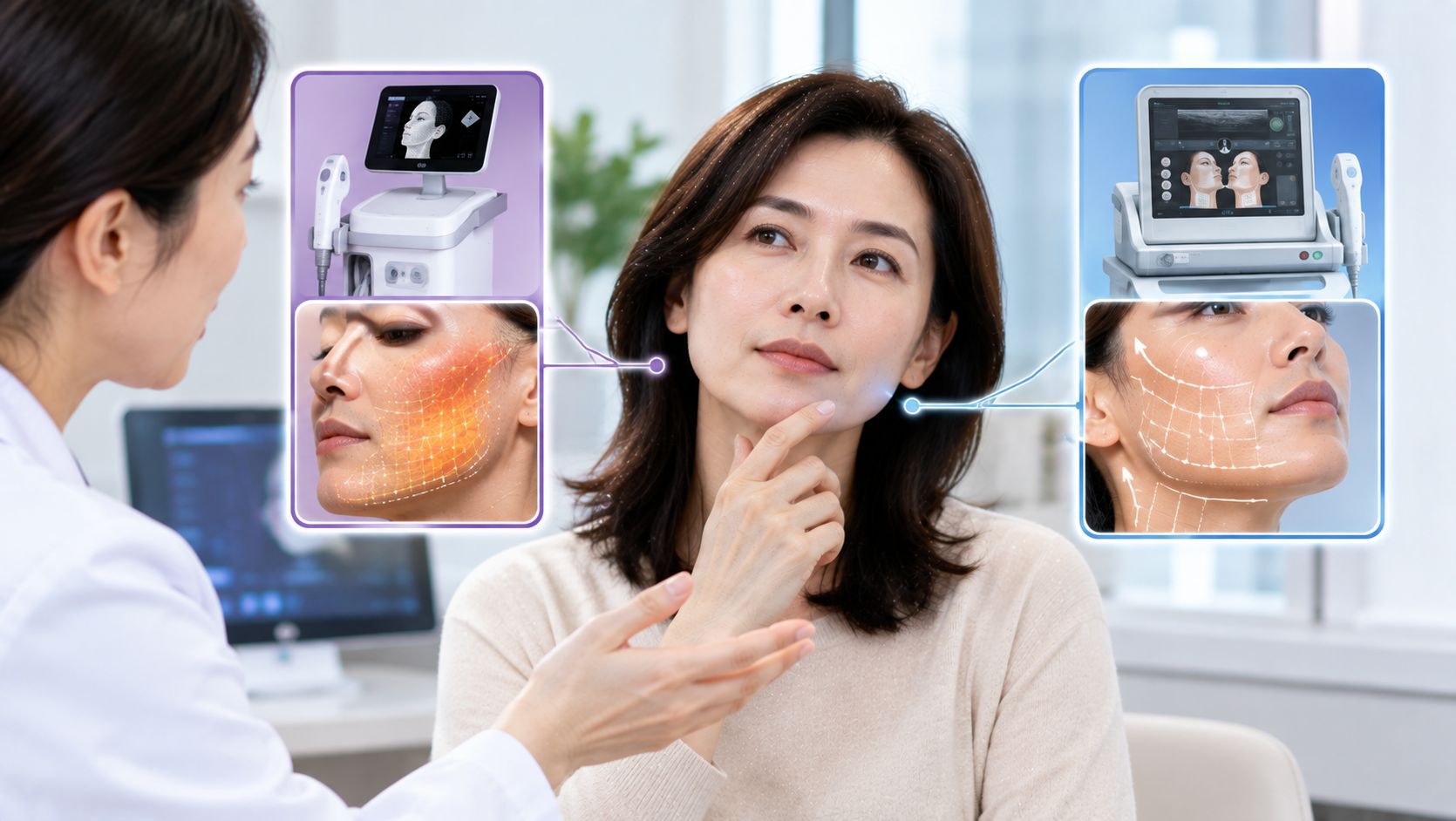
Depending on the patient, options can include selected laser, RF, or other regenerative/skin-quality treatments.
Surgical assessment
If significant orbital fat prominence or lower-eyelid structural changes are present, an oculoplastic evaluation may be more appropriate than additional filler.
What If the Problem Is Mainly Lighting?
If your under-eyes look good under consistent, soft lighting but dramatically worse under harsh overhead lighting, treatment may not be necessary.
Try evaluating your face using:
- Soft natural daylight
- Front-facing light
- The same camera distance
- The same facial expression
- No extreme overhead lighting
Take photographs at rest and while smiling.
If the “problem” appears only under one highly directional light source, you may be seeing shadows rather than a major structural defect.
How Should You Assess Your Under-Eyes Before Treatment?
Instead of asking only, “Do I look hollow?”, consider these questions:
- Is the depression visible when I am relaxed?
- Is there also a raised or puffy area beside it?
- Does the appearance change dramatically with lighting?
- Does smiling make the area fuller?
- Do I have previous filler?
- Does the puffiness fluctuate?
- Is the issue mainly pigmentation rather than contour?
- Is the skin itself thin or crepey?
These distinctions can completely change the treatment plan.
What Should International Patients Ask in Seoul?
If you are considering under-eye treatment in Seoul, describe the problem precisely.
Instead of saying:
“My eye bags are bad.”
You can explain:
“My under-eyes look hollow under overhead lighting but puffy under frontal lighting.”
That gives the clinician a much better starting point.
Bring photographs taken under different lighting conditions if the appearance varies substantially.
Also disclose previous filler, Botox, laser, RF, or other periocular treatments.
When Should Under-Eye Puffiness Be Medically Evaluated?
Sudden or unusual swelling should not automatically be considered an aesthetic problem.
Seek medical evaluation if you develop rapid swelling, significant pain, redness, warmth, skin discoloration, vision changes, double vision, or other acute symptoms, particularly after an injectable treatment.
Serious complications after periocular filler are uncommon, but vascular complications can be severe and require urgent assessment.
Conclusion
Under-eyes that look hollow in some lighting and puffy in other lighting do not necessarily indicate two separate problems.
A depression can create a shadow while nearby tissue creates a highlight, making the same anatomy appear hollow in one environment and swollen in another. Facial expression, skin thickness, orbital fat, fluid retention, aging, and previous filler can further change the appearance.
Before choosing filler or another treatment, determine whether the primary issue is true volume loss, a shadow, tissue fullness, swelling, skin quality, or a combination.
For patients with previous under-eye filler, particularly those with persistent puffiness or an uncertain treatment history, professional examination and sometimes ultrasound can provide more useful information than photographs alone.
Frequently Asked Questions
Why do my under-eyes look hollow in photos but puffy in the mirror?
Lighting, camera angle, facial expression, and shadows can change the perceived contour of the lower eyelid. The same underlying anatomy can therefore look very different.
Can under-eye hollows and bags happen together?
Yes. A tear-trough depression can exist next to orbital fat or soft-tissue fullness, creating both a hollow and a puffy appearance.
Should I get filler if my under-eyes look hollow?
Only after determining that the primary problem is genuine volume deficiency. If the area is already prone to puffiness, additional filler may not be appropriate.
Can old filler cause under-eye puffiness?
Yes, retained filler or delayed filler-related edema can contribute to periocular fullness in some patients. Previous filler should be considered during assessment.
Can ultrasound tell whether my under-eye puffiness is filler?
Ultrasound can sometimes identify and localize retained filler and may be useful when previous treatment history or anatomy is uncertain.
What is better for under-eye hollows: filler or laser?
They address different problems. Filler is primarily used for selected volume deficiencies, while laser is generally aimed at skin quality, texture, and certain pigmentation or fine-line concerns. The appropriate choice depends on what is causing the appearance.