I Don't Have Eye Bags When I'm Resting but They Appear When I Smile. What Treatment Helps?
Introduction
If your under-eyes look relatively smooth when your face is relaxed but small bags or bulges appear when you smile, this does not necessarily mean you have permanent eye bags. Smiling activates the muscles around the eyes and can temporarily change the position and appearance of the lower-eyelid tissues.
For some people, the change is mainly caused by muscle movement. For others, smiling makes existing orbital fat, skin laxity, fluid retention, or under-eye contour differences more visible. The right treatment therefore depends on what is creating the bulge when you smile, rather than simply treating it as a volume problem.
In particular, adding under-eye filler is not automatically the solution. If the issue is dynamic fullness rather than a hollow, additional filler could potentially make the area look heavier.
Why Do Eye Bags Appear Only When I Smile?
The muscles surrounding the eye play an important role in facial expression.
When you smile, the orbicularis oculi muscle contracts. This changes the shape of the lower eyelid and pushes or folds nearby tissues.
As a result, you may temporarily notice:
- A small bulge under the eyelashes
- Several fine horizontal lines
- A crescent-shaped fullness
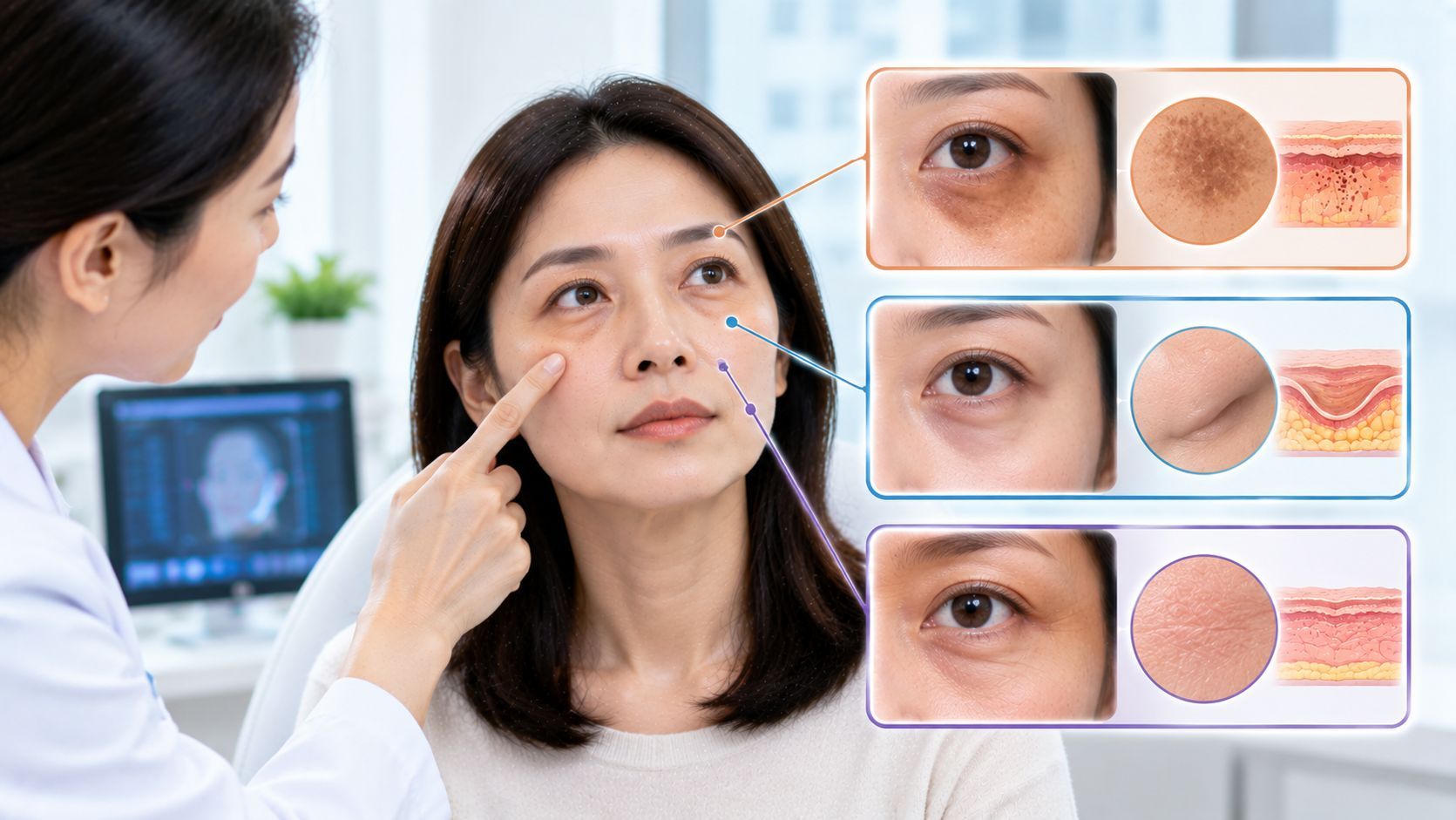
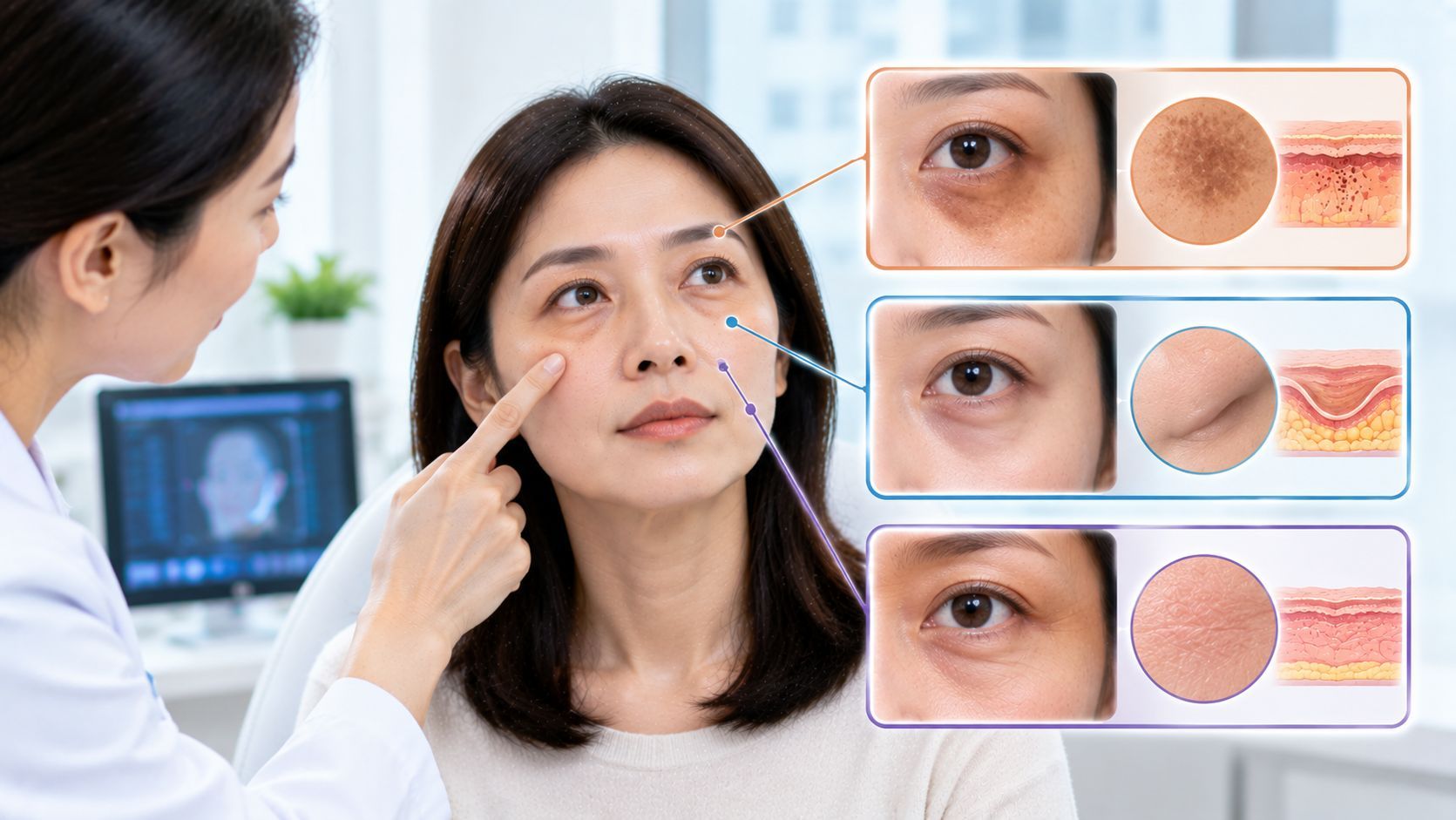
- A deeper-looking tear trough
- More visible lower-eyelid texture
- A small pouch that disappears when you relax
This can be a normal consequence of facial movement.
Dynamic fullness versus a permanent eye bag
A useful distinction is whether the fullness is present at rest.
Dynamic fullness appears primarily during smiling or squinting.
Static fullness remains visible even when the face is completely relaxed.
Some people have both.
What Causes the Bulge When I Smile?
Several anatomical factors can contribute.
Orbicularis oculi muscle
The muscle contracts strongly during smiling and can make the lower eyelid look temporarily fuller.
Orbital fat
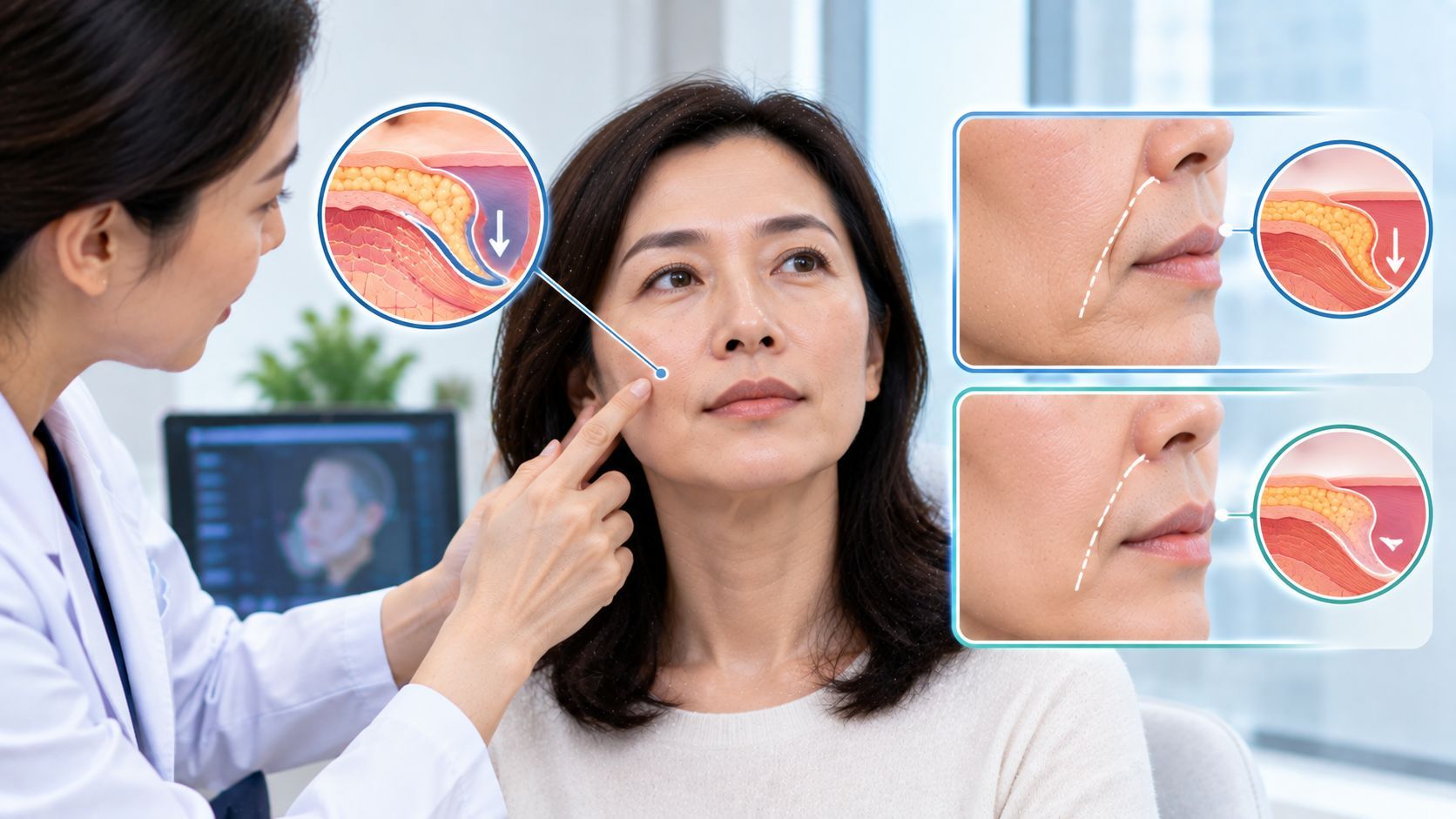
Fat surrounding the eye provides cushioning and protection. Changes in the supporting tissues can make this fat more visible, particularly with age.
Lower-eyelid skin
Thin or less elastic skin can fold more prominently during facial movement.
Cheek structure
The transition between the lower eyelid and upper cheek affects how shadows and contours appear during smiling.
Fluid retention
Temporary puffiness can make movement-related fullness more obvious.
Previous filler
Filler placed in the tear trough or cheek can sometimes contribute to fullness or alter the contour of the area.
Does This Mean I Need Under-Eye Filler?
Usually, you should not assume that.
Under-eye filler is primarily designed to address volume deficiency or a tear-trough depression. It does not remove orbital fat or stop the orbicularis oculi muscle from contracting.
If you already have a visible bulge when smiling, adding more volume may not address the cause.
In some patients, additional filler can make the transition between the lower eyelid and cheek look fuller or puffier.
That does not mean under-eye filler is inherently inappropriate. It means the indication needs to be clear.
What If I Also Have a Hollow Tear Trough?
This situation can be more complicated.
You might have:
- A hollow at rest
- A bulge when smiling
- Thin skin
- Mild pigmentation
- Dynamic wrinkles
In that case, adding volume to the hollow does not necessarily eliminate the dynamic bulge.
A clinician may need to determine whether the hollow is caused by true volume deficiency, shadowing, anatomy, or a combination of factors.
The goal should be to improve the overall lower-eyelid-to-cheek transition without unnecessarily increasing fullness.
Can Botox Help if the Bags Only Appear When I Smile?
In selected cases, botulinum toxin may reduce certain dynamic wrinkles or muscle-related changes.
However, this requires particular caution around the eyes.
The orbicularis oculi muscle is not simply a cosmetic muscle. It contributes to eyelid closure and other important functions.
Excessive weakening or poorly placed injections can potentially cause:
- Changes in the smile
- Lower-eyelid changes
- Dryness or incomplete eyelid closure
- Asymmetry
- An altered expression
Therefore, Botox should not be viewed as a routine treatment for every smile-related under-eye bulge.
If the primary issue is actual orbital fat protrusion, Botox will not remove that fat.
Can Laser Help?
Laser treatment may be useful when the main problem is skin texture, fine lines, or pigmentation, rather than a true fat bulge.
Certain fractional lasers can stimulate controlled skin remodeling and improve fine lines over time.
However, the lower eyelid requires careful treatment planning because the skin is thin and sensitive.
Patients with a greater risk of post-inflammatory hyperpigmentation may require particularly conservative settings or alternative approaches.
A laser may improve the quality of the skin surrounding an eye bag, but it does not necessarily eliminate the underlying fat.
What About Radiofrequency Treatments?
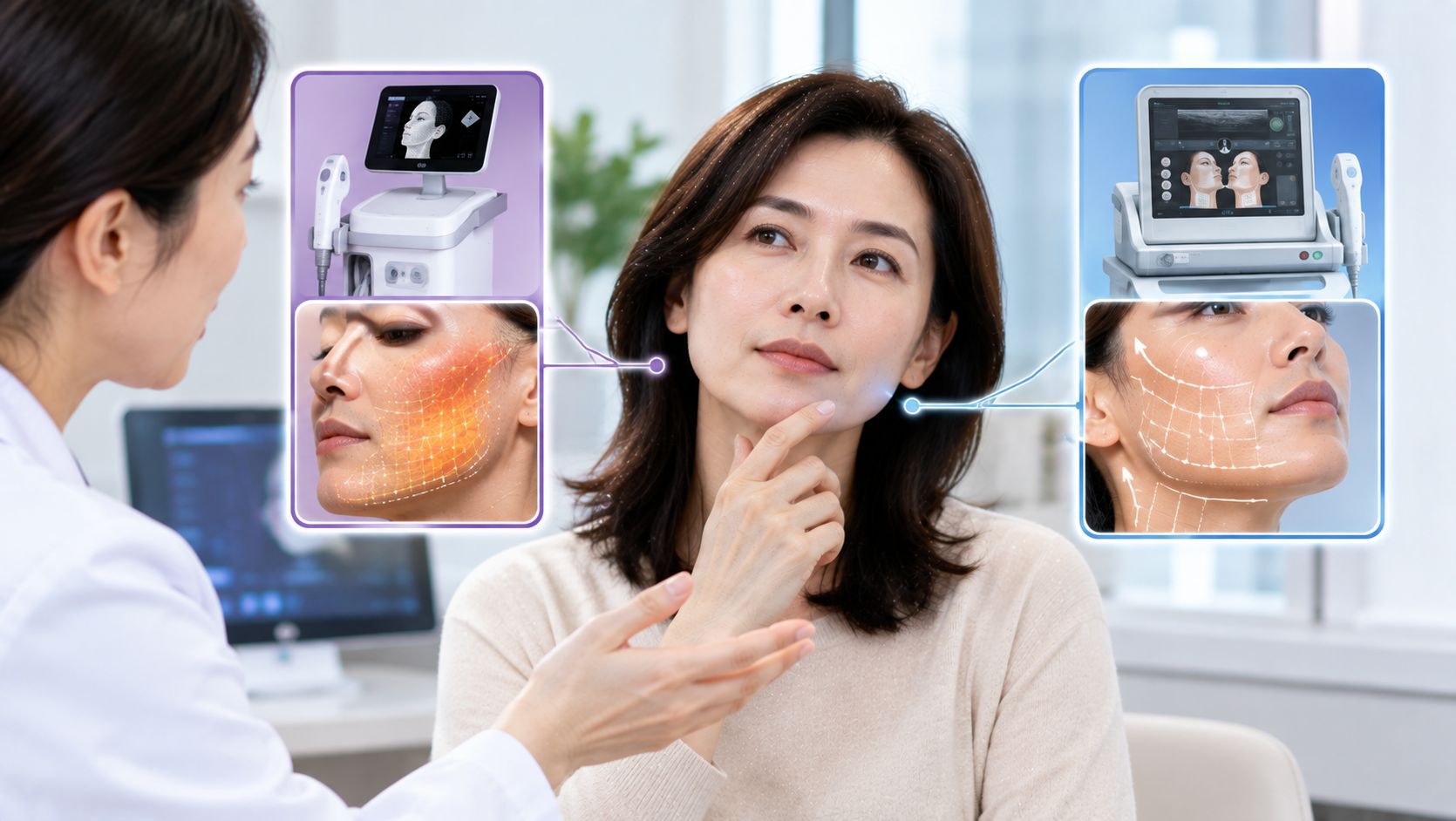
Some RF-based treatments are used to improve skin quality and mild laxity.
They may be considered when loose or crepey skin contributes to the appearance of the lower eyelid.
However, RF treatment should not be assumed to remove orbital fat.
If the problem is primarily a discrete fat bulge that appears during smiling, treating the skin alone may provide limited improvement.
Could Skin Boosters or Collagen Stimulators Help?
Possibly, but the indication matters.
Some injectable treatments aim to improve skin quality, hydration, or collagen remodeling rather than simply adding structural volume.
They may be considered when thin, crepey skin is a major component of the concern.
The under-eye area is delicate, however. Not every injectable is appropriate for direct periocular use, and products should not be used simply because they are marketed as “collagen stimulators.”
Treatment should be selected based on the specific product, injection depth, anatomy, and clinician experience.
When Is Surgery More Appropriate?
If the lower-eyelid fat is prominent even at rest, or if there is substantial lower-eyelid skin laxity, a surgical consultation may be more appropriate.
Lower blepharoplasty can address selected cases involving:
- Prominent orbital fat
- Excess lower-eyelid skin
- Certain structural changes around the lower eyelid
This is very different from treating fine lines that appear only when smiling.
Surgery is not automatically required simply because a small bulge appears during expression.
How Can You Tell Which Problem You Have?
A useful consultation should examine your eyes in several situations.
At complete rest
This shows the baseline anatomy.
With a gentle smile
This reveals moderate muscle activity.
With a full smile
This shows the maximum dynamic change.
From different angles
Side and three-quarter views can reveal whether the issue is a true bulge or primarily a shadow.
Under consistent lighting
Lighting can make a small crease appear dramatically deeper.
This dynamic assessment can be more informative than a single photograph.
What If I Had Filler Before?
Tell the clinician.
Previous filler can change the way the lower eyelid and cheek transition looks.
If you have had:
- Tear-trough filler
- Cheek filler
- Midface filler
- Repeated injections
- Unknown filler products
the clinician may need to consider whether residual filler contributes to the appearance.
High-frequency ultrasound can sometimes help identify and localize retained filler when the history or anatomy is uncertain. Expert consensus supports ultrasound as a useful tool in selected aesthetic procedures and filler-related assessments.
What Should International Patients Consider When Seeking Treatment in Seoul?
If you are traveling to Seoul for under-eye treatment, avoid choosing a procedure solely from a treatment menu.
Instead, explain exactly what happens:
“My under-eyes look normal at rest, but bags appear when I smile.”
That description is clinically more useful than simply saying, “I have eye bags.”
Bring photographs showing:
- Your face at rest
- A natural smile
- A full smile
Try to take them under similar lighting.
Also tell the clinic about any previous filler, Botox, laser, RF, or other treatments around the eyes.
When Should You Seek Medical Assessment?
A stable cosmetic change that appears only with smiling is generally different from sudden swelling.
Seek prompt medical assessment if you develop sudden or severe swelling, significant pain, redness, skin discoloration, vision changes, double vision, or difficulty closing the eye, especially after an injectable or energy-based procedure.
The periocular region has important structures, so unusual symptoms should not simply be treated as an aesthetic issue.
Conclusion
If you do not have visible eye bags when resting but develop small bulges when smiling, the cause may be dynamic muscle movement rather than a permanent fat bag.
Orbital fat, skin laxity, thin skin, cheek anatomy, fluid retention, and previous filler can also contribute.
The appropriate treatment depends on which factor is dominant. Botox may help selected dynamic wrinkles but requires careful dosing. Laser or RF may improve skin quality and fine lines but will not necessarily remove an underlying fat bulge. Filler may be useful for genuine hollowing but is not automatically appropriate when the main concern is movement-related fullness.
For this reason, the most useful first step is a consultation that evaluates your lower eyelids both at rest and while smiling. In patients with previous filler, ultrasound may provide additional information when the anatomy or treatment history is uncertain.
Frequently Asked Questions
Why do my eye bags appear only when I smile?
Smiling activates the muscles around the eyes and changes the position of the lower-eyelid tissues. This can temporarily make orbital fat, skin folds, or existing fullness more visible.
Will under-eye filler remove bags that appear when I smile?
Not necessarily. Filler addresses volume loss rather than muscle movement or orbital fat. If there is already dynamic fullness, adding volume may not produce the desired result.
Can Botox stop under-eye bags when smiling?
Botox can reduce certain dynamic wrinkles in carefully selected patients, but it does not remove orbital fat. Treatment around the eyes must also be conservative because the muscles have important functional roles.
Can laser remove under-eye bags?
Laser can improve certain skin-quality concerns, such as fine lines and texture, but it does not necessarily remove a true orbital fat bulge.
Do I need surgery if bags appear only when I smile?
Not necessarily. Surgery is generally considered when there is a significant structural problem, such as persistent fat prominence or excess skin. Dynamic fullness alone does not automatically require surgery.
Can old filler make smile-related eye bags worse?
It can contribute to fullness or contour changes in some patients. If you have previous tear-trough or cheek filler, an assessment can determine whether retained filler is part of the problem.