Why Do My Under-Eyes Look Worse When I Smile?
Introduction
If your under-eyes look relatively smooth when your face is relaxed but suddenly show bags, wrinkles, creases, or puffiness when you smile, this is often related to normal movement of the muscles and soft tissues around the eyes. It does not necessarily mean that your under-eye area is getting worse or that you need filler.
When you smile, the muscles around the eyes contract and the skin folds differently. This can temporarily push or accentuate fat compartments, create dynamic wrinkles, and make existing hollows or skin texture more visible. The appearance can also be influenced by lighting, skin thickness, genetics, and age-related changes.
For this reason, treating an under-eye concern based only on how it looks at rest may lead to the wrong treatment.
Why Do Under-Eyes Change When You Smile?
The skin around the eyes is thin and highly mobile. When you smile, the orbicularis oculi muscle contracts, causing the skin and underlying tissues to move.
This can produce several different effects.
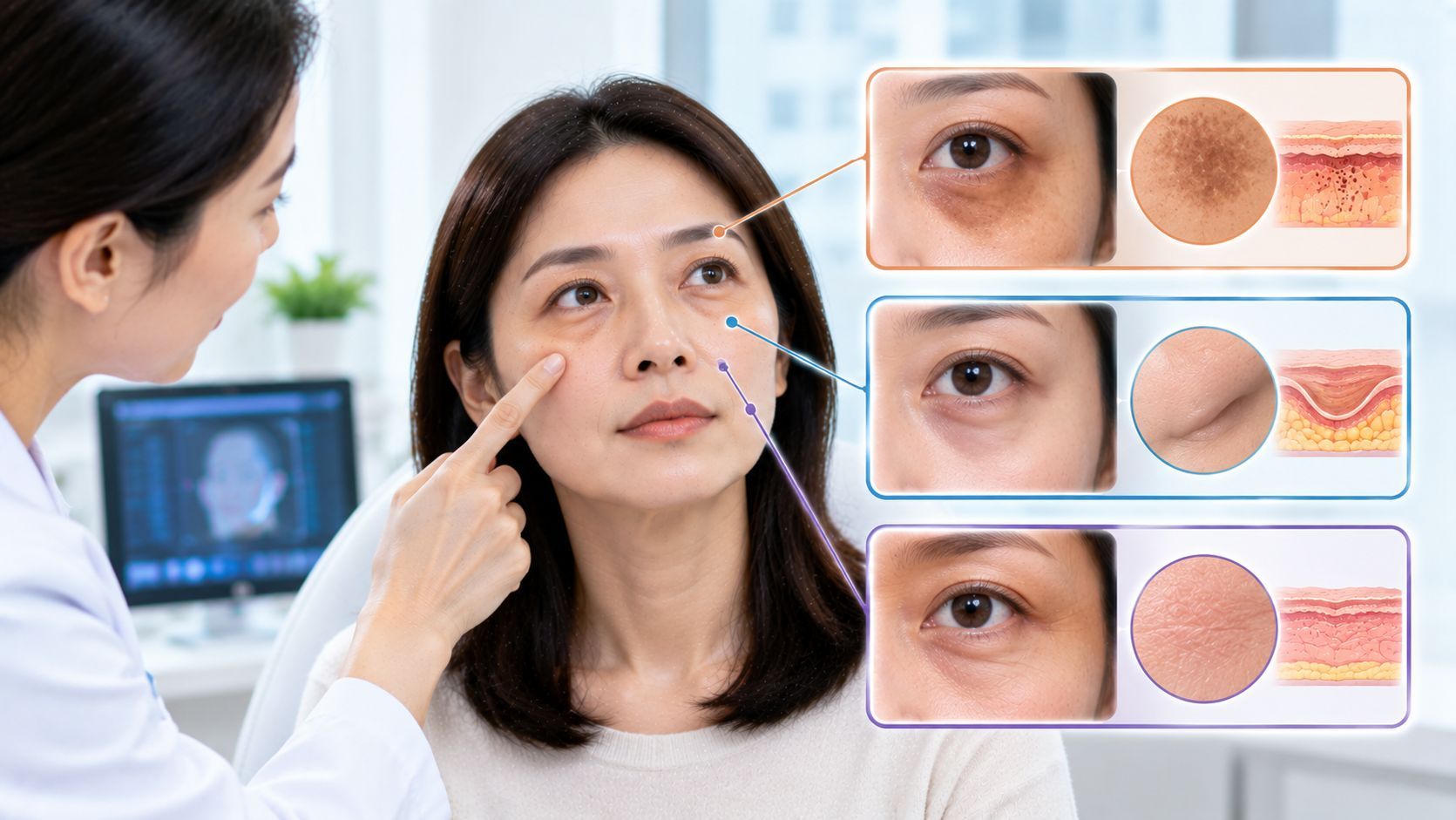
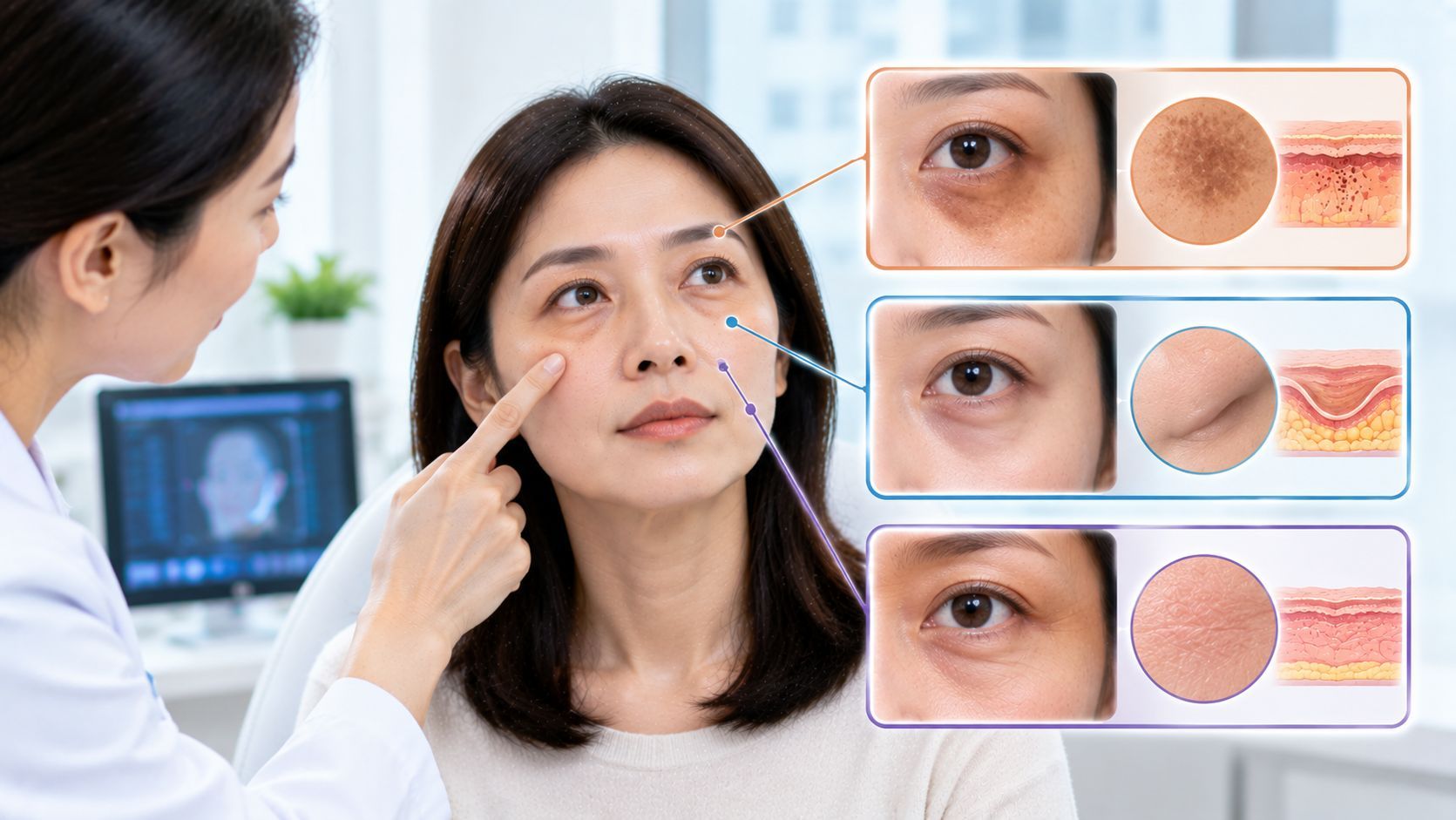
Dynamic wrinkles become visible
Fine lines that are barely noticeable when you are relaxed may appear when you smile. These are often called dynamic wrinkles because facial movement contributes to their formation.
The lower eyelid can become more prominent
Muscle contraction can temporarily alter the contour of the lower eyelid and make the area underneath the eye appear fuller.
Existing puffiness can become more obvious
If you already have prominent orbital fat or mild tissue laxity, smiling can push the tissues forward and make the contour easier to see.
Hollows can look deeper
Movement can create shadows around the transition between the lower eyelid and cheek. This can make a tear-trough hollow appear deeper even though the actual volume has not suddenly changed.
Does This Mean I Have Eye Bags?
Not necessarily.
A useful distinction is between dynamic fullness and a persistent eye bag.
If the fullness is mainly visible while smiling and largely disappears when your face relaxes, muscle movement may be an important part of the appearance.
A persistent bag that remains visible at rest can have a different underlying cause, including:
- Prominent orbital fat
- Lower-eyelid tissue laxity
- Structural anatomy
- Age-related changes
- Fluid retention
- A combination of factors
Some people have both resting fullness and movement-related prominence.
Why Do Some People Develop More Under-Eye Creasing When They Smile?
Several factors can contribute.
Thin under-eye skin
The lower-eyelid skin is among the thinnest skin on the face. As collagen and elastin decrease with age, fine lines can become easier to see.
Reduced skin elasticity
Older skin may not return to its resting position as easily after repeated facial movement.
Facial anatomy
The relationship between orbital fat, the lower eyelid, cheek fat, bone structure, and skin differs substantially between individuals.
Sun exposure
Cumulative ultraviolet exposure contributes to collagen breakdown and can make fine lines and uneven texture more visible.
Dryness
Dehydrated skin can temporarily emphasize fine lines, particularly under the eyes.
Could It Be From Under-Eye Fat?
Yes.
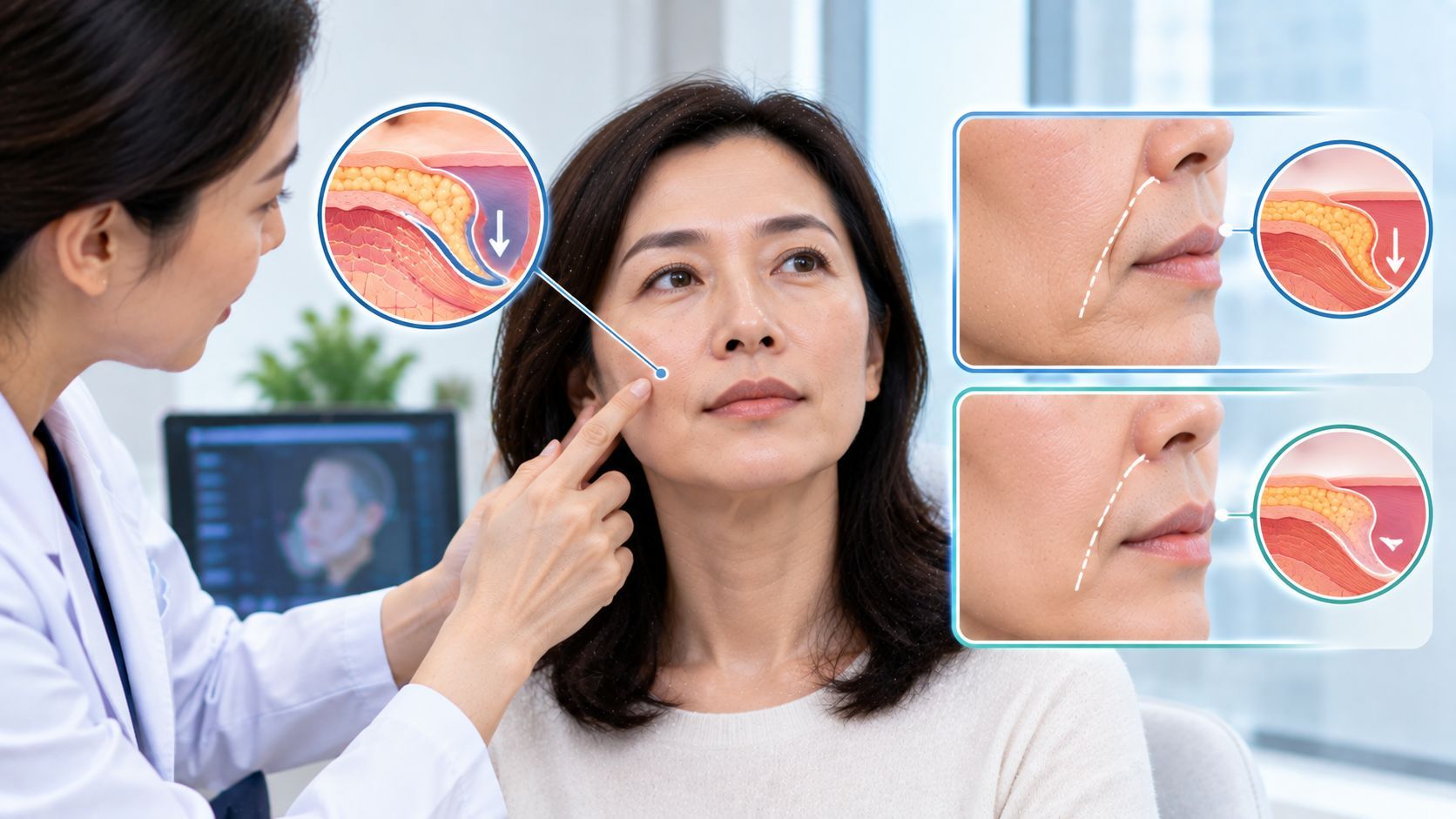
The lower eyelid contains orbital fat that helps cushion the eye. With aging, changes in the supporting tissues can make this fat more noticeable.
When you smile, contraction of the surrounding muscles can change the appearance of the lower eyelid.
However, not every under-eye bulge is caused by excess fat.
Swelling, filler, skin laxity, and the natural anatomy of the lower eyelid can produce similar visual effects.
Could Old Filler Make My Under-Eyes Look Worse When I Smile?
It is possible in some patients, particularly if filler has been placed directly in or around the tear trough or adjacent cheek area.
Hyaluronic acid filler can persist longer than expected in some individuals, and delayed swelling or contour changes can occasionally occur.
If you have previously received under-eye or cheek filler and notice:
- New puffiness
- Unevenness
- Firmness
- A bluish appearance
- Swelling that changes over time
- A contour that looks worse during facial movement
it is worth having the area professionally assessed rather than automatically adding more filler.
Ultrasound can sometimes help identify retained filler and assess its location when the treatment history or anatomy is unclear.
Would Under-Eye Filler Fix Wrinkles That Appear When I Smile?
Not necessarily.
This is an important distinction.
Filler primarily addresses volume-related concerns. It is not designed to stop the muscles responsible for dynamic facial movement.
If the main problem is a wrinkle that appears only when smiling, adding filler may not address the underlying muscle movement.
In some cases, excessive filler can actually make the lower eyelid area appear heavier or puffier.
That is why an assessment should determine whether the primary issue is:
- Dynamic wrinkles
- Hollowing
- Fat prominence
- Skin laxity
- Skin texture
- Swelling
- A combination
What Treatments May Help?
The appropriate treatment depends on what you see both at rest and during movement.
Botulinum toxin for selected dynamic wrinkles
Very small amounts of botulinum toxin may be used around the eye area in carefully selected patients to reduce certain dynamic wrinkles.
However, the lower eyelid is a delicate area. Excessive weakening of the muscles around the eye can potentially cause unwanted effects, including changes in lower-eyelid support or smile appearance.
Therefore, treatment should be conservative and performed by an appropriately qualified medical professional familiar with periocular anatomy.
Laser treatments for skin texture
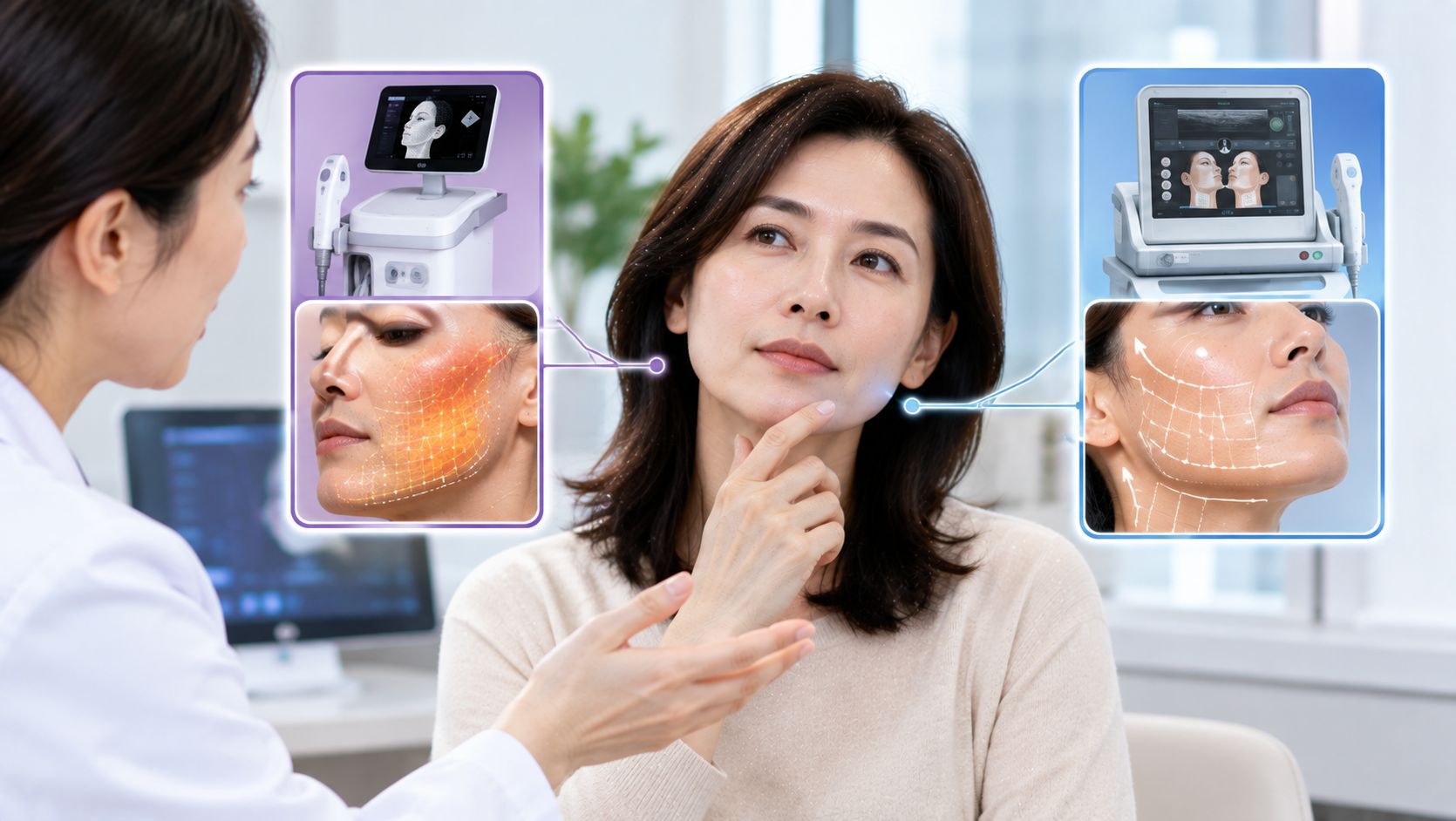
Certain fractional laser treatments can improve fine lines, pigmentation, and skin texture by stimulating controlled skin remodeling.
The appropriate laser and settings depend heavily on skin type and pigmentation risk.
RF or other energy-based treatments
Selected radiofrequency approaches may be used to improve skin quality and mild laxity. They are not equivalent to surgical lower-eyelid correction and results vary.
Skin-quality treatments
Some patients may benefit from treatments focused on hydration or dermal quality rather than adding volume.
Surgical evaluation
If prominent orbital fat or significant lower-eyelid laxity is the primary problem, an oculoplastic or appropriately qualified surgical consultation may be more relevant than injectable treatment.
What If My Under-Eyes Look Fine at Rest?
This is an important clue.
If the area looks relatively normal when relaxed but changes significantly when you smile, treatment should account for dynamic anatomy.
A clinician may assess your face:
- At rest
- With a gentle smile
- With a full smile
- From different angles
- Under consistent lighting
This helps distinguish a static structural problem from one that appears primarily during movement.
Why Lighting Can Make the Problem Look Worse
Under-eye concerns are extremely sensitive to lighting.
Overhead or directional light can create shadows beneath the lower eyelid and make a normal crease look like a deeper hollow.
Side lighting can emphasize texture.
Direct frontal lighting may make the same area appear considerably smoother.
Therefore, compare your under-eyes using similar lighting and photographs before deciding that a treatment has failed or that your anatomy has suddenly changed.
What Should International Patients Consider Before Under-Eye Treatment in Seoul?
If you are traveling to Seoul for periocular treatment, avoid scheduling multiple aggressive procedures immediately before a flight or major event.
Before treatment, ask the clinic:
- Is my concern a bag, hollow, wrinkle, or skin-quality problem?
- Does it appear mainly when I smile?
- Would filler actually address it?
- Could filler make the area look puffier?
- Would laser be appropriate for my skin type?
- Is there a pigmentation risk?
- Would a conservative approach be preferable?
- Do I need an oculoplastic assessment?
Bring photographs showing your under-eyes at rest and while smiling. This can be particularly useful when the problem is dynamic.
When Should Under-Eye Changes Be Medically Assessed?
Sudden or unusual changes should not automatically be treated as an aesthetic concern.
Seek medical assessment if you develop rapid swelling, significant pain, redness, vision changes, double vision, marked asymmetry, or skin discoloration, particularly after an injectable or energy-based procedure.
The eye area is anatomically sensitive, so unusual symptoms warrant appropriate evaluation.
Conclusion
Under-eyes that look worse when you smile are not necessarily a sign that you need filler.
Movement of the orbicularis oculi muscle can temporarily emphasize wrinkles, lower-eyelid fullness, shadows, and existing anatomical features. Thin skin, reduced elasticity, orbital fat, swelling, previous filler, and lighting can all contribute.
The most useful first step is to determine what changes when you smile and why. If the problem is primarily dynamic wrinkles, a carefully considered treatment may be different from what would be used for persistent bags or hollowness. If skin quality is the main concern, laser or other skin-focused approaches may be considered instead of adding volume.
For international patients seeking under-eye treatment in Seoul, a conservative consultation that examines the area both at rest and during smiling can help avoid treating the wrong problem.
Frequently Asked Questions
Why do my under-eye bags appear only when I smile?
Smiling contracts the muscles around the eyes and changes the position of the lower-eyelid tissues. This can temporarily make orbital fat, skin folds, or existing puffiness more prominent.
Do I need filler if my under-eyes look worse when I smile?
Not necessarily. Filler is primarily a volume-restoring treatment. If your main issue is dynamic wrinkling or muscle-related fullness, filler may not address the underlying cause.
Can Botox help under-eye wrinkles when I smile?
In selected patients, carefully administered botulinum toxin may reduce certain dynamic wrinkles. Because the muscles around the eye also contribute to eyelid and smile function, treatment requires particularly conservative planning.
Can old filler make my under-eyes look puffy when I smile?
It can contribute to contour changes in some patients. If you have previous under-eye or cheek filler and notice persistent or unusual fullness, professional assessment may help determine whether retained filler is involved.
Can laser improve under-eye wrinkles?
Certain fractional laser treatments can improve fine lines and skin texture, but suitability depends on the patient's skin type, pigmentation risk, skin condition, and the specific laser used.
Why do my under-eyes look different in photographs?
Lighting, camera angle, facial expression, and shadows can dramatically change the appearance of the lower eyelids. Compare photographs under consistent conditions before judging a change in your anatomy.