What Is the Best Korean Treatment for Loose Facial Skin After Weight Loss?
Introduction
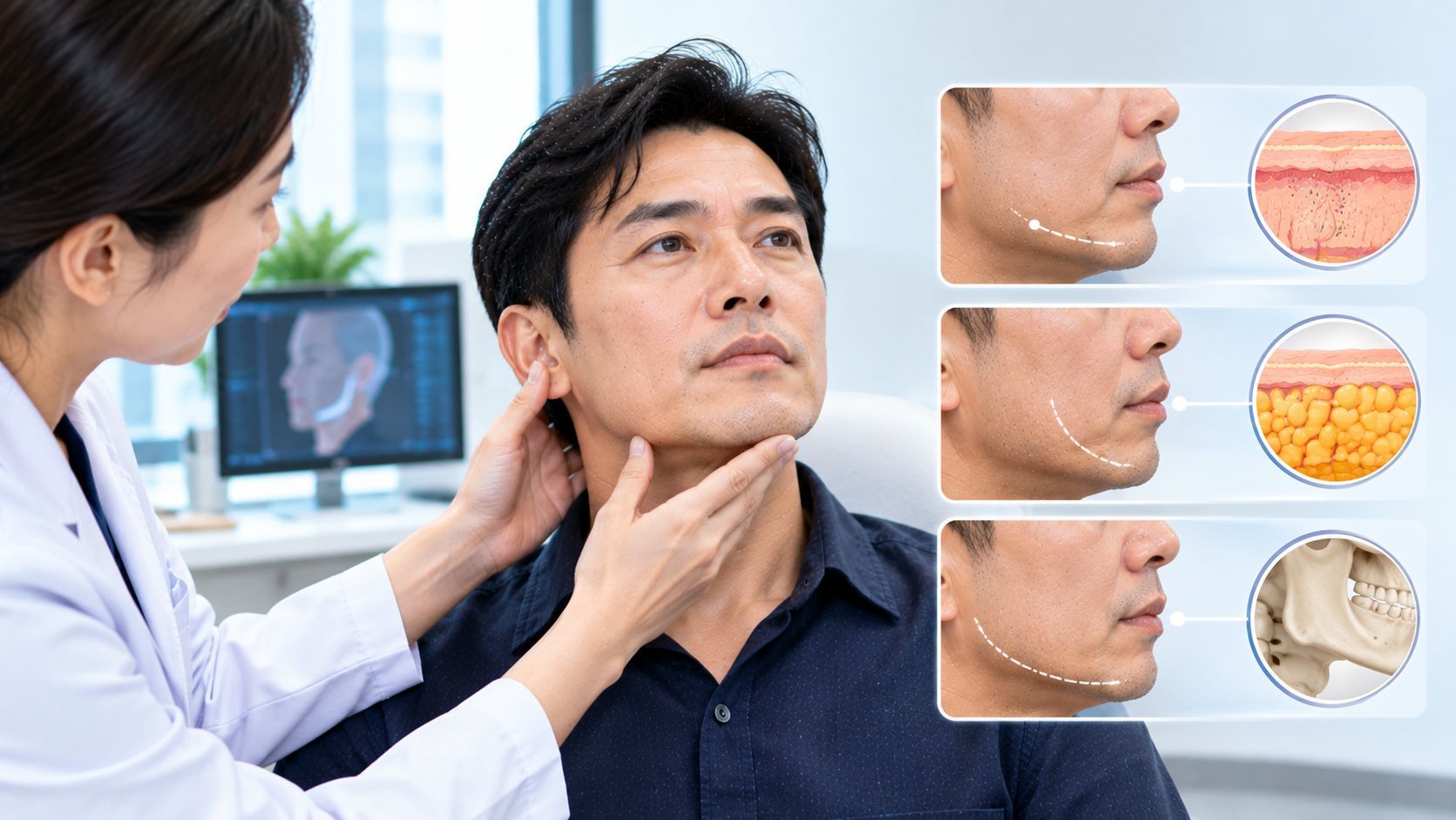
Losing a significant amount of weight can be a major achievement, but some people notice an unexpected change afterward: the face may look looser, flatter, or more aged. The cheeks can lose fullness, the jawline may appear less defined, and loose skin can become more noticeable around the lower face and neck. Research on substantial weight loss has found changes including facial volume loss and increased skin laxity, particularly around the mid-cheek and neck areas.
So, what is the best Korean treatment for loose facial skin after weight loss? There is no single treatment that is best for everyone. The right approach depends on whether the main problem is skin laxity, facial volume loss, poor skin quality, or a combination of these concerns. Korean dermatology clinics commonly use non-surgical approaches such as ultrasound or radiofrequency skin tightening, collagen-stimulating treatments, and carefully selected volume-restoring treatments.
Why Does Facial Skin Become Loose After Weight Loss?
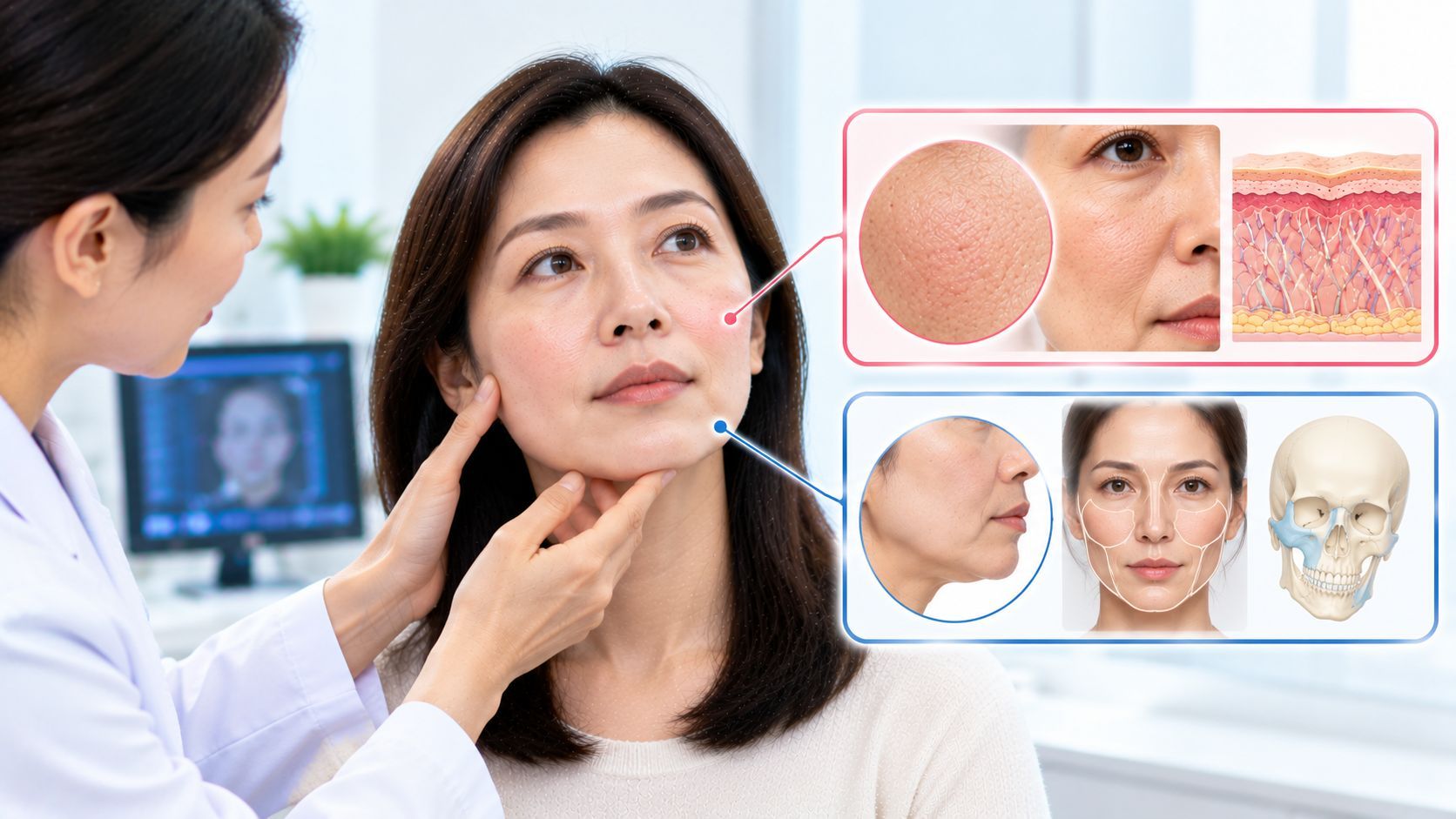
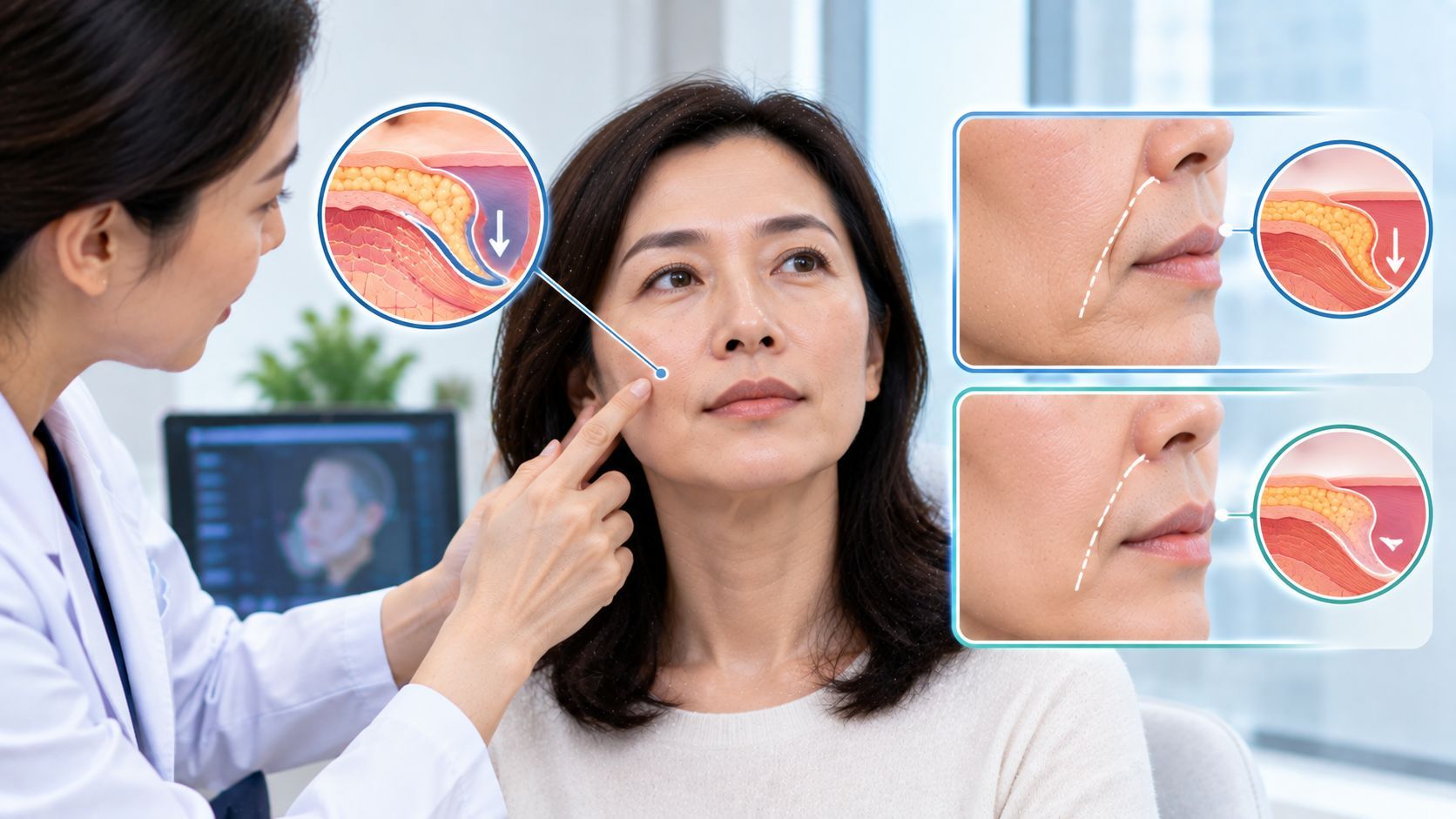
Loss of Facial Volume
Weight loss does not only reduce fat around the abdomen, arms, or legs. Facial fat compartments can also become smaller.
This may make the cheeks look flatter and reduce support around the lower face. When the underlying volume decreases, skin that previously appeared relatively firm may begin to look loose.
A 2024 systematic review found that substantial weight loss is associated with facial fat devolumization and increased skin laxity, contributing to an accelerated-aging appearance.
Reduced Skin Elasticity
Skin that has been stretched by higher facial volume may not immediately return to its previous shape after weight loss.
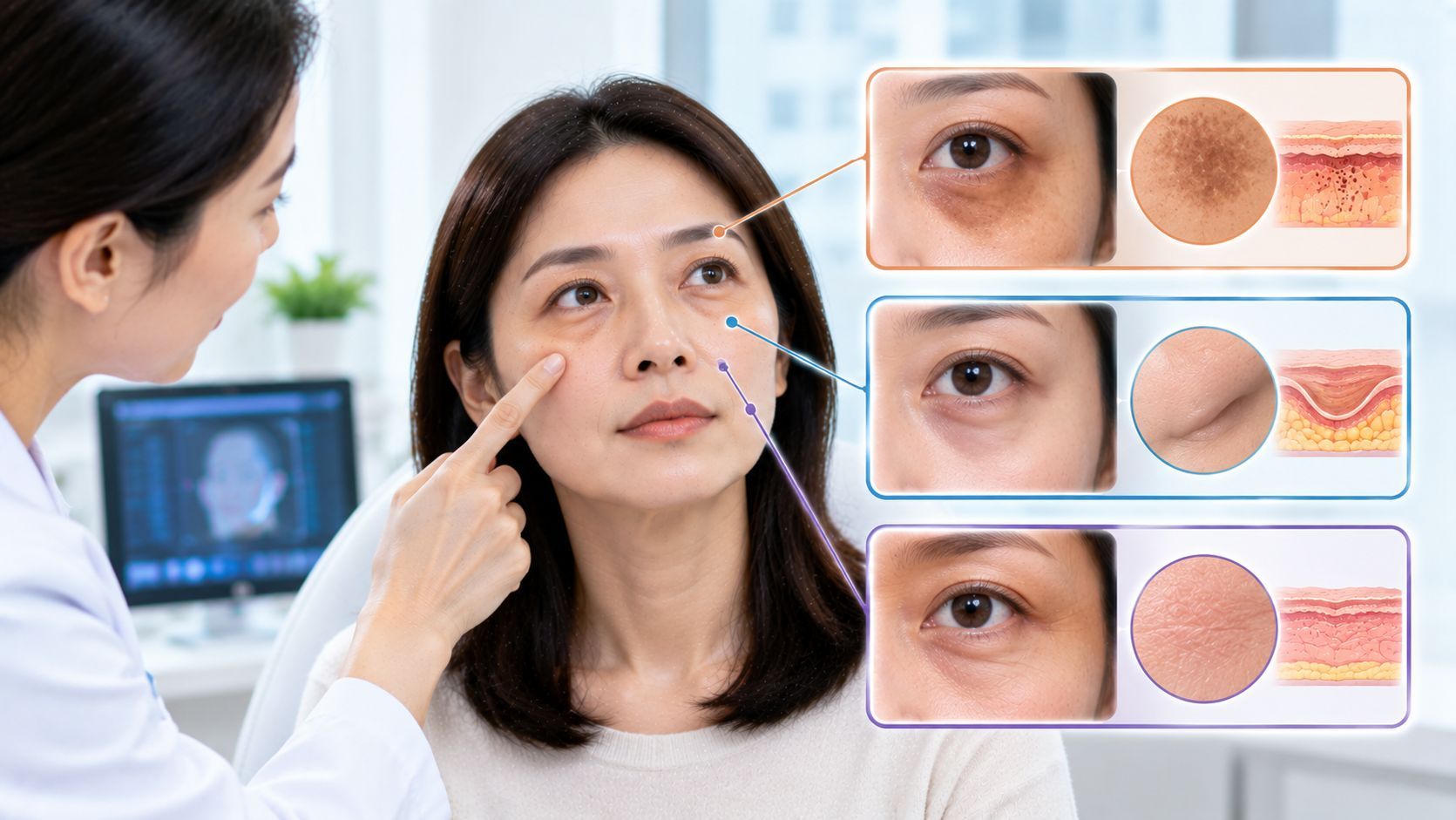
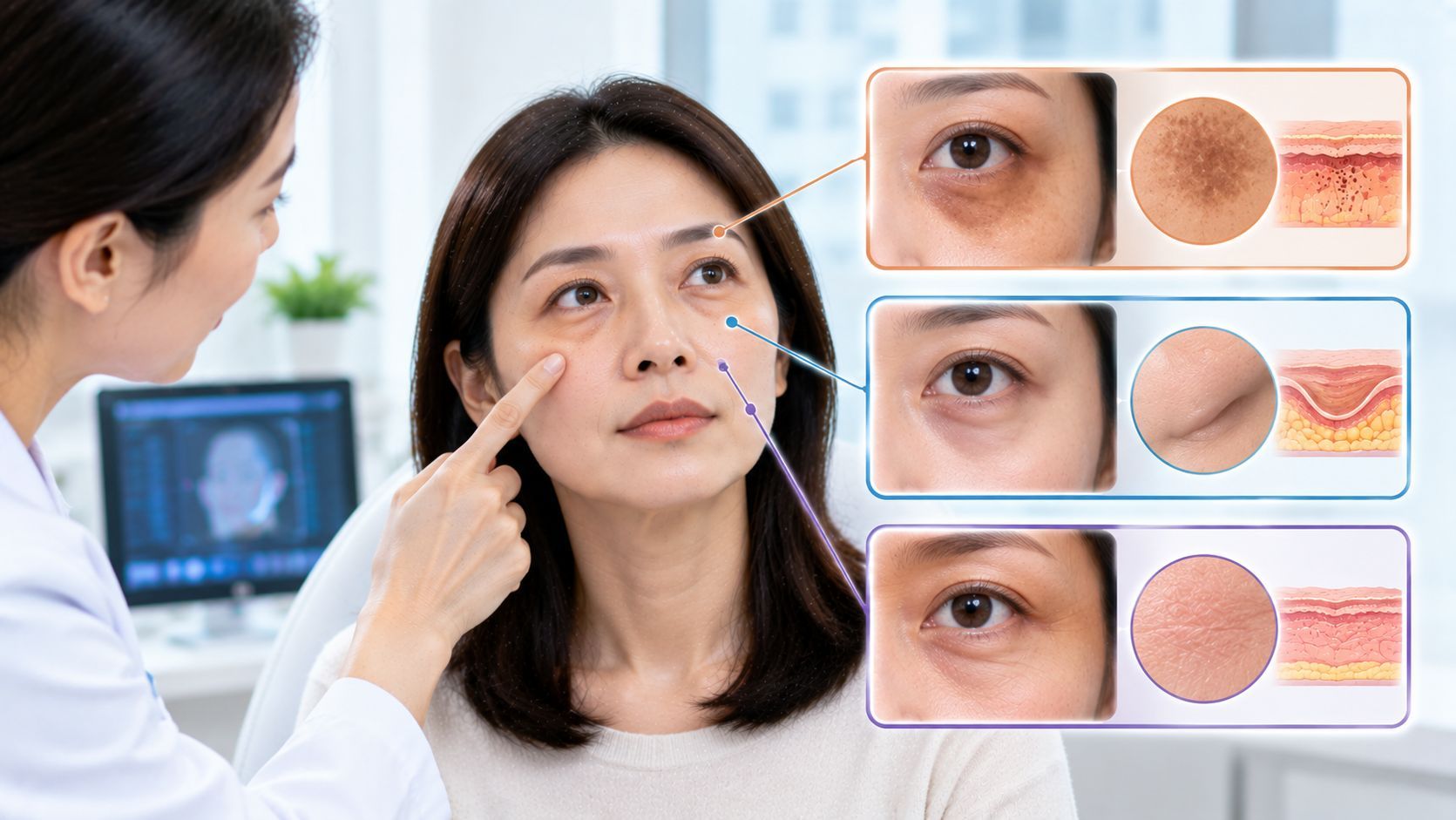
Collagen and elastin are important for firmness and elasticity. Age, sun exposure, genetics, smoking, and the speed and extent of weight loss can all influence how well skin contracts.
The Lower Face Can Look Heavier
After weight loss, some people notice more visible jowls or folds even though they have less overall facial fat.
This can happen because reduced cheek volume and skin laxity change facial proportions. The result may be a less defined jawline rather than simply “extra fat.”
What Is the Best Korean Treatment for Loose Facial Skin?
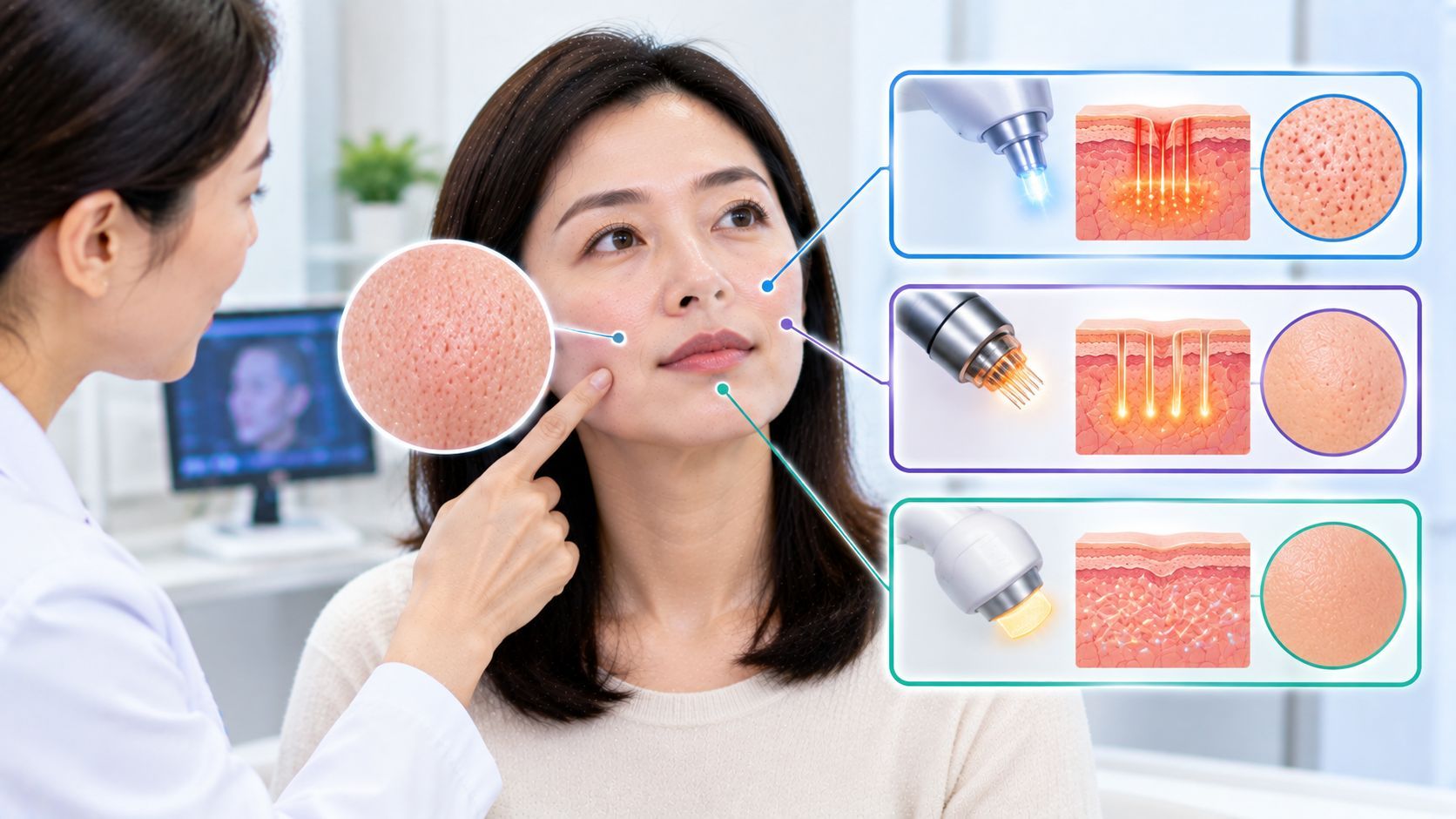
For mild to moderate loose facial skin after weight loss, non-surgical skin-tightening treatments may be appropriate. Common options include ultrasound-based treatments and radiofrequency technologies.
The best treatment should be selected after determining how much laxity exists and whether facial volume has also been lost.
The American Academy of Dermatology notes that non-invasive ultrasound and radiofrequency can produce gradual tightening, while larger amounts of loose skin may require a surgical approach for more dramatic correction.
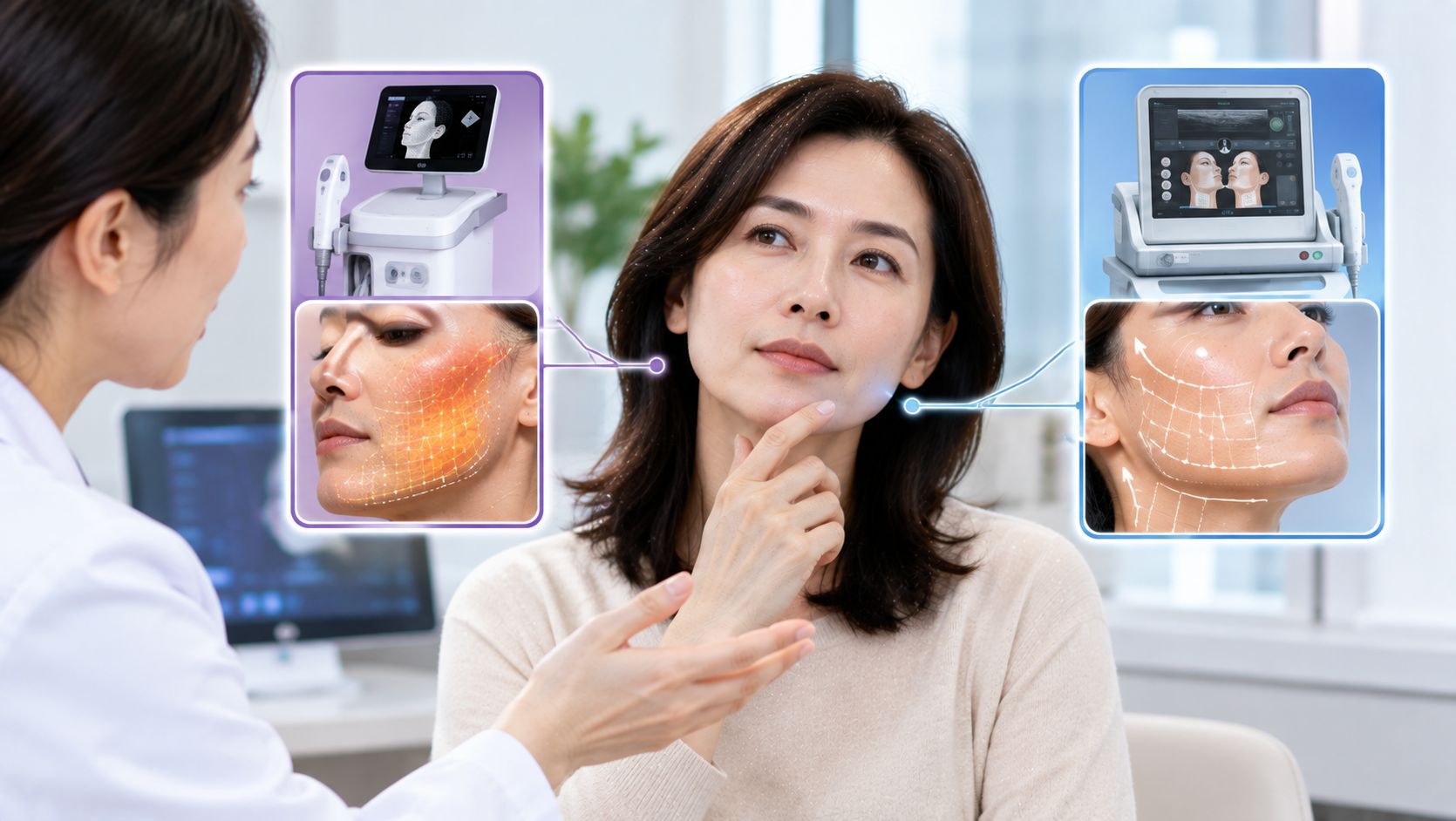
Ultrasound Skin Tightening
Ultrasound-based treatments use focused energy to heat targeted tissue layers and stimulate collagen remodeling.
They may be considered when the main concern is:
- Mild to moderate facial laxity
- Early jowling
- Less-defined jawline
- Lower-face sagging
- Mild neck laxity
One advantage is that ultrasound tightening does not add facial volume. This can be useful for someone who wants a firmer appearance without making the face look fuller.
However, it is not a substitute for removing significant excess skin.
Radiofrequency Skin Tightening
Radiofrequency treatments use controlled heat to stimulate changes within the skin and underlying tissues.
They may be considered for people with:
- Mild to moderate loose skin
- Reduced skin firmness
- Fine lines accompanying laxity
- Lower-face or neck concerns
- Poor skin elasticity after weight loss
The AAD reports that non-invasive radiofrequency can produce gradual tightening as collagen remodeling develops over time.
In Korean dermatology clinics, the specific RF technology and treatment depth can vary considerably, so the device name alone should not determine whether it is appropriate.
What If My Face Is Loose AND Hollow?
This is one of the most important considerations after major weight loss.
If you have both loose skin and facial volume loss, tightening alone may not produce the appearance you want.
For example, imagine that the cheeks have become noticeably flatter while the lower-face skin has become looser. Tightening the skin may improve laxity, but it cannot fully replace lost facial volume.
Recent guidance on facial changes associated with GLP-1-related weight loss also emphasizes that patients may have several concerns at once, including midface volume loss, hollowing, laxity, wrinkles, and changes in skin quality. Multimodal treatment may therefore be appropriate for selected patients.
Could Fillers Be Part of the Treatment?
Possibly.
If weight loss has created significant volume loss, a dermatologist may consider carefully placed hyaluronic acid filler or another appropriate volumizing treatment.
The goal should not necessarily be to “fill the loose skin.” Instead, treatment may focus on restoring strategic structural support in areas where volume has been lost.
Potential areas can include:
- Mid-cheek
- Lateral cheek
- Temples
- Chin
- Certain areas around the lower face
The exact location depends on your facial anatomy.
Too much filler can create an unnatural or heavy appearance, so post-weight-loss facial rejuvenation generally requires a conservative approach.
What About Collagen-Stimulating Treatments?
Collagen-stimulating treatments may be useful when the problem is more about skin quality and gradual loss of firmness rather than major structural volume loss.
Depending on the patient's condition, a dermatologist may discuss options designed to stimulate collagen or improve skin quality.
These treatments generally work gradually rather than creating an immediate facelift-like effect.
They may be particularly useful when combined thoughtfully with other treatments rather than used as a standalone solution for substantial loose skin.
Can Korean Skin Tightening Remove Excess Skin?
This is an important limitation.
Non-surgical treatments can improve skin firmness and mild-to-moderate laxity, but they cannot physically remove a large amount of excess skin.
The AAD explains that surgical lifting procedures provide the most dramatic lifting results, while non-surgical options generally provide more modest improvement and less downtime.
After massive weight loss, some patients develop substantial redundant skin and tissue deflation. In those cases, facelift or neck-lift surgery may need to be discussed with a qualified plastic surgeon.
Should You Wait Until Your Weight Stabilizes?
Often, it is sensible to discuss timing before starting an extensive facial rejuvenation plan.
If you are still losing substantial weight, your facial volume and skin laxity may continue changing. A treatment plan made too early may need to be adjusted later.
This does not necessarily mean you must postpone every treatment until your weight is completely unchanged. Instead, a dermatologist can evaluate where you are in your weight-loss journey and decide whether a conservative treatment makes sense now.
Recent clinical guidance specifically highlights the importance of treatment timing during the weight-loss journey.
How Do Korean Clinics Usually Approach Loose Skin After Weight Loss?
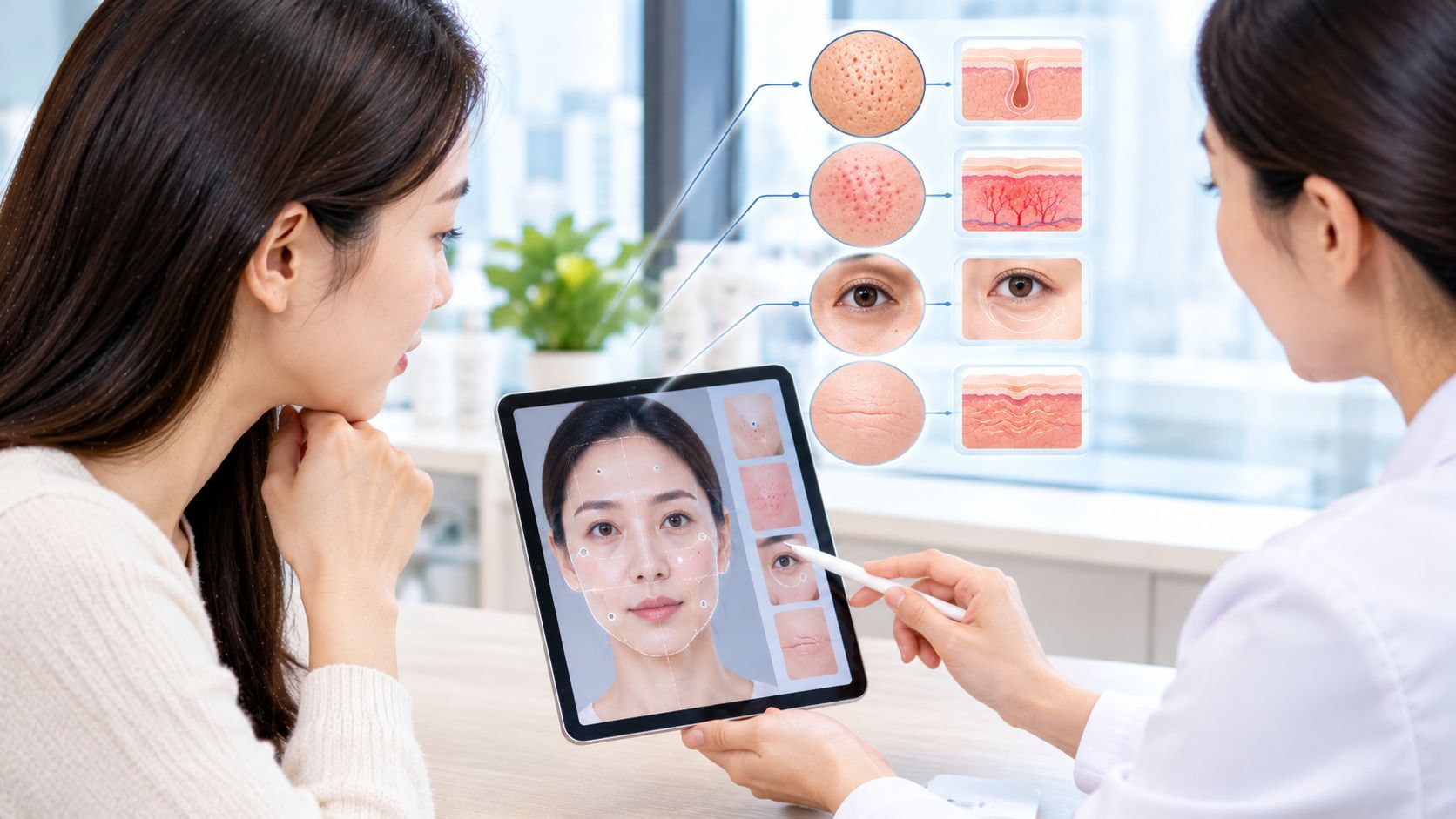
A good consultation should look beyond the phrase “loose skin.”
The dermatologist may assess:
- How much skin laxity is present
- Where facial volume has been lost
- Whether the cheeks look hollow
- The degree of jowling
- Jawline definition
- Neck laxity
- Skin texture and collagen quality
- Whether your weight is still changing
The treatment may then involve one procedure or a staged combination.
For an international patient, it is also useful to ask how many sessions may be recommended, when results should become visible, whether follow-up is available, and what recovery is expected before flying home.
What Results Should You Expect?
Results depend heavily on the amount of laxity and volume loss.
Someone with mild looseness may see a noticeable improvement from non-surgical tightening. Someone with substantial excess skin may see only limited improvement.
Energy-based tightening generally produces gradual results because collagen remodeling takes time. The AAD notes that ultrasound and radiofrequency treatments may show progressive tightening over months rather than producing an immediate surgical-level lift.
Risks and Limitations
Every aesthetic procedure has potential risks.
Depending on the treatment, these can include temporary redness, swelling, tenderness, sensitivity, bruising, uneven results, burns or other energy-related complications, or dissatisfaction with the degree of improvement.
Injectable treatments have their own risks, including swelling, bruising, asymmetry, infection, and, rarely, serious vascular complications.
Treatment should therefore be performed after an individualized medical assessment rather than selected solely because a particular device or procedure is popular in Korea.
Conclusion
The best Korean treatment for loose facial skin after weight loss depends on what actually changed in your face.
If mild-to-moderate laxity is the main concern, ultrasound or radiofrequency tightening may be appropriate. If weight loss has also caused hollow cheeks or other volume loss, carefully planned volume restoration may be considered. Collagen-stimulating treatments can also play a role in improving skin quality.
For significant excess skin, however, non-surgical treatments may not provide enough correction, and a surgical consultation may be more appropriate.
The most effective approach is therefore not simply “the strongest tightening treatment.” It is a treatment plan based on your skin laxity, facial volume, anatomy, skin quality, and weight stability.
FAQs
Is skin tightening good after major weight loss?
It can be helpful for mild-to-moderate facial laxity. However, substantial excess skin may require surgical lifting for a more significant correction.
Can Thermage or other RF treatments fix loose facial skin after weight loss?
RF may improve skin firmness and stimulate collagen, but results depend on the degree of laxity. It cannot remove large amounts of excess skin.
Is Ultherapy suitable for a face that became loose after losing weight?
It may be considered when laxity is the primary concern. If the face is also very thin or hollow, the dermatologist should evaluate whether tightening alone could leave the face looking less full.
Should I get filler or skin tightening first?
There is no universal order. The decision depends on whether volume loss or laxity is the dominant problem. Some patients benefit from a staged combination approach.
Can loose facial skin tighten naturally after weight loss?
Some improvement may occur as the body adjusts, but the degree of natural skin contraction varies significantly. Age, genetics, amount of weight lost, skin elasticity, and duration of weight gain can all influence the result.
Is Korean dermatology suitable for post-weight-loss facial rejuvenation?
Korean dermatology clinics offer many non-surgical aesthetic technologies and combination approaches. For international patients, the important step is choosing a qualified medical provider who evaluates your individual anatomy rather than recommending a procedure solely because it is popular.