Can Botox Lift Downturned Mouth Corners?
Introduction
Yes, Botox can improve downturned mouth corners in some people, particularly when the downward position is partly caused by strong activity of the depressor anguli oris (DAO) muscles. Botox works by temporarily reducing muscle activity, which can decrease the downward pull on the corners of the mouth. However, it does not physically add volume or tighten significantly loose skin, so it is not the right solution for every type of downturned mouth.
The key is determining whether your mouth looks downward mainly because of muscle activity, marionette lines, volume loss, skin laxity, or a combination of these changes. The treatment that makes sense depends on that underlying cause.
How Does Botox Lift the Corners of the Mouth?
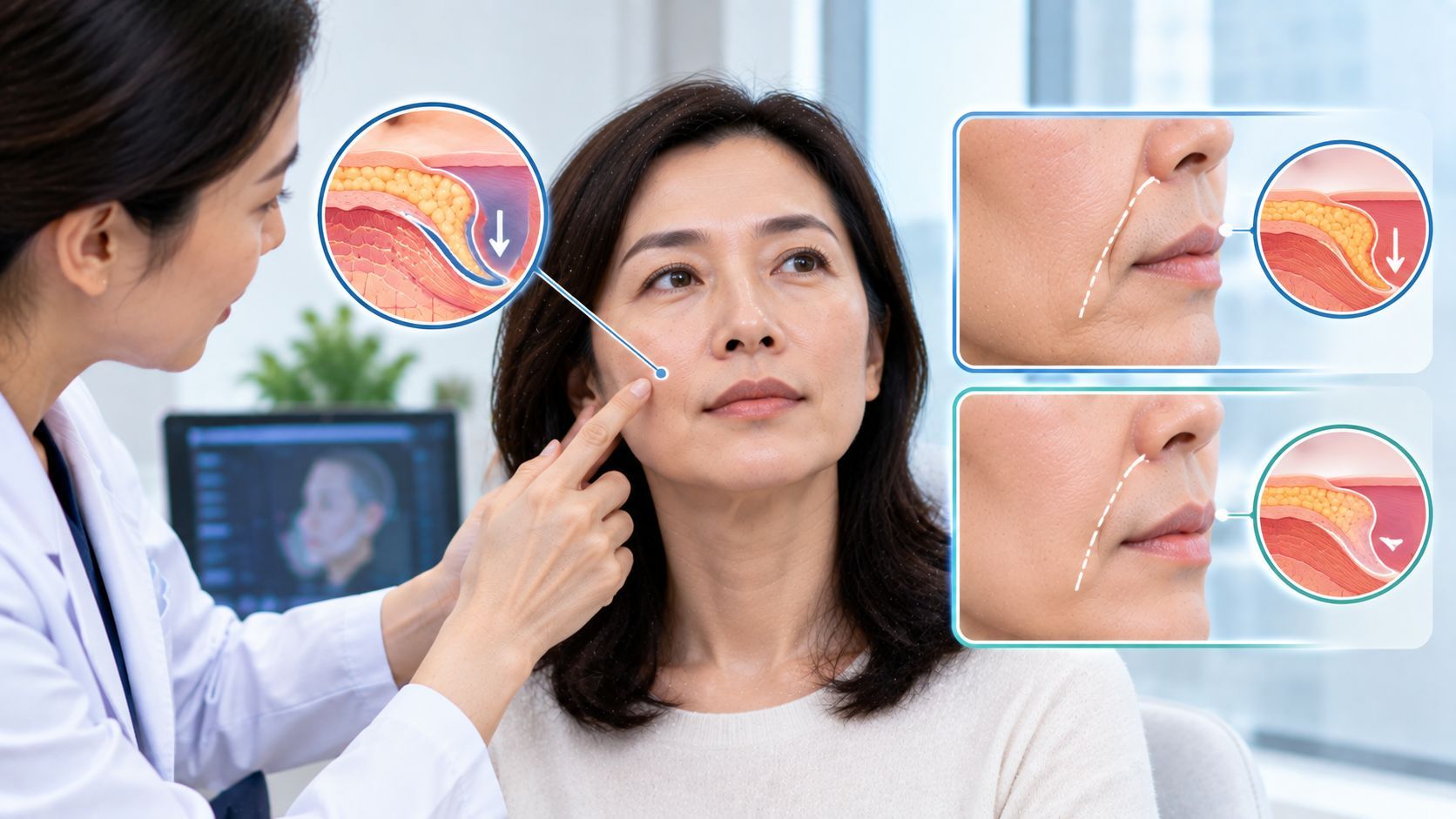
The DAO muscles are located around the lower corners of the mouth and help pull the mouth downward.
When these muscles are particularly active, they can contribute to a resting expression that looks:
- Sad
- Tired
- Serious
- Unhappy
- Downturned
Botox does not literally lift the mouth like a surgical procedure. Instead, it temporarily reduces the downward muscular force.
If the DAO is a significant contributor, reducing its activity can allow the muscles that naturally elevate the mouth corner to have relatively greater influence.
This is why the procedure is sometimes described as a nonsurgical mouth-corner lift.
Who May Benefit Most From DAO Botox?
Botox tends to make the most sense when the mouth corners are noticeably pulled downward by muscle activity.
One simple clue is movement.
If you can see the corners pulling downward when you speak, frown, or make certain expressions, muscle activity may be contributing.
Another clue is that the corners appear relatively normal when the surrounding tissues are supported, but become noticeably downward-directed when the muscles contract.
A professional examination is more reliable than trying to diagnose this yourself.
When Botox May Not Be Enough
Not every downturned mouth is primarily a muscle problem.
Deep Marionette Lines
Marionette lines are folds extending downward from the corners of the mouth toward the chin.
If these are deep, simply relaxing the DAO may not remove the fold.
Volume Loss
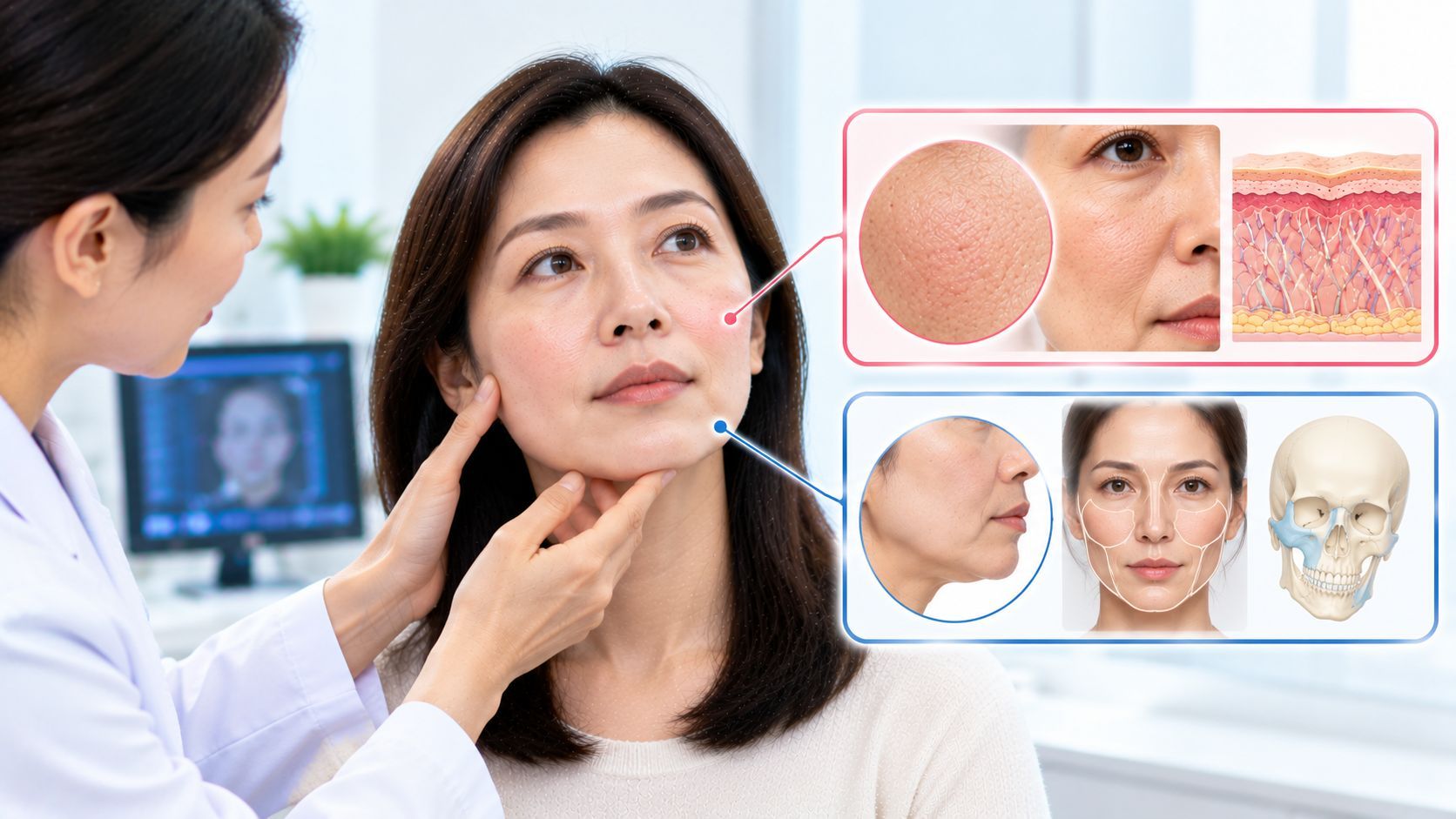
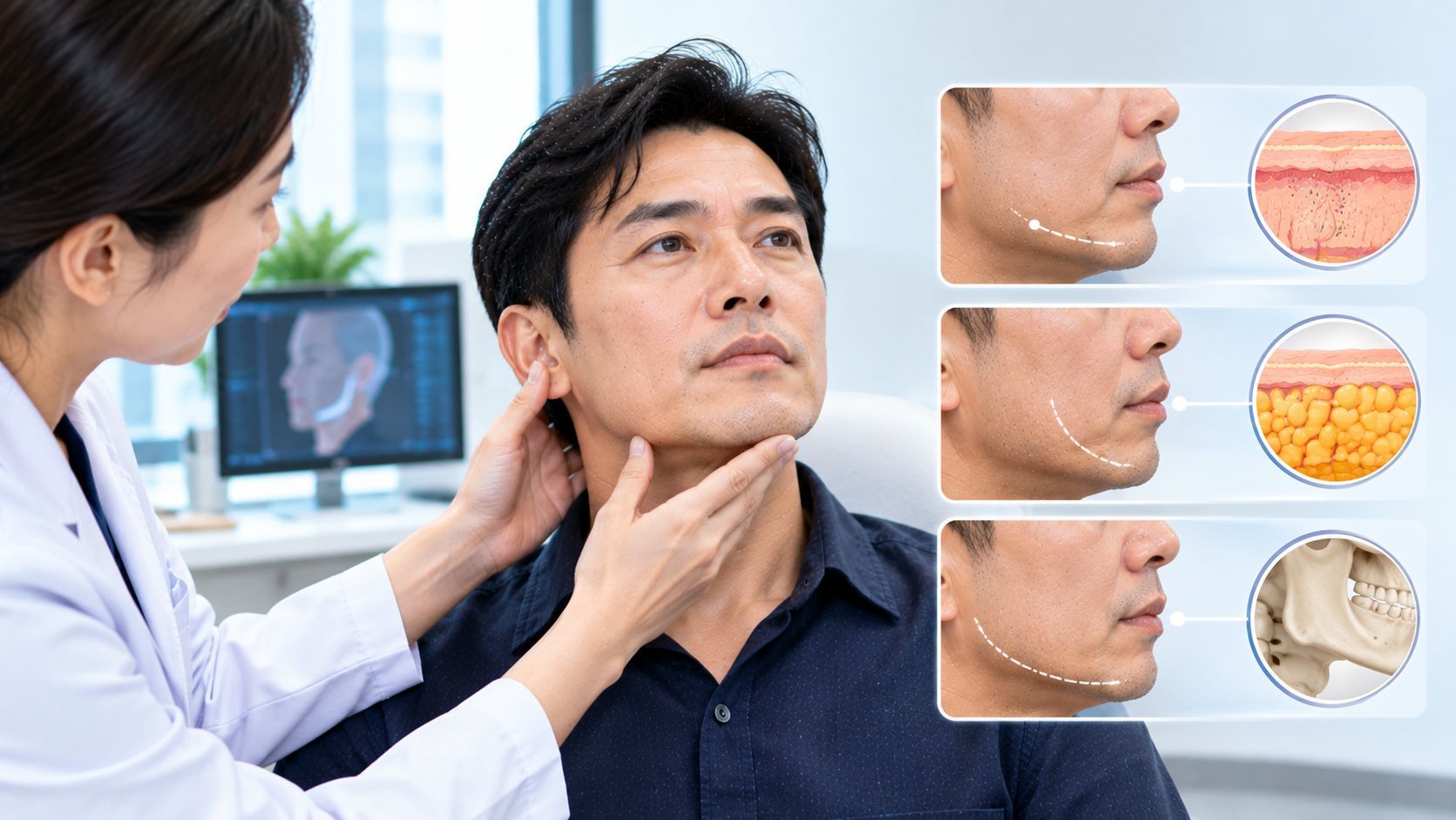
Age-related changes in facial fat and deeper supporting structures can alter the shape of the lower face.
In these cases, restoring carefully selected volume may be considered, although lip filler is not automatically necessary.
Skin Laxity
If the surrounding skin has become loose, Botox cannot tighten the skin directly.
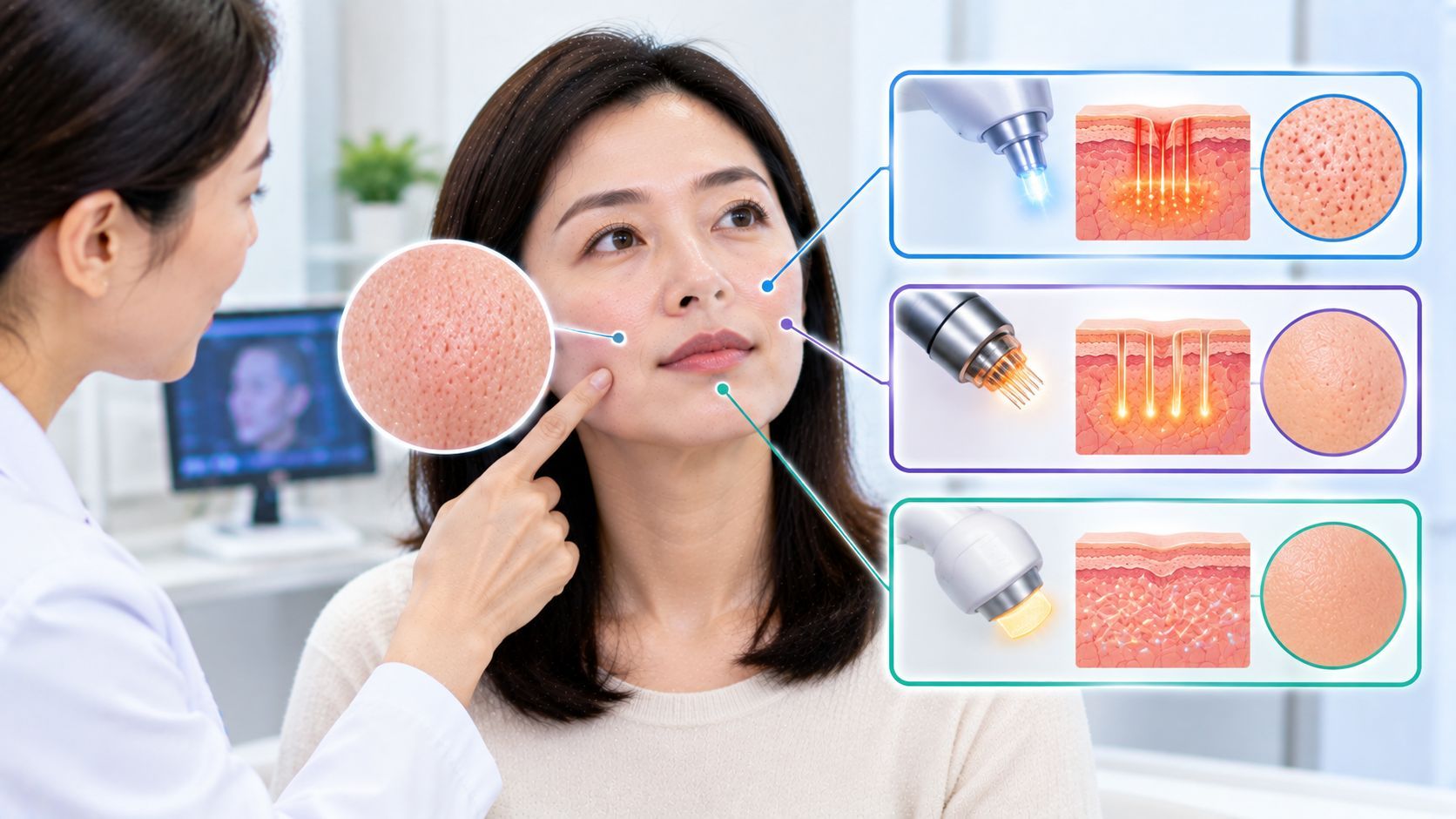
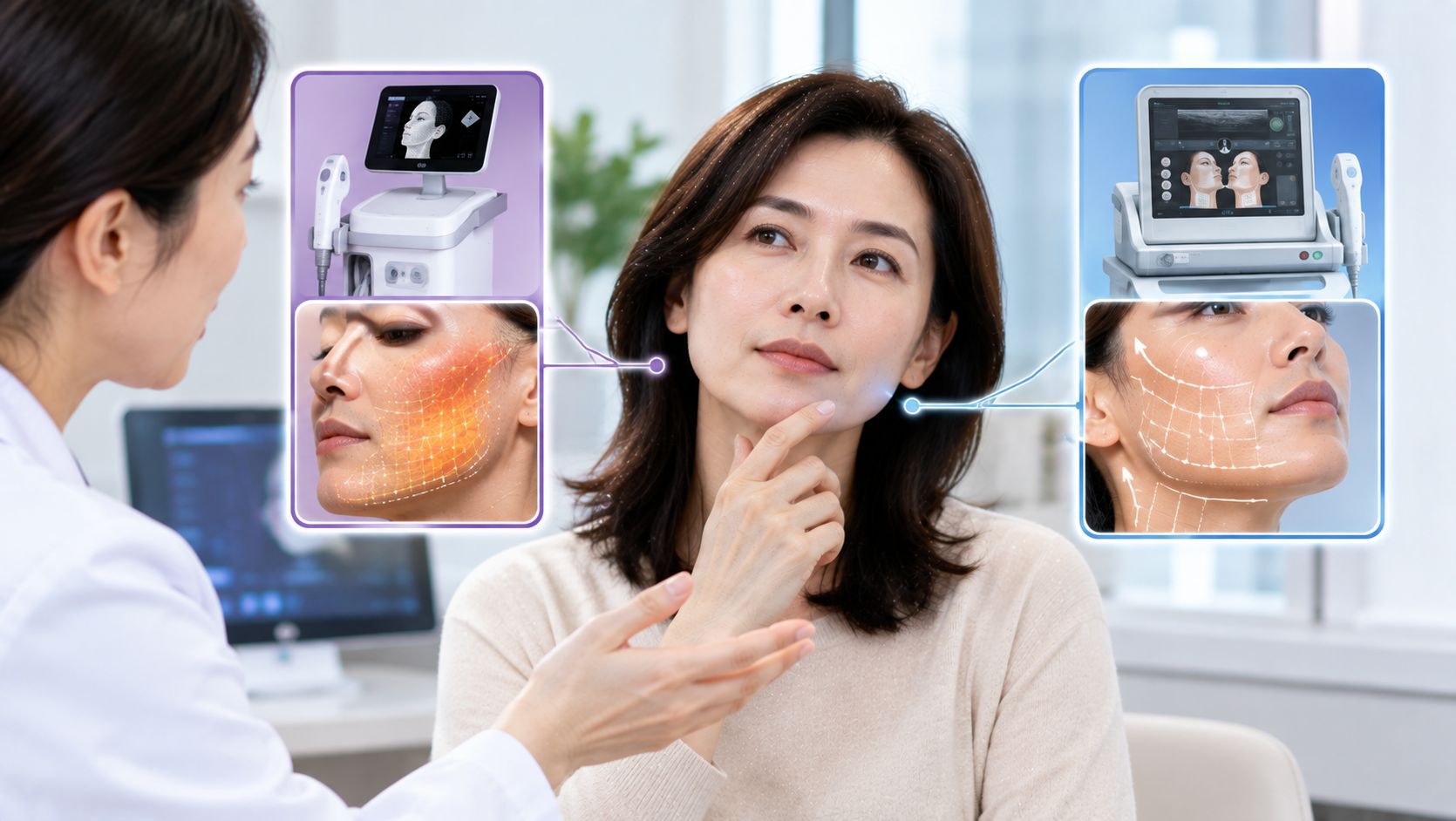
Laser, radiofrequency, other tightening approaches, or—in more advanced cases—surgical treatment may be considered depending on the anatomy.
Lower-Face Descent
When tissue has descended significantly with age, the mouth corners may be affected by broader changes throughout the lower face.
DAO Botox alone may then produce only a subtle change.
What Does the Treatment Involve?
DAO Botox is generally a relatively quick office procedure.
During consultation, the clinician evaluates:
- Your resting mouth position
- How the corners move during expression
- DAO activity
- The surrounding lower-lip muscles
- Marionette lines
- Chin shape and movement
- Overall lower-face balance
Small amounts of Botox may then be placed in carefully selected locations.
The exact dose and injection pattern should not be standardized for everyone because facial anatomy varies.
Why Is Lower-Face Botox Different From Forehead Botox?
The lower face contains many closely interacting muscles.
The muscles around the mouth are involved in:
- Smiling
- Speaking
- Eating
- Drinking
- Lower-lip movement
- Facial expressions
Because of this, excessive or inaccurately placed Botox can affect neighboring muscles.
Possible unwanted effects can include temporary asymmetry, altered lower-lip movement, difficulty with certain expressions, or an unnatural smile.
Anatomical studies emphasize the close relationship between the DAO and neighboring perioral muscles, which helps explain why precise placement matters.
Can Botox Make the Mouth Look More Balanced?
Sometimes.
If one DAO is more active than the other, carefully targeted treatment may improve asymmetry.
However, facial asymmetry is often multifactorial. Differences in bone structure, teeth, soft tissue, muscle activity, and previous cosmetic procedures can all contribute.
Therefore, Botox should not automatically be assumed to correct every uneven mouth.
How Long Does DAO Botox Last?
Botox effects are temporary.
Muscle activity generally begins changing over the first several days, with the effect becoming more apparent over the following weeks. The duration varies between individuals and depends on factors such as the product, dose, muscle activity, and individual response.
As the effect gradually wears off, the downward muscle activity returns.
This means DAO Botox is a maintenance treatment, not a permanent correction.
What If My Mouth Still Looks Downturned After Botox?
If the muscle component has been adequately treated but the mouth still looks downward, the remaining appearance may be coming from another source.
A follow-up assessment can distinguish between:
- Residual muscle activity
- Marionette lines
- Volume deficiency
- Skin laxity
- Lower-face descent
- Chin anatomy
This distinction is important because increasing the Botox dose is not necessarily the answer.
If the underlying problem is volume loss, additional Botox will not replace volume. If the issue is loose skin, Botox will not tighten it.
Can You Combine Botox With Other Treatments?
Potentially, yes.
A comprehensive lower-face treatment plan might combine different approaches according to the cause.
Botox + Skin Tightening
For someone with both DAO activity and mild skin laxity, Botox may address muscle movement while a tightening treatment targets the surrounding tissue.
Botox + Skin Resurfacing
If fine lines and poor skin texture are also present, resurfacing may be considered.
Botox + Carefully Selected Filler
In some patients, the mouth corner is affected by both muscle activity and structural volume loss. A clinician may consider treating both components.
Importantly, this does not mean filler must be placed in the lips.
Botox + Chin Treatment
If chin contraction or an orange-peel-like chin texture contributes to the appearance, the clinician may evaluate the mentalis muscle separately.
The treatment plan should be based on the anatomy rather than automatically combining procedures.
Can Botox Completely Reverse Aging Around the Mouth?
Usually not.
Botox is particularly useful for dynamic muscular components.
It is much less capable of correcting:
- Significant skin laxity
- Deep folds
- Major volume loss
- Advanced tissue descent
- Prominent fat compartments
- Structural skeletal changes
This is why a consultation should distinguish between a muscle problem and a structural aging problem.
What Are the Risks?
Common temporary effects may include:
- Redness
- Tenderness
- Bruising
- Mild swelling
Because the injection is near important facial muscles, there can also be temporary unwanted changes in movement or asymmetry.
The lower face is particularly sensitive to small differences in muscle activity.
If you experience unusual weakness, difficulty swallowing, breathing problems, or significant facial dysfunction after treatment, seek medical attention promptly.
What Should You Ask a Seoul Clinic?
If you are considering DAO Botox in Seoul, especially as an international patient, ask the clinician to assess your mouth both at rest and during movement.
Useful questions include:
- Is my DAO muscle actually causing my downturned mouth?
- Do I have significant marionette lines?
- Would Botox alone be enough?
- Could treatment affect my smile or lower-lip movement?
- How much movement do you intend to preserve?
- Would treating the skin or surrounding lower face make a difference?
- What happens if the result is asymmetric?
- How long should I expect the effect to last?
If you have had previous Botox or filler, provide the clinic with those treatment details whenever possible.
When Should You Avoid Assuming It Is Cosmetic Aging?
A suddenly changing mouth position, new facial weakness, numbness, severe asymmetry, difficulty speaking, or other neurological symptoms should not simply be treated as an aesthetic issue.
Sudden facial weakness or other acute neurological symptoms require prompt medical evaluation.
Conclusion
Botox can lift or improve the appearance of downturned mouth corners when excessive DAO muscle activity is an important part of the problem. It works by temporarily reducing the downward pull of the muscle rather than physically lifting or adding volume to the mouth.
If the main cause is deep marionette lines, volume loss, skin laxity, or tissue descent, Botox may provide only limited improvement. In those situations, another treatment—or a combination of treatments—may be more appropriate.
The most useful question is therefore not simply “Can Botox lift my mouth corners?” but “How much of my downturned mouth is caused by muscle activity?”
FAQs
Does Botox really lift downturned mouth corners?
It can create a subtle lifting effect in selected patients by reducing downward DAO muscle activity. It is not a surgical lift and cannot correct every cause of a downturned mouth.
How quickly does DAO Botox work?
The effect develops gradually rather than immediately. The exact timing varies according to the individual, product, dose, and muscle response.
Can DAO Botox change my smile?
It can temporarily affect lower-face movement if neighboring muscles are influenced. Conservative treatment and accurate anatomical placement are important.
Is DAO Botox better than filler for downturned mouth corners?
Neither is universally better. Botox primarily addresses muscle activity, while filler addresses volume and structural contour. The appropriate choice depends on the underlying cause.
Can I get DAO Botox without lip filler?
Yes. DAO Botox does not require lip filler. If your concern is specifically downturned corners, the treatment can be evaluated independently of lip augmentation.
How long does a mouth-corner Botox treatment last?
The effect is temporary and gradually wears off as muscle activity returns. Duration varies between patients.