Why Are the Corners of My Mouth Starting to Turn Downward?
Introduction
If the corners of your mouth are beginning to point downward, it does not necessarily mean that you are suddenly developing deep wrinkles or losing a large amount of facial volume. A downward-turning mouth is usually the result of several changes happening together, including muscle activity, skin aging, loss of structural support, soft-tissue descent, and changes around the chin and jawline. The aging perioral region can develop downturned corners, marionette lines, chin irregularities, lip thinning, and other changes at the same time.
The good news is that treatment does not have to mean immediately putting filler into your lips. Depending on the cause, options may include Botox, skin resurfacing, skin-quality treatments, tightening procedures, filler outside the lips, or surgical approaches for more advanced structural aging.
What Causes the Corners of the Mouth to Turn Down?
The corners of the mouth are influenced by several muscles and surrounding facial structures. One particularly important muscle is the depressor anguli oris (DAO), which pulls the corners of the mouth downward.
When DAO activity is prominent, the mouth can appear more downturned, tired, stern, or sad even when your facial expression is neutral. Anatomical studies show that the DAO is located close to several other muscles, which is one reason precise treatment is important.
But muscle activity is only part of the picture.
1. Changes in Muscle Activity
Repeated downward movement of the mouth corners can gradually contribute to a more noticeable resting position.
This can be particularly visible when the face is relaxed. You may notice that the corners look slightly downward even though you are not frowning.
2. Loss of Skin Elasticity
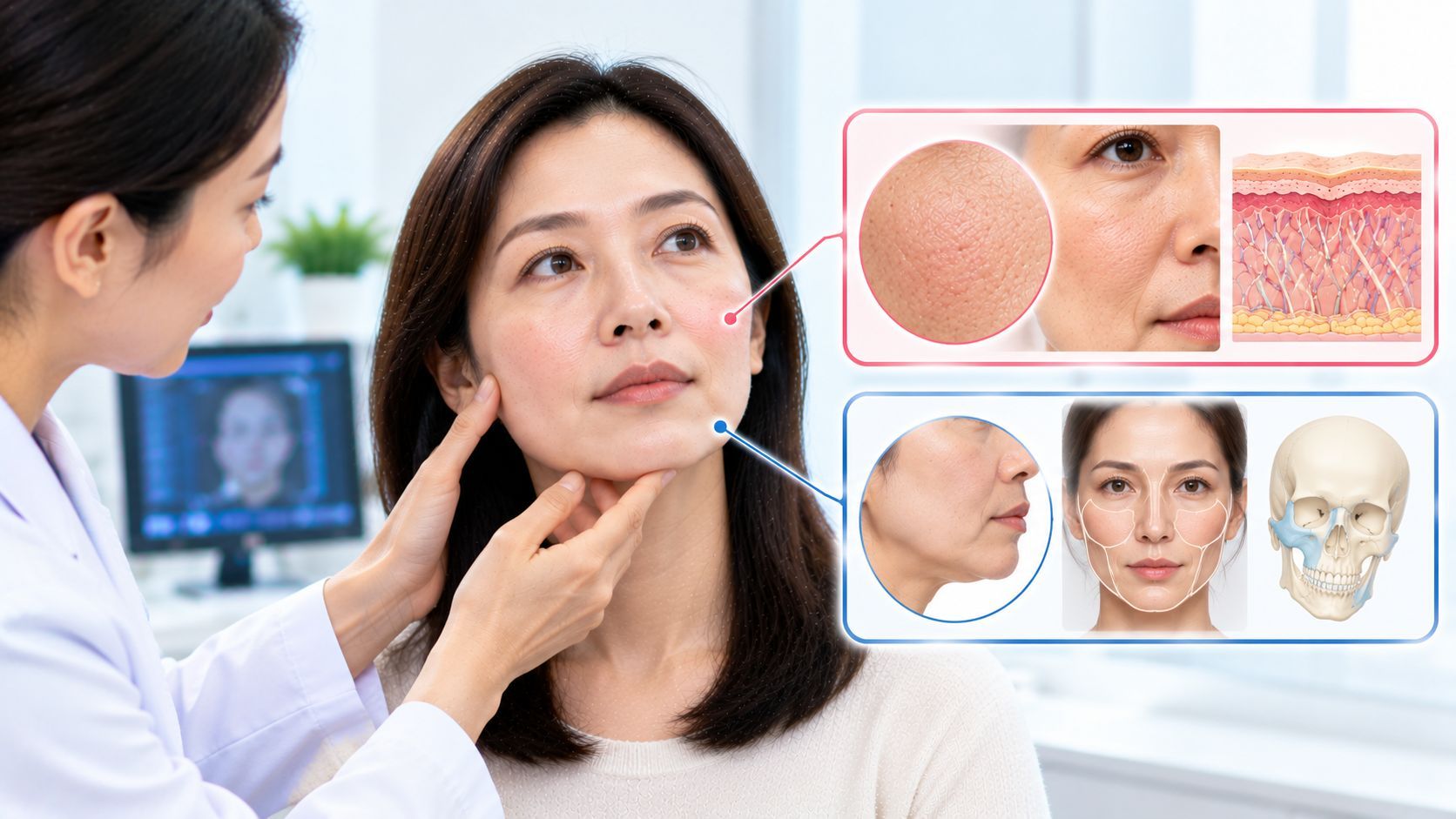
As collagen and elastin change with age, the skin around the mouth becomes less resilient.
The lower face can consequently look less supported, making the corners appear lower.
3. Changes in Facial Volume
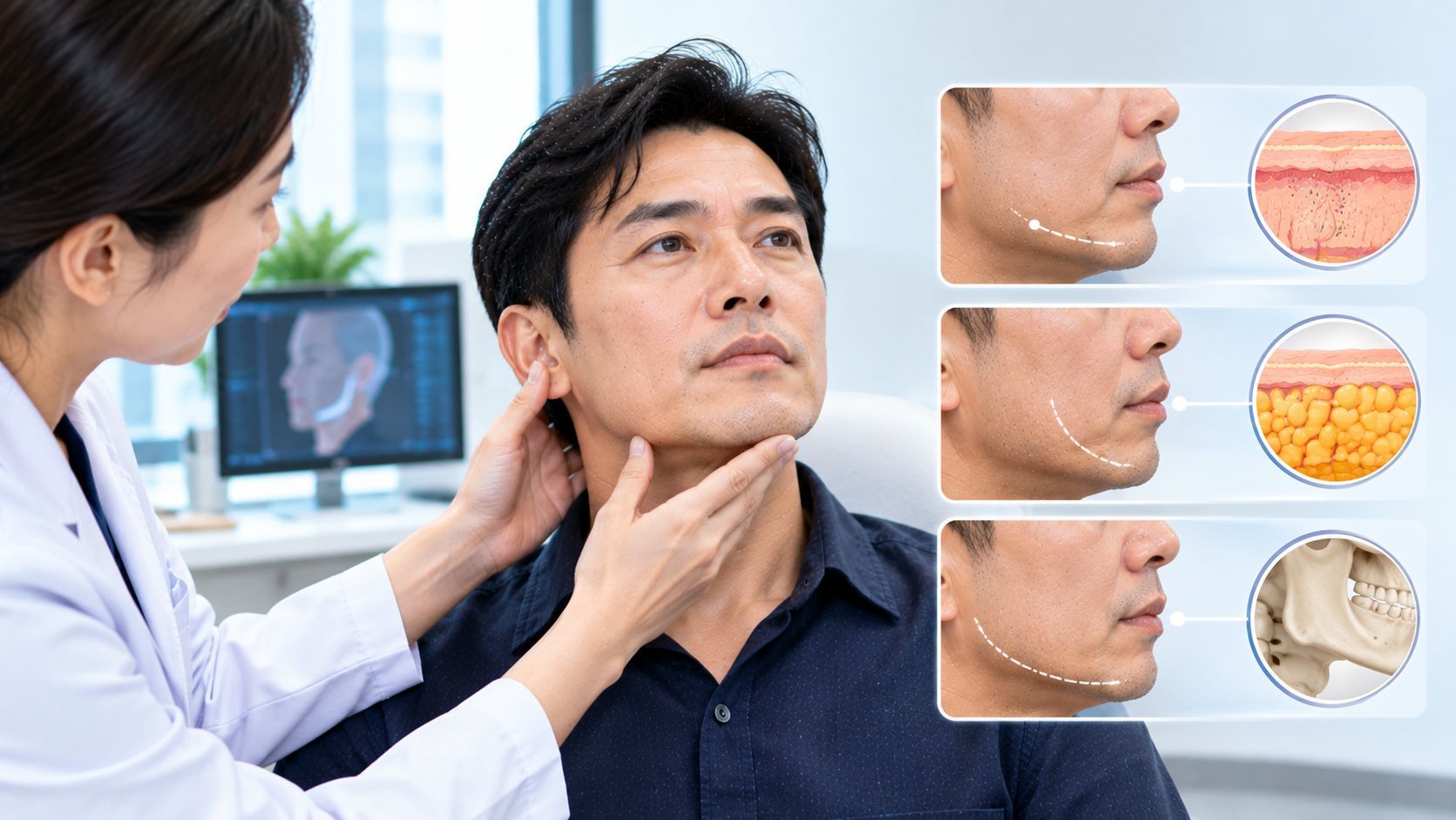
Aging can alter fat compartments and deeper facial structures. Volume loss in some areas can increase the appearance of folds around the mouth.
This does not necessarily mean that adding filler directly to the lips is the correct solution.
4. Development of Marionette Lines
Marionette lines extend downward from the corners of the mouth toward the chin.
Once these become deeper, they can visually pull the mouth corners downward even when the primary problem is actually the surrounding lower face.
5. Chin and Jawline Changes
Changes around the chin and jawline can also influence how the mouth area looks.
If the lower face begins to lose definition, the transition between the mouth, chin, and jaw can become heavier or more downward-directed.
Why Can This Happen Before You Have Many Wrinkles?
You do not need deep wrinkles to develop downturned mouth corners.
Facial aging is three-dimensional. Muscle behavior, soft-tissue movement, skin quality, volume distribution, and skeletal changes can occur at different rates.
That means someone may notice:
- Downturned mouth corners
- Slight marionette lines
- A heavier lower face
- Less defined jawline
- Longer-looking lower face
before developing extensive surface wrinkles.
The perioral region is particularly complex because multiple structures contribute to its appearance.
Can Botox Help Downturned Mouth Corners?
In selected patients, Botox can help reduce downward pull from the DAO muscle.
The concept is relatively straightforward: if the DAO is contributing significantly to the downward movement, carefully reducing its activity may allow the muscles that elevate the mouth corner to have relatively greater influence.
Published literature and a systematic review of mouth-corner lifting techniques support botulinum toxin as one nonsurgical approach, although outcomes depend heavily on anatomy and technique.
However, Botox is not a universal solution.
If the corners are downturned primarily because of:
- Significant skin laxity
- Deep marionette folds
- Major volume loss
- Soft-tissue descent
- Structural changes around the chin
relaxing the DAO alone may produce only modest improvement.
What Happens If Too Much Botox Is Used?
The lower face is less forgiving than the forehead.
The DAO sits near other muscles involved in lower-lip movement. An injection that affects neighboring muscles can potentially produce temporary asymmetry or unwanted changes in lip movement.
That is why lower-face Botox should be approached conservatively.
The goal is not to completely eliminate movement. The goal is to alter an excessive downward force while preserving normal smiling, speaking, eating, and facial expression.
Does Downturned Mouth Always Need Filler?
No.
Filler can be useful when volume loss contributes to the appearance, but it is only one possible treatment.
For example, a patient may have relatively good volume but excessive DAO activity. In that situation, Botox may make more sense than adding volume.
Another patient may have deep marionette folds caused by a combination of tissue descent and volume loss. That person may require a completely different strategy.
A proper assessment should therefore determine why the mouth is turning downward before deciding where to inject.
What Other Treatments Can Help?
Skin Resurfacing
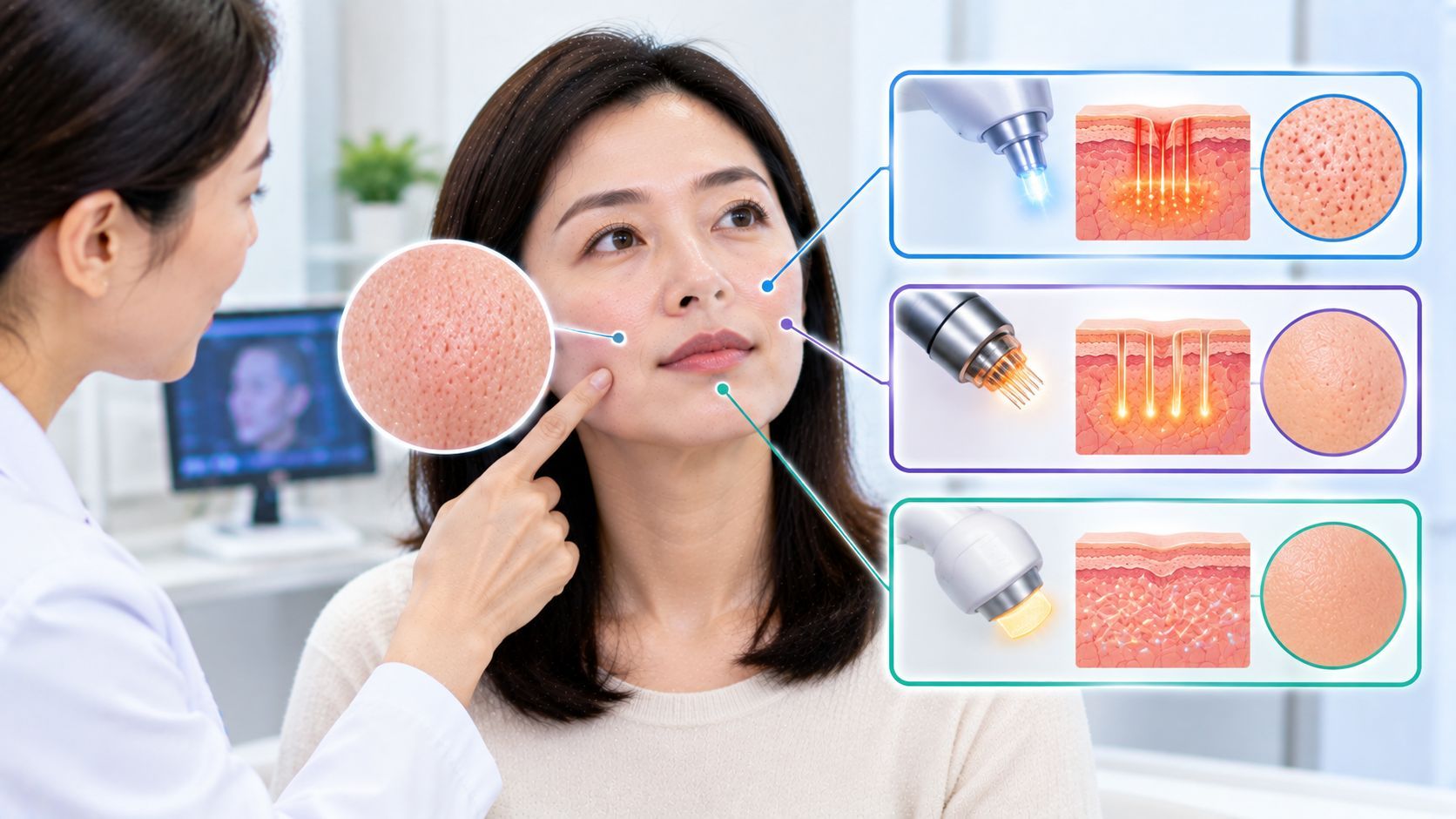
If fine lines and poor skin texture are major contributors, fractional laser or other resurfacing treatments may improve the quality of the skin around the mouth.
A review of perioral rejuvenation describes fractional resurfacing, microneedling, RF microneedling, neurotoxin, and filler as different tools that can be selected according to the patient's specific concerns.
RF and Other Skin-Tightening Treatments
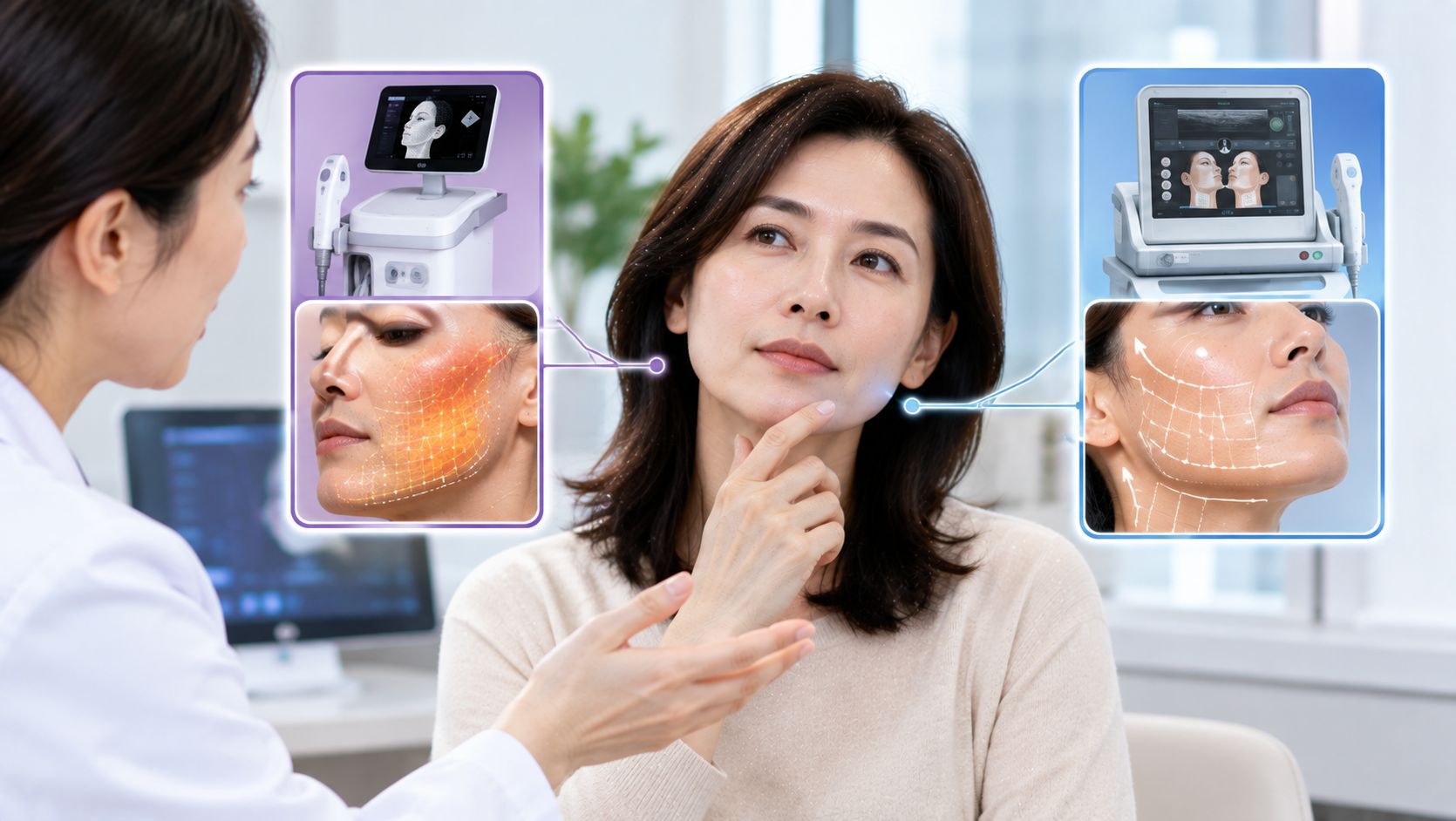
If mild laxity contributes to the downward appearance, radiofrequency-based treatments may be considered.
These treatments are intended to improve tissue quality and tightening rather than directly reposition the mouth corner.
Results are generally more subtle than those produced by surgery.
Skin-Quality Treatments
If the surrounding skin has become thin, dry, or finely wrinkled, treatments aimed at improving skin quality may complement other procedures.
These can be particularly relevant when the concern is not simply the position of the mouth corner but the overall appearance of the lower face.
Filler Around the Mouth Rather Than Into the Lips
Some patients are concerned about looking overfilled and therefore do not want lip augmentation.
That does not necessarily mean all filler is inappropriate.
In selected cases, treatment may focus on structural areas around the mouth rather than increasing lip volume. However, filler placement in the lower face requires an understanding of facial anatomy and should be individualized.
When Is Surgery Considered?
If the mouth corners are significantly downturned because of advanced tissue descent or structural aging, nonsurgical treatments may have limited ability to reposition them.
Surgical options exist, but they are generally considered when the degree of aging or laxity is beyond what conservative treatments can reasonably address.
A consultation can help determine whether your concern is primarily muscular, skin-related, volume-related, or structural.
How to Decide What You Actually Need
A useful way to think about the problem is:
Main findingTreatment category that may be consideredCorners move downward stronglyDAO BotoxFine lines around the mouthLaser or resurfacingMild skin laxityRF or tightening treatmentDeep marionette linesStructural assessment ± filler or other treatmentVolume lossCarefully selected volume restorationHeavy lower faceLower-face assessment and possible tighteningSignificant tissue descentSurgical consultation
This is not a treatment prescription. Several causes can exist simultaneously.
What Should You Ask a Seoul Dermatology Clinic?
If you are considering treatment in Seoul, especially as an international patient, ask the clinician to explain what is actually pulling or making the mouth corners look downward.
Useful questions include:
- Is my DAO muscle contributing to the problem?
- Do I have significant marionette lines or mainly muscle activity?
- Would Botox alone be enough?
- Would treating the surrounding skin improve the appearance?
- Do I actually need filler?
- Could treatment affect my smile or lower-lip movement?
- How long should I expect the result to last?
- What happens if the treatment is asymmetric?
For international patients, keeping a record of previous Botox, filler, laser, or lifting treatments can also help the clinician plan safely.
Conclusion
Downturned mouth corners are a common feature of lower-face aging, but they are not caused by one factor in every person. DAO muscle activity, skin laxity, volume changes, marionette lines, and broader lower-face aging can all contribute.
If the problem is mainly muscular, carefully performed DAO Botox may provide improvement. If skin quality or laxity is more important, resurfacing or tightening treatments may be more appropriate. If significant volume loss or structural descent is present, a different approach may be needed.
The most important step is therefore not simply asking, “What should I inject?” but “Why are my mouth corners turning downward?”
FAQs
Why are my mouth corners suddenly turning downward?
Aging-related changes in muscle activity, skin elasticity, facial volume, and lower-face support can gradually make the corners appear lower.
Can Botox lift downturned mouth corners?
Botox can improve downturned corners in selected patients by reducing activity of the DAO muscle. It is less likely to provide a major correction when significant tissue descent or volume loss is the main problem.
Will Botox make my smile look different?
It can if the toxin affects nearby muscles or is used too aggressively. Because the DAO is close to muscles involved in lower-lip movement, conservative technique and anatomical knowledge are particularly important.
Do I need lip filler for downturned mouth corners?
Not necessarily. Depending on the cause, treatment may involve Botox, skin resurfacing, tightening, or addressing structural changes around the mouth rather than adding volume to the lips.
Are downturned mouth corners the same as marionette lines?
No. They can occur together, but a downturned mouth corner describes the position or direction of the oral commissure, while marionette lines are folds extending downward from the mouth toward the chin.
Can skincare fix downturned mouth corners?
Skincare can improve dryness, texture, and some fine lines, but it generally cannot significantly reposition a mouth corner that is being pulled downward by muscle activity or structural tissue changes.