Can Frequent RF Treatment Damage Facial Fat?
Introduction
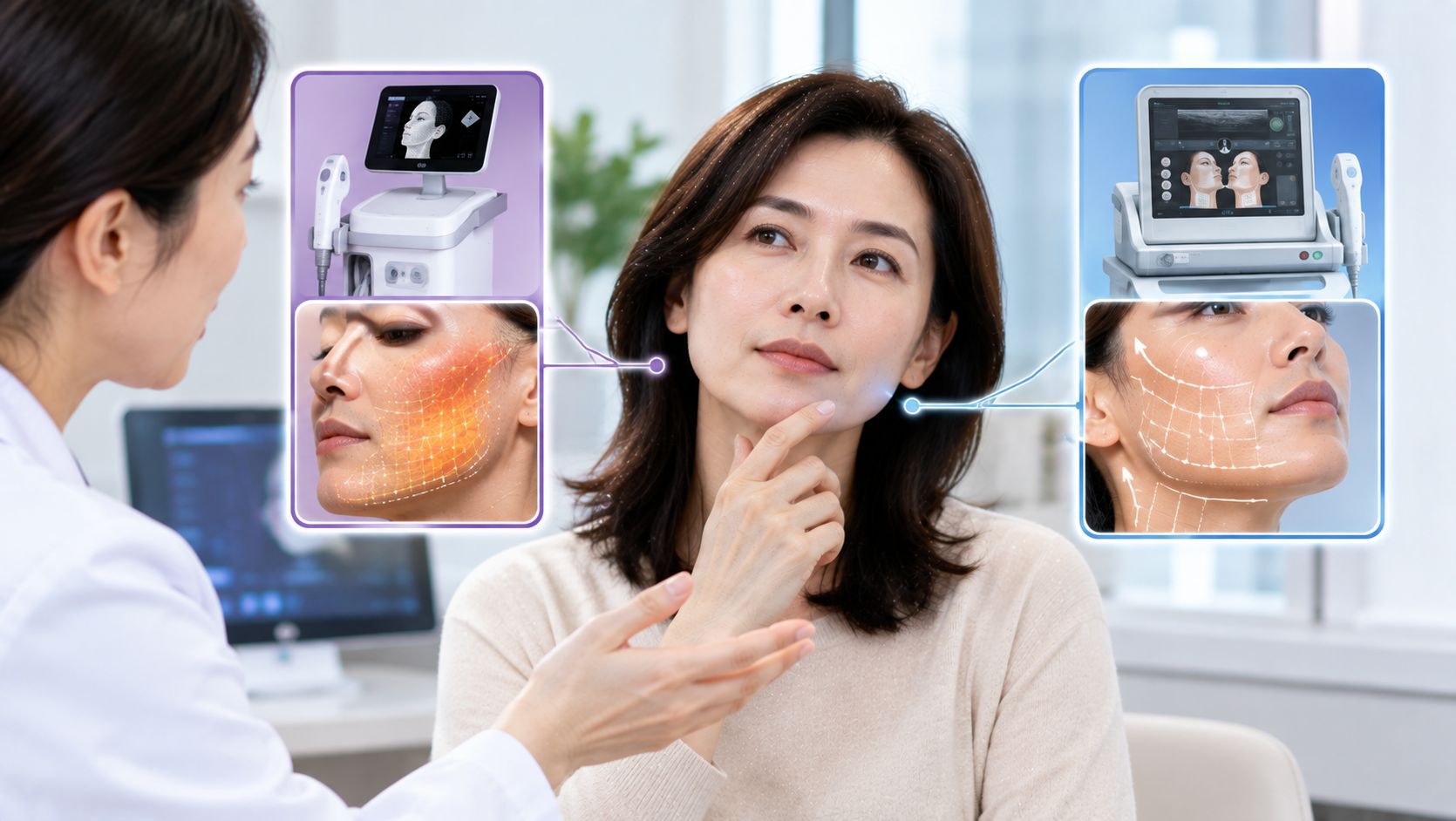
Radiofrequency (RF) treatments are widely used for facial tightening, skin rejuvenation, wrinkles, acne scars, and texture improvement. Depending on the technology, RF energy can be delivered superficially, through microneedles, or into deeper tissue layers.
This leads to an important question for people who regularly have aesthetic treatments: Can frequent RF treatment damage facial fat?
The answer is nuanced. Some RF technologies can affect adipose tissue, and studies have documented reductions or changes in facial fat with certain RF treatments. However, this does not mean that every RF treatment automatically destroys facial fat or that routine RF rejuvenation inevitably causes facial thinning. The device, energy delivery, depth, treatment settings, treatment area, and individual anatomy all matter.
For someone with a naturally thin face, recent weight loss, or existing facial volume loss, repeated RF treatment deserves more individualized planning.
What Does RF Do to Facial Tissue?
Radiofrequency uses electromagnetic energy to generate heat within tissue.
Depending on the device, RF can produce controlled thermal effects that are intended to encourage collagen remodeling and improve skin firmness.
A 2025 systematic review of RF facial rejuvenation found improvements in skin texture and firmness across the studies reviewed, with generally mild and transient reported adverse effects. However, the authors also emphasized limitations in the available evidence and differences between treatment protocols.
RF therefore isn't simply a "fat-burning" treatment.
Some RF technologies are primarily designed for skin rejuvenation, while others intentionally target deeper tissue or fat.
That distinction is extremely important.
Can RF Affect Facial Fat?
Yes, certain RF treatments can affect adipose tissue.
A systematic review specifically examining RF and adipose tissue found evidence suggesting that some RF protocols can influence fat tissue and adipocyte lipolysis, although the studies had substantial variation and methodological limitations.
Another systematic review examining RF for facial and neck rejuvenation reported both improvements in skin laxity and evidence of volumetric facial-fat changes in some studies.
This does not mean that every facial RF session reduces fat.
Instead, it means that RF has the potential to influence fat depending on how and where it is delivered.
Why RF Technology Matters
"RF treatment" describes a broad category rather than one single procedure.
Examples include:
- Monopolar RF
- Bipolar RF
- Multipolar RF
- Fractional RF
- RF microneedling
- More deeply delivered RF technologies
These devices can differ considerably in their energy delivery, depth, temperature, treatment pattern, and intended tissue target.
A 2022 systematic review noted substantial variation in RF types and treatment parameters among studies of skin rejuvenation.
Therefore, it is misleading to say that RF is either safe for facial fat or unsafe for facial fat as a category.
The more useful question is:
What type of RF is being used, at what depth, with what settings, and for what purpose?
When Is Facial Fat Loss More Concerning?
Facial fat becomes particularly important when someone already has limited soft-tissue volume.
You may need more careful treatment planning if you have:
- Naturally thin cheeks
- Hollow temples
- Prominent cheekbones
- A narrow lower face
- Recent significant weight loss
- Post-menopausal facial volume loss
- Previous fat-reduction procedures
- Previous treatments that made your face appear thinner
- Very little subcutaneous facial fat
If your primary concern is loose skin but you have very little facial volume, aggressively pursuing tissue tightening may not produce the appearance you want.
A tighter face is not necessarily a younger-looking face if the treatment also changes the volume that gives the face softness.
Can Frequent RF Make the Face Look Older?
Potentially, if repeated treatment contributes to unwanted volume loss or if the treatment strategy does not match the patient's anatomy.
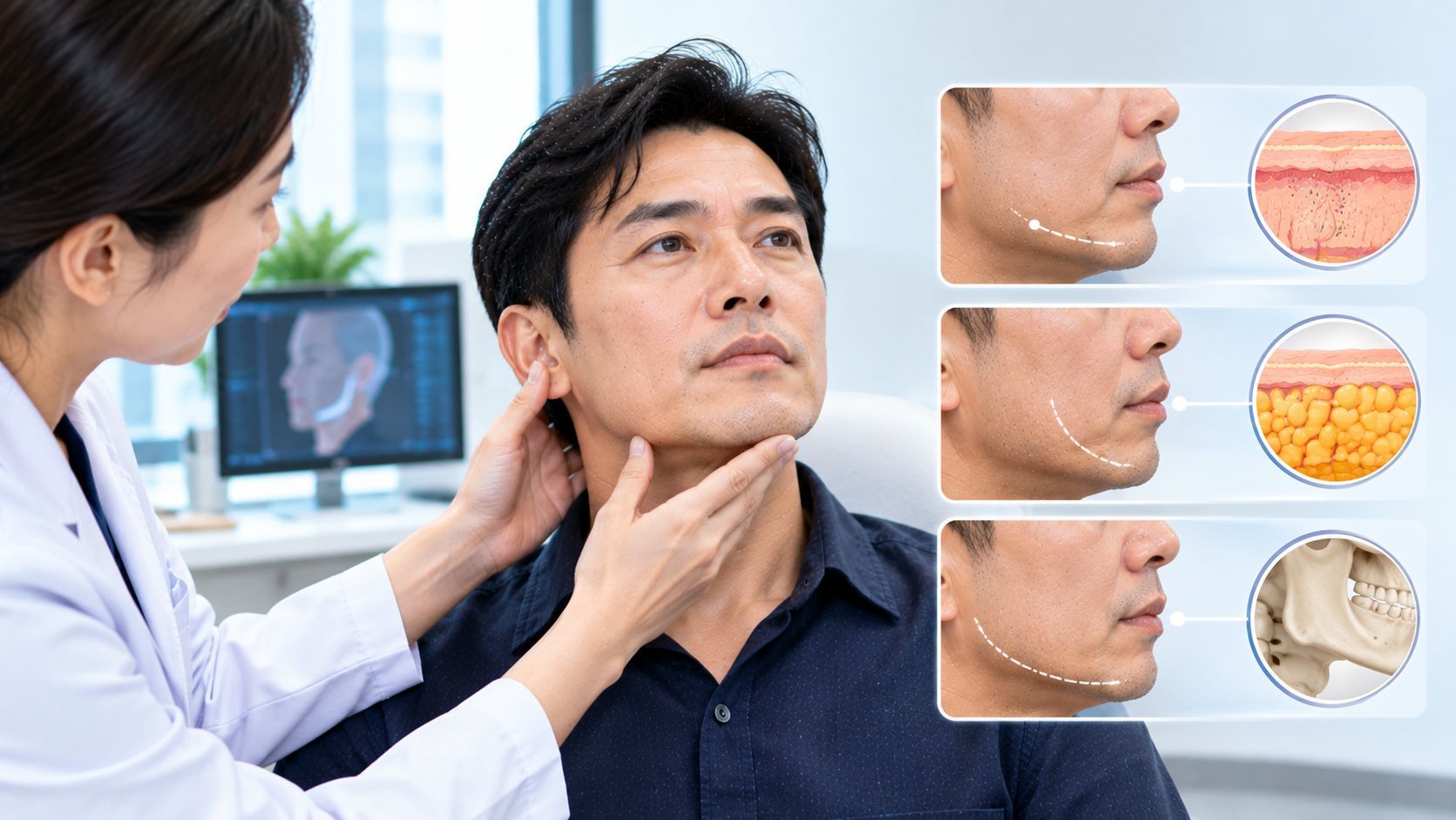
Facial aging involves several processes simultaneously:
- Collagen and elastin changes
- Skin laxity
- Fat redistribution
- Fat loss
- Bone remodeling
- Muscle changes
- Changes in facial proportions
If someone interprets every aging change as skin laxity, they may repeatedly pursue tightening treatments when the more important problem is actually volume loss.
For example, someone who lost 10 kg may have both loose skin and reduced facial fat. Treating the remaining laxity without considering the volume loss could make the face appear more angular.
Does RF Microneedling Destroy Facial Fat?
RF microneedling requires a separate discussion.
With RF microneedling, insulated or non-insulated needles deliver RF energy into selected tissue depths. The treatment is often used for acne scars, texture, wrinkles, and skin tightening.
A 2026 systematic review of RF microneedling for facial rejuvenation found generally favorable outcomes, with reported adverse events predominantly mild and transient in the studies included.
That does not mean RF microneedling cannot affect deeper tissue.
Treatment depth and energy settings matter.
If your objective is improving skin texture or acne scars, the treatment plan should be designed around those targets rather than unnecessarily exposing deeper tissue.
Is More RF More Effective?
Not necessarily.
There is no simple relationship where:
More sessions = more collagen = better face.
RF studies use different treatment parameters, and systematic reviews have repeatedly pointed out substantial variation between devices and protocols.
The appropriate treatment frequency depends on:
- Device type
- Treatment objective
- Treatment depth
- Energy level
- Area treated
- Previous response
- Skin condition
- Facial volume
- Other treatments performed
A person receiving RF for acne scars may have a completely different treatment plan from someone receiving RF primarily for facial laxity.
What Are Possible Warning Signs After Repeated RF?
A change in facial appearance does not automatically prove that RF caused fat loss.
However, if you notice the following after multiple treatments, it is reasonable to have your face reassessed:
New cheek hollowness
A previously full cheek appears noticeably more concave.
More prominent bony structures
The cheekbones, temples, or jaw may appear unusually prominent compared with previous photographs.
A smaller-looking face
Your face appears narrower or more skeletal rather than simply tighter.
Localized depressions
One particular area appears thinner than surrounding tissue.
Progressive changes after repeated treatments
If each treatment seems to make your face increasingly leaner, continuing the same treatment without reassessment may not be appropriate.
These observations are not diagnostic. Weight changes, aging, dehydration, lighting, previous filler changes, and other factors can produce similar appearances.
How Can You Tell Whether RF Actually Changed Your Facial Fat?
You generally cannot determine this from a mirror alone.
A dermatologist may assess:
- Before-and-after photographs
- Facial contours
- Skin laxity
- Subcutaneous tissue
- Weight history
- Previous procedures
- Treatment areas
- Device type
- Treatment settings
In selected situations, imaging may help evaluate soft-tissue structures.
This is particularly useful when a patient has had several procedures and is unsure which treatment caused a change.
Should You Stop RF Completely If You Have a Thin Face?
Not necessarily.
Having a thin face does not automatically mean that all RF treatments are inappropriate.
Instead, the treatment should have a clearly defined objective.
For example, someone with a thin face may still want treatment for:
- Acne scars
- Uneven texture
- Fine wrinkles
- Mild skin laxity
The dermatologist can determine whether RF is appropriate and how the treatment should be adjusted.
The important point is to avoid treating facial fat as an unwanted tissue by default.
What If You Have Already Had Several RF Treatments?
Before scheduling another session, consider having a treatment review.
Bring information about:
- Device names
- Dates of previous treatments
- Treatment areas
- Number of sessions
- Approximate energy settings, if available
- Other procedures performed around the same time
- Changes in body weight
- Before-and-after photographs
This is particularly useful for international patients who may have received treatments at several clinics.
If you are visiting Seoul for another RF treatment, show the dermatologist your previous treatment records rather than assuming the new clinic knows what was previously done.
Should You Switch From RF to Another Treatment?
Not automatically.
If you are concerned about facial thinning, the answer is not necessarily to switch immediately to another energy-based treatment.
First determine what you are actually trying to correct.
If the main issue is skin laxity
A carefully selected tightening treatment may still be appropriate.
If the main issue is volume loss
Volume-preserving or volume-restoring strategies may deserve consideration instead.
If the main issue is texture
A treatment directed primarily toward skin texture may make more sense than repeatedly treating deeper tissue.
If several problems exist
A staged treatment plan may be preferable to repeatedly performing the same procedure.
Questions to Ask a Korean Dermatologist Before Another RF Treatment
If you are considering another RF session in Seoul, ask:
- Which tissue layer are you targeting?
- Is this treatment intended to affect facial fat?
- How deep will the RF energy be delivered?
- Do I already have significant facial-volume loss?
- Which areas would you avoid on my face?
- Have I had enough time to evaluate my previous treatment?
- Could another treatment address my concern without repeatedly heating deeper tissue?
- How will you modify the treatment for my facial anatomy?
These questions can be especially important if you have already had Thermage, RF microneedling, HIFU, Ultherapy, or other energy-based treatments.
When Should You Pause Before Another RF Treatment?
Consider getting reassessed before continuing if:
- Your face has become noticeably thinner
- You have developed new hollows
- You recently lost substantial weight
- You are unsure which RF treatments you have already received
- Multiple energy-based procedures have been performed close together
- Your previous result was disappointing
- You are no longer sure whether your primary problem is laxity or volume loss
A pause does not mean that RF has permanently damaged your skin or fat. It simply gives you an opportunity to determine what is actually happening before adding another treatment.
Conclusion
Can frequent RF treatment damage facial fat?
Certain RF technologies and treatment protocols can affect adipose tissue, and scientific studies have documented facial-fat changes with some RF treatments. But this does not mean that routine RF rejuvenation automatically destroys facial fat.
The important factors are device type, treatment depth, energy, technique, frequency, treatment area, and individual facial anatomy.
For people with thin faces, recent weight loss, or existing volume loss, repeated RF should be approached particularly carefully. The goal should not be to maximize tightening at every appointment. It should be to improve a specific problem while preserving the facial volume and proportions that contribute to a natural appearance.
Frequently Asked Questions
Can RF actually reduce facial fat?
Some RF treatments can influence adipose tissue, and studies have documented volumetric facial-fat changes with certain RF approaches. However, this does not mean every RF treatment causes facial fat loss.
Does frequent RF permanently destroy facial fat?
There is not enough evidence to say that frequent facial RF routinely causes permanent fat destruction. The effects vary substantially according to the technology, settings, treatment depth, and individual patient.
Is RF safe for someone with a thin face?
It may be, depending on the treatment and objective. A thin face requires careful assessment because unnecessary reduction of already-limited facial volume may change facial proportions.
Can RF microneedling cause facial thinning?
RF microneedling is generally used for skin rejuvenation and texture rather than intentional facial-fat reduction. However, treatment depth and energy settings matter, so the procedure should be individualized. Current systematic evidence reports predominantly mild and transient adverse events, but longer-term evidence remains limited.
Should I avoid RF after losing weight?
Not necessarily. But after significant weight loss, it is important to determine whether your primary problem is loose skin, lost facial volume, or both before choosing another tightening procedure.
How often should I have RF treatment?
There is no universal schedule that applies to every RF device or patient. Frequency should be based on the specific technology, treatment goal, previous response, and current facial condition rather than a fixed calendar schedule.