Why Are My Pores Becoming Larger After Menopause?
Introduction
Many women notice that their pores suddenly seem larger during or after menopause. The change can be especially noticeable around the cheeks, nose, and lower face, even if pores were not a major concern earlier in life.
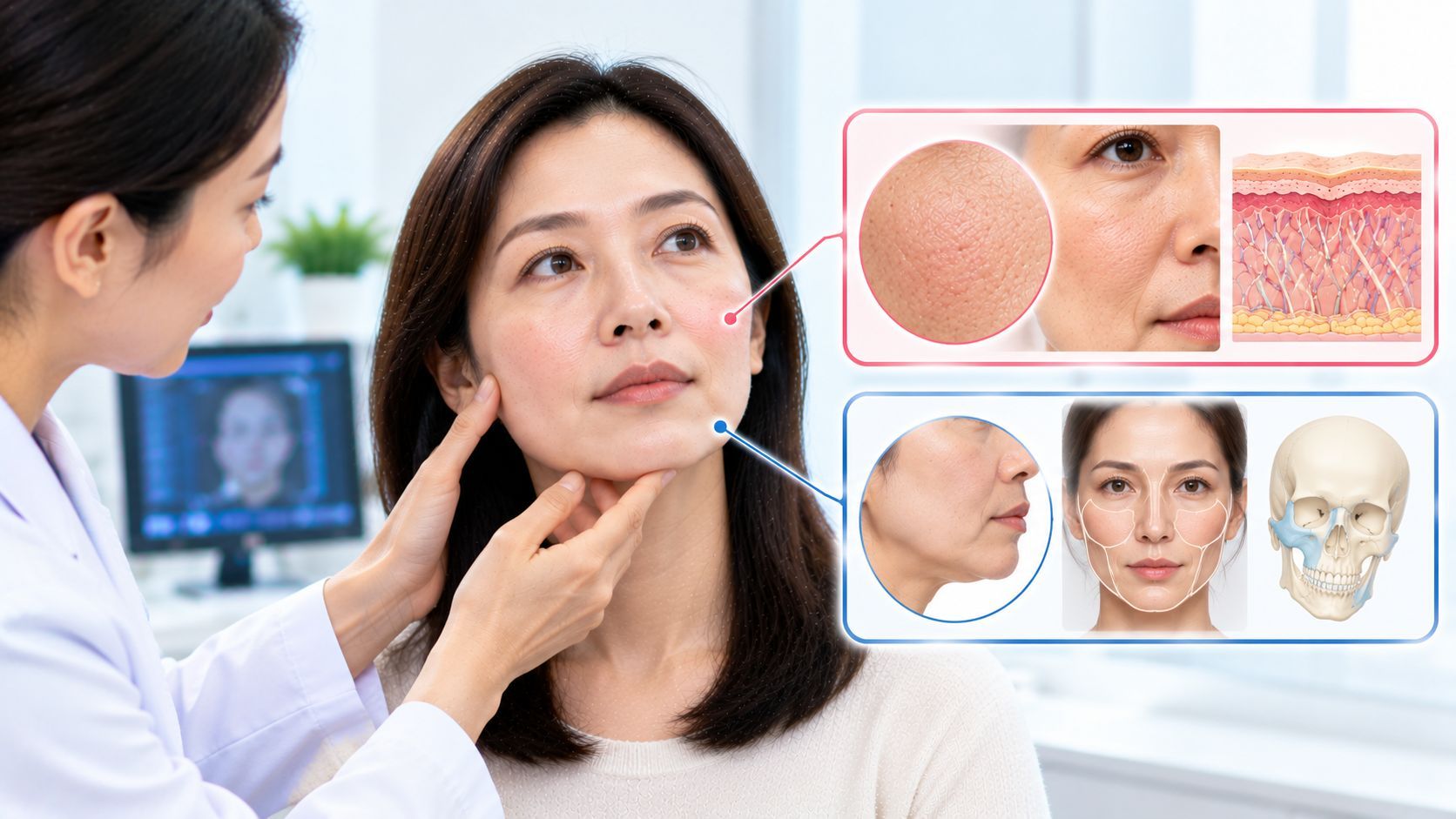
Menopause can make pores appear larger because declining estrogen is associated with reduced collagen, thinner skin, and reduced firmness. When the surrounding skin loses structural support, pores can look more visible. However, enlarged-looking pores are not caused by menopause alone. Sebum, dehydration, sun damage, genetics, acne, and changes in skin texture can also contribute. The American Academy of Dermatology specifically notes that large pores can become more noticeable when skin firmness decreases during menopause.
The good news is that enlarged-looking pores can often be improved, although no treatment permanently eliminates pores.
Why Do Pores Look Larger After Menopause?
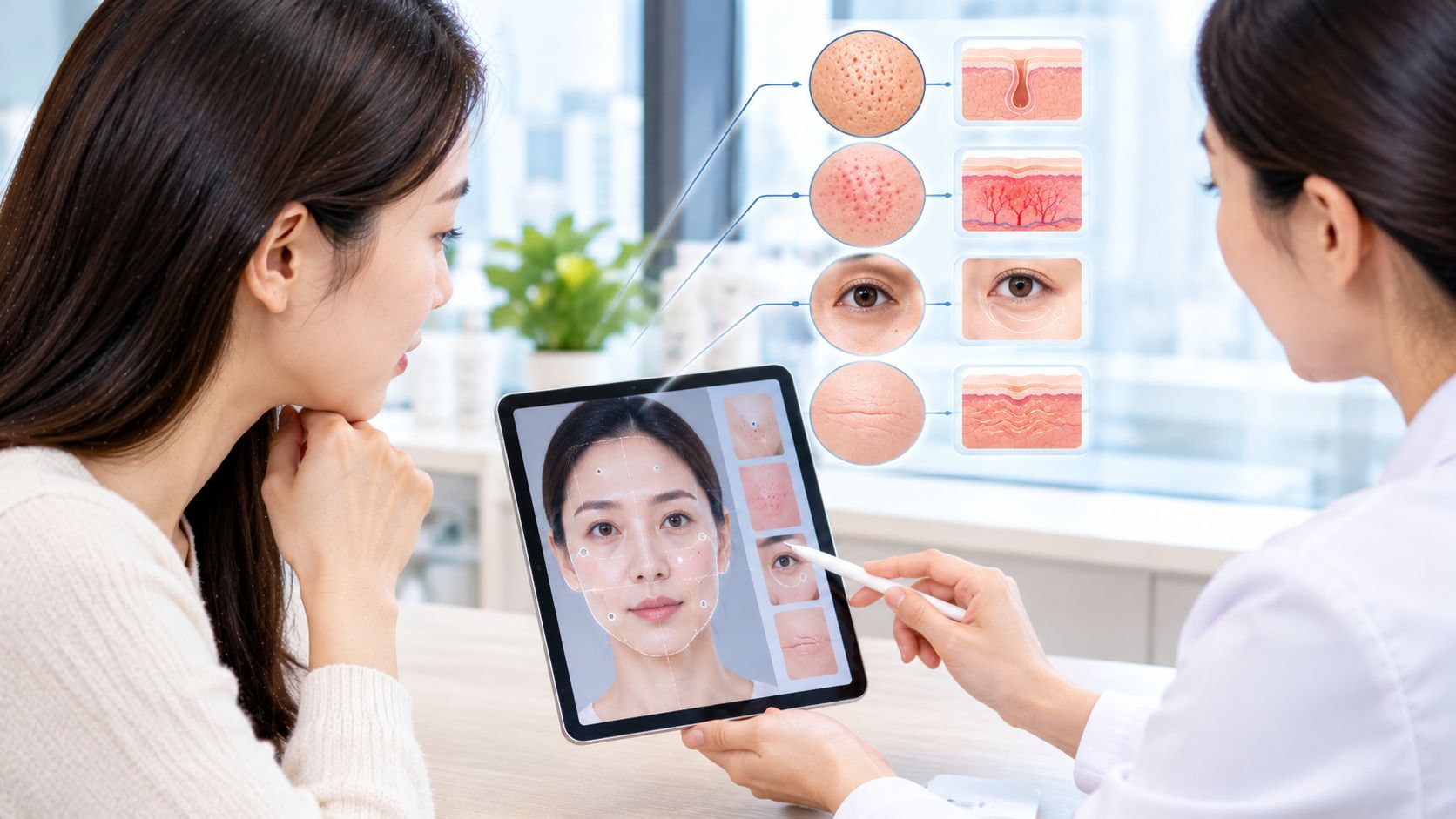
Pores are normal openings in the skin associated with structures such as hair follicles and sebaceous glands. Their visible size varies from person to person and can change with age and skin condition.
Menopause introduces another factor: hormonal changes can affect the skin's structure.
Research reviews have linked estrogen decline during menopause with reduced collagen production, decreased elasticity, changes in skin thickness, and moisture loss.
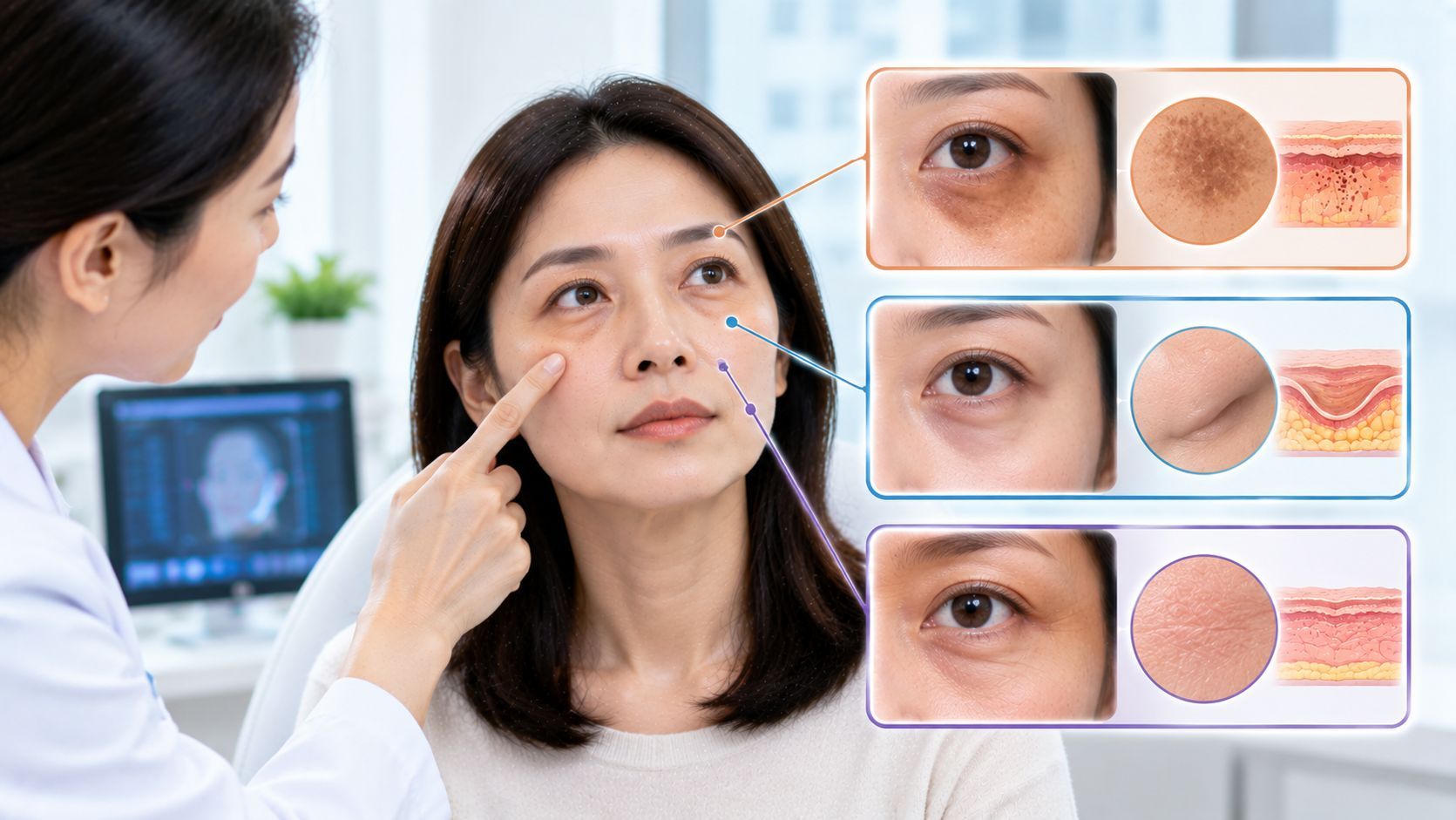
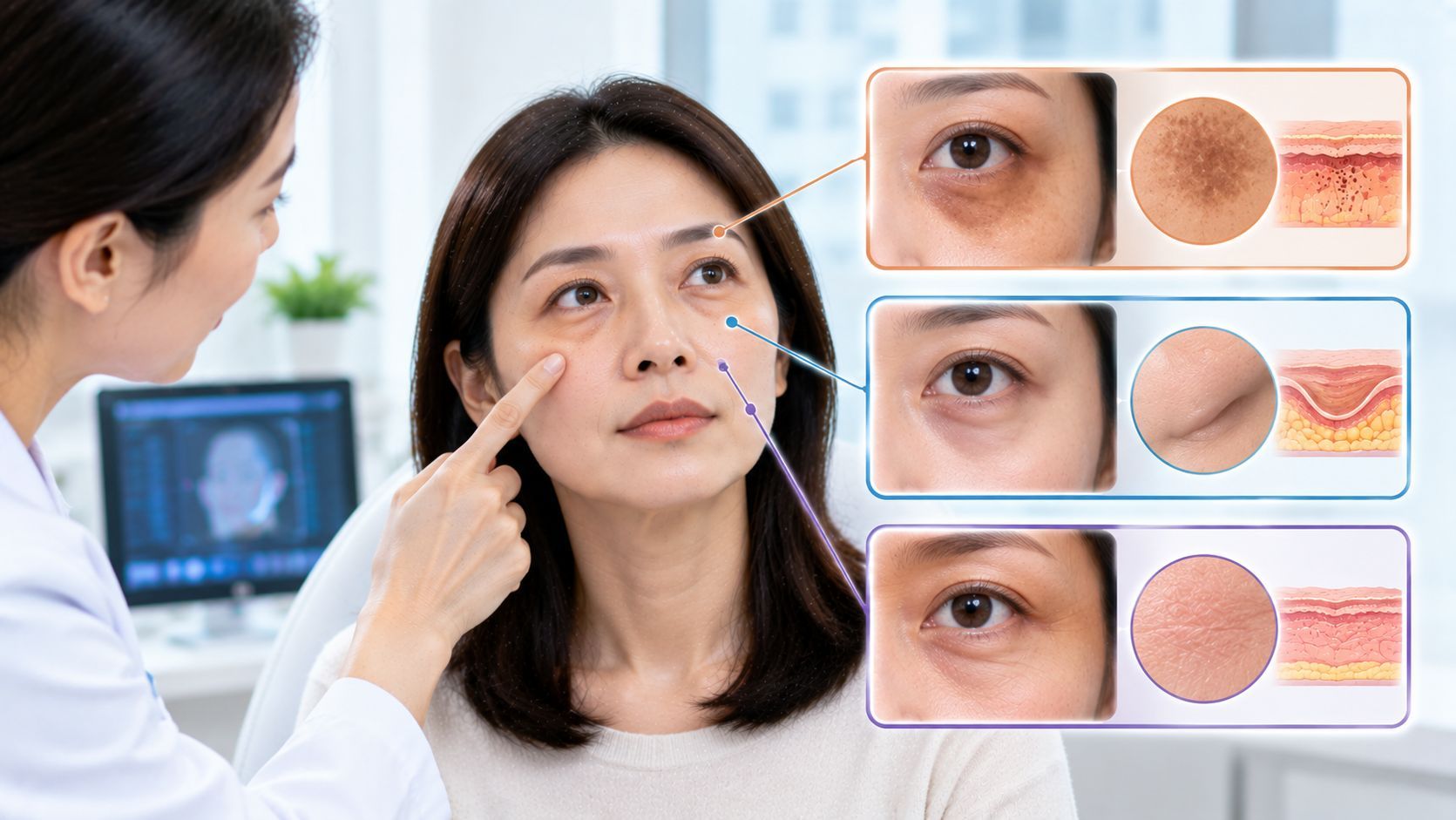
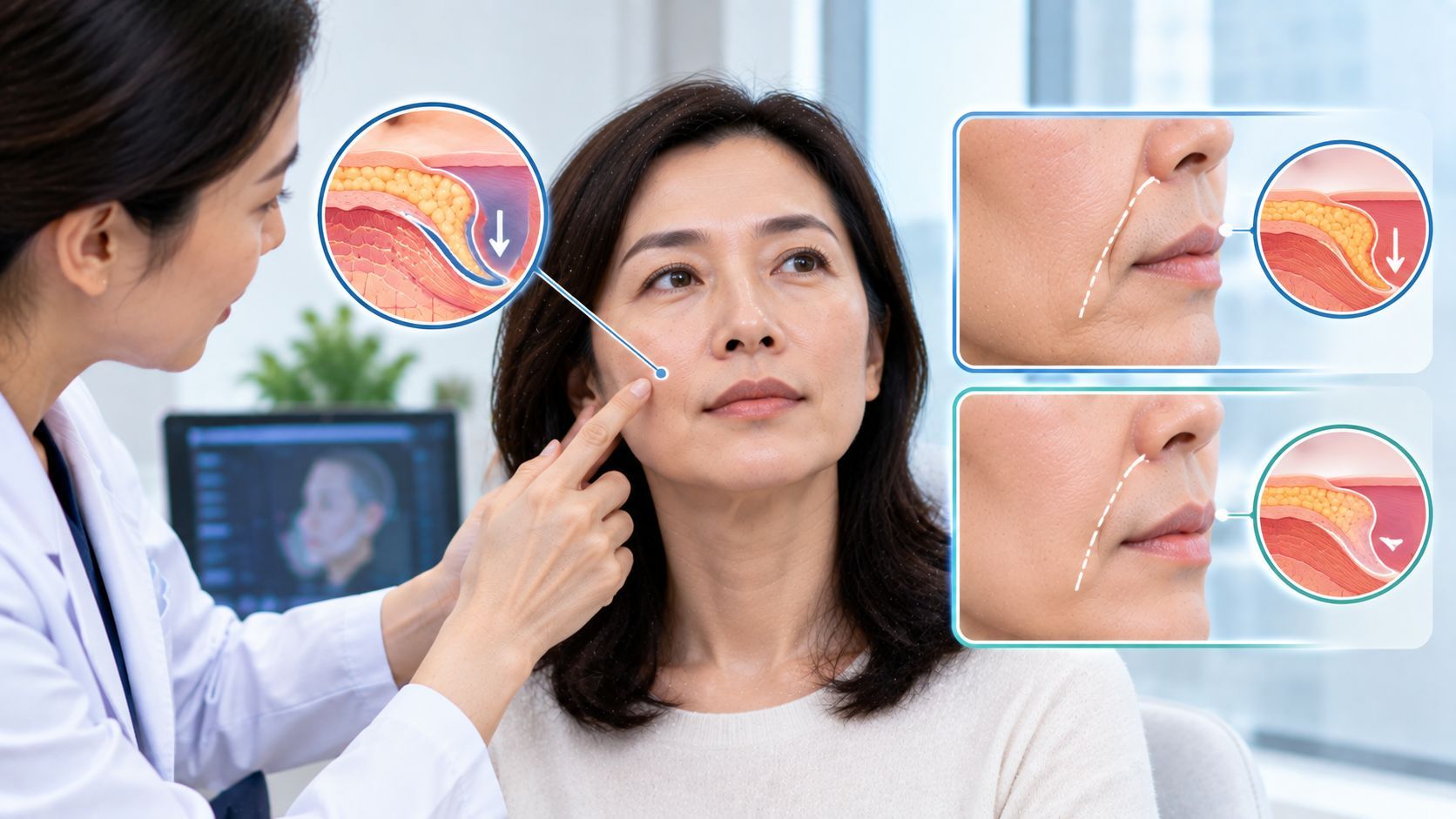
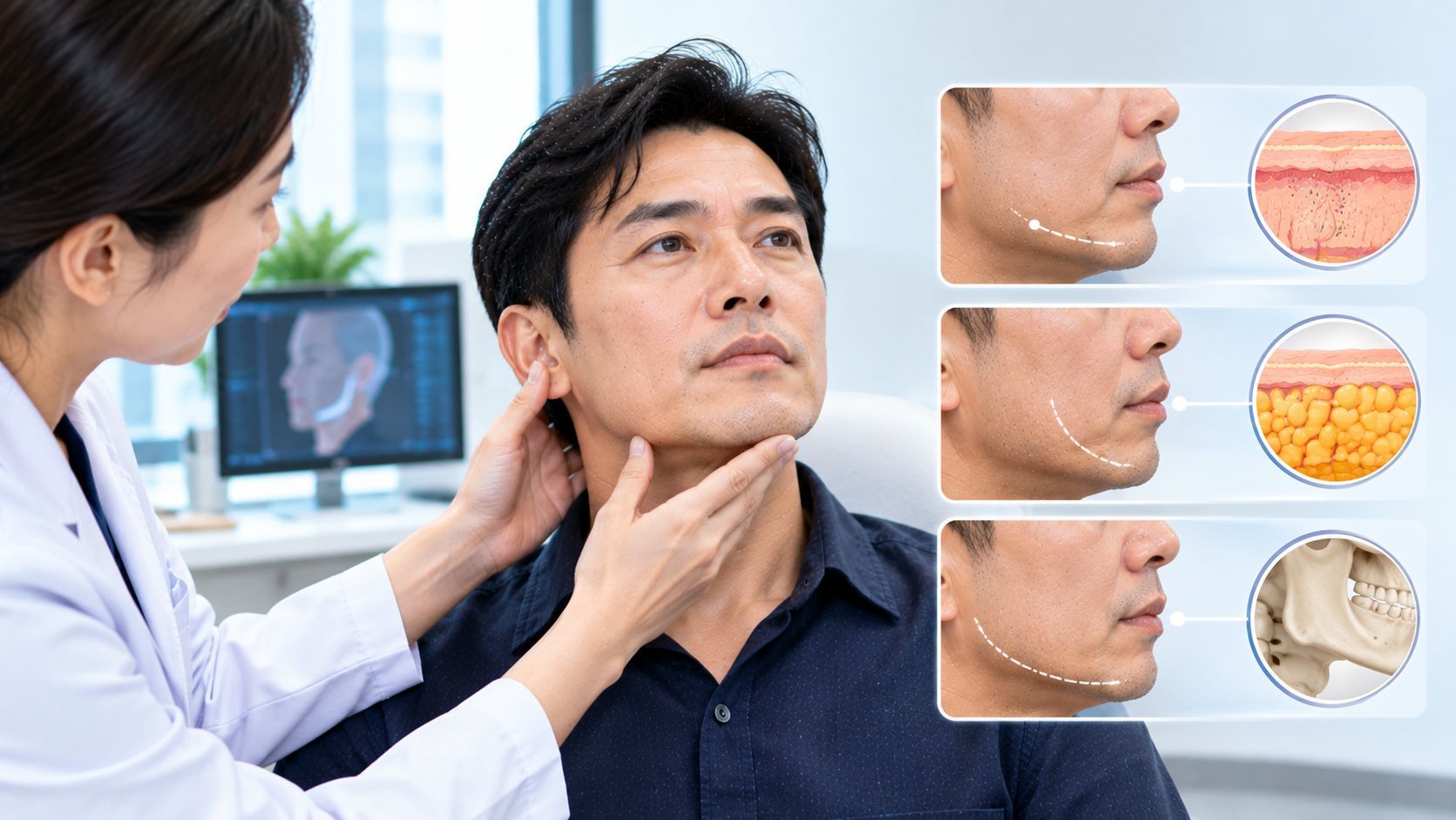
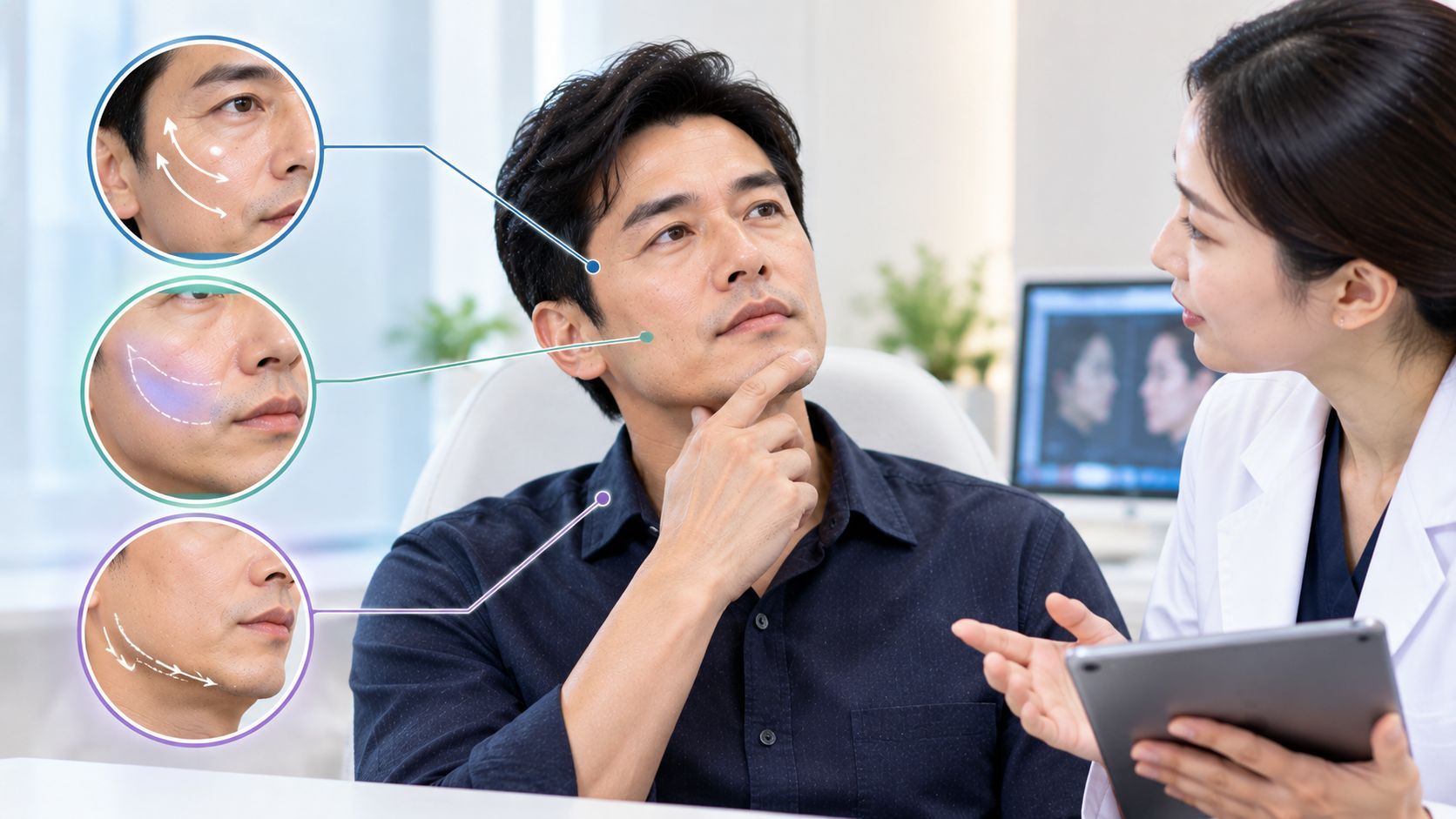
When the skin loses firmness, the tissue surrounding a pore may provide less structural support. This can make an existing pore appear wider even though the pore itself has not necessarily undergone a dramatic structural transformation.
Other factors can include:
- Sun damage
- Natural aging
- Genetics
- Increased oil production in some individuals
- Dehydration
- Reduced skin elasticity
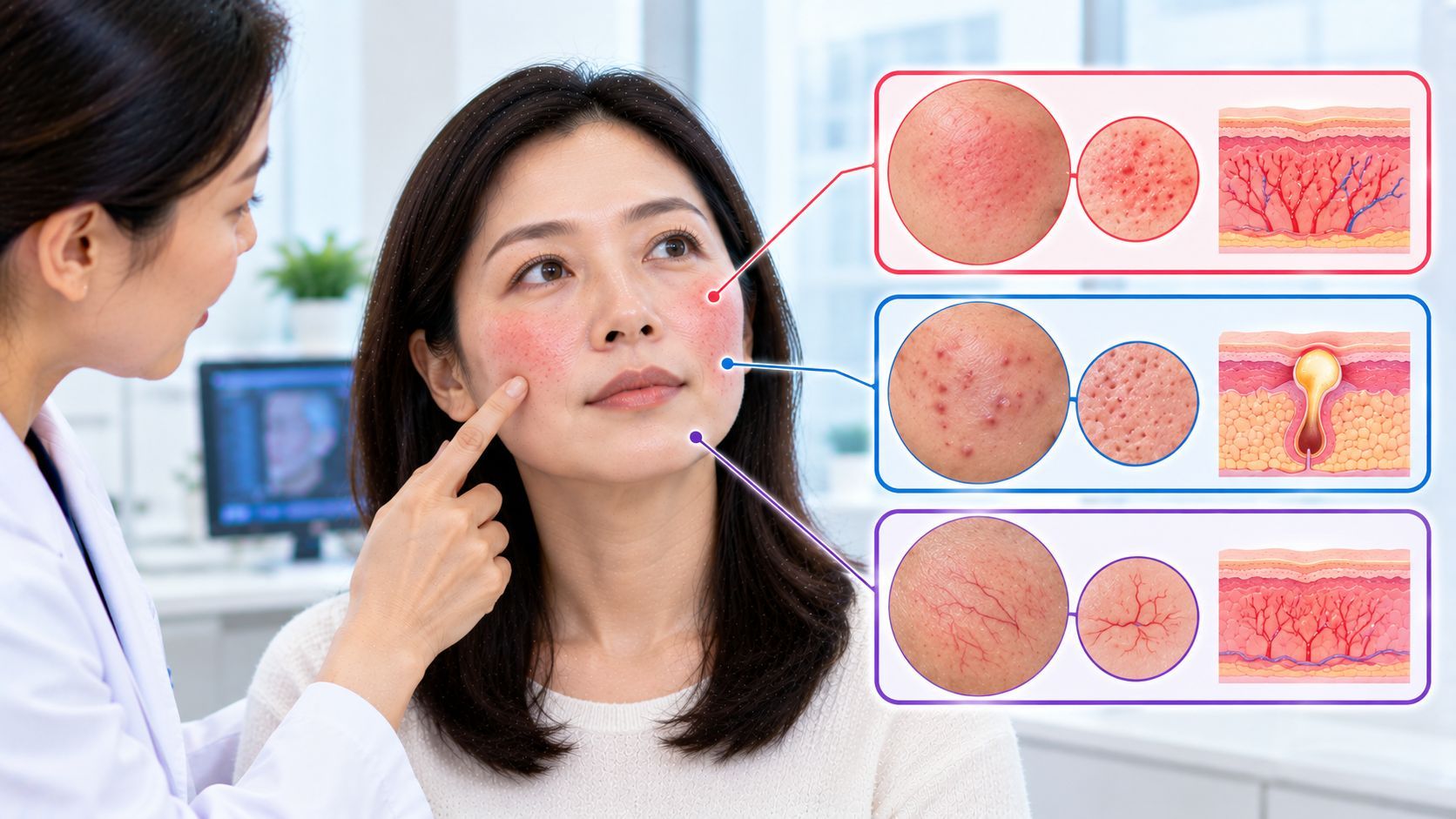
- Acne and previous inflammation
- Accumulated skin damage
- Rough or uneven texture
This is why treating "large pores" without identifying the underlying cause may produce disappointing results.
Are Large Pores Actually Getting Bigger?
Not always.
Sometimes the pores only appear larger because the surrounding skin has become thinner, less elastic, or more textured.
For example, if a pore was previously surrounded by firm skin, it may have been less noticeable. After collagen and elasticity decline, the same pore can become more visible.
This distinction matters because tightening or collagen-focused treatments may help improve the surrounding skin even though they do not physically close the pore.
Pores also cannot be permanently "closed." Their visibility can be reduced, but healthy skin will continue to have pores.
What Can Help Enlarged-Looking Pores After Menopause?
1. Retinoids and Retinol
Retinoids are among the better-known topical options for improving photoaging and skin texture.
They can encourage skin-cell turnover and support collagen-related remodeling, which may make pores and fine lines appear less prominent over time.
The AAD recommends considering products containing retinol or peptides for menopausal skin concerns associated with reduced firmness and collagen.
However, menopausal skin can also be drier and more sensitive. Starting a strong retinoid too aggressively can cause:
- Dryness
- Peeling
- Burning
- Redness
- Increased irritation
A gradual approach is generally more appropriate, particularly if your skin barrier is already compromised.
2. RF Microneedling
RF microneedling can be considered when enlarged-looking pores occur together with:
- Reduced firmness
- Uneven texture
- Fine lines
- Mild skin laxity
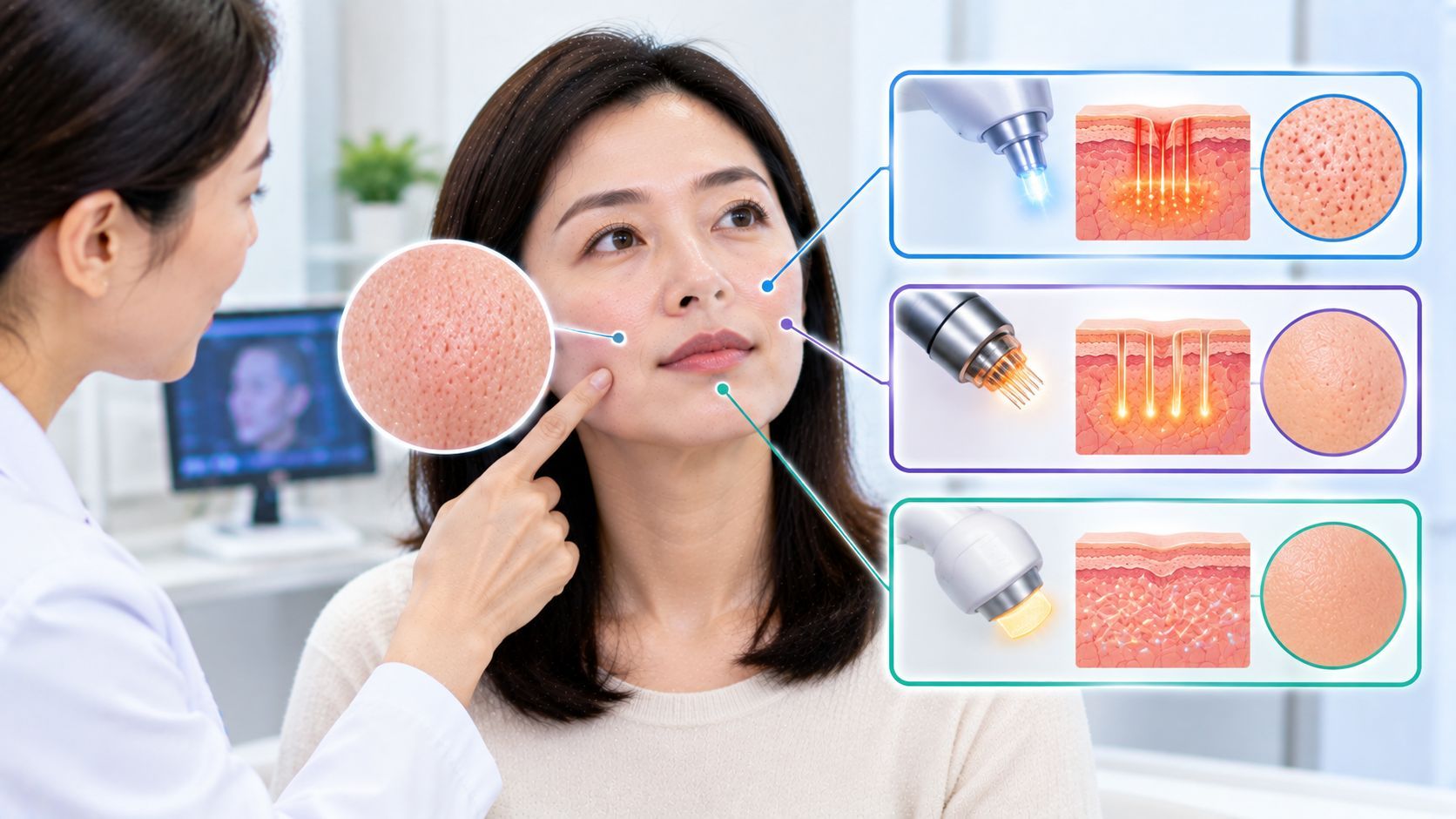
The treatment combines controlled microneedling with radiofrequency energy. Depending on the device and settings, the treatment can target different tissue depths.
The objective is not to "seal" pores but to improve the surrounding skin's texture and firmness.
This can be particularly relevant when menopause-related collagen loss is contributing to the appearance of larger pores.
3. Radiofrequency Skin Tightening
Traditional RF treatments use controlled heat to stimulate tissue remodeling.
RF may be considered when pores appear larger partly because the skin has lost firmness.
Research on facial RF treatments has reported improvements in skin laxity and elasticity, although different RF technologies and treatment protocols produce different results.
RF is therefore potentially useful when the pore concern is connected to overall loss of firmness rather than excess oil alone.
4. Fractional Laser Treatments
Fractional laser treatments can be considered when enlarged pores are accompanied by:
- Rough texture
- Fine lines
- Sun damage
- Acne scars
- Uneven pigmentation
Laser resurfacing works differently from RF and may involve more downtime depending on the device.
The appropriate laser depends on your skin type, pigmentation risk, degree of sun damage, and desired recovery period.
Patients with a history of pigmentation problems should discuss these risks carefully before treatment.
5. Microneedling
Conventional microneedling creates controlled micro-injuries in the skin that stimulate a wound-healing response.
It may be considered for:
- Enlarged-looking pores
- Mild texture irregularities
- Fine lines
- Reduced firmness
- Some acne scarring
It is generally less energy-intensive than RF microneedling, but the appropriate choice depends on the condition being treated.
What About Rejuran?
Rejuran and other polynucleotide-based treatments are frequently used in Korean aesthetic dermatology for skin-quality concerns.
They may be considered when enlarged-looking pores occur alongside:
- Fine lines
- Reduced elasticity
- Thin-looking skin
- Uneven texture
However, Rejuran should not be presented as a direct pore-tightening treatment.
Its potential role is more related to improving overall skin quality and appearance. Evidence for polynucleotide treatments is developing, and available studies vary in design and treatment protocols.
If pores are the only concern, a dermatologist may recommend a different approach rather than automatically choosing an injectable skin-quality treatment.
Can Skin Boosters Help Menopausal Pores?
Skin boosters may be considered when the skin is particularly dry and dehydrated.
Dehydrated skin can make texture irregularities and fine lines more noticeable. Improving hydration may therefore make the skin surface appear smoother.
However, skin boosters are not primarily designed to tighten enlarged pores.
If your pores look large because of:
Dryness + fine lines + thin-looking skin
a skin-quality approach may be relevant.
If they look large because of:
Laxity + reduced collagen + rough texture
RF microneedling, RF, laser, or another collagen-focused treatment may be more relevant.
Could HIFU Help Enlarged Pores?
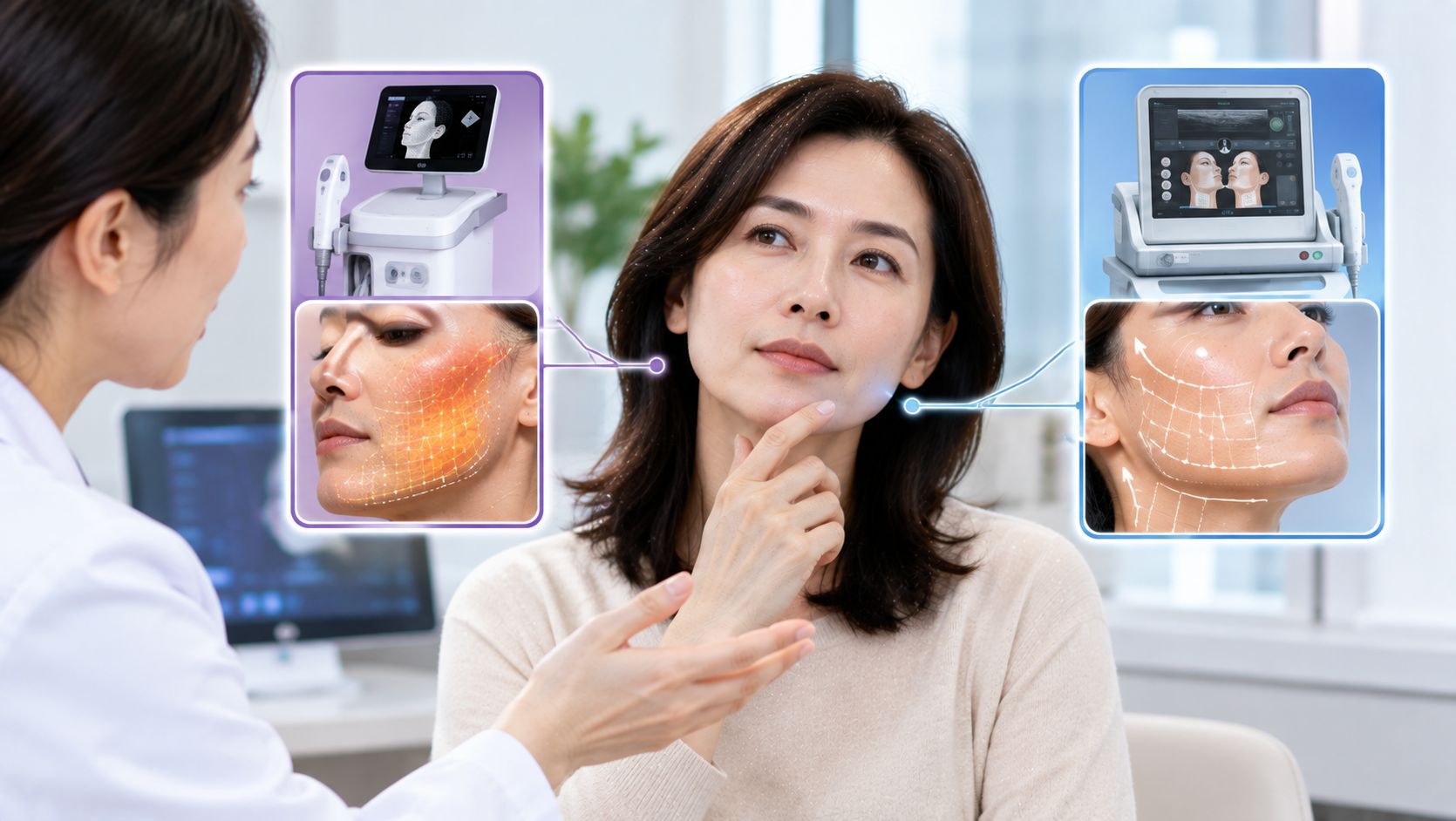
HIFU or microfocused ultrasound is primarily a tightening treatment rather than a pore treatment.
It may be useful when menopause-related aging includes lower-face or neck laxity, but it is not usually the first treatment chosen solely for enlarged pores.
For example, if a patient has:
- Enlarged-looking pores
- Sagging cheeks
- Early jowls
- Reduced jawline definition
a clinician might consider a broader rejuvenation plan that addresses both laxity and skin texture.
But using HIFU simply to "shrink pores" would not necessarily address the primary problem.
What About Acne and Oil After Menopause?
Menopause does not always mean completely dry skin.
Hormonal changes can produce different effects in different individuals. The AAD notes that some women develop acne around menopause as hormone levels change.
If oil, clogged pores, or acne are contributing to visible pore size, treatment may need to include approaches such as:
- Gentle cleansing
- Salicylic acid when appropriate
- Retinoids
- Acne-specific treatment
- Professional extraction when medically appropriate
However, excessively drying the skin can make menopausal skin more irritated and uncomfortable.
The goal should be balanced oil control rather than stripping the skin.
How Does Sun Damage Affect Pores?
Long-term UV exposure can contribute to collagen and elastin damage.
As the supporting structures around pores become less resilient, pores may become more noticeable.
This makes daily sun protection especially important after menopause.
Use a broad-spectrum sunscreen and apply it consistently to the face, neck, and other exposed areas.
Sunscreen will not immediately make pores smaller, but reducing ongoing UV damage can help protect the structural support of the skin.
Which Treatment Should You Consider?
Main concernTreatments to discussEnlarged-looking pores + drynessMoisturizer, gentle skincare, selected skin boostersPores + fine linesRetinoids, microneedling, selected laser treatmentsPores + reduced firmnessRF or RF microneedlingPores + acne/scarringRetinoids, appropriate laser or microneedlingPores + significant laxityRF/HIFU plus a broader rejuvenation assessmentPores + pigmentationAppropriate laser or pigment-focused treatmentMainly oily/clogged poresAcne and oil-control treatment
The table is a starting framework, not a diagnosis.
What If My Face Is Already Thin After Menopause?
This is particularly important.
If menopause has been accompanied by facial volume loss, an aggressive tightening strategy may not be appropriate.
A thin or hollow face can have:
- Reduced cheek fullness
- Temple hollowing
- More prominent facial contours
- Increased visibility of fine lines
- Less soft-tissue support
In such cases, the appearance of pores may be only one part of a broader change in facial structure.
A dermatologist should assess whether volume, skin quality, laxity, or texture is the primary issue before selecting a treatment.
Can Hormone Therapy Treat Enlarged Pores?
Hormonal therapy is a medical issue rather than a cosmetic pore treatment.
Research indicates that estrogen influences collagen, elasticity, hydration, and other aspects of skin biology.
However, current evidence does not support using hormone replacement therapy solely as a treatment for enlarged pores or estrogen-deficient skin. A 2025 review noted that clinical guidelines do not support hormone therapy specifically for estrogen-deficient skin because robust skin-specific clinical evidence remains limited.
If you are considering menopausal hormone therapy, discuss the overall benefits and risks with a qualified healthcare professional rather than using it primarily for cosmetic purposes.
What Should International Patients Ask a Korean Clinic?
If you are visiting Seoul for treatment, ask:
- Are my pores actually enlarged, or do they look larger because of collagen loss?
- Is my skin dry, oily, or both?
- Would RF microneedling be appropriate?
- Would RF or laser treatment be more suitable?
- Do I have enough facial volume for a tightening procedure?
- Would Rejuran or a skin booster address my actual concern?
- How much downtime should I expect?
- What pigmentation risks apply to my skin?
- How many sessions might be needed?
- How long should I remain in Seoul before flying home?
A good consultation should identify the cause of the visible pore change rather than simply recommend a procedure marketed for "pore tightening."
Conclusion
Pores can appear larger after menopause because the surrounding skin loses some of its collagen, elasticity, and structural firmness. The AAD specifically identifies reduced skin firmness as one reason large pores can become more noticeable during menopause.
The most appropriate treatment depends on what is making the pores visible. Retinoids may help skin texture and collagen support, while RF microneedling can be considered for pores combined with texture and mild laxity. RF may help when reduced firmness is contributing to the appearance, while laser treatments can be useful when sun damage or uneven texture is also present.
Rejuran and skin boosters may have a role when overall skin quality or dryness is part of the problem, but neither should be viewed as a direct pore-closing treatment.
For menopausal patients considering treatment in Korea, the goal should be smoother, healthier-looking skin rather than permanently eliminating normal pores.
Frequently Asked Questions
Why do my pores look bigger after menopause?
Reduced collagen and skin firmness after menopause can make existing pores more visible. Dryness, sun damage, oil production, genetics, and texture changes can also contribute.
Can RF microneedling reduce large pores after menopause?
It may improve the appearance of pores when they occur alongside uneven texture, fine lines, or mild skin laxity. Results vary according to skin condition and treatment settings.
Is Rejuran good for enlarged pores?
Rejuran is primarily a skin-quality treatment. It may be considered when enlarged-looking pores occur with reduced elasticity or overall skin-quality changes, but it is not specifically a pore-closing treatment.
Can HIFU shrink pores?
HIFU is primarily intended for selected skin-laxity concerns. It is not generally used as a dedicated enlarged-pore treatment.
Can retinol help menopausal pores?
Retinol may improve skin texture and support collagen-related changes, potentially making pores appear less noticeable. Menopausal skin can be sensitive, so gradual introduction is important.
Can enlarged pores disappear permanently?
No. Pores are normal skin structures and cannot be permanently eliminated. Treatment can reduce their appearance by improving texture, firmness, hydration, or oil control.