My Neck Suddenly Looks Much Older After Menopause. What Treatment Should I Consider?
Introduction
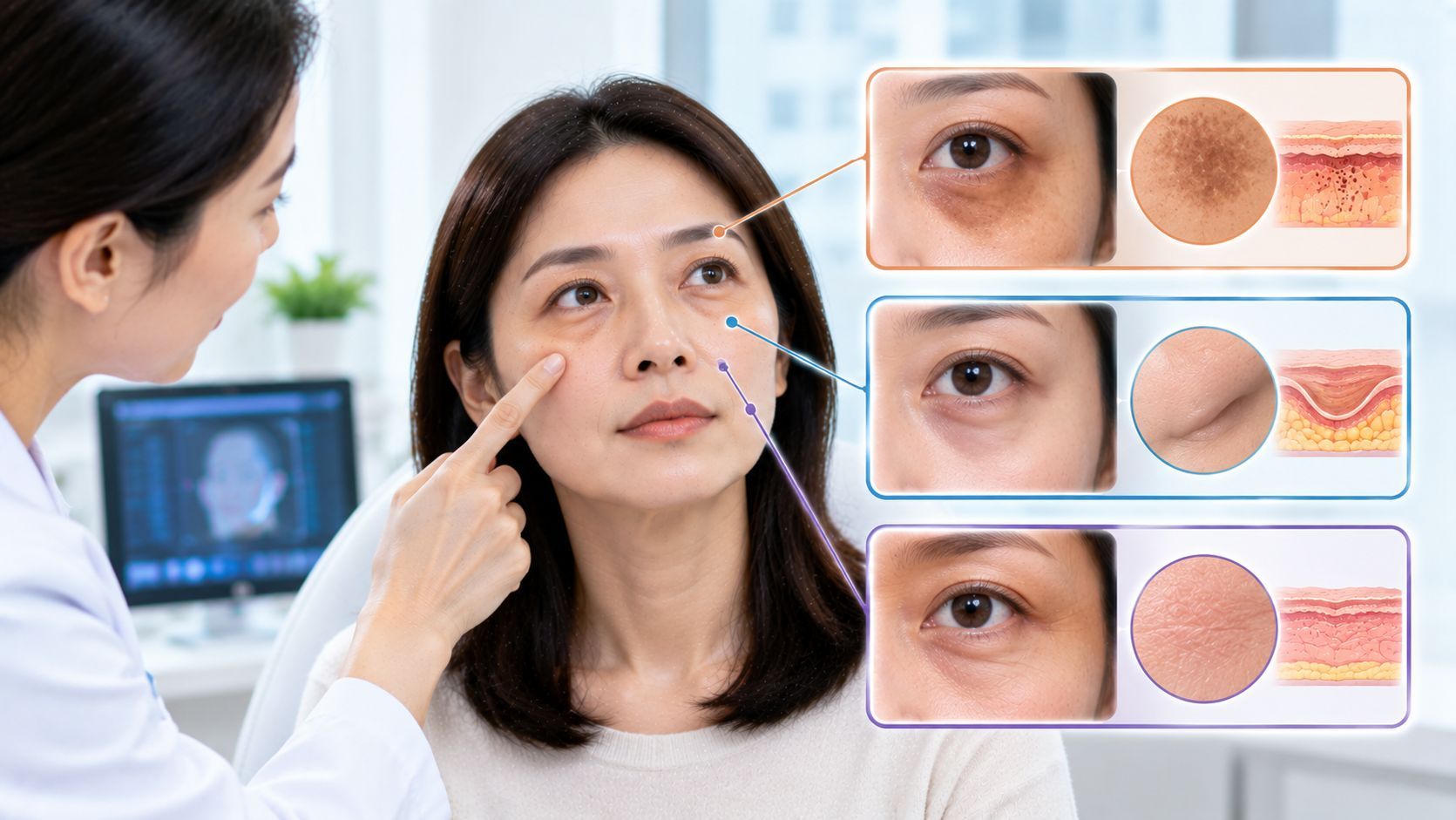
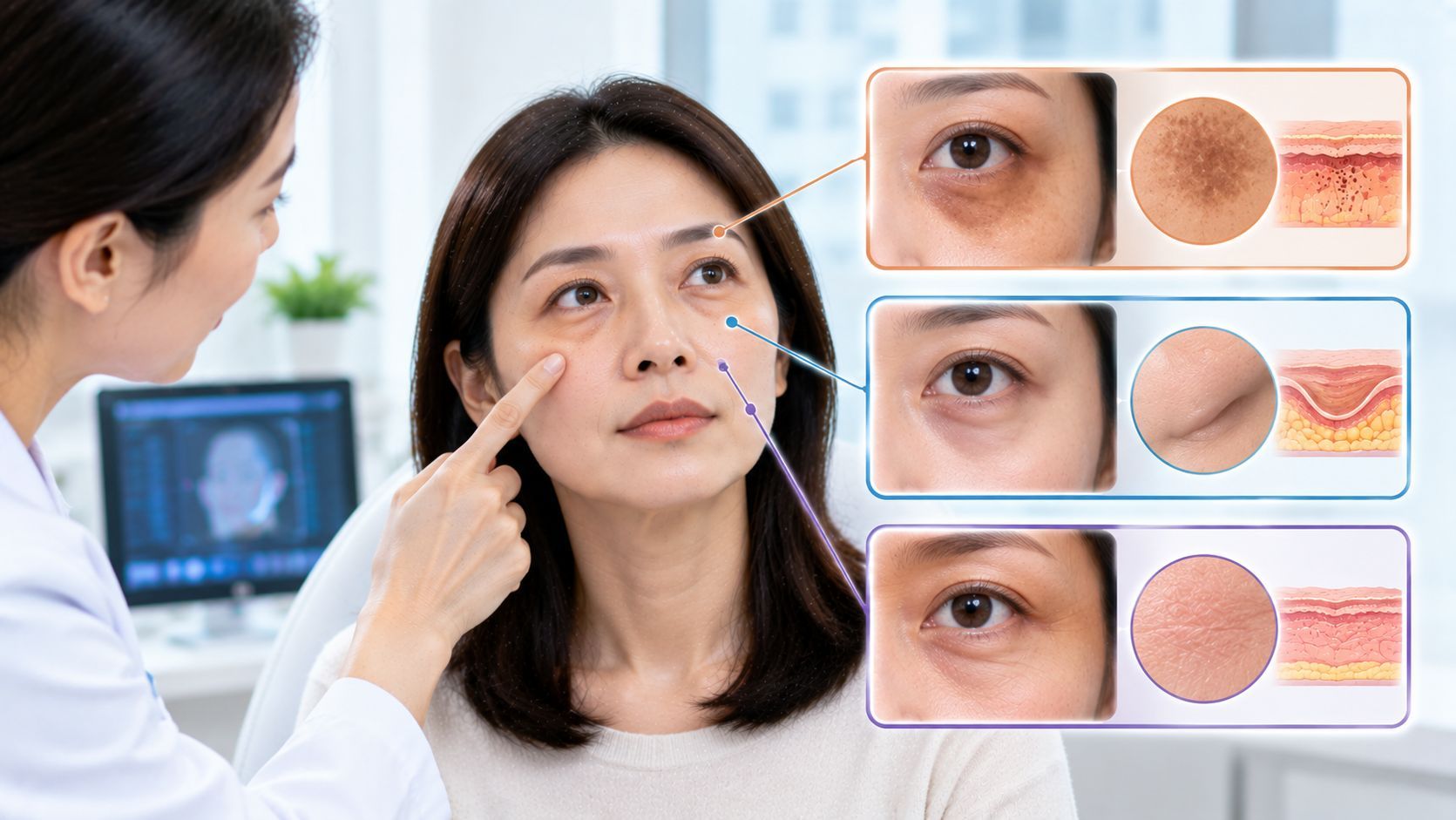
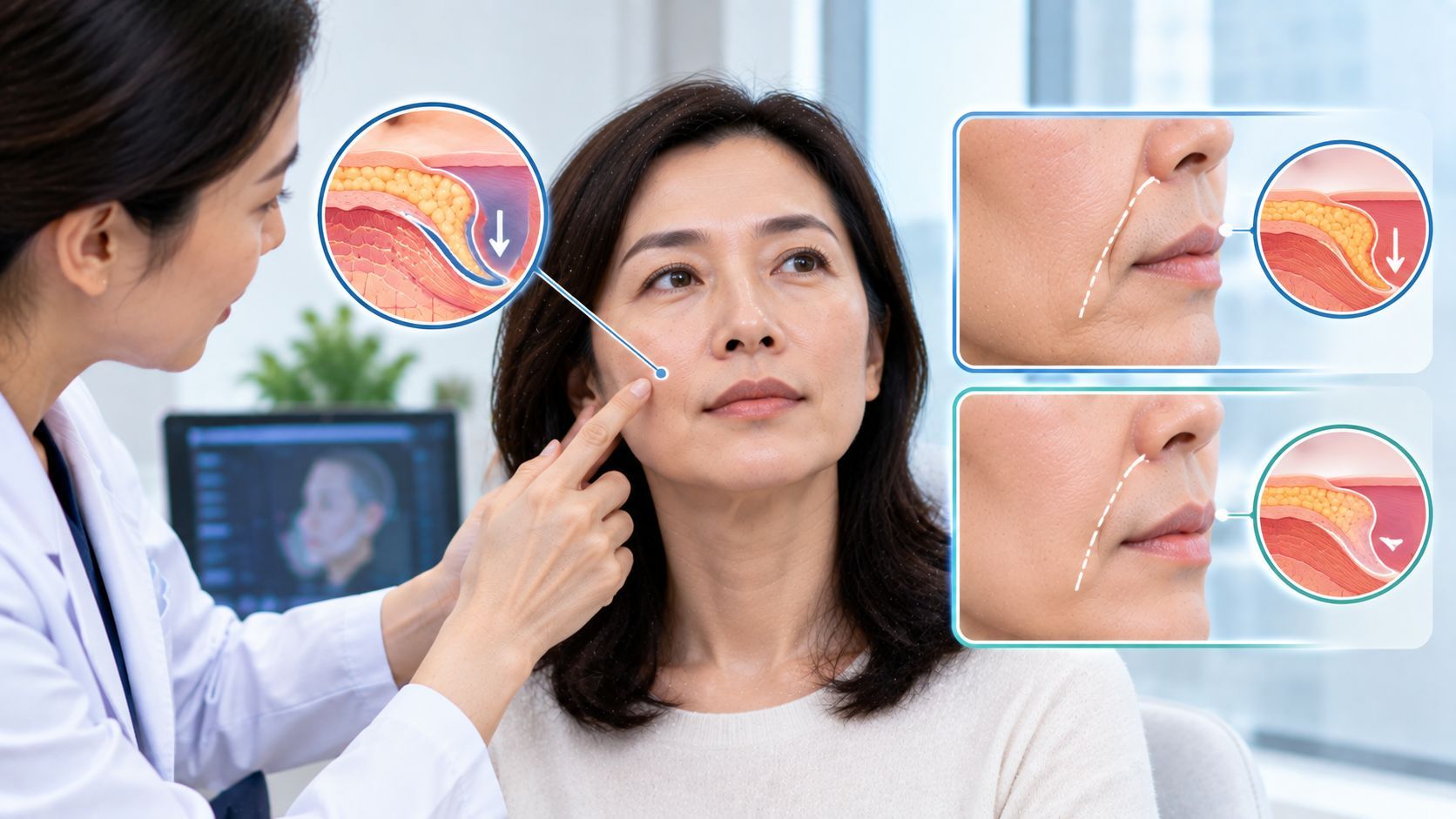
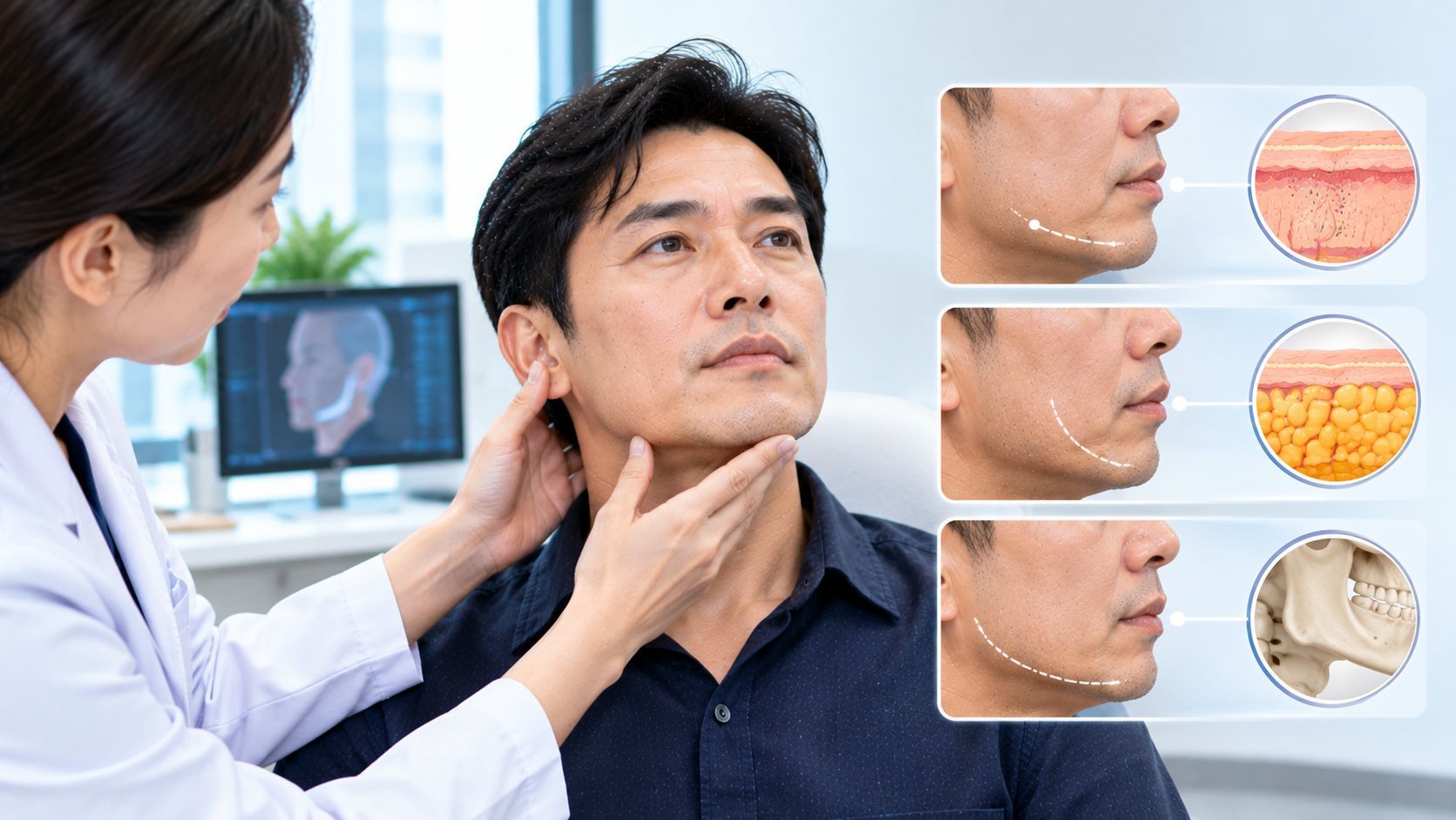
The neck can change noticeably during and after menopause. Skin may become thinner and drier, horizontal lines can become more visible, and reduced elasticity may make the neck look looser or more crepey. Changes in deeper tissues and natural aging can also contribute to a less defined neck and jawline.
There is no single treatment for an older-looking neck after menopause. The most appropriate option depends on whether the main problem is dry or thin skin, fine lines, skin laxity, muscle activity, or excess tissue. Treatments such as RF, HIFU or microfocused ultrasound, RF microneedling, selected skin-quality injectables, and laser-based procedures may each have a role, but they address different problems.
Why Can the Neck Age Quickly After Menopause?
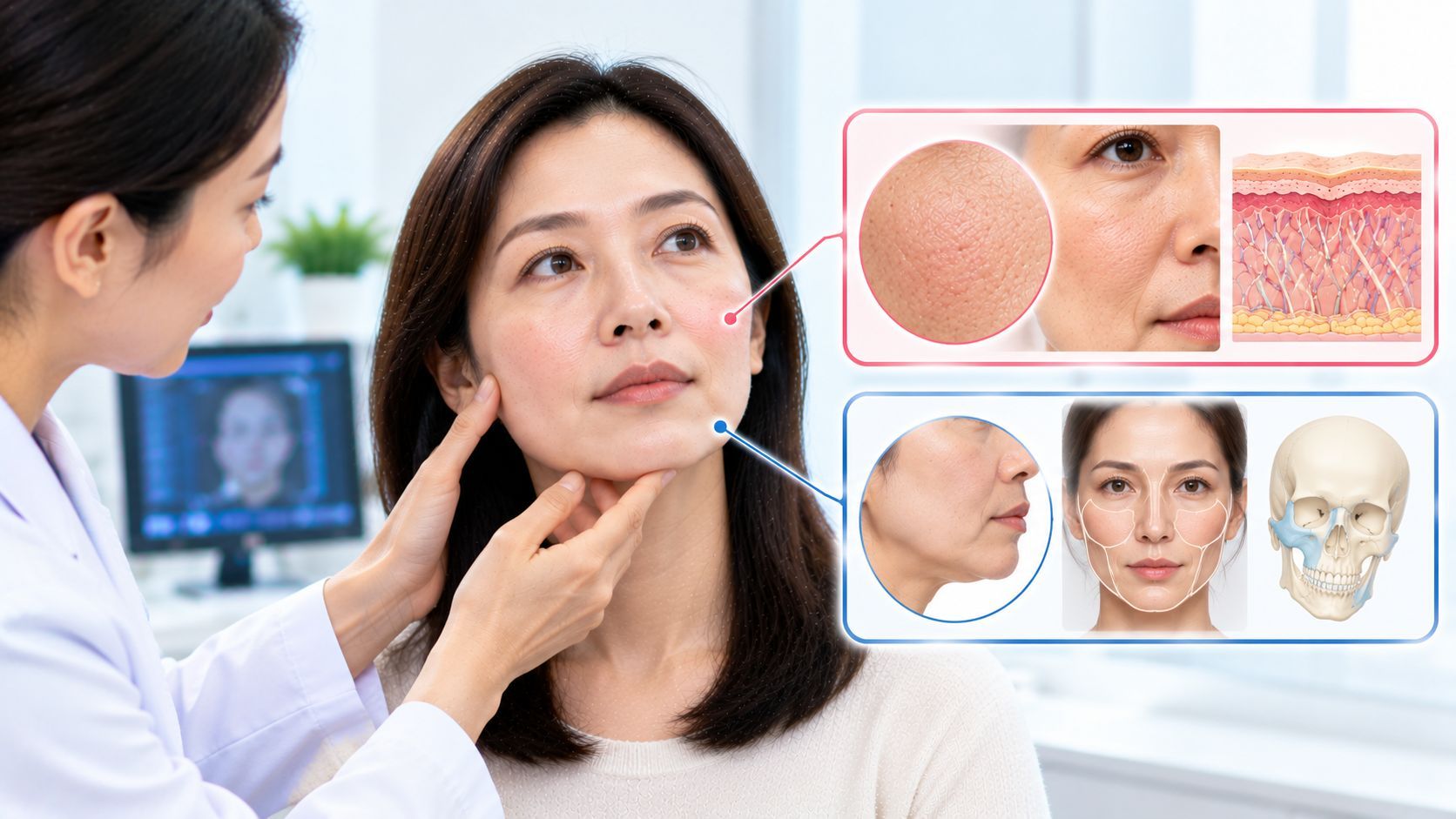
Menopause is associated with declining estrogen, which can affect several characteristics of the skin. Research has linked menopause-related hormonal changes with reductions in collagen and changes in skin thickness, hydration, and elasticity.
The neck can make these changes particularly noticeable because its skin is relatively thin and receives considerable cumulative sun exposure.
After menopause, you may notice:
- Horizontal neck lines
- Crepey skin
- Dryness
- Reduced elasticity
- Vertical neck bands
- Mild or moderate skin laxity
- Less-defined jawline
- Increased visibility of wrinkles
- Changes in the transition between the chin and neck
Not all of these changes have the same cause.
For example, a horizontal line is not necessarily evidence of severe collagen loss, while vertical bands may involve underlying muscle activity rather than simply loose skin.
First Determine What Is Making Your Neck Look Older
Before choosing a procedure, a dermatologist should determine which issue is dominant.
Thin or Crepey Skin
If the skin looks thin, dry, finely wrinkled, and less resilient, the primary concern may be skin quality.
Possible approaches include:
- Moisturizing skincare
- Retinoids or retinol when appropriate
- Selected skin-quality injectables
- Microneedling
- Certain laser treatments
- RF-based treatments
Skin Laxity
If the neck skin has become looser, an energy-based tightening treatment may be considered.
Potential options include:
- RF
- HIFU or microfocused ultrasound
- RF microneedling
Non-invasive tightening generally works better when the amount of sagging is limited. The American Academy of Dermatology notes that people with substantial loose skin may not obtain the desired degree of correction from non-surgical tightening alone.
Vertical Neck Bands
Vertical bands can be related to contraction of the platysma muscle. In selected patients, botulinum toxin may be considered for this particular concern.
This is different from treating loose skin.
Excess Skin or Significant Sagging
When there is substantial excess skin, non-surgical treatments may have limited ability to create the desired change. A surgical consultation may therefore be appropriate.
Can RF Help an Older-Looking Neck After Menopause?
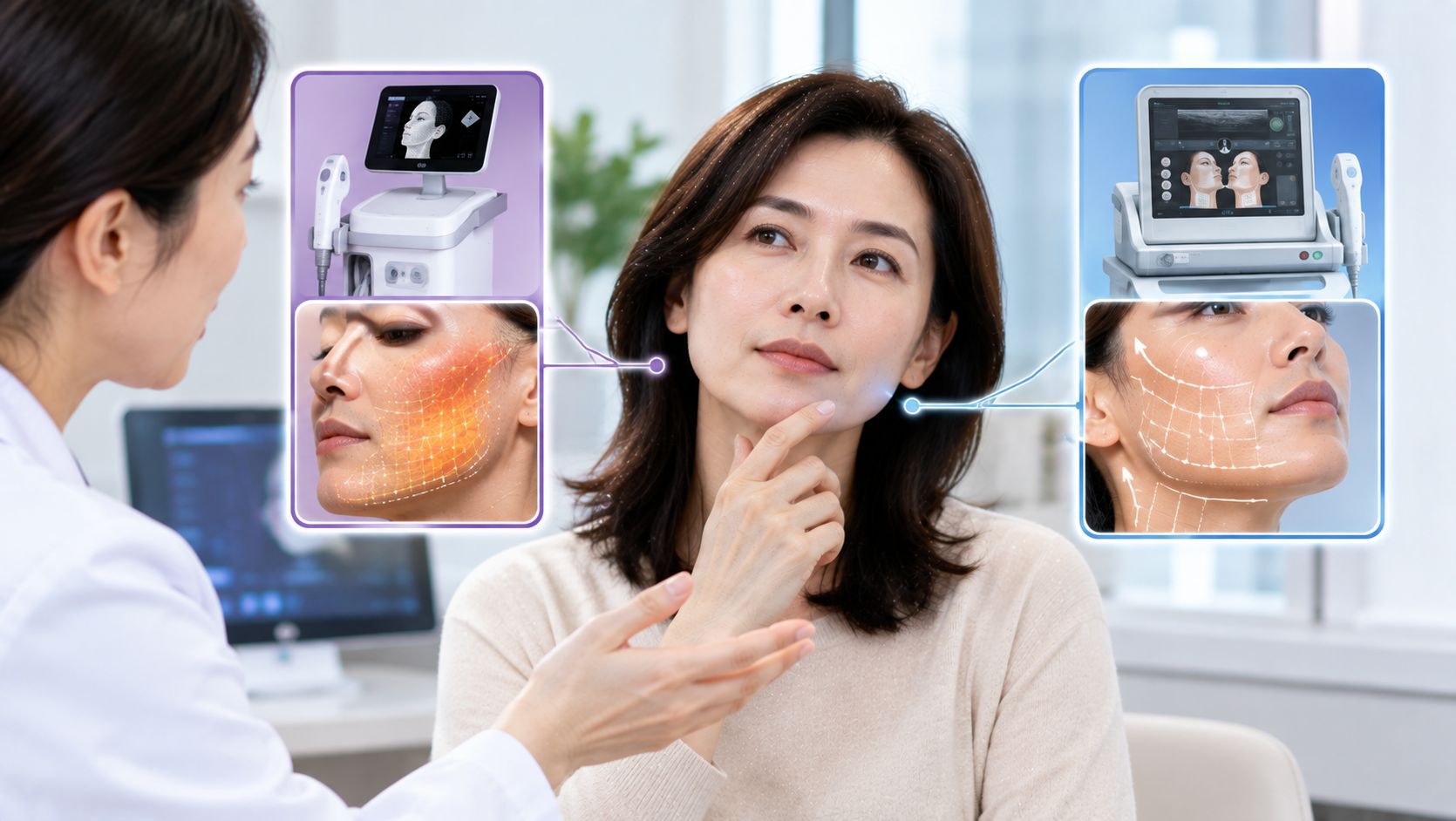
RF is one of the commonly used non-surgical approaches for skin laxity and rejuvenation.
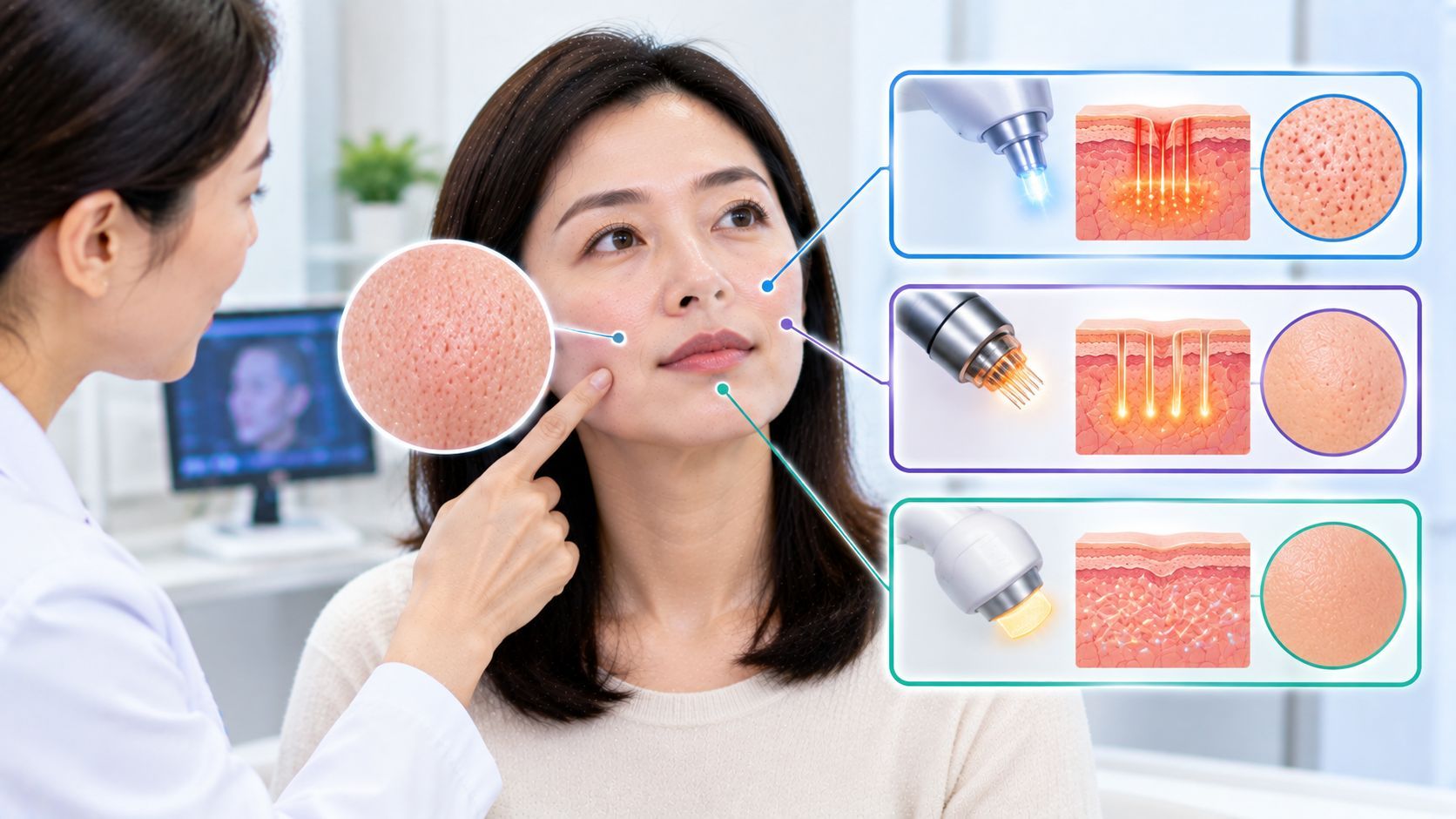
Radiofrequency energy produces controlled heating within targeted tissues. Depending on the technology, this can promote tissue remodeling and changes involving collagen and elastic fibers.
Clinical literature has reported improvements in facial skin laxity and elasticity with various RF technologies, although devices, treatment parameters, and study designs vary.
RF may be considered when the neck has:
- Mild to moderate laxity
- Reduced firmness
- Fine lines
- Early crepey changes
- Some loss of definition
It is important to understand that RF does not simply "replace" all collagen lost after menopause. Instead, the goal is controlled tissue remodeling and improvement in appearance over time.
Could HIFU Be an Option?
HIFU, or focused ultrasound-based tightening, may be considered when deeper tissue laxity is part of the problem.
It can be used in selected patients for areas such as the lower face and neck.
Compared with a skin-quality procedure, HIFU is more focused on tightening selected deeper tissue layers.
It may therefore be discussed when you have:
- Mild to moderate neck laxity
- Lower-face sagging
- Early jowling
- Reduced jawline definition
However, HIFU does not correct every type of neck aging. It does not restore hydration or replace significant lost volume.
RF vs HIFU for the Neck
ConcernRFHIFUMild skin laxityMay helpMay helpSkin firmnessCommon treatment goalMay improveFine linesMay helpLess directly focusedSkin textureSome RF technologies may helpNot usually the primary targetDeeper laxityDepends on deviceCommon treatment targetSignificant excess skinLimitedLimitedDrynessNot primary indicationNot primary indicationMajor volume lossDoes not restore volumeDoes not restore volume
Neither technology should automatically be considered the better option.
The choice should take into account the neck's anatomy, skin thickness, degree of laxity, treatment area, and the exact device being used.
What About RF Microneedling?
RF microneedling combines controlled microneedling with radiofrequency energy.
It may be considered when neck aging includes both texture problems and mild laxity.
Potential treatment goals can include:
- Fine lines
- Uneven texture
- Crepey appearance
- Reduced firmness
However, the neck can be more delicate than other treatment areas. Treatment depth and energy settings need to be carefully selected.
Possible temporary effects include redness, swelling, tenderness, and irritation. Pigmentary changes and other complications can occur, particularly when treatment is not appropriately selected or performed.
Can Rejuran Help the Neck?
Rejuran and other polynucleotide-based treatments are popular in Korean aesthetic dermatology for skin-quality concerns.
A systematic review of polynucleotide treatments reported potential improvements in parameters such as wrinkles, elasticity, and skin texture, although the evidence remains limited and treatment protocols vary.
For a menopausal neck, this type of treatment may be considered when the concern is primarily:
- Fine lines
- Skin quality
- Texture
- Reduced elasticity
- Thin-looking skin
It should not be viewed as a replacement for a neck lift or as a treatment capable of removing significant excess skin.
Could Skin Boosters Help Dry Neck Skin?
If the neck looks older primarily because it has become very dry and crepey, improving hydration and skin quality may be more relevant than aggressively tightening it.
Skin boosters may be considered for selected patients, depending on the specific product and treatment plan.
However, hydration does not equal lifting.
A treatment designed primarily to improve skin hydration should not be expected to correct pronounced neck laxity.
What About Horizontal Neck Lines?
Horizontal neck lines can become more visible with age, but their appearance can have multiple contributing factors.
Depending on the individual, treatment discussions may include:
- Topical retinoids
- Skin-quality injectables
- Selected fillers
- Microneedling
- Laser treatment
- RF-based treatments
Fillers require particular caution around the neck because anatomy and vascular structures must be carefully considered. The decision should be made by an appropriately qualified medical professional with experience treating the area.
What About Vertical Neck Bands?
Vertical bands are a different problem.
When visible bands are associated with platysma muscle activity, botulinum toxin may sometimes be used to reduce muscle contraction.
However, it does not tighten loose skin in the same way as RF or HIFU.
A patient may therefore have both muscle-related bands and skin laxity, requiring separate assessment of each issue.
When Is Surgery More Appropriate?
Non-surgical treatments have limits.
If you have:
- Significant loose skin
- A pronounced hanging neck
- Major submental fullness
- Strong platysmal changes
- Advanced lower-face and neck aging
a surgical consultation may provide a clearer understanding of the available options.
This does not mean that surgery is automatically necessary. It means the amount and type of tissue change should be assessed realistically before spending time and money on treatments that may not provide enough correction.
What Should You Do Before Treatment?
A basic skincare routine remains important after menopause.
Consider discussing:
- Broad-spectrum sunscreen
- A gentle cleanser
- A moisturizer suitable for dry skin
- Retinoid or retinol use when appropriate
- Avoiding excessive exfoliation
- Protection from prolonged UV exposure
The neck should generally be included in daily sun protection rather than treating the face separately.
What Should International Patients Ask a Korean Clinic?
If you are traveling to Seoul for neck rejuvenation, ask the clinic:
- Is my main problem skin laxity, collagen loss, muscle activity, or dryness?
- Would RF or HIFU be appropriate for my neck?
- Which exact device will be used?
- What treatment depth is planned?
- Would RF microneedling be appropriate?
- Would a skin-quality treatment provide more benefit?
- How much downtime should I expect?
- What side effects should I watch for?
- How long should I stay in Seoul before flying home?
- What follow-up is available if I have a concern after returning home?
Do not choose a treatment simply because it is advertised as a "neck tightening" procedure. Different treatments can target very different causes of neck aging.
Can You Combine Treatments?
A combination approach can sometimes make sense when several problems are present.
For example, a menopausal patient might have:
Dry, thin skin + fine lines + mild laxity
In that situation, skincare and a skin-quality treatment might be combined with an appropriate tightening procedure.
Another patient might have:
Skin laxity + prominent platysma bands
That could require a different treatment strategy.
The important principle is to treat the actual causes rather than automatically combining every available procedure.
How Quickly Will the Neck Improve?
Most collagen-focused and energy-based treatments are not instant.
Improvements may develop progressively over weeks or months, depending on the procedure and individual response.
Results vary according to:
- Age
- Skin thickness
- Degree of laxity
- UV damage
- Collagen status
- Treatment device
- Treatment settings
- Number of sessions
- Individual healing response
Maintenance may also be needed because menopause-related aging and chronological aging continue after treatment.
Conclusion
If your neck suddenly looks much older after menopause, the first step is not necessarily to choose RF, HIFU, or an injectable. The most important step is identifying what changed.
For mild to moderate skin laxity, RF or HIFU may be considered. RF microneedling may be relevant when texture and laxity occur together. Rejuran or other skin-quality treatments may be considered for fine lines and reduced skin quality, while botulinum toxin can have a role when prominent vertical bands are related to muscle activity.
If there is significant excess skin, non-surgical procedures may not provide enough correction and a surgical assessment may be appropriate.
For international patients considering treatment in Korea, a personalized consultation can help determine whether the neck needs tightening, skin-quality improvement, treatment of muscle activity, or a combination of approaches.
Frequently Asked Questions
What is the best treatment for an aging neck after menopause?
There is no single best treatment. RF, HIFU, RF microneedling, skin-quality treatments, botulinum toxin, lasers, and surgical procedures address different causes of neck aging.
Is RF good for menopausal neck skin?
RF may be appropriate for selected patients with mild to moderate laxity and reduced firmness. The exact device and treatment settings are important.
Is HIFU better than RF for neck sagging?
Neither is universally better. HIFU may be considered for selected deeper laxity, while RF can be useful for firmness and tissue remodeling. Individual anatomy should guide the decision.
Can Rejuran tighten the neck?
Rejuran is primarily a skin-quality treatment. It may help selected aspects of skin texture and elasticity but should not be expected to remove significant loose skin.
Can menopause cause neck wrinkles?
Menopause-related hormonal changes can contribute to reduced collagen, skin thickness, hydration, and elasticity, which can make wrinkles and crepey skin more noticeable. Other factors, particularly aging and cumulative sun exposure, also contribute.
How long should I stay in Seoul after neck treatment?
The appropriate recovery period depends on the specific procedure and your individual response. Ask the treating clinic about expected swelling, redness, tenderness, activity restrictions, and when it is reasonable to fly.