My face looks older in photos than in the mirror. What should I treat?
Introduction
If your face looks noticeably older in photographs than it does in the mirror, that does not necessarily mean your face has suddenly aged. Cameras can emphasize shadows, facial proportions, skin texture, under-eye hollows, pigmentation, and changes in facial volume that may be less obvious when you see yourself in normal lighting.
The more useful question is which feature is making your face look older in photos? In many cases, the answer is not simply “wrinkles.” It may be under-eye hollowness, loss of facial volume, skin laxity, uneven pigmentation, fine lines, or a combination of several changes.
What Should You Treat First?
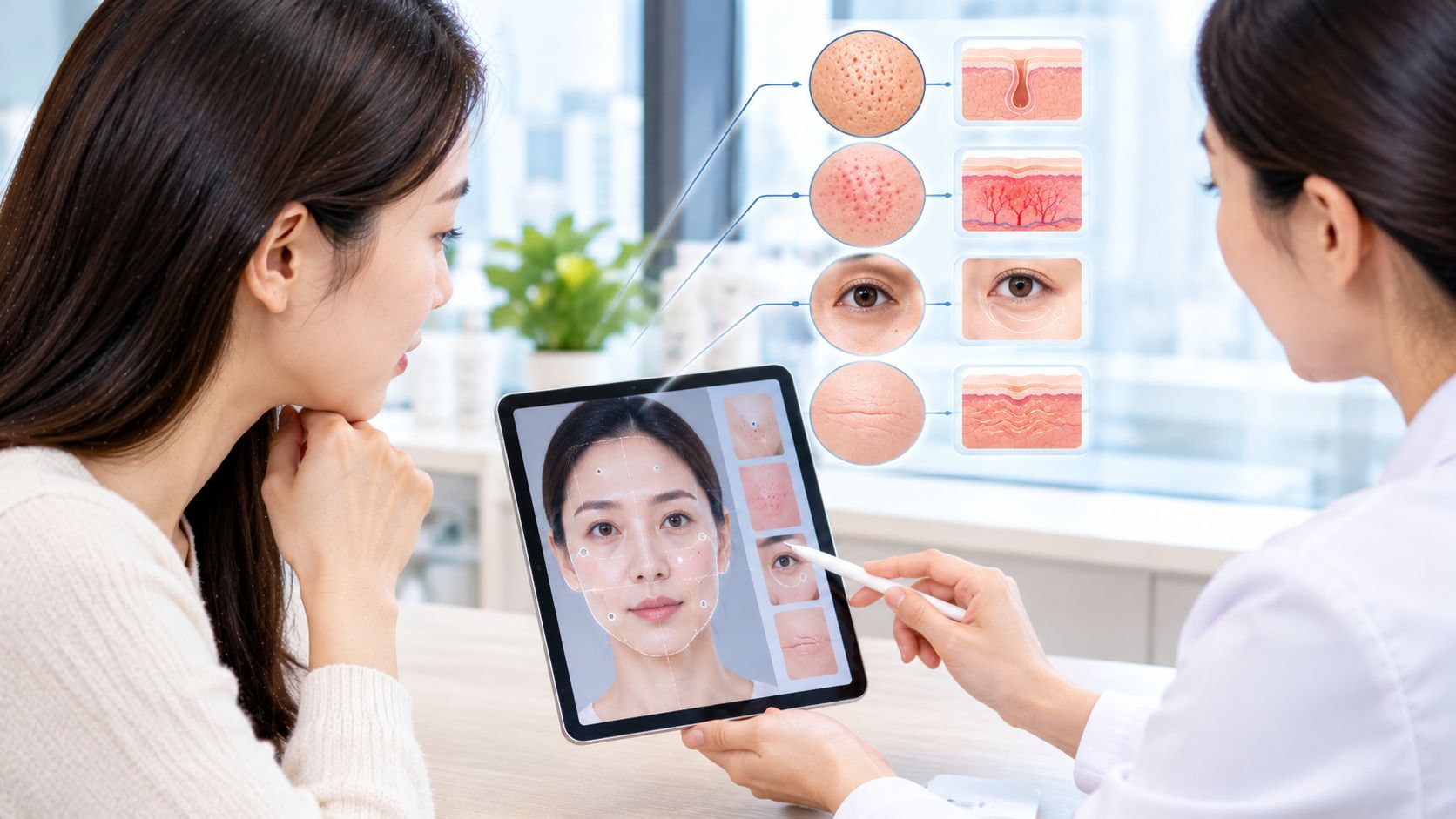
Treat the feature that is creating the strongest aging effect rather than treating your entire face automatically. If photographs make you look older, a dermatologist can assess whether the main issue is skin quality, volume loss, laxity, pigmentation, or facial expression lines.
Common possibilities include:
- Under-eye hollows or dark circles → under-eye-focused treatment or carefully selected filler in appropriate candidates
- Loss of cheek or midface fullness → volume-restoring treatment such as dermal filler when appropriate
- Fine lines and expression wrinkles → Botox or other wrinkle-focused approaches
- Loose or sagging skin → skin-tightening treatments or, when significant, surgical consultation
- Dull, uneven or sun-damaged skin → skincare, chemical peels, laser or light-based treatments depending on the concern
- Poor skin texture or fine lines → microneedling, laser-based treatments or other collagen-focused options
- Several mild concerns together → a conservative combination plan may be more appropriate than one aggressive procedure
Dermatologists commonly use different treatments for different signs of aging because no single treatment addresses every component of facial aging.
Why Can You Look Older in Photos?
Camera Perspective Can Change Facial Proportions
A photograph is a flat, two-dimensional representation of a three-dimensional face. The camera's distance, lens, angle, lighting and facial expression can therefore influence how your features appear.
A close-up photograph, for example, can make certain facial proportions appear different from how they look when someone views you from a normal conversational distance.
This is one reason you should not choose a cosmetic treatment based solely on one unflattering photograph.
Shadows Can Emphasize Hollows and Wrinkles
Lighting can make a major difference.
Overhead or directional lighting may create shadows underneath the eyes, beside the nose, beneath the cheekbones and around the mouth. These shadows can make normal facial contours appear deeper.
If your face looks significantly older only under certain lighting, lighting and facial shadows may be contributing as much as actual skin aging.
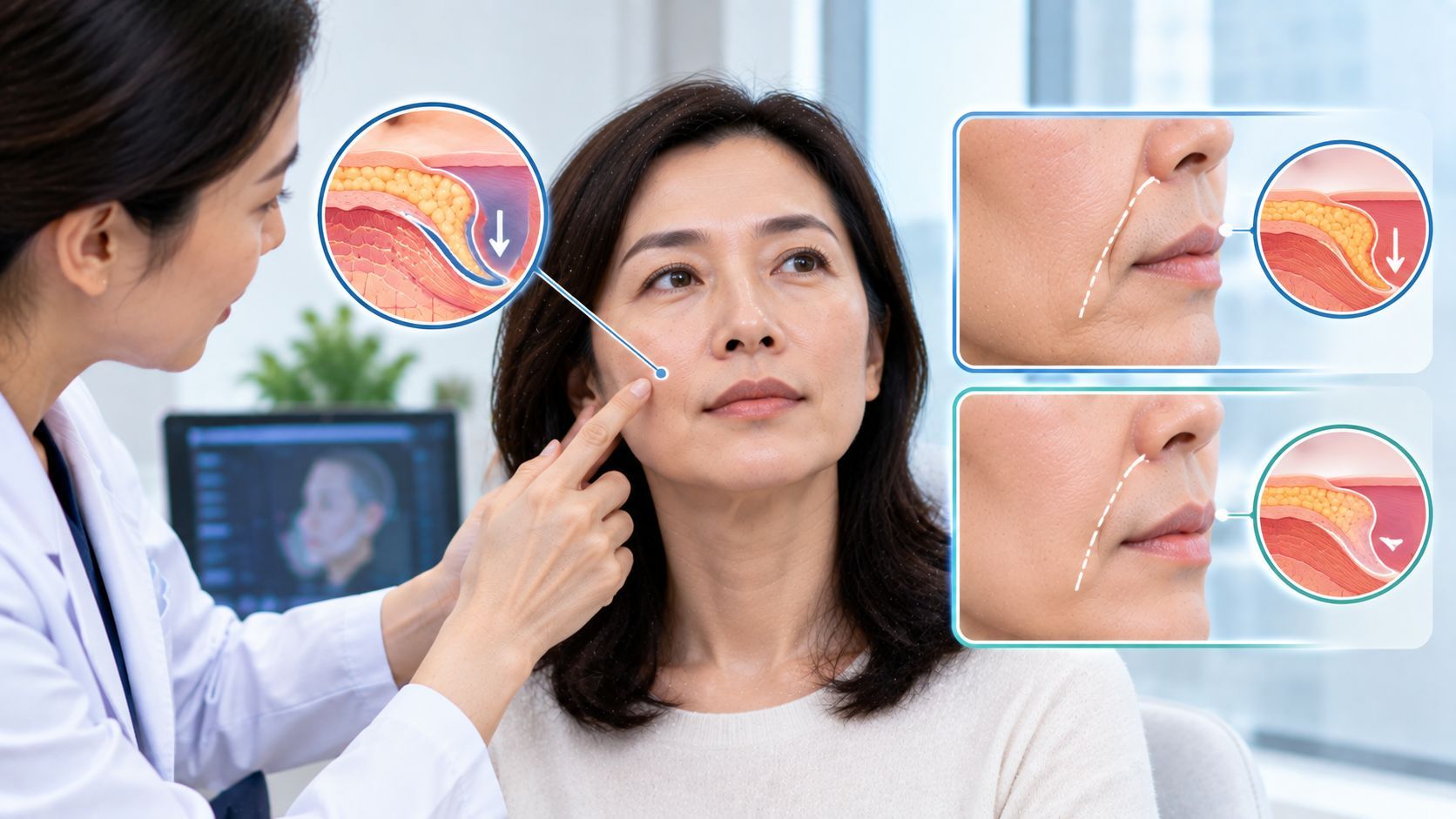
Facial Volume Changes Can Become More Noticeable
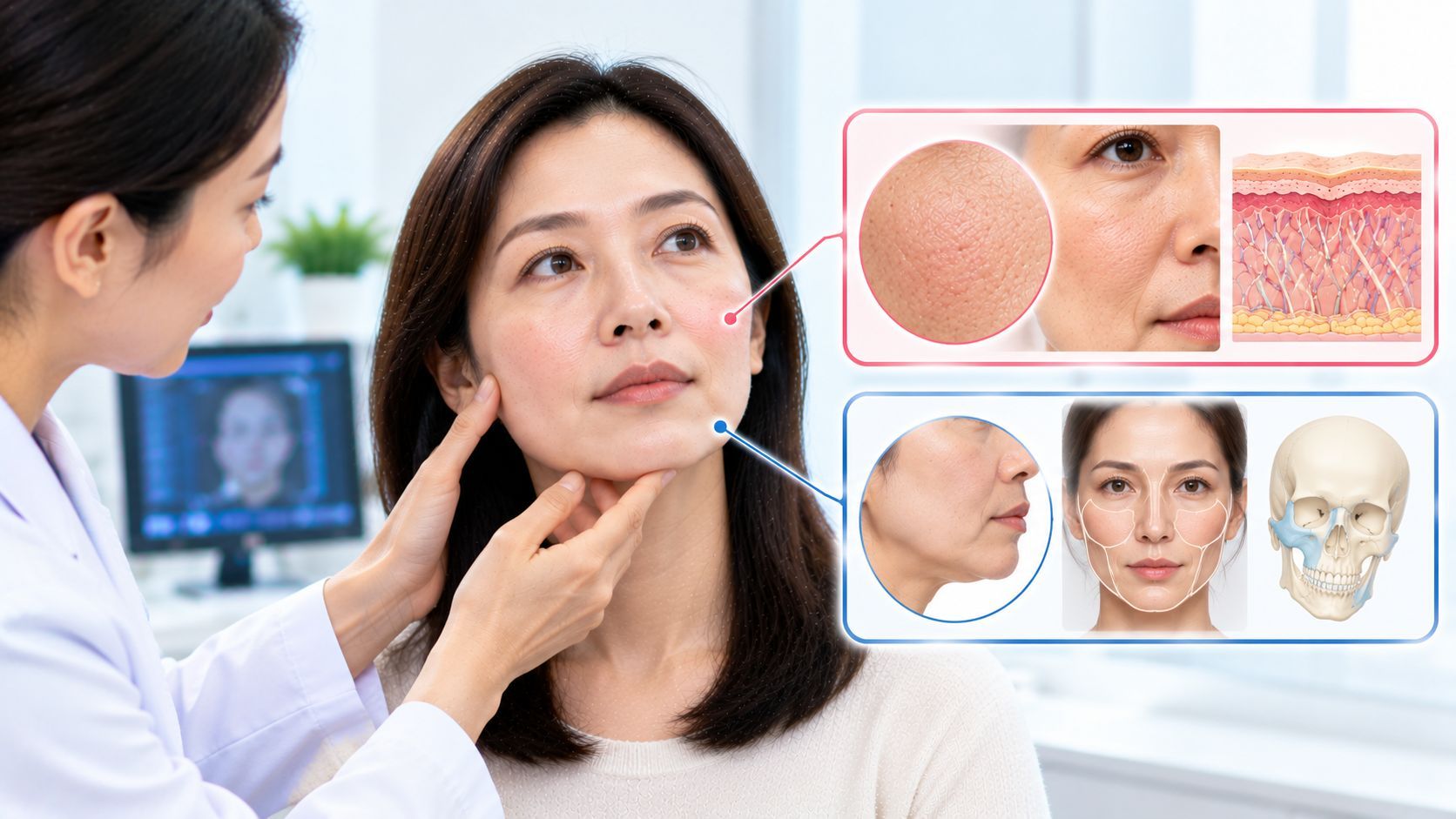
As facial aging progresses, the face can lose some of its youthful fullness. This can contribute to hollows and changes in facial contour.
In photographs, volume loss may be particularly noticeable around:
- The cheeks
- Temples
- Under-eye area
- Nasolabial region
- Lower face
- Lips
Dermal fillers can restore selected areas of lost fullness, but they are not appropriate for every facial concern and should be used conservatively.
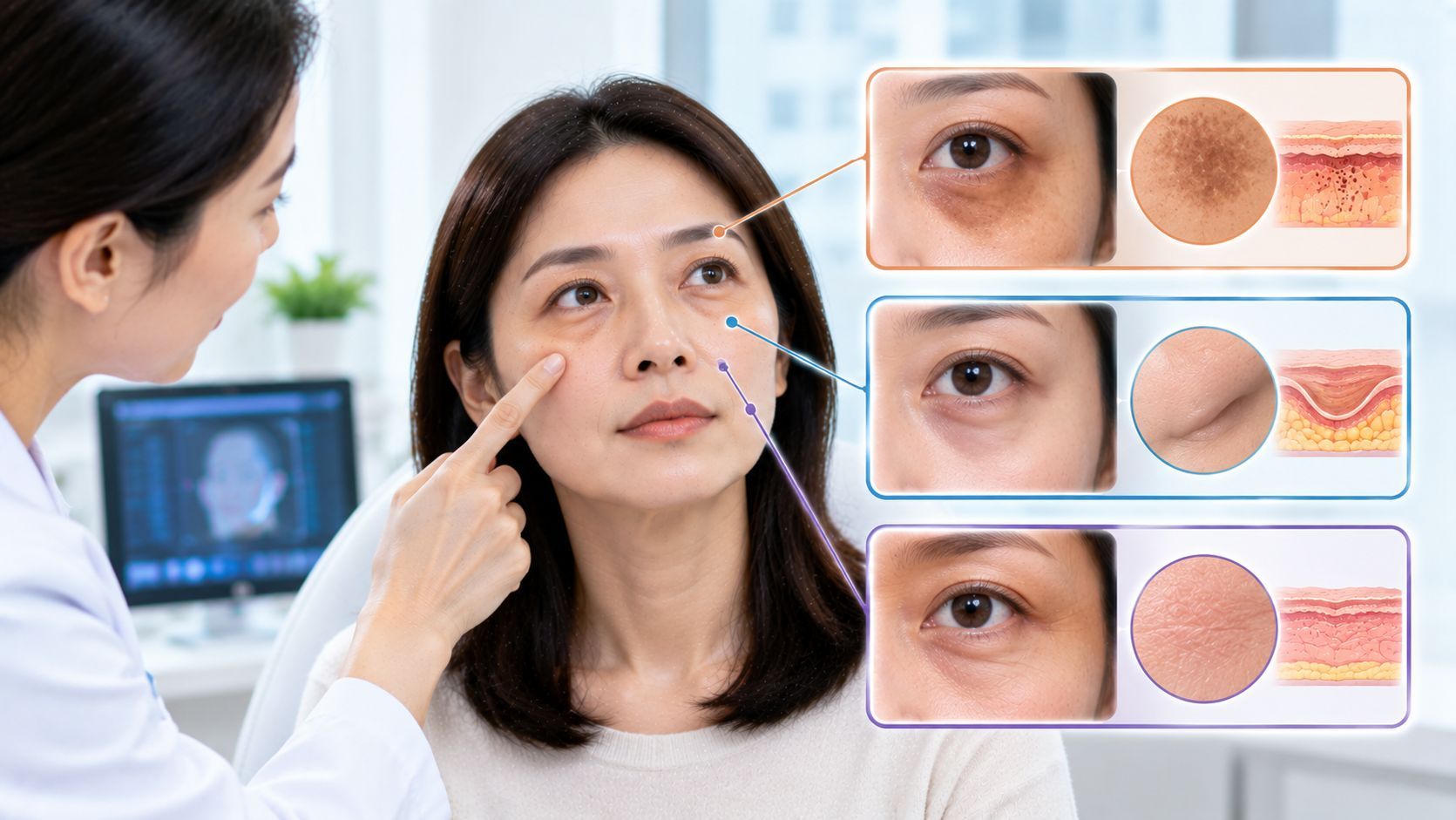
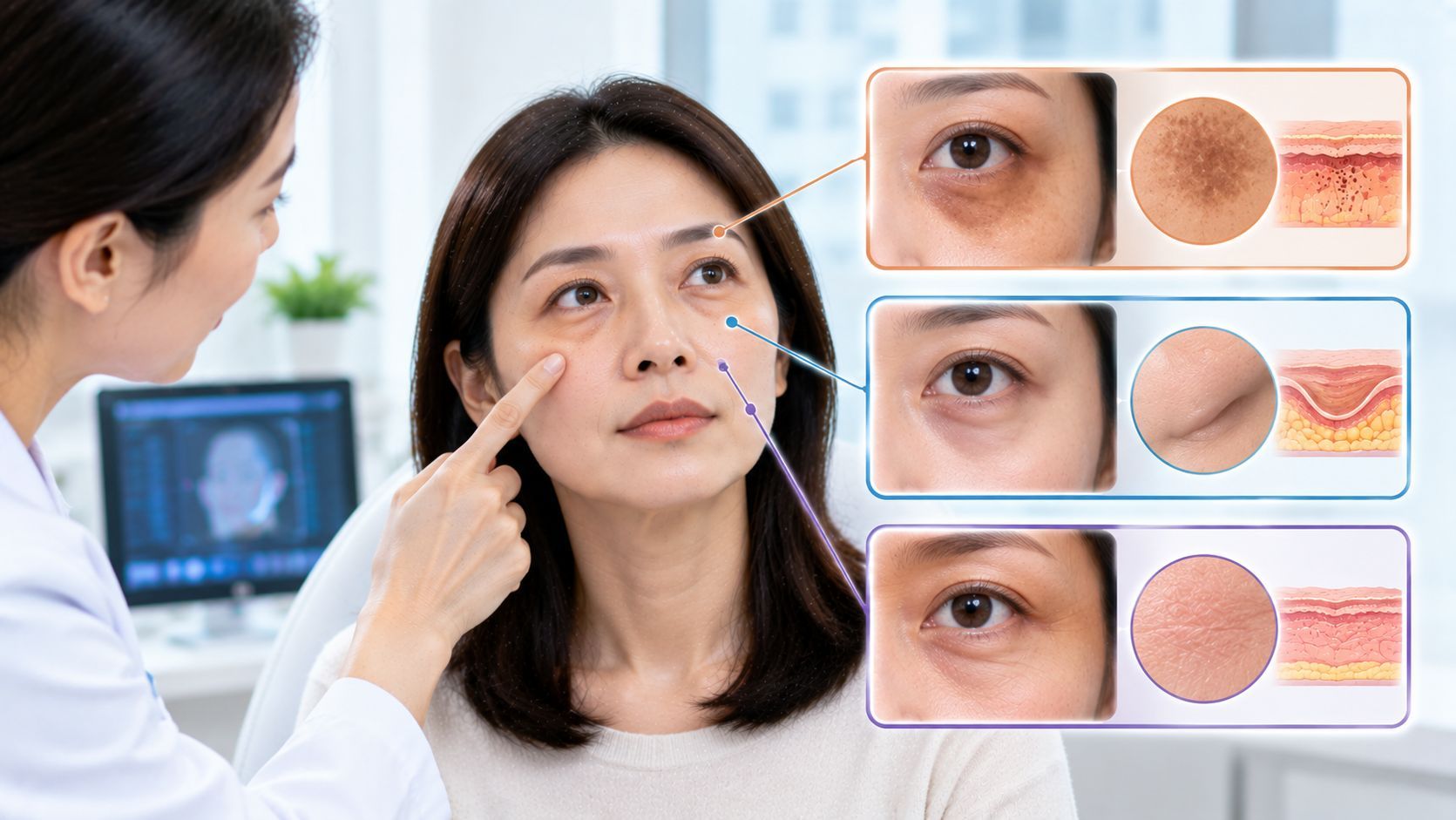
If Your Under-Eyes Make You Look Older
Under-eye changes are one of the first things to examine if photographs make you look tired or older.
Under-Eye Hollows
A hollow beneath the eyes can create a shadow that looks like a dark circle even when the skin itself is not heavily pigmented.
Depending on the anatomy, treatment might involve:
- Improving surrounding facial volume
- Carefully selected dermal filler
- Skin-quality treatments
- Addressing pigmentation separately
Under-eye filler requires particular caution because the area is anatomically delicate and not everyone is a suitable candidate.
Dark Circles
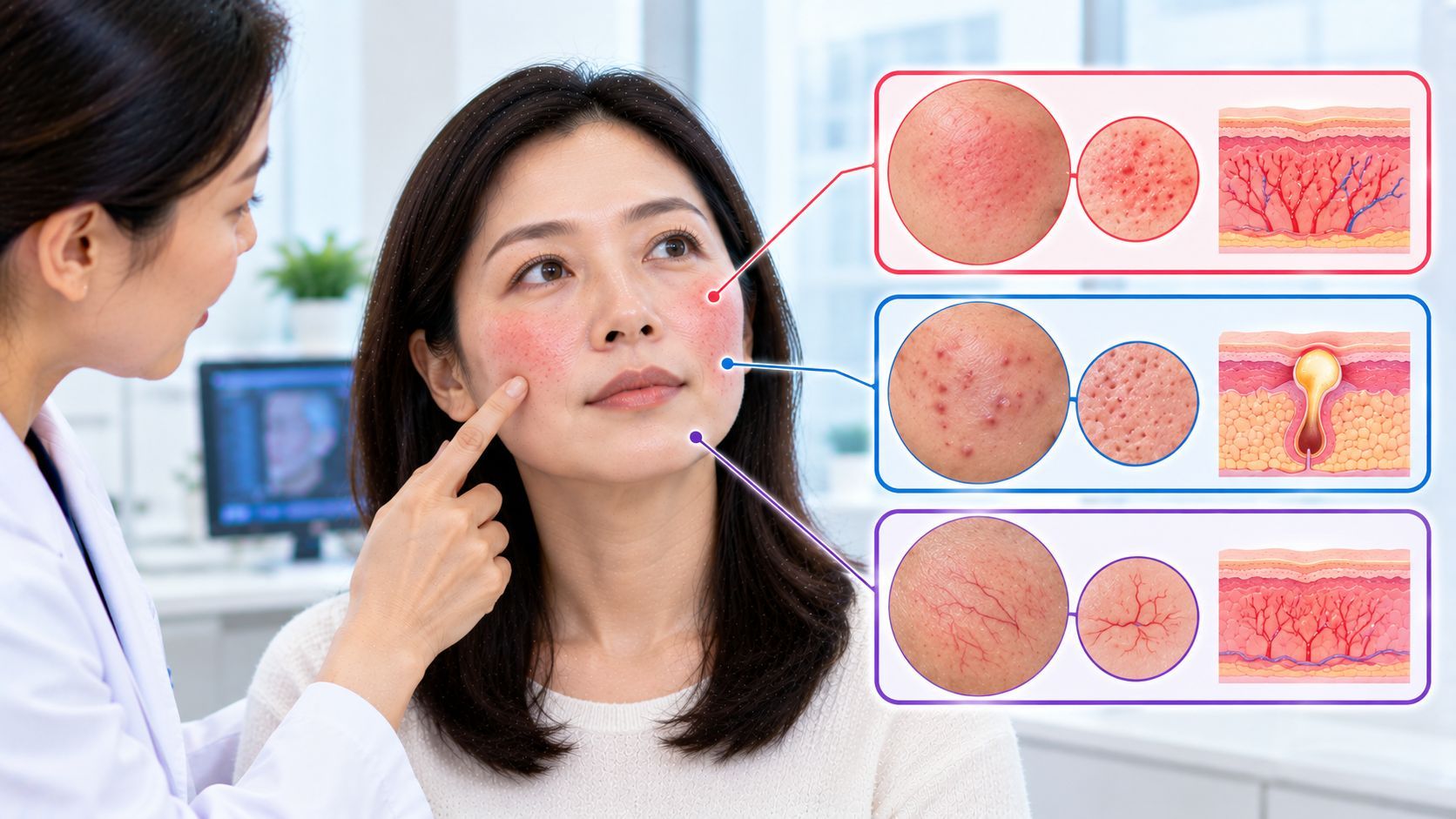
Dark circles may have several causes, including pigmentation, visible blood vessels, thin skin, shadowing from hollows, or a combination.
That means simply treating “dark circles” without determining the cause can produce disappointing results.
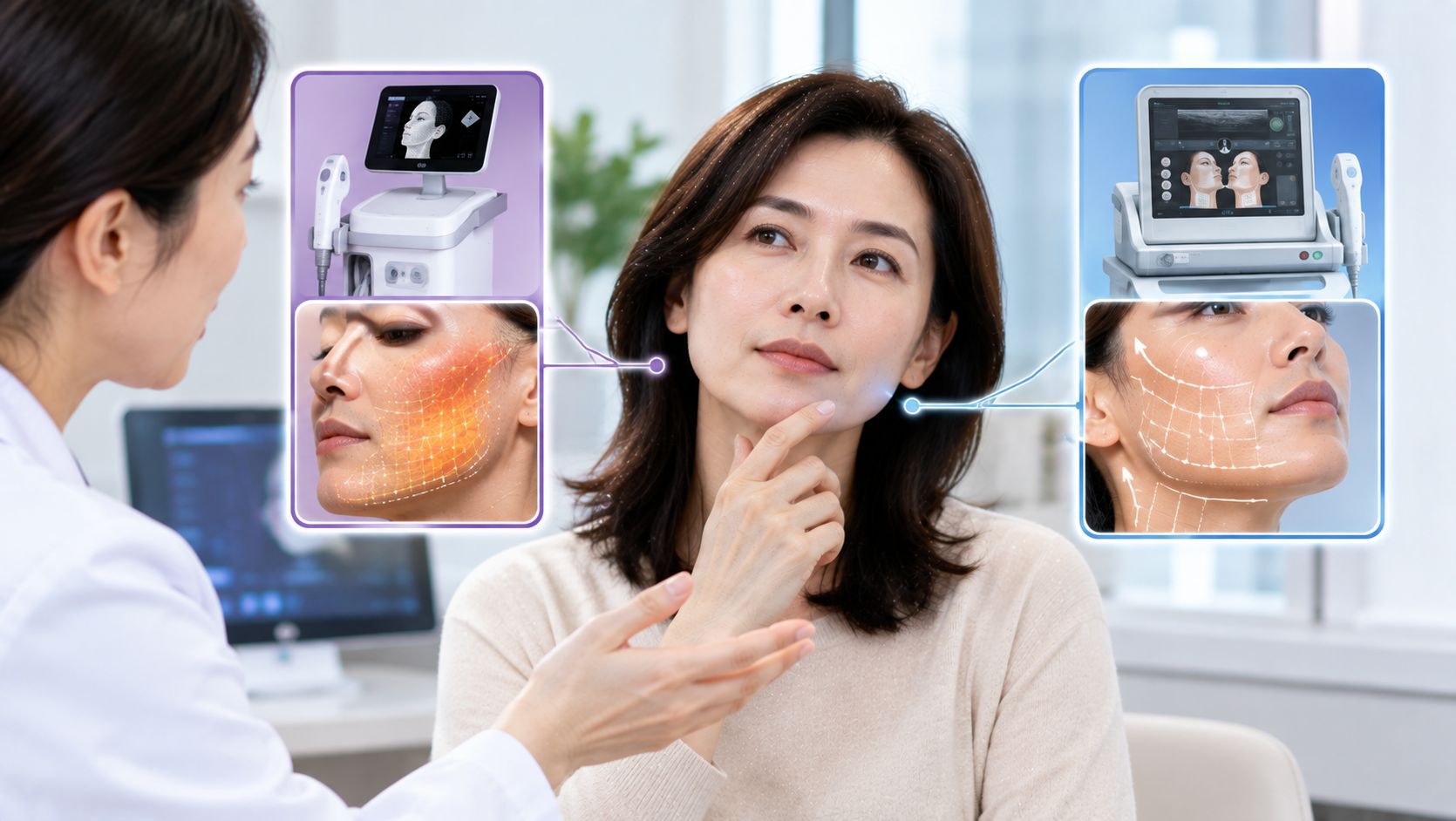
If Your Face Looks Older Because of Sagging
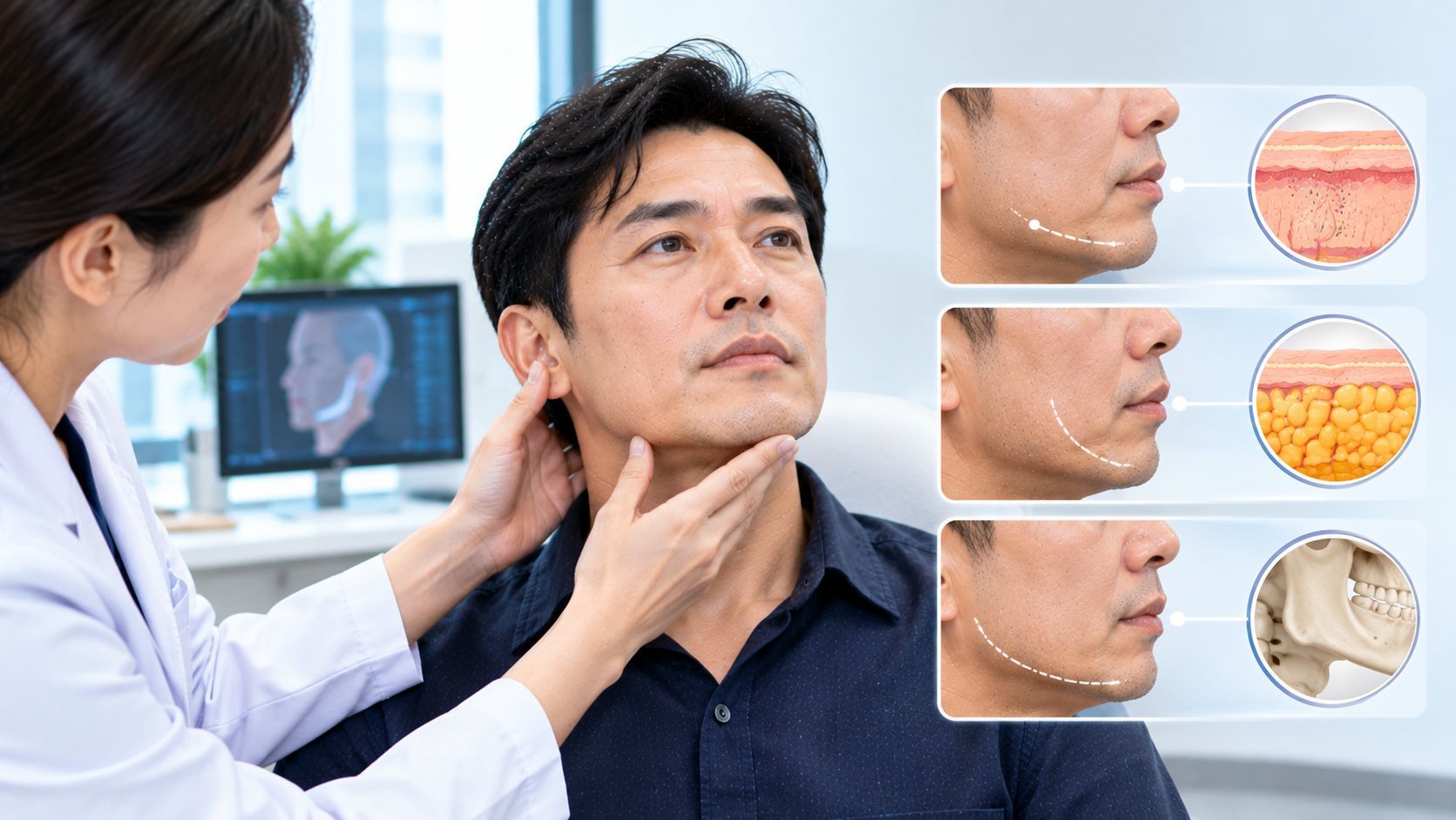
If photographs show a softer jawline, early jowling or less-defined cheeks, the primary concern may be skin laxity and changing facial structure rather than wrinkles.
For mild to moderate laxity, dermatologists may consider non-surgical approaches such as ultrasound or radiofrequency-based skin tightening. Laser treatments can also address certain combinations of wrinkles and photoaging.
For substantial skin laxity, however, non-surgical treatments have limitations. A surgical facelift generally produces a more significant lifting effect than non-surgical tightening, although it also involves surgery and greater recovery.
If Your Skin Looks Older Than Your Facial Shape
Sometimes the problem is primarily skin quality.
You may notice:
- Fine lines
- Rough texture
- Enlarged-looking pores
- Uneven pigmentation
- Sun spots
- Dullness
- Dryness
- Loss of radiance
Sun exposure is particularly important because cumulative UV damage can contribute to wrinkles, pigmentation, loose skin and uneven complexion.
Skincare Should Still Be the Foundation
Daily broad-spectrum SPF 30 or higher and regular moisturizing are important foundations for managing signs of premature skin aging. Dermatologists also commonly recommend targeted anti-aging ingredients, including retinoids when appropriate.
If you are introducing active products, adding too many at once can irritate the skin and make redness, dryness and visible lines more noticeable.
Which Treatments Might Help?
Botox for Expression Lines
If photographs make you look older because of forehead lines, frown lines or crow's-feet, botulinum toxin may be considered.
It works primarily by reducing muscle activity that contributes to certain dynamic wrinkles. It does not replace lost facial volume or correct significant skin laxity.
Dermal Fillers for Selected Volume Loss
Fillers may be useful when the main issue is localized loss of fullness or contour.
They can be used in carefully selected patients to restore volume in areas such as the cheeks or certain hollow areas.
The goal should generally be restoration rather than simply adding as much volume as possible. Excessive filler can create a less natural appearance.
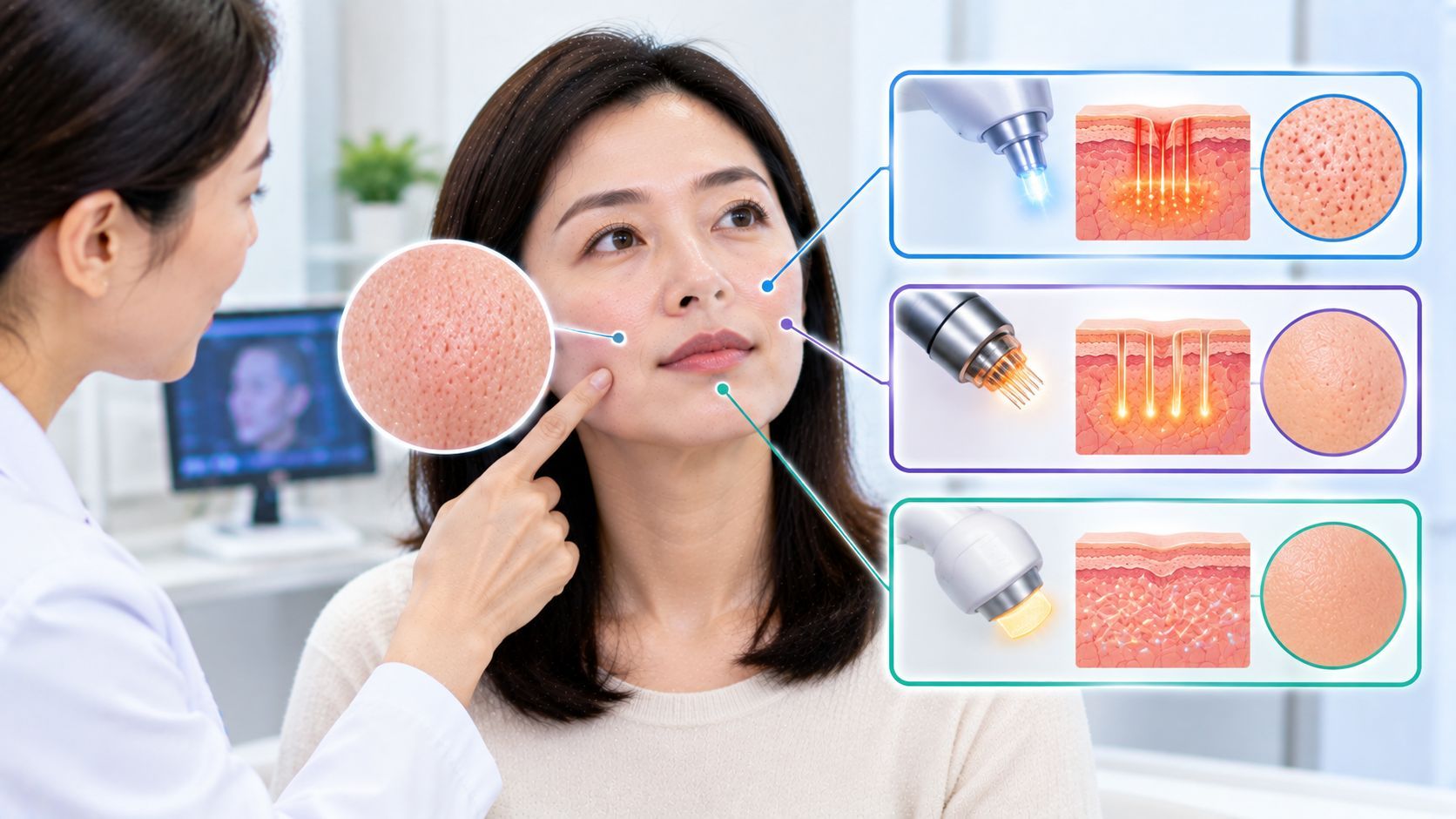
Laser Treatments for Texture and Sun Damage
Laser treatments may be considered when photographs highlight wrinkles, uneven pigmentation or photoaged skin.
Different lasers have very different levels of intensity and downtime, so treatment should be selected according to the specific problem and skin characteristics.
Microneedling for Texture and Fine Lines
Microneedling can be used to improve certain aspects of skin texture, fine lines and mild laxity. It may be considered when the main problem is skin quality rather than significant structural volume loss.
Radiofrequency or Ultrasound Skin Tightening
If your face appears older because of mild laxity rather than deep wrinkles, energy-based skin-tightening treatments may be options.
These treatments can have gradual and relatively subtle results, and they should not be presented as equivalent to a facelift.
Should You Treat Your Whole Face?
Not necessarily.
A better approach is to identify the visual aging pattern first.
For example:
What looks older in photosWhat may be worth assessingUnder-eyesHollows, pigmentation, thin skin, shadowsForehead/frown linesDynamic wrinklesCheeks look flatterVolume lossJawline looks softerSkin laxity, volume distributionFace looks dullPhotoaging, pigmentation, skin qualityFine lines everywhereSkin quality and collagen lossSeveral concernsConservative combination treatment
A dermatologist may recommend treating one concern first and reassessing the result rather than performing several procedures simultaneously.
What About Combining Treatments?
Combination treatment can make sense when different aging mechanisms are contributing to the appearance.
For example, someone might have:
- Mild expression lines
- Early skin laxity
- Under-eye shadows
- Uneven pigmentation
Trying to correct all four problems with one treatment is unlikely to be ideal.
A personalized plan could instead combine different approaches over time. Dermatologists sometimes use multiple treatment types to address different signs of aging while aiming for a natural appearance.
For international patients considering treatment in Seoul, this is particularly important. Your consultation should identify what actually needs treatment before you agree to a package of procedures.
How to Prepare for a Dermatology Consultation
Bring several photographs if you are concerned about how your face appears in pictures.
Useful photos include:
- A normal front-facing photograph
- A three-quarter view
- A side profile
- A photograph in natural daylight
- An older photograph for comparison
Avoid relying exclusively on selfies taken very close to your face.
During consultation, ask:
- What makes my face look older?
- Is the main issue skin, volume, laxity or pigmentation?
- Which treatment would address that specific problem?
- What improvement is realistic?
- What are the risks and downtime?
- Would treating less give me a more natural result?
- Do I actually need more than one treatment?
For international patients, also ask about follow-up appointments, aftercare instructions, medical records and what to do if a problem develops after returning home.
Risks and Limitations
No cosmetic treatment can guarantee that your face will look younger in every photograph.
Results can vary according to age, anatomy, skin type, degree of aging, treatment technique and individual healing.
Injectable treatments can cause temporary swelling, bruising, tenderness or asymmetry, while more serious complications are possible. Energy-based and laser treatments can also cause redness, pigmentation changes, burns or other complications depending on the procedure.
The safest strategy is to choose treatment based on an in-person assessment rather than trying to reproduce a treatment seen in someone else's before-and-after photographs.
Conclusion
If your face looks older in photos than in the mirror, do not automatically assume that you need a major anti-aging treatment.
Start by identifying what the camera is emphasizing: under-eye shadows, volume loss, wrinkles, skin laxity, pigmentation, texture or a combination. Once the main concern is identified, treatment can be much more targeted.
For some people, better skincare and sun protection may be enough. Others may benefit from Botox, carefully selected fillers, laser or microneedling, skin-tightening treatments, or a conservative combination approach.
The goal should not be to make your face look dramatically different. It should be to address the specific features that are making you appear older while preserving your natural facial proportions.
FAQs
Why do I look older in photos but not in the mirror?
Photos can emphasize shadows, facial contours, texture and proportions depending on the camera, lens, distance, lighting and expression. One photograph is therefore not a reliable measure of how old your face actually looks.
What treatment makes a face look younger in photos?
There is no single best treatment. The appropriate option depends on what is creating the aged appearance. Wrinkles, volume loss, skin laxity, pigmentation and under-eye concerns require different approaches.
Should I get fillers if my face looks older in pictures?
Only if volume loss is actually contributing to the appearance. Fillers can restore selected areas of lost fullness, but adding unnecessary volume may produce an unnatural result.
Can Botox make my face look younger?
Botox can reduce certain expression-related wrinkles, such as frown lines and some forehead or eye-area lines. It does not correct every cause of facial aging.
Is laser treatment good for an older-looking face?
Laser treatment can be useful for selected concerns such as photoaging, pigmentation, wrinkles and texture. The appropriate laser depends on the specific skin problem and desired downtime.
What should I do before choosing an anti-aging treatment?
Have a qualified dermatologist assess your facial structure, skin quality, volume distribution and degree of laxity. Bring representative photographs, but do not choose a procedure based solely on one unflattering image.