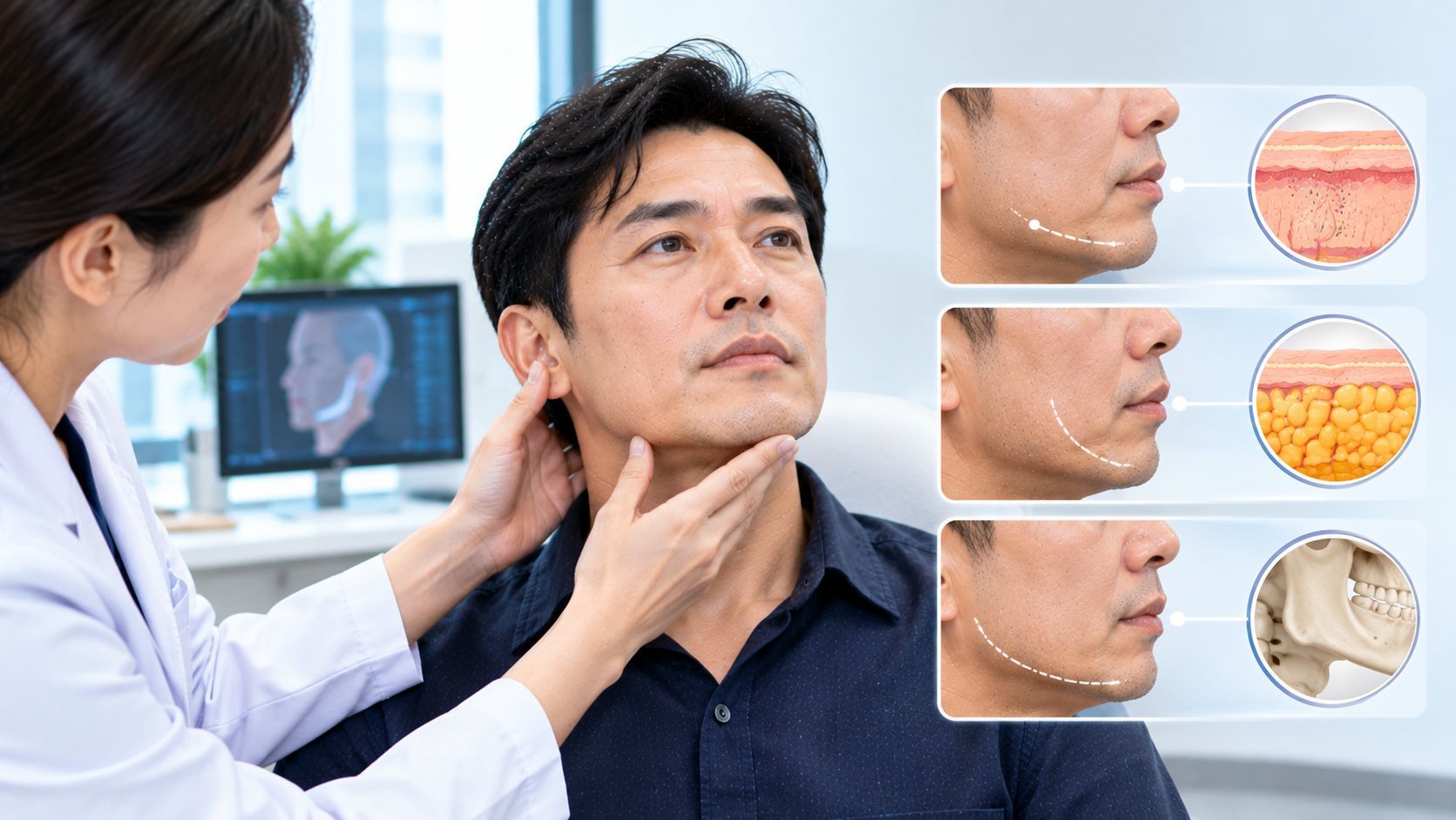
My Face Looks Smaller After Lifting Treatment but I Don't Like It. Can It Be Reversed?
Introduction
A face that looks smaller after a lifting treatment can be surprising, especially when the original goal was firmer skin, a sharper jawline or a more youthful appearance. Some patients are happy with a slimmer contour, while others feel that their cheeks have become too flat, hollow or angular.
Whether the change can be reversed depends on what caused the face to look smaller. Temporary swelling may simply have disappeared, while genuine volume loss, weight loss or changes in soft-tissue contour may require a different approach. In some cases, the face may not have lost significant volume at all; tightening may simply have made existing hollowness more visible.
The first step is therefore to identify the cause before attempting another cosmetic treatment.
Why Can the Face Look Smaller After a Lifting Treatment?
The Initial Swelling Has Gone Down
Many aesthetic procedures produce temporary swelling. During the early recovery period, the face may look fuller than it did before treatment.
As swelling subsides, the face can appear noticeably smaller.
This is particularly confusing when patients compare an early post-treatment photograph with a later photograph. The early image may not represent the eventual result.
The Face May Look More Defined
A tightening treatment can change the visual relationship between the cheek, jawline and lower face.
If lax skin is reduced or repositioned, the face may appear:
- Narrower
- More angular
- More defined around the jaw
- Less round
- Less soft
That does not necessarily mean that a significant amount of facial fat has disappeared.
However, if you prefer a fuller facial appearance, even a modest contour change can feel undesirable.
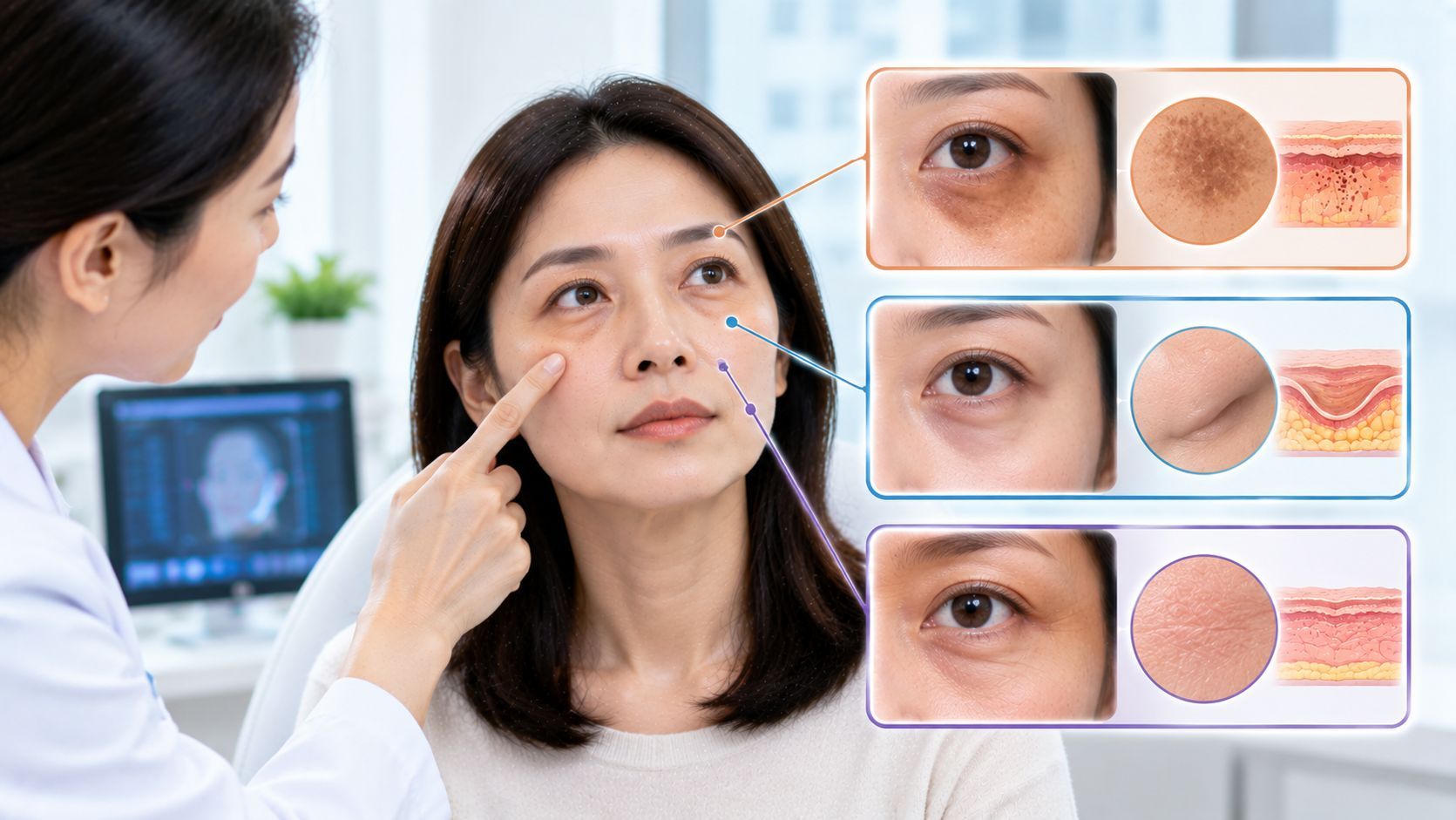
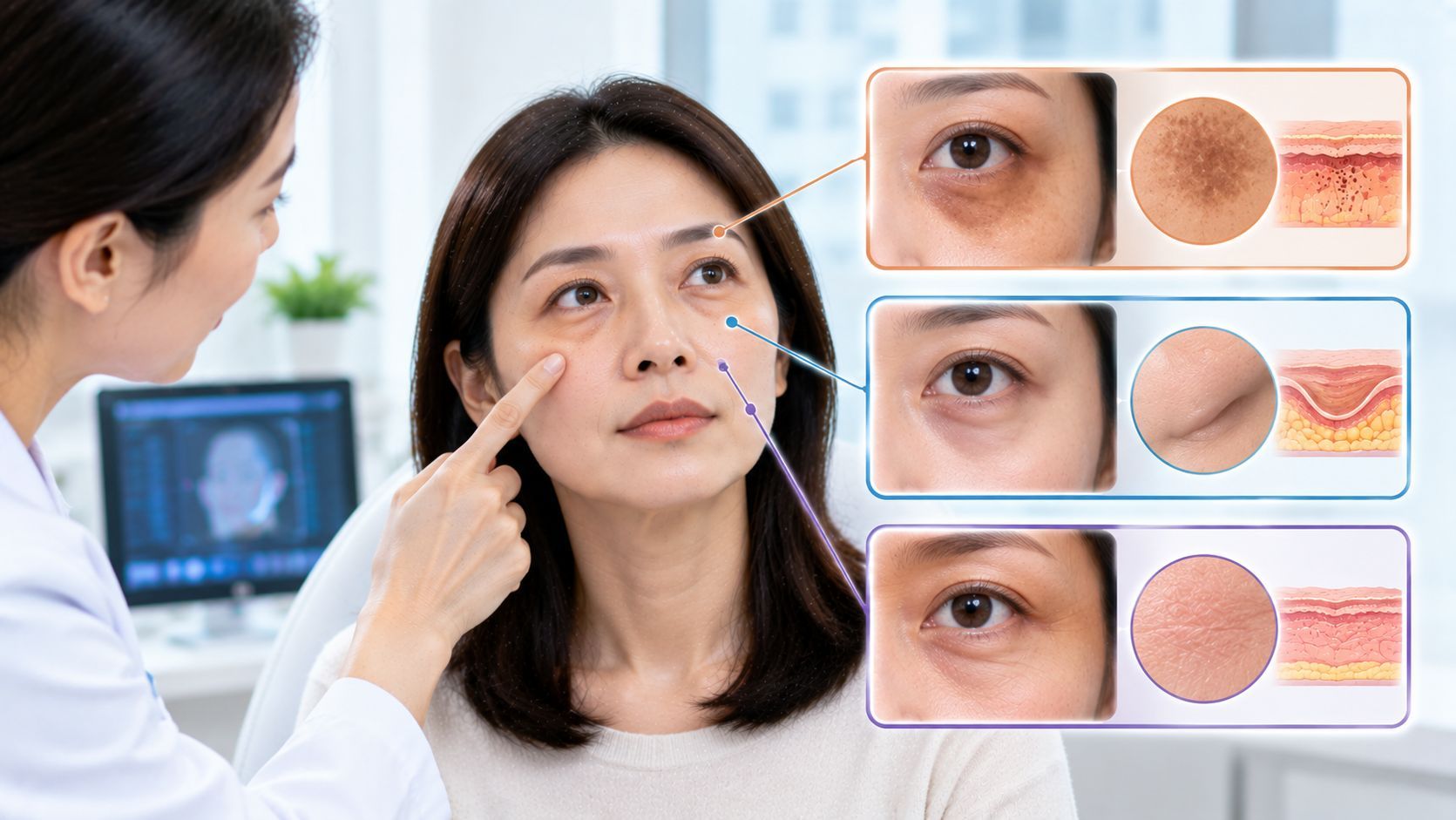
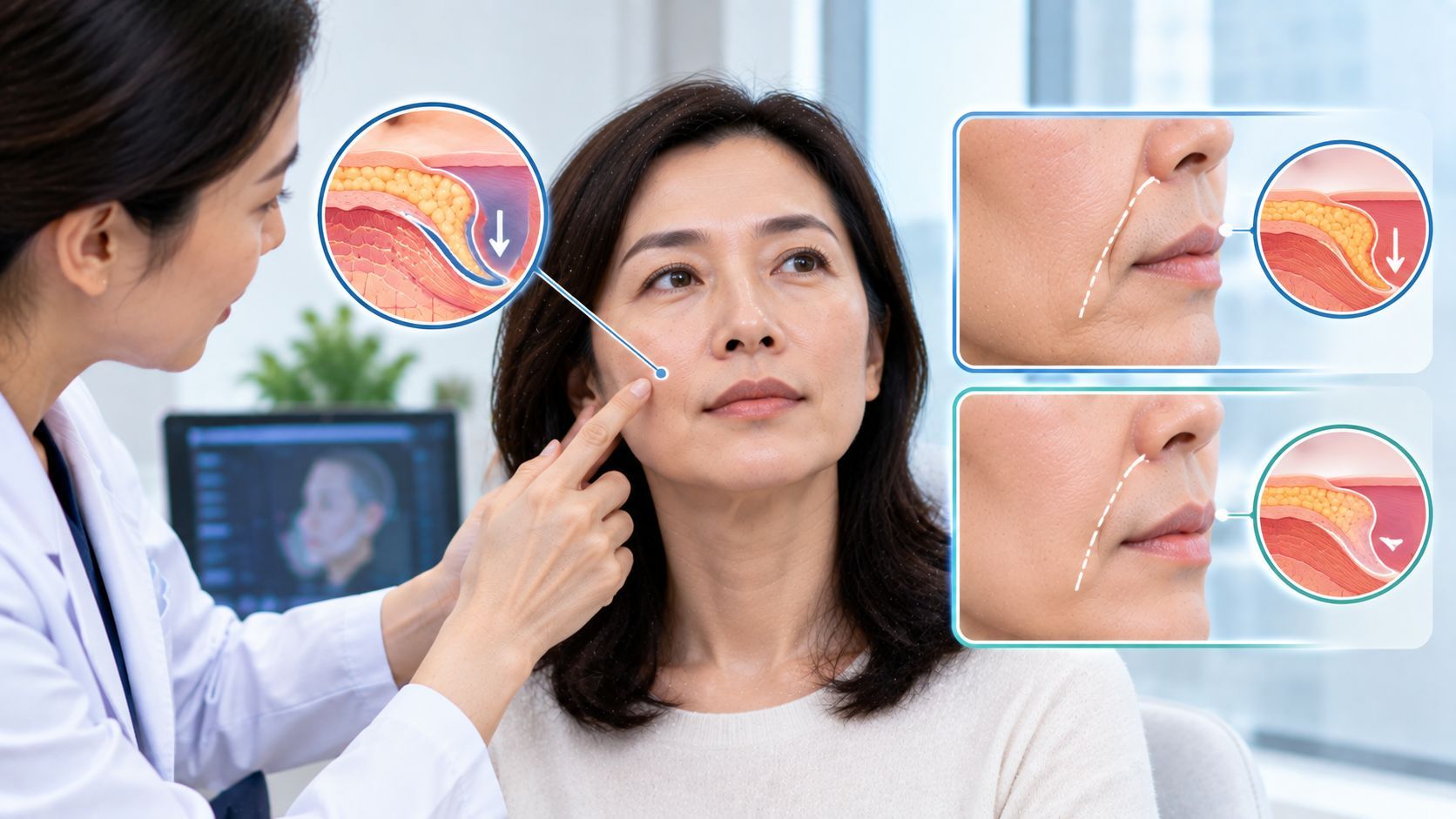
Existing Volume Loss May Become More Noticeable
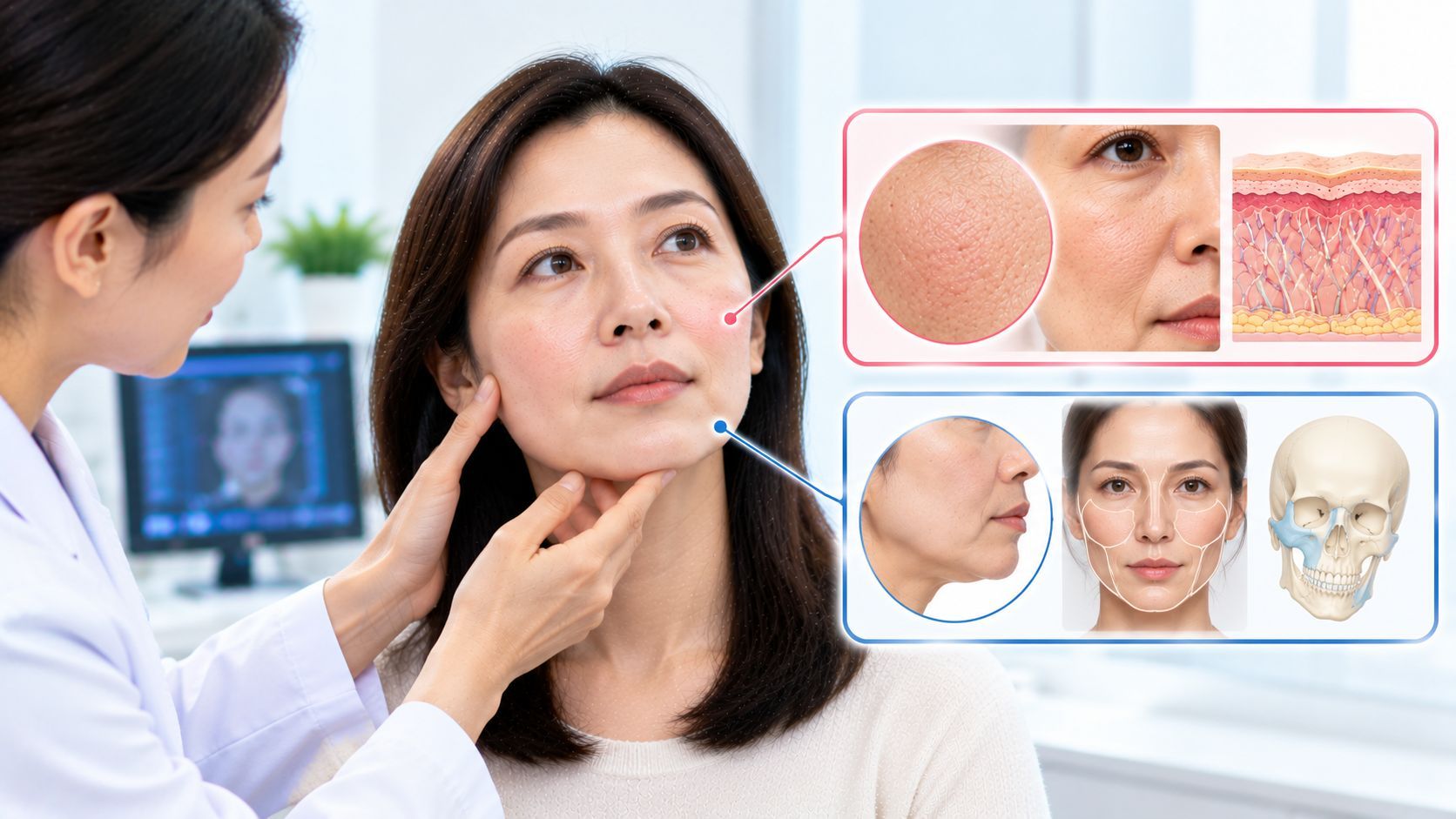
Age-related volume loss, menopause, genetics and weight loss can all contribute to facial hollowing.
If you already had:
- Hollow cheeks
- Temple depression
- Low facial fat
- Prominent cheekbones
- A narrow face
then tightening may not address the underlying lack of volume.
The resulting contrast can make the face appear older or smaller.
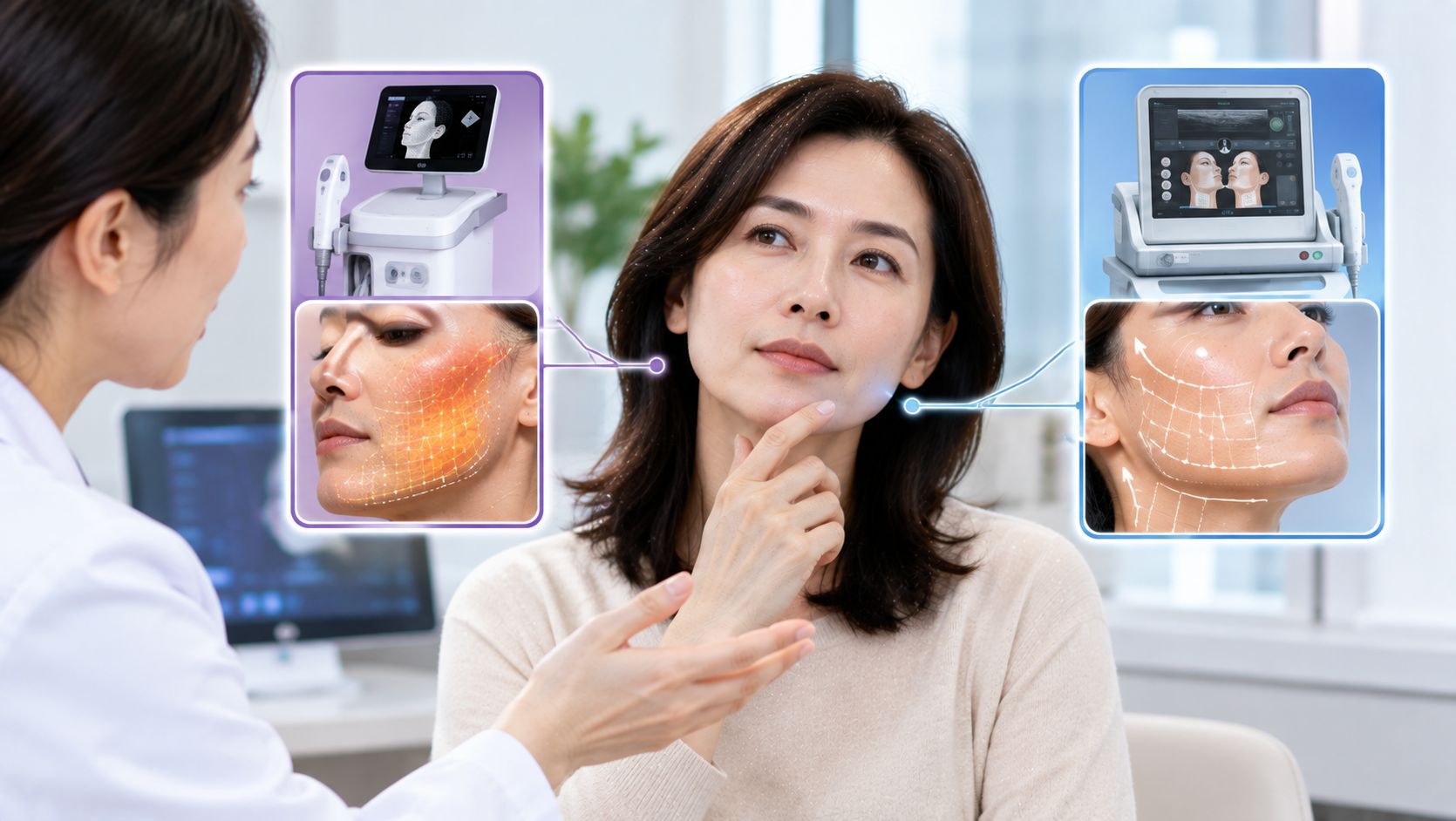
Some Energy Treatments Can Affect Deeper Tissue
Different lifting technologies use different forms of energy and treatment depths.
Depending on the procedure, these may include:
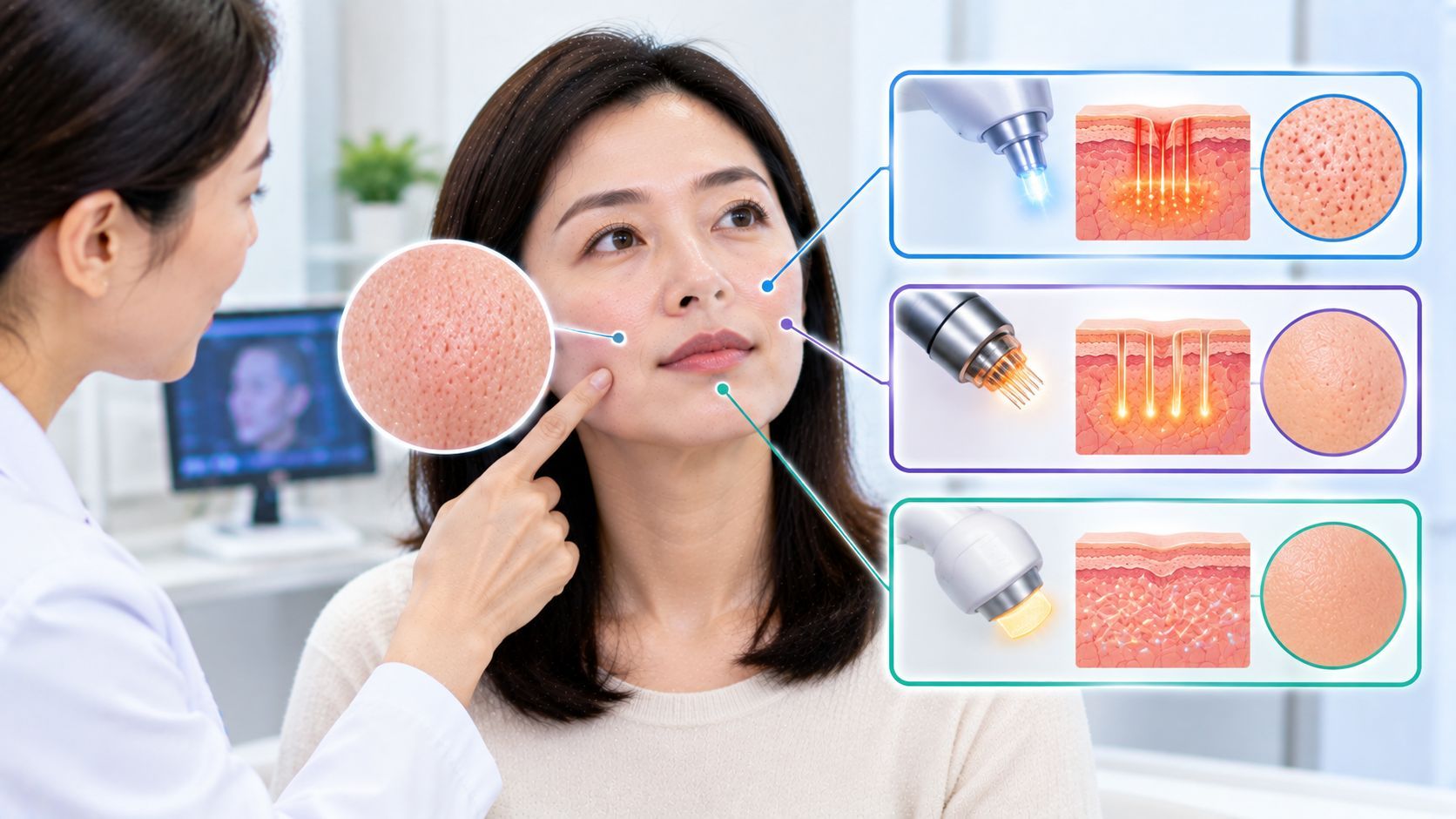
- HIFU or microfocused ultrasound
- RF skin tightening
- RF microneedling
- Other energy-based treatments
The device, treatment settings, treatment area and patient's anatomy all influence the result.
It is therefore important not to treat every “lifting treatment” as if it works in exactly the same way.
Does a Smaller Face Mean I Lost Facial Fat?
Not necessarily.
A smaller-looking face can result from several different factors.
Possible causeWhat you may noticeSwelling resolutionFace looks smaller after initial fullness disappearsIncreased definitionJawline or cheekbones look more pronouncedNatural agingGradual hollowing and laxityWeight lossReduced fullness throughout the faceTrue volume lossPersistent cheek or temple depressionSkin tighteningLess loose tissue and a narrower-looking contourLocalized tissue changeA specific depression or asymmetry
A proper examination is more reliable than trying to determine the cause from photographs alone.
Can the Change Be Reversed?
If It Is Temporary, It May Improve Naturally
If the smaller appearance is primarily related to post-treatment swelling resolving, there may be no need for corrective treatment.
Your physician can assess whether the tissues are still recovering and recommend an appropriate observation period.
If There Is Genuine Volume Loss, Volume Restoration May Help
If the face is genuinely deficient in volume, a doctor may discuss a volumizing treatment.
Potential options can include:
- Hyaluronic acid filler
- Collagen-stimulating injectables
- Fat grafting in selected cases
Dermal fillers are used to restore or add fullness in specific facial areas. The American Academy of Dermatology emphasizes that fillers should be administered by an experienced medical professional because complications can occur.
The objective should be restoring natural proportions rather than making the face excessively full.
Could Filler Make the Face Look Too Heavy?
Yes.
This is why corrective filler should not be treated as an automatic solution.
If the face looks smaller because of a contour change rather than substantial volume loss, excessive filler could create:
- Facial heaviness
- Puffy cheeks
- Loss of definition
- An unnatural appearance
- Imbalance between facial areas
A conservative approach is generally more appropriate when the exact cause is uncertain.
What If I Don't Want Filler?
Filler is only one possible option.
If the primary concern is skin quality rather than significant volume loss, your dermatologist may discuss treatments such as:
Rejuran or Polynucleotide Treatments
These are generally used to improve selected aspects of skin quality, such as texture, fine lines and elasticity.
They are not equivalent to replacing substantial cheek volume.
Skin Boosters
Skin boosters may be considered when dryness, dehydration or overall skin quality is a major concern.
Again, they are not designed to recreate significant lost facial volume.
Microneedling or RF Microneedling
These treatments may be considered for texture, fine lines or selected laxity, depending on the patient's anatomy.
However, if the face already appears too thin, additional tightening should be approached cautiously.
What If the Treatment Was HIFU or Ultherapy?
HIFU and microfocused ultrasound are intended primarily for selected skin-tightening indications.
Studies generally support their use for mild-to-moderate facial laxity, with outcomes varying according to device, treatment parameters and patient characteristics. (pubmed.ncbi.nlm.nih.gov)
Rare cases of subcutaneous atrophy have been reported after microfocused ultrasound, but it would be incorrect to assume that every patient who looks slimmer after treatment has experienced fat loss. (pubmed.ncbi.nlm.nih.gov)
If you have a persistent localized depression, unusual asymmetry or a clearly changed contour, an in-person assessment is appropriate.
What If the Treatment Was RF?
RF treatments use radiofrequency energy to heat tissue and can promote remodeling associated with collagen and skin firmness.
Evidence reviews have reported improvements in facial laxity and elasticity with various RF technologies, but treatment parameters and devices differ substantially. (pubmed.ncbi.nlm.nih.gov)
If your face looks smaller after RF, the physician should determine whether this is simply a tighter contour or an actual change in facial volume.
Repeating RF without understanding the original result may not be appropriate.
What If I Lost Weight at the Same Time?
This is an important factor.
If you lost weight before or after your lifting treatment, it can be difficult to determine which change came from the procedure.
Weight loss can reduce facial fullness and contribute to:
- Hollow cheeks
- Temple hollowing
- Deeper folds
- Increased skin laxity
- More visible facial bones
If your weight is still changing, it may also be difficult to determine your eventual facial baseline.
A physician may therefore recommend reassessing facial proportions after your weight has stabilized.
Should I Immediately Get Another Treatment?
Usually, the better approach is to pause and assess.
Before undergoing another procedure, ask:
- Did I actually lose volume?
- Is the face simply less swollen?
- Has my weight changed?
- Did the treatment alter laxity or contour?
- Is there a localized depression?
- Is the skin quality itself a problem?
- Would adding volume improve the overall proportions?
This helps prevent a cycle in which one treatment creates an unwanted change and another treatment is performed before the first result has been properly understood.
Can a Doctor Reverse a Lifting Treatment?
There is no universal “undo” procedure for every lifting treatment.
The answer depends on the technology and what happened afterward.
For example, if the concern is:
Temporary swelling: observation may be sufficient.
Volume deficiency: carefully planned volume restoration may be considered.
Excessive filler from another treatment: hyaluronic-acid filler can sometimes be dissolved using an enzyme called hyaluronidase under appropriate medical supervision.
Persistent tissue injury or atrophy: management depends on the specific findings and may require time, observation or reconstructive treatment.
This is why saying “reverse my lifting treatment” is less useful medically than describing the exact change you are experiencing.
When Should You Seek Medical Assessment?
You should contact your treating provider or another qualified medical professional if you develop:
- Persistent or worsening pain
- Significant asymmetry
- Numbness
- Muscle weakness
- Skin discoloration
- Blistering or burns
- A pronounced localized depression
- Persistent swelling
- Rapidly developing contour changes
These symptoms require clinical assessment rather than simply adding another cosmetic procedure.
How Can International Patients in Seoul Handle an Unwanted Result?
If you received your treatment in Seoul and are unhappy with the result, request your treatment information from the clinic.
Ask for details such as:
- Treatment name
- Device used
- Treatment date
- Areas treated
- Treatment depth
- Energy settings where available
- Number of shots or lines
- Before-treatment photographs
- Follow-up recommendations
If you consult another dermatologist in Seoul, these records can help the physician understand what was actually performed.
Avoid choosing a corrective treatment based solely on an online description of your symptoms.
How Can You Reduce the Risk in the Future?
Before a lifting procedure, tell the doctor if you have a naturally thin face or are concerned about losing facial fullness.
Ask:
“Will this treatment make my existing facial hollowness more noticeable?”
Also ask whether the treatment is intended to address:
- Skin laxity
- Deep tissue laxity
- Facial volume
- Skin texture
- Wrinkles
A procedure designed mainly for tightening cannot be expected to replace lost facial volume.
Conclusion
If your face looks smaller after a lifting treatment and you dislike the result, the change may be temporary, structural, volume-related or simply a difference in facial definition.
The most important step is to identify the cause before trying to reverse it.
If genuine volume loss is present, carefully planned volume restoration may be considered. If the issue is skin quality, a treatment such as Rejuran, a skin booster or another appropriate procedure may be discussed. If the face is simply still recovering, waiting and reassessing may be more appropriate.
For patients traveling to Seoul for aesthetic treatment, obtaining the exact treatment and device information can make a future assessment much easier.
FAQs
Can a lifting treatment make my face smaller?
A lifting treatment can sometimes make the face appear slimmer or more defined. This does not necessarily mean that significant facial fat has been lost.
Can my face return to its previous appearance?
It depends on the cause. Temporary changes may improve naturally, while genuine volume loss may require a separate treatment to restore fullness.
Should I get filler if my face looks smaller?
Only after determining whether genuine volume loss is present. Adding filler without identifying the cause can create unnecessary fullness or imbalance.
Can Rejuran restore a smaller-looking face?
Rejuran is primarily intended to improve skin quality rather than replace substantial facial volume. It may be considered when texture, fine lines or skin quality are the main concerns.
Should I have another HIFU or RF treatment to fix the problem?
Not automatically. If your concern is reduced facial volume, another tightening procedure may not address the underlying issue.
What should I do if one side of my face looks smaller?
Persistent or pronounced asymmetry should be assessed by a qualified medical professional, particularly if it is accompanied by pain, numbness, weakness or other unusual symptoms.