Should Facial Volume Restoration Come Before Skin Tightening After Major Weight Loss?
Introduction
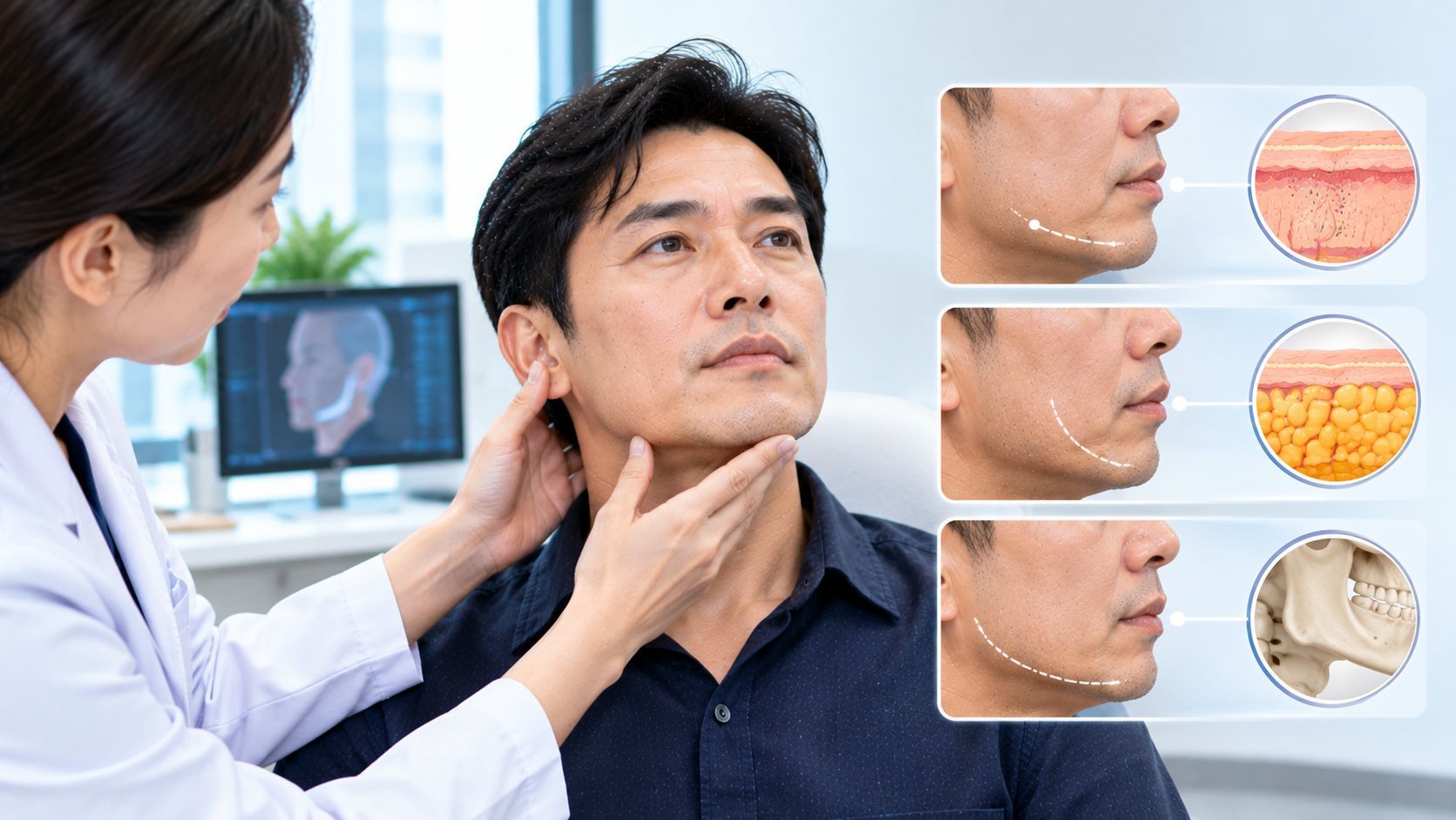
Major weight loss can change the face in more than one way. You may lose fullness in the cheeks and temples while also developing looser skin around the jawline, lower face, or neck. Because these changes happen together, it can be difficult to know whether you should restore lost facial volume first or begin with a skin-tightening treatment.
There is no universal treatment order that applies to everyone. When noticeable facial deflation is the main concern, assessing and addressing volume loss before tightening may make sense. When the face has adequate volume but primarily has loose skin, skin tightening may be more relevant. If both problems are significant, a staged combination approach may be considered. Recent literature on facial changes after GLP-1-associated weight loss similarly describes volume loss and skin laxity as interconnected but distinct concerns.
Why Major Weight Loss Changes Facial Appearance
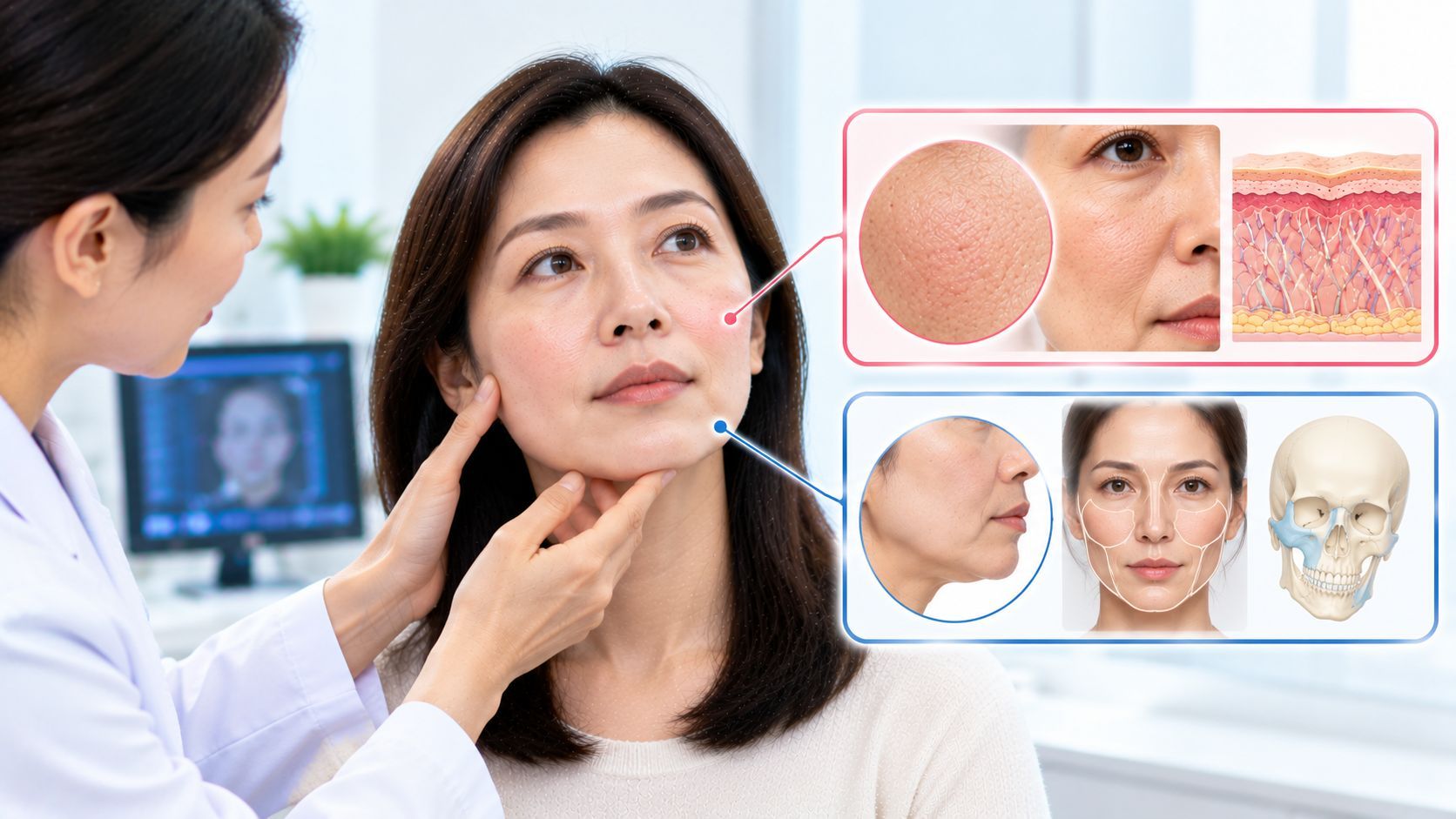
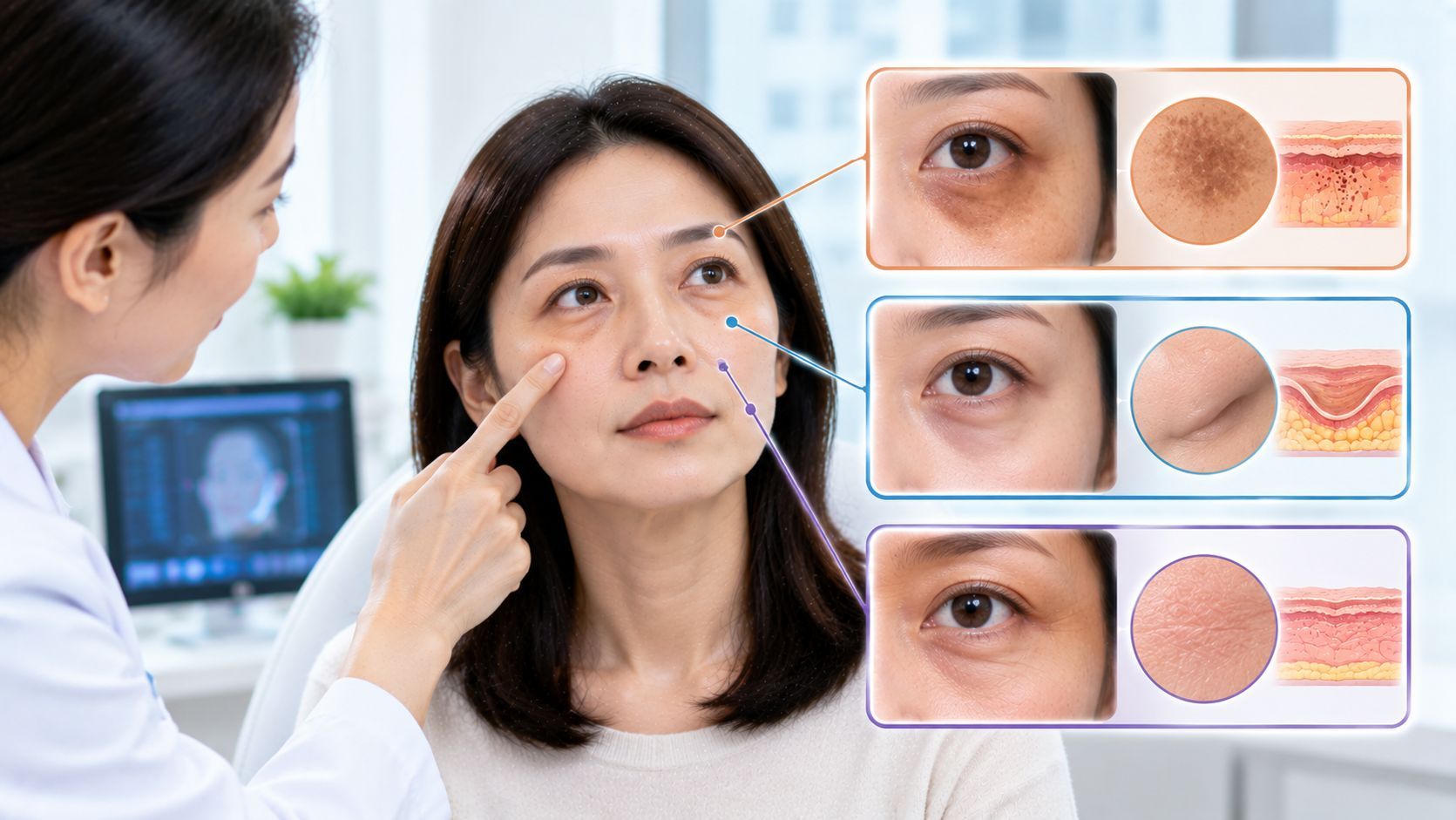
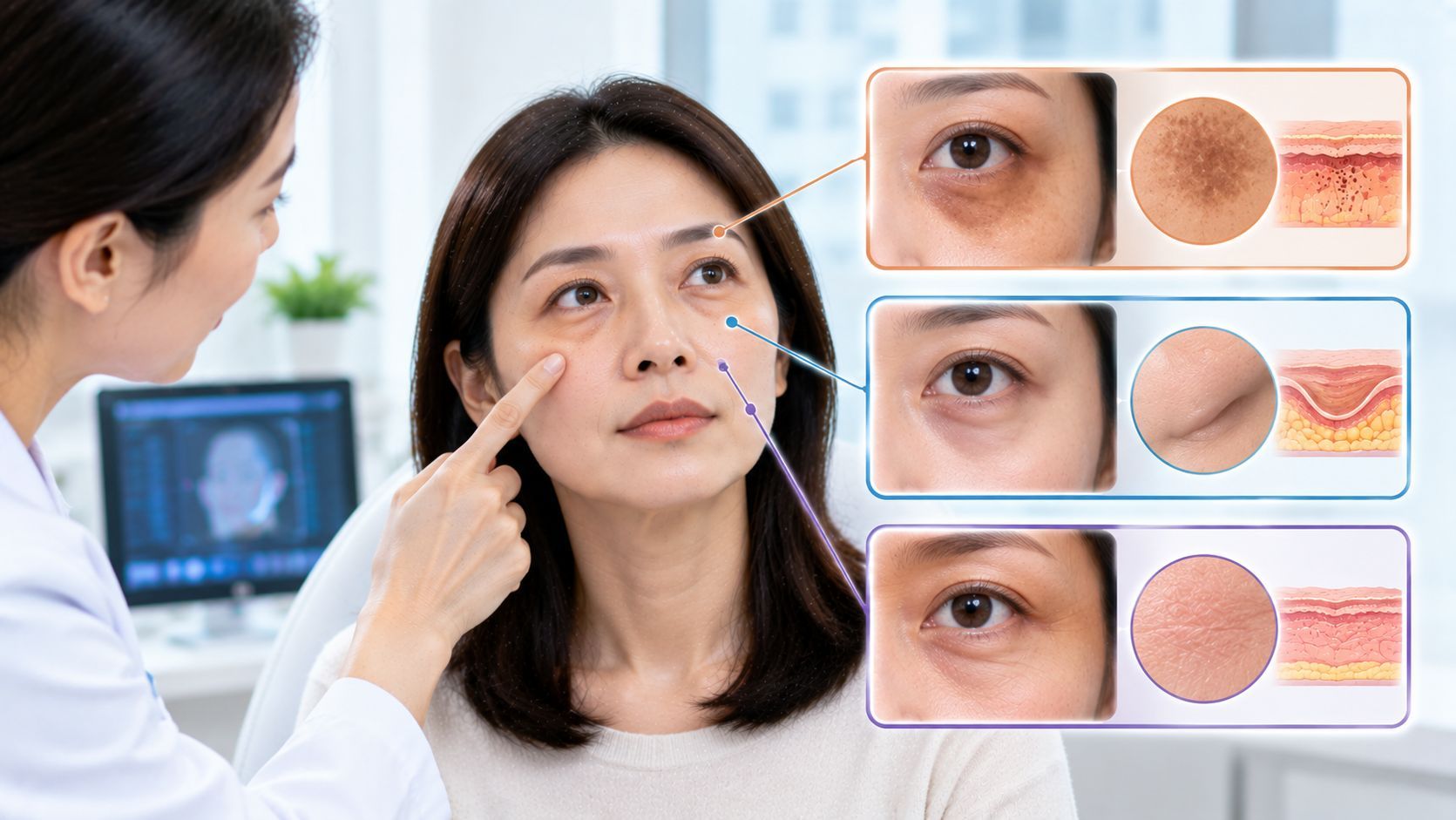
When you lose a substantial amount of weight, fat is lost from different parts of the body, including facial soft tissue. The degree and location of facial volume loss vary from person to person.
You may notice:
- Hollow cheeks
- Flatter midface contours
- Temple hollowing
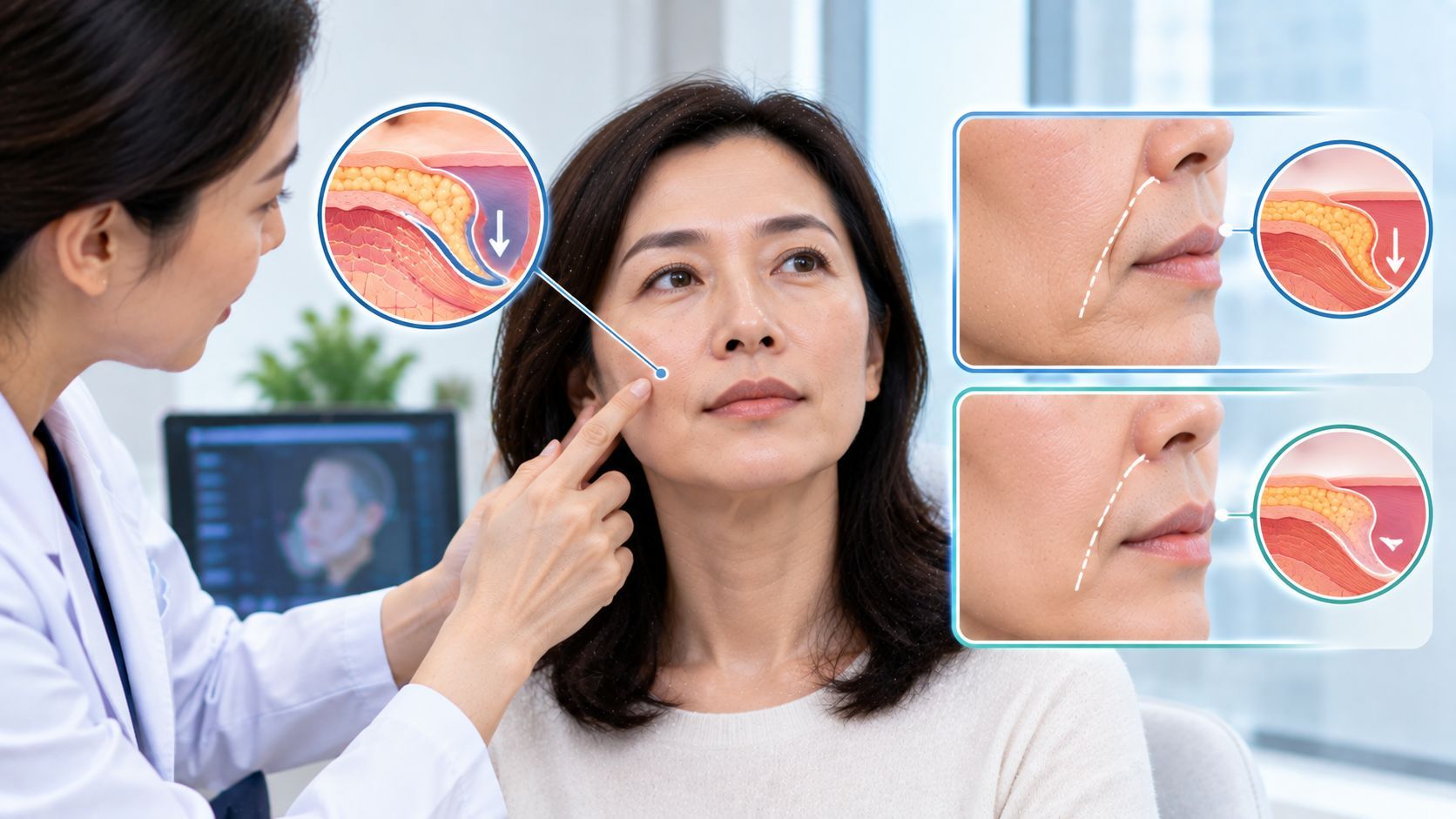
- More visible nasolabial folds
- Under-eye hollowing
- Jowls
- Loose jawline skin
- Crepey skin
- Reduced facial fullness
- A more tired or aged appearance
The American Academy of Dermatology notes that facial changes associated with GLP-1-related weight loss can include reduced facial fullness, sagging, wrinkles and crepey skin. These changes are primarily related to weight loss rather than being unique to a particular medication.
This creates two different treatment targets: volume and laxity.
What Is Facial Volume Restoration?
Facial volume restoration aims to replace or compensate for lost soft-tissue fullness.
Depending on the patient's anatomy and goals, a clinician may consider:
- Hyaluronic acid dermal fillers
- Collagen-stimulating injectables
- Other volumizing approaches
- Fat transfer in selected surgical cases
Dermal fillers can restore fullness in selected facial areas. However, filler placement should be based on facial anatomy rather than simply filling every area that appears hollow.
The objective is usually to restore proportion and support rather than recreate the amount of facial fat that existed before weight loss.
What Does Skin Tightening Address?
Skin tightening primarily addresses laxity and reduced firmness.
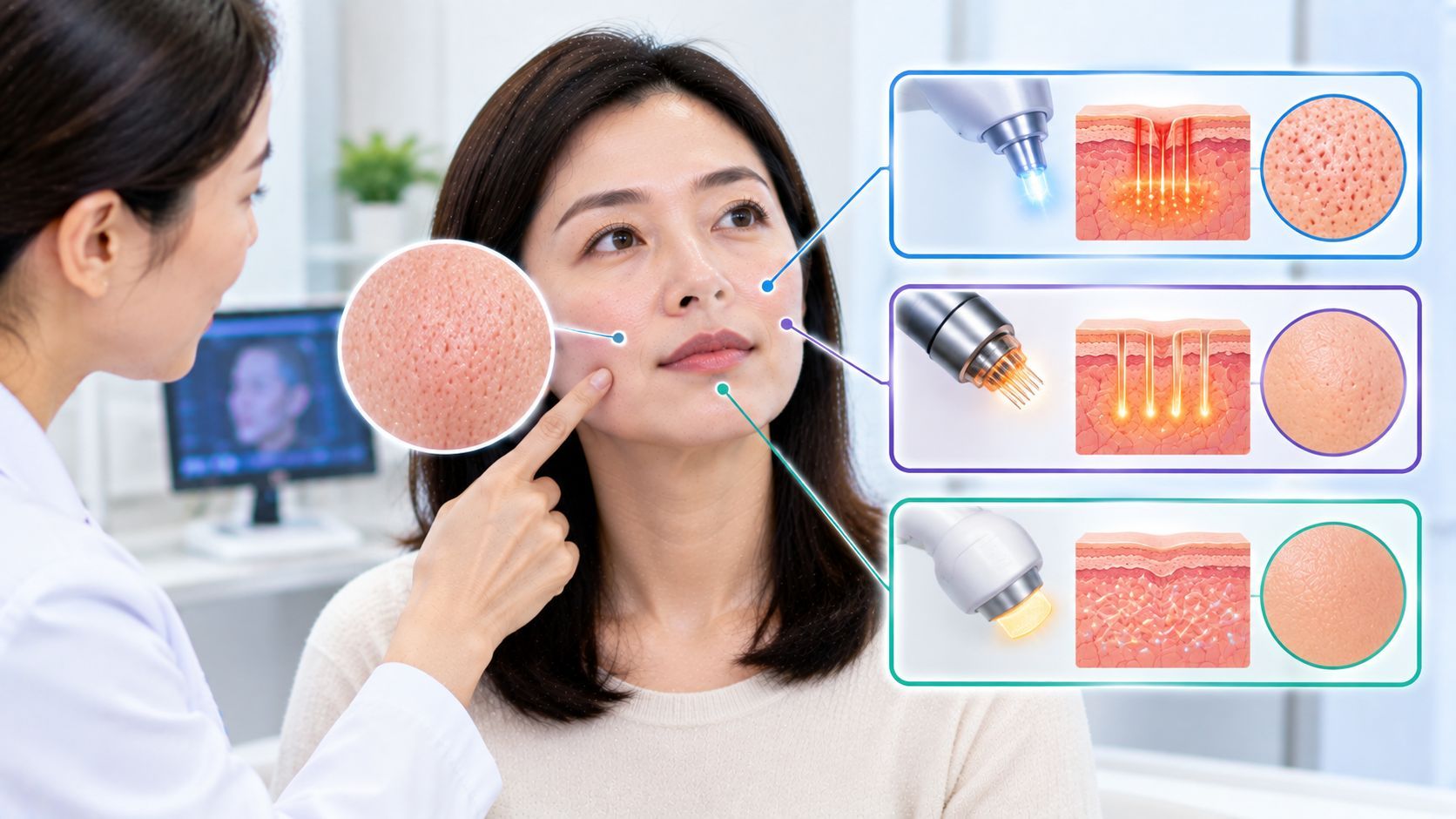
Non-surgical technologies may include:
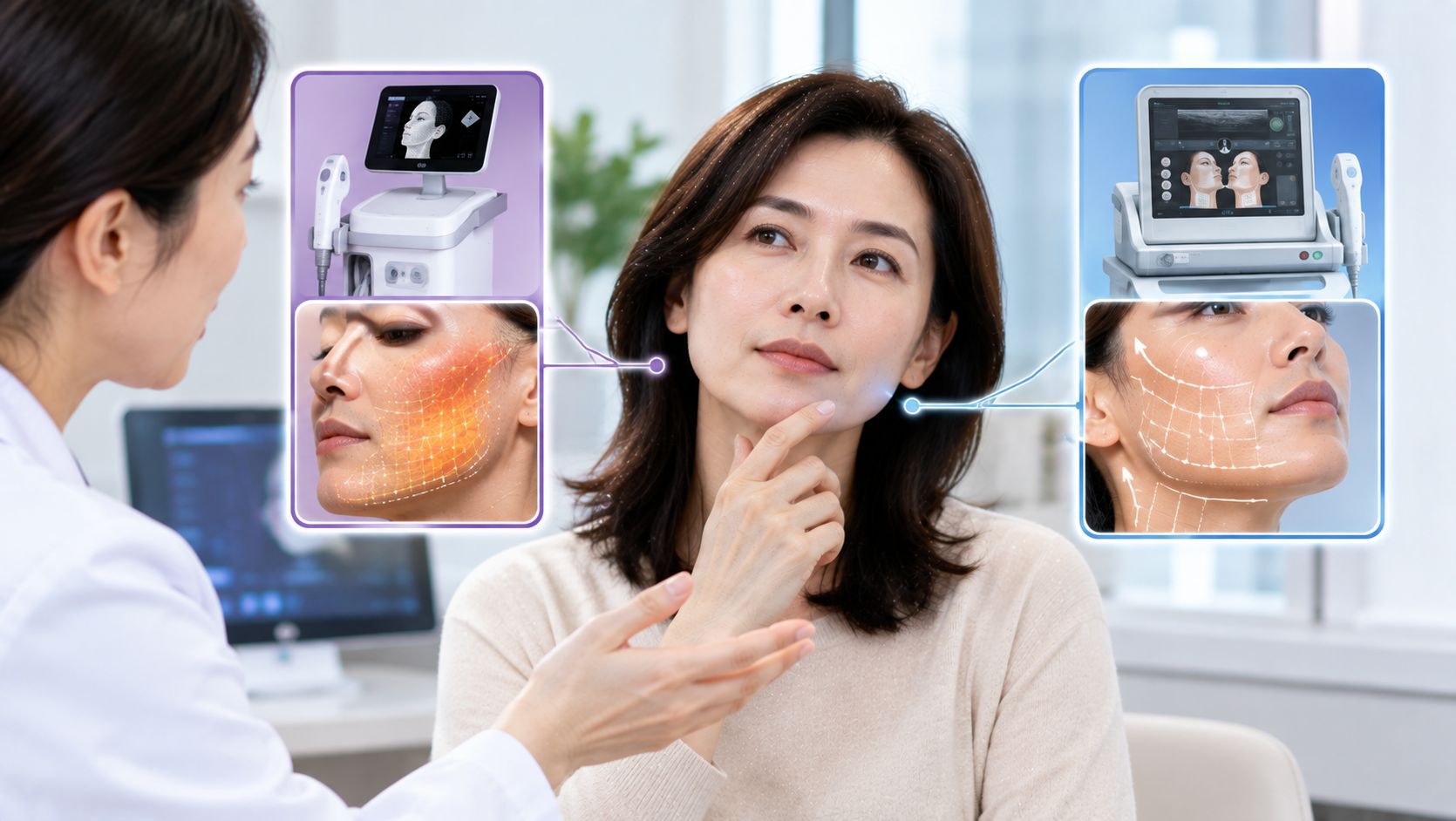
- Microfocused ultrasound
- Radiofrequency
- Other energy-based tightening technologies
The American Academy of Dermatology explains that ultrasound and radiofrequency can provide gradual improvement in skin firmness, particularly when sagging is limited. However, non-invasive tightening has limitations when there is substantial excess skin.
This distinction is important:
Volume restoration adds or replaces fullness.
Skin tightening attempts to improve laxity and firmness.
One does not automatically replace the other.
Should Volume Restoration Come First?
If major weight loss has left your face significantly hollow or deflated, assessing facial volume before aggressive tightening may be appropriate.
Consider a patient whose cheeks have become noticeably flatter and whose temples have lost fullness. If the patient also has mild jowling, simply tightening the skin does not restore the missing volume.
In this situation, a clinician may first determine whether strategic volume restoration would improve facial support and proportions.
That does not mean everyone needs filler before tightening. It means that the underlying volume should be evaluated before deciding that laxity is the main problem.
When Skin Tightening May Come First
Skin tightening may be more relevant when the face still has adequate soft-tissue volume but the skin has become loose.
This can happen around the:
- Jawline
- Lower cheeks
- Chin
- Neck
For example, if your cheeks still look relatively full but your jawline has become less defined after weight loss, a clinician may consider an ultrasound or RF-based tightening treatment.
In this situation, adding filler may not be necessary and could potentially add volume where the main problem is actually laxity.
What If You Have Both Volume Loss and Loose Skin?
This is one of the most common situations after major weight loss.
You might have:
- Hollow cheeks
- Mild temple hollowing
- Loose lower-face skin
- Jowls
- Reduced jawline definition
Trying to solve all of these issues with one treatment can be unrealistic.
A clinician may instead consider a multimodal or staged approach.
Recent publications discussing aesthetic management after GLP-1-associated weight loss describe the need to assess multiple anatomical changes and potentially combine volumizing, collagen-stimulating and tightening strategies according to individual findings.
Why Treating Volume First Can Sometimes Change the Tightening Plan
Facial volume contributes to the appearance of facial contours.
If volume is restored strategically, some areas may appear better supported even before a tightening treatment is performed. This can change how much tightening is actually needed.
For example, restoring appropriate midface support may improve the relationship between the cheek and lower face. The clinician can then reassess remaining laxity instead of automatically treating every area with an energy device.
This is one reason a step-by-step treatment plan can sometimes be more appropriate than scheduling multiple procedures during the first appointment.
Could Tightening Come Before Volume Restoration?
Yes.
If your facial volume remains adequate and laxity is the dominant concern, tightening can reasonably be considered first.
The sequence should depend on what the examination shows.
For example:
Adequate volume + mild/moderate laxity → tightening may be considered.
Significant hollowing + mild laxity → volume assessment may come first.
Significant hollowing + significant laxity → a staged or combination plan may be discussed.
Significant excess skin → a surgical assessment may be more appropriate than relying entirely on non-surgical tightening.
What About a Very Thin Face?
Patients with very thin faces require particular attention when considering tightening treatments.
If the face already appears hollow, the objective should not simply be to make it tighter.
A consultation should evaluate:
- Remaining facial fat
- Cheek projection
- Temple volume
- Midface support
- Skin thickness
- Degree of laxity
- Jawline anatomy
- Expected future weight changes
This is particularly relevant because a person can have both thin facial tissue and loose skin at the same time.
In that situation, the treatment plan needs to balance firmness with preservation or restoration of facial volume.
What About Collagen-Stimulating Treatments?
Collagen-stimulating treatments can occupy a middle ground between traditional volume restoration and energy-based tightening.
Depending on the specific product and technique, they may be used to improve tissue quality and gradually increase collagen-related support.
They may be considered for patients with:
- Mild volume deficiency
- Reduced skin firmness
- Thin or crepey skin
- Early laxity
- A preference for gradual changes
However, they should not automatically be treated as a replacement for either conventional volume restoration or surgery.
The appropriate treatment depends on the extent of structural change after weight loss.
Should You Wait Until Your Weight Is Stable?
If you are still undergoing substantial weight loss, additional facial changes may occur.
Continued weight loss can potentially lead to further loss of facial fullness or additional skin laxity. Recent expert literature emphasizes considering where the patient is within their weight-loss journey when planning aesthetic treatment.
There is no single mandatory waiting period for everyone.
Instead, discuss:
- Whether your weight is still changing substantially
- Whether you expect additional weight loss
- Whether your facial appearance has stabilized
- Whether your primary concern is volume or laxity
- Which treatment you are considering
What If You Have Significant Excess Skin?
Non-surgical tightening cannot remove large amounts of excess skin.
The AAD notes that non-invasive treatments are most useful for limited sagging, while significant sagging may require a different approach.
After major weight loss, some patients may therefore need to discuss surgical facial lifting procedures.
Surgery involves different considerations, including anesthesia, recovery, scarring and surgical risks, so it should be evaluated separately from non-surgical rejuvenation.
How Should International Patients Approach Treatment in Korea?
If you are traveling to Seoul for post-weight-loss facial rejuvenation, consider scheduling a consultation before committing to several treatments.
Ask the clinic:
- Do I have more volume loss or skin laxity?
- Should volume restoration be considered before tightening?
- Would tightening alone address my concern?
- Do I actually need filler?
- Would a collagen-stimulating treatment be appropriate?
- Could my current facial volume make certain tightening treatments unsuitable?
- Should treatments be staged instead of performed together?
- How much downtime should I expect?
- How long should I remain in Korea for follow-up?
- What follow-up options are available after I return home?
If possible, bring photographs showing your face before and after major weight loss. They can help the clinician understand how your facial proportions have changed.
A Simple Way to Think About Treatment Order
Main concern after weight lossTreatment category to discussSignificant cheek or temple hollowingVolume restorationMild/moderate loose skinSkin tighteningHollowing + laxityStaged or combination treatmentThin, crepey skinSkin-quality/collagen approachesLarge amount of excess skinSurgical assessmentOngoing substantial weight lossConsider treatment timing
This table is a planning framework, not a personal treatment recommendation. A medical assessment is needed to determine which approach is appropriate.
How Long Does It Take to See Results?
The timeline depends on the treatment.
Fillers can create an immediate change in treated volume, although swelling can temporarily affect the appearance.
Collagen-stimulating treatments generally produce more gradual changes.
Ultrasound and RF tightening also tend to develop progressively as tissue remodeling occurs. The AAD reports that results from non-invasive tightening can take months to become apparent.
Because different treatments work on different timelines, staging them can sometimes make it easier to evaluate the result of each step.
Risks and Limitations
Every aesthetic treatment has potential risks.
Injectables can cause swelling, bruising, tenderness, asymmetry and other complications. Energy-based treatments can cause discomfort, redness, swelling and, depending on the device and settings, burns or other tissue injury.
Treatment should therefore be performed by an appropriately qualified clinician who can assess your facial anatomy and explain the specific risks.
Avoid choosing a procedure solely because it is marketed as a “post-weight-loss” or “Ozempic face” solution.
Conclusion
After major weight loss, facial volume restoration does not always have to come before skin tightening, but volume loss should be assessed before deciding that tightening is the main solution.
If your face is significantly hollow or deflated, volume restoration may deserve consideration. If you have adequate volume but loose skin, tightening may be more relevant. If both problems are present, a staged combination approach may be discussed.
For international patients visiting Korea, the most useful strategy is to begin with a detailed assessment of volume, laxity and skin quality rather than choosing multiple procedures in advance. The right sequence depends on what actually changed in your face during weight loss.
FAQs
Should I get filler before Ultherapy after weight loss?
Not necessarily. If significant volume loss is present, a clinician may consider volume restoration first, but if your facial volume is adequate and laxity is the main issue, tightening may be appropriate without filler.
Can skin tightening restore lost facial volume?
No. Skin tightening primarily addresses laxity and firmness. It does not directly replace facial fat that has been lost during weight reduction.
Can filler tighten loose skin after weight loss?
Filler can provide volume and structural support in selected areas, but it is not a substitute for a true skin-tightening procedure when excess laxity is the primary problem.
Is combination treatment necessary after major weight loss?
Not necessarily. Some patients have primarily volume loss or primarily laxity. Others have both and may benefit from discussing more than one treatment category.
Is it better to wait until weight loss is complete?
There is no universal waiting period. If substantial additional weight loss is expected, however, your facial appearance may continue changing, which can affect treatment planning.
Can non-surgical treatments remove excess facial skin?
Non-surgical tightening can improve selected cases of laxity but cannot remove substantial amounts of excess skin. Significant excess tissue may require discussion of surgical options.