Why Did My Skin Suddenly Become Thin and Dry After Menopause?
Introduction
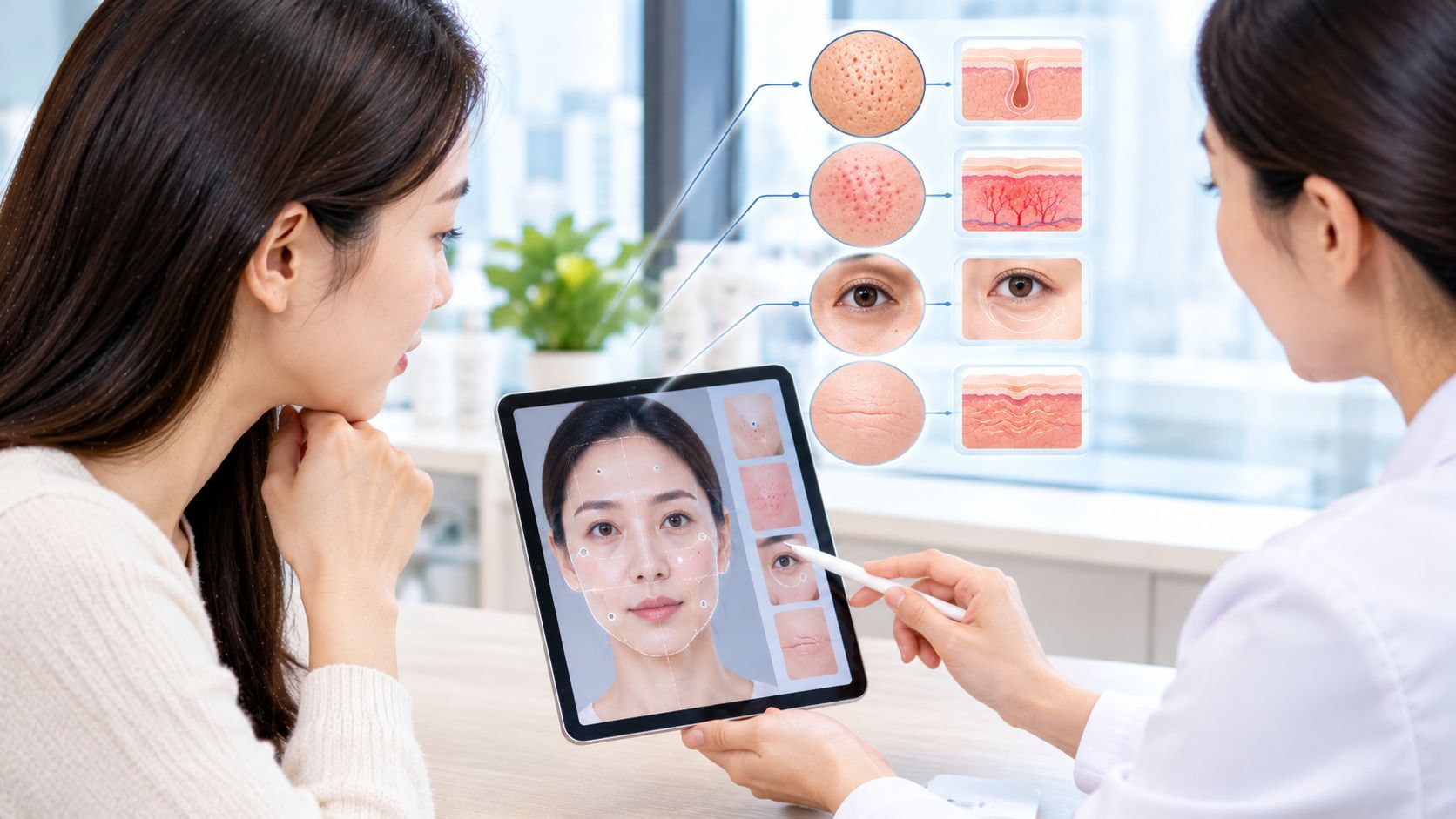
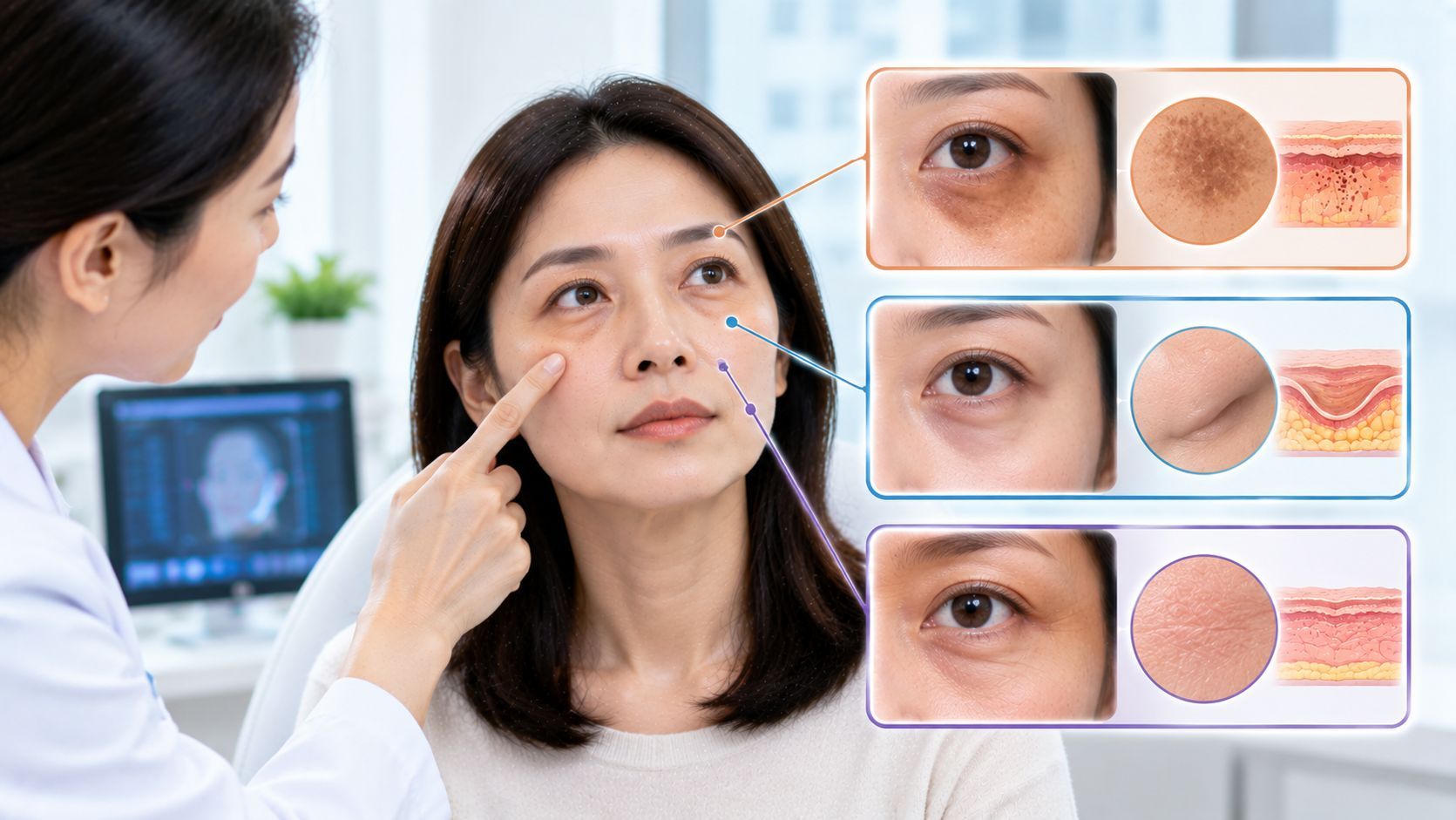
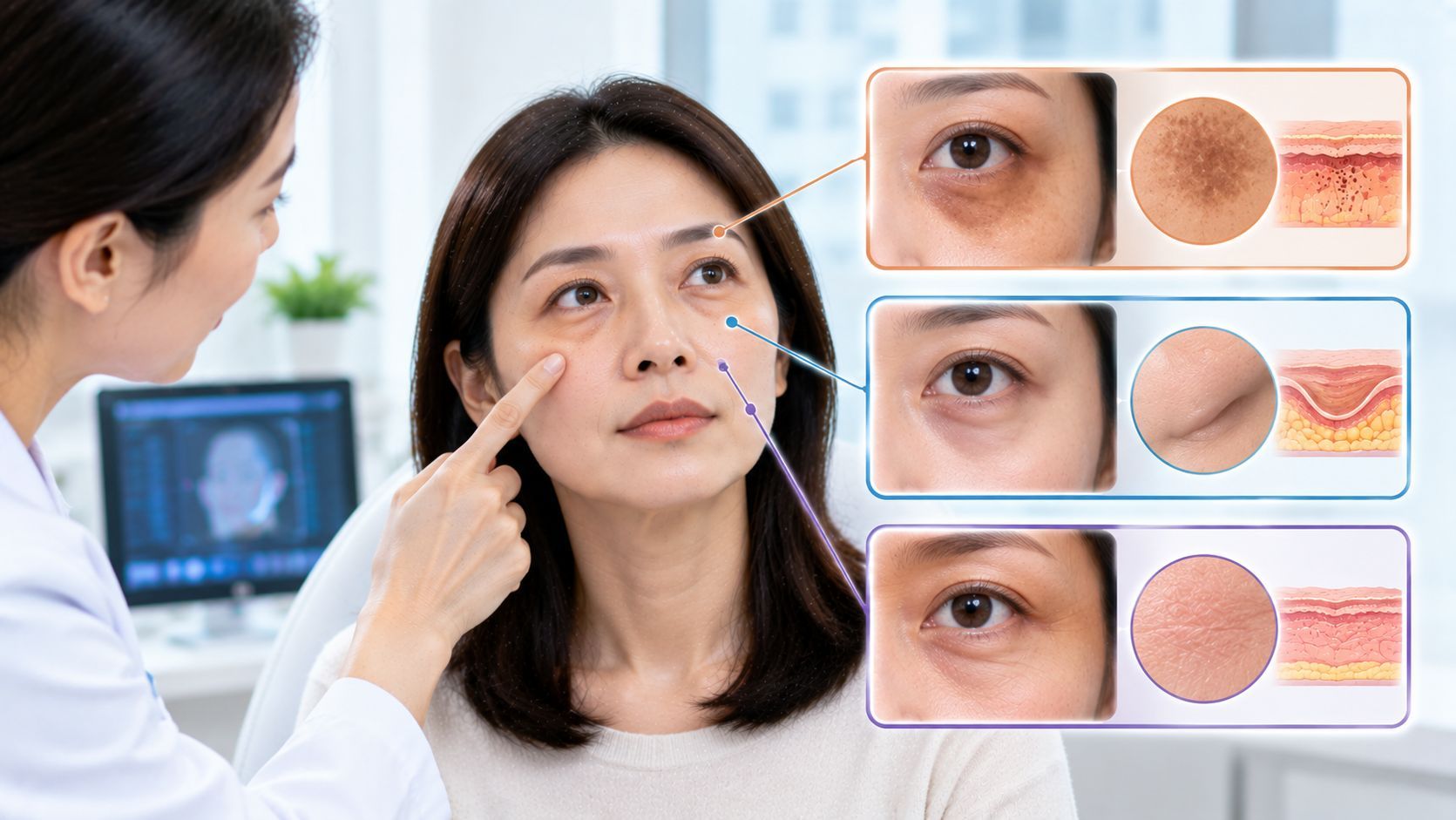
Many women notice a significant change in their skin during and after menopause. Skin that once felt relatively firm and hydrated may suddenly seem thinner, drier, more sensitive, or more wrinkled. You may also notice increased crepiness, less elasticity, larger-looking pores, or slower recovery from irritation.
These changes are not simply a result of getting older. Declining estrogen during menopause can affect skin hydration, thickness, collagen, elasticity and other components of skin structure. Research has linked menopause-related hormonal changes with measurable alterations in the skin, including reduced collagen and changes in skin thickness and hydration.
Understanding why these changes occur can help you decide whether your priority should be hydration, barrier repair, collagen support, pigmentation management, or professional skin treatment.
What Happens to Skin During Menopause?
Menopause involves a major hormonal transition, particularly a decline in ovarian estrogen production. Estrogen influences several processes that contribute to healthy-looking skin.
During and after menopause, women may experience:
- Reduced skin hydration
- Thinner-feeling skin
- Loss of elasticity
- Increased dryness
- More visible wrinkles
- Reduced firmness
- Increased sensitivity
- Slower recovery from irritation
- Changes in pigmentation
- A rougher or crepey texture
The extent of these changes varies considerably between individuals.
Some women notice gradual changes over several years, while others feel that their skin changed relatively quickly around the menopausal transition.
Why Does Menopausal Skin Become Thinner?
One important factor is collagen loss.
Collagen provides structural support within the skin. Estrogen is involved in maintaining the skin's extracellular matrix and collagen-related processes. Research has reported substantial changes in collagen content around menopause, although the exact rate and magnitude vary between individuals.
As collagen and other supportive components decrease, skin may begin to appear:
- Less dense
- Less firm
- More finely wrinkled
- More crepey
- More fragile
This is different from simply having dry skin. A moisturizer can improve hydration, but it cannot completely replace structural changes occurring deeper within the skin.
Why Does Skin Become So Dry After Menopause?
Dryness is another common concern.
Menopausal skin may have reduced ability to maintain moisture within the outer skin barrier. Changes in sebum production and barrier function can contribute to increased dryness and sensitivity.
You may notice:
- Tightness after cleansing
- Flaking
- Rough texture
- Increased sensitivity to skincare products
- Makeup settling into fine lines
- Itching or discomfort
- A dull appearance
This is why an appropriate skin-barrier routine becomes particularly important during and after menopause.
Is Thin Skin the Same as Dry Skin?
No.
This distinction is important when considering treatment.
Dry skin primarily involves inadequate hydration or impaired barrier function.
Thin skin can refer to reduced skin thickness and structural support.
A person can have both at the same time.
For example, your skin may feel extremely dry while also showing reduced firmness and more visible fine lines. In that situation, simply adding stronger moisturizers may improve comfort without completely addressing the loss of elasticity or collagen.
Why Does My Skin Suddenly Look More Wrinkled?
Several changes can happen simultaneously.
Reduced collagen and elasticity can make existing wrinkles more visible. Lower hydration can also make fine lines appear more pronounced.
Additionally, cumulative environmental exposure becomes more visible over time.
Important contributors include:
- Menopausal hormonal changes
- Natural aging
- Cumulative ultraviolet exposure
- Smoking
- Environmental pollution
- Repeated irritation
- Genetics
- Changes in skincare habits
- Nutrition and overall health
Therefore, not every skin change after menopause should automatically be attributed to hormones alone.
Why Does My Face Look Less Firm After Menopause?
Loss of firmness can result from several overlapping processes.
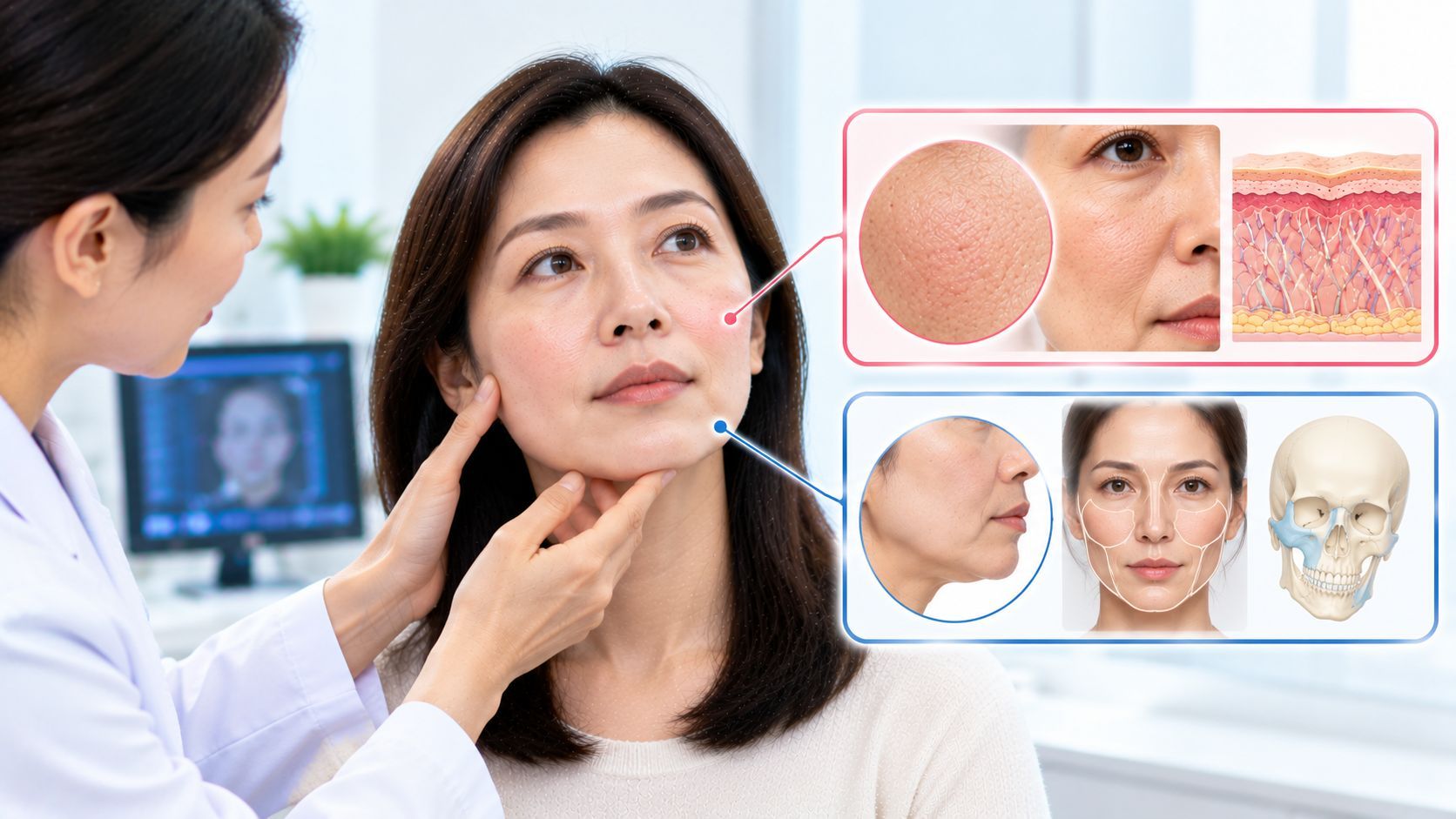
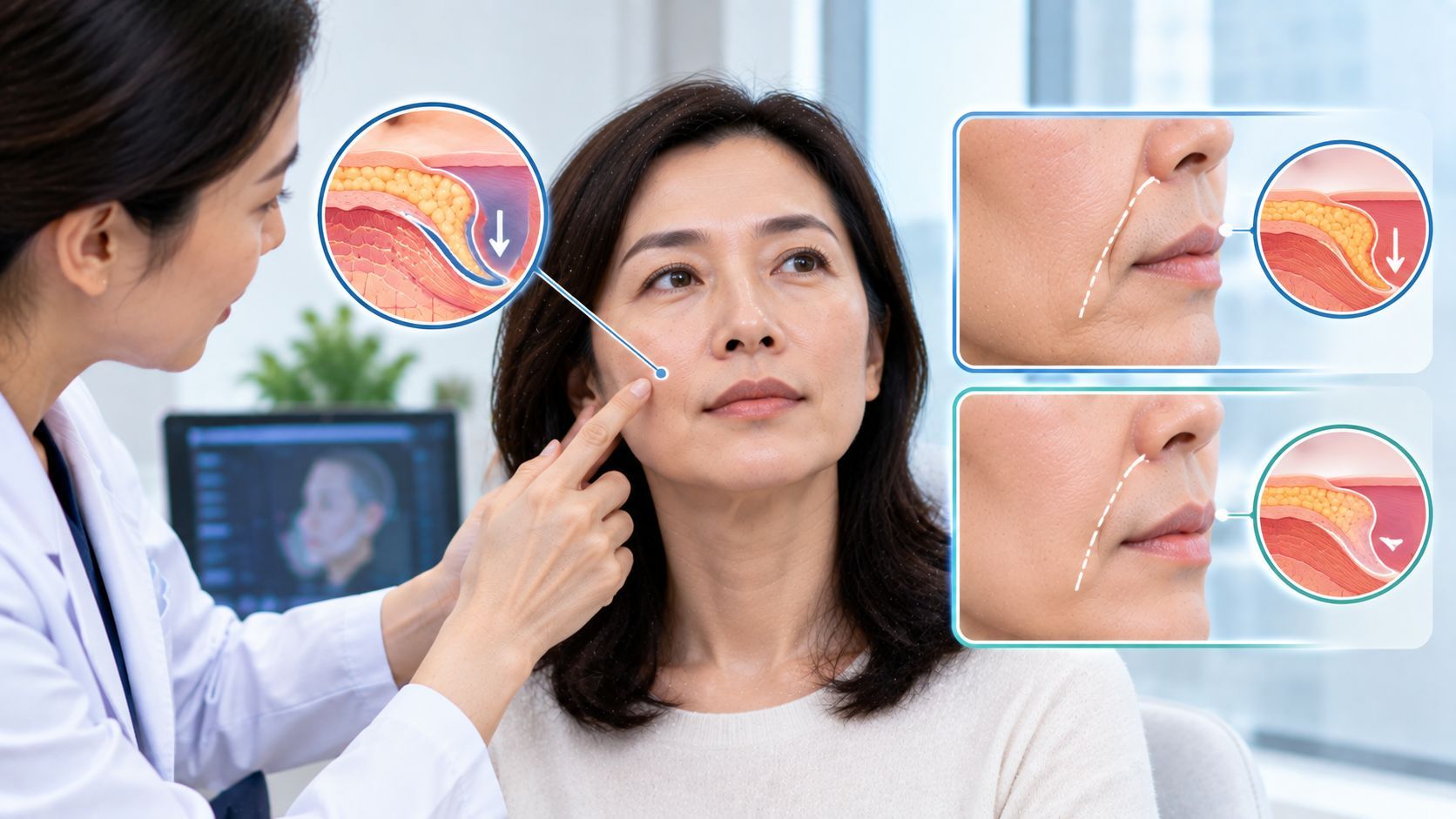
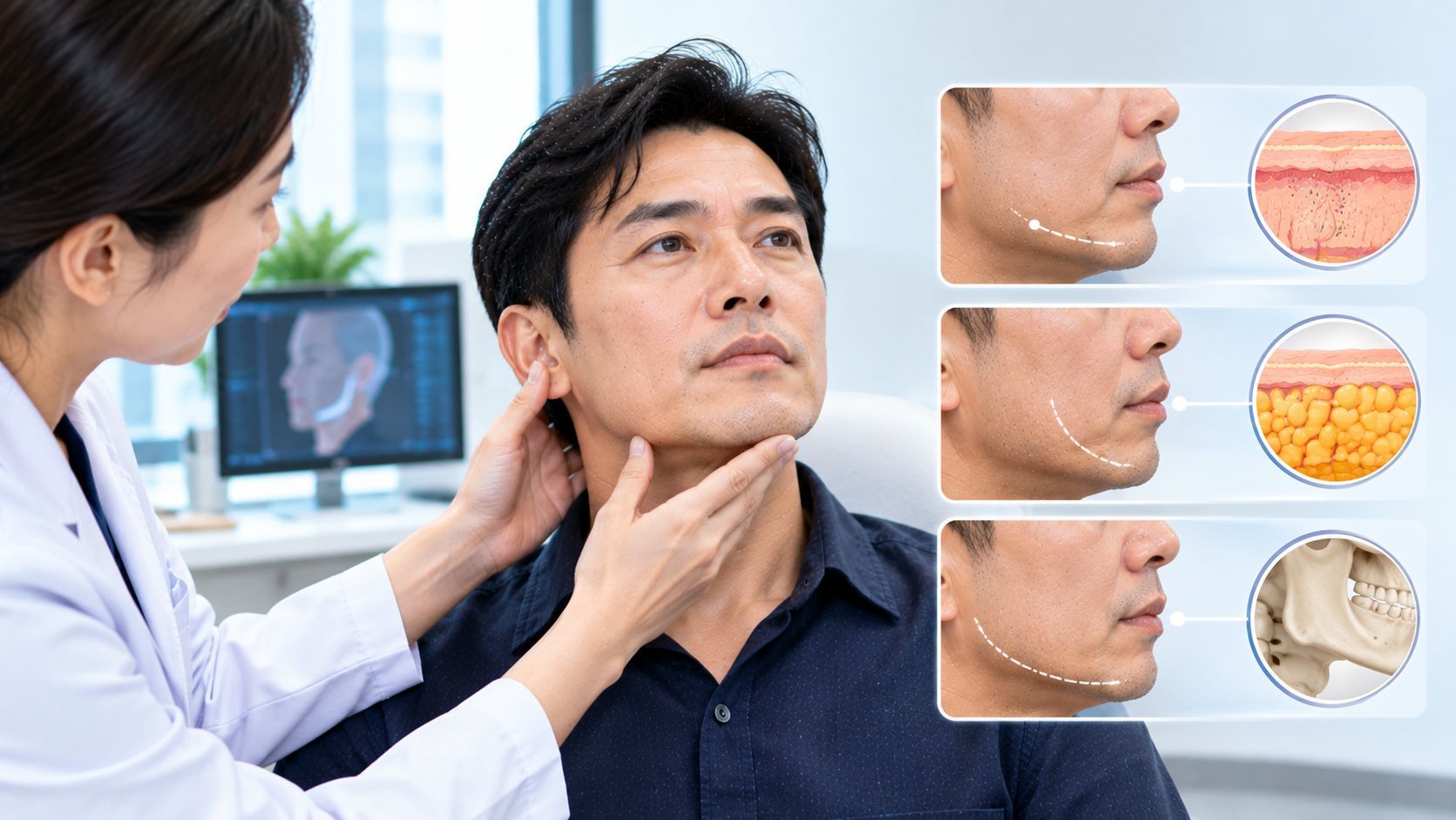
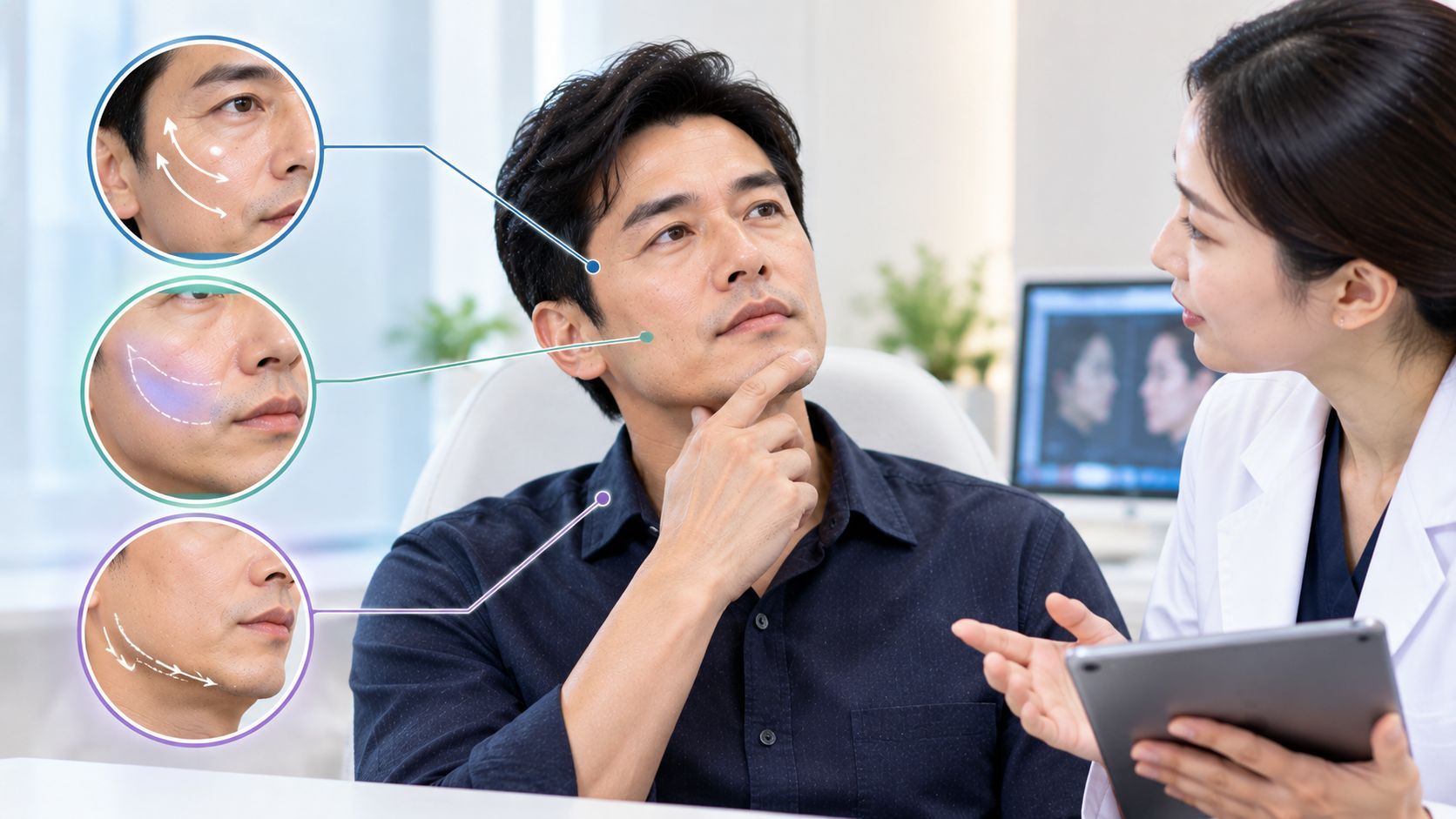
Reduced collagen and elastin support can contribute to skin laxity. Changes in facial fat distribution and underlying soft tissue can also affect facial contours.
You might notice:
- Less-defined cheeks
- Mild jowling
- Reduced jawline definition
- Nasolabial folds becoming more noticeable
- Looser skin around the mouth
- Neck laxity
This is why post-menopausal facial rejuvenation often requires more than simply treating surface dryness.
Can Skincare Alone Help Menopausal Skin?
Yes, skincare can be an important foundation.
A simple routine may focus on:
Gentle Cleansing
Avoid unnecessarily harsh cleansing, particularly if your skin feels tight afterward.
Moisturizing
Look for products designed to support the skin barrier and reduce water loss. Ingredients commonly used for dry skin include ceramides, glycerin and hyaluronic acid.
Daily Sunscreen
Broad-spectrum sunscreen is important because ultraviolet exposure contributes to collagen degradation, pigmentation and premature skin aging.
Retinoids When Appropriate
Retinoids can support collagen-related skin remodeling and improve certain signs of photoaging. However, menopausal skin can be sensitive, so introducing them gradually and selecting an appropriate formulation is important.
Skincare cannot completely reverse hormonal changes, but it can substantially improve hydration, barrier function and the appearance of the skin surface.
What Korean Skin Treatments May Help?
If skincare is no longer enough to address your concerns, a Korean dermatology clinic may offer several treatment categories.
The appropriate option depends on whether your main issue is dryness, skin quality, wrinkles, laxity, pigmentation or volume loss.
Potential categories include:
- Skin boosters
- Rejuran
- Radiofrequency treatments
- Ultrasound-based tightening
- Laser treatments
- Collagen-stimulating injectables
- Microneedling
- Hydrating facial procedures
These treatments are not interchangeable.
A skin booster may focus primarily on hydration and skin quality, while RF or HIFU is generally used to address selected cases of laxity.
Can Skin Boosters Help Very Dry Skin?
Skin boosters may be considered when hydration and overall skin quality are major concerns.
Depending on the specific product, injectable skin boosters may contain substances intended to improve hydration or stimulate changes within the skin.
They may be considered for concerns such as:
- Dryness
- Fine lines
- Dullness
- Reduced skin smoothness
- Mild crepiness
- Poor-looking skin texture
However, injectable treatment is not automatically necessary for dry skin. A dermatologist should first determine whether the problem is primarily dehydration, barrier dysfunction, hormonal skin changes, or another dermatological condition.
Is Rejuran an Option for Menopausal Skin?
Rejuran is a polynucleotide-based injectable treatment used in aesthetic dermatology for skin-quality concerns.
It is sometimes considered for patients interested in improving skin texture, elasticity and overall skin quality rather than simply adding facial volume.
For menopausal skin, it may be discussed when dryness, fine lines, reduced firmness and skin-quality changes occur together.
However, Rejuran should not be presented as a treatment that replaces lost estrogen or reverses menopause. Its role is aesthetic and dermatological rather than hormonal.
What About RF or HIFU?
If your main concern is loose skin, energy-based tightening may be considered.
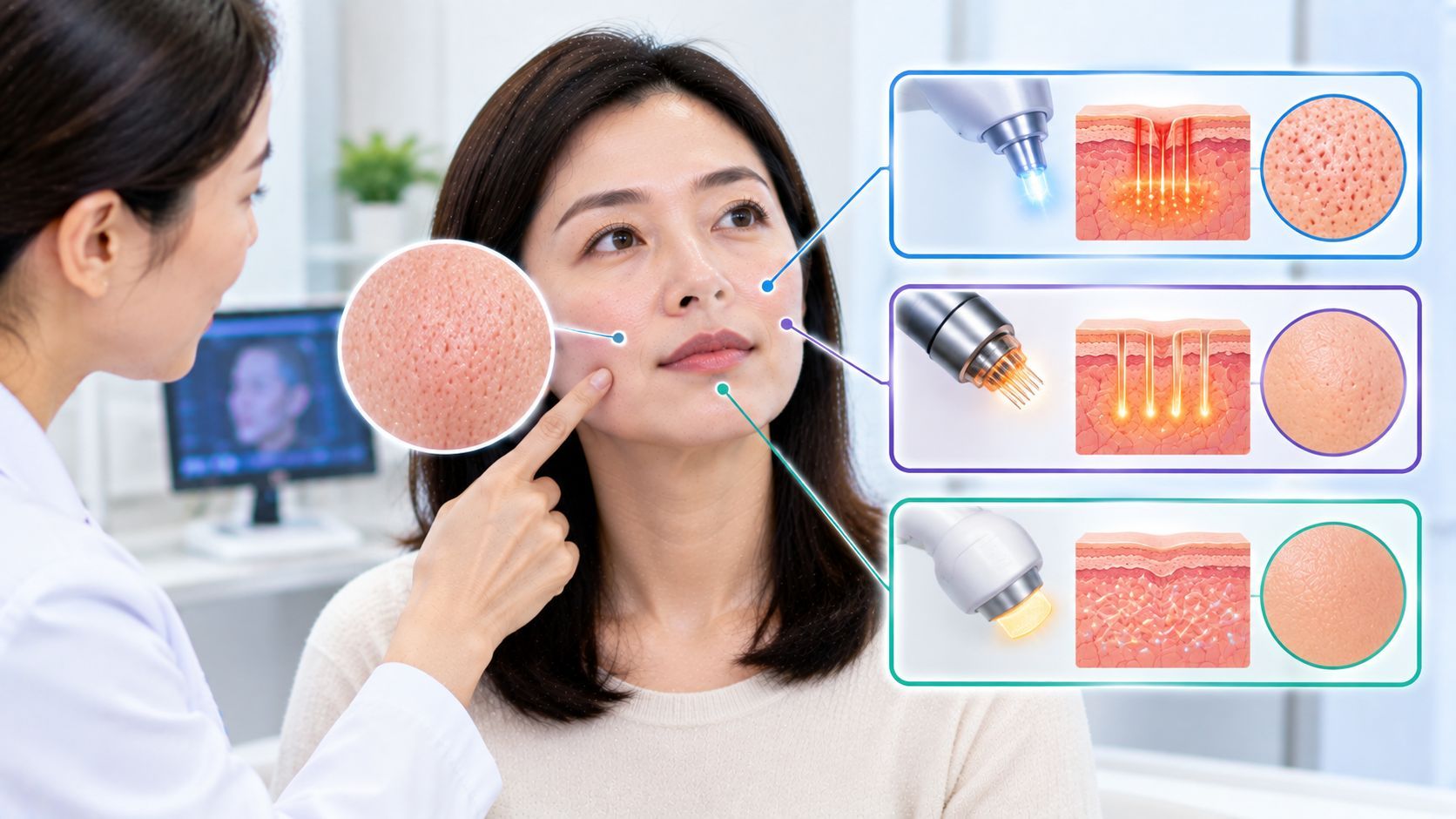
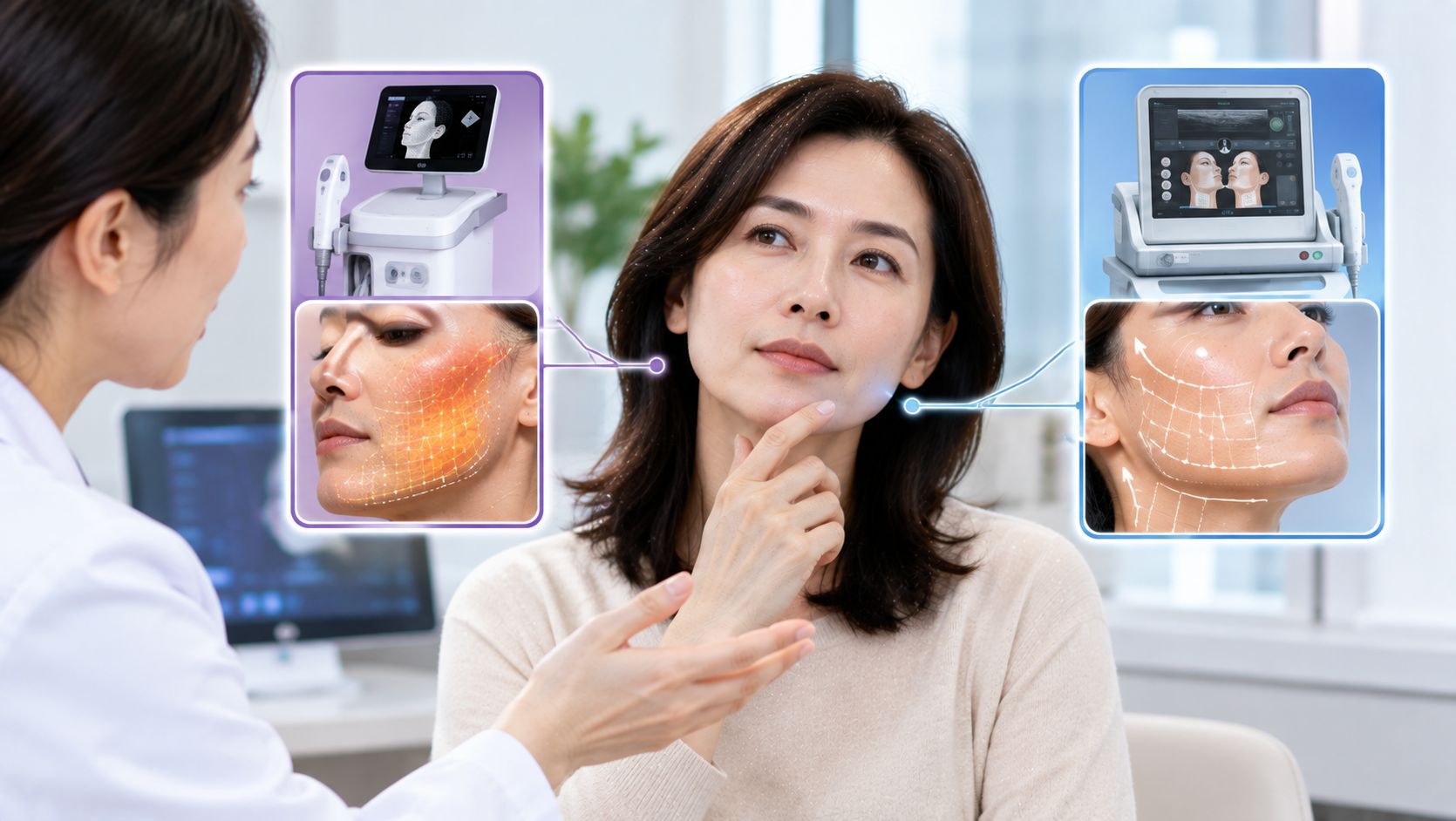
Radiofrequency treatments use controlled heating to affect tissue and stimulate remodeling. HIFU or microfocused ultrasound uses focused ultrasound energy at selected tissue depths.
These treatments are fundamentally different from hydrating skin boosters.
If your primary problem is dry, thin skin without significant laxity, a tightening procedure may not be the first treatment to discuss.
Conversely, if your skin is relatively hydrated but your jawline has become loose, tightening may be more relevant.
Can Menopausal Skin Be Treated Without Making It More Sensitive?
Treatment selection matters.
Very dry or compromised skin may require barrier support before certain procedures. Your dermatologist may recommend adjusting your skincare routine before treatment.
It is also important to disclose:
- Current skincare products
- Retinoid use
- Recent laser treatments
- Injectable treatments
- Prescription medications
- Skin allergies or previous reactions
This allows the clinician to consider treatment intensity and timing more carefully.
When Should You See a Dermatologist?
Not every new skin change after menopause is simply a normal hormonal effect.
Seek professional evaluation if you develop:
- Persistent severe dryness
- Significant itching
- New rashes
- Painful or inflamed areas
- Rapidly changing lesions
- Persistent redness
- Unexplained skin changes
- Sudden changes that do not improve with basic skincare
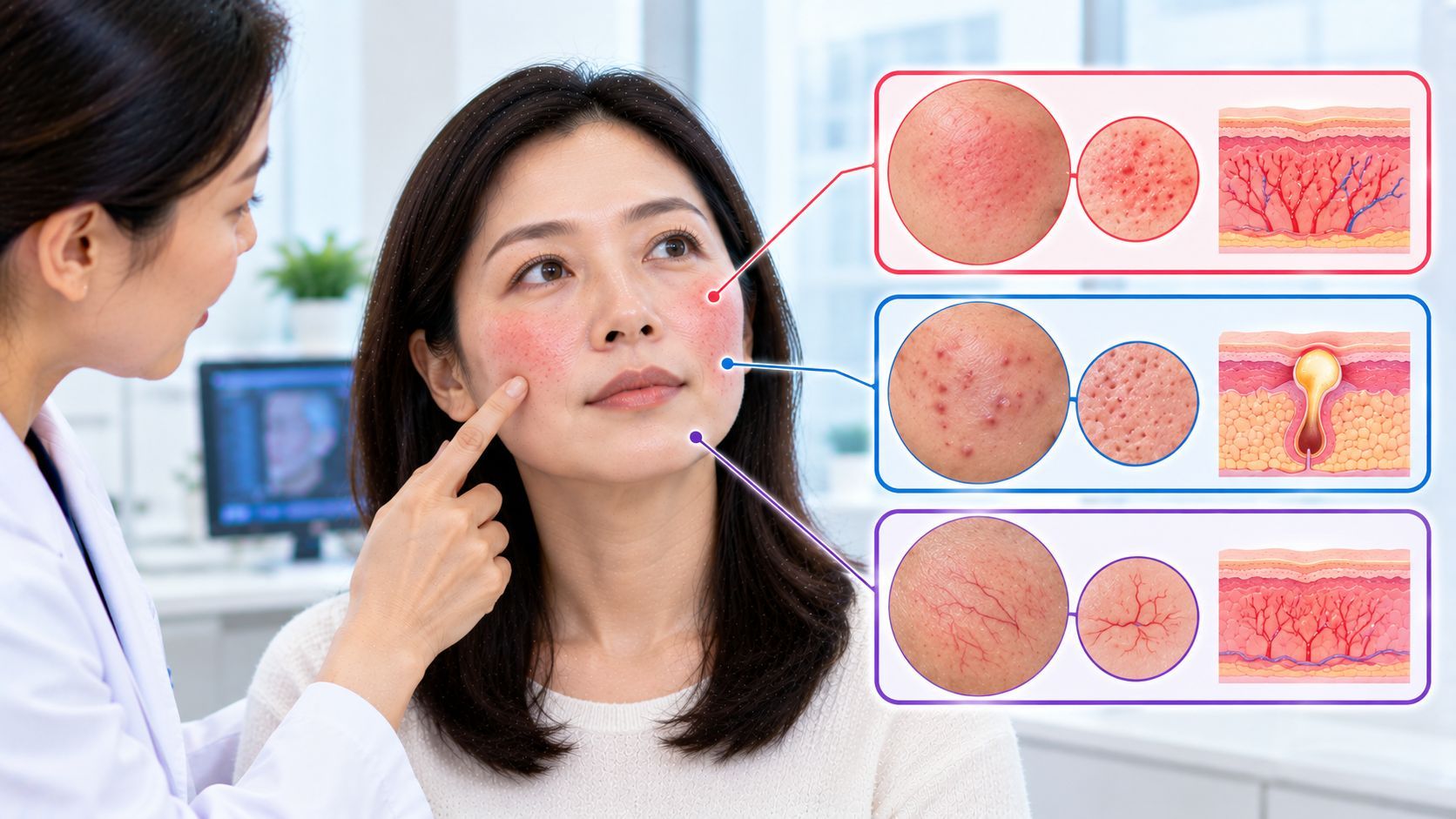
A dermatologist can distinguish menopausal skin changes from eczema, contact dermatitis, rosacea, medication-related changes or other conditions.
What Should International Patients Ask a Korean Clinic?
If you are traveling to Seoul for menopausal skin treatment, consider asking:
- Is my main problem dryness, skin thinning, collagen loss or laxity?
- Should I repair my skin barrier before treatment?
- Would a skin booster be more appropriate than tightening?
- Would Rejuran be suitable for my skin concerns?
- Do I have enough laxity to justify RF or HIFU?
- How many sessions might be considered?
- What downtime should I expect?
- How should I care for my skin after treatment?
- How long should I remain in Korea for follow-up?
- What should I avoid before flying home?
These questions can help prevent choosing a procedure simply because it is popular.
Can Hormone Therapy Improve Skin?
Menopausal hormone therapy is a medical treatment used for specific menopausal symptoms and requires individualized assessment.
Some research suggests estrogen-related therapies can influence skin properties, including collagen and hydration. However, hormone therapy should not be started solely as an aesthetic treatment without discussing its overall benefits, risks and suitability with an appropriate healthcare professional.
If you are considering hormonal treatment, that discussion is separate from choosing an aesthetic dermatology procedure.
What Is a Practical Approach to Menopausal Skin?
A useful treatment strategy can start with four questions:
1. Is the skin mainly dry?
Prioritize barrier repair and hydration.
2. Is the skin mainly thin and crepey?
Discuss skin-quality and collagen-support options.
3. Is the face becoming loose?
Assess whether RF, ultrasound or another tightening approach is appropriate.
4. Is there also facial volume loss?
Discuss whether carefully selected volume restoration should be considered.
This approach is more useful than treating every menopausal skin concern with the same procedure.
Conclusion
Skin can become noticeably thinner and drier after menopause because hormonal changes, particularly declining estrogen, affect collagen, hydration, elasticity and other components of skin structure. Natural aging and cumulative environmental exposure can add to these changes.
The first step is identifying what is actually bothering you most. Dryness may respond to barrier-focused skincare, while reduced firmness, crepiness, laxity and facial volume loss may require different treatment strategies.
Korean dermatology clinics offer many options, including skin boosters, Rejuran, RF, HIFU and laser-based treatments. However, the most appropriate choice depends on your individual skin condition rather than your age or menopausal status alone.
FAQs
Does menopause really make your skin thinner?
Yes. Hormonal changes during menopause are associated with changes in collagen, skin thickness, elasticity and hydration. The degree of change varies between individuals.
Why is my skin suddenly so dry after menopause?
Reduced estrogen and age-related changes can affect the skin barrier, hydration and oil production. This can make skin feel tighter, rougher and more sensitive.
Can Rejuran help thin menopausal skin?
Rejuran may be considered for selected skin-quality concerns such as texture and elasticity. It does not replace estrogen or reverse the hormonal changes of menopause.
Are skin boosters good for menopausal dryness?
Some skin boosters may improve hydration and skin quality, but the specific product and whether injectable treatment is appropriate should be determined after evaluating your skin.
Should I choose RF or HIFU for menopausal skin?
Neither is automatically better for every menopausal patient. These technologies are primarily considered for laxity and firmness, while severe dryness may require a different approach.
Can menopause cause larger-looking pores?
Yes, reduced elasticity and changes in skin structure can make pores appear more noticeable. Sebum changes, photoaging and genetics can also contribute.