What Korean Skin Treatments Are Best for Menopausal Skin?
Introduction
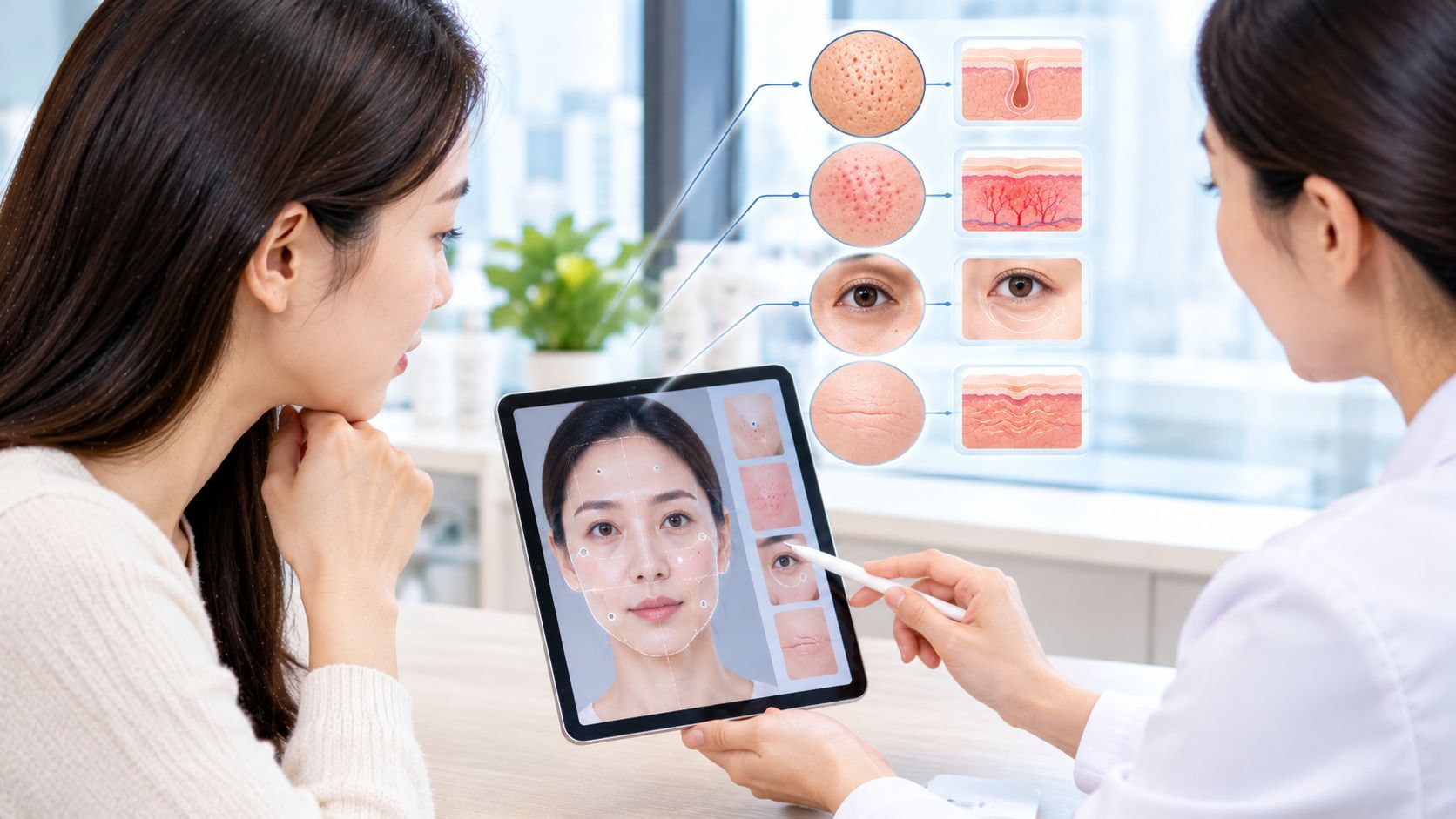
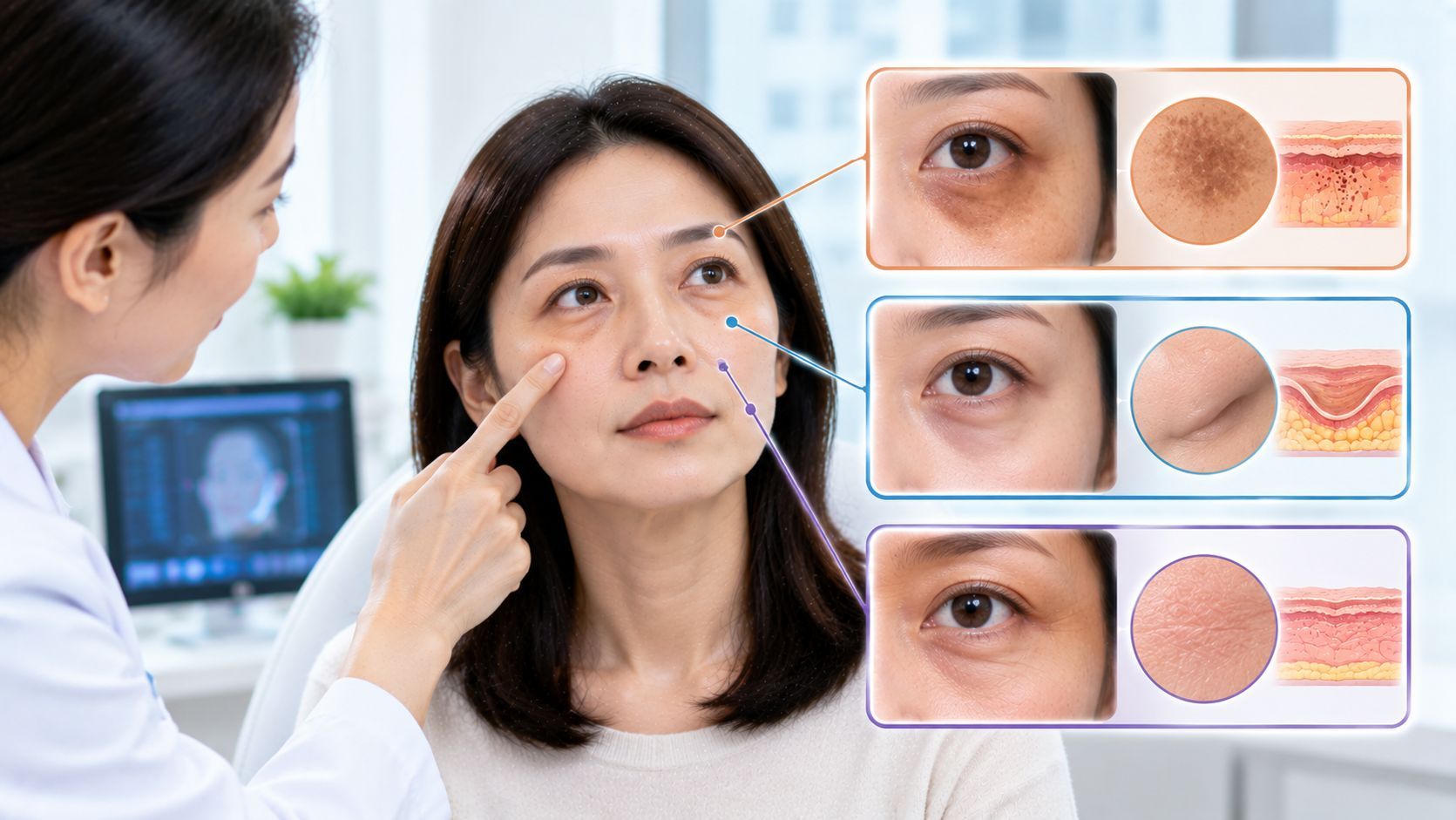
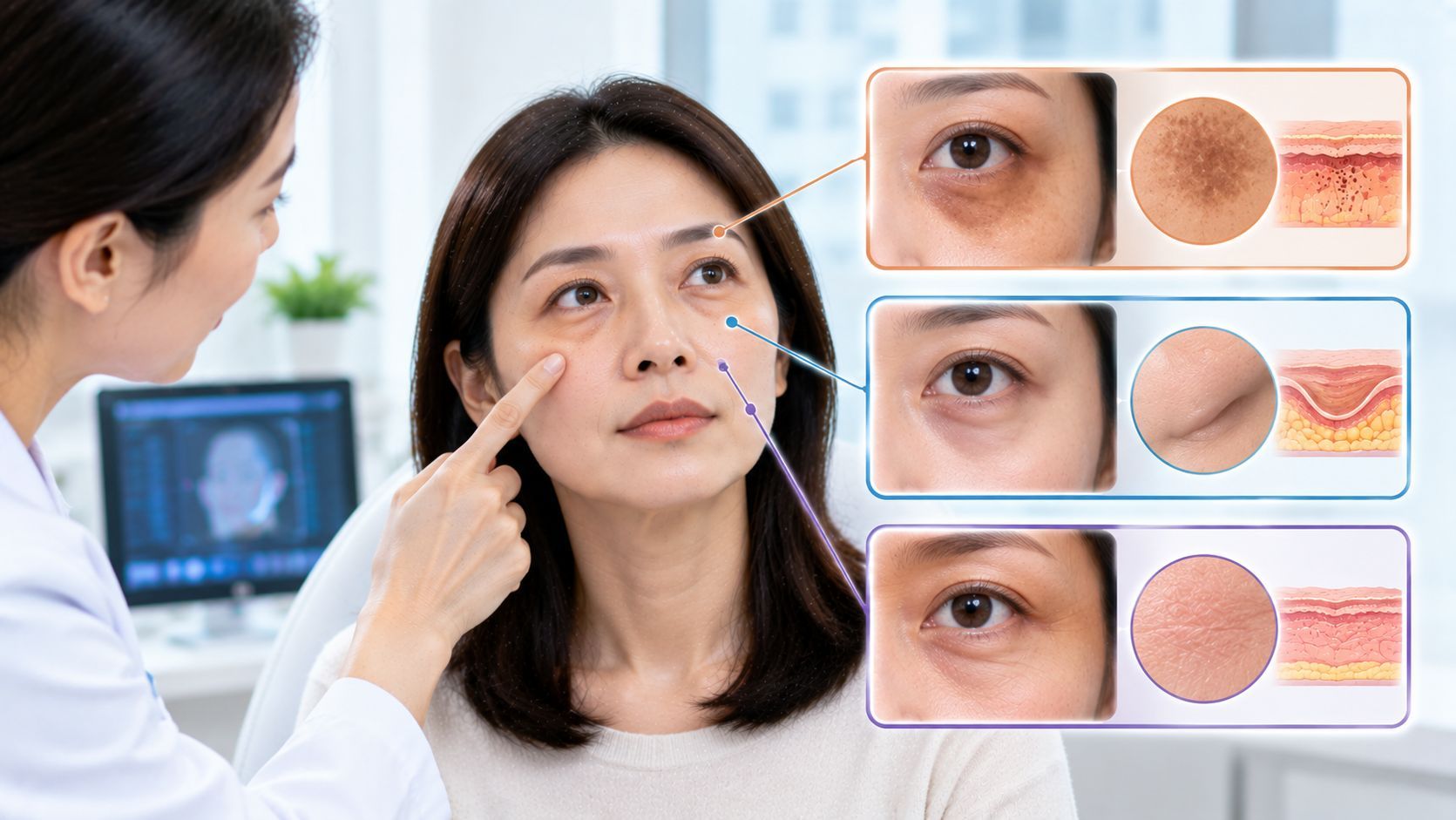
Menopausal skin can change noticeably as estrogen levels decline. Dryness, thinner-looking skin, fine lines, reduced elasticity, pigmentation, larger-looking pores and facial laxity may become more visible during and after menopause. Because these concerns involve different aspects of the skin, there is no single Korean skin treatment that is best for every menopausal woman.
The right treatment depends on what has changed most. Hydration-focused treatments may be relevant for very dry skin, collagen-support treatments may be considered for reduced firmness and texture, while RF or ultrasound-based treatments may be appropriate when laxity is the primary concern. Menopausal hormonal changes are associated with changes in skin collagen, thickness, elasticity and hydration, while cumulative sun exposure and natural aging can contribute additional effects.
How Does Menopause Change the Skin?
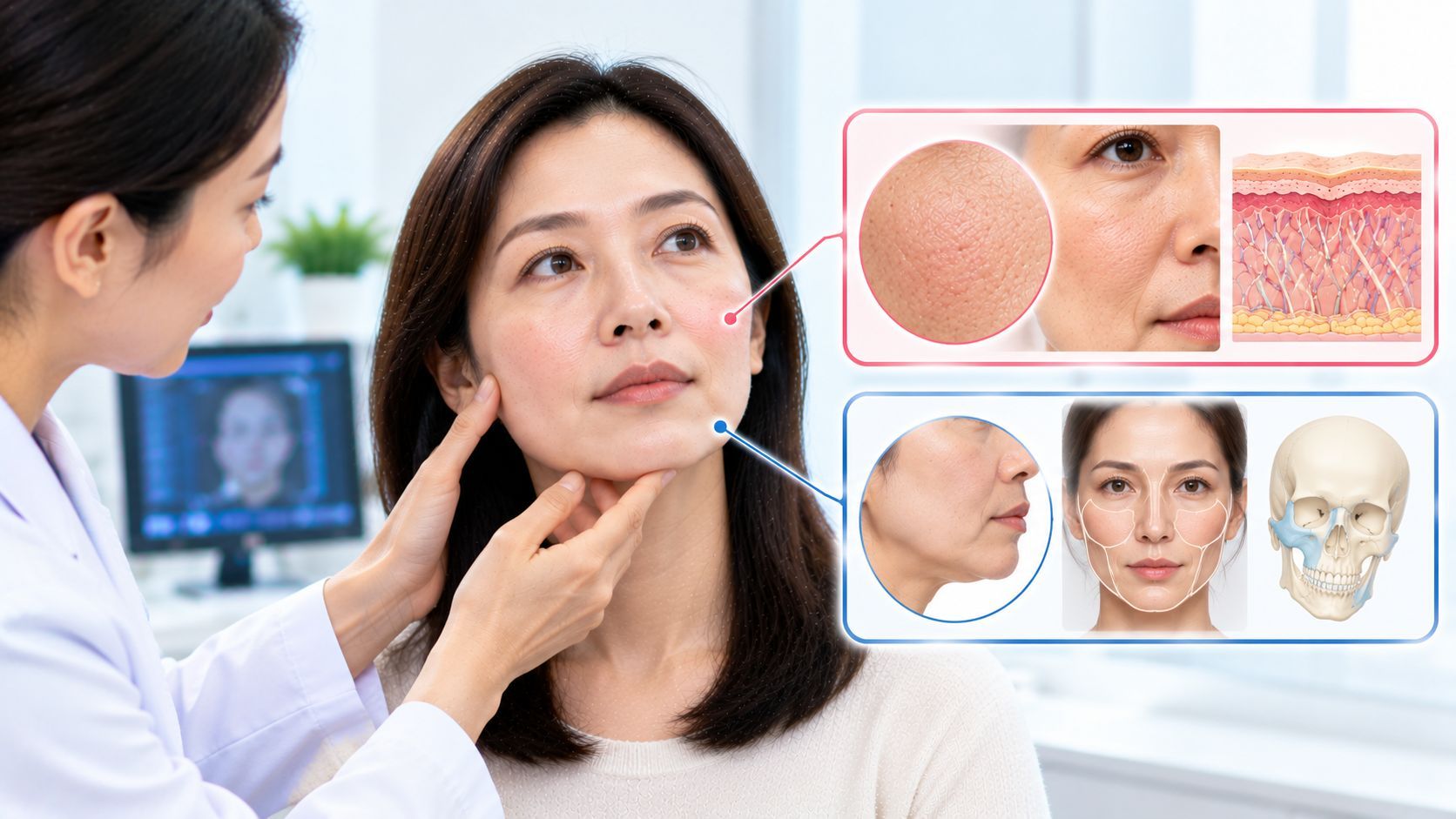
Menopause is associated with a substantial decline in estrogen. Because estrogen influences skin structure and hydration, its decline can contribute to several visible changes.
Common concerns include:
- Dryness and tightness
- Reduced skin elasticity
- Fine lines and wrinkles
- Thinner-feeling skin
- Crepey texture
- Reduced firmness
- Facial sagging
- Larger-looking pores
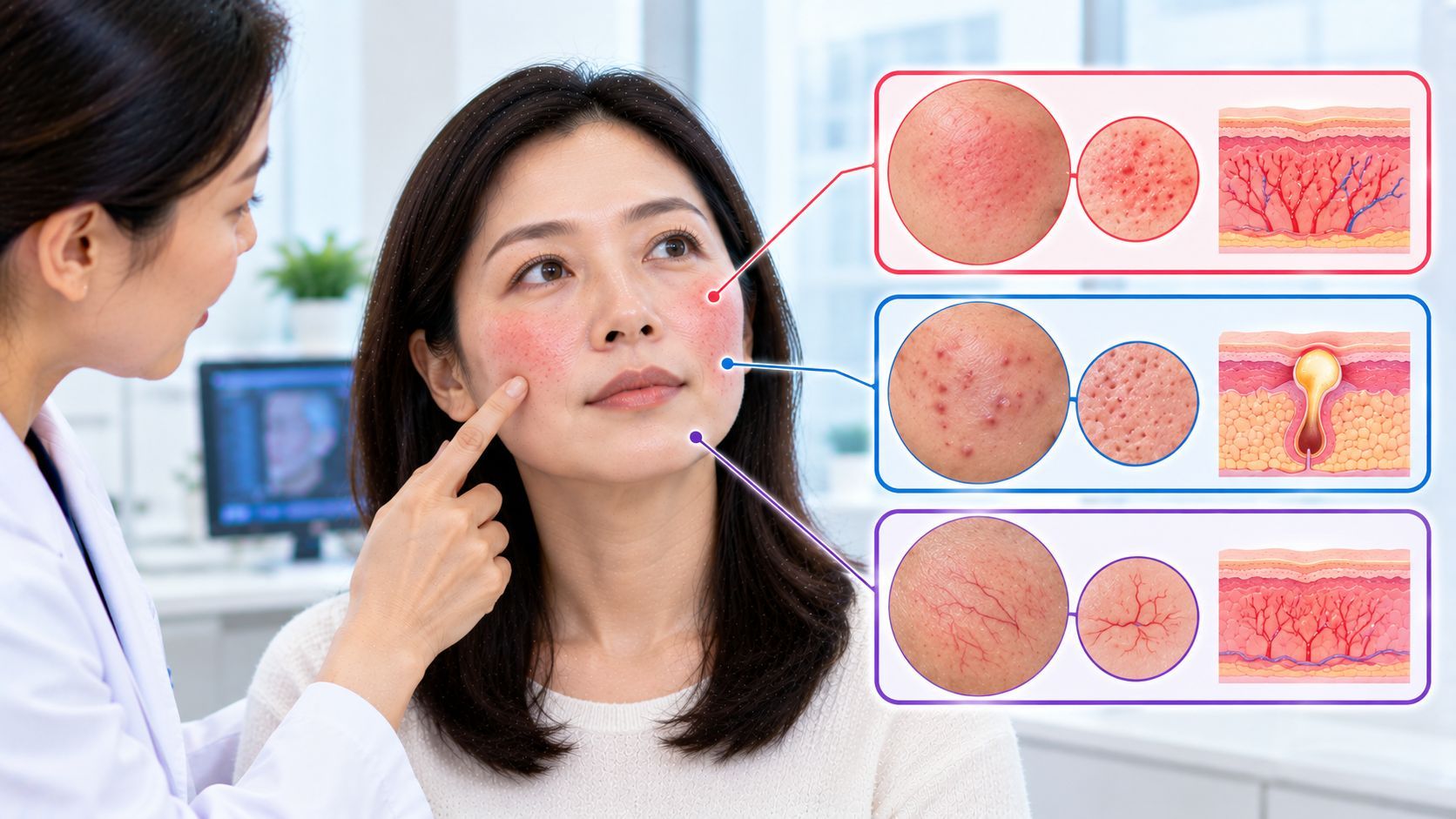
- Uneven pigmentation
- Dullness
- Increased sensitivity
These changes can occur together, but they do not necessarily have the same underlying cause.
For example, a woman may have very dry skin but relatively little laxity, while another woman of the same age may have adequate hydration but significant jawline sagging.
That distinction matters when choosing treatment.
What Are the Main Korean Treatment Categories for Menopausal Skin?
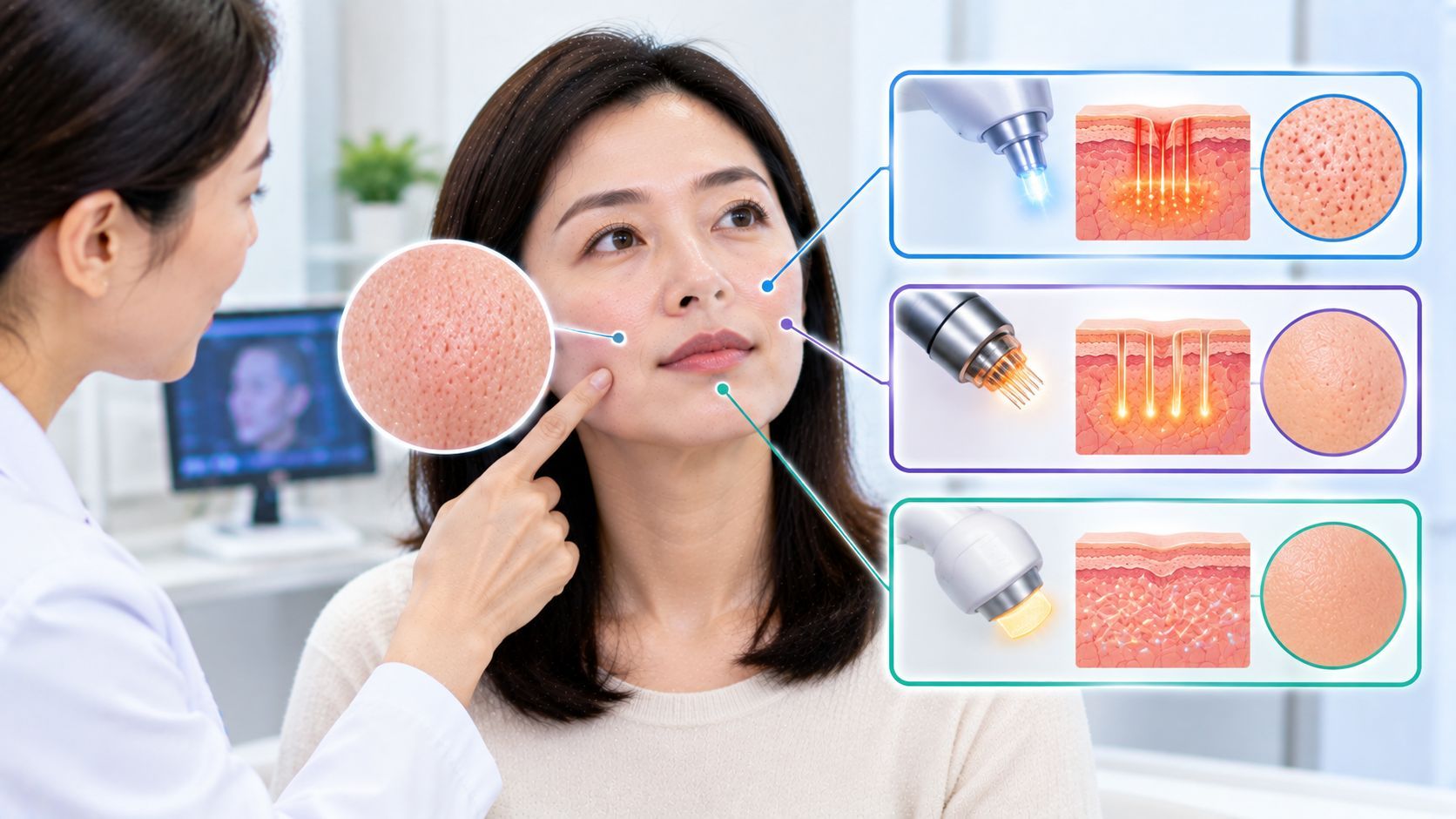
Korean dermatology clinics commonly offer several categories of aesthetic treatments that may be considered for menopausal skin.
These include:
- Skin boosters
- Rejuran and other skin-quality injectables
- Radiofrequency tightening
- HIFU or microfocused ultrasound
- Collagen-stimulating treatments
- Laser treatments
- Microneedling-based procedures
- Professional hydration treatments
Each targets a different concern.
Skin Boosters for Dry and Dehydrated Skin
If dryness is your biggest concern, a hydration-focused treatment may deserve consideration before an aggressive tightening procedure.
Depending on the product, injectable skin boosters can be designed to improve hydration and overall skin quality.
They may be discussed for:
- Very dry skin
- Fine dehydration lines
- Dull complexion
- Rough texture
- Mild crepiness
- Reduced skin smoothness
However, not every dry menopausal complexion requires injectable treatment.
A dermatologist should first evaluate whether the problem is caused by dehydration, barrier dysfunction, a dermatological condition, environmental factors or a combination.
Why Hydration Matters After Menopause
Dryness can make fine lines look more prominent and can make the skin surface appear rougher.
Improving hydration does not restore all of the structural changes associated with menopause, but it can improve how the skin feels and looks.
A good home routine remains important even when professional treatment is performed.
Rejuran for Menopausal Skin
Rejuran is a polynucleotide-based injectable used in aesthetic dermatology for skin-quality concerns.
It is often discussed for patients who want gradual improvement in areas such as:
- Skin texture
- Elasticity
- Fine lines
- Overall skin quality
- Mild crepey appearance
For menopausal patients, Rejuran may be considered when reduced skin quality is a more important concern than major facial volume loss.
However, Rejuran should not be described as a replacement for estrogen or as a treatment for menopause itself.
Its role is aesthetic skin treatment.
The suitability of Rejuran depends on skin condition, treatment area, medical history and the clinician's assessment.
Radiofrequency for Menopausal Skin
Radiofrequency treatments use controlled energy to heat tissue and stimulate remodeling.
RF may be considered when the primary concern is:
- Mild to moderate laxity
- Reduced firmness
- Jawline definition
- Lower-face looseness
- Neck laxity
The American Academy of Dermatology notes that radiofrequency-based approaches can provide gradual improvement in skin firmness, particularly when sagging is limited.
Why RF May Be Relevant After Menopause
Reduced collagen and elasticity can contribute to facial laxity during aging and menopause.
RF may therefore be considered when the skin has become less firm but there is not a large amount of excess tissue.
However, RF is not primarily a hydration treatment. If your main problem is severe dryness, improving the skin barrier may be more relevant than immediately choosing a tightening procedure.
HIFU and Microfocused Ultrasound
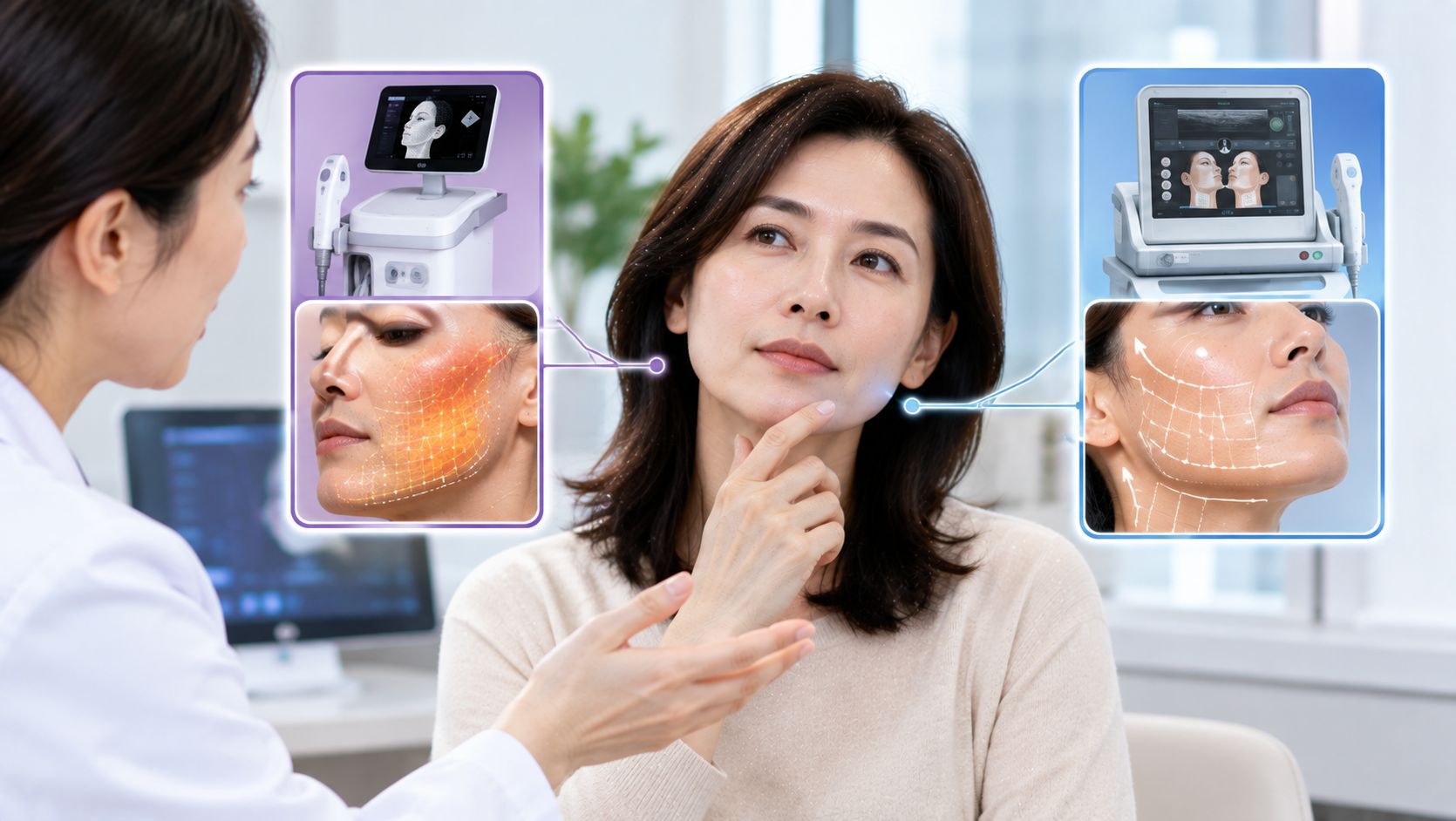
HIFU and microfocused ultrasound treatments use focused ultrasound energy at selected tissue depths.
They are generally considered for selected cases of:
- Lower-face laxity
- Jawline looseness
- Mild jowling
- Neck laxity
- Reduced facial definition
Ultrasound-based tightening can produce gradual changes rather than an immediate surgical-style lift. The AAD notes that non-invasive ultrasound tightening is most appropriate for limited sagging and that significant excess skin may not respond adequately.
Is HIFU Suitable for Every Menopausal Face?
No.
Some menopausal women also experience facial volume loss. If the face is already thin or hollow, the clinician should assess facial volume before deciding on an energy-based tightening treatment.
Tightening loose skin and restoring lost facial volume are different objectives.
Collagen-Stimulating Treatments
Collagen stimulation may be relevant when the main concern is gradual loss of firmness and skin quality.
Depending on the treatment, this category can include:
- Certain injectable collagen stimulators
- Microneedling
- RF microneedling
- Other collagen-focused procedures
These treatments are not identical, and their suitability depends on the patient's skin condition.
A woman with thin, crepey skin may have different needs from someone with thick skin and pronounced jawline laxity.
Laser Treatments for Menopausal Skin
Laser treatments can address concerns that are not necessarily caused directly by menopause.
For example, a menopausal patient may simultaneously experience:
- Sun-related pigmentation
- Uneven skin tone
- Fine lines
- Rough texture
- Enlarged-looking pores
- Dullness
Different lasers target different concerns, so there is no universal “menopause laser.”
A consultation should identify whether pigmentation, texture, redness or another issue is the primary target.
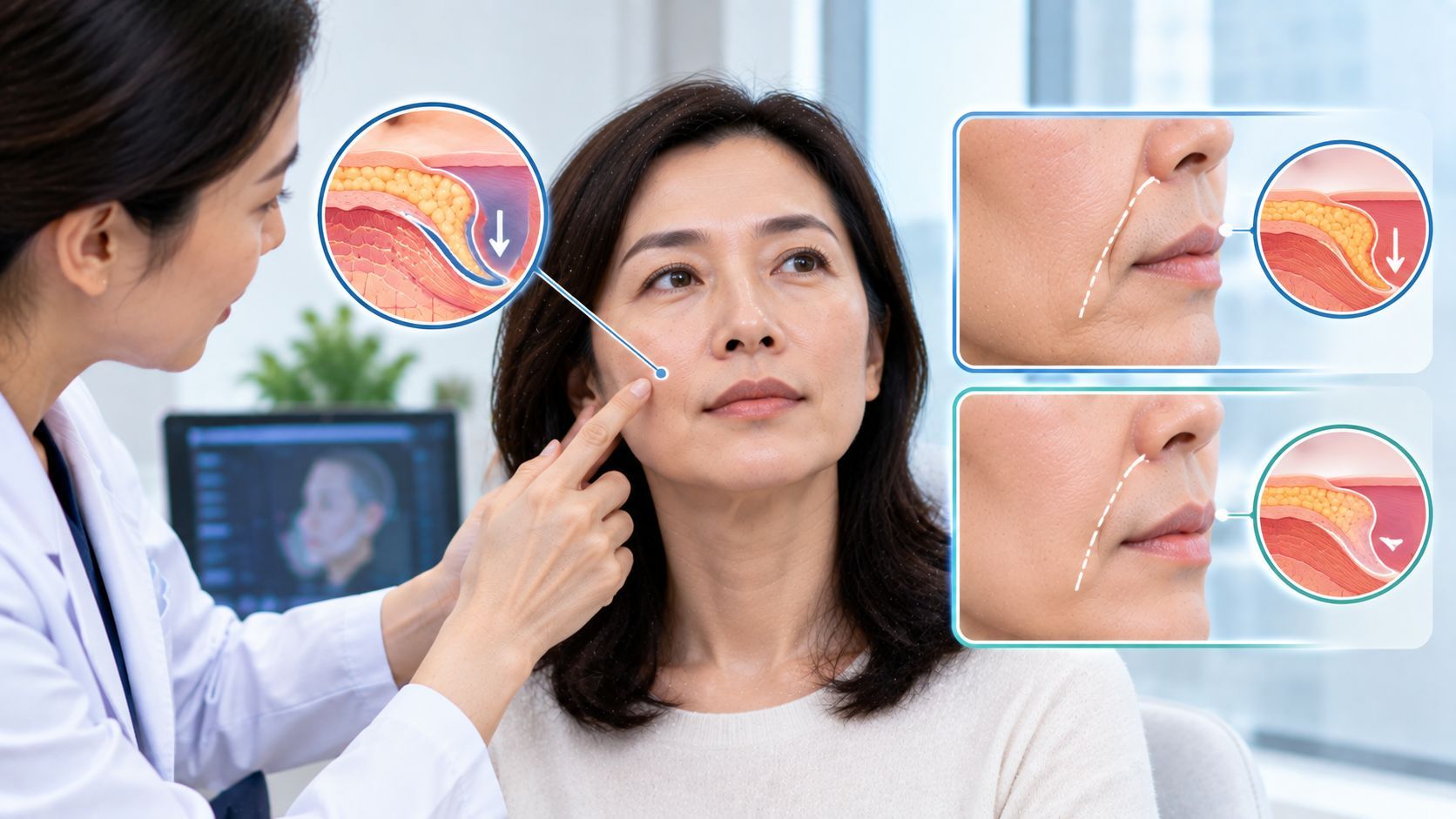
What If Your Main Concern Is Facial Sagging?
If your biggest concern is a changing jawline rather than dryness, tightening treatments may deserve greater consideration.
You might notice:
- Jowls
- Less-defined jawline
- Loose lower-face skin
- Neck laxity
- Reduced cheek firmness
RF or ultrasound-based tightening may be considered for limited laxity.
However, significant excess skin may require a surgical discussion. Non-invasive treatments cannot remove large quantities of excess skin.
What If Your Face Looks Older Because of Volume Loss?
Menopause-related aging can involve changes in facial soft tissue as well as the skin itself.
If your face looks:
- Hollow
- Deflated
- Sunken around the temples
- Flatter in the cheeks
- More angular than before
then a tightening treatment may not address the entire concern.
Depending on your anatomy, a dermatologist may discuss carefully placed dermal filler or other volumizing approaches.
The American Academy of Dermatology explains that fillers can restore fullness in selected facial areas, but treatment carries risks and should be performed by an appropriately qualified clinician.
Which Treatment Should You Consider First?
A useful approach is to identify your dominant concern.
Main concernTreatment category to discussSevere drynessBarrier care and hydration-focused treatmentFine lines and poor skin qualityRejuran or other skin-quality approachesMild crepey textureSkin-quality/collagen-focused treatmentsJawline laxityRF or ultrasound-based tighteningNeck laxityRF or ultrasound-based tighteningPigmentationAppropriate laser or pigment-focused treatmentHollow cheeks or templesVolume-restoration assessmentMultiple concernsIndividualized staged or combination plan
This is a framework rather than a prescription. The same treatment may be appropriate for one menopausal patient and inappropriate for another.
Can You Combine Treatments?
Sometimes.
Menopausal skin frequently has several concerns at once. For example, you could have:
Dryness + fine lines + mild laxity
or
Hollow cheeks + loose jawline + crepey skin
A clinic may therefore recommend addressing different problems with different treatment categories.
Recent literature concerning facial changes during GLP-1-associated weight loss similarly emphasizes that facial rejuvenation can require assessment of multiple tissue changes rather than treating a single symptom in isolation.
However, more treatment is not automatically better.
Combining procedures can also increase cost, downtime or the possibility of irritation and complications. Treatment should therefore be planned around specific objectives.
What Should You Do Before Treatment?
A strong skincare foundation is useful regardless of whether you plan professional treatment.
Consider discussing:
Gentle Cleansing
Avoid unnecessarily harsh cleansers if your skin is already dry or sensitive.
Moisturizer
Barrier-supporting ingredients such as ceramides and humectants can help maintain hydration.
Sun Protection
Daily broad-spectrum sunscreen is important because ultraviolet exposure contributes to collagen degradation and visible skin aging.
Careful Use of Retinoids
Retinoids may help with photoaging and collagen-related skin changes, but menopausal skin can be sensitive. Introduce them gradually and discuss appropriate use with a dermatologist if irritation develops.
How Should International Patients Plan Menopausal Skin Treatment in Seoul?
If you are traveling to Korea for treatment, avoid selecting procedures solely from an online menu.
Before booking, ask:
- What is the main problem with my skin?
- Is my skin primarily dry, thin, lax or volume-deficient?
- Would hydration treatment be more appropriate than tightening?
- Would Rejuran be useful for my skin quality?
- Do I have enough facial tissue for an energy-based tightening treatment?
- Would RF or HIFU be appropriate for my jawline?
- How many sessions might be considered?
- What downtime should I expect?
- How should I care for my skin after treatment?
- How soon can I safely travel home?
For international patients, also tell the clinic about prescription medications, allergies, previous procedures and any history of unusual reactions.
How Long Do Results Take?
Results vary by treatment.
Hydration-focused procedures may produce changes in skin feel and appearance relatively quickly, although swelling or temporary treatment effects can initially affect the result.
Rejuran and collagen-focused treatments generally rely on gradual tissue changes.
RF and ultrasound tightening also develop progressively rather than producing an immediate surgical lift. The AAD describes non-invasive tightening results as gradual and notes that improvement can take months to become apparent.
Understanding the expected timeline is especially important if you are visiting Seoul for a short trip.
What Are the Risks?
Professional skin treatments are not risk-free.
Injectable treatments can cause:
- Swelling
- Bruising
- Tenderness
- Temporary redness
- Asymmetry
- Infection
- Other procedure-specific complications
Energy-based treatments can cause discomfort, redness, swelling and, depending on the technology and settings, burns or other tissue effects.
Very dry or sensitive menopausal skin may also require more conservative treatment planning.
Conclusion
The best Korean skin treatment for menopausal skin depends on what has changed most in your skin.
If dryness is the main concern, barrier repair and hydration-focused treatments may deserve attention. If skin quality and fine lines are the priority, treatments such as Rejuran or other collagen-focused approaches may be discussed. If jawline or neck laxity dominates, RF or ultrasound-based tightening may be considered. If significant facial volume has been lost, volume restoration should be assessed separately.
For women traveling to Seoul, the most useful approach is to have the skin evaluated before choosing a treatment package. Menopausal skin often needs a combination of hydration, collagen support, firmness management and sun protection rather than one procedure alone.
FAQs
What is the best Korean treatment for menopausal skin?
There is no single best treatment for every menopausal woman. Skin boosters may be considered for hydration, Rejuran for selected skin-quality concerns, and RF or HIFU for appropriate cases of skin laxity.
Is Rejuran good for menopausal skin?
Rejuran may be considered for selected concerns involving skin quality, texture and elasticity. It does not treat menopause or replace declining estrogen.
Is RF better than HIFU after menopause?
Neither is universally better. The appropriate technology depends on your degree of laxity, facial anatomy, skin thickness and treatment goals.
Can skin boosters help menopausal dryness?
Some skin boosters are designed to improve hydration and skin quality. However, severe dryness should also be evaluated for underlying skin-barrier problems or dermatological conditions.
Can Korean treatments restore collagen after menopause?
Some treatments are designed to stimulate collagen remodeling or improve the appearance of collagen-depleted skin. Results vary, and no aesthetic procedure completely reverses the biological effects of menopause.
Should I combine several Korean anti-aging treatments?
Combination treatment may be considered when you have multiple concerns, but it is not automatically necessary. A clinician should determine which problems actually require treatment and whether procedures should be performed together or in stages.