My Jawline Started Sagging Quickly After Menopause. What Can Help?
Introduction
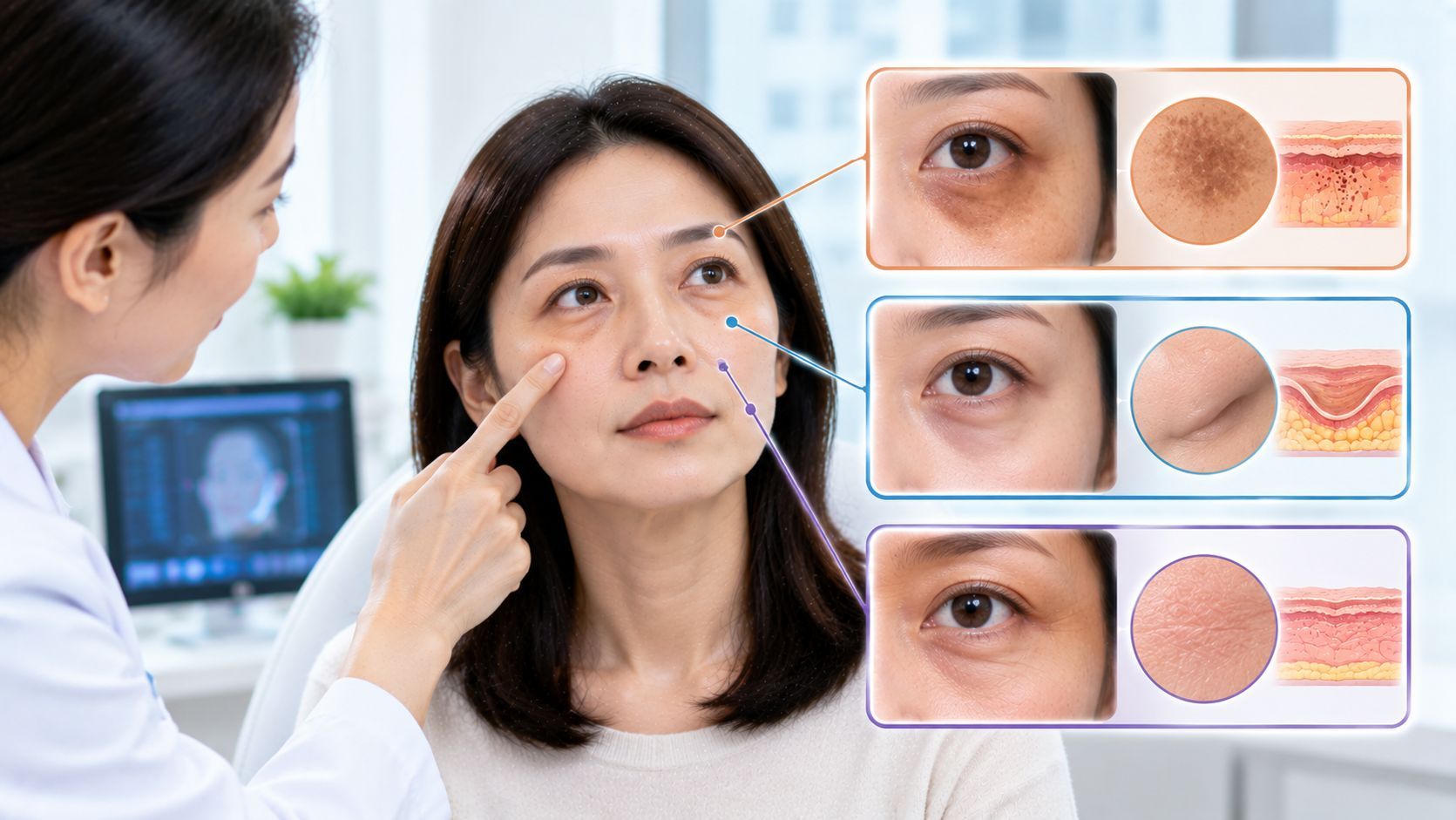
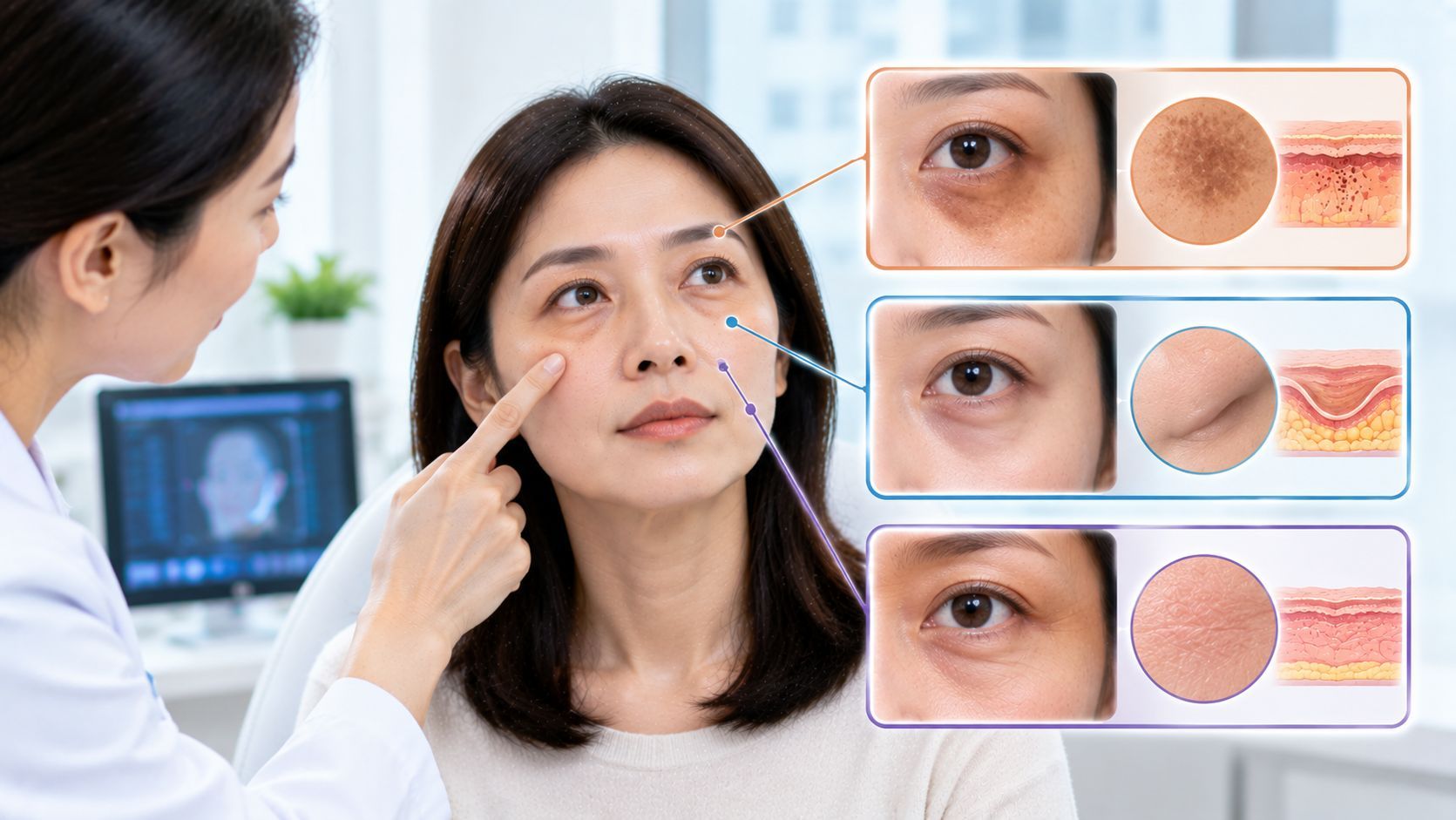
A suddenly less-defined jawline can be one of the most noticeable facial changes after menopause. You may see early jowls, softer lower-face contours, loose skin around the mouth and chin, or a neck that seems to have aged faster than the rest of your face.
Menopause can contribute to these changes because declining estrogen is associated with changes in collagen, skin thickness, elasticity and hydration. Natural aging and changes in facial soft tissue can add to the effect.
The right treatment depends on why your jawline is changing. Mild-to-moderate skin laxity may be addressed with non-surgical tightening, while significant facial volume loss may require a different strategy. If there is substantial excess skin, non-surgical treatment may have limited results.
Why Can the Jawline Sag After Menopause?
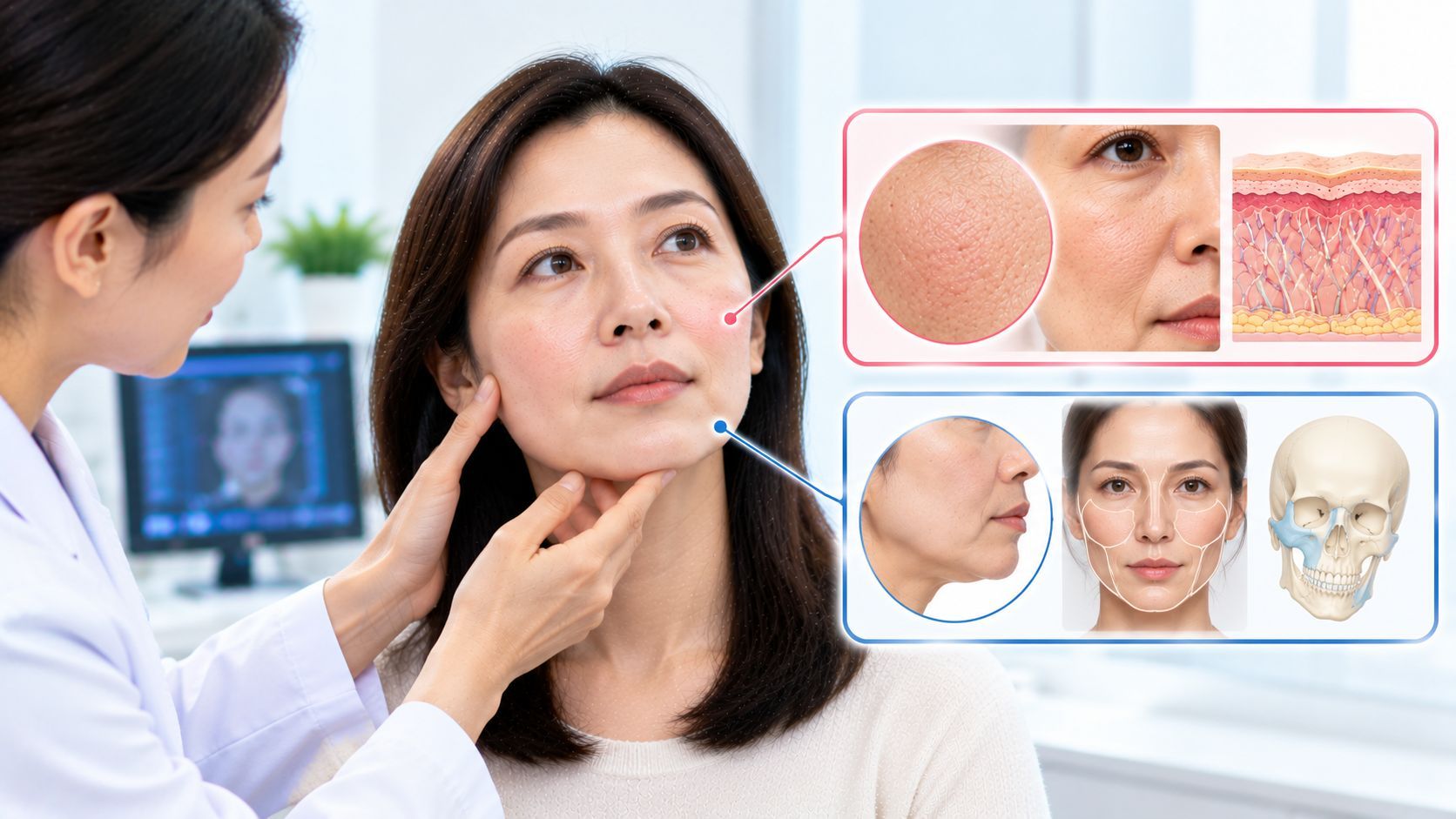
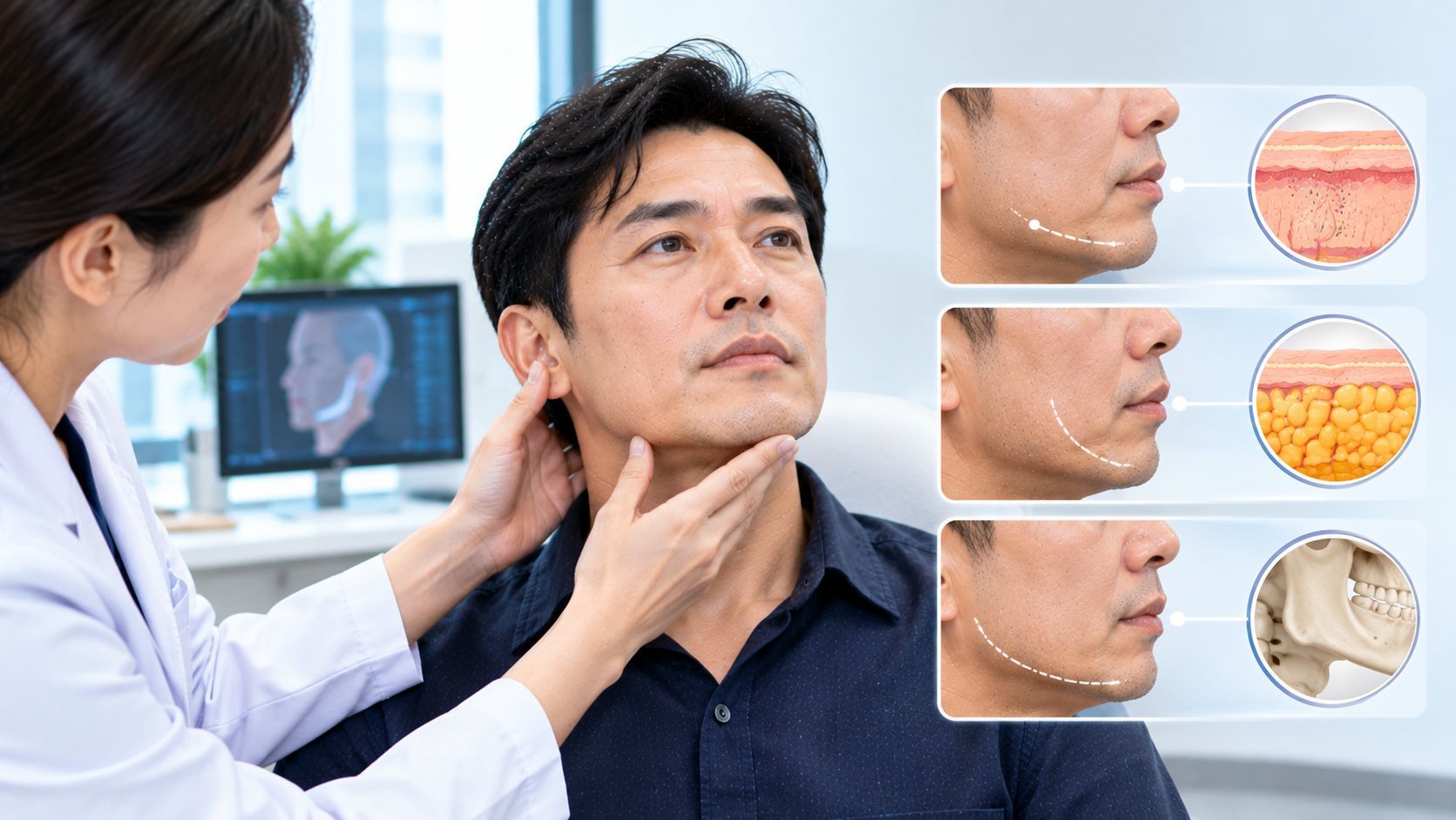
Jawline definition depends on several structures working together:
- Skin elasticity
- Collagen and elastin
- Facial fat distribution
- Deeper connective tissues
- Bone structure
- Muscles
- Submental and neck tissue
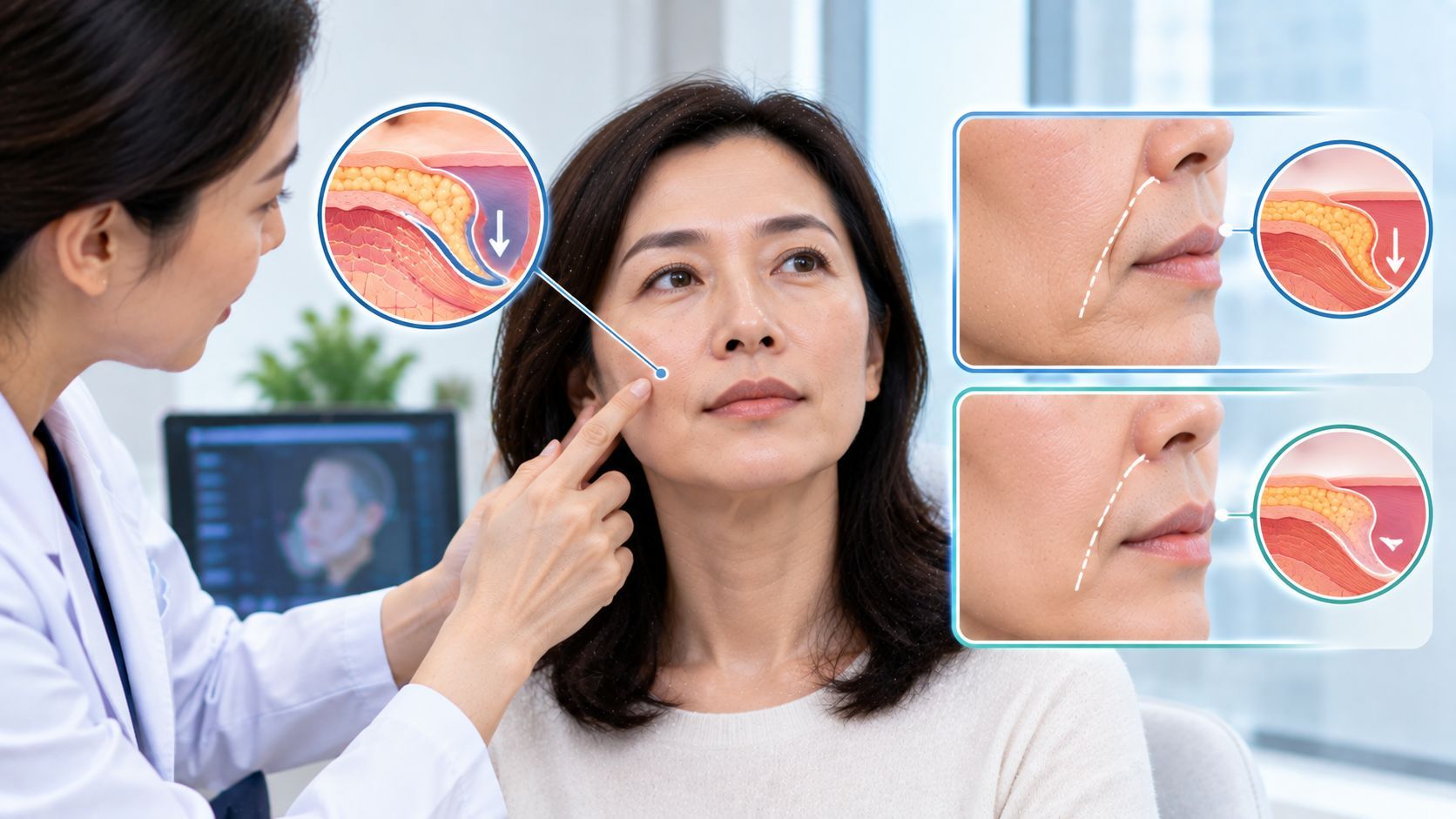
During menopause, reduced estrogen can contribute to changes in the skin's collagen and structural support. At the same time, normal aging can affect facial fat compartments and underlying tissues.
The result may be a combination of:
- Reduced skin firmness
- Jowling
- Lower-face laxity
- Less-defined jawline
- Deeper folds
- Looser neck skin
This means that “jawline sagging” is not always simply a skin problem.
Why Can It Seem to Happen Quickly?
The underlying biological changes usually develop over time, but the visible appearance can seem sudden.
Several factors can make the change more noticeable:
- Menopausal hormonal changes
- Natural age-related collagen loss
- Recent weight loss
- Sun exposure
- Smoking
- Changes in facial volume
- Reduced skin hydration
- Genetics
If you have also recently lost a significant amount of weight, facial volume loss can make the jawline appear less supported.
Therefore, a rapid change in jawline appearance after menopause should not automatically be treated as a simple need for stronger skin tightening.
What Should You Determine First?
Before choosing a procedure, try to identify which of these problems is dominant:
1. Skin Laxity
The skin itself has become looser and less elastic.
2. Facial Volume Loss
The face has become flatter or hollow, reducing support around the lower face.
3. Combination of Both
You have both reduced volume and loose skin.
4. Excess Skin
There is enough loose tissue that non-surgical tightening may not produce the desired degree of improvement.
This assessment determines which treatment categories are worth discussing.
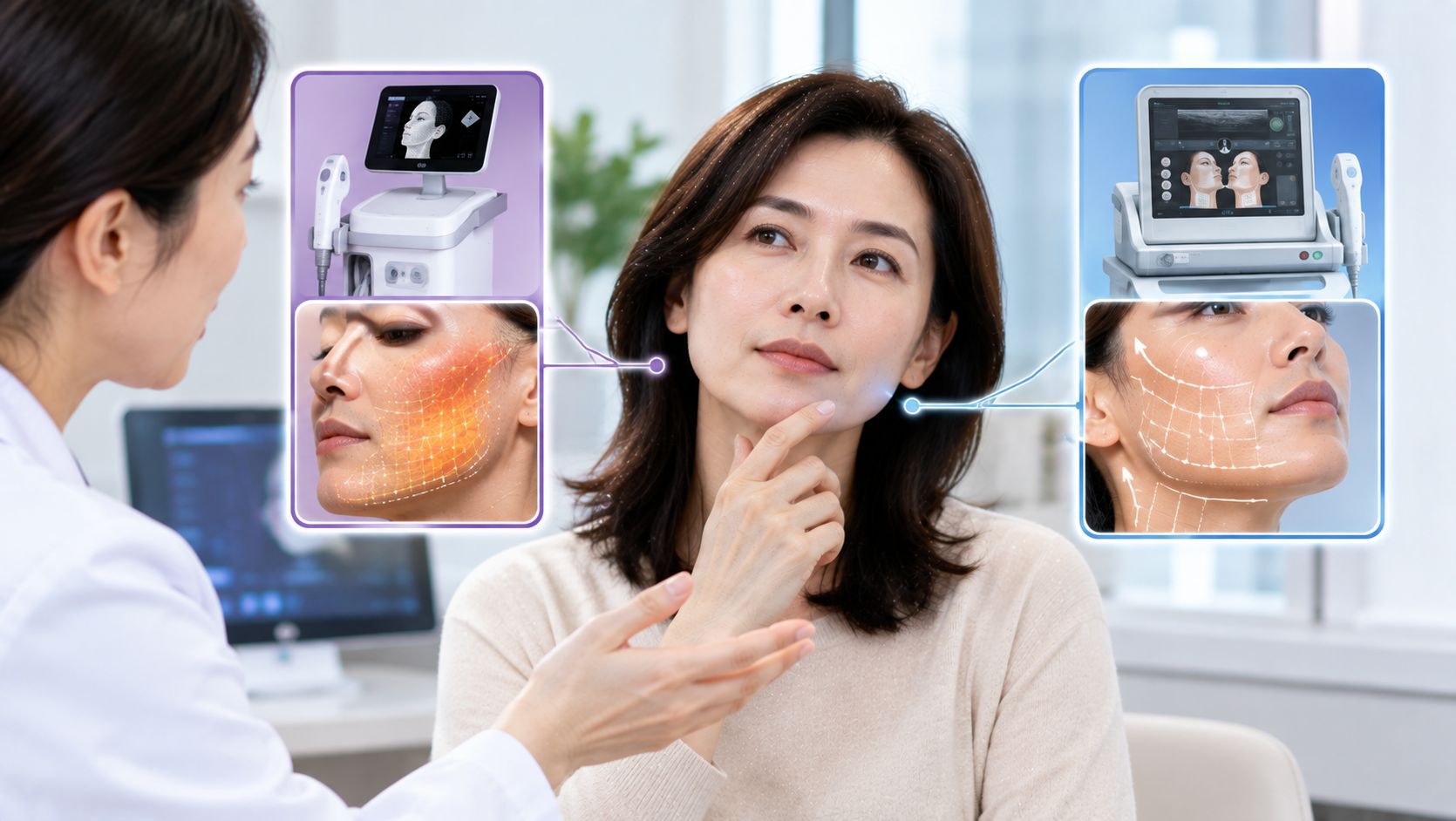
Can RF Tightening Help a Sagging Jawline?
Radiofrequency treatments may be considered for selected cases of facial laxity.
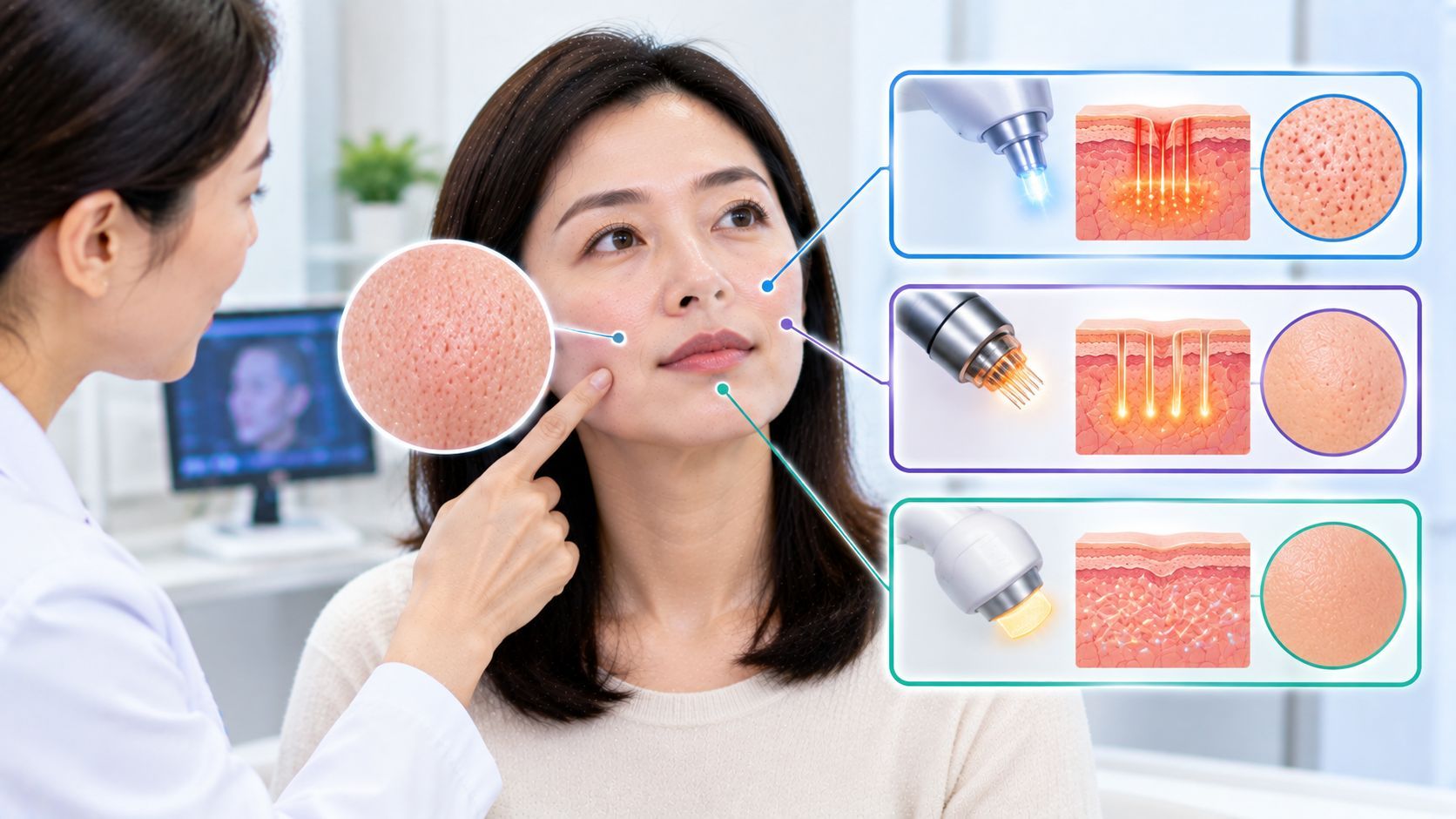
RF uses controlled heating to stimulate tissue remodeling and can improve the appearance of skin firmness over time.
It may be relevant when you have:
- Mild or moderate jowling
- Reduced jawline definition
- Lower-face laxity
- Early neck laxity
- Relatively good facial volume
The American Academy of Dermatology notes that radiofrequency can provide gradual tightening and is generally more useful when sagging is limited.
Why RF May Be Considered After Menopause
Post-menopausal changes in collagen and elasticity can contribute to lower-face laxity.
RF may therefore be one option when the main problem is firmness rather than significant volume loss.
However, RF is not a replacement for lost facial fat and does not remove substantial excess skin.
Could HIFU Help the Jawline?
HIFU and microfocused ultrasound are another category of non-surgical tightening treatment.
Focused ultrasound can target selected tissue depths and stimulate remodeling.
It may be considered for:
- Mild jawline laxity
- Early jowls
- Lower-face looseness
- Neck laxity
- Reduced definition
The AAD notes that ultrasound-based tightening can produce gradual improvement, but more substantial sagging may not respond adequately to non-invasive treatment.
RF vs HIFU for a Post-Menopausal Jawline
The question is not necessarily which technology is “better.”
They use different energy mechanisms and treatment approaches, and the appropriate choice depends on:
- Degree of laxity
- Facial thickness
- Treatment area
- Skin quality
- Facial volume
- Desired degree of improvement
- Previous treatments
A clinician should evaluate your anatomy rather than selecting a device based solely on age.
What If Your Face Has Become Thin?
This is particularly important after menopause.
If you have:
- Hollow cheeks
- Temple hollowing
- Reduced facial fullness
- A very thin lower face
then aggressive tightening may not address the primary reason your face looks older.
Facial volume contributes to the appearance of youthful contours. If volume has been lost, a clinician may discuss carefully selected volume-restoration options.
Dermal fillers can restore fullness in selected areas, although they carry risks and should be used conservatively by an appropriately qualified injector.
The goal should not be to fill the jawline simply because it looks less defined. Sometimes restoring support higher in the face can produce a more balanced result.
Can Collagen-Stimulating Treatments Help?
Collagen-focused treatments may be considered when reduced skin quality and mild laxity occur together.
Depending on the treatment, this can include:
- Rejuran
- Other collagen-stimulating injectables
- RF microneedling
- Microneedling
- Other skin-remodeling procedures
These approaches are different from conventional fillers and tightening devices.
They generally aim for gradual changes in skin quality or tissue support rather than creating an immediate lifting effect.
What About Rejuran for Jawline Sagging?
Rejuran is primarily considered a skin-quality treatment rather than a conventional lifting procedure.
It may be discussed when post-menopausal skin has:
- Reduced elasticity
- Fine lines
- Poor texture
- Mild crepiness
- Reduced overall skin quality
However, Rejuran should not be expected to physically lift substantial jowls.
If the primary problem is pronounced structural laxity, an energy-based tightening procedure or surgical assessment may be more relevant.
Can Skin Boosters Tighten a Sagging Jawline?
Skin boosters may improve hydration and selected aspects of skin quality, but they are not primarily lifting procedures.
If your jawline looks less defined because of dryness and crepey skin, improving hydration may make the skin appear smoother.
However, if the underlying problem is substantial laxity, hydration alone is unlikely to recreate a sharply defined jawline.
What If You Recently Lost Weight Too?
Weight loss can make post-menopausal jawline changes more noticeable.
Losing facial fat can reduce support beneath the skin, while menopause-related changes in elasticity can make the remaining skin appear looser.
In this situation, you may have:
Volume loss + skin laxity + reduced collagen
Trying to treat all three with one device may not be realistic.
Recent literature discussing facial changes following GLP-1-associated weight loss similarly describes volume loss and increased laxity as separate but overlapping treatment considerations.
What If There Is Significant Excess Skin?
Non-surgical tightening has limits.
If there is considerable excess skin along the jawline or neck, RF or HIFU may provide only partial improvement.
The AAD notes that non-invasive tightening is most appropriate for limited sagging, while significant excess skin may require another approach.
A surgical consultation may therefore be appropriate for substantial jowling or neck skin excess.
A facelift or neck lift is fundamentally different from non-surgical treatment and involves surgery, recovery and surgical risks.
Can Skincare Prevent Jawline Sagging After Menopause?
Skincare cannot completely prevent age-related changes, but it can support overall skin health.
Useful basics include:
- Daily broad-spectrum sunscreen
- Moisturizer
- Gentle cleansing
- Avoiding unnecessary irritation
- Appropriate use of retinoids
- Maintaining a consistent skincare routine
Sunscreen is particularly important because cumulative ultraviolet exposure contributes to collagen breakdown and visible skin aging.
Should You Wait Before Getting Treatment?
If your weight is still changing substantially, additional facial changes may occur.
If you have recently lost significant weight, your clinician may want to determine whether your facial volume and weight are relatively stable before making a long-term treatment plan.
There is no universal waiting period.
The appropriate timing depends on:
- Current weight trajectory
- Degree of facial change
- Treatment type
- Amount of expected future weight loss
- Your specific goals
What Should International Patients Ask a Korean Clinic?
If you are traveling to Seoul for jawline treatment, ask:
- Is my jawline problem mainly skin laxity or volume loss?
- Do I have enough facial tissue for RF or HIFU?
- Would RF or ultrasound be appropriate for my skin?
- Would collagen stimulation be useful?
- Would volume restoration improve my facial proportions?
- How much improvement can non-surgical treatment realistically provide?
- Would my degree of laxity be better addressed surgically?
- How much swelling or downtime should I expect?
- How many days should I stay in Seoul?
- What follow-up is available after I return home?
These questions can help you avoid selecting a treatment simply because it is popular.
How Long Does Jawline Tightening Take to Work?
Non-surgical tightening is generally gradual.
The AAD notes that results from ultrasound and RF-based treatments develop over time rather than immediately.
The timeline depends on:
- Treatment technology
- Energy settings
- Degree of laxity
- Skin condition
- Age
- Facial anatomy
- Individual collagen response
Temporary swelling can also make the face look different immediately after treatment, so early results should not necessarily be considered the final outcome.
Conclusion
If your jawline started sagging after menopause, the first step is to determine whether the main problem is skin laxity, facial volume loss, reduced skin quality, or a combination.
For limited laxity, RF or HIFU may be considered. For thin, crepey skin, collagen- or skin-quality-focused treatments may have a role. If facial volume has also decreased, volume restoration may need to be assessed separately. And when substantial excess skin is present, a surgical consultation may provide a more realistic discussion of what can be achieved.
For women seeking treatment in Korea, a detailed facial assessment is more useful than choosing a procedure based solely on the fact that the jawline changed after menopause.
FAQs
Why did my jawline suddenly sag after menopause?
Menopausal hormonal changes can contribute to reduced collagen and elasticity, while natural aging, facial-volume changes and previous weight loss can further affect jawline definition.
Is RF good for a sagging jawline after menopause?
RF may be considered for selected cases of mild to moderate laxity. It is not designed to replace lost facial volume or remove substantial excess skin.
Is HIFU better than RF for post-menopausal jowls?
Neither is universally better. The appropriate choice depends on your facial anatomy, skin laxity, tissue thickness and treatment goals.
Can Rejuran lift my jowls?
Rejuran is primarily a skin-quality treatment. It may help selected concerns involving texture and elasticity but should not be expected to provide a surgical-style lift for significant jowls.
Do I need filler for a sagging jawline?
Not necessarily. If the issue is primarily loose skin, tightening may be more relevant. If volume loss contributes to the appearance, carefully planned volume restoration may be discussed.
Can non-surgical treatment remove jowls completely?
Non-surgical treatments can improve selected cases of laxity but cannot guarantee complete removal of jowls. Significant excess skin may require surgical evaluation.