What Korean Treatments Are Suitable If My Skin Becomes Red From Almost Everything?
Introduction
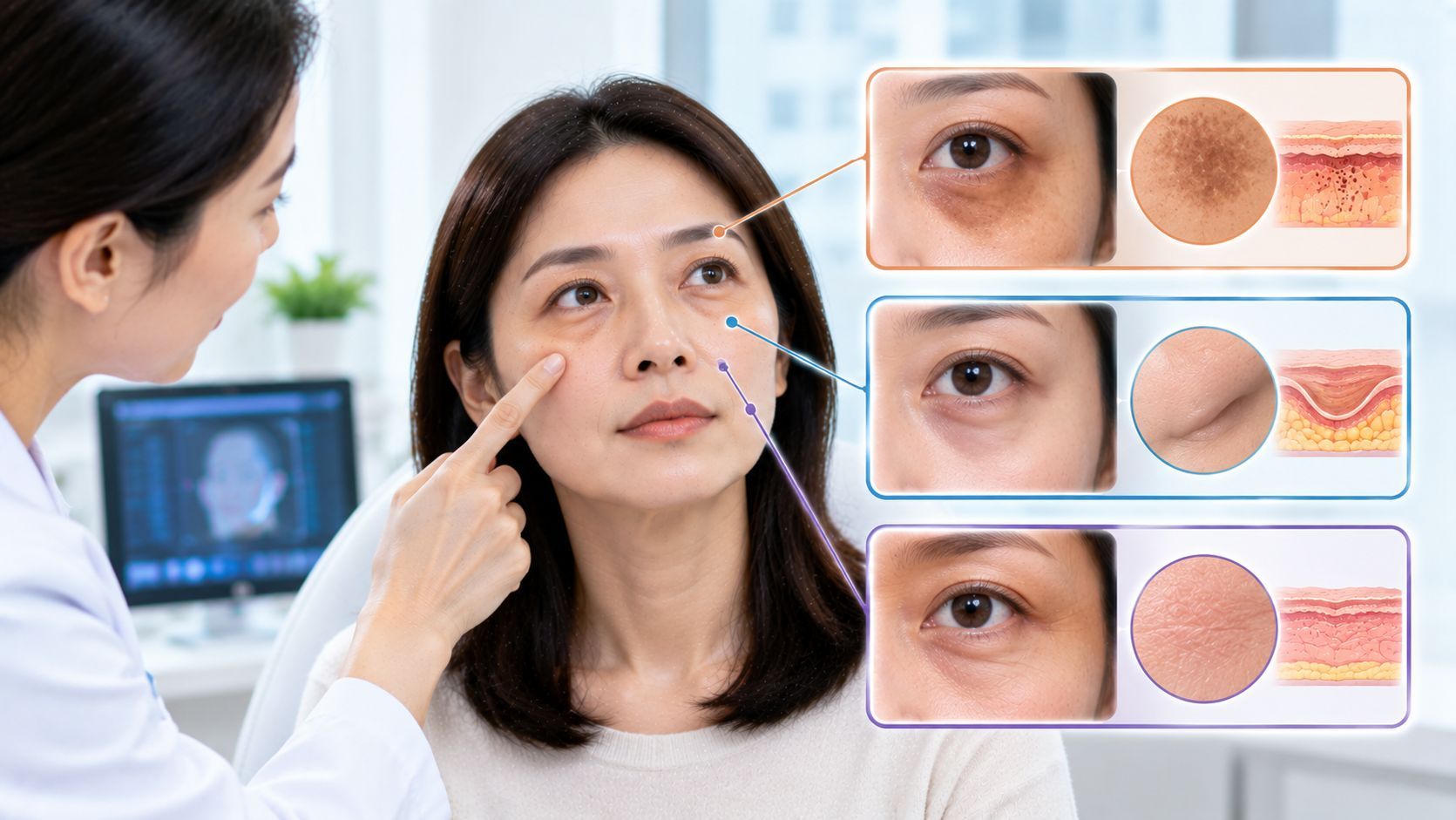
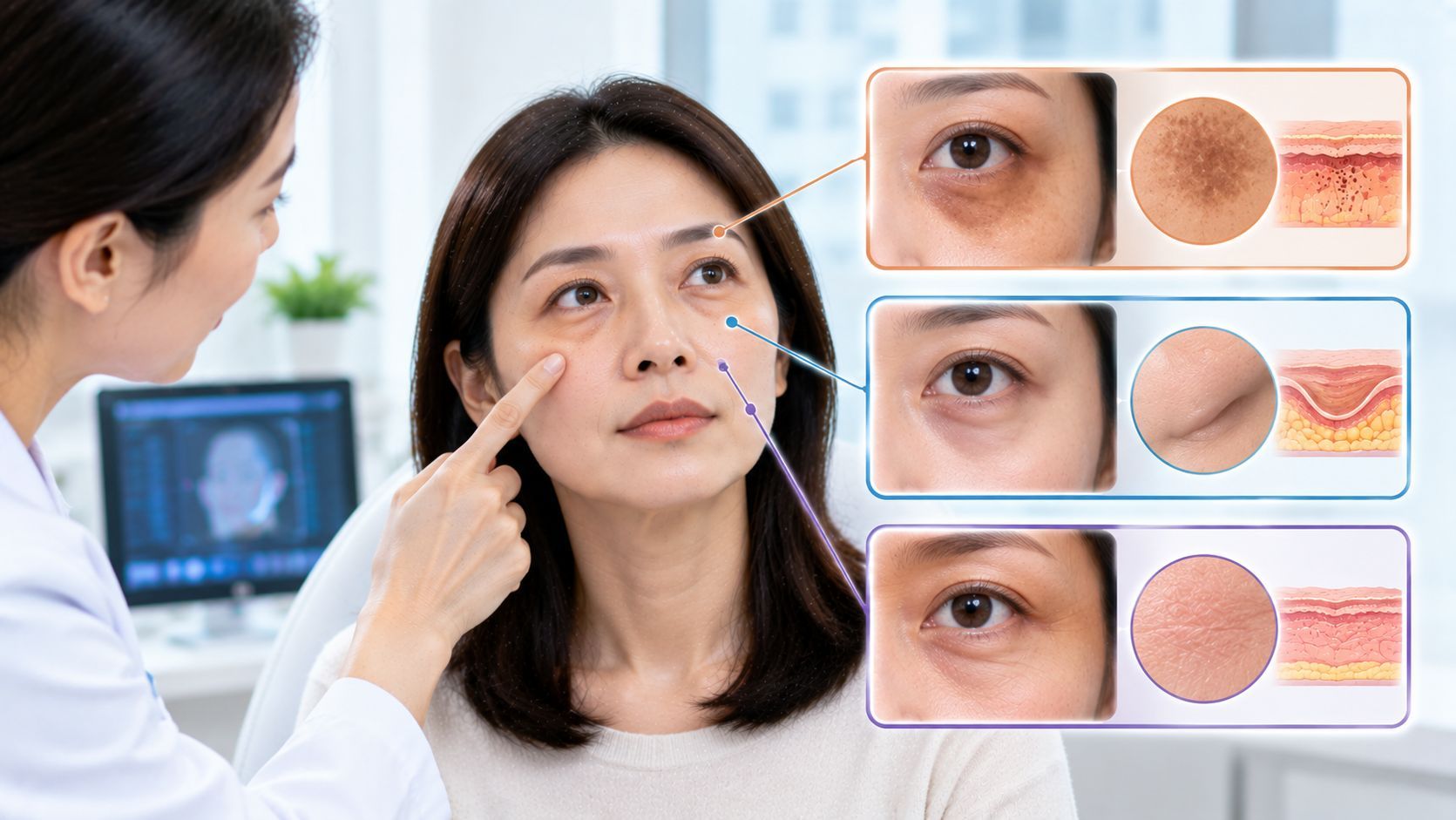
If your skin becomes red after skincare, heat, facials, exercise, or cosmetic procedures, choosing an aesthetic treatment in Korea requires more than simply looking for the “gentlest” procedure. Frequent redness can result from a sensitive or impaired skin barrier, rosacea, irritation, dermatitis, or other causes, and each situation can require a different approach.
The most appropriate Korean treatment depends on why your skin becomes red, whether the redness is currently active, and what you want to improve. For some people, the first step may be barrier support and medical management rather than an aesthetic procedure. For others, carefully selected laser, light, injectable, or energy-based treatments may be considered once the skin is stable.
Why Does My Skin Turn Red So Easily?
Facial redness is a symptom, not a diagnosis.
Common possibilities include:
- Sensitive or reactive skin
- Temporary skin-barrier dysfunction
- Rosacea
- Irritant contact dermatitis
- Allergic contact dermatitis
- Excessive exfoliation
- Retinoid irritation
- Environmental heat or sun exposure
- Reaction to previous cosmetic procedures
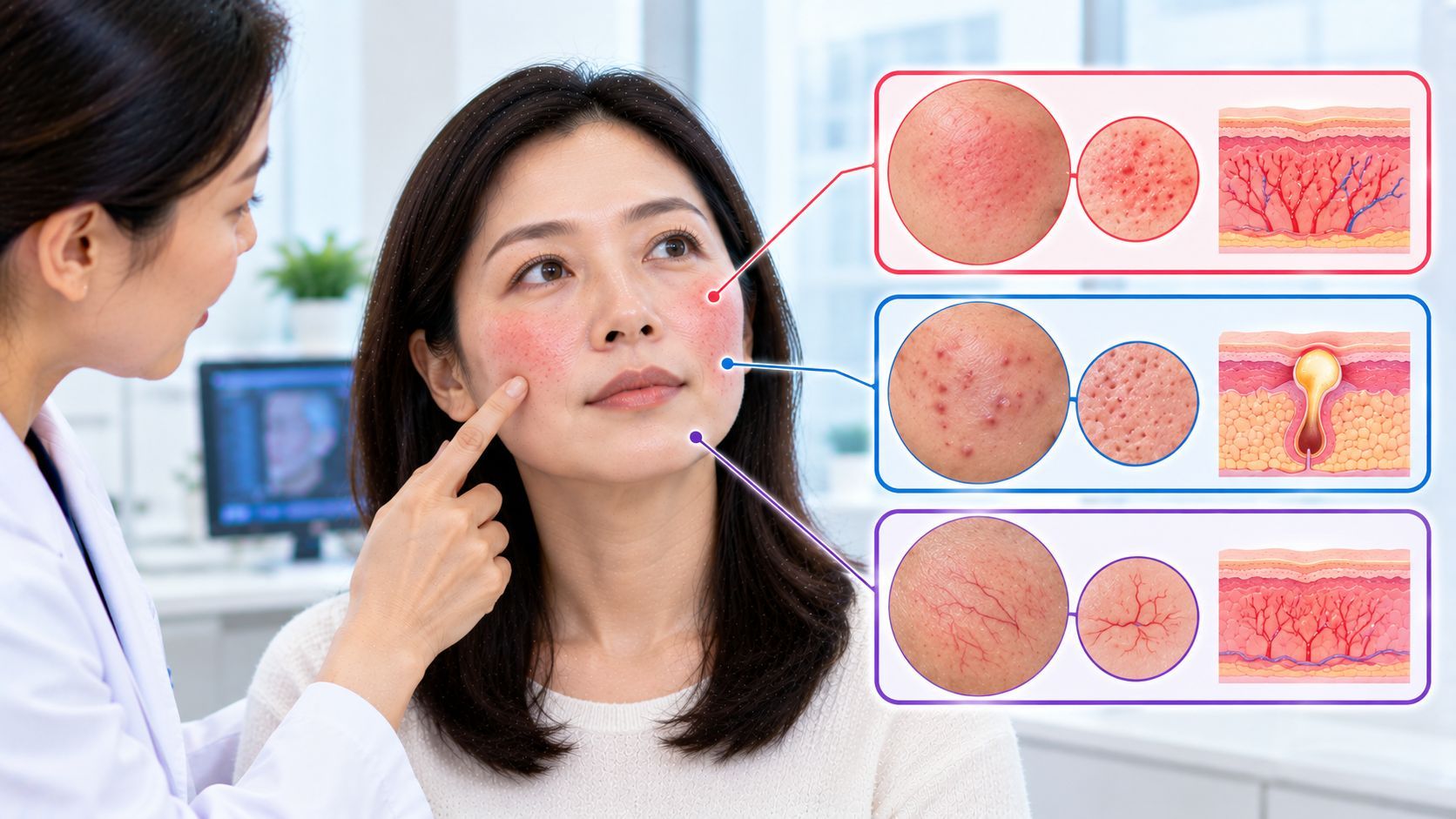
Rosacea is particularly important because it can involve flushing, persistent redness, visible blood vessels, burning, and stinging. The American Academy of Dermatology notes that people with rosacea can also have increased skin sensitivity.
If your face becomes red from almost everything, identifying the underlying cause should come before choosing a procedure.
Does Sensitive Skin Mean I Cannot Have Korean Aesthetic Treatments?
No.
Sensitive skin does not automatically rule out aesthetic treatment.
The more important question is whether the skin is stable.
Someone who naturally flushes easily but currently has comfortable, intact skin may have different treatment options from someone experiencing active burning, peeling, or inflammation.
For example, a dermatologist might consider:
- A conservative treatment protocol
- A lower treatment intensity
- Longer intervals between procedures
- A treatment targeting a specific cause of redness
- Delaying treatment until the skin barrier improves
The objective is to avoid unnecessarily adding inflammation to already reactive skin.
1. Vascular Laser or Light Treatment for Certain Redness
If your main concern is persistent redness or visible small blood vessels, a vascular laser or light-based treatment may be considered.
The AAD states that laser and light therapy can reduce visible blood vessels and may improve persistent facial redness in appropriate patients with rosacea.
This is very different from choosing a resurfacing laser simply because your skin looks uneven.
A vascular treatment is intended to address particular blood-vessel-related features.
However, it does not necessarily eliminate all flushing triggers or permanently prevent future rosacea symptoms.
2. Gentle, Non-Ablative Laser Approaches
Some non-ablative laser procedures create less surface disruption than aggressive ablative resurfacing.
That may make certain treatments worth discussing when the goal involves pigmentation or texture and the skin is sensitive.
However, non-ablative does not mean irritation-free.
Laser treatment can still cause temporary redness, warmth, swelling, dryness, or sensitivity. The actual effect depends on the device and settings.
Therefore, your dermatologist should decide whether the skin is stable enough for treatment and what intensity is appropriate.
3. Skin-Quality Treatments May Be Considered After Stabilization
Some people with reactive skin are interested in injectable skin-quality treatments such as skin boosters.
These treatments involve multiple injections, so they can themselves cause temporary redness, swelling, bruising, tenderness, or bumps.
For that reason, they should not automatically be considered a solution for unexplained redness.
If your primary problem is burning and flushing, diagnosing the cause may be more important than adding an injectable.
If the skin is stable and the dermatologist believes improving hydration or skin quality is appropriate, a specific injectable treatment may be considered.
4. Microneedling Requires Individual Assessment
Microneedling creates controlled micro-injuries in the skin.
It is commonly used for concerns such as:
- Acne scars
- Uneven texture
- Enlarged pores
- Fine lines
- Collagen remodeling
But if your skin is already burning or inflamed, creating additional micro-injuries may not be the first step.
Research has found temporary changes in transepidermal water loss and redness after microneedling, followed by barrier recovery in studied treatment protocols.
Therefore, someone with stable sensitive skin may be treated differently from someone with an actively compromised barrier.
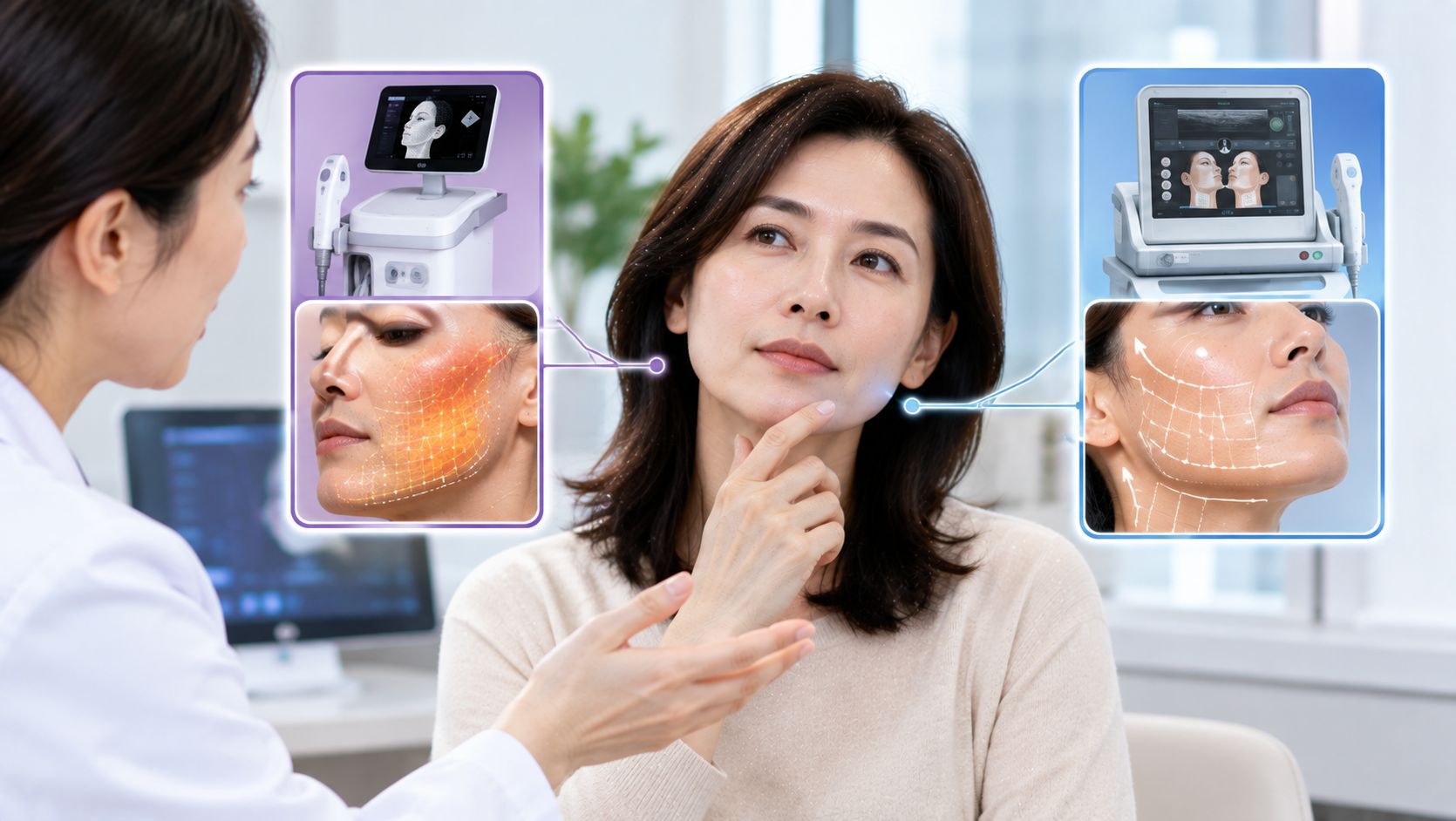
5. RF Treatments Need Extra Attention if Heat Triggers Redness
Radiofrequency treatments use thermal energy, so they deserve careful consideration if your skin reacts strongly to heat.
This does not mean everyone with sensitive skin must avoid RF.
Instead, tell your dermatologist if your redness is triggered by:
- Hot showers
- Saunas
- Hot weather
- Exercise
- Heated rooms
- Hot beverages
Heat is a recognized rosacea trigger for many patients.
If you have significant heat sensitivity, the clinician can determine whether an RF procedure is appropriate or whether another approach makes more sense.
6. Barrier-Focused Skincare May Be the Best “Treatment” Initially
Sometimes the most appropriate Korean dermatology plan is not an immediate procedure.
If your skin burns from most products, a dermatologist may first recommend simplifying your routine and supporting barrier recovery.
This can involve:
- Gentle cleansing
- A suitable moisturizer
- Daily sunscreen
- Reducing unnecessary exfoliation
- Adjusting irritating active ingredients
- Avoiding aggressive facials
- Identifying personal triggers
Moisturizers can help support the skin barrier through combinations of occlusive, humectant, and emollient ingredients.
Once your skin becomes more stable, your dermatologist can reassess whether an aesthetic procedure is appropriate.
What Treatments Should You Be Careful With?
If your skin becomes red extremely easily, caution may be appropriate with treatments that create substantial heat, injury, or irritation.
Treatment categoryWhy assessment mattersAblative laserGreater surface injury and recoveryAggressive resurfacingCan produce significant inflammationRF microneedlingCombines mechanical injury and heatStrong chemical peelsIntentionally exfoliate and irritate skinAggressive microneedlingCreates controlled micro-injuryHigh-intensity energy treatmentsCan create substantial thermal effectsMultiple procedures togetherMay increase cumulative irritation
This table does not mean these procedures are permanently unsuitable.
It means the treatment intensity and timing matter, particularly when your skin is already reactive.
How Can a Dermatologist Choose the Right Treatment?
Before recommending a procedure, a dermatologist may evaluate several characteristics.
Pattern of Redness
Does your face become red temporarily, or is redness persistent?
Triggers
Does heat, exercise, skincare, alcohol, sunlight, or temperature change trigger the redness?
Associated Symptoms
Burning, stinging, itching, bumps, scaling, or visible blood vessels can provide important clues.
Current Skin Barrier
If your skin is peeling, cracking, or burning from basic products, elective procedures may need to wait.
Previous Treatment Reactions
Tell the dermatologist if laser, facials, peels, injections, or other treatments previously caused prolonged redness.
These details are often more useful than simply saying that your skin is “sensitive.”
Could It Be Rosacea Instead of Sensitive Skin?
Possibly.
Rosacea can be mistaken for general sensitivity because both can involve redness and stinging.
The AAD describes several common rosacea features, including flushing, persistent facial redness, visible blood vessels, and burning or stinging.
If you frequently flush and remain red afterward, particularly around the cheeks, nose, chin, or central face, a dermatologist may consider rosacea as part of the assessment.
However, not every red or sensitive face has rosacea.
A clinical evaluation is needed to distinguish between possible causes.
What About Korean Dermatology Clinics?
Korean dermatology clinics commonly offer combinations of laser, light, injectable, microneedling, and energy-based treatments.
For highly reactive skin, however, having many treatment choices can make the consultation more important—not less.
Rather than arriving with a fixed request such as “I want Pico laser” or “I want RF,” explain your symptoms first.
Tell the dermatologist:
- How easily you become red
- How long the redness lasts
- Whether your face burns
- Whether heat triggers symptoms
- Which skincare products cause reactions
- Whether you've previously reacted to laser
- Whether you have been diagnosed with rosacea
- What you want to improve
The clinician can then determine whether the original treatment idea should be changed.
What Should International Patients Consider?
If you are traveling to Korea for treatment, avoid scheduling a procedure immediately before an important event.
Even relatively conservative treatments can cause temporary redness or swelling.
You should also consider:
- Time needed for recovery
- Follow-up availability
- Sun exposure during your trip
- Sauna or hot-bath plans
- Swimming
- Exercise
- Long flights
- Your ability to follow aftercare instructions
If your skin is unpredictable, leaving some flexibility in your itinerary can be useful.
When Should You Avoid Cosmetic Treatment for Now?
A dermatologist should assess your skin before an elective procedure if you currently have:
- Severe burning
- Active peeling
- Significant inflammation
- An unexplained rash
- A strong rosacea flare
- Cracked skin
- Signs of infection
- A recent severe allergic or irritant reaction
The goal is not to permanently avoid aesthetic treatment.
It is to determine whether your skin needs medical management or recovery before another controlled procedure is introduced.
Conclusion
If your skin becomes red from almost everything, there is no single Korean aesthetic treatment that is automatically appropriate for everyone.
Some patients may eventually benefit from carefully selected vascular laser or light treatment, particularly when visible blood vessels or persistent redness are the main concern. Others may need barrier stabilization first, while people with heat-sensitive or inflammatory skin may require a different treatment strategy.
The most important step is to determine why your skin is reacting so easily.
Once the cause and current condition of your skin are understood, a Korean dermatologist can select the treatment technology, intensity, and timing more appropriately.
FAQs
What is the safest Korean treatment for extremely sensitive skin?
There is no universally safest treatment. The appropriate option depends on whether the problem is barrier dysfunction, rosacea, dermatitis, pigmentation, vascular redness, or another condition.
Can sensitive skin get laser treatment in Korea?
Yes, some people with sensitive skin can receive laser treatment. The specific laser, settings, treatment goal, and current skin condition all need to be considered.
Is vascular laser suitable for rosacea?
Vascular laser or light treatment may be considered for certain rosacea features, particularly visible blood vessels and persistent redness.
Should I avoid RF if heat makes my face red?
Not necessarily, but heat sensitivity should be discussed with your dermatologist before RF treatment. Heat can trigger rosacea symptoms in some patients.
Can skin boosters help extremely sensitive skin?
They may be considered in selected patients once the skin is stable, but injections can themselves cause temporary redness and swelling. They should not automatically be used to treat unexplained facial redness.
Should I repair my skin barrier before an aesthetic procedure?
If your skin is actively burning, peeling, or inflamed, stabilization may be appropriate before an elective cosmetic procedure. The exact timing depends on the cause and severity of the problem.