Why Is My Left Jowl Worse Than My Right?
Introduction
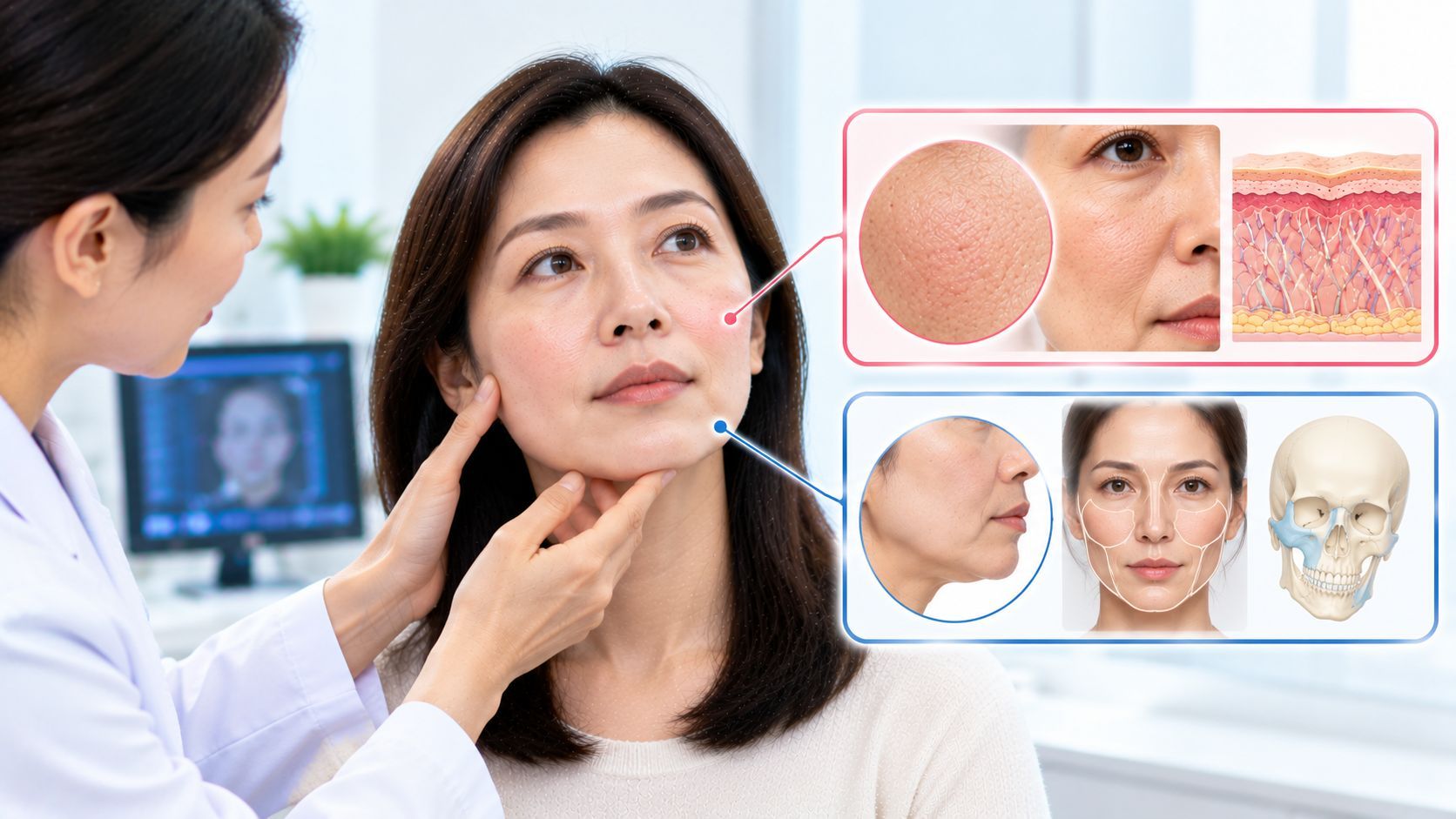
It is common for one jowl to appear more noticeable than the other. The left and right sides of the face are rarely perfectly symmetrical, and differences can become more obvious with age as skin laxity, facial volume, muscle activity and natural facial structure change.
If your left jowl looks worse than your right, the first question is not necessarily “Which lifting treatment should I get?” It is why is that side looking different? If the difference is mainly caused by skin laxity, a dermatologist may consider non-invasive skin-tightening treatments. If volume, muscle activity or underlying anatomy contributes to the difference, another approach may be more appropriate.
The goal of treatment should generally be to reduce the visible imbalance while preserving your natural facial shape, rather than trying to make both sides mathematically identical.
What Is a Jowl?
A jowl is the area along the lower cheek and jawline where soft tissue can become more prominent as the face ages.
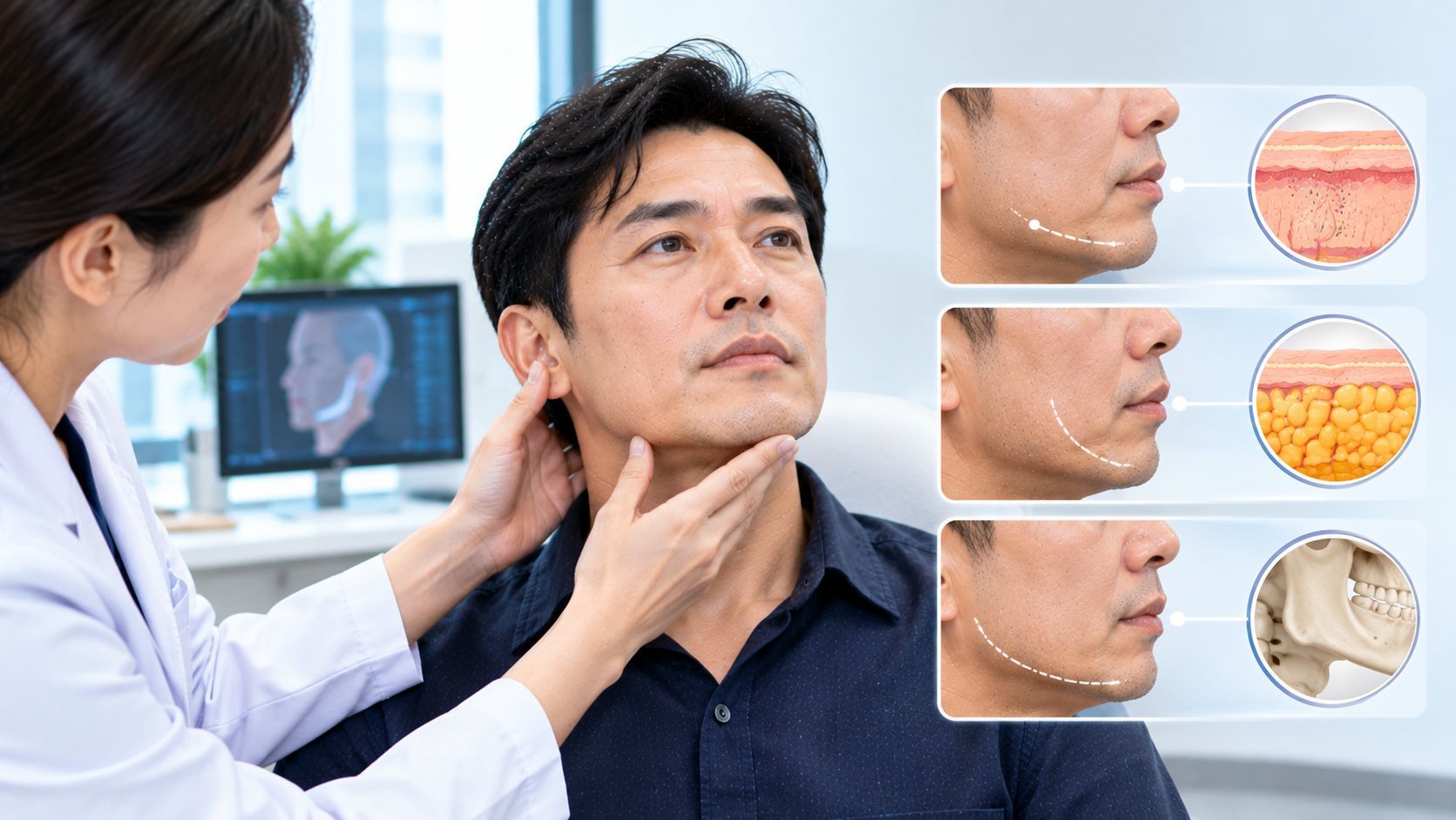
Jowls can become more visible because of several age-related changes, including:
- Reduced skin elasticity
- Changes in collagen
- Redistribution or loss of facial fat
- Changes in supporting tissues
- Gravity-related descent of facial tissues
- Changes in the jaw and surrounding structures
The degree of jowling can vary considerably from one side of the face to the other.
Why Can One Jowl Be Worse?
Natural Facial Asymmetry
The simplest explanation is that your two sides are naturally different.
One side may have:
- A slightly different jawbone contour
- Different cheek volume
- Different fat distribution
- Different muscle development
- Slightly different skin thickness
- A naturally lower position of certain facial structures
These differences can become more noticeable as aging progresses.
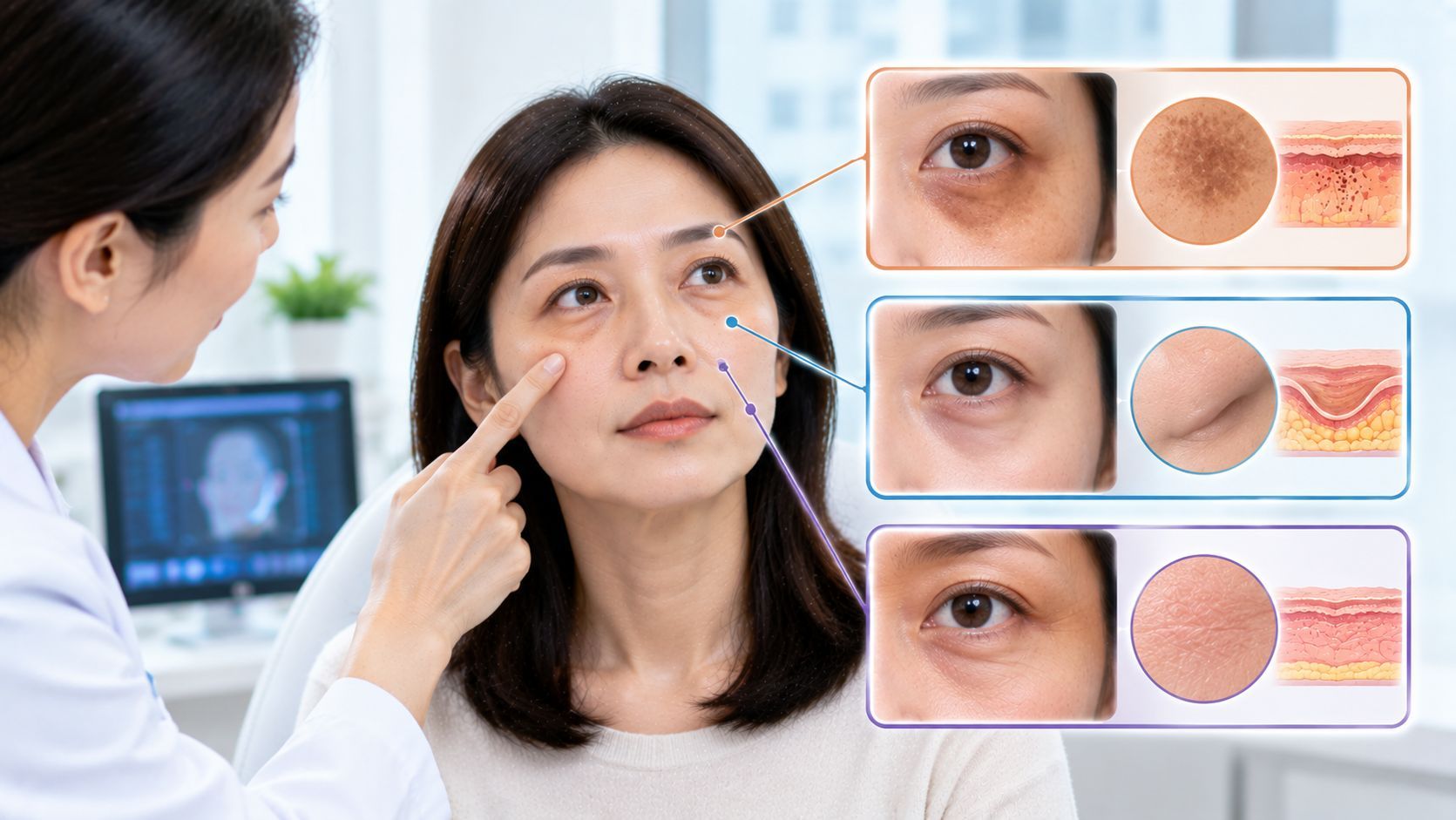
Uneven Skin Laxity
If one side has developed more laxity, that side may show a deeper fold or more prominent jowl.
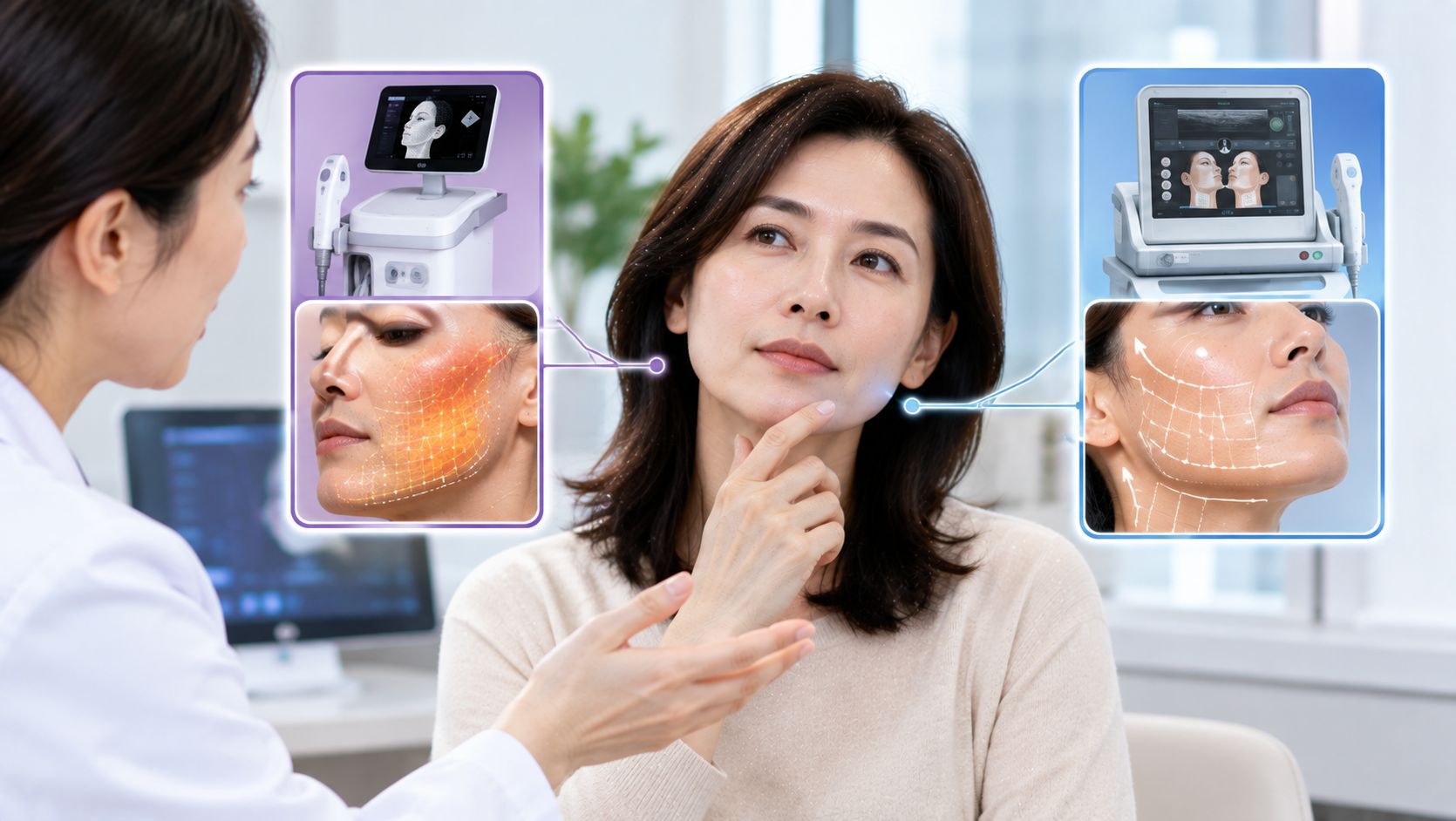
Non-invasive skin-tightening procedures can sometimes improve mild to moderate laxity. The AAD explains that ultrasound and radiofrequency-based tightening procedures can stimulate collagen-related changes and gradually improve firmness.
However, tightening will not necessarily correct a jowl that is primarily caused by bone structure or significant volume changes.
Differences in Facial Volume
A jowl can look more prominent because the surrounding areas have different amounts of volume.
For example, if one cheek has less fullness, the lower face may appear more hollow or lower by comparison.
This is important because simply tightening the skin may not address the actual reason for the asymmetry.
Muscle Activity
The muscles around the mouth and lower face can also contribute to differences between the two sides.
People often have slightly different movement patterns when:
- Smiling
- Speaking
- Chewing
- Frowning
- Clenching the jaw
If muscle activity contributes to the appearance, a dermatologist may assess whether a muscle-targeting treatment could be appropriate.
Does Sleeping on One Side Cause a Worse Jowl?
Sleeping position is often blamed for facial asymmetry, but it is unlikely to be the only explanation for a noticeably different jowl.
Long-term pressure on one side of the face may contribute to temporary impressions or potentially influence how wrinkles appear, but aging-related facial asymmetry is multifactorial.
If your left jowl has recently become more noticeable, it is better to consider the broader picture—including aging, anatomy, volume, muscle activity and skin laxity—rather than assuming your sleeping position is solely responsible.
Can Skin Treatments Improve an Uneven Jowl?
They can sometimes help, particularly when skin laxity is a major contributor.
Possible options may include:
- Ultrasound-based skin tightening
- Radiofrequency-based tightening
- RF microneedling
- Selected laser treatments
- Medical skincare for overall skin quality
The suitability of each treatment depends on the severity and cause of the jowl.
Ultrasound-Based Tightening
Ultrasound treatments can deliver focused energy beneath the skin and stimulate tissue remodeling.
For someone whose left jowl is more pronounced because of mild laxity, a dermatologist may determine that an individually planned ultrasound treatment could improve firmness.
The important point is that treatment should be based on the actual anatomy rather than simply treating the entire face with identical settings.
Radiofrequency Treatments
Radiofrequency treatments use controlled heat to target tissue and stimulate collagen-related changes.
They may be considered when mild laxity contributes to a softer jawline.
However, more aggressive treatment is not necessarily better. If you have a naturally lean face, excessive tightening or volume reduction could potentially make the face look more hollow.
RF Microneedling
RF microneedling combines microneedling with radiofrequency energy.
It may be considered when skin texture and mild laxity are both concerns.
Because it affects the skin and underlying tissue rather than simply adding volume, it may be an option for someone who wants to improve the appearance of a jowl without making the face fuller.
Can Ultherapy Treat One Jowl More Than the Other?
Potentially, but the decision should be made by a qualified medical professional after evaluating your face.
If one side has clearly different laxity, a treatment plan can potentially account for that difference.
However, “more treatment on the worse side” should not automatically be the goal.
A dermatologist needs to consider:
- Skin thickness
- Tissue laxity
- Facial anatomy
- Fat distribution
- Bone structure
- Treatment depth
- Previous procedures
- Desired degree of correction
The objective is to improve the visible imbalance without creating a new asymmetry.
What About Thermage?
Thermage is a radiofrequency-based skin-tightening treatment.
It may be considered when the jowl is primarily related to skin laxity.
However, Thermage cannot fundamentally reshape the jawbone or replace missing volume. If the left and right jowls look different because of underlying structural differences, skin tightening alone may have limited results.
This is why the consultation is particularly important when only one side appears significantly worse.
Should I Treat Only the Left Jowl?
Not necessarily.
This is one of the most important decisions to make with an asymmetric face.
You might assume:
“My left jowl is worse, so only my left side should be treated.”
But facial appearance is three-dimensional.
The right side might appear better because:
- It has more cheek volume
- The jawline is naturally different
- The skin is tighter
- The surrounding tissues sit differently
Treating only the left side without understanding these relationships could produce an unnatural result.
A dermatologist may instead recommend:
- Treating both sides differently
- Treating both sides conservatively
- Treating the surrounding cheek or jawline
- Addressing volume rather than laxity
- Treating the main contributing factor first
- Doing nothing if the asymmetry is within normal variation
Can Filler Make an Uneven Jowl Look More Balanced?
Sometimes.
If the apparent asymmetry is caused partly by volume differences, carefully placed filler may be considered.
But filler should not automatically be used for every jowl.
Adding volume directly into a jowl can sometimes make the lower face look heavier rather than correcting the underlying issue.
The AAD explains that fillers can restore lost fullness, but natural-looking results depend on appropriate treatment planning and the skill of the injector.
If you are concerned about looking overfilled, ask whether the goal is restoring lost support rather than simply adding volume.
Could Botox Help an Uneven Jowl?
It depends on the cause.
Botulinum toxin changes the activity of targeted muscles. It may be considered in selected situations where muscle activity contributes to lower-face asymmetry.
However, Botox is not a general treatment for loose skin.
If your left jowl is primarily caused by skin laxity, Botox may not solve the problem.
Because muscle activity differs between individuals, inappropriate treatment can also create temporary asymmetry.
This is particularly important around the lower face, where small changes in muscle balance can affect facial movement.
How Do You Know Whether It Is Skin, Volume or Structure?
A useful way to think about an uneven jowl is to separate the possible causes.
What you noticePossible contributorSkin looks looser on one sideSkin laxityOne cheek looks more hollowVolume differenceJowl changes noticeably when smilingMuscle activityJawline shape is different even when youngNatural anatomyDifference appeared gradually with ageAging-related changesDifference appeared suddenlyMedical assessment may be needed
This is not a diagnosis. A dermatologist needs to examine your face to determine which factors are actually contributing.
What If My Jowl Suddenly Became Worse?
A gradual increase in jowling with age is generally different from sudden facial drooping.
If one side of your face suddenly becomes weak or droops, especially together with:
- Arm or leg weakness
- Numbness
- Difficulty speaking
- Confusion
- Vision changes
- Severe headache
- Difficulty walking
seek urgent medical attention.
A sudden facial change should not be assumed to be an aesthetic issue.
How Can International Patients Treat Uneven Jowls in Korea?
If you are visiting Korea for treatment, explain your concern specifically.
Instead of saying:
“I want a V-line.”
you might say:
“My left jowl is more noticeable than my right, and I want to improve the asymmetry without making my face slimmer.”
That gives the dermatologist important information about your priorities.
During your consultation, ask:
- What is causing the difference between my two jowls?
- Is this mainly skin laxity, volume, muscle activity or anatomy?
- Does each side need the same treatment?
- Could treating only the left side make the asymmetry worse?
- Would tightening make my face look slimmer?
- Would filler add unnecessary volume?
- What degree of improvement is realistic?
- How long will results take to appear?
- What downtime should I expect?
- Will I need follow-up before flying home?
How to Get a More Natural Result
If your goal is subtle correction, consider these principles.
Don't Chase Perfect Symmetry
A completely symmetrical face is not a realistic goal.
The objective should be better balance, not identical sides.
Treat the Cause, Not Just the Appearance
A jowl is an appearance—not necessarily the underlying problem.
If the cause is laxity, tightening may make sense.
If the cause is volume loss, volume restoration may be more appropriate.
If muscle activity is involved, a muscle-targeting approach may be considered.
Start Conservatively
If you are unsure how much correction you want, discuss a staged approach.
This can allow you and your dermatologist to evaluate the result before considering additional treatment.
Preserve Facial Volume When Appropriate
If you already have a naturally slim face, tell your provider that you do not want facial slimming.
This can influence which procedures are considered and how aggressively they are performed.
Conclusion
Having a more noticeable jowl on the left side than the right is usually not unusual. Facial asymmetry can become more apparent as aging changes the skin, soft tissues, muscles and facial volume.
Skin-tightening treatments such as ultrasound or radiofrequency may help when uneven laxity is the main contributor. But if the difference comes from volume, muscle activity or underlying anatomy, another approach may be more appropriate.
The best treatment is therefore not necessarily the one that gives the strongest lift. It is the one that addresses the actual cause of the asymmetry while preserving your natural facial proportions.
For international patients considering treatment in Korea, ask for an individualized assessment of both sides rather than assuming that the worse side simply needs more treatment.
FAQs
Why is my left jowl worse than my right?
Possible reasons include natural facial asymmetry, uneven skin laxity, differences in facial volume, muscle activity and underlying facial structure. Aging can make pre-existing differences more noticeable.
Can Ultherapy improve an uneven jowl?
It may help when skin laxity contributes to the jowl. A dermatologist should determine whether the asymmetry is actually related to laxity before recommending ultrasound-based tightening.
Can Thermage reduce one-sided jowling?
Thermage may improve the appearance of mild skin laxity, but it cannot correct asymmetry caused primarily by bone structure, muscle imbalance or significant volume differences.
Should I treat only the side with the worse jowl?
Not necessarily. Treating only one side can sometimes create a new imbalance. A dermatologist should assess both sides and determine whether asymmetric treatment is appropriate.
Can filler fix an uneven jowl?
Filler may be considered when volume differences contribute to the appearance, but directly adding volume to a jowl is not always appropriate. The cause of the asymmetry should be established first.
Can facial asymmetry suddenly become a medical problem?
Yes. Sudden facial drooping, particularly with weakness, numbness, speech difficulty, confusion or other neurological symptoms, requires urgent medical evaluation rather than cosmetic treatment.