Should I Get Lifting Treatment Before Losing Weight or Afterward?
Introduction
If you are planning significant weight loss and are also considering a facial lifting treatment, the timing can be confusing. You may wonder whether it makes sense to tighten your face before losing weight or whether you should wait until your weight has stabilized.
Weight loss can change facial volume and skin laxity. Depending on how much weight you lose, where you lose it, your age, skin elasticity, and genetics, your face may become slimmer but may also develop more noticeable hollowness, jowls, or loose skin.
For people planning substantial weight loss, waiting until the weight is relatively stable can make it easier to assess the face accurately. However, someone who has already lost weight or is only planning modest weight loss may have different options.
Why Weight Loss Can Change the Face
Facial Volume Can Decrease
The face contains fat compartments that contribute to its shape and fullness.
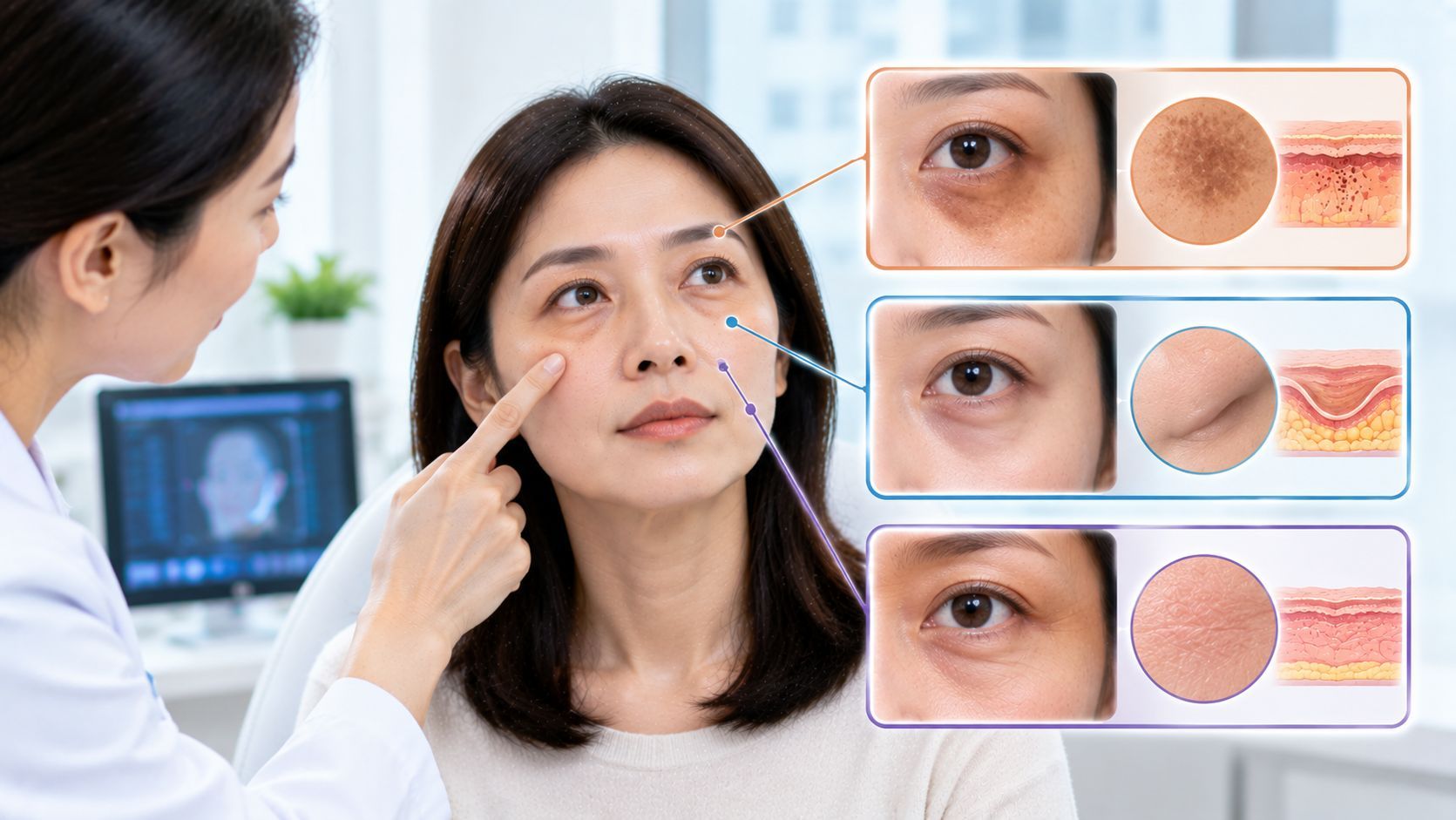
When body weight decreases, some people experience noticeable facial volume loss. This can make the:
- Cheeks look flatter
- Temples appear more hollow
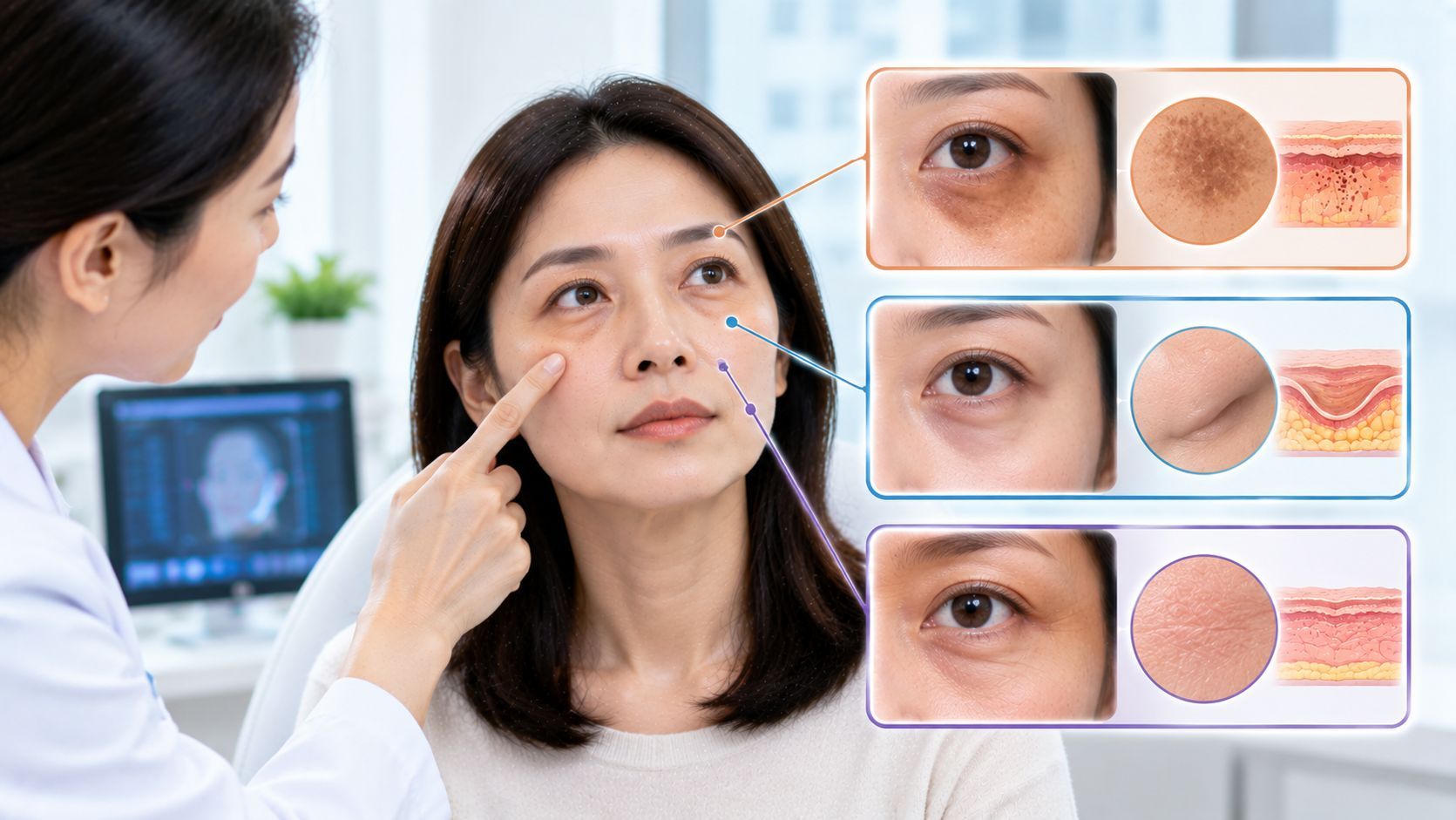
- Under-eye area look more sunken
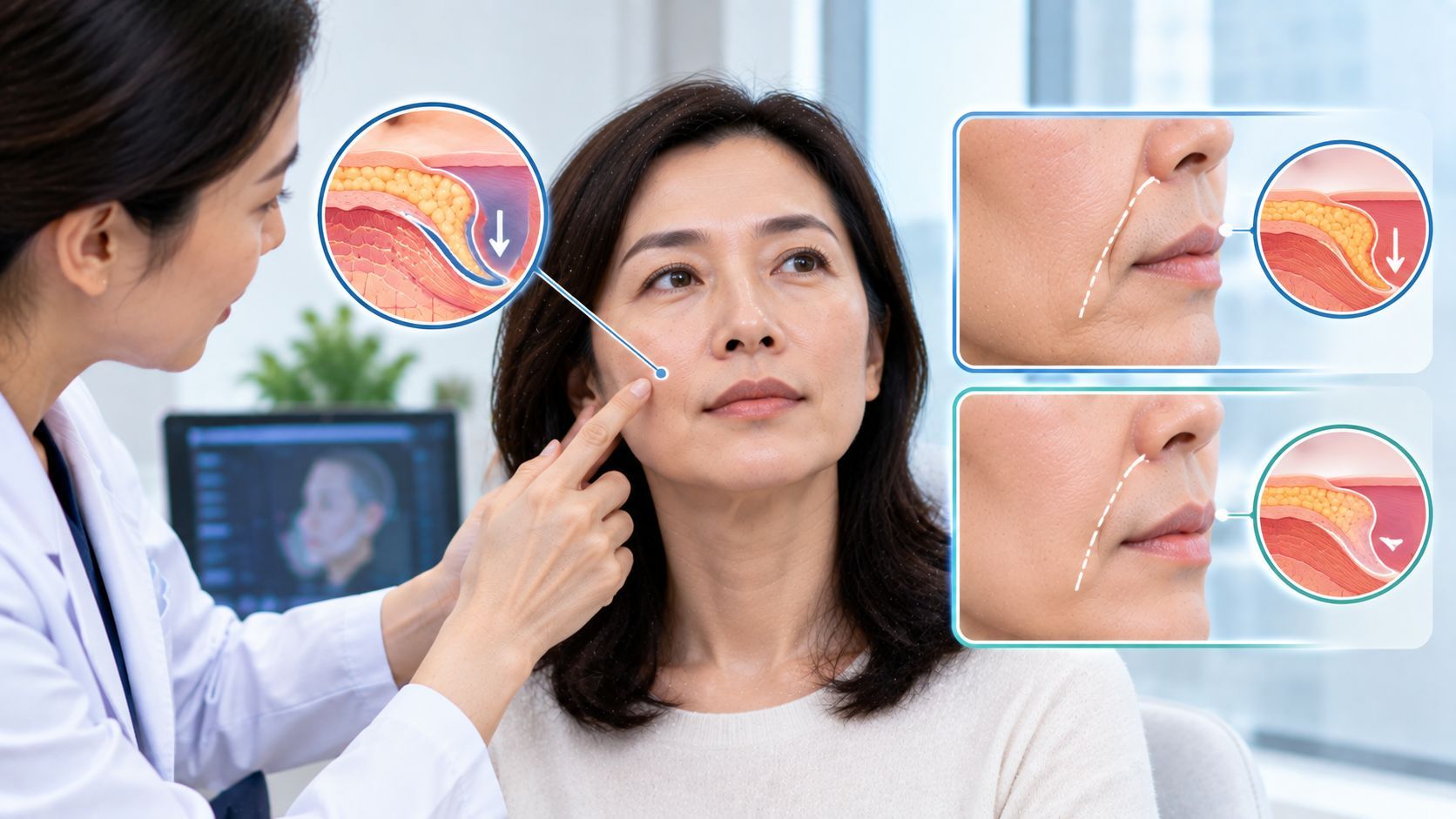
- Nasolabial folds appear more prominent
- Lower face look thinner
The degree of change varies considerably between individuals.
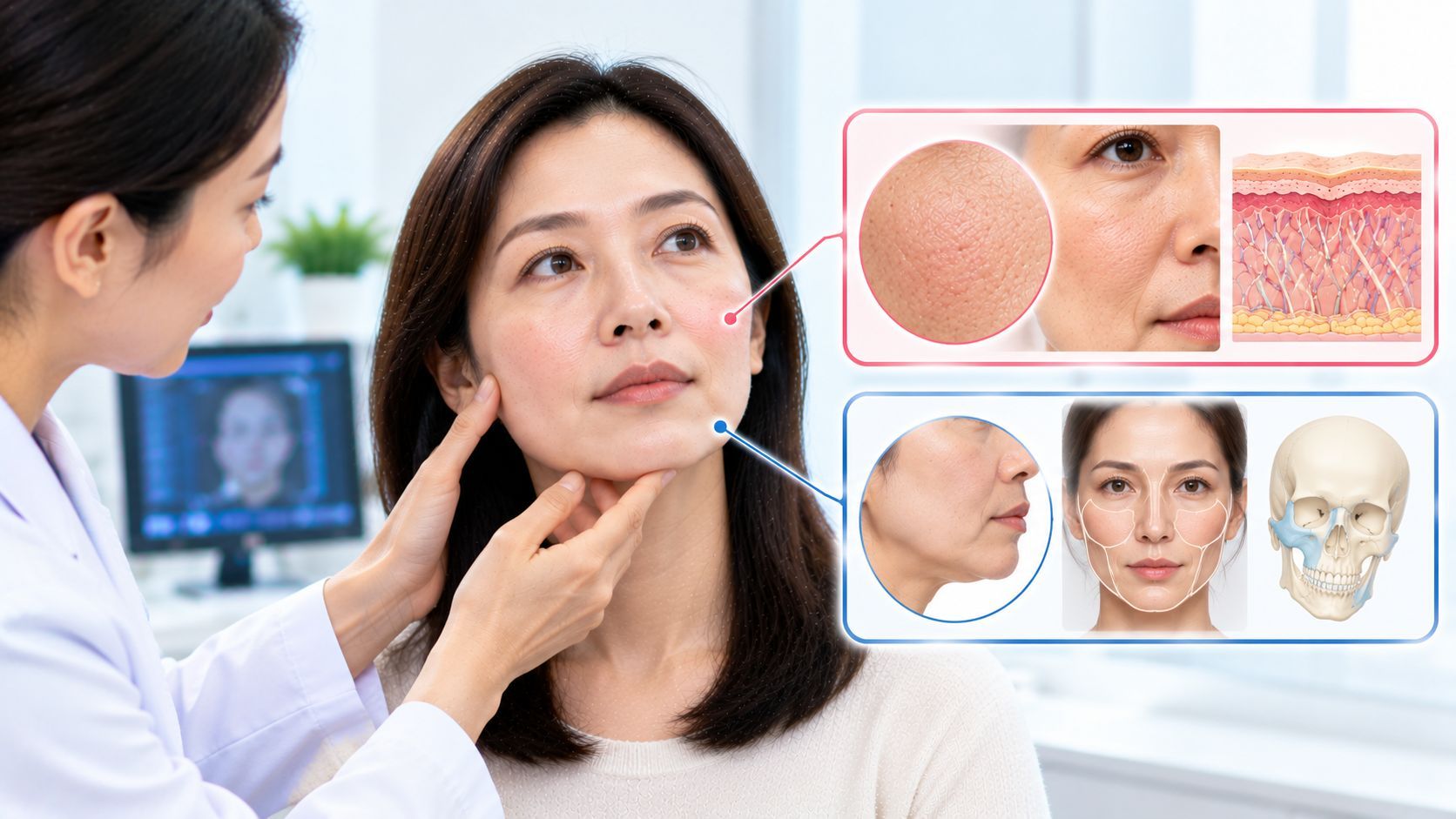
Skin May Also Become Looser
When the underlying volume decreases, the skin may not immediately contract to the same degree.
This can make existing laxity more visible around the:
- Jawline
- Lower cheeks
- Jowls
- Neck
This is one reason why facial lifting treatment planned before major weight loss may not produce the same appearance afterward.
Why Waiting Until Weight Stabilizes Can Make Sense
Your Final Facial Shape May Not Be Clear Yet
If you are still losing a significant amount of weight, your facial volume and contour may continue changing.
A treatment designed around your current facial structure could therefore become less appropriate after additional weight loss.
For example, if a patient receives a tightening treatment while still significantly overweight and then loses substantial facial volume, the face may look different afterward even though the original treatment worked as intended.
It Can Be Easier to Identify the Remaining Problem
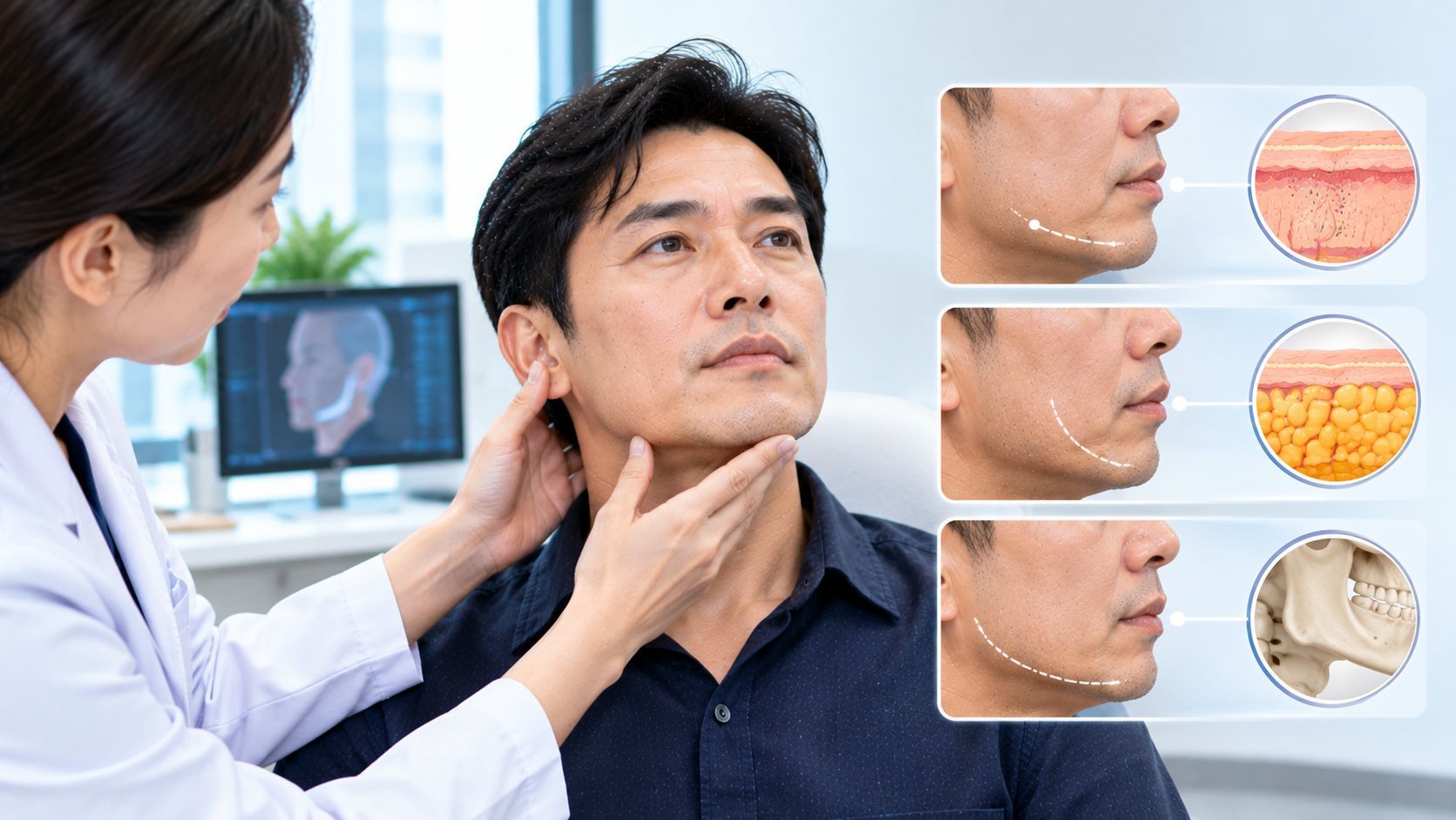
After weight stabilization, a dermatologist or aesthetic physician can better determine whether the main issue is:
- Skin laxity
- Volume loss
- Jowling
- Neck laxity
- Hollowing
- Muscle prominence
- A combination of these
That distinction matters because different problems call for different treatments.
Does Everyone Need to Wait?
No.
Waiting is not necessarily required for every person considering facial tightening.
If you are already close to your target weight and expect only modest additional weight loss, the clinician may determine that treatment can be performed now.
Similarly, if your primary concern is a localized area of skin laxity and your weight is relatively stable, delaying treatment may not provide a meaningful advantage.
The important factor is the amount and expected impact of future weight loss, rather than weight loss itself.
What If You Have Already Lost a Lot of Weight?
If you have already lost significant weight and are noticing new jowls or facial looseness, the situation is different.
At that point, your clinician can evaluate the current facial structure and determine whether the appearance is primarily related to:
- Reduced facial fat
- Skin laxity
- Loss of structural support
- Changes around the jawline
- Neck skin laxity
A tightening treatment may be considered if skin laxity is the main issue.
What About “Ozempic Face”?
The term “Ozempic face” is commonly used to describe facial changes associated with substantial weight loss while using medications such as GLP-1 receptor agonists.
The appearance may include:
- Facial volume loss
- Hollow cheeks
- More visible folds
- Jowling
- Looser-looking skin
The important point is that these changes are associated with weight loss, rather than being a unique skin disease caused by one medication.
If someone is still losing weight, facial volume can continue changing.
Should You Choose Ultherapy or Thermage Before Weight Loss?
Ultherapy
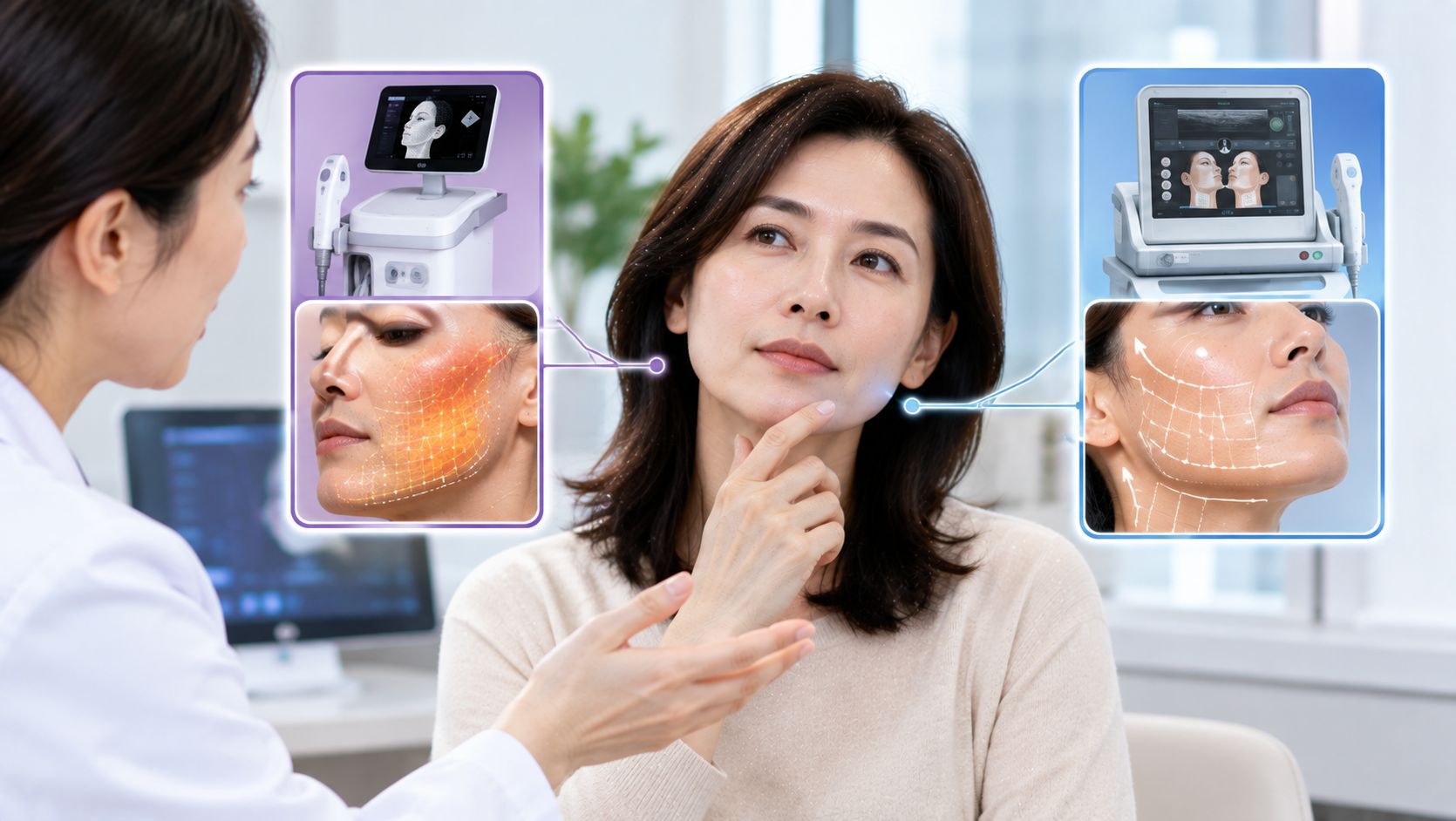
Ultherapy uses focused ultrasound energy to target deeper tissue layers and stimulate a remodeling response.
If substantial weight loss is still ahead, the eventual facial contour may change after treatment.
Thermage
Thermage uses radiofrequency energy for skin tightening and collagen remodeling.
It can also be considered for facial laxity, but the expected benefit should be assessed in the context of the patient's current and anticipated facial volume.
Neither treatment replaces lost facial volume.
What About Sofwave?
Sofwave is another non-surgical treatment used for skin tightening and collagen stimulation.
It may be considered when mild-to-moderate laxity is present, but the same principle applies: if substantial weight loss is still occurring, the facial tissues may continue changing.
The clinician should therefore consider the expected final facial shape before deciding on treatment timing.
What If Your Face Looks Too Thin After Weight Loss?
This is an important distinction.
Some people lose weight and mainly notice loose skin. Others lose substantial facial volume and feel that their face has become too thin.
If the primary problem is volume loss, more tightening is not necessarily the answer.
A clinician may instead evaluate whether selective volume restoration could improve facial proportions.
Potential approaches can include different types of fillers or collagen-stimulating treatments, depending on the individual situation.
Can You Combine Tightening and Volume Restoration?
Sometimes.
A comprehensive facial assessment may identify both:
- Skin laxity
- Volume loss
In that situation, the treatment plan may involve a combination of tightening and volume restoration.
However, adding more procedures does not automatically create a better result. The objective should be to address the specific anatomical changes rather than treating every visible sign of aging.
What If You Are Still Losing Weight?
If you expect substantial additional weight loss, tell the clinician before booking treatment.
Explain:
- How much weight you have already lost
- How much additional weight you expect to lose
- Whether your weight has been stable
- Whether your face has changed significantly during the process
- Which facial areas concern you most
This information can influence whether treatment is performed now or postponed.
How Long Should Weight Be Stable?
There is no single universal number of weeks or months that applies to every patient.
The appropriate timing depends on the amount of weight loss, whether additional weight loss is planned, and how much the face has changed.
Rather than following an arbitrary calendar, the more useful question is whether your facial volume and body weight have become reasonably stable enough for the clinician to assess the current anatomy.
What About Facial Lifting Threads?
Thread lifting is different from non-invasive energy-based tightening.
Because threads physically reposition or support tissue, treatment planning may be particularly important if substantial weight loss is expected afterward.
Losing additional weight can change the amount and distribution of facial tissue after the procedure.
For someone planning significant weight loss, discussing the timing carefully with the treating physician is important before considering a thread lift.
A Practical Treatment-Planning Approach
If You Have Significant Weight Loss Ahead
Consider discussing whether it makes sense to wait until your weight and facial appearance are more stable.
If You Are Near Your Target Weight
A consultation can determine whether treatment can reasonably be planned now.
If You Have Already Lost the Weight
The focus can shift toward identifying whether the remaining issue is laxity, volume loss, or both.
If You Have Lost Weight Very Quickly
A more detailed assessment may be useful because the face may have experienced noticeable changes in both volume and skin appearance.
Questions to Ask Your Doctor
Before booking a lifting treatment, ask:
- Will future weight loss change my facial treatment plan?
- Is my current problem skin laxity or facial volume loss?
- Should I wait until my weight stabilizes?
- Would tightening alone address my concern?
- Could additional weight loss make my face look more hollow?
- Would volume restoration be more appropriate after weight loss?
- Which treatment is appropriate for my current degree of laxity?
- Should I reassess my face after reaching my target weight?
Final Thoughts
If you are planning substantial weight loss, facial lifting treatment is often easier to plan once your weight and facial appearance have become relatively stable. Future weight loss can change facial volume and make jowls, hollowness, or loose skin more noticeable.
However, waiting is not automatically necessary for everyone. Someone who is already close to their target weight or expects only modest additional weight loss may be able to proceed after an appropriate assessment.
The key is to distinguish skin laxity from facial volume loss. Tightening treatments can address certain forms of laxity, but they do not replace facial volume lost during weight reduction.
A personalized evaluation after—or near the end of—major weight loss can help determine whether you actually need tightening, volume restoration, or a combination of approaches.