Should I Treat Acne Scars Before Starting Skin Boosters?
Introduction
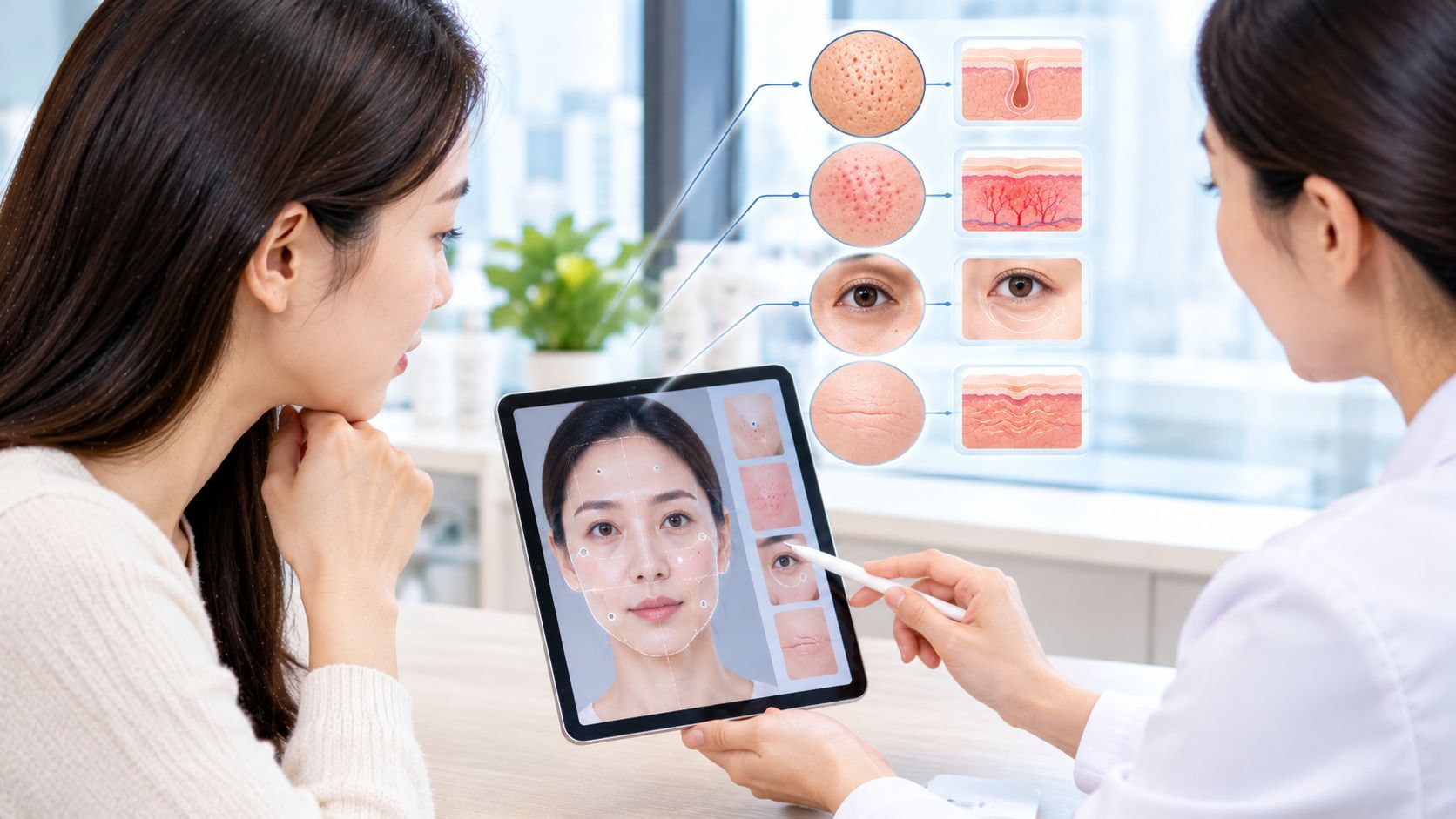
If your acne is under control but you still have acne scars, uneven texture, enlarged pores, or depressed areas, you may wonder whether to treat the scars first or begin with a skin booster. The answer depends largely on what type of acne scars you have and what you want the treatment to accomplish.
Skin boosters can improve hydration, skin quality, fine texture, and overall skin appearance, but they do not necessarily correct structural acne scars. Treatments such as subcision, TCA CROSS, fractional laser, RF microneedling, or other scar-directed procedures may be more appropriate when the main problem is depressed or tethered scarring.
For some patients, a combination approach makes sense. For others, treating the acne scars first provides a clearer foundation before adding a skin-quality treatment.
Why Acne Scars and Skin Quality Are Different Problems
Acne Scars Can Be Structural
Acne scarring is not one single condition.
Common types include:
- Ice-pick scars
- Boxcar scars
- Rolling scars
- Shallow depressed scars
- Atrophic scars
- Post-inflammatory hyperpigmentation
- Post-inflammatory redness
Different scar types can require different treatments.
A skin booster may improve the surrounding skin, but it generally cannot release a deep tethered scar or physically remodel a narrow ice-pick scar in the same way a scar-specific procedure can.
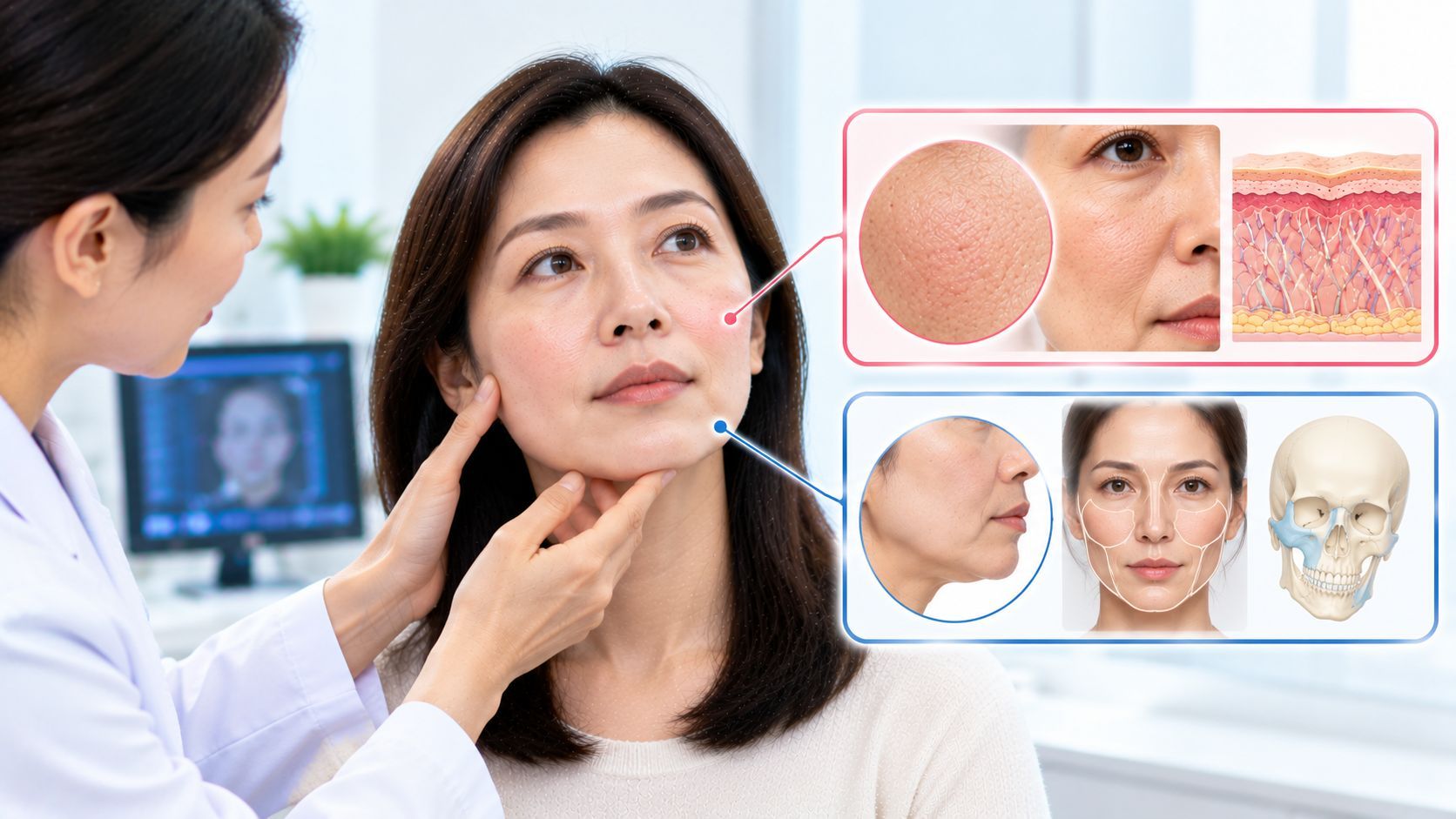
Skin Boosters Primarily Improve Skin Quality
Depending on the product, skin boosters may be used to improve characteristics such as:
- Hydration
- Fine lines
- Texture
- Skin smoothness
- Elasticity
- Overall skin quality
Examples of injectable skin-quality treatments include hyaluronic-acid-based products and other injectable regenerative or collagen-supporting treatments.
The important distinction is that better skin quality does not necessarily mean removal of an established acne scar.
Should Acne Scars Be Treated First?
Often, Yes, If Structural Scarring Is the Main Concern
If depressed scars are the primary reason you are seeking treatment, a dermatologist may prioritize scar correction before adding a skin booster.
For example, if rolling scars are caused by fibrous attachments beneath the skin, subcision may be considered to release those attachments.
If narrow ice-pick scars are the major problem, a different scar-directed approach may be more appropriate.
The treatment should therefore be matched to the scar rather than simply choosing a general rejuvenation injection.
Skin Boosters Can Be Added Later
Once the main scar-directed treatments have been completed or stabilized, a skin booster may be incorporated if the remaining concern is overall texture, hydration, or skin quality.
This can create a more structured treatment plan:
Scar correction → recovery → reassessment → skin-quality treatment
However, this is not mandatory for every patient.
When a Skin Booster May Come First
When Scarring Is Very Mild
If your acne scars are shallow and your main concern is roughness, dehydration, or dull-looking skin, a skin booster may be reasonable as an early treatment.
Sometimes what appears to be significant unevenness is partly caused by dehydration, enlarged pores, surface texture, or uneven pigmentation rather than deep scarring.
When You Want Overall Skin Improvement
If your goal is not complete scar correction but rather healthier-looking, smoother skin, your dermatologist may recommend improving overall skin quality alongside or before scar-specific procedures.
The treatment objective matters.
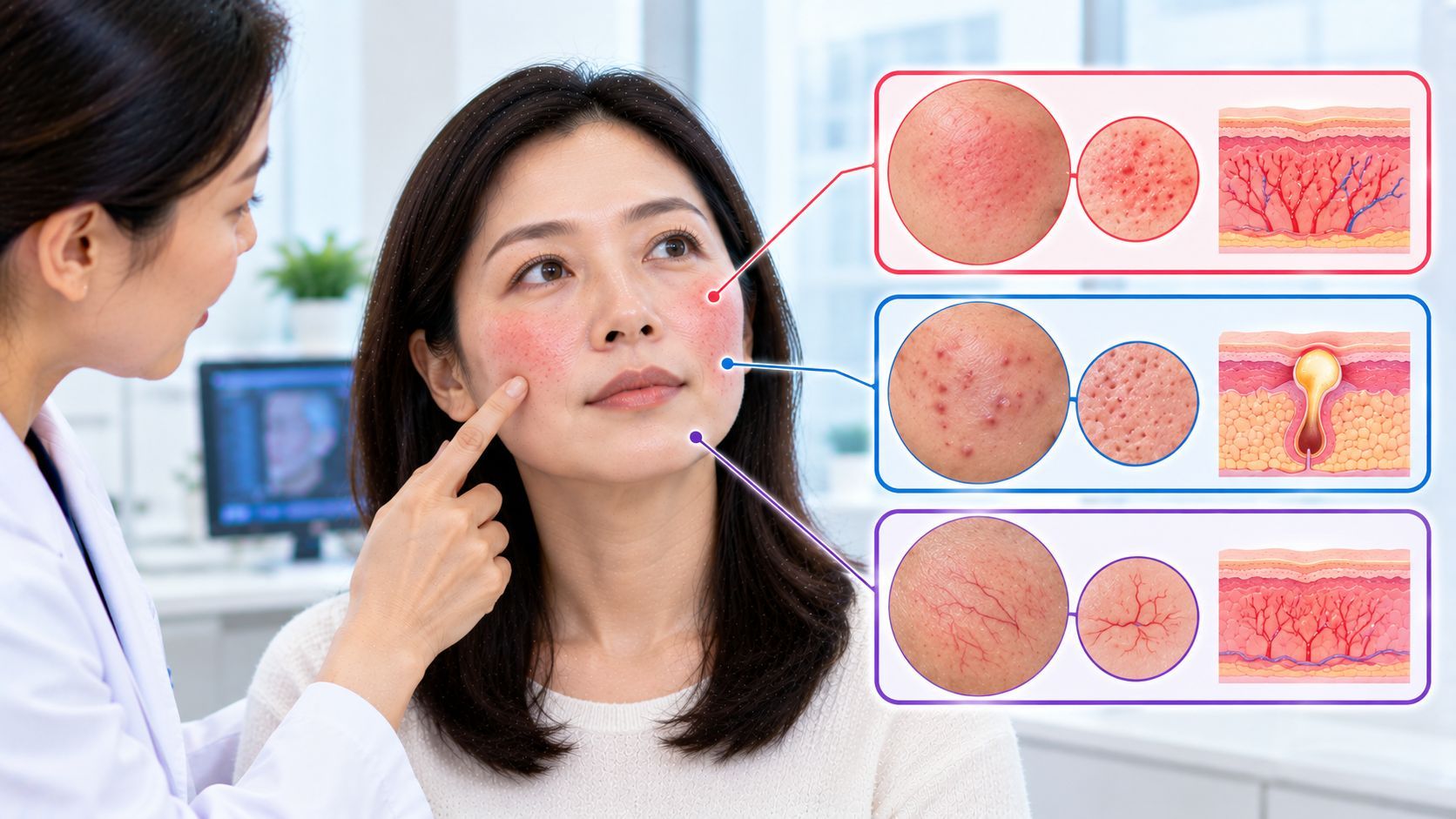
What If You Have Both Acne Scars and Pigmentation?
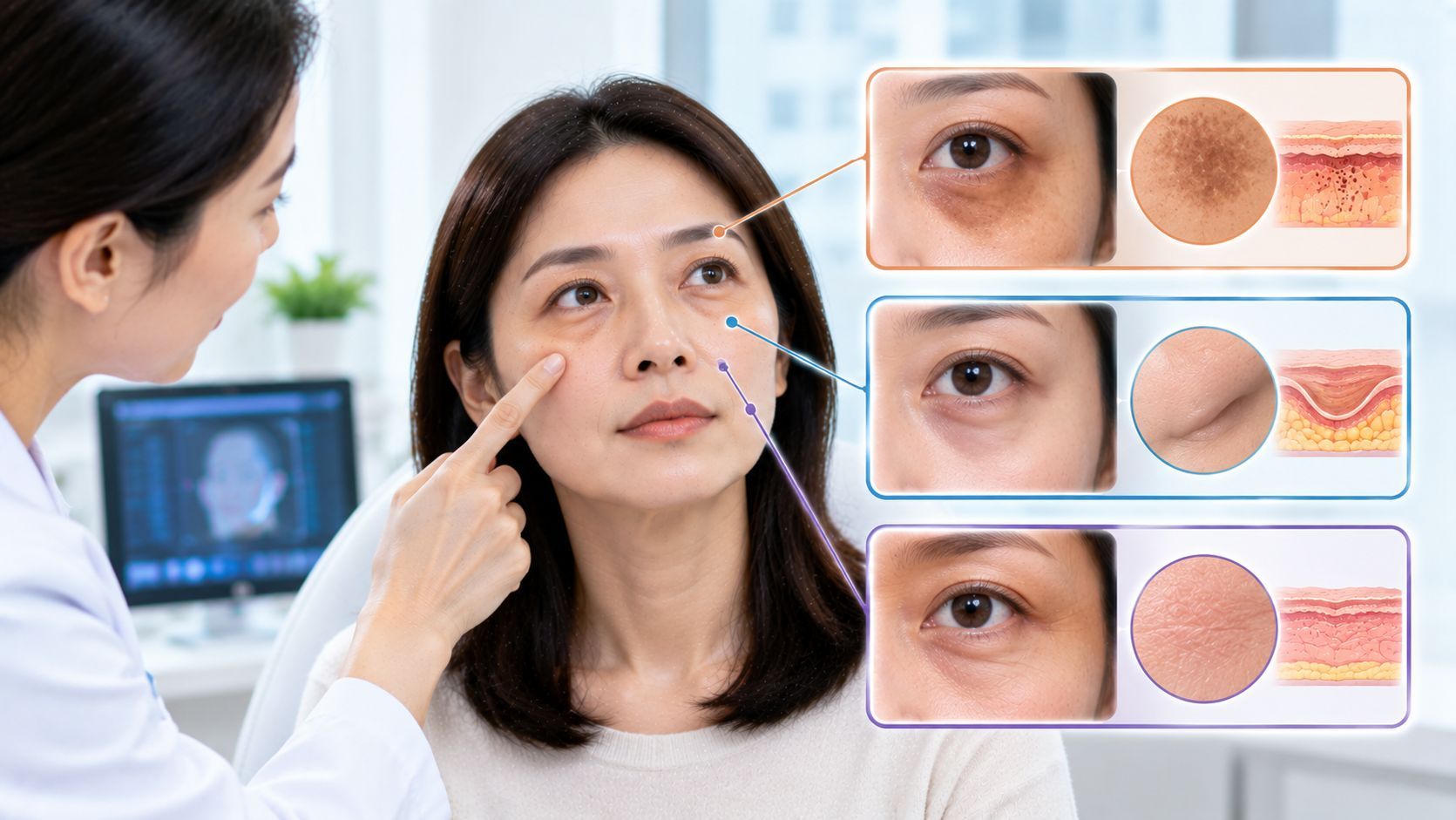
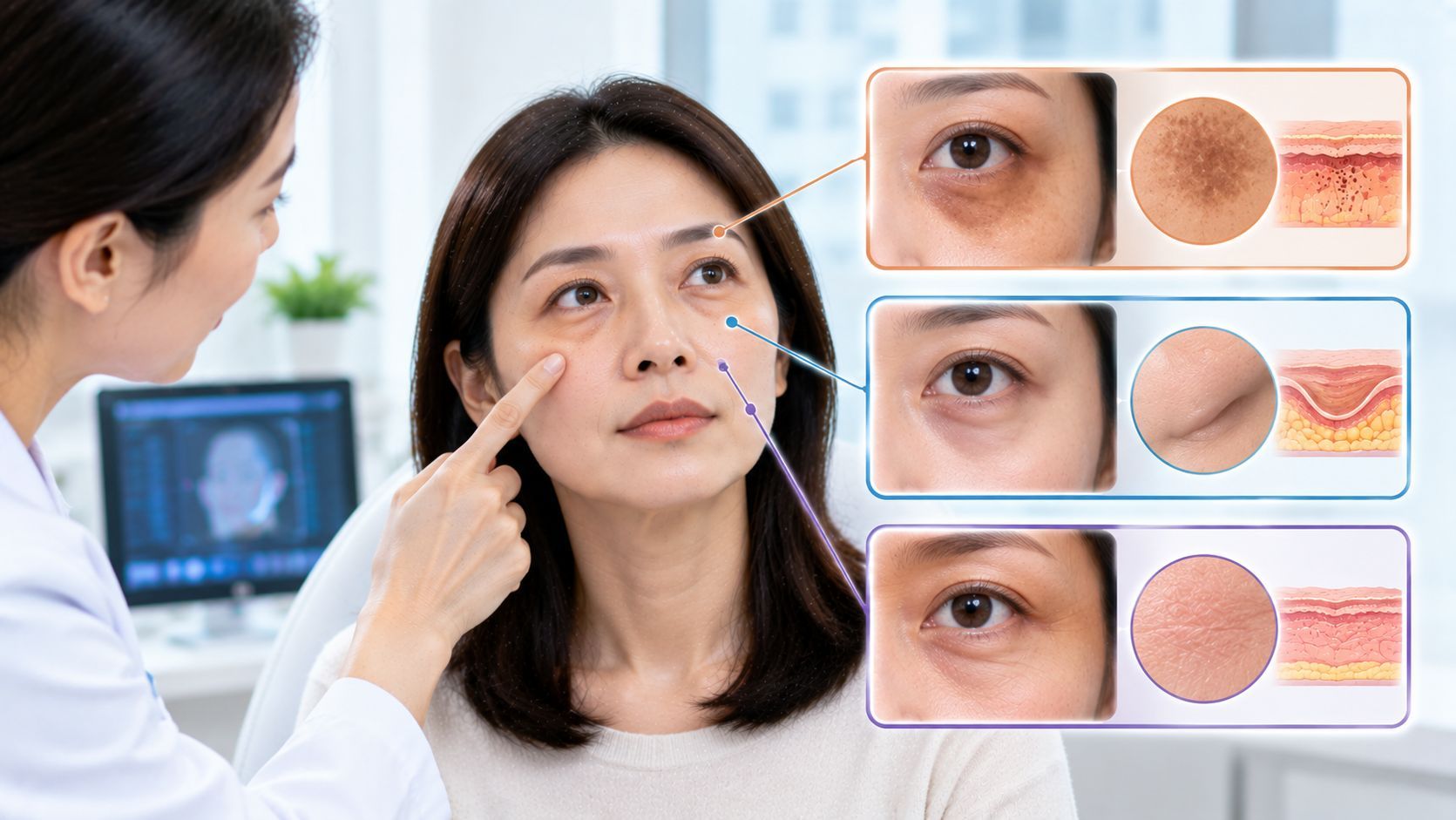
Many former acne patients have a combination of:
- Depressed scars
- Dark marks
- Red marks
- Enlarged pores
- Uneven texture
These problems may require different treatments.
For example, laser or other pigment-focused treatments may be considered for discoloration, while subcision or resurfacing may be considered for structural scars.
A skin booster may then be used as part of an overall skin-quality plan.
Trying to make one treatment solve every acne-related concern is usually unrealistic.
Why Active Acne Should Be Addressed First
If you still have frequent inflammatory acne, scar treatment may not be the first priority.
New acne lesions can create additional inflammation and potentially new scars.
Before focusing heavily on existing scars, your dermatologist may want to control active acne and reduce the risk of ongoing scarring.
This is particularly important for patients who continue to experience frequent breakouts.
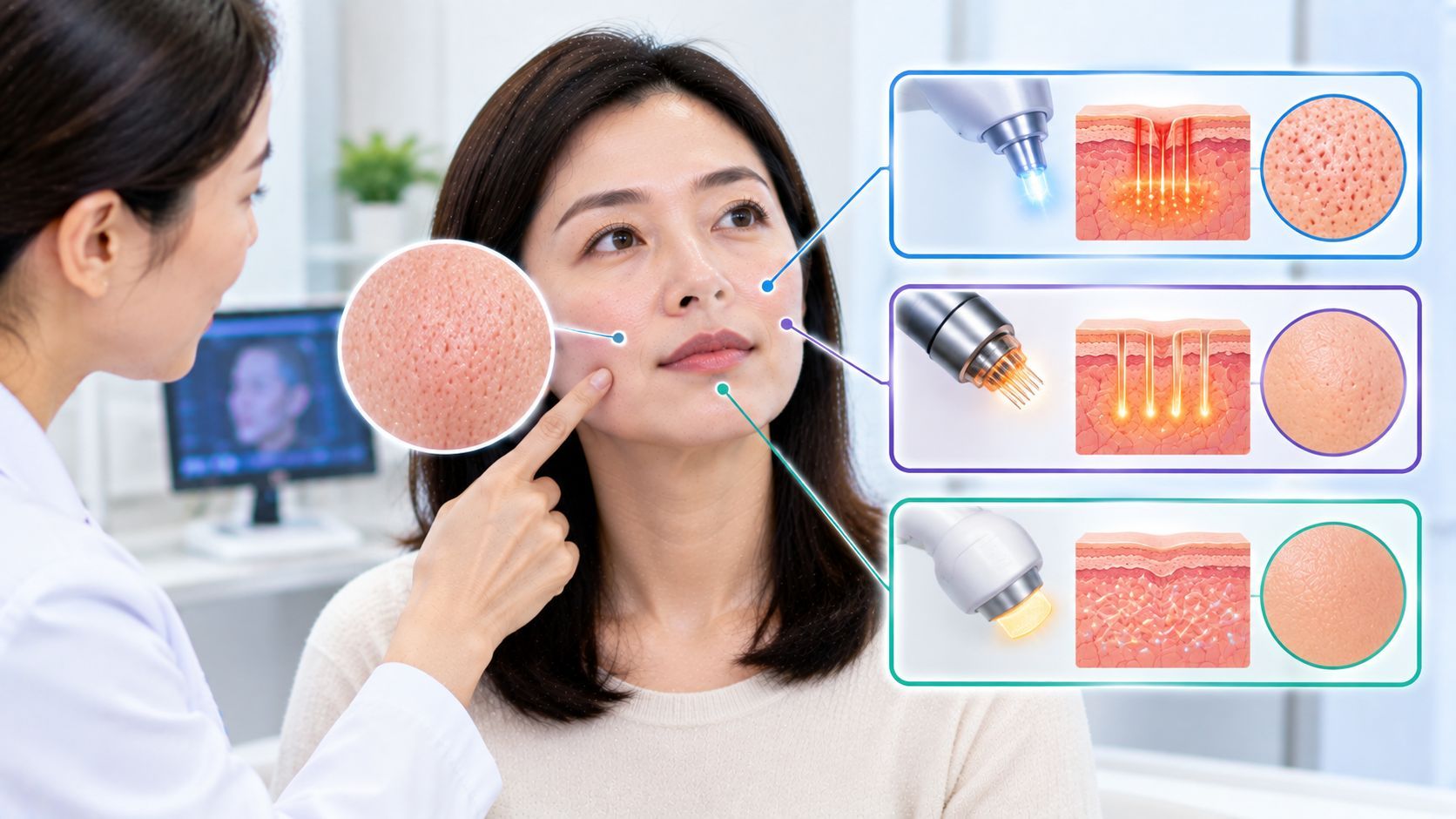
Which Acne Scar Treatments Might Be Considered?
Subcision
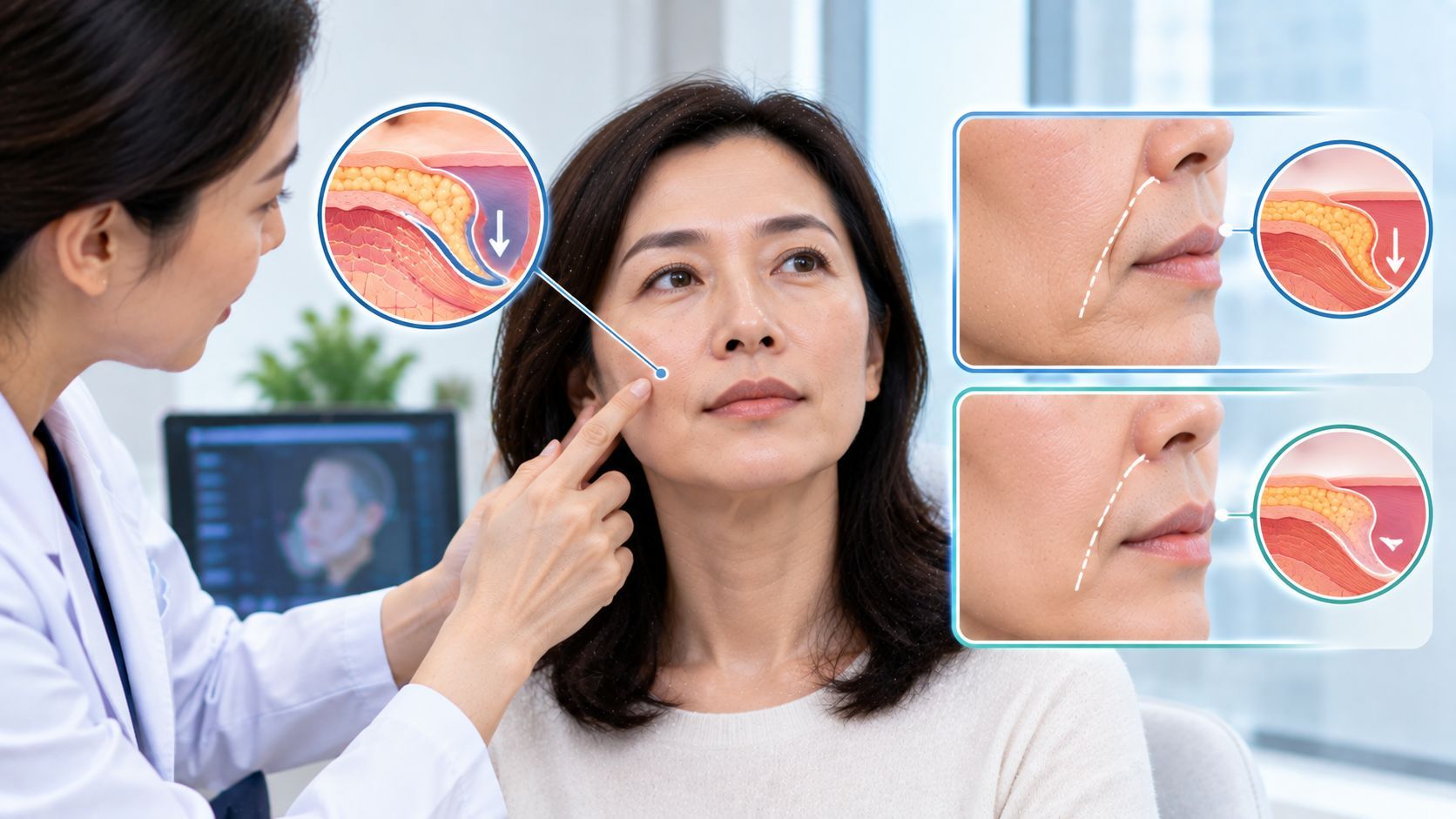
Subcision is often considered for rolling or tethered scars.
A clinician uses a needle or specialized instrument beneath the skin to release fibrous attachments that pull the scar downward.
TCA CROSS
TCA CROSS may be considered for selected ice-pick scars and some narrow depressed scars.
It involves applying a high-concentration chemical solution directly into individual scar openings.
Fractional Laser
Fractional laser treatments can be used for certain forms of acne scarring by creating controlled treatment zones that stimulate remodeling.
The appropriate laser and intensity depend on the patient's skin and scar characteristics.
RF Microneedling
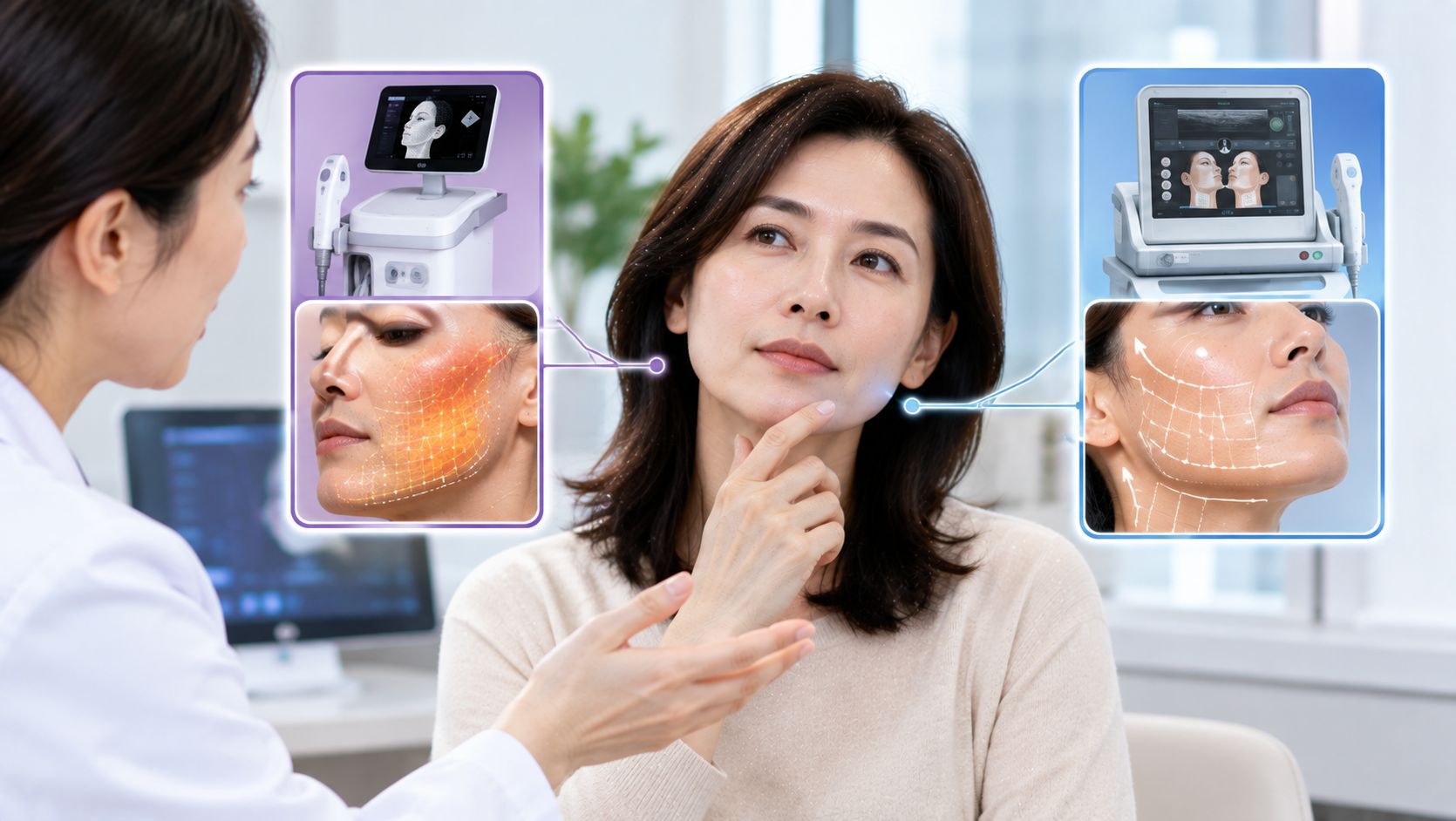
RF microneedling combines microneedling with radiofrequency energy and may be considered for certain acne-scar and texture concerns.
Examples of devices used in clinical practice include Potenza, Sylfirm X, Secret RF, and other RF microneedling platforms.
Device choice and settings should be individualized.
Can Skin Boosters Be Combined With Acne-Scar Treatments?
They can sometimes be included in a broader treatment plan, but combining everything during one appointment is not automatically necessary.
A dermatologist may prefer to separate treatments so that:
- Skin recovery can be monitored
- Inflammation is easier to assess
- Treatment response can be evaluated
- Unnecessary irritation is minimized
The sequence should be based on the specific procedures rather than the assumption that more treatments in one visit will produce faster results.
What About Rejuran?
Rejuran is sometimes discussed as a treatment for overall skin quality and may be incorporated into acne-scar treatment plans.
However, it should not be presented as a universal replacement for scar-specific procedures.
If a scar is physically tethered or deeply depressed, an injectable skin-quality treatment may not address the underlying mechanical problem.
A dermatologist may therefore use Rejuran as a complementary treatment rather than the main scar-correction procedure.
What About Juvelook?
Juvelook is another injectable treatment used in some aesthetic practices for skin-quality and collagen-related goals.
Depending on the formulation and clinical protocol, it may be considered for concerns such as texture and fine lines.
But, just as with other skin boosters, the presence of Juvelook does not eliminate the need to diagnose the specific acne-scar type.
How Many Treatments Will You Need?
Acne scars often require a series of treatments rather than one procedure.
The number and spacing of sessions can depend on:
- Scar depth
- Scar type
- Skin type
- Treatment method
- Previous procedures
- Healing response
- Degree of improvement desired
Skin boosters may also require multiple sessions depending on the product and treatment protocol.
It is therefore useful to think in terms of a treatment plan, rather than expecting one appointment to completely correct years of acne scarring.
A Practical Treatment Sequence
A dermatologist may structure treatment roughly like this:
Step 1: Control Active Acne
If acne is still active, address the underlying acne first.
Step 2: Identify the Scar Type
Determine whether the scars are rolling, boxcar, ice-pick, shallow, or mixed.
Step 3: Treat the Structural Scars
Use procedures selected for the specific scar characteristics.
Step 4: Reassess the Skin
After sufficient healing, evaluate what remains.
Step 5: Address Skin Quality
If hydration, fine texture, elasticity, or overall skin quality remain concerns, a skin booster may then be considered.
This sequence is only an example. Some patients may appropriately receive skin-quality treatments earlier.
Questions to Ask Before Combining Treatments
Before booking acne-scar procedures and skin boosters, ask:
- What type of acne scars do I have?
- Are my scars structural or mainly pigmentation?
- Which treatment directly addresses my scar type?
- Will the skin booster actually improve my main concern?
- Should scar treatment come before the booster?
- Can the treatments be performed during the same visit?
- How long should I wait between procedures?
- How many sessions might be needed?
These questions can help prevent choosing a treatment simply because it is popular or available.
Final Thoughts
If acne scars are the main problem, scar-directed treatment will often be more important than starting with a general skin booster. Structural scars such as rolling, boxcar, and ice-pick scars may require specific procedures that target the underlying scar architecture.
Skin boosters can still have a role when the goal is improving hydration, texture, elasticity, or overall skin quality. They may be incorporated before, after, or alongside scar treatments depending on the patient's skin and treatment plan.
The key is to distinguish scar correction from general skin rejuvenation. A consultation with a dermatologist can determine whether your uneven skin is primarily caused by structural acne scars, pigmentation, texture, or a combination of these issues.