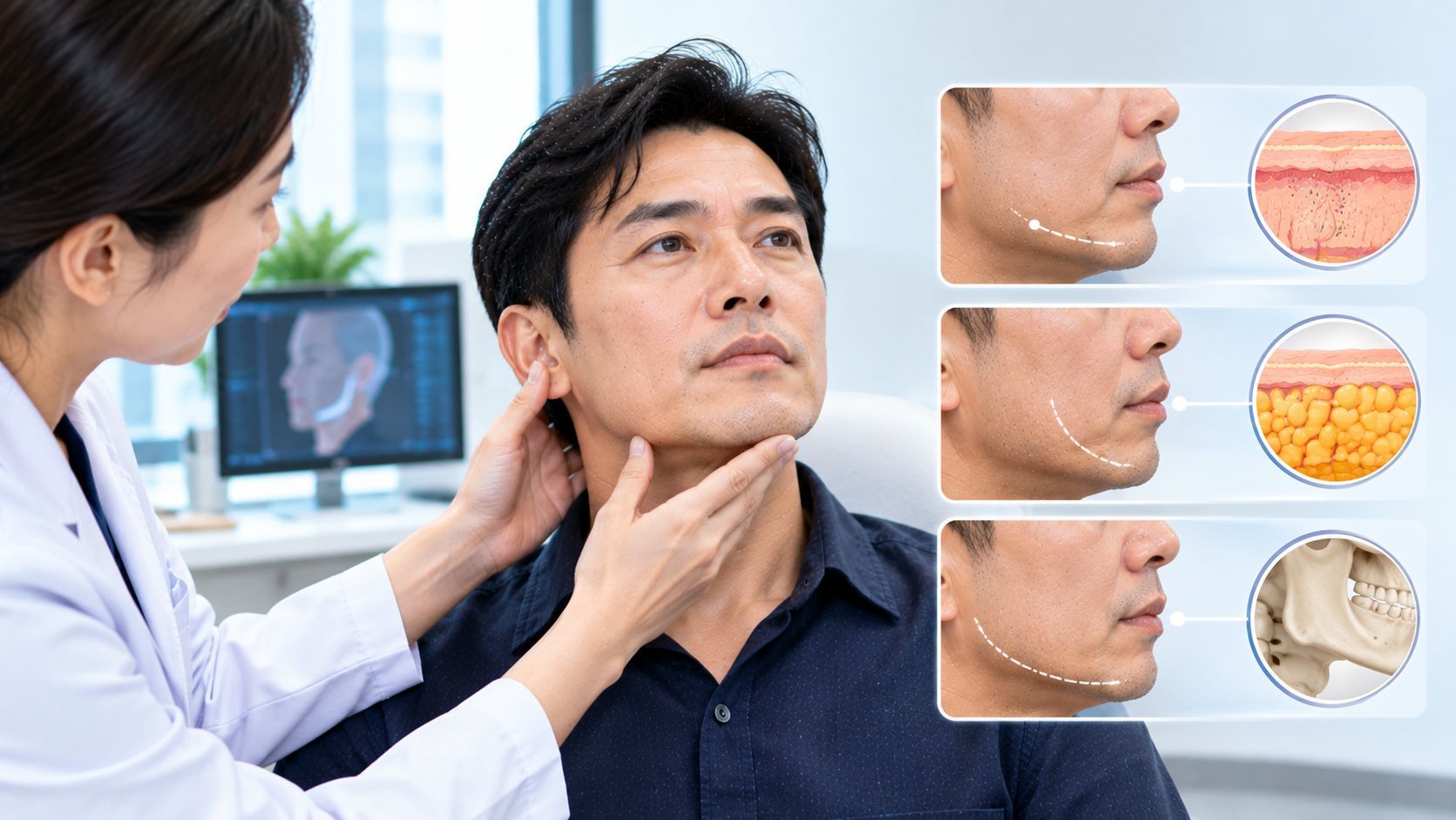
How Can I Look Refreshed Without Botox or Filler?
Introduction
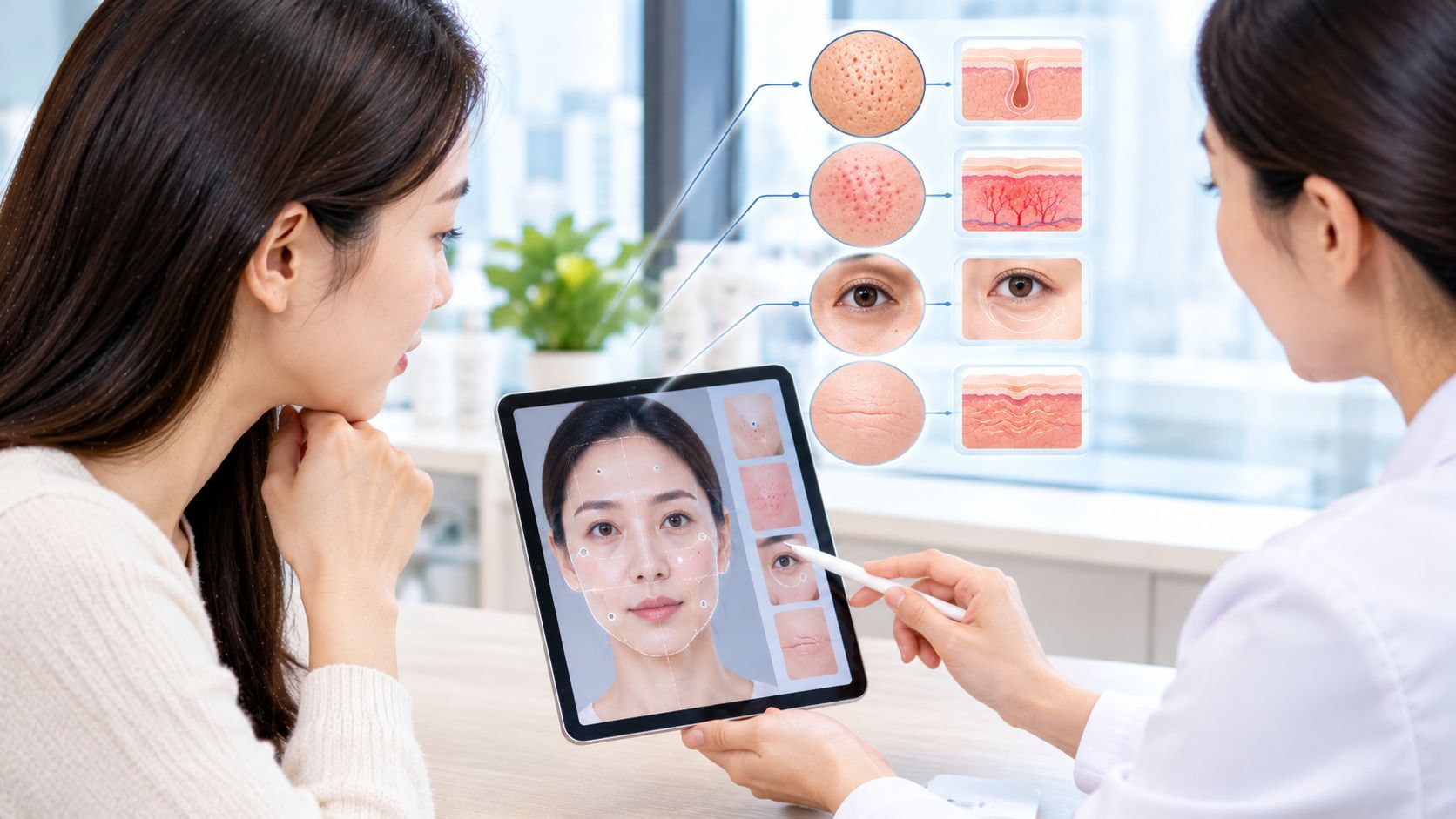
If your face looks tired, dull, rough, or slightly older than you feel, you do not necessarily need Botox or dermal filler to look more refreshed. The right approach depends on what is creating the tired appearance—skin quality, pigmentation, uneven texture, mild laxity, dehydration, fine lines, or actual loss of facial volume.
Yes, you can look more refreshed without Botox or filler. Treatments such as medical skincare, chemical peels, microneedling, laser or light-based treatments, and selected non-invasive skin-tightening procedures can improve skin quality without deliberately relaxing facial muscles or adding facial volume. Dermatologists commonly use treatments such as chemical peels, laser resurfacing, microneedling, ultrasound, and radiofrequency for different signs of skin aging.
The key is to treat the reason you look tired rather than automatically treating wrinkles.
What Does a “Refreshed” Face Actually Mean?
A refreshed appearance does not necessarily mean having a tighter, fuller, or dramatically younger-looking face.
It may simply mean:
- Brighter and more even-looking skin
- Smoother texture
- Less visible fine lines
- Reduced appearance of sun damage or pigmentation
- Healthier-looking skin
- Mild improvement in skin firmness
- Less dullness and roughness
- A more rested overall appearance
This distinction matters because different problems require different treatments.
For example, someone with dull, uneven skin may benefit more from a resurfacing treatment than from filler. Someone with significant facial volume loss, however, may not achieve the same improvement from a skin-only procedure.
Best Ways to Look Refreshed Without Botox or Filler
1. Improve Your Daily Skincare Routine
For some people, the biggest improvement starts with consistent skincare rather than a procedure.
A basic routine may include:
- Broad-spectrum sunscreen
- Moisturizer
- A gentle cleanser
- Appropriate antioxidant or pigment-targeting products
- A retinoid or retinol when suitable
Sun protection is particularly important because cumulative UV exposure contributes to wrinkles, uneven pigmentation, and other visible signs of skin aging. Dermatologists may also recommend topical retinoids and other skincare approaches depending on the concern.
Skincare usually works gradually, so it is better viewed as the foundation of facial rejuvenation rather than a quick transformation.
2. Chemical Peels for Dull or Uneven Skin
A chemical peel can be useful when the main problem is dullness, uneven tone, rough texture, pigmentation, or fine lines.
Depending on the type and strength, a peel can remove damaged outer skin layers and stimulate changes within the skin. Dermatologists use chemical peels for concerns including dull complexion, discoloration, fine lines, rough skin, freckles, and some forms of sun damage.
The advantage for someone avoiding Botox and filler is that a peel focuses on skin quality rather than changing facial structure.
However, stronger peels can involve more downtime and irritation. Chemical peels should also be selected carefully according to your skin type and condition.
3. Microneedling for Texture and Fine Lines
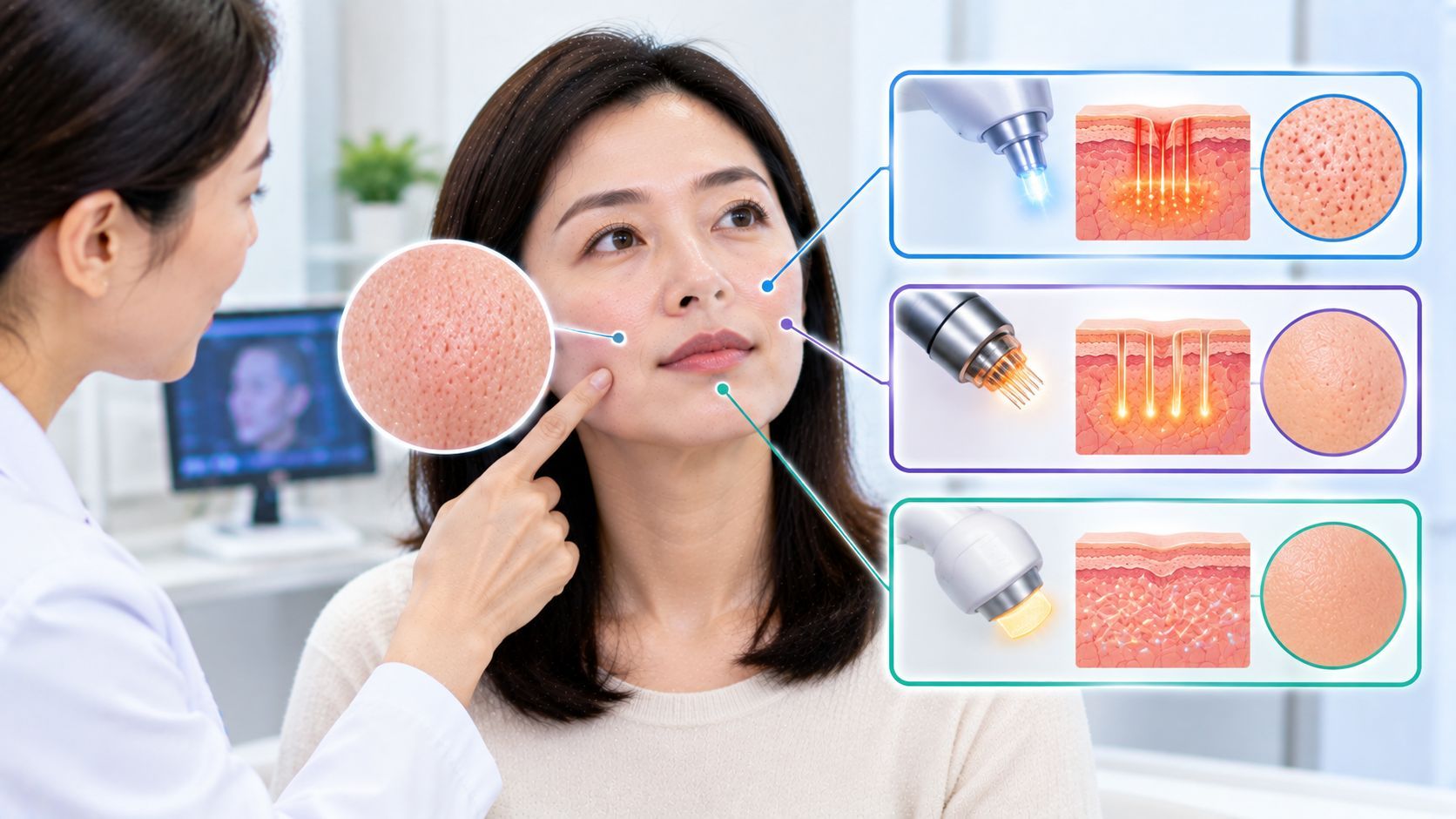
Microneedling uses very small needles to create controlled micro-injuries in the skin, stimulating collagen production during the healing process.
It can be used for:
- Fine lines
- Uneven texture
- Large pores
- Acne scars
- Uneven skin tone
- Mild skin laxity
The American Academy of Dermatology describes microneedling as a minimally invasive treatment that can stimulate collagen production, with results developing gradually rather than appearing immediately.
This can make it attractive if your goal is to look healthier and more rested rather than obviously treated.
4. Radiofrequency Microneedling
If you want to address both texture and some degree of skin firmness, radiofrequency microneedling may be considered.
It combines microneedling with controlled radiofrequency energy delivered through the needles. The goal is to stimulate collagen remodeling deeper within the skin.
It may be considered for concerns such as:
- Fine lines
- Texture
- Mild laxity
- Acne scarring
- Enlarged pores
However, it is still a medical procedure and should not be selected simply because it is marketed as a “no-downtime” or “skin tightening” treatment. The appropriate energy, depth, and treatment plan depend on the individual.
5. Laser or Light-Based Treatments
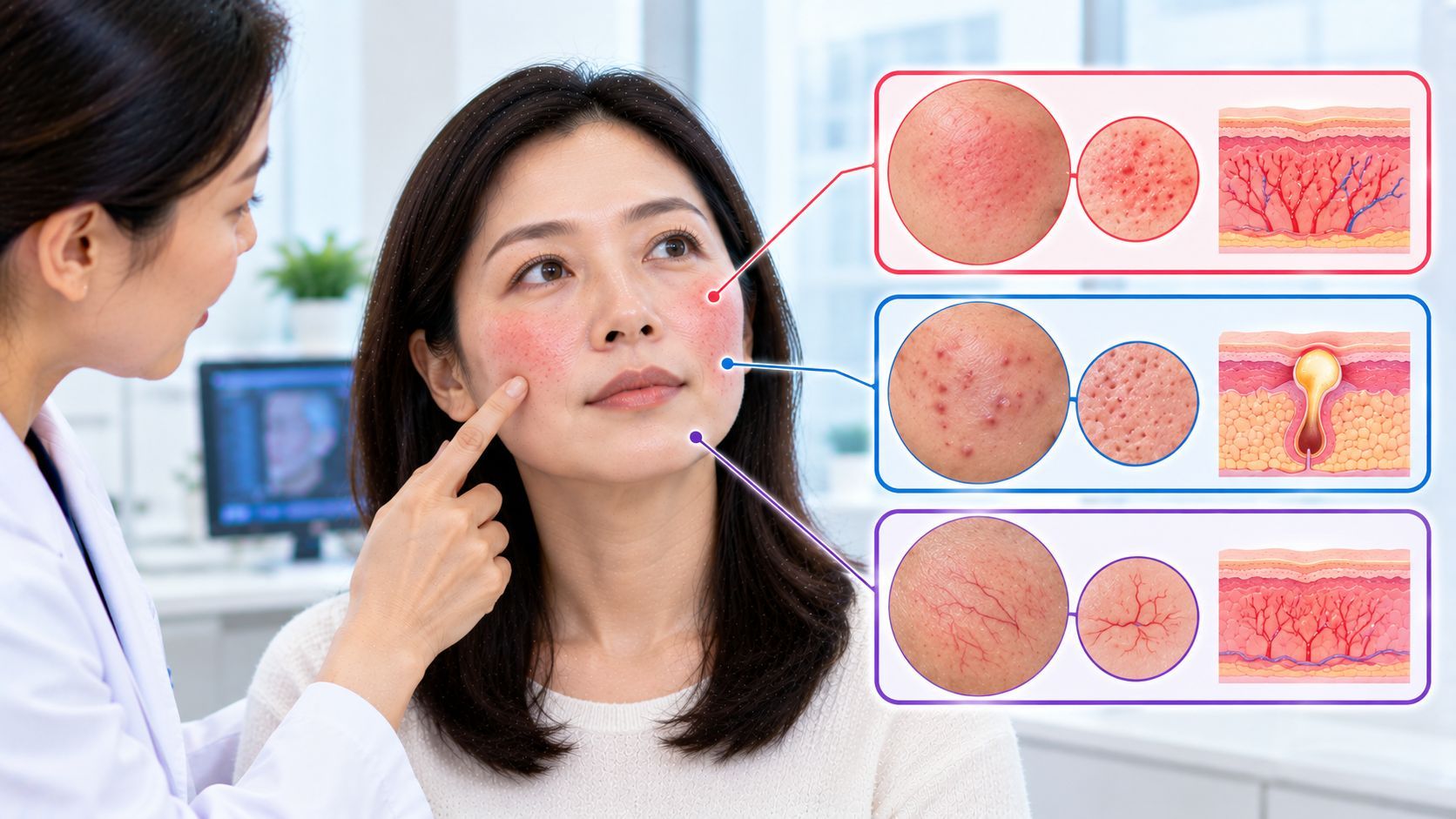
Laser and light-based procedures can target certain forms of pigmentation, sun damage, uneven texture, redness, or other visible skin concerns.
Laser resurfacing, for example, can improve certain signs of sun-damaged skin and stimulate collagen during healing.
The important point is that “laser treatment” is not one single treatment. Different devices and settings target different concerns.
A dermatologist may therefore recommend one type of laser for pigmentation and another approach for texture or resurfacing.
For international patients visiting Korea, this is particularly important. Instead of choosing a treatment because it is popular on social media, ask what specific skin problem the device is intended to treat.
6. Non-Invasive Skin Tightening
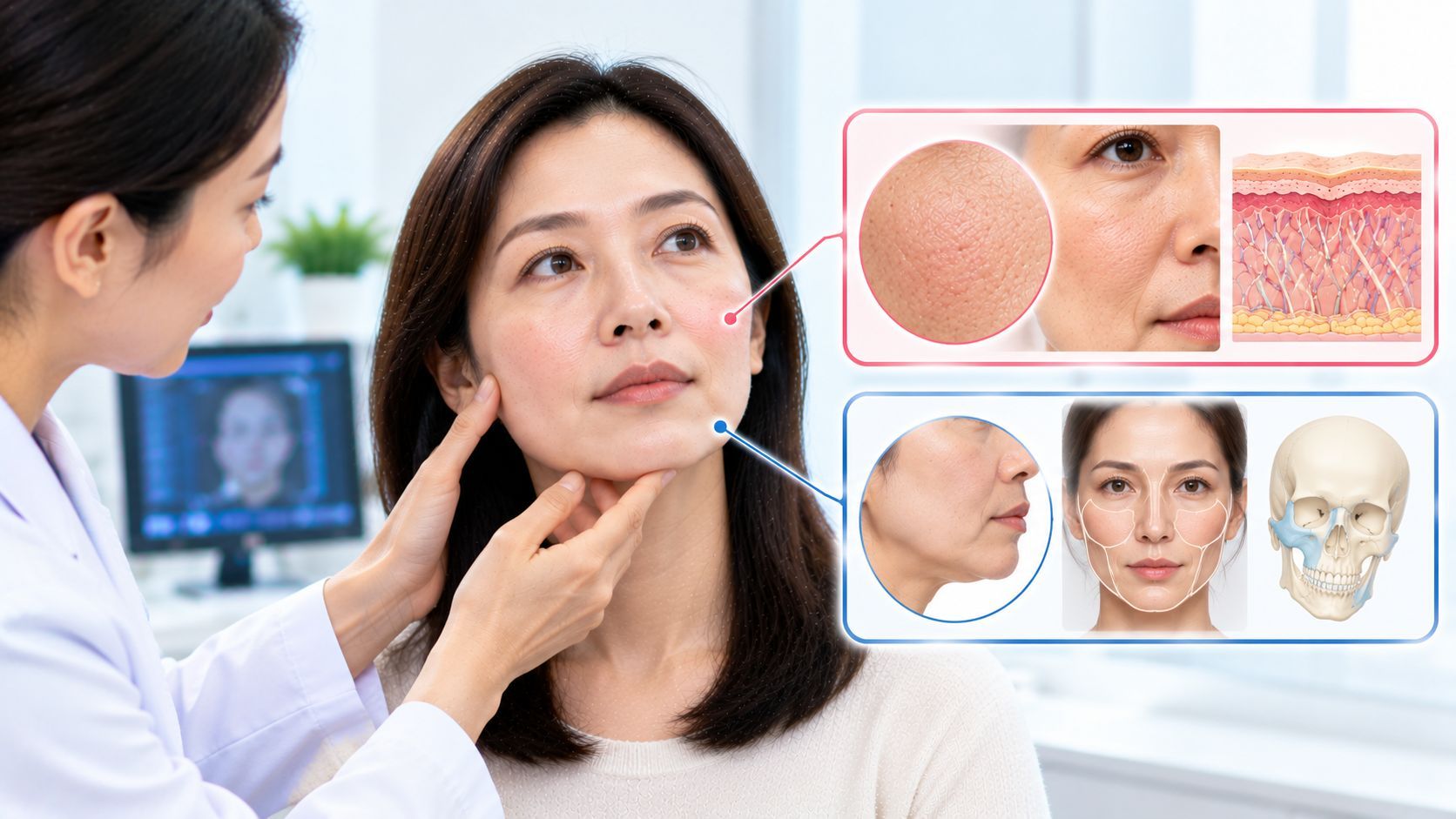
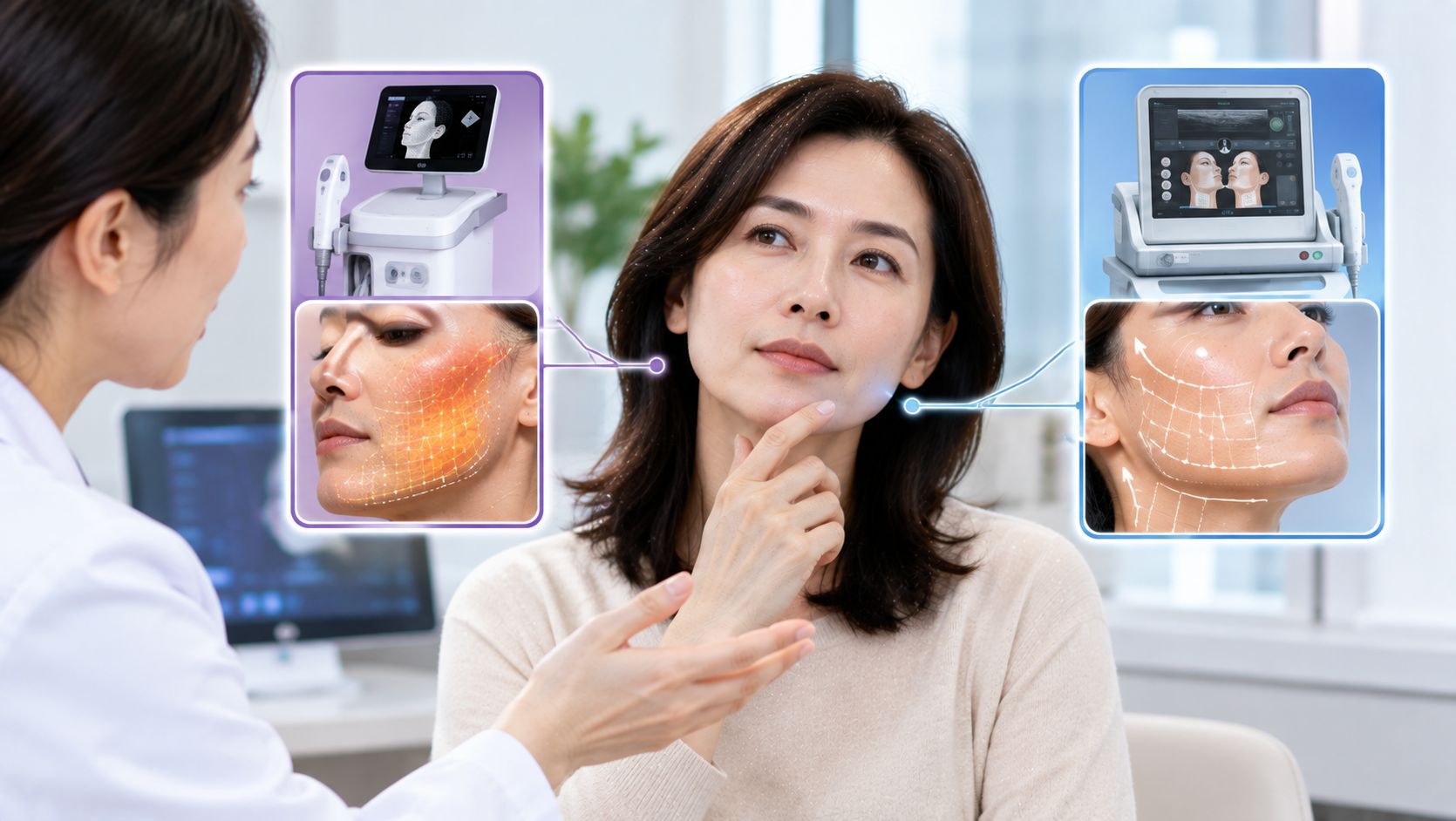
If your face looks tired partly because of mild skin laxity, non-invasive ultrasound or radiofrequency treatments may be options.
These approaches aim to improve firmness without adding volume. The AAD lists ultrasound and non-invasive radiofrequency among treatments dermatologists may use for loose skin.
They are generally more appropriate for mild to moderate laxity than for substantial sagging.
You should also have realistic expectations. Non-invasive tightening does not reproduce the degree of lifting achieved by surgery.
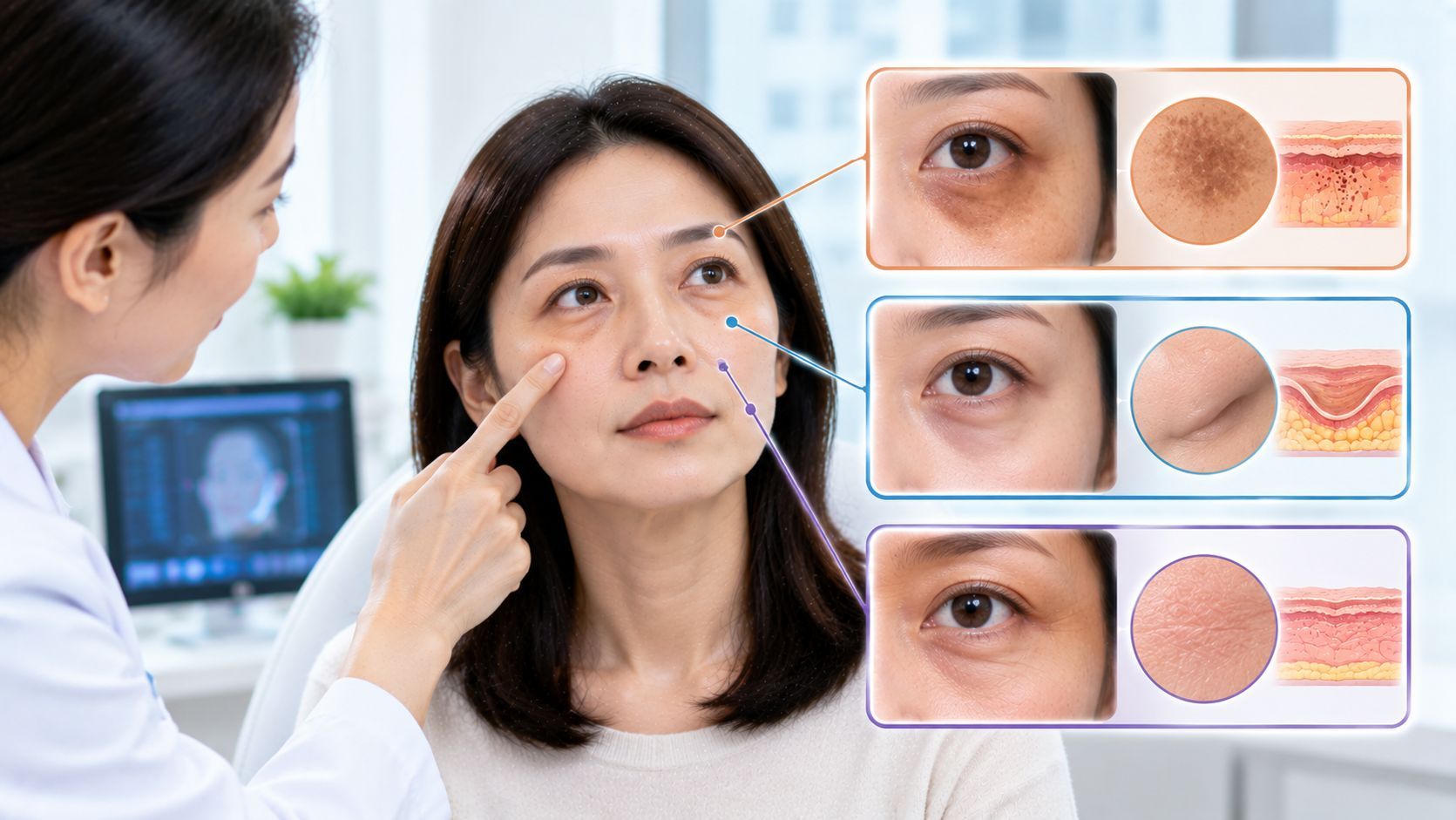
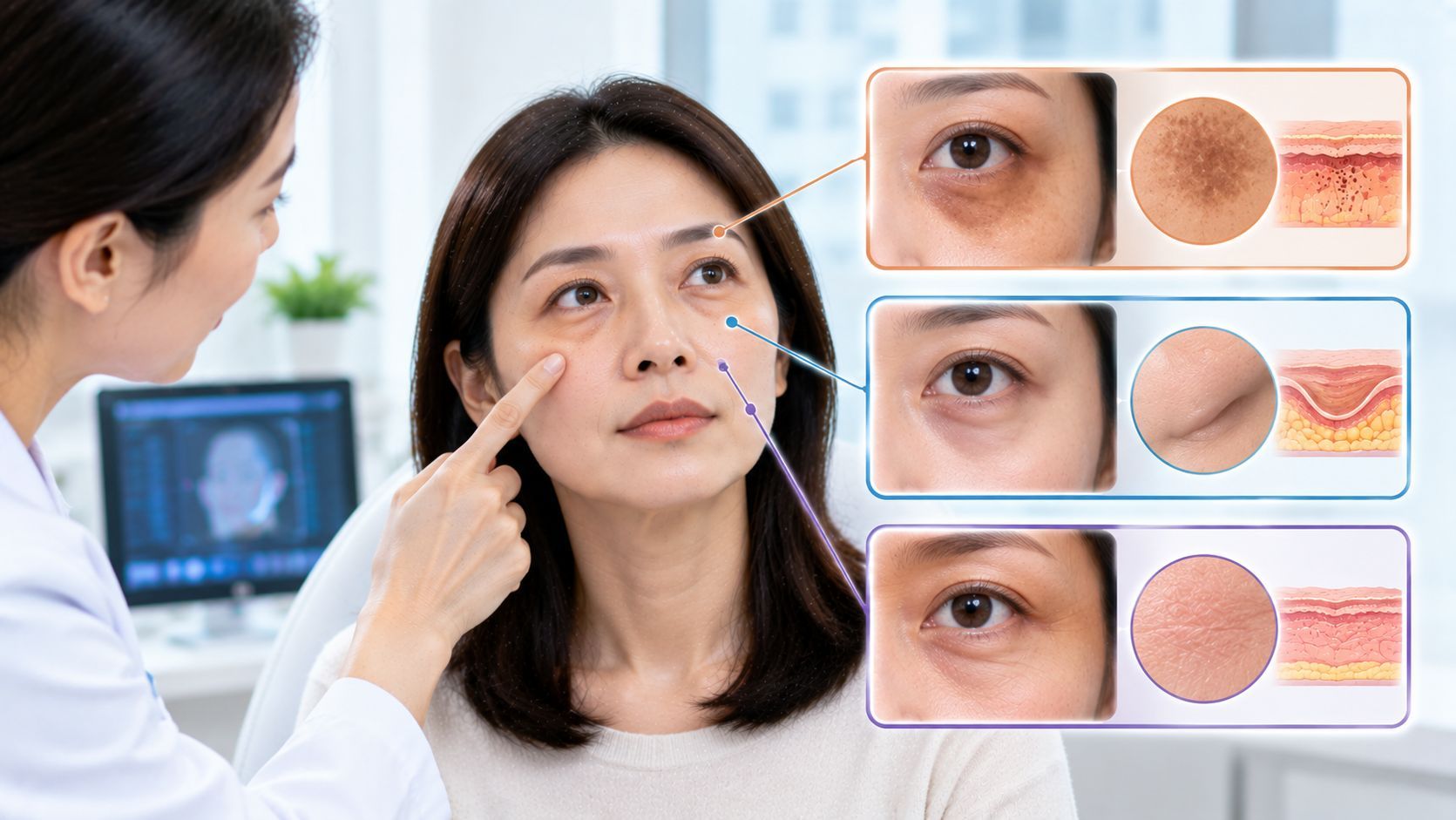
What If Your Under-Eye Area Makes You Look Tired?
The under-eye area is one of the most complicated parts of facial rejuvenation.
A tired appearance can result from:
- Pigmentation
- Fine lines
- Dryness
- Puffiness
- Skin laxity
- Tear-trough or orbital hollowing
- Natural facial anatomy
Not all of these respond to the same treatment.
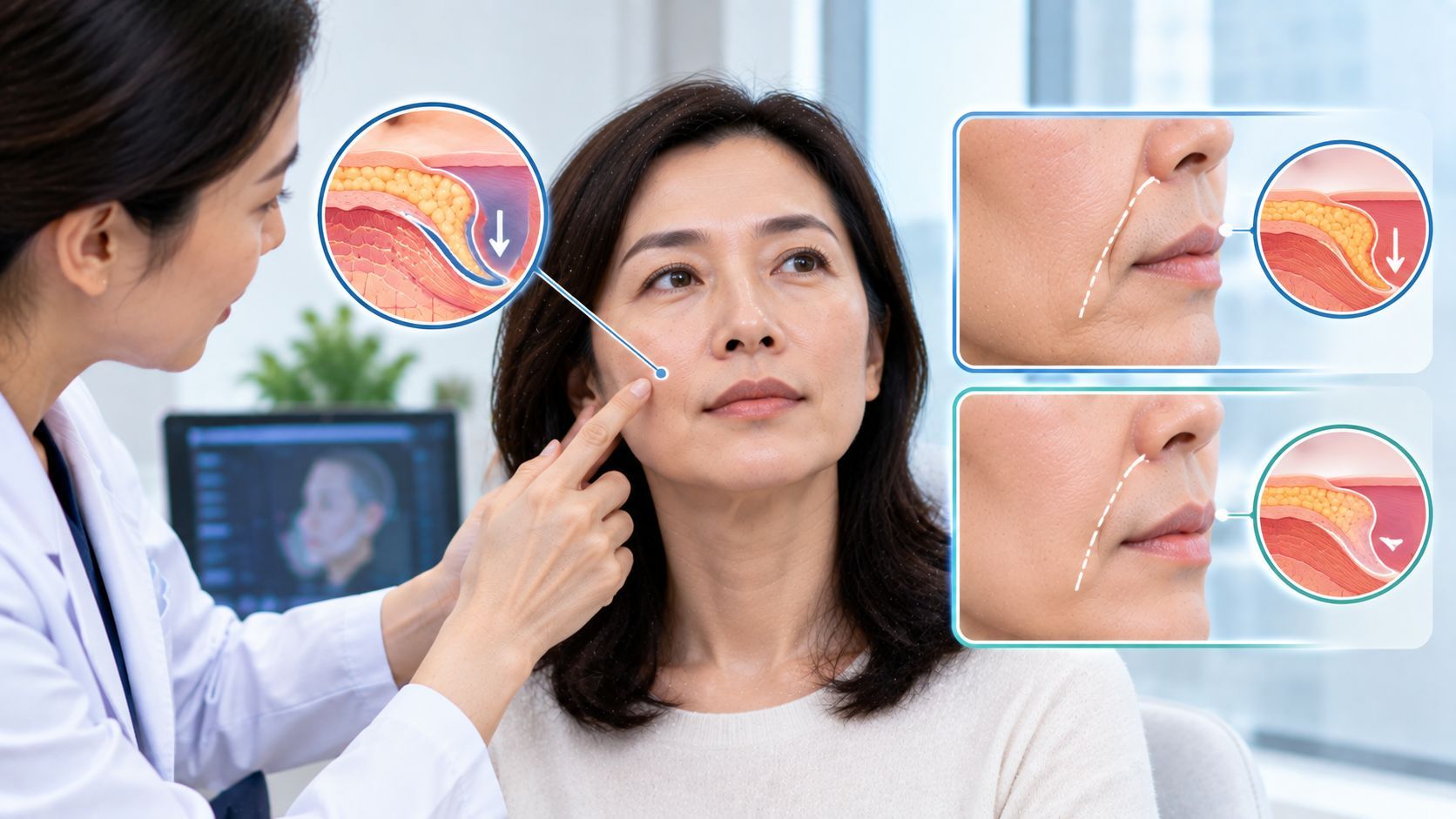
For example, improving pigmentation or skin texture may make the area appear brighter, while genuine volume loss is a different problem. If you specifically want to avoid filler, your options for correcting significant structural hollowing may be more limited.
A proper assessment is therefore more useful than choosing a treatment based only on photographs or social-media trends.
Which Treatment Should You Choose?
Main concernPossible non-Botox/non-filler approachDull complexionSkincare, chemical peel, selected laser/light treatmentsUneven pigmentationMedical skincare, peel, laser/light treatmentRough textureMicroneedling, laser, peelFine linesSkincare, microneedling, resurfacingEnlarged poresMicroneedling, RF microneedling, selected laser treatmentsMild laxityRF, ultrasound, RF microneedlingAcne scarsMicroneedling, laser, chemical peel, combination treatmentDehydrated-looking skinMoisturizer, appropriate skincare, selected professional treatmentsSignificant volume lossNon-filler options may have limitations
This table is a starting point rather than a treatment prescription. A dermatologist should determine whether the visible concern is actually caused by the problem you think you are seeing.
Can You Combine Treatments?
Sometimes, yes.
A dermatologist may combine treatments that address different aspects of skin aging. For example, someone with uneven pigmentation and poor texture may need a different strategy from someone whose main concern is mild laxity.
The AAD notes that there is no single cosmetic treatment that addresses every aspect of facial aging, and that treatment plans may combine home skincare with appropriate in-office procedures.
However, combining several procedures does not automatically produce a better result.
A more sensible strategy is often:
- Identify the main reason you look tired.
- Choose the least aggressive effective approach.
- Allow the skin to recover.
- Assess the result.
- Add another treatment only if there is a genuine remaining concern.
Looking Refreshed Without Looking “Done”
If your goal is subtle rejuvenation, tell your dermatologist exactly that.
You can explain that you want:
- Better skin quality
- A brighter complexion
- Less visible fine lines
- Subtle firmness
- No change to your facial shape
- No added facial volume
- No frozen facial expression
- A gradual, natural-looking improvement
This gives the provider a much clearer target than simply saying, “Make me look younger.”
The goal should be to improve the features that make you look tired without unnecessarily changing the features that make you look like yourself.
What About Getting These Treatments in Korea?
South Korea offers a wide range of cosmetic dermatology procedures, including lasers, peels, microneedling, radiofrequency, ultrasound-based treatments, and other skin-rejuvenation approaches.
For an international patient, however, the number of available treatments can make choosing more complicated.
Instead of asking, “What is the most popular treatment in Seoul?”, consider asking:
- What is causing my tired appearance?
- Is my main problem skin quality, laxity, pigmentation, or volume?
- What treatment specifically addresses that problem?
- How much downtime should I expect?
- Could this treatment make my skin temporarily darker or irritated?
- How many sessions might I need?
- What should I avoid before and after treatment?
- What follow-up will be available if I return home?
A medical consultation should come before committing to a package.
Risks and Limitations
Avoiding Botox and filler does not mean avoiding medical risks.
Chemical peels can cause irritation and require varying amounts of recovery depending on their strength.
Microneedling can cause temporary redness and other short-term reactions, while inappropriate treatment can create complications. The AAD recommends having microneedling performed by a qualified medical professional with appropriate skin expertise.
Laser, radiofrequency, and other energy-based treatments can also have side effects, particularly when the treatment is poorly selected or aggressively performed.
Your skin type, medical history, medications, previous procedures, pigmentation tendency, and recovery time should all be considered before treatment.
Conclusion
You do not need Botox or filler to look more refreshed.
If your tired appearance comes mainly from dullness, pigmentation, uneven texture, fine lines, or mild laxity, treatments such as medical skincare, chemical peels, microneedling, laser-based procedures, and non-invasive skin tightening may offer meaningful improvement without intentionally adding facial volume or relaxing facial muscles.
The most natural result usually comes from treating the actual cause of the tired appearance, rather than choosing the most popular procedure.
For international patients considering treatment in Korea, a personalized dermatology consultation is especially important because it can help separate concerns that require skin rejuvenation from those caused by volume loss or facial structure.
FAQs
1. Can I really look younger without Botox or filler?
Yes. Depending on the cause of facial aging, skincare, peels, microneedling, lasers, and non-invasive tightening treatments may improve skin quality, texture, pigmentation, fine lines, or mild laxity without Botox or filler.
2. What is the best treatment for a tired-looking face without injections?
There is no single best treatment. If dullness is the problem, a peel or appropriate skincare may help. If texture is the issue, microneedling or resurfacing may be considered. Mild laxity may respond better to an energy-based tightening treatment.
3. Can microneedling make my face look more refreshed?
It can improve certain aspects of skin texture and stimulate collagen production. Results develop gradually, and several treatments may sometimes be needed.
4. Can a chemical peel make my face look brighter?
Yes. Chemical peels can improve certain forms of uneven pigmentation, dullness, rough texture, and fine lines. The appropriate peel strength depends on your skin and the concern being treated.
5. Can I avoid changing my facial shape?
Often, yes. Skin-focused treatments generally aim to improve the skin rather than add facial volume. However, the appropriate treatment depends on whether your concerns are actually caused by skin quality, laxity, or underlying volume loss.
6. What should international patients consider before treatment in Korea?
Ask about the exact procedure, expected downtime, possible side effects, aftercare, follow-up arrangements, and whether you can safely travel soon after treatment. It is also helpful to keep records of previous cosmetic procedures and medications available for your doctor.