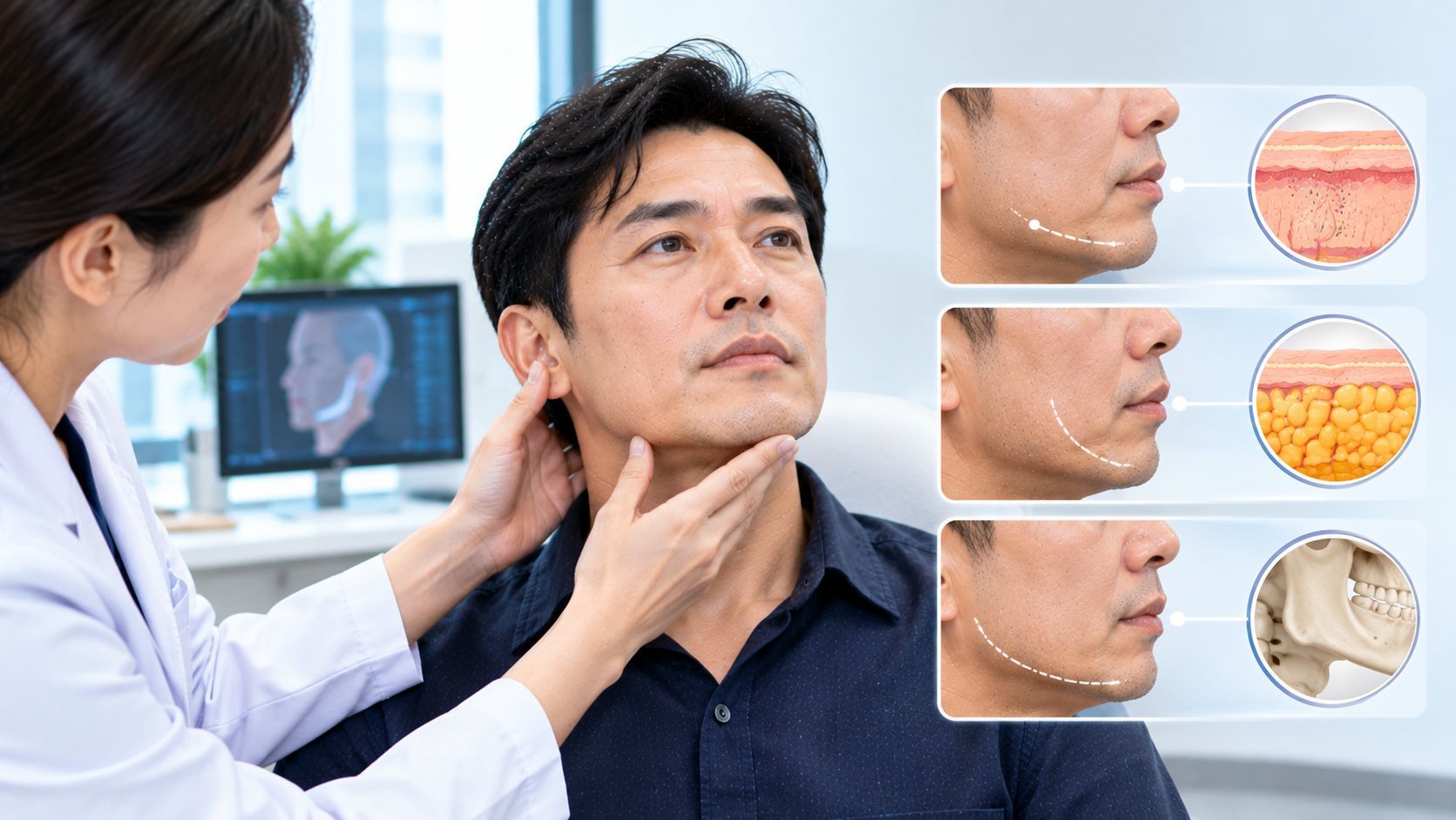
Can a non-surgical treatment improve a genetically weak jawline?
Introduction
A genetically weak jawline can make the lower face look less defined even when a person is slim, has little facial fat, or has relatively firm skin. The underlying issue may be a naturally small or recessed chin, less prominent mandibular contours, a softer chin-to-neck transition, or a combination of facial anatomy and soft tissue.
The good news is that some non-surgical treatments can improve the appearance of a weak jawline. However, the appropriate treatment depends on what is actually causing the lack of definition. Fillers can add projection, while skin-tightening treatments can improve laxity, and fat-reduction treatments can address excess submental fullness. None of these treatments can fundamentally change the underlying jawbone.
What Does a Genetically Weak Jawline Mean?
A genetically weak jawline generally refers to naturally limited definition or projection in the lower third of the face. It can be noticeable from the front, side profile, or both.
Common structural factors include:
- A small or recessed chin
- A less prominent lower jaw
- A short or softly defined lower face
- A less distinct chin-to-neck angle
- Naturally fuller tissue beneath the chin
- Facial proportions that make the jaw appear less projected
Genetics can influence bone structure, fat distribution, skin characteristics, and facial proportions. Therefore, two people with the same body weight can have very different jawline definitions.
Importantly, a weak-looking jawline is not necessarily caused by excess fat.
How Can You Tell What Is Causing the Weak Jawline?
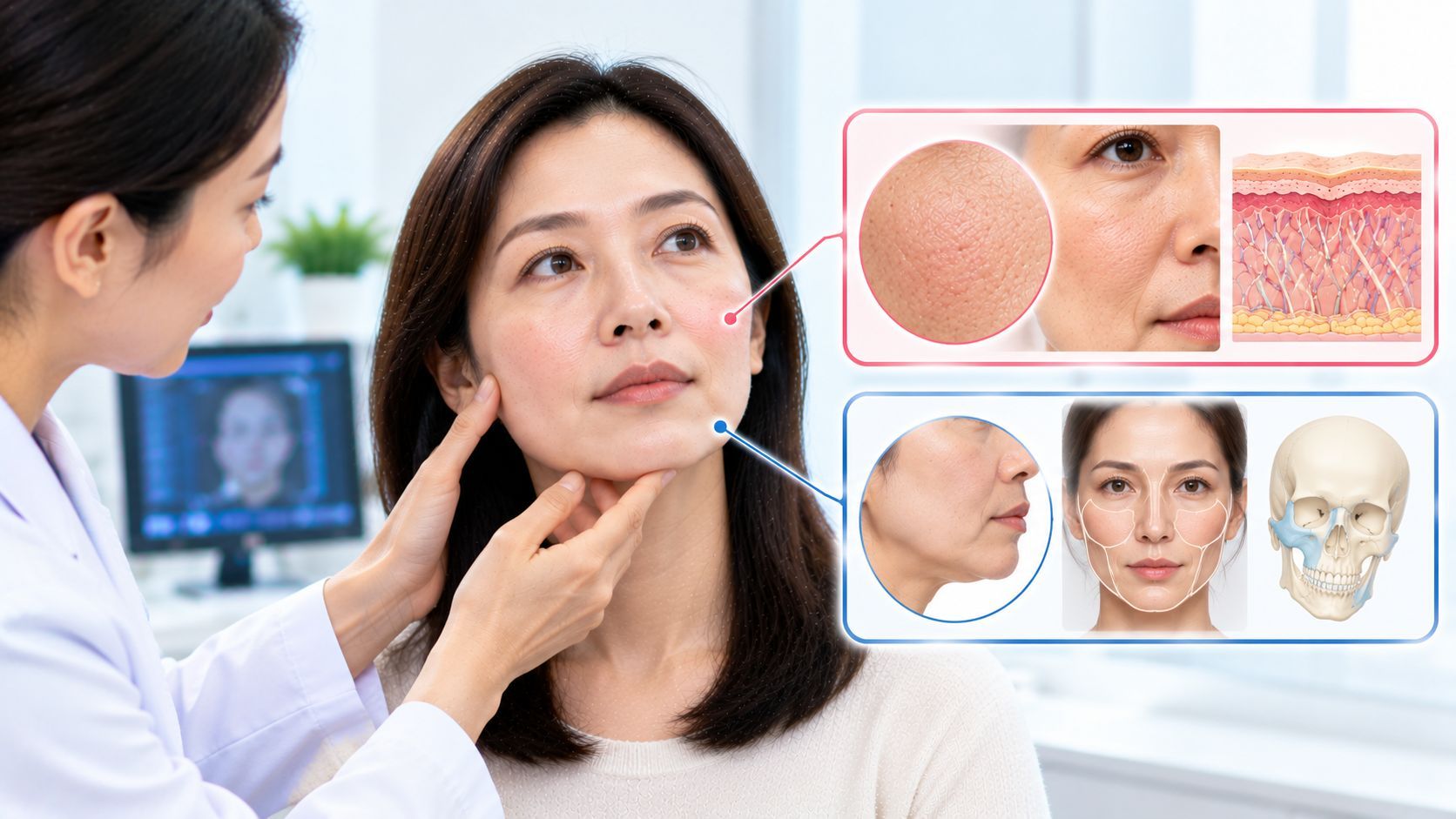
Before choosing a treatment, it helps to separate bone structure, fat, skin laxity, and muscle activity.
1. Chin and Jaw Structure
A recessed or relatively small chin can make the lower face appear less projected. From the side, the chin may sit farther back relative to the lips and other facial structures.
In this situation, simply removing fat may not create the sharper profile someone expects.
2. Submental Fat
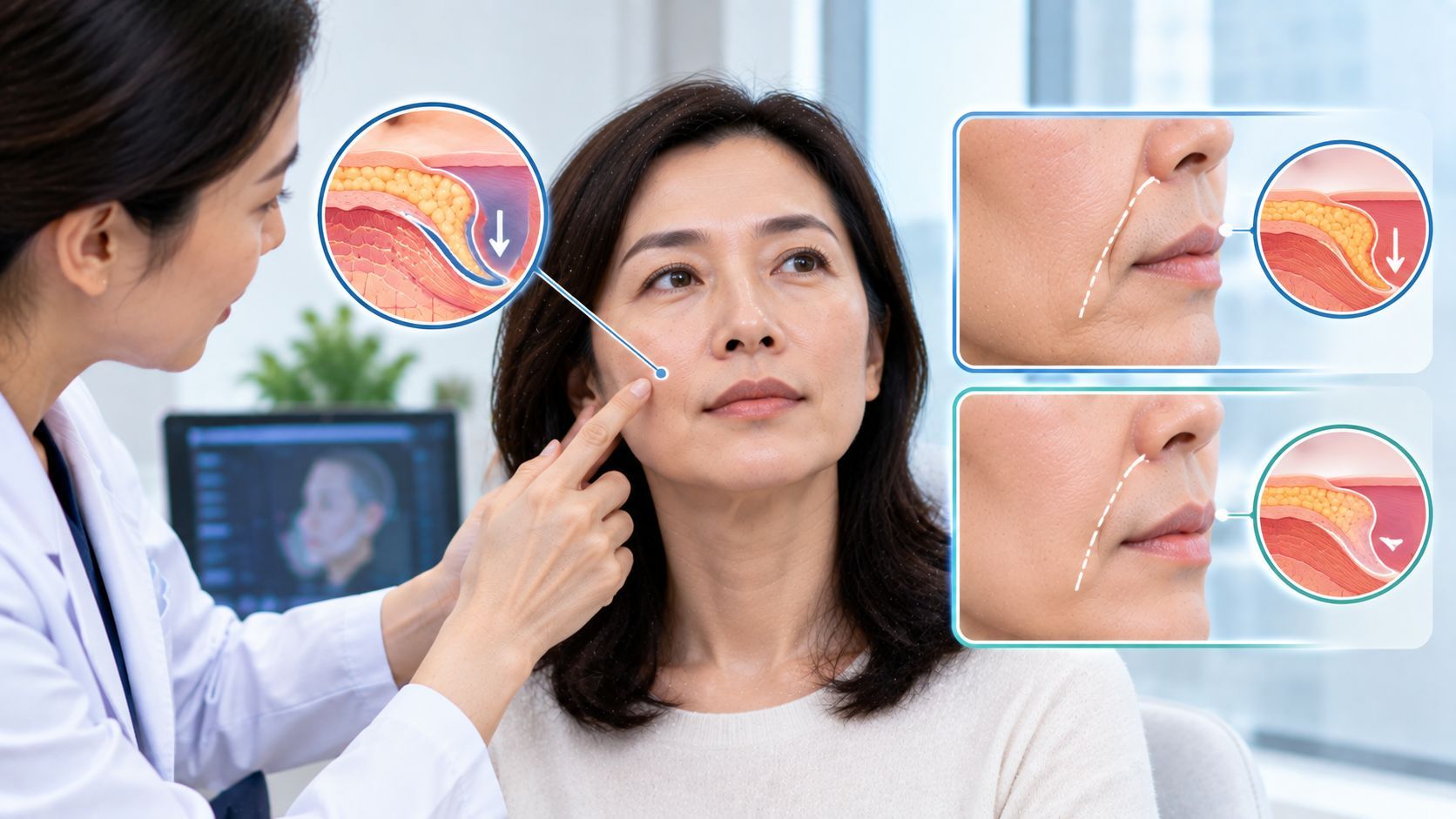
Fat beneath the chin can blur the transition between the jaw and neck. Even relatively thin people can have localized submental fat because fat distribution is partly genetic.
3. Loose Skin
Aging or significant weight loss can reduce skin elasticity. Loose skin beneath an otherwise well-defined jaw can make the jawline appear softer.
4. Neck and Platysma Muscle Activity
In some people, platysma muscle activity contributes to vertical neck bands or downward tension around the lower face. Botox may be considered for selected muscle-related concerns, but it does not strengthen the jawbone or remove fat.
Can Chin Filler Improve a Weak Jawline?
Yes. Chin filler can improve the appearance of a mildly or moderately recessed chin in appropriately selected patients.
Dermal filler can temporarily increase chin projection or improve the relationship between the chin and surrounding facial structures. Depending on the treatment plan, a clinician may focus on forward projection, vertical height, or subtle contouring.
The goal should generally be proportion rather than simply making the chin larger.
Chin filler does not alter the underlying bone. Results are temporary, and filler treatments have potential complications, including swelling, bruising, asymmetry, nodules, and, rarely, serious vascular complications. Because the chin contains important blood vessels, treatment should be performed by an appropriately trained medical professional.
What About Jawline Filler?
Jawline filler can sometimes create a more defined mandibular contour when the problem is partly related to soft-tissue definition.
It may be considered when:
- The jawline lacks visible contour
- There is mild volume deficiency
- The patient wants temporary structural enhancement
- Skin laxity is limited
- The desired change can reasonably be achieved with soft-tissue augmentation
However, adding too much filler can make the lower face look wider, heavier, or less natural.
Someone with a naturally narrow face may not benefit from simply adding large amounts of product along the entire jawline. Treatment should account for facial width, chin projection, cheek volume, and overall proportions.
Can Skin-Tightening Treatments Help?
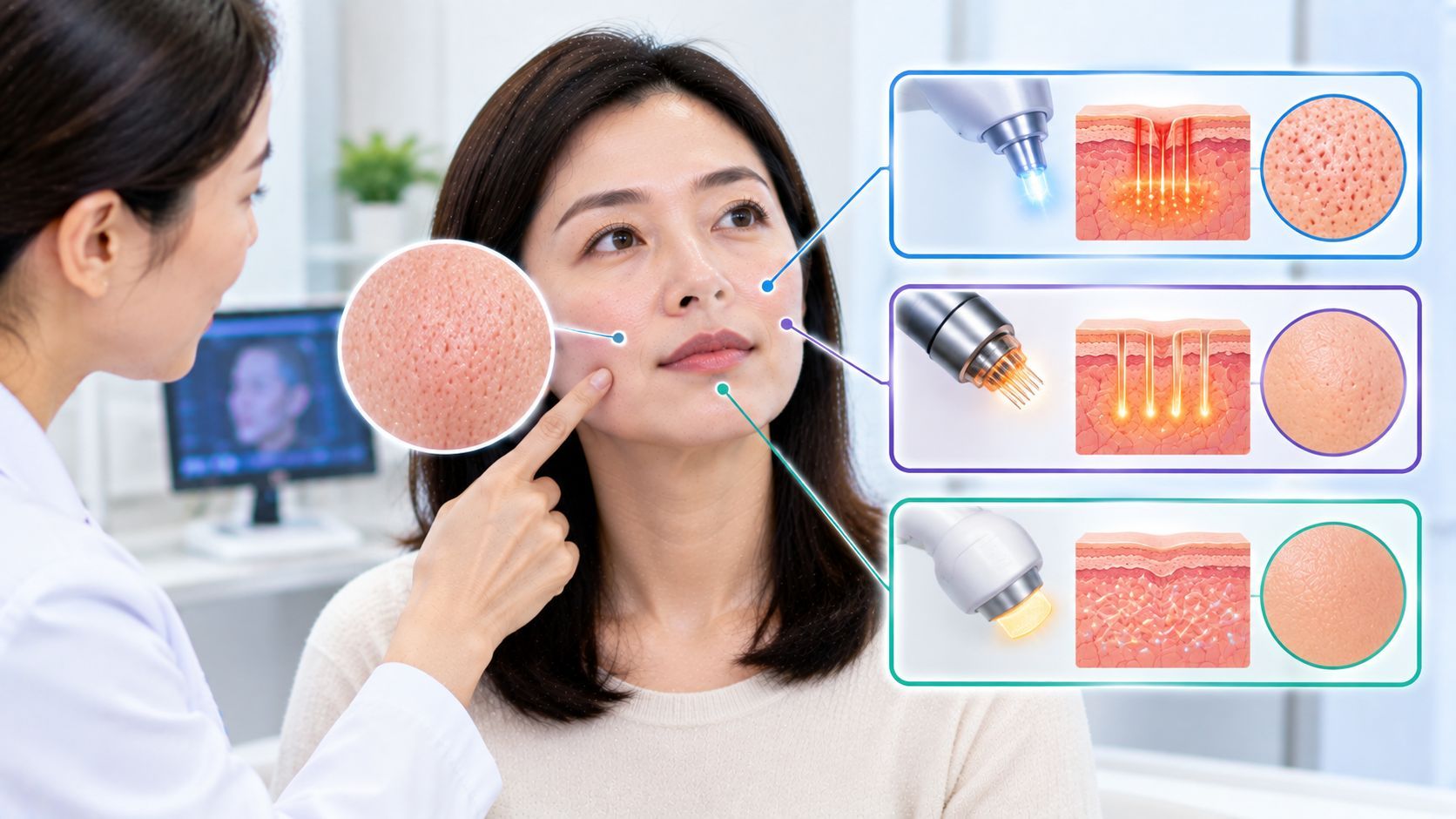
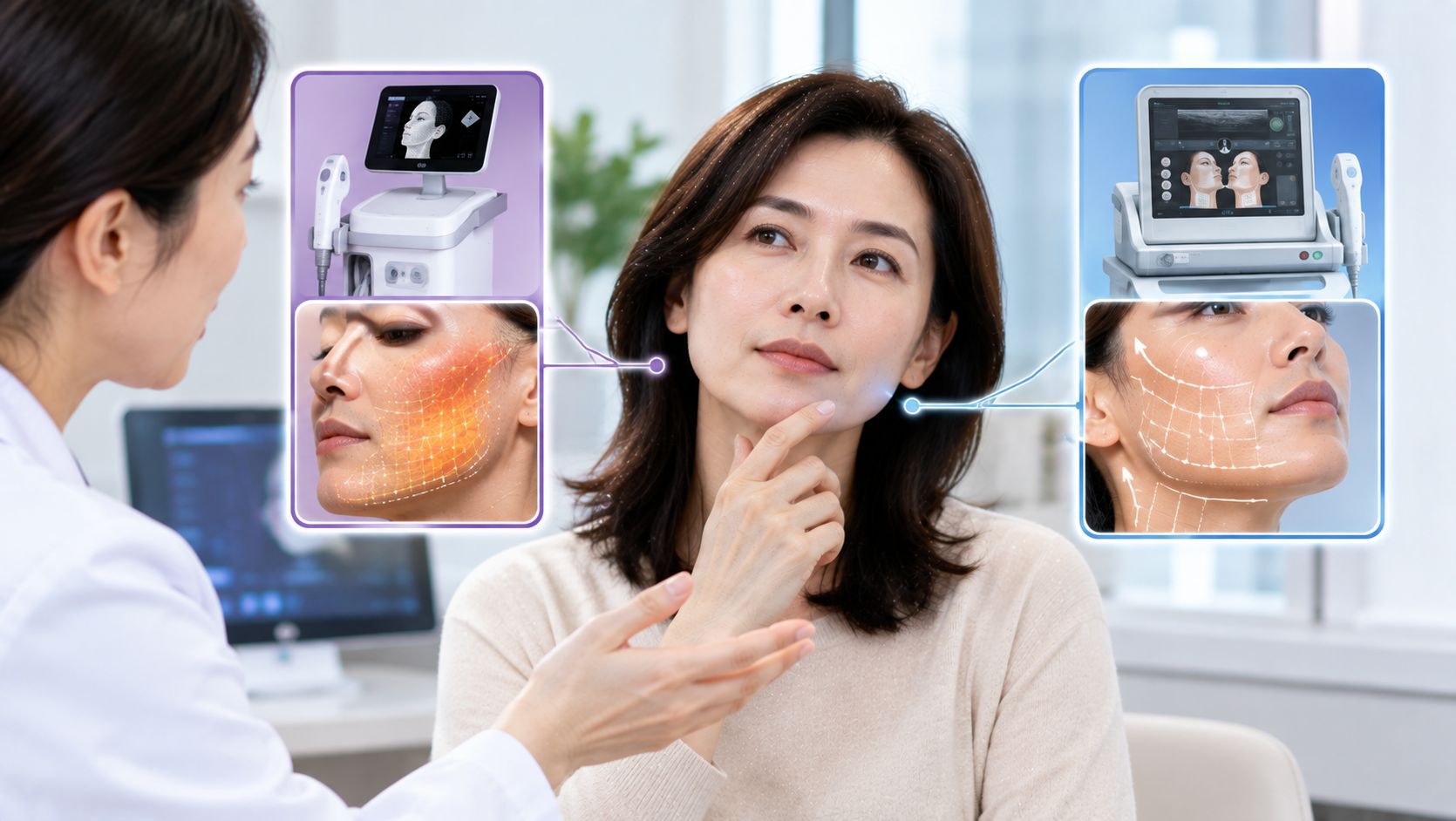
If the problem is partly caused by mild skin laxity, energy-based treatments may improve jawline definition without adding volume.
Depending on the patient's anatomy and skin condition, a dermatologist may consider technologies such as:
- Radiofrequency tightening
- Thermage
- Ultherapy or other focused ultrasound treatments
- Sofwave
- RF microneedling
These treatments aim to stimulate remodeling within the skin and underlying tissues rather than physically changing the jawbone.
They may be more relevant when someone has a structurally reasonable jawline but the surrounding skin has become less firm.
Results are generally gradual and vary between individuals. Non-surgical tightening should be viewed as an improvement rather than an equivalent substitute for surgical jaw or chin procedures.
What If There Is Fat Under the Chin?
When submental fat contributes significantly to the weak jawline appearance, fat reduction may be considered.
Depending on the individual, options can include non-surgical fat-reduction approaches or submental liposuction.
However, removing fat is not automatically beneficial for everyone with a soft jawline.
If the person has thin skin or existing laxity, reducing too much submental volume could make loose skin more noticeable. This is especially relevant after significant weight loss.
The treatment should therefore address the actual source of fullness, rather than assuming every poorly defined jawline needs fat reduction.
Can Botox Improve a Weak Jawline?
Botox has a more limited role.
It may be useful when specific muscle activity contributes to the appearance of the lower face or neck. For example, selected platysma-related concerns can sometimes be treated with neuromodulators.
However, Botox cannot:
- Build the jawbone
- Make a recessed chin structurally larger
- Remove submental fat
- Directly tighten significant loose skin
Masseter Botox can actually make the lower face narrower in people with prominent masseter muscles, so it should not automatically be considered a jawline-enhancement treatment.
When Is Surgery More Appropriate?
Non-surgical treatment has limits.
If the primary problem is substantial skeletal deficiency, options such as genioplasty or chin augmentation surgery may provide a more significant structural change than filler.
Similarly, substantial excess skin may require surgical lifting rather than relying solely on energy-based tightening.
This does not mean surgery is necessary for every weak jawline. Many people have mild structural differences that can be improved visually without surgery. The important point is to match the treatment to the anatomy.
Can Treatments Be Combined?
Sometimes, yes.
For example, a person may have:
- Mild chin recession
- Small amounts of submental fat
- Mild skin laxity
In that situation, a clinician might consider a combination of structural enhancement, fat management, and skin tightening rather than trying to solve everything with one procedure.
The order and combination depend on the patient's anatomy, previous treatments, skin quality, and desired degree of change.
A conservative approach is particularly important when the goal is a natural-looking result.
What Should You Ask During a Seoul Jawline Consultation?
If you are considering treatment in Seoul, ask the clinic to identify the primary cause of the weak jawline before recommending a procedure.
Useful questions include:
- Is my jawline mainly affected by bone structure, fat, skin, or a combination?
- Is my chin recessed from the side?
- Would chin filler improve my proportions?
- Would jawline filler make my face look wider?
- Do I have enough submental fat to justify fat reduction?
- Would tightening treatment help my skin quality?
- Could removing fat make existing laxity more visible?
- What degree of improvement is realistic without surgery?
- What complications should I understand before treatment?
- How will follow-up be handled if I am an international patient?
Photographs from the front and side can be useful, but an in-person examination allows the clinician to assess movement, skin elasticity, tissue thickness, and facial proportions more accurately.
Conclusion
A genetically weak jawline can often be visually improved without surgery, but there is no single treatment that works for every person. Chin filler may improve projection, jawline filler may enhance selected contours, tightening treatments may address mild laxity, and fat reduction may help when submental fat is a genuine contributor.
The most important step is determining whether the issue comes primarily from jaw structure, chin projection, fat, loose skin, muscle activity, or a combination. Non-surgical treatments can modify appearance, but they cannot fundamentally change skeletal anatomy.
For patients seeking treatment in Seoul, a detailed facial and profile assessment is particularly important. A conservative plan that matches the underlying anatomy is generally more appropriate than simply adding volume or removing tissue.
FAQs
Can filler permanently fix a genetically weak jawline?
No. Dermal filler can temporarily improve chin projection or jawline contour, but it does not permanently change the underlying bone structure.
Is a weak jawline always caused by a recessed chin?
No. A weak-looking jawline can result from chin structure, mandibular anatomy, submental fat, skin laxity, facial proportions, or several factors together.
Can Ultherapy or RF make my jawbone stronger?
No. Energy-based tightening treatments affect soft tissue and skin remodeling. They cannot enlarge or reshape the jawbone.
Can losing weight strengthen my jawline?
If submental fat contributes to the appearance, weight loss may reveal more jawline definition. However, weight loss cannot change a naturally recessed chin or mandibular structure.
Can a weak jawline be improved without filler?
Yes. Depending on the cause, treatment may involve skin tightening, fat reduction, or selected muscle treatments. If the issue is primarily skeletal, however, non-surgical options have limitations.