Which Acne-Scar Treatments Are Safest for Darker Skin Tones?
Introduction
If you have darker skin and acne scars, treatment requires a slightly different approach because procedures that create inflammation can sometimes trigger post-inflammatory hyperpigmentation (PIH). The good news is that darker skin does not mean you have to live with acne scars or avoid professional treatment.
The safest approach depends on your Fitzpatrick skin type, scar type, tendency to develop dark marks, current acne activity, and the treatment being considered. Options such as microneedling, selected RF microneedling, fractional picosecond treatments, subcision, and carefully selected non-ablative lasers may be considered, while aggressive ablative resurfacing generally requires greater caution in darker skin.
The most important point is that there is no single safest acne-scar treatment for every darker skin tone. Treating the type of scar you actually have is more important than choosing a procedure simply because it is marketed as “safe for dark skin.”
Why Acne-Scar Treatment Can Be More Complicated in Darker Skin
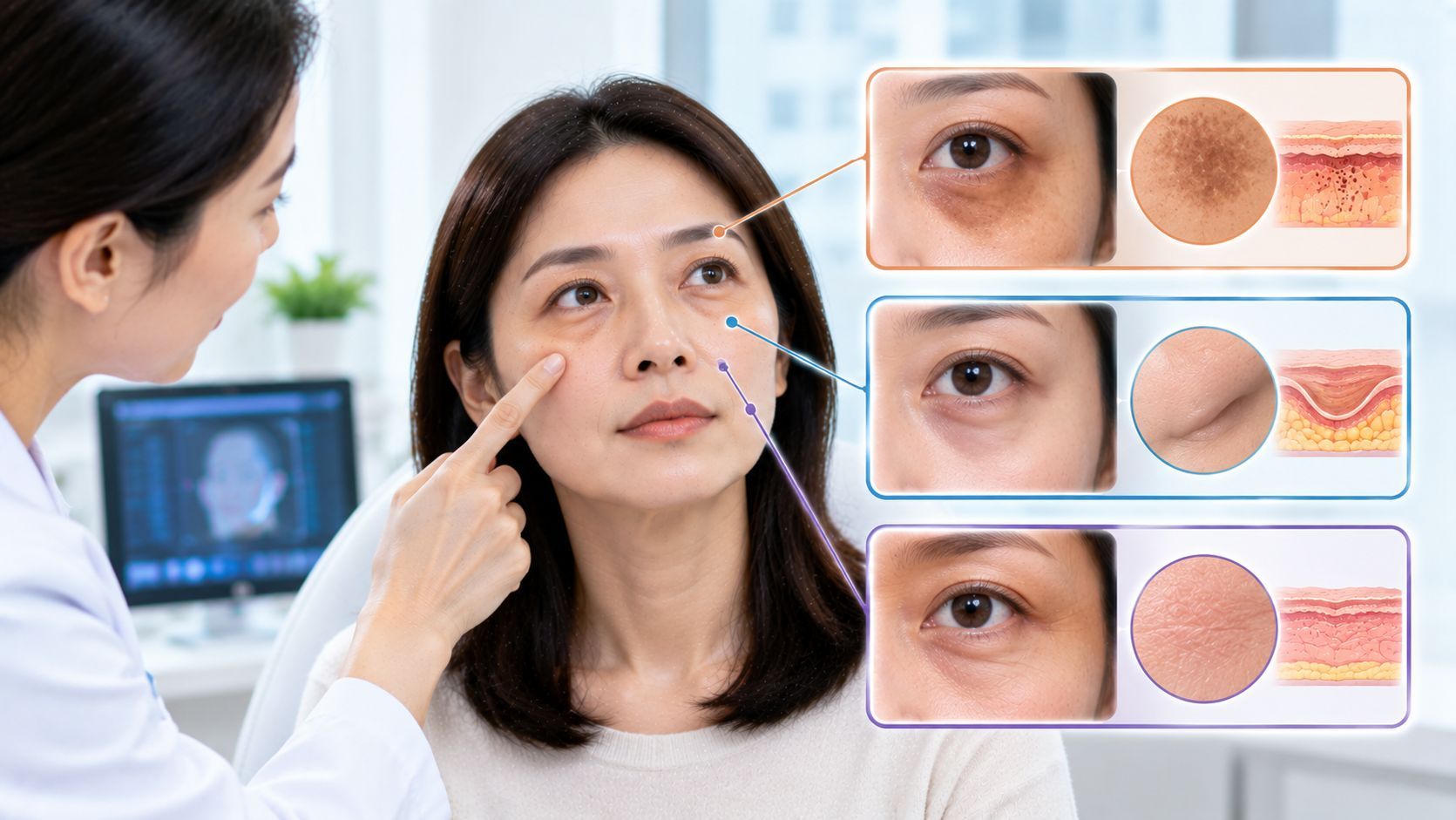
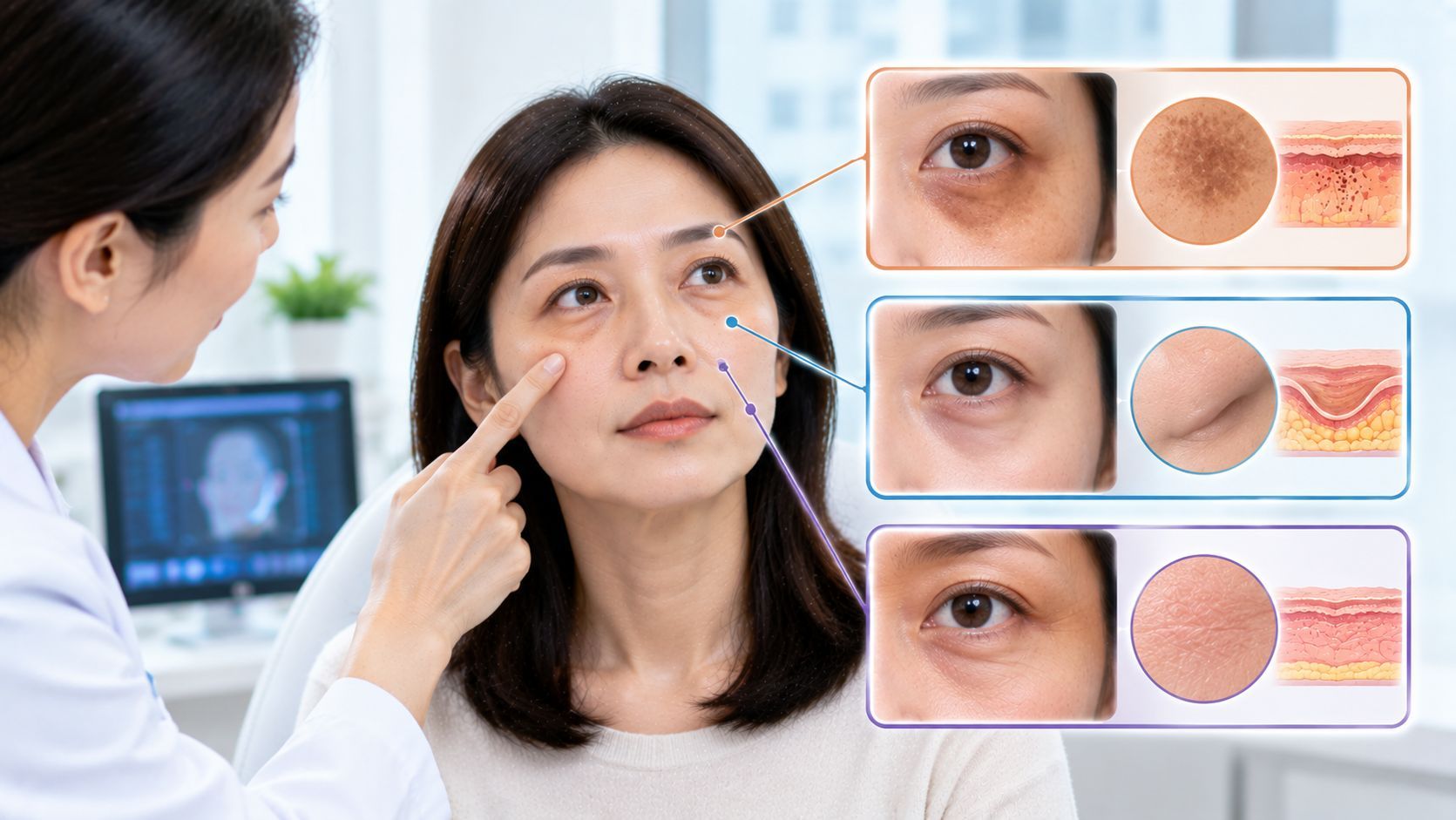
Acne scars themselves are caused by changes in the skin's structure after inflammation. Darker skin can also develop persistent pigmentation after that inflammation has healed.
This means you may have two separate problems:
- Structural acne scars — depressions, indentations, or uneven texture
- Pigmentary changes — brown or dark marks left after acne
These require different strategies.
A treatment that improves scar depth may not remove pigmentation. Similarly, aggressively treating brown marks will not necessarily correct a depressed rolling or boxcar scar.
Which Acne-Scar Treatments May Be Considered?
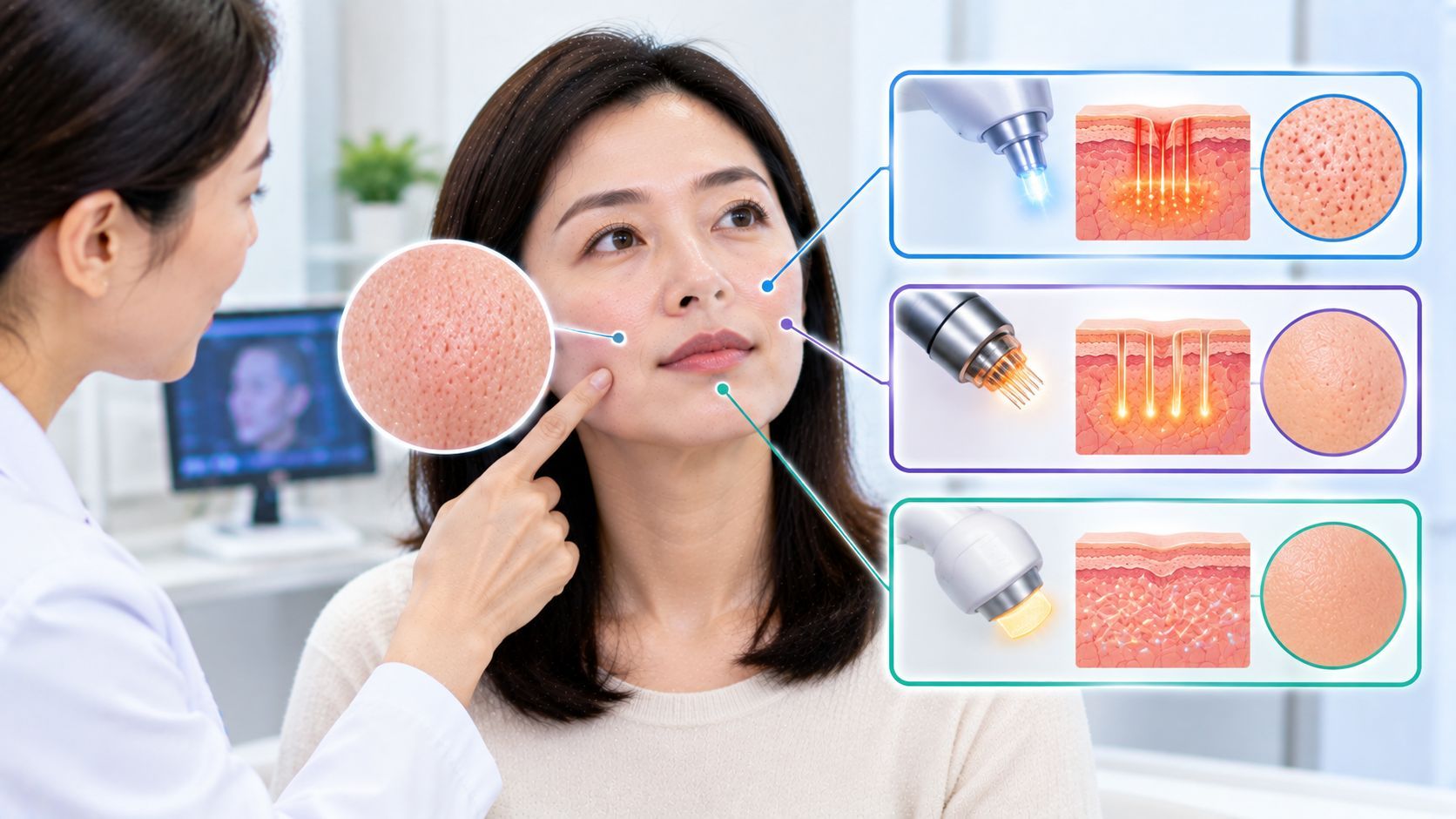
Microneedling
Microneedling uses fine needles to create controlled micro-injuries that stimulate skin remodeling.
One advantage is that the treatment does not rely on a laser beam being absorbed by epidermal melanin. The American Academy of Dermatology describes microneedling as a treatment that can be used for acne scars and notes that it is safe for people with all skin tones.
However, “safe for all skin tones” does not mean “no risk.”
Temporary redness, swelling, irritation, and pigmentary changes can still occur. Treatment depth and intensity should be adjusted according to the patient and scar type.
Microneedling may be particularly useful for selected shallow or moderate textural scars.
RF Microneedling
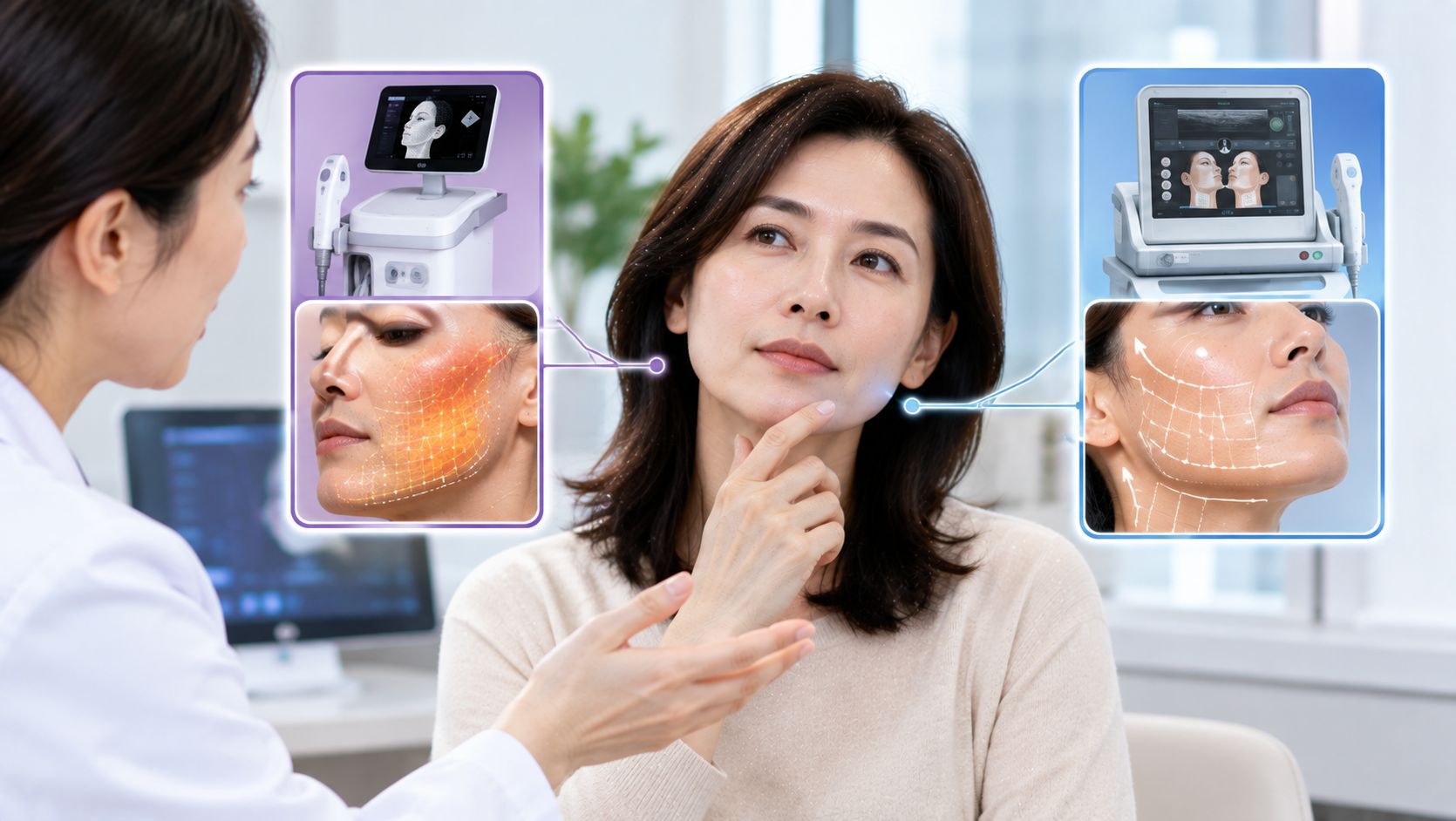
RF microneedling combines controlled needle penetration with radiofrequency energy delivered beneath the skin.
Because much of the energy is delivered below the epidermis, it can be an attractive option for some patients with darker skin who are concerned about surface pigment changes.
However, RF microneedling still produces thermal injury. Excessive energy, inappropriate depth, or poor technique can cause burns or pigmentation problems.
It should therefore not automatically be considered risk-free for darker skin.
Fractional Picosecond Laser
Fractional picosecond laser treatment is another option that has been studied for acne scars in Asian skin.
Research involving a 1064-nm picosecond laser with a fractional microlens array reported improvement in atrophic acne scars among Asian patients with Fitzpatrick III–IV skin, although temporary PIH occurred in some treatment sessions.
A meta-analysis of fractional picosecond lasers also found that they can improve acne scars, with a lower PIH incidence than some other fractional laser approaches in the studies analyzed.
This makes fractional Pico a treatment worth discussing, but the exact wavelength, device, and settings remain important.
Subcision
Subcision is fundamentally different from laser resurfacing.
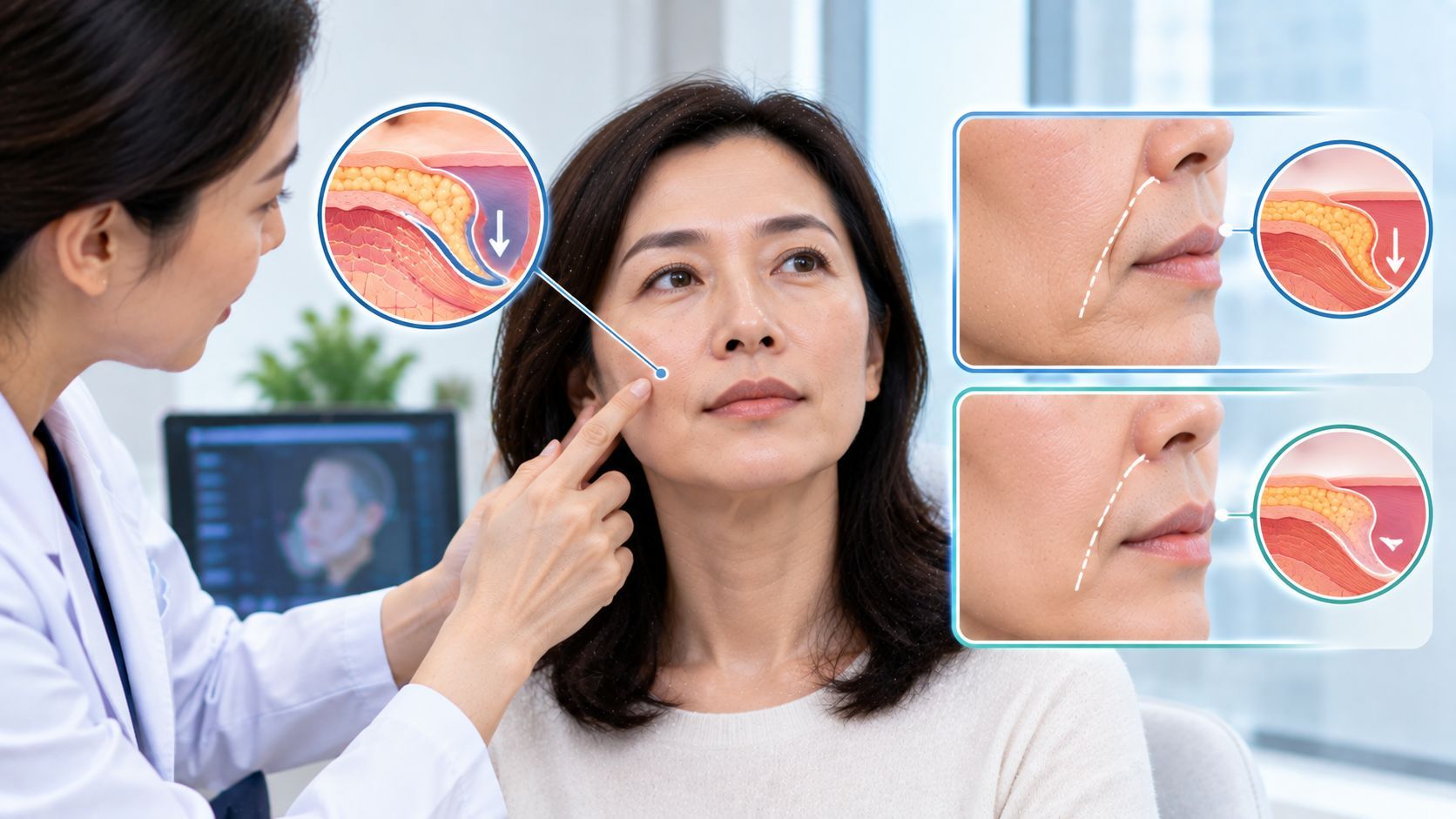
A needle or cannula is placed beneath a depressed scar to release fibrous bands that pull the skin downward.
It can be particularly relevant for rolling scars.
Because it does not intentionally resurface the entire epidermis, it may be useful when minimizing widespread pigmentary injury is a priority.
However, bruising, swelling, bleeding, infection, and temporary pigmentation changes are possible.
Subcision also does not treat every acne-scar type equally well.
TCA CROSS
TCA CROSS uses a high-concentration trichloroacetic acid application specifically within selected acne scars, particularly ice-pick scars.
It can be useful for appropriately selected scars, but because it deliberately produces a localized chemical injury, PIH is an important consideration in darker skin.
This is a procedure where precision matters considerably. It should not be treated like a general facial peel.
What About CO₂ Laser?
Fractional CO₂ laser can produce significant improvement in acne scarring, but darker skin requires greater caution.
Ablative laser resurfacing creates substantial thermal injury and inflammation. These effects can increase the risk of PIH and, in some cases, hypopigmentation or scarring.
Reviews of fractional non-ablative laser treatment in darker phototypes generally emphasize the favorable safety considerations of non-ablative approaches compared with more aggressive ablative resurfacing.
This does not mean CO₂ laser is automatically inappropriate. It means that the potential benefit must be balanced against pigmentary risk, particularly if you already develop dark marks easily.
How Does Your Acne-Scar Type Change the Treatment?
Rolling Scars
Rolling scars often result from fibrous attachments beneath the skin.
Possible treatments may include:
- Subcision
- Subcision combined with another procedure
- Selected collagen-remodeling treatments
Laser alone may not release the underlying tethering.
Boxcar Scars
Boxcar scars have relatively defined edges and can vary significantly in depth.
Depending on the scar, possible approaches include:
- Microneedling
- Fractional laser
- RF microneedling
- Combination treatment
Ice-Pick Scars
Ice-pick scars are narrow and deep.
Possible options can include:
- TCA CROSS
- Focal surgical techniques in selected cases
- Combination treatment
Broad resurfacing may not be the most logical way to address a very deep, narrow scar.
What If You Also Have Dark Acne Marks?
This is extremely important.
If you are prone to PIH, your dermatologist may want to control active acne and pigmentation before performing an aggressive scar procedure.
Otherwise, you could improve the scar structure while simultaneously creating new pigmentation.
Your treatment plan might therefore address:
- Active acne
- Inflammation
- Existing pigmentation
- Structural scars
- Long-term prevention of new acne
The order can matter.
Does Darker Skin Mean You Should Avoid Lasers Entirely?
No.
The goal is to choose an appropriate laser and treatment intensity rather than eliminating lasers altogether.
For example, some non-ablative fractional and picosecond approaches have been studied in darker or Asian skin types.
The risk depends on:
- Wavelength
- Energy
- Pulse duration
- Treatment density
- Number of passes
- Cooling
- Skin condition
- Recent sun exposure
- PIH history
- Operator technique
What If I Develop PIH Very Easily?
Tell your dermatologist before treatment.
Don't simply say, “My skin is dark.”
Instead, explain your actual history:
“Every time I get acne or an injury, the area becomes dark afterward.”
Also mention if you have previously developed pigmentation after:
- Laser
- Microneedling
- Waxing
- Chemical peels
- Burns
- Injections
This information can influence treatment selection and intensity.
Can a Test Spot Help?
For patients with significant pigmentary concerns, a dermatologist may sometimes consider a small test area before treating a larger region.
This can provide additional information about how your skin responds to a particular treatment protocol.
However, a test spot does not guarantee that a full treatment will be complication-free.
Delayed PIH can also occur, so the response needs to be monitored over time.
What Should You Ask a Korean Dermatologist?
If you are visiting Seoul for acne-scar treatment, consider asking:
- What type of acne scars do I have?
- What Fitzpatrick skin type do you consider me?
- Do I have a high risk of PIH?
- Would microneedling be appropriate for my scars?
- Would RF microneedling or fractional laser be preferable?
- Would subcision help if my scars are tethered?
- Should my pigmentation be treated before scar resurfacing?
- Would you recommend a test spot?
- How much downtime should I expect?
- What should I do if darkening develops afterward?
A good treatment plan should explain why a particular procedure matches your scar structure and skin characteristics.
Acne-Scar Treatment Comparison for Darker Skin
TreatmentPotential rolePigmentation considerationMicroneedlingSelected shallow/moderate scarsGenerally favorable, but PIH remains possibleRF microneedlingTexture and some deeper scarsHeat and energy settings require careFractional PicoSelected atrophic scarsWavelength and settings matterSubcisionEspecially rolling/tethered scarsLess surface resurfacing, but bruising/PIH possibleTCA CROSSSelected ice-pick scarsPIH risk requires careful techniqueNon-ablative fractional laserTexture/scarringOften considered more conservatively than ablative resurfacingFractional CO₂More significant resurfacingGreater caution in darker skin
What About Combining Treatments?
Combination treatment can sometimes address different components of acne scarring more effectively.
For example, a dermatologist may consider treating tethering with subcision and texture with another procedure.
But more treatment is not automatically better.
Combining several inflammatory procedures in one session may increase swelling, irritation, recovery time, and potentially PIH.
For darker skin, a staged treatment plan may sometimes be preferable to performing everything aggressively at once.
Conclusion
Darker skin can be treated for acne scars, but the safest approach is usually the one that matches the scar type while minimizing unnecessary inflammation.
Microneedling, appropriately selected RF microneedling, fractional picosecond treatments, subcision, and certain non-ablative lasers can all have roles. More aggressive ablative resurfacing and strong chemical treatments require additional caution because of pigmentary complications.
Your history of PIH may be just as important as your skin tone. If you regularly develop dark marks after acne or minor injuries, tell your dermatologist before treatment.
For patients traveling to Seoul, the goal should not be to find the most powerful acne-scar treatment. It should be to develop a treatment plan that addresses your specific scar structure and pigmentation risk while allowing enough time for recovery.
FAQs
What is the safest acne-scar treatment for dark skin?
There is no single treatment that is safest for everyone. Microneedling, selected RF microneedling, subcision, and certain non-ablative or picosecond treatments may be considered depending on the scar type and PIH risk.
Can dark skin get fractional laser for acne scars?
Yes, selected fractional lasers can be used in darker skin, but treatment parameters and laser type are important. Non-ablative approaches may be considered when reducing pigmentary risk is a priority.
Is RF microneedling safer than CO₂ laser for dark skin?
They have different risk profiles. RF microneedling may be an alternative for some patients, but it still delivers thermal energy and can cause pigmentary complications if used too aggressively.
Can subcision cause hyperpigmentation?
It can. Bruising and inflammation following subcision may sometimes contribute to temporary pigmentation, particularly in patients predisposed to PIH.
Should I treat acne marks before acne scars?
Often, the dermatologist will consider both problems together. If active acne or significant inflammation is present, controlling it may be important before aggressive scar treatment.
Can acne scars disappear completely?
Most acne-scar treatments aim for improvement rather than complete removal. Results depend heavily on scar type, depth, skin characteristics, and the treatment strategy.