Why Did My Skin Look Amazing for Two Weeks After Treatment and Then Go Back to Normal?
Introduction
It can be frustrating when your skin looks smoother, brighter, tighter, or more youthful immediately after an aesthetic treatment, only for that improvement to seem to disappear after a week or two. This does not automatically mean the treatment failed. In many cases, the early “amazing” result is partly caused by temporary swelling, hydration, inflammation, skin plumping, or changes in light reflection rather than the final treatment effect.
Different treatments also have very different timelines. Some produce an immediate cosmetic change, while others depend on collagen remodeling or gradual tissue changes. For example, Ultherapy results are expected to develop gradually, with the manufacturer describing more meaningful results over approximately two to three months and continued visible improvement afterward.
If your skin looked excellent for two weeks and then returned to its previous appearance, the important question is what caused the early improvement and whether the treatment has actually had enough time to produce its intended effect.
Why Can Skin Look Better Immediately After Treatment?
Temporary swelling can create a smoother appearance
After injectable or energy-based procedures, mild swelling can temporarily change the contours of the face. This can make fine lines appear less noticeable and make certain areas look fuller or smoother.
Once the swelling disappears, your face may return closer to its normal appearance. That can feel like the treatment “stopped working,” even though the temporary post-treatment effect simply faded.
Swelling and other short-term reactions are documented after various nonsurgical aesthetic procedures, although the frequency and duration depend heavily on the treatment.
Hydration can create a temporary glow
Some treatments and post-treatment skincare routines can temporarily increase hydration or improve the surface appearance of the skin.
Hydrated skin reflects light differently, which can make it appear smoother, fresher, and more radiant. If that effect decreases over time, the skin may look less impressive even though some longer-term treatment process may still be developing.
Inflammation can temporarily change texture
Certain procedures intentionally create a controlled skin response. Microneedling and some energy-based treatments, for example, can activate inflammatory and repair pathways followed by tissue remodeling.
The early appearance and the eventual remodeling result are therefore not necessarily the same thing.
Some Treatments Need More Than Two Weeks
One of the biggest mistakes is judging every cosmetic treatment on the same timeline.
Laser and resurfacing treatments
Laser procedures can produce changes in texture and appearance during healing, but the final result depends on the specific laser, treatment depth, skin condition, and healing process.
If the initial glow fades after a couple of weeks, that does not necessarily mean the eventual result has disappeared. The appropriate evaluation point depends on the specific laser and treatment intensity.
RF and RF microneedling
Radiofrequency-based treatments can produce temporary redness or swelling, while longer-term changes may develop through tissue remodeling.
A 2026 systematic review of radiofrequency microneedling found improvements in facial texture and tightening across the studies reviewed, while common adverse effects such as redness and edema were generally mild and temporary.
This means the appearance during the first few days or weeks should not automatically be treated as the final outcome.
Ultherapy and other ultrasound treatments
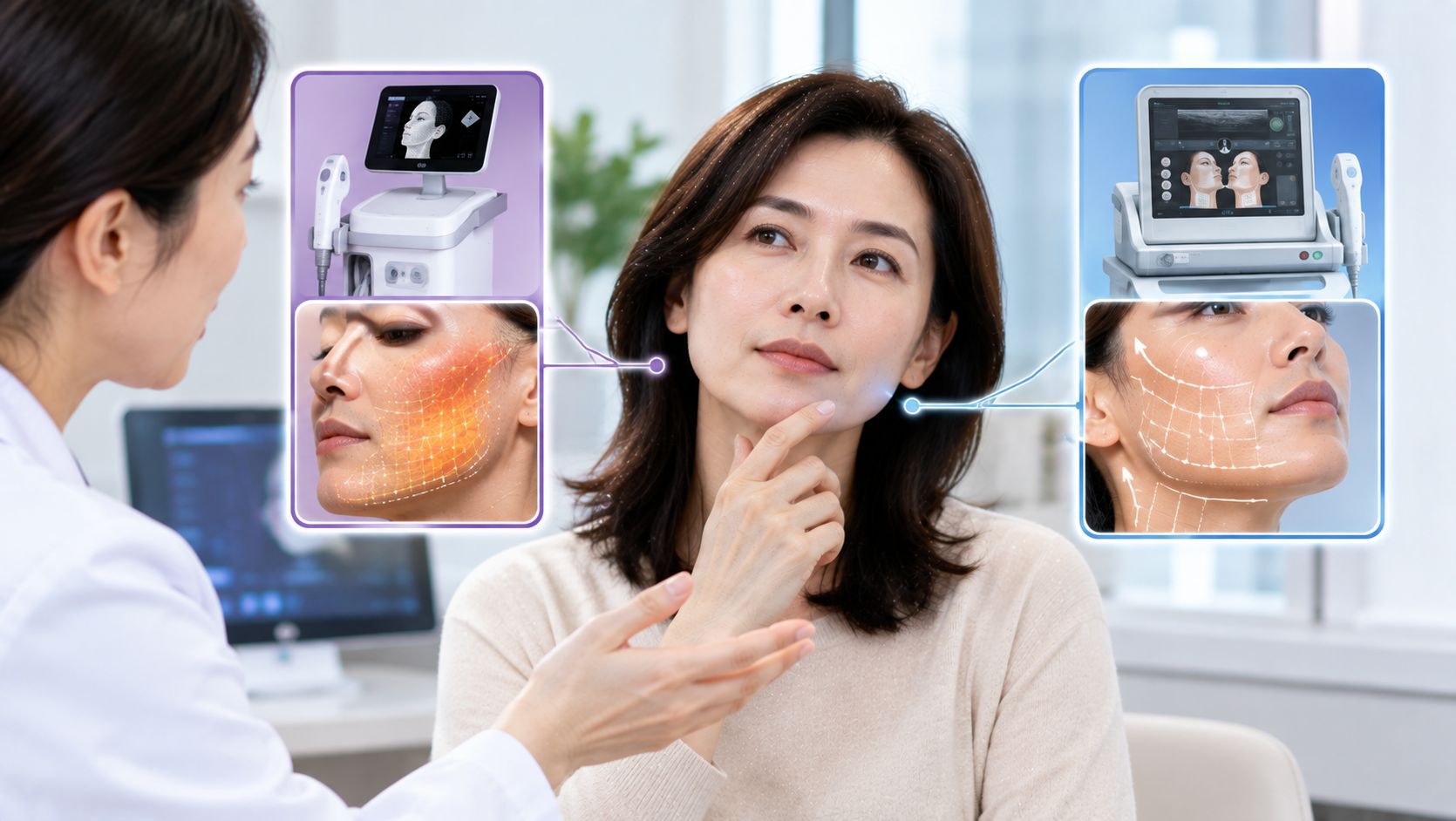
Ultrasound-based skin tightening is another example where patience can be important. Ultherapy's manufacturer describes an initial lift in some patients but states that the more complete result develops over approximately two to three months as new collagen and elastin develop.
Its published before-and-after examples also commonly evaluate patients at around 60, 90, and 180 days rather than only a week or two after treatment.
Therefore, an early improvement followed by a less dramatic appearance at two weeks does not necessarily represent the final result.
What If the Treatment Really Did Wear Off Quickly?
Sometimes the explanation is simpler: the treatment produced a modest effect, and the temporary component was much more noticeable than the lasting effect.
This can happen when:
- The original skin concern was more significant than the treatment could address.
- The treatment mainly improved skin quality but did not correct structural volume loss.
- Skin laxity was too advanced for a non-surgical procedure to create a dramatic lift.
- The treatment required multiple sessions.
- The selected treatment was not the best match for the primary concern.
- Expectations were based on unusually strong before-and-after photographs.
- Your skin returned to its baseline after temporary swelling or hydration subsided.
For collagen-stimulating procedures, gradual improvement is common rather than an immediate dramatic transformation. Injectable collagen biostimulators, for example, are designed around gradual changes in firmness, elasticity, and contour, although evidence and protocols vary substantially between products.
How Can You Tell Whether Your Treatment Is Still Working?
Instead of relying only on the mirror, compare your skin systematically.
Take standardized photographs
Use:
- The same room
- Similar lighting
- The same camera
- The same facial expression
- The same distance
- The same angle
- No makeup when possible
Take photographs before treatment and at several appropriate follow-up points.
This can reveal subtle improvements that are difficult to notice when looking at yourself every day.
Compare the original treatment goal
Ask what you actually wanted to improve.
Was it:
- Fine lines?
- Skin texture?
- Pores?
- Pigmentation?
- Facial laxity?
- Volume loss?
- Acne scars?
- Dullness?
- Hydration?
A treatment can improve one of these concerns while having little effect on another.
For example, improving skin texture does not necessarily restore lost cheek volume, while tightening lax skin does not necessarily correct hollowing.
Should You Repeat the Treatment Immediately?
Usually, it is better to understand the result before automatically repeating or adding another procedure.
First determine:
- What treatment was performed?
- What product or device was used?
- What settings or amount were used?
- What was the original problem?
- How long has it been since treatment?
- What result were you expecting?
- What result is actually visible now?
Repeating treatment too quickly can make it difficult to determine what is helping and what may be causing unwanted effects.
A clinician should assess the treatment-specific timeline before deciding whether another session is appropriate.
Could Another Treatment Be More Appropriate?
Possibly, but this depends on the problem rather than simply the fact that your first treatment faded.
For example, someone primarily concerned with skin texture may need a different approach from someone with significant facial volume loss. Someone with mild laxity may be considered for an energy-based treatment, while substantial excess skin may require discussion of surgical options.
The goal should be to match the treatment to the underlying concern rather than continually adding procedures because an early glow disappeared.
What Should International Patients in Seoul Do?
If you are visiting Seoul for aesthetic treatment, keep a record of your procedure.
Ask the clinic for:
- Treatment name
- Device name and model
- Product name, if injectable
- Treatment date
- Areas treated
- Relevant settings or dosage information
- Before-treatment photographs
- Recommended follow-up timing
- Aftercare instructions
This information becomes particularly useful if you return home before the final result develops.
It also helps another dermatologist or aesthetic physician understand exactly what was performed if you need an assessment later.
When Should You Contact the Clinic?
A fading cosmetic improvement is usually different from a medical complication. However, contact your treating clinic promptly if you develop symptoms that are unexpected or worsening.
Depending on the procedure, concerning symptoms can include:
- Severe or increasing pain
- Significant swelling that does not improve
- Blistering or burns
- Signs of infection
- Significant skin discoloration
- New severe asymmetry
- Persistent numbness or weakness
- Vision changes after an injectable procedure
Urgent symptoms should be medically assessed rather than treated as a normal part of cosmetic recovery.
Conclusion
If your skin looked amazing for two weeks after treatment and then seemed to return to normal, it does not automatically mean the treatment failed.
The early improvement may have been caused partly by temporary swelling, hydration, inflammation, or skin-surface changes. Meanwhile, some treatments require weeks or months for their intended effects to become apparent. Ultherapy, for example, is specifically described as producing gradual collagen-related improvement over several months rather than an immediate final result.
Before repeating treatment, identify what actually changed, how long the treatment normally takes to work, and whether the original treatment was appropriate for your concern. Standardized photographs and a follow-up assessment can be much more useful than judging your appearance from day to day.
Frequently Asked Questions
Is it normal for skin to look better immediately after treatment and then worse?
It can happen. Temporary swelling, hydration, inflammation, and other short-term changes can make the skin look particularly good shortly after treatment. Their disappearance does not necessarily mean the underlying treatment effect has disappeared.
Does going back to normal after two weeks mean my treatment failed?
Not necessarily. Some treatments have gradual results that develop over several weeks or months. The correct evaluation period depends on the specific procedure.
Should I get another treatment if my results faded quickly?
Not automatically. First determine whether the initial improvement was temporary, whether the treatment has reached its expected result timeline, and whether the procedure matched your original concern.
Why does my skin sometimes look better after swelling goes down but then lose its glow?
Post-treatment hydration, swelling, and surface changes can temporarily improve the appearance of the skin. Once these effects resolve, the skin may look closer to baseline.
Can different treatments have different result timelines?
Yes. Injectables, lasers, RF treatments, ultrasound treatments, and collagen-stimulating procedures work through different mechanisms and therefore should not all be evaluated at the same time point.