My Skin Looks Great in the Morning and Tired at Night. Is There a Treatment for This?
Introduction
If your skin looks fresh and healthy when you wake up but appears dull, flat, dry, or tired by evening, you may wonder whether you need a treatment or whether something else is happening. This pattern is relatively common and does not necessarily mean your skin is aging rapidly.
Changes throughout the day can be influenced by dehydration, oil production, environmental exposure, facial movement, temperature, makeup, skin-barrier function, and temporary changes in fluid distribution. Sleep also gives the skin time away from many external factors, while the daytime exposes it to UV radiation, pollution, indoor heating or air conditioning, and repeated facial movement.
The best approach is usually to identify what changes during the day rather than immediately choosing an intensive cosmetic procedure.
Why Can Skin Look Better in the Morning?
Several factors can make the face appear fresher after sleep.
The Skin Has Had Time to Recover
During the night, the skin is generally exposed to fewer environmental stressors. There is no makeup, less UV exposure, and typically less contact with pollutants.
A consistent nighttime skincare routine can also support the skin barrier while you sleep.
Morning Facial Appearance Can Be Different
Fluid distribution changes while you are lying down. Some people temporarily look slightly fuller in the morning, while others may notice that their skin appears smoother or more hydrated.
These changes can make facial features and skin texture appear different without representing a permanent change.
Morning Lighting Can Be More Forgiving
The way you perceive your skin also depends on lighting.
Soft indoor morning light may minimize pores, fine lines, and texture. Strong overhead or side lighting later in the day can emphasize them.
Therefore, a dramatic difference between morning and evening does not necessarily mean your skin has physically deteriorated during the day.
Why Can My Face Look Tired by Evening?
Dehydration
Loss of water from the skin throughout the day can make fine lines and texture more noticeable.
Air conditioning, heating, wind, sun exposure, and low humidity can all contribute to increased dryness.
Oil and Sweat
As the day progresses, sebum and sweat accumulate on the skin. Makeup can mix with these substances and settle around pores or fine lines.
This can make the complexion look less smooth even when the underlying skin has not changed.
UV and Environmental Exposure
Daytime exposure to ultraviolet radiation and environmental pollutants can affect the skin over time.
Sunscreen is therefore important even if your main concern is maintaining a fresh appearance rather than preventing a specific skin condition.
Facial Movement
By evening, the face has gone through hours of smiling, talking, squinting, chewing, and other movements.
Expression lines may therefore look more noticeable temporarily.
Does This Mean My Skin Is Aging?
Not necessarily.
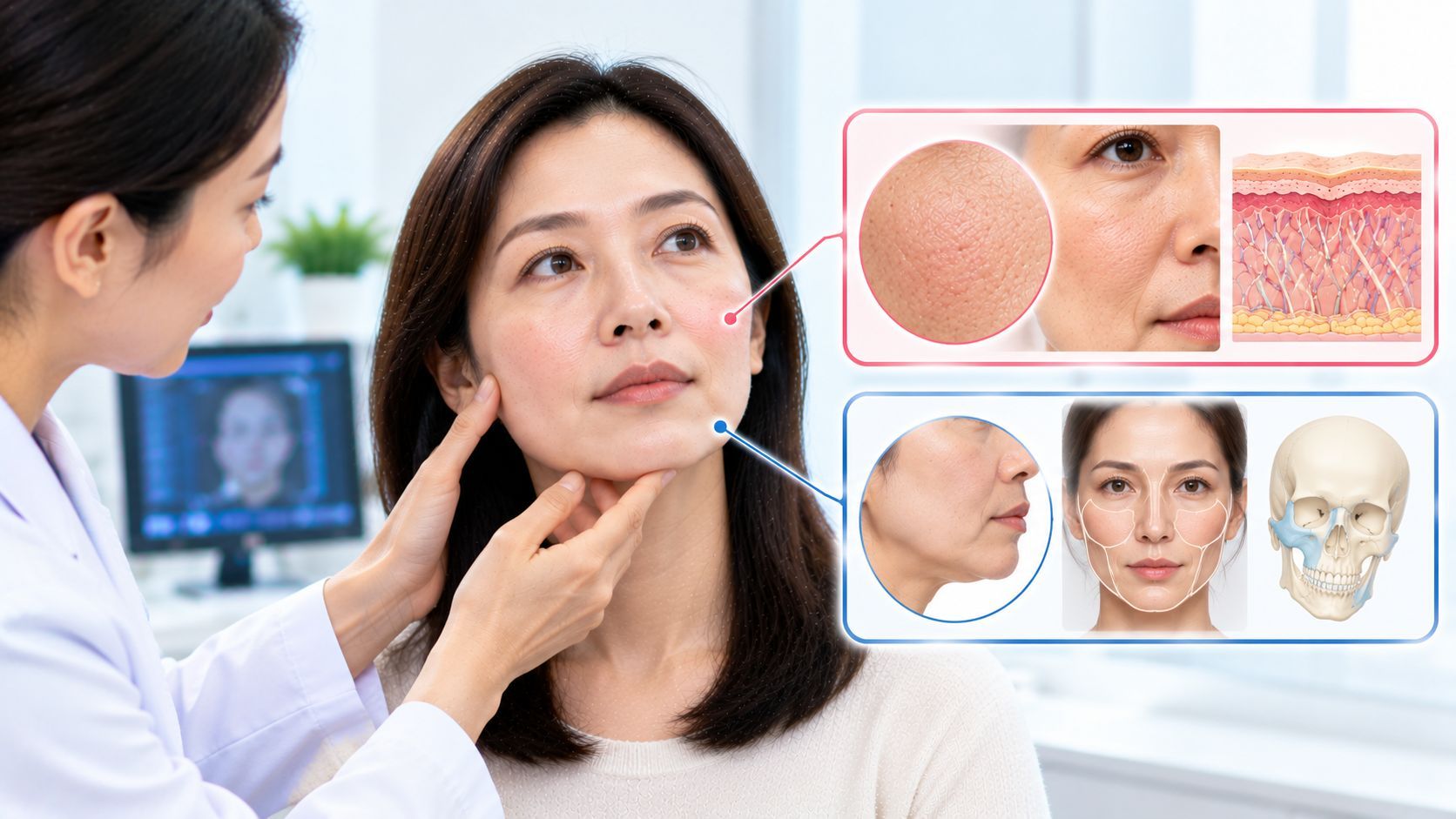
Aging can contribute to reduced hydration, collagen changes, and decreased skin resilience, but a morning-to-evening change by itself does not prove accelerated aging.
If your skin consistently becomes more dry, rough, or lined throughout the day, however, it may be worth assessing your skincare routine and skin barrier.
A dermatologist can also determine whether early skin-quality changes are contributing.
Could Dehydration Be the Main Problem?
Yes.
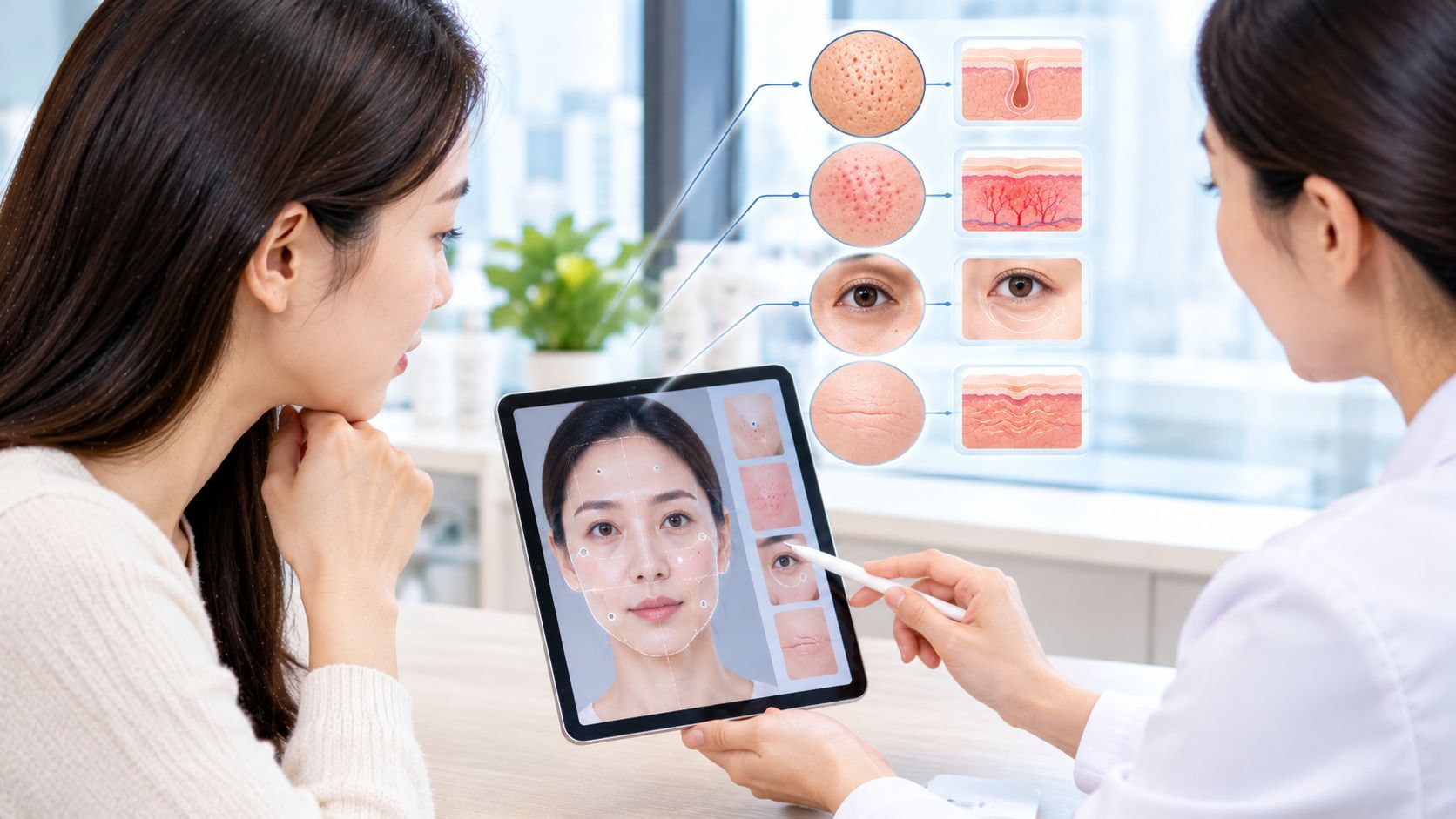
If your skin looks comfortable and smooth in the morning but becomes tight, crepey, or lined by evening, dehydration may be an important contributor.
Signs can include:
- Tightness
- Fine lines becoming more visible
- Rough texture
- Flaking
- Makeup settling into lines
- A less reflective complexion
Improving the skin barrier may therefore be more useful than immediately pursuing an injectable or energy-based treatment.
What Skincare Can Help?
A simple routine can help maintain a more consistent appearance throughout the day.
Morning
A practical routine may include:
- Gentle cleansing if needed
- Hydrating skincare
- Moisturizer appropriate for your skin type
- Broad-spectrum sunscreen
If your skin tolerates it, antioxidant skincare may also be considered.
Evening
Nighttime care can focus on:
- Gentle cleansing
- Moisturization
- Appropriate active ingredients
- Barrier support
If you use retinoids or exfoliating acids, introducing them gradually can help minimize irritation.
More products do not necessarily produce better skin.
Could a Skin Booster Help?
If the main concern is persistent dehydration, fine texture, or reduced skin quality, a dermatologist may consider a skin-quality injectable.
Some skin boosters are designed to improve hydration or other aspects of skin quality rather than significantly adding volume.
They may be useful when topical skincare is not sufficiently addressing the concern.
However, they are not an automatic solution for everyone whose skin looks tired at night. Injectable procedures carry risks such as swelling, bruising, infection, nodules, and other product- or technique-specific complications.
What About RF or Skin-Tightening Treatments?
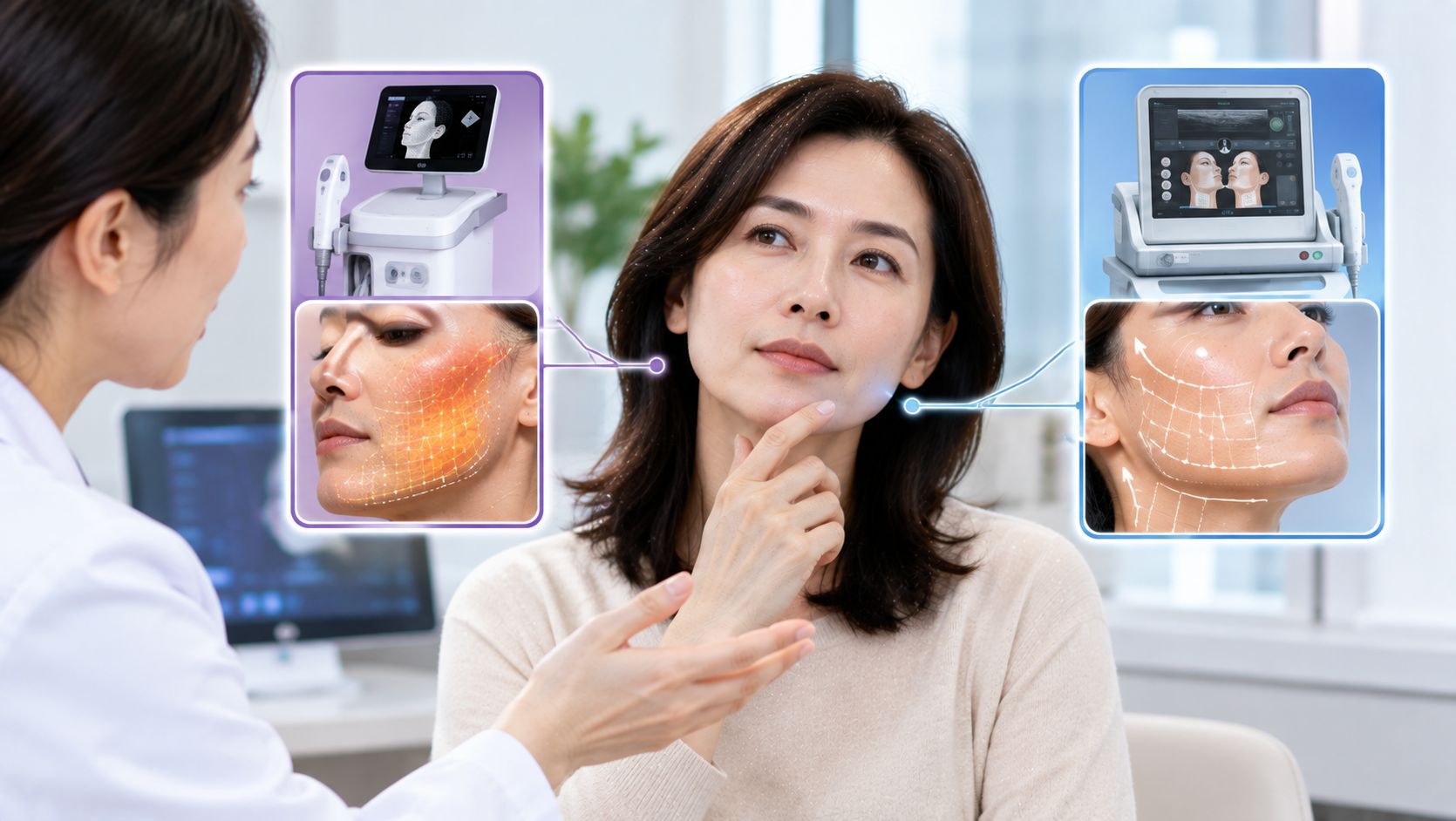
If the evening “tired” appearance is associated with gradual loss of firmness, energy-based treatments may be considered.
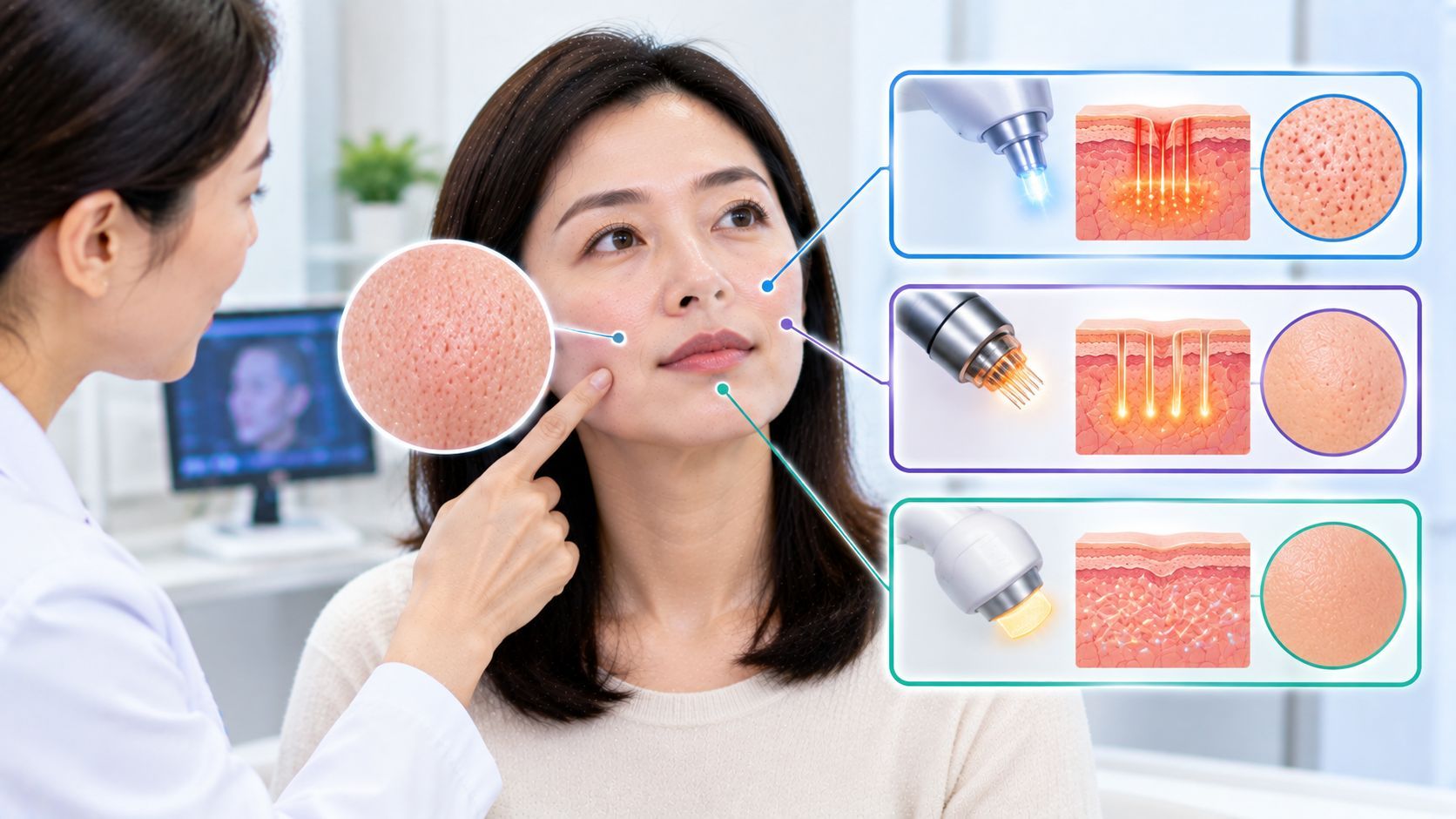
Depending on the individual, options can include:
- Radiofrequency
- Thermage
- Focused ultrasound
- Sofwave
- RF microneedling
These treatments aim to improve aspects of tissue remodeling and skin firmness.
They are more relevant when there is genuine laxity or reduced structural support, rather than simple daytime dehydration.
Can Laser Treatment Help?
Laser treatment may be useful when the problem involves persistent texture, pigmentation, or other structural skin-quality concerns.
However, laser treatment is not necessarily appropriate simply because your skin looks tired at the end of the day.
If the underlying issue is hydration or temporary oil and makeup buildup, resurfacing the skin may be unnecessary.
What If My Skin Looks Flat Rather Than Dry?
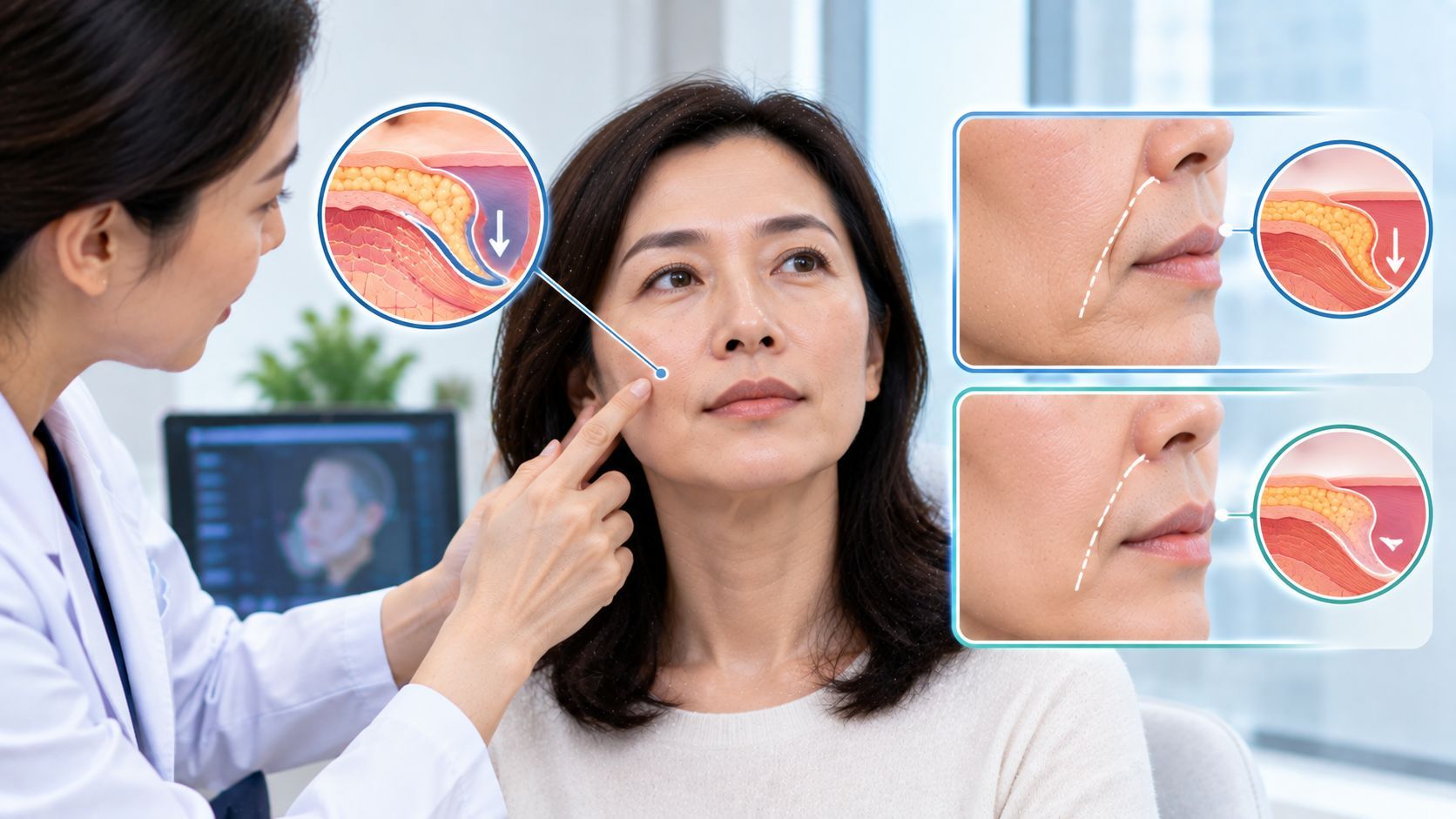
Some people describe their evening appearance as “flat” or “deflated” rather than dry.
This can be influenced by facial movement, lighting, temporary changes in fluid distribution, and natural facial anatomy.
It is important not to assume that a tired-looking face automatically needs filler.
Adding volume can change facial proportions, and it does not correct dehydration or surface texture.
If volume loss is actually present, a clinician can discuss whether carefully selected volume restoration is appropriate. But the cause should be established first.
Could Makeup Be Making My Skin Look Older?
Yes.
Foundation and concealer can settle into pores, fine lines, and areas of dryness as the day progresses. This can make skin look more textured or tired.
If the skin looks good before makeup but becomes noticeably uneven several hours afterward, the problem may partly involve:
- Product compatibility
- Excess powder
- Dehydrated skin
- Oil production
- Makeup application
- Sunscreen and foundation layering
In that situation, changing products or preparation may be more useful than a medical procedure.
How Can I Tell Whether I Need Treatment?
Try observing your skin over several days under reasonably consistent lighting.
Ask yourself:
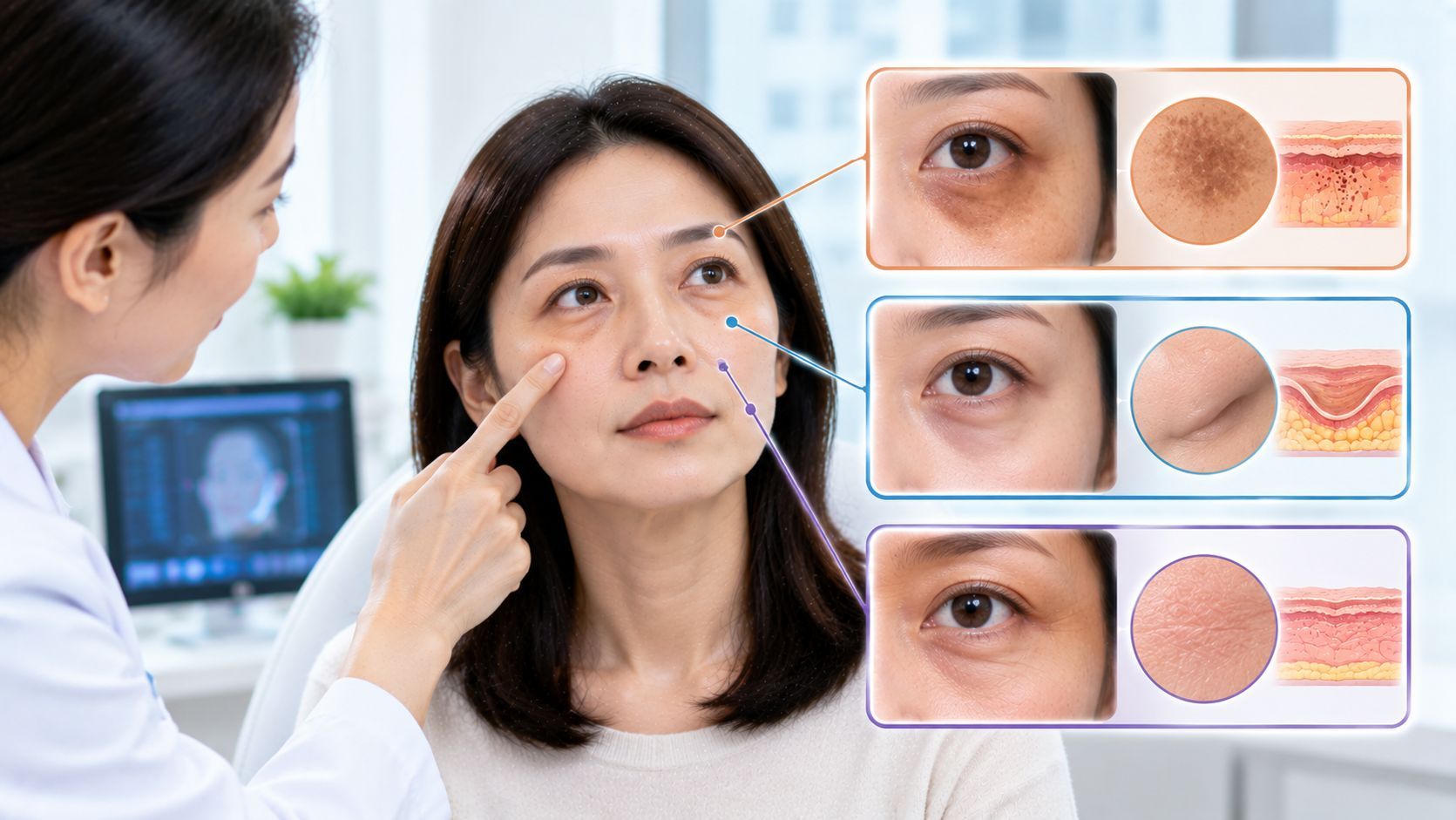
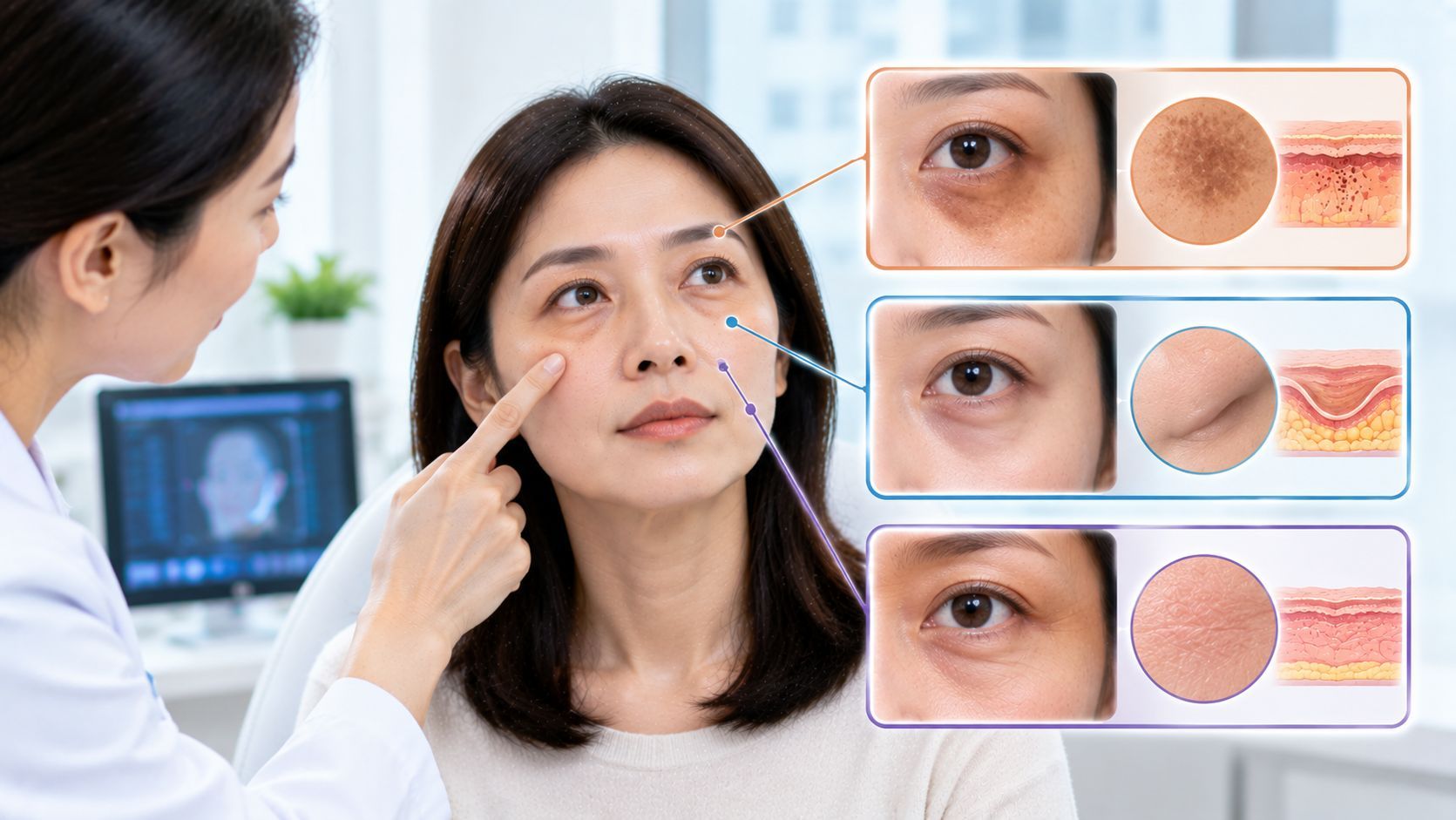
- Does my skin become dry or tight?
- Does oil accumulate around my nose and forehead?
- Does makeup settle into lines?
- Does my skin actually lose firmness?
- Do fine lines disappear again after cleansing and moisturizing?
- Does the change happen only under certain lighting?
If the appearance improves substantially after cleansing and moisturizing, a skincare or environmental factor may be more important than a structural skin problem.
When Should I Consider a Dermatology Consultation?
A consultation may be useful if the evening change is persistent and accompanied by:
- Progressive skin laxity
- Increasing fine lines
- Significant dryness
- Persistent roughness
- Pigmentation
- Acne scars
- Noticeable volume loss
- Changes that remain after cleansing and hydration
For international patients visiting Seoul, it is helpful to schedule consultation and treatment with enough time for any expected redness, swelling, peeling, or other recovery before flying home.
A Treatment Approach Based on the Cause
Main concernPossible approachDaytime dehydrationBarrier-focused skincareMakeup settlingSkincare and makeup adjustmentExcess oilAppropriate cleansing and oil-control careUneven texturePeel, laser or RF microneedling when appropriateEarly laxityRF, ultrasound or other tightening treatmentPersistent skin-quality concernsSelected skin boostersTrue volume lossCarefully planned volume restoration
These categories can overlap, so a combination may sometimes be appropriate.
Conclusion
If your skin looks great in the morning but tired by nighttime, the problem is often not that your skin suddenly ages during the day. Dehydration, environmental exposure, oil, makeup, facial movement, lighting, and temporary changes in the skin can all create a more tired appearance.
Start by determining whether the change is primarily related to hydration, surface texture, oil, makeup, or genuine loss of firmness. Simple barrier-focused skincare may be enough for some people. Others may benefit from carefully selected peels, skin-quality treatments, RF, ultrasound, laser, or other procedures when an underlying skin concern is present.
The goal should be to understand why your skin changes during the day before choosing a treatment.
FAQs
Why does my skin look better in the morning?
Overnight, the skin has less exposure to UV radiation, pollution, makeup, and other environmental factors. Hydration and fluid distribution can also temporarily affect appearance.
Why does my face look tired at night?
Dehydration, oil, sweat, makeup, environmental exposure, facial movement, and lighting can all make the skin look less fresh by evening.
Can skin boosters stop my face from looking tired at night?
They may improve hydration and certain aspects of skin quality in selected patients, but they will not correct every cause of daytime dullness.
Do I need Botox if my face looks tired by evening?
Not necessarily. Botox primarily affects muscle activity and is not a general treatment for dehydration, dullness, or daytime skin fatigue.
Can RF tightening help an evening sagging appearance?
If genuine mild skin laxity is contributing, RF or another tightening treatment may help gradually. It will not directly correct temporary dehydration or makeup-related changes.
Should I get filler if my face looks more tired at night?
Not automatically. A tired appearance can have many causes. Filler is most appropriate when actual volume deficiency has been identified and the treatment fits the person's facial proportions.