My Skin Looks Excellent Indoors but Terrible in Sunlight. What Treatment Targets Texture?
Introduction
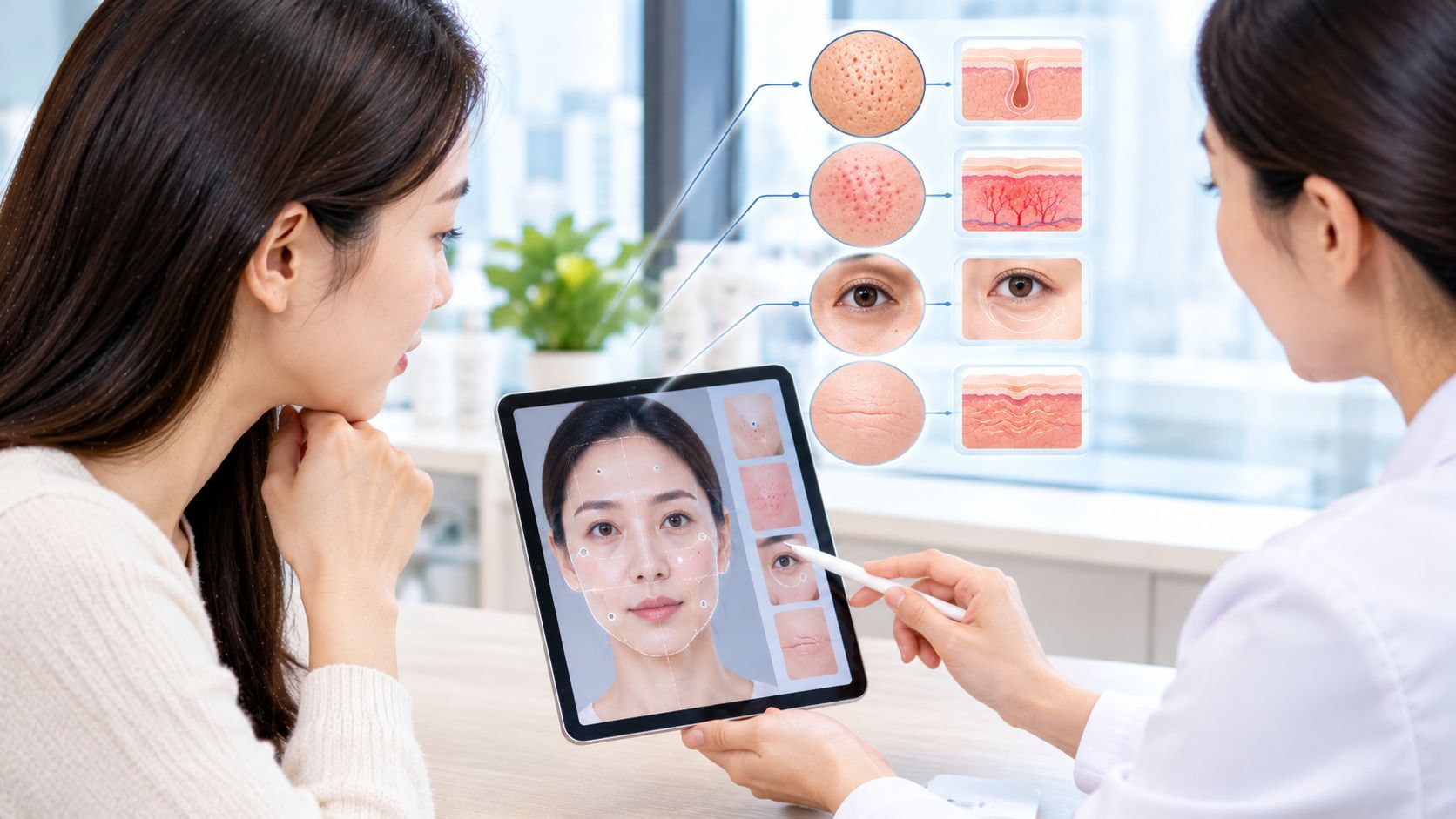
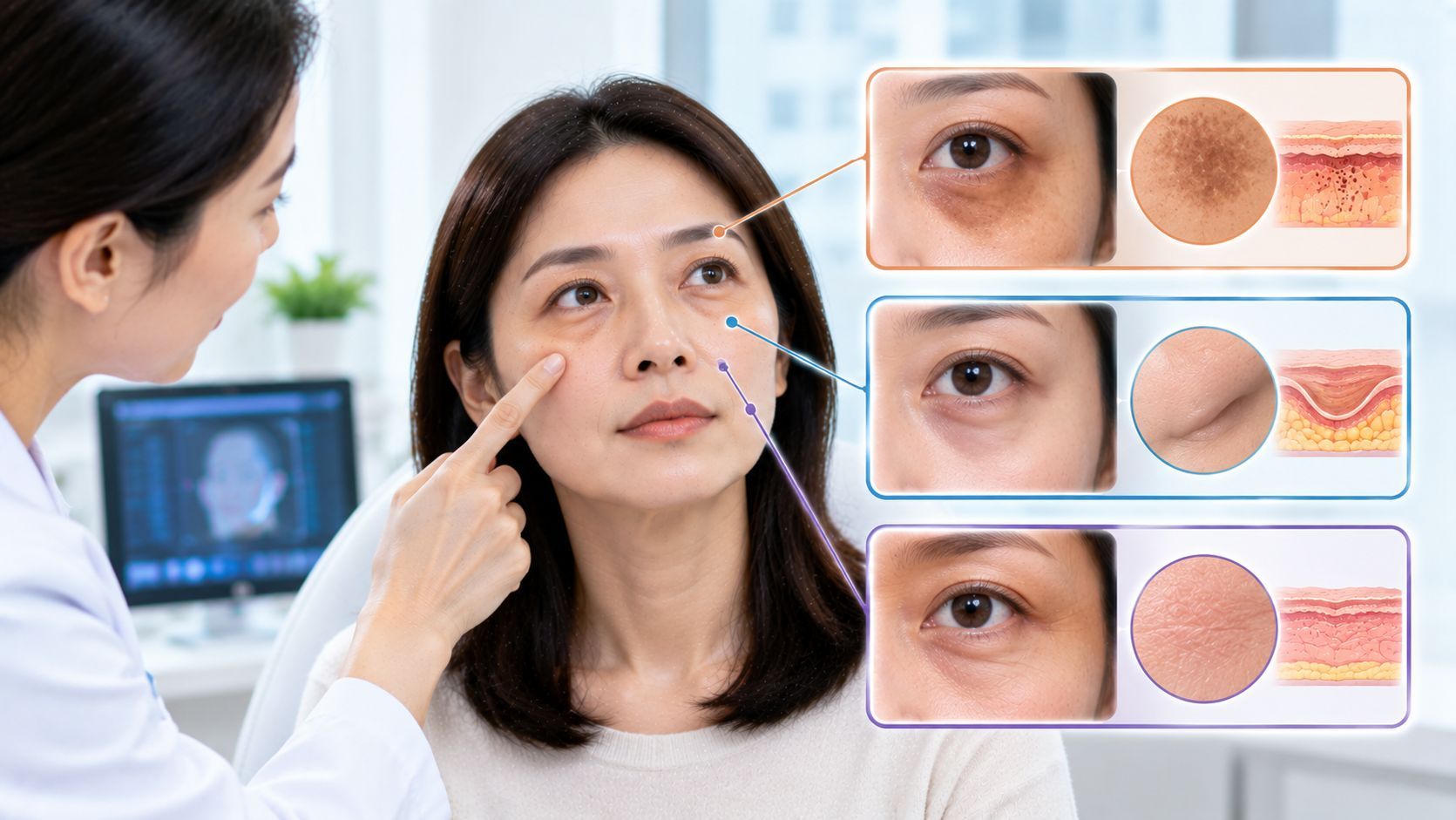
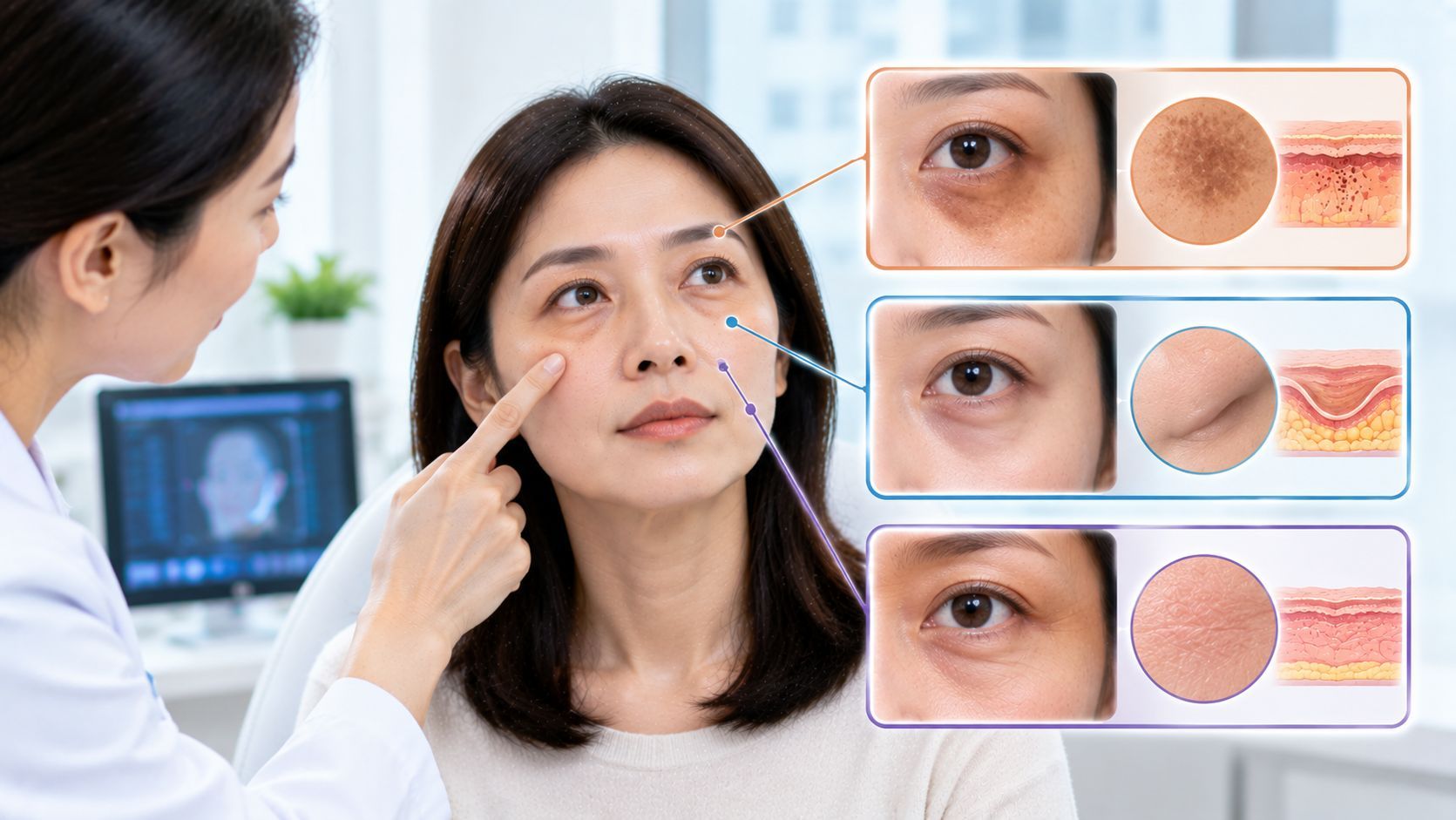
If your skin looks smooth and clear indoors but suddenly appears rough, uneven, or much older in direct sunlight, you may not actually have a dramatic skin problem. Strong sunlight reveals details that softer indoor lighting can hide, including pores, fine lines, shallow acne scars, uneven texture, dryness, and subtle changes in skin firmness.
Sunlight also creates stronger shadows across the face. This can make tiny depressions and surface irregularities look much deeper.
The right treatment therefore depends on what sunlight is revealing. If the main issue is texture, treating pigmentation alone may not produce the improvement you are looking for.
Why Does Sunlight Make Skin Texture Look Worse?
Indoor lighting is often relatively soft and diffused. Direct sunlight creates stronger highlights and shadows.
These shadows can emphasize:
- Enlarged pores
- Fine lines
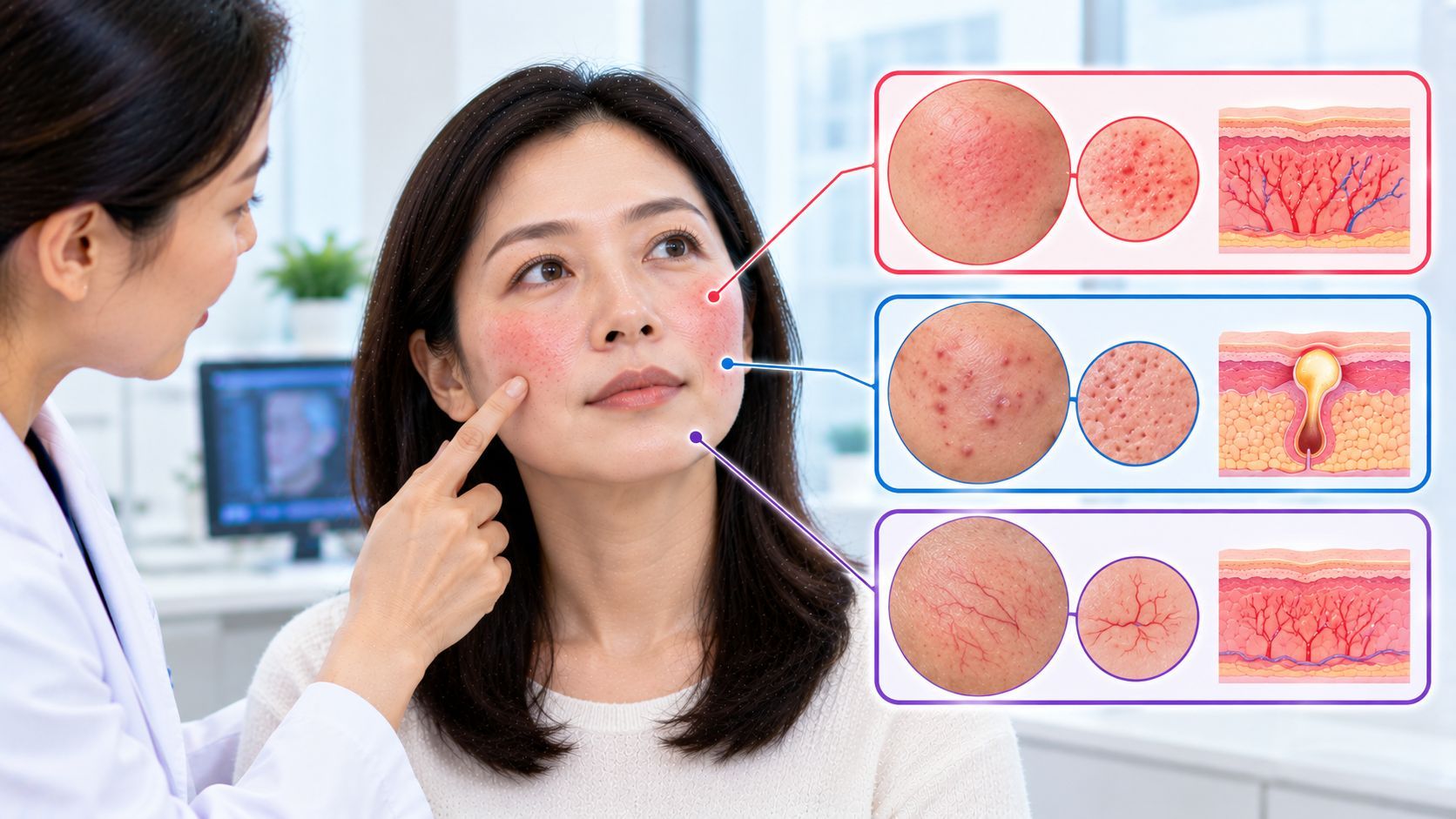
- Acne scars
- Rough surface texture
- Dehydrated skin
- Crepey areas
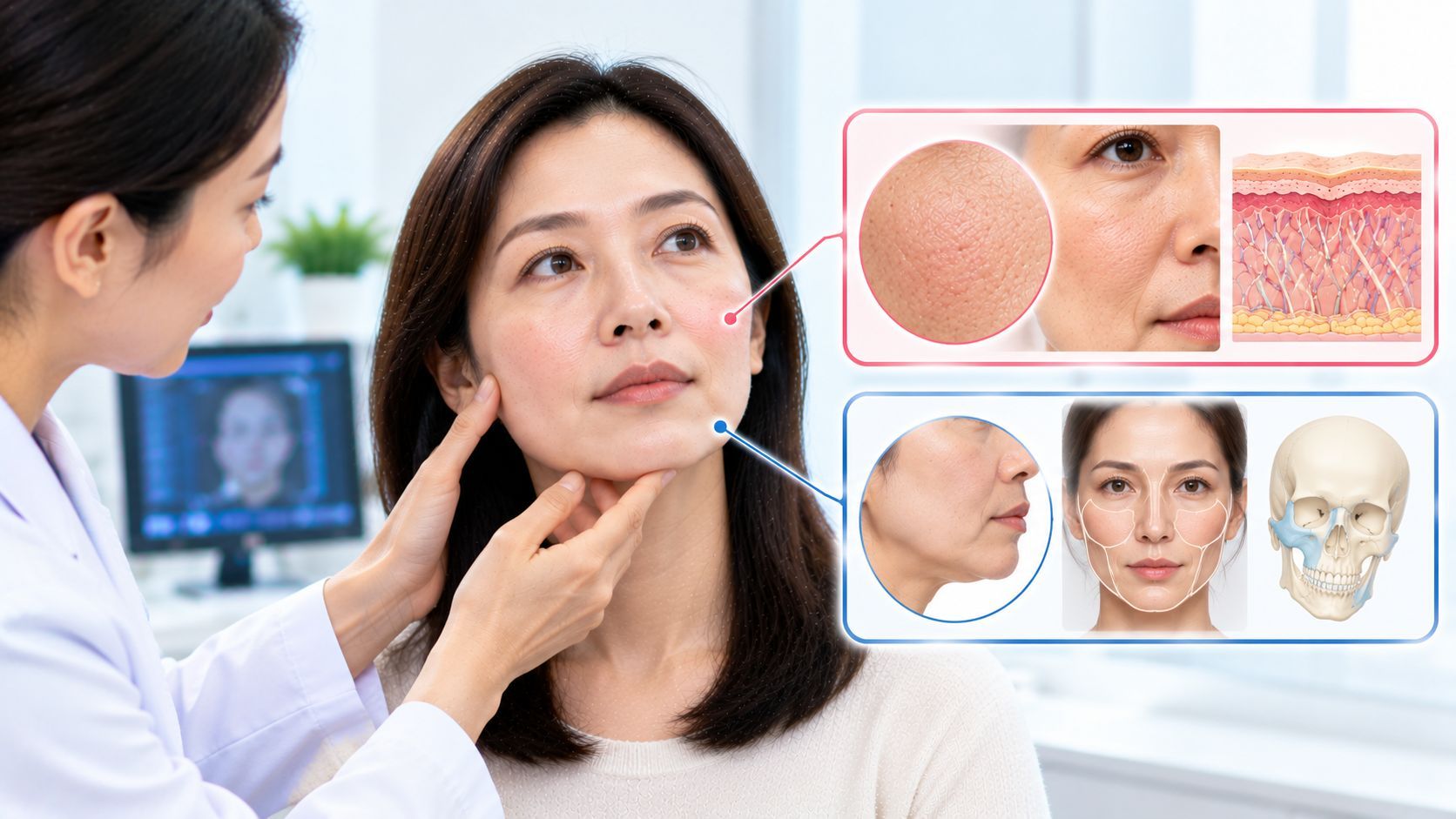
- Early skin laxity
- Facial volume changes
This is why someone may think, “My skin looks perfect in the bathroom mirror, but terrible outside.”
It does not necessarily mean your skin suddenly became worse.
Strong Light Reveals Surface Irregularities
A completely flat surface reflects light more consistently.
When the skin contains tiny depressions or raised areas, light reflects differently from each part of the surface. Strong directional sunlight makes these differences more obvious.
Even normal pores can therefore look dramatic under harsh lighting.
Sunlight Can Reveal Fine Lines
Fine lines may be almost invisible under soft indoor lighting but become obvious when sunlight hits the face at an angle.
This is particularly common around:
- Eyes
- Mouth
- Forehead
- Cheeks
The issue may involve normal facial movement, dehydration, collagen changes, or photoaging.
First Determine Whether It Is Texture or Lighting
Before scheduling a procedure, examine your skin under several types of lighting.
Compare:
- Natural indirect daylight
- Direct sunlight
- Soft indoor lighting
- Overhead lighting
- Bare skin versus makeup
If your skin looks relatively even under most conditions and only appears dramatically textured in harsh sunlight, aggressive treatment may not be necessary.
But if the texture remains visible across different lighting conditions, there may be a genuine skin-quality issue worth addressing.
What Types of Texture Can Sunlight Reveal?
Enlarged Pores
Pores are especially noticeable when light creates shadows around their openings.
If they are also visible on bare skin under ordinary lighting, pore-focused skincare or professional treatment may be considered.
Acne Scars
Shallow rolling or boxcar scars can become much more obvious in direct sunlight.
Different scar types require different treatments.
Possible approaches may include:
- Microneedling
- RF microneedling
- Fractional laser
- Subcision
- TCA CROSS for selected ice-pick scars
- Combination treatment
There is no single acne-scar procedure that works equally well for every scar type.
Fine Lines and Crepey Texture
Sunlight may expose subtle skin thinning and fine surface lines that are difficult to see indoors.
This can be related to age, cumulative UV exposure, dehydration, or reduced collagen and elastin support.
Early Laxity
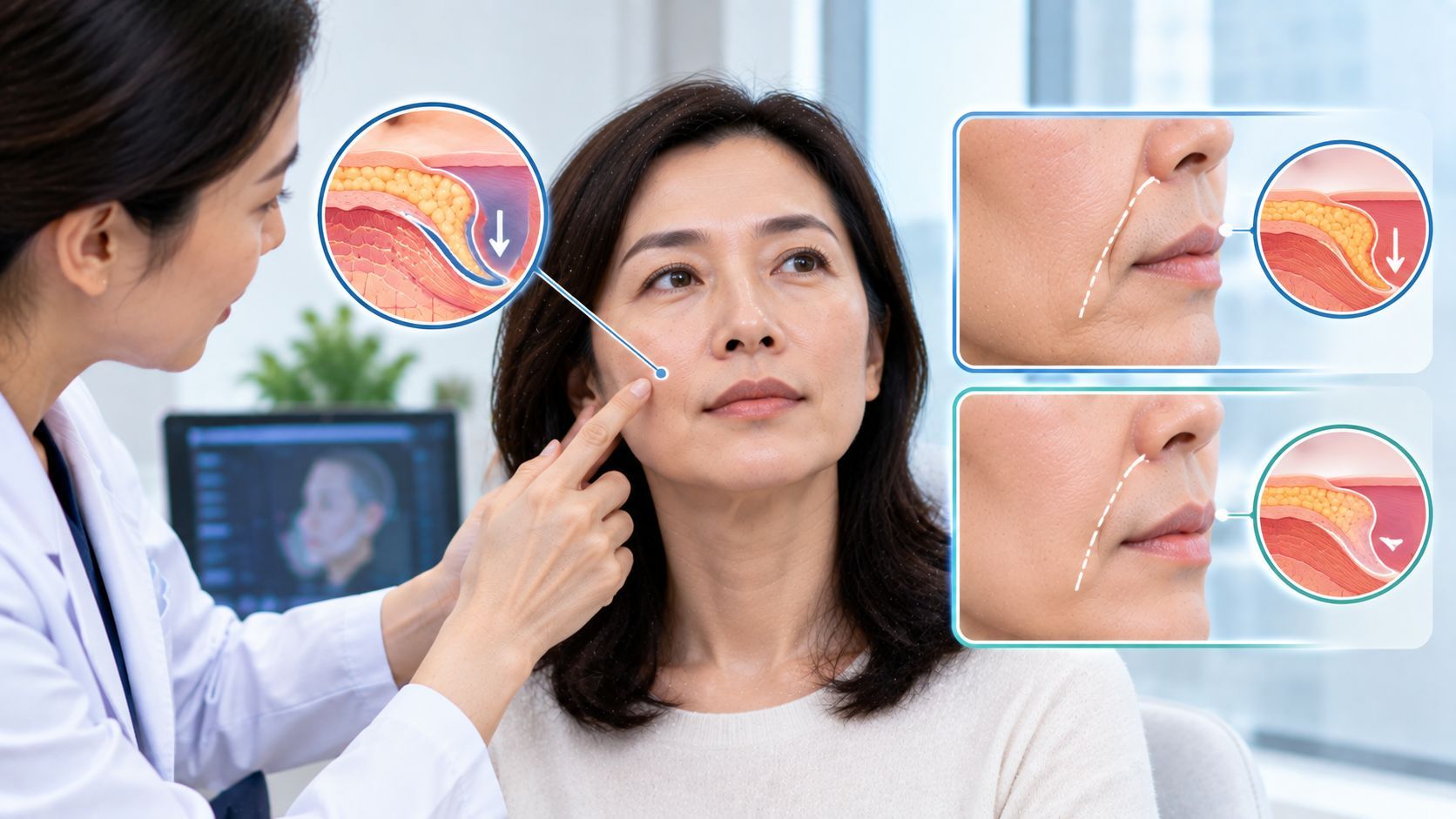
Loss of firmness can create small folds and shadows that become more visible in strong light.
In this situation, the concern is not purely surface texture. The underlying support of the skin may also be changing.
What Treatments Can Improve Facial Texture?
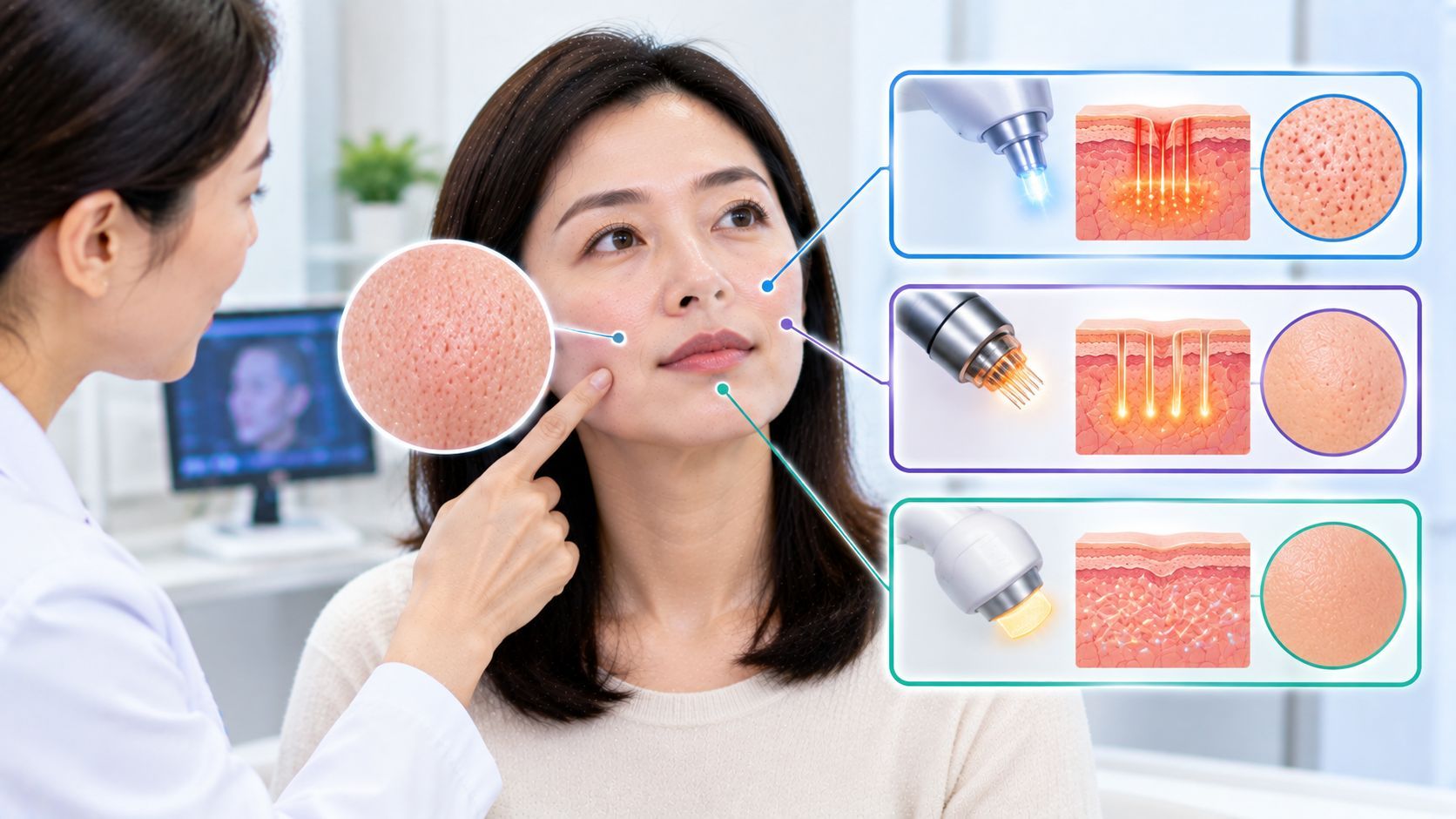
RF Microneedling
RF microneedling may be appropriate for selected patients with:
- Enlarged pores
- Mild acne scars
- Uneven texture
- Fine lines
- Mild laxity
It combines microneedling with radiofrequency energy to encourage controlled remodeling.
Results are generally gradual rather than immediate, and multiple sessions may be recommended.
Treatment settings should be individualized. Excessively aggressive treatment is not automatically better.
Fractional Laser Resurfacing
Fractional laser treatment can target certain textural irregularities by creating controlled areas of skin injury and stimulating remodeling.
It may be considered for:
- Acne scars
- Fine lines
- Photodamage
- Uneven surface texture
Downtime and pigmentation risk vary according to the laser, treatment intensity, and individual skin characteristics.
Patients with a tendency toward post-inflammatory pigmentation should discuss these risks carefully before treatment.
Microneedling
Traditional microneedling may help selected patients with mild textural irregularities.
It can be considered when the primary goal is collagen remodeling without necessarily using radiofrequency energy.
The appropriate treatment depends on how deep and established the textural problem is.
Chemical Peels
Superficial peels may improve mild roughness and surface irregularity.
They can be useful when the problem is primarily on the outer skin layers.
However, a peel is unlikely to correct deeper acne scars or significant laxity.
Skin-Quality Treatments
If sunlight reveals dryness, fine crepiness, or reduced skin quality rather than major structural texture, hydration-focused approaches may be considered.
Some skin boosters can improve hydration and certain aspects of skin quality in appropriate patients.
They should not be confused with fillers and are not designed to erase deep scars.
What If Sunlight Makes Your Face Look Older?
Sometimes the problem is not texture alone.
Strong sunlight can emphasize:
- Hollow temples
- Tear-trough shadows
- Cheek volume loss
- Pre-jowl hollows
- Nasolabial shadows
- Mild skin laxity
These can make a person feel that their face suddenly looks much older.
However, adding filler simply because sunlight reveals shadows is not always appropriate.
A dermatologist should determine whether the shadow comes from volume loss, skin laxity, facial structure, or simply lighting.
Does Sun Exposure Cause the Texture Problem?
Sunlight can reveal texture, but UV exposure can also contribute to long-term skin changes.
Cumulative ultraviolet exposure is associated with photoaging, including changes in collagen, elastin, pigmentation, and surface texture.
This is why daily sun protection remains important even if you are planning professional treatment.
A procedure cannot replace consistent UV protection.
Can Skincare Help?
Yes, particularly when the problem is mild.
A practical routine may include:
- Broad-spectrum sunscreen every day
- Moisturizer appropriate for your skin type
- Gentle cleansing
- A retinoid when medically appropriate
- Antioxidant skincare when tolerated
- Carefully controlled exfoliation
Avoid aggressive scrubbing simply because your skin looks rough in sunlight.
Irritation can make the texture appear worse.
Should You Treat Your Entire Face?
Not necessarily.
If sunlight reveals a specific area of concern, such as acne scars on the cheeks or enlarged pores around the nose, targeted treatment may make more sense than treating the entire face.
This can also reduce unnecessary downtime and expense.
For international patients visiting Seoul for a limited period, discussing the smallest effective treatment area can be particularly useful.
Which Treatment Matches Which Texture Problem?
Texture concernPossible approachMild surface roughnessSkincare or superficial peelEnlarged poresRF microneedling, selected laser, skincareRolling acne scarsSubcision, RF microneedling, laser or combination treatmentBoxcar scarsFractional resurfacing or combination treatmentIce-pick scarsTCA CROSS or selected scar-specific treatmentFine linesRetinoids, resurfacing, RF or other skin-quality treatmentsMild crepey textureHydration, RF microneedling or selected resurfacingLaxity-related foldsRF or ultrasound-based tightening when appropriate
The best approach depends on the depth, location, skin type, and cause of the texture.
What Should You Ask a Seoul Dermatologist?
Before treatment, consider asking:
- Is the texture actually abnormal or mainly visible because of lighting?
- What type of texture do I have?
- Are my pores, scars, dryness, or laxity the main issue?
- Would RF microneedling or fractional laser be more appropriate?
- How much improvement is realistic?
- How much downtime should I expect?
- What is my risk of post-treatment pigmentation?
- Do I need full-face treatment?
- Should I treat texture before considering filler or tightening?
These questions can help keep treatment focused on the actual cause.
Conclusion
If your skin looks excellent indoors but much worse in sunlight, do not automatically assume that you need an intensive treatment.
Harsh sunlight is exceptionally good at revealing normal pores, fine lines, tiny shadows, dehydration, and subtle texture. The important question is whether those features remain noticeable under ordinary lighting.
If there is genuine persistent texture, treatments such as RF microneedling, fractional laser, microneedling, selected chemical peels, or skin-quality treatments may help depending on the underlying problem.
The goal should not be completely texture-free skin. Healthy skin naturally has pores and fine lines. A better goal is smoother, more even texture that remains natural under different lighting conditions.
FAQs
Why does my skin look worse in sunlight?
Direct sunlight creates strong highlights and shadows that reveal pores, fine lines, acne scars, dryness, and other surface irregularities that softer lighting can hide.
Is bad-looking skin in sunlight a sign of aging?
Not necessarily. Lighting can dramatically change how normal skin texture appears. However, persistent texture across different lighting conditions may reflect genuine skin changes.
What treatment is best for skin texture?
There is no single best treatment. RF microneedling, fractional laser, microneedling, peels, skincare, and other approaches may be appropriate depending on the specific type of texture.
Can RF microneedling improve skin texture?
It can improve selected cases of enlarged pores, acne-scar texture, fine lines, and mild laxity by promoting controlled remodeling.
Can filler fix shadows that appear in sunlight?
Sometimes volume loss contributes to shadows, but filler is not automatically appropriate. Shadows can also come from facial structure, laxity, or lighting.
How can I prevent sunlight from worsening skin texture?
Consistent broad-spectrum sunscreen, protective clothing, shade, and appropriate skincare can help reduce cumulative UV-related skin damage.