Can Skin Tightening Fix an “Ozempic Face” Without Filler?
Introduction
If your face looks thinner, looser, or more tired after significant weight loss, you may wonder whether a skin-tightening treatment can improve the change without using dermal filler. The short answer is: skin tightening can help when loose or lax skin is a major part of the problem, but it cannot replace facial volume that has been lost.
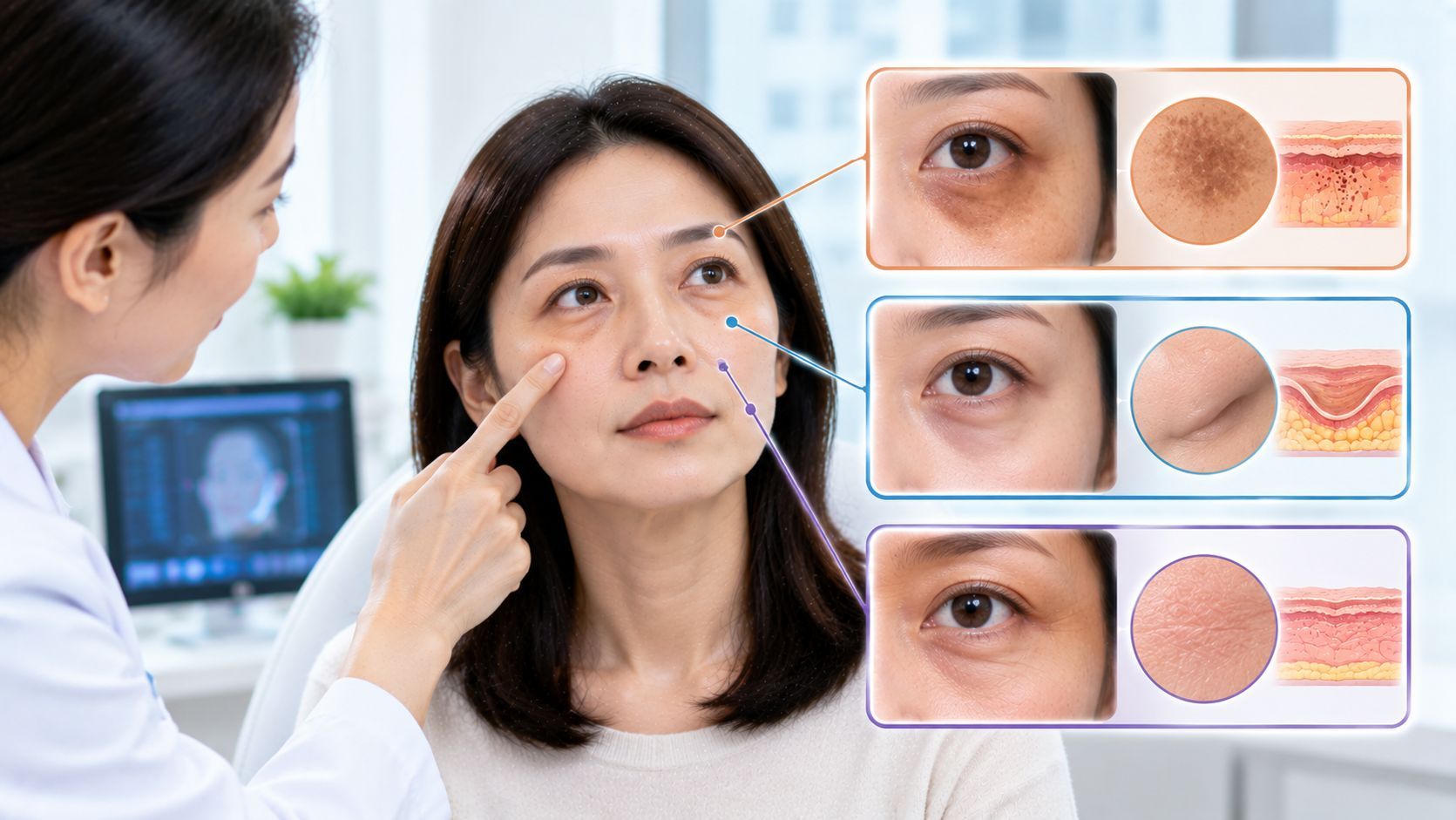
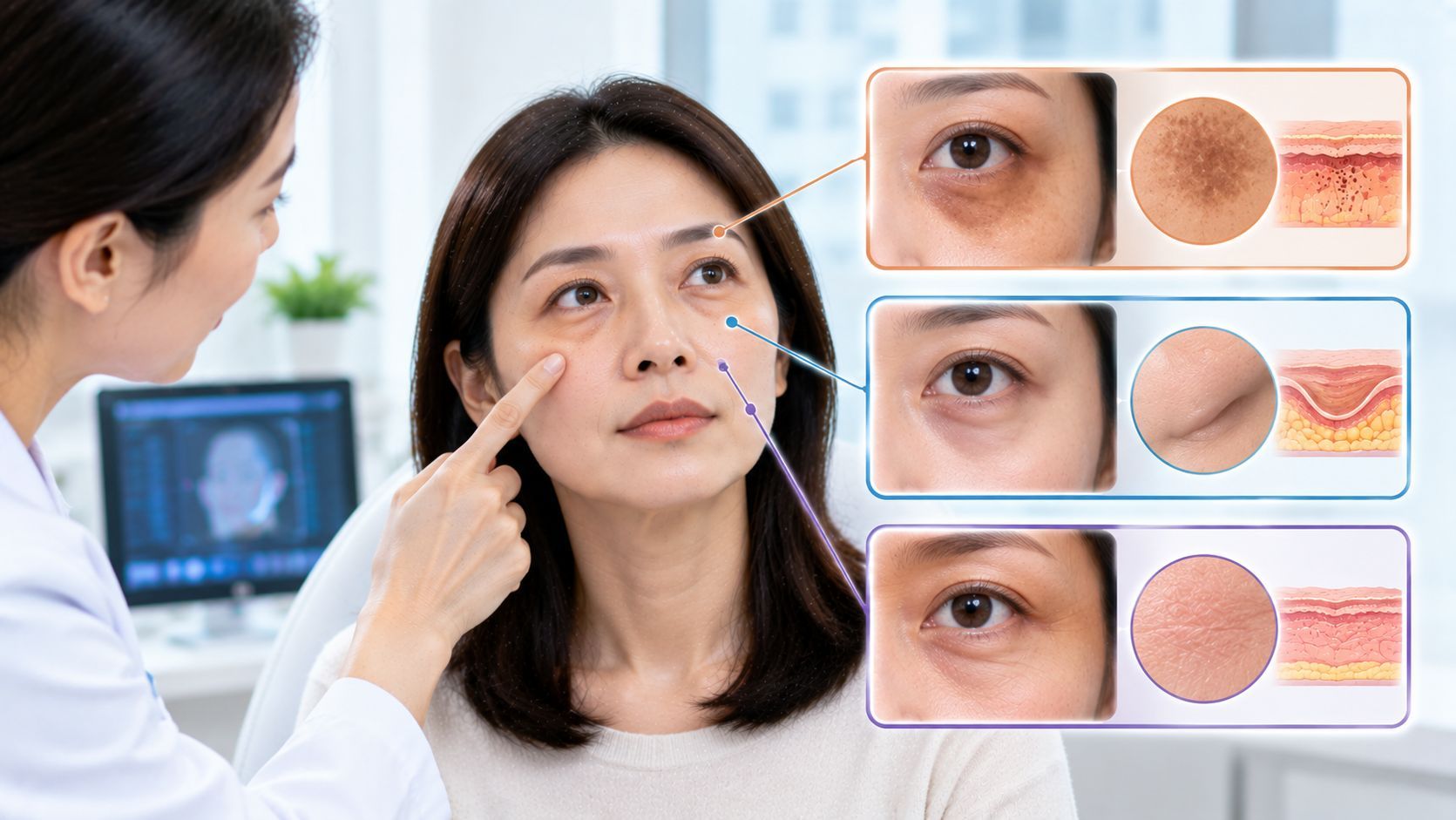
The term “Ozempic face” is informal rather than a medical diagnosis. Facial changes associated with GLP-1 medications are often related to the weight loss itself, particularly when weight is lost relatively quickly. People may notice reduced facial fullness, sagging, wrinkles, hollow areas, or a more crepey appearance.
For international patients considering treatment in Korea, the key is to determine whether the dominant issue is skin laxity, volume loss, or a combination of both. That distinction can make a major difference in treatment planning.
What Does “Ozempic Face” Actually Mean?
“Ozempic face” is commonly used to describe facial changes that can occur after substantial or rapid weight loss. These changes are not necessarily caused directly by Ozempic itself. Reduced facial fat and changes in the supporting tissues can occur when someone loses a significant amount of weight, regardless of how the weight loss occurs.
Common changes include:
- Less fullness in the cheeks
- Hollowing around the temples or under the eyes
- More visible folds
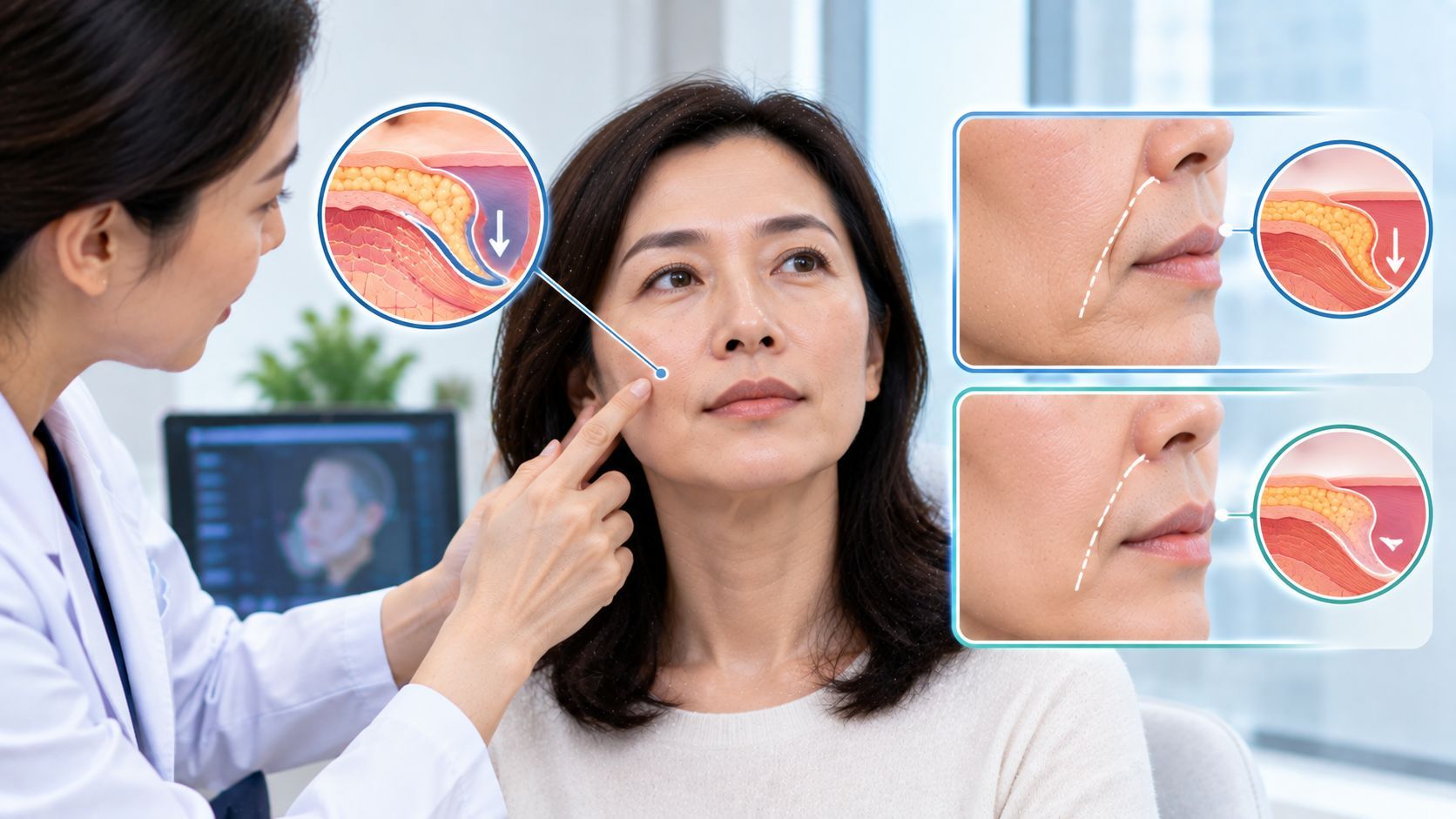
- Looser skin around the jawline
- Jowls
- Crepey skin texture
- A thinner-looking face
- Increased visibility of existing wrinkles
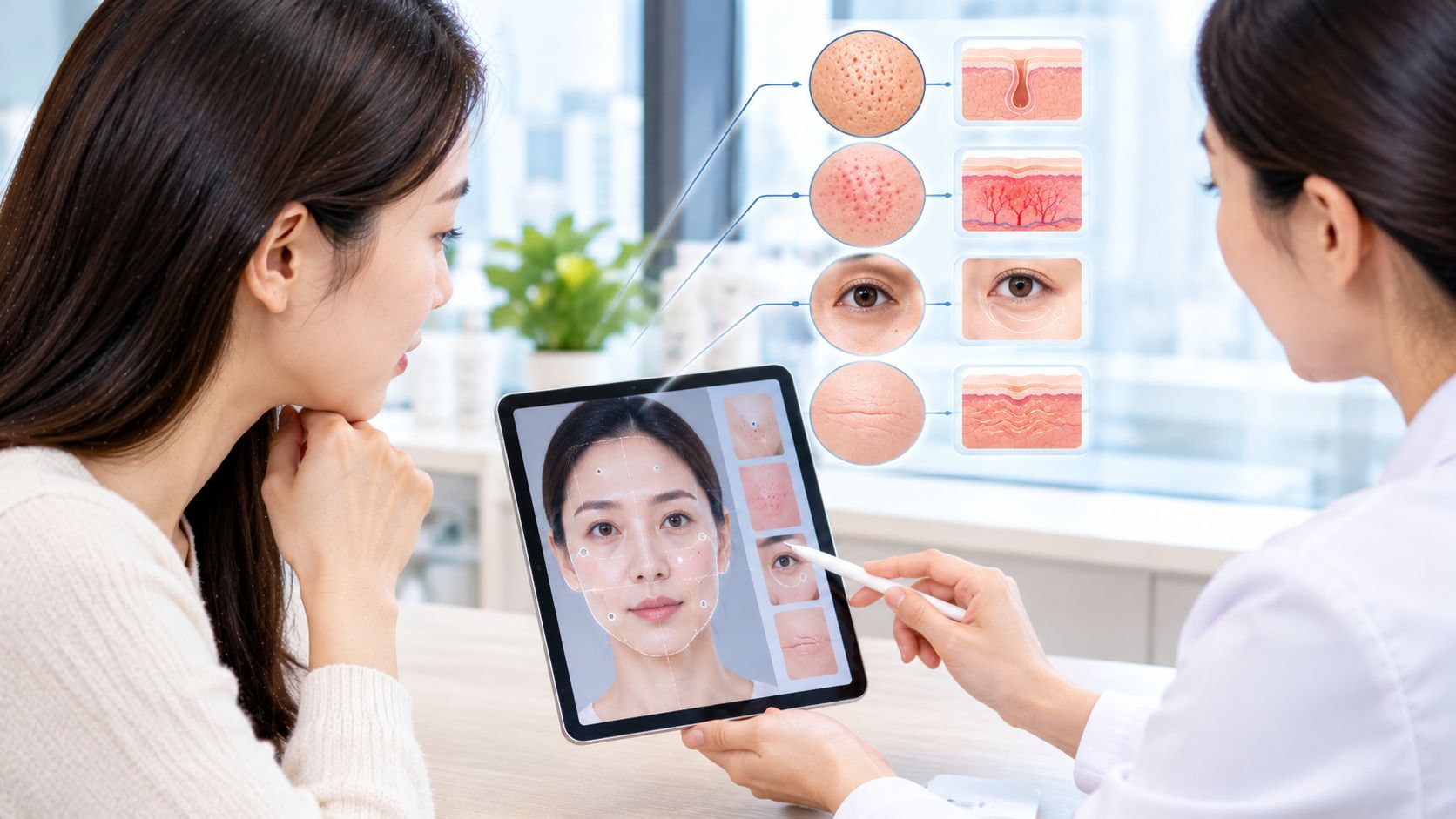
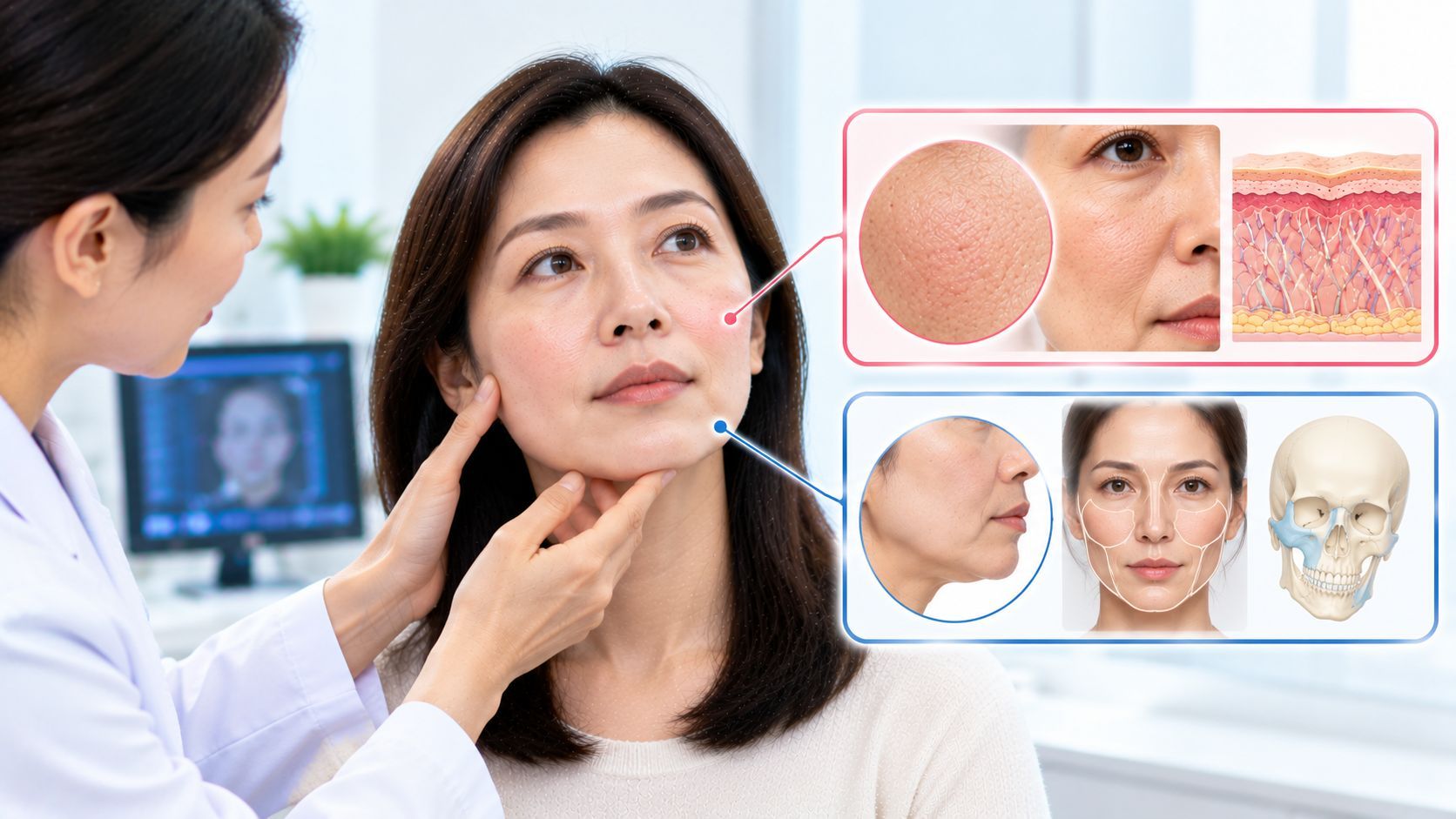
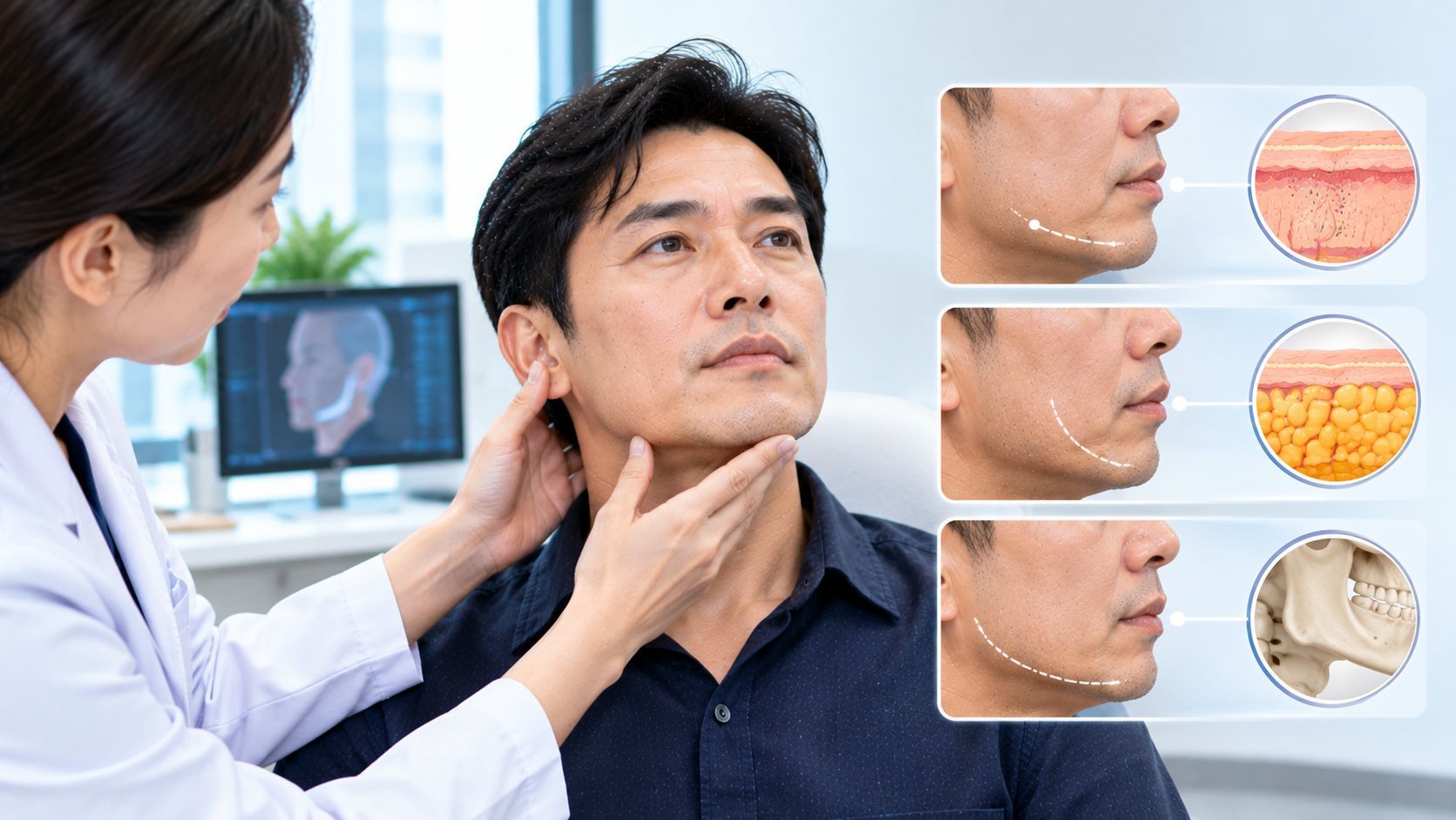
Recent dermatology literature describes post-GLP-1 weight-loss facial changes as involving several tissue layers, including superficial fat loss, reduced structural support and increased skin laxity.
This is why treating every post-weight-loss face with the same procedure may not produce the desired result.
Can Skin Tightening Help Without Filler?
Yes, if skin laxity is the primary concern.
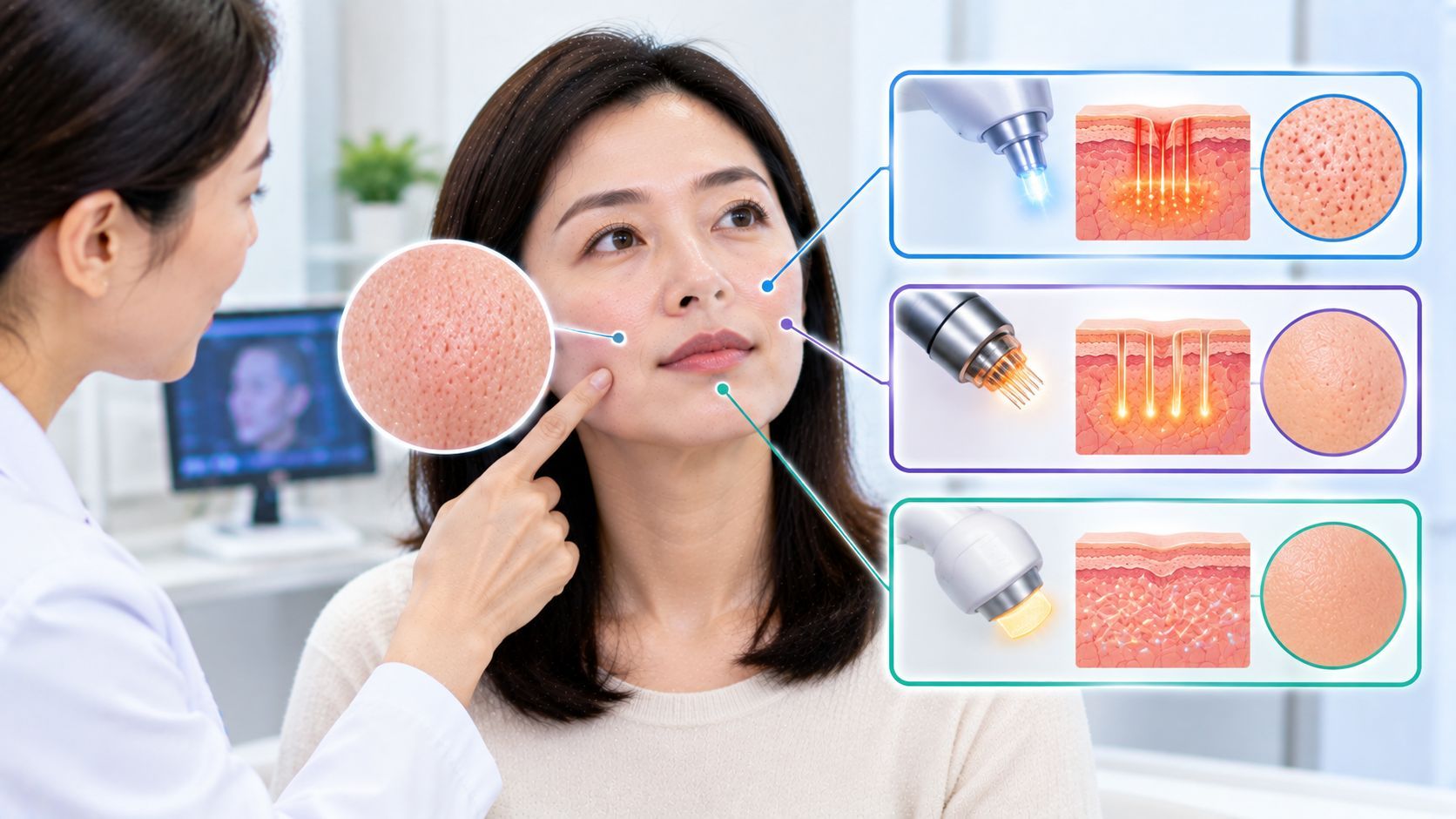
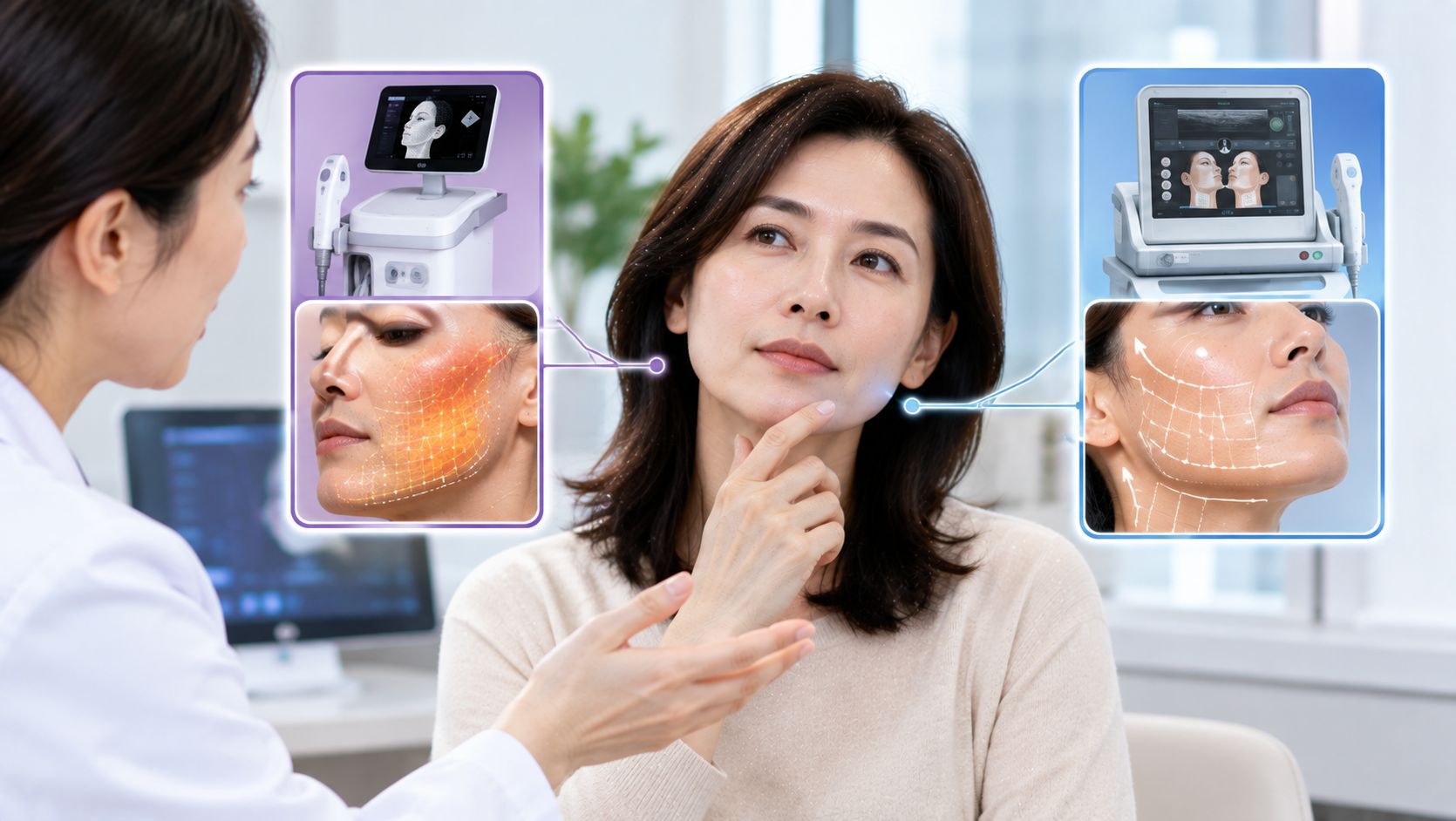
Non-surgical tightening treatments use technologies such as focused ultrasound or radiofrequency to heat targeted tissue and encourage collagen remodeling. The American Academy of Dermatology notes that ultrasound and radiofrequency can provide gradual tightening, particularly when sagging is limited.
Depending on the patient's anatomy and treatment goals, options may include:
Ultherapy and Microfocused Ultrasound
Ultrasound-based tightening can target deeper tissue layers and stimulate collagen remodeling. It may be considered when the face has become somewhat lax after weight loss but still has enough underlying volume.
It may be useful for concerns such as:
- Mild jawline laxity
- Early jowling
- Lower-face looseness
- Mild neck laxity
- Reduced definition caused partly by loose skin
However, it does not recreate facial fat that has disappeared.
Thermage and Radiofrequency Treatments
Radiofrequency treatments heat tissue beneath the skin to encourage collagen remodeling. They may be considered when the main issue is reduced firmness or elasticity.
For someone whose face became thinner after weight loss, treatment settings and treatment areas should be selected carefully. Excessive tightening or inappropriate treatment of a very thin face may not address the actual cause of the patient's concern.
Other Collagen-Stimulating Approaches
Some treatment plans combine energy-based tightening with procedures intended to improve skin quality and collagen production.
Recent expert guidance on facial changes during GLP-1-associated weight loss emphasizes that different problems may require different modalities rather than relying on one procedure alone.
When Skin Tightening Alone May Not Be Enough
The biggest limitation is simple: tightening skin does not replace lost facial volume.
Imagine two patients who both lost 15 kg.
Patient A has relatively good cheek volume but loose skin along the jawline. A tightening treatment may address an important part of the problem.
Patient B has hollow cheeks, flatter midface contours and less support beneath the skin. Tightening alone may make the skin firmer but leave the face looking deflated.
Research published in 2026 describes post-weight-loss facial changes as involving both volume loss and increased laxity, which helps explain why multimodal treatment may sometimes be considered.
What If You Have Hollow Cheeks and Loose Skin?
This is where treatment planning becomes more individualized.
A dermatologist may consider a staged approach involving:
- Assessment of facial volume
- Assessment of skin laxity
- Evaluation of skin quality
- Review of weight-loss progress
- Selection of one or more treatments based on the dominant concern
If substantial volume has been lost, options may include carefully placed hyaluronic acid filler or other volumizing approaches. The AAD lists soft-tissue fillers and fat transfer among procedures that can restore facial fullness after weight-loss-related facial changes.
Collagen-stimulating treatments may also be considered where gradual improvement in tissue quality is appropriate.
That does not mean every patient needs filler. In fact, adding volume where it is not needed can create an unnatural appearance. The objective should be to restore facial balance rather than simply add as much volume as possible.
Can Skin Tightening Make a Thin Face Look Thinner?
This is an important question for people who already have a narrow or hollow face.
Skin-tightening treatment should be planned according to the patient's facial anatomy. Someone with significant volume loss may require a different strategy from someone with mainly loose skin.
A consultation should therefore assess:
- Cheek volume
- Temple volume
- Midface support
- Jawline definition
- Skin elasticity
- Degree of laxity
- Existing jowls
- Amount of subcutaneous facial tissue
- Whether additional weight loss is expected
The goal is not simply to make the face “tighter.” It is to improve the relationship between skin, soft-tissue volume and facial contours.
Should You Wait Until Your Weight Stabilizes?
If you are still losing a substantial amount of weight, treatment planning may need to account for further facial changes.
Continued weight loss can potentially produce additional volume loss or skin laxity. Recent expert guidance specifically highlights the importance of considering treatment timing within the patient's weight-loss journey and recommends ongoing follow-up because aesthetic needs can change.
There is no universal rule that every patient must reach a particular weight before receiving aesthetic treatment. Your doctor can assess whether your weight and facial appearance are sufficiently stable for the treatment being considered.
What If There Is Significant Excess Skin?
Non-surgical skin tightening has limitations.
The AAD notes that non-invasive tightening is most suitable for limited sagging and that more substantial sagging may not respond adequately. Surgical procedures can produce more significant lifting when there is considerable excess skin.
Therefore, someone with pronounced post-weight-loss skin excess may need a discussion about surgical options rather than repeatedly increasing non-surgical treatment intensity.
What Should International Patients Ask a Korean Clinic?
If you are traveling to Seoul for treatment, ask the clinic to explain exactly what they believe is causing your facial change.
Useful questions include:
- Is my main problem volume loss, skin laxity, or both?
- Would tightening alone address my concern?
- Could additional tightening be inappropriate for my current facial volume?
- Do you recommend ultrasound, RF, or another technology, and why?
- Would collagen stimulation be useful in my case?
- If filler is recommended, which areas actually need structural support?
- Should I wait if I am still losing weight?
- How long should I stay in Korea for treatment and follow-up?
- What downtime should I expect before flying home?
- What happens if I develop swelling or another complication after returning home?
For medical tourism, having a clear treatment plan is particularly important because you may have limited opportunities for in-person follow-up after returning home.
How Long Do Skin-Tightening Results Take?
Skin tightening is generally not an instant transformation.
Ultrasound and radiofrequency treatments rely partly on gradual tissue remodeling and collagen production. The AAD reports that ultrasound tightening may show modest lifting over approximately 2–6 months, while RF results can develop progressively as collagen remodeling occurs.
Your individual timeline can differ depending on:
- Age
- Skin elasticity
- Degree of laxity
- Treatment technology
- Treatment settings
- Facial anatomy
- Previous procedures
- Ongoing weight changes
Risks and Limitations
Non-surgical treatments are not risk-free. Depending on the technology, possible problems can include temporary redness, swelling, tenderness, discomfort, burns or other tissue effects.
The risks and appropriate settings depend on the specific device and treatment plan.
Most importantly, avoid choosing a procedure simply because it is marketed as an “Ozempic face treatment.” The same label can describe very different problems in different people.
Conclusion
Skin tightening can improve the loose-skin component of an “Ozempic face” without filler, but it cannot replace facial volume that has been lost.
If your main concern is mild or moderate laxity, treatments such as ultrasound or radiofrequency may be considered. If your face has significant hollowing or deflation, volume restoration may need to be discussed. When both problems exist, a staged or multimodal plan may be more appropriate.
For patients seeking treatment in Korea, the most useful first step is a detailed facial assessment rather than choosing a procedure based only on the term “Ozempic face.” The goal should be to determine what changed after weight loss and select treatment according to those specific changes.
FAQs
Is “Ozempic face” permanent?
Not necessarily. The appearance can change as weight stabilizes and depending on the degree of facial volume loss and skin laxity. Treatment options can also address selected aspects of the change.
Can Ultherapy fix Ozempic face without filler?
Ultherapy may improve skin laxity and some contour concerns, but it cannot directly replace lost facial volume. Whether it is appropriate depends on how much volume and skin elasticity remain.
Can Thermage help after major weight loss?
Thermage or other RF treatments may help selected patients with reduced skin firmness. However, significant facial volume loss requires a different assessment because RF does not directly restore lost fat.
Do I need filler after losing weight on a GLP-1 medication?
No. Filler is one possible option, not an automatic requirement. The appropriate treatment depends on whether your primary issue is volume loss, laxity, skin quality, or a combination.
Should I stop my GLP-1 medication before an aesthetic treatment?
Do not stop or change a prescribed medication solely for an aesthetic procedure without discussing it with the clinician who prescribed it and the clinician performing the procedure.
Can Korean skin clinics treat “Ozempic face”?
Korean dermatology clinics may offer technologies and injectable treatments that address different components of post-weight-loss facial changes. The appropriate procedure should be determined after an individual assessment rather than selected solely by the treatment name.