How Long Should I Wait Between Different Energy-Based Treatments?
Introduction
If you are considering several energy-based skin treatments, one of the most important planning questions is how much time should be left between procedures. Treatments such as laser, RF microneedling, Thermage, Ultherapy, Sofwave, and other energy-based procedures can have very different effects on the skin and deeper tissues.
There is no single waiting period that applies to every combination. The appropriate interval depends on which devices are being used, the treatment intensity, the treatment area, your skin condition, and how your skin responds afterward.
Doing several energy-based treatments too close together does not necessarily produce faster results. In some situations, allowing the skin and underlying tissues to recover before another procedure can make treatment planning more controlled.
Why Do You Need to Wait Between Energy-Based Treatments?
Energy-based procedures intentionally create a biological response in the skin or underlying tissue.
Depending on the treatment, this may involve:
- Controlled thermal injury
- Collagen remodeling
- Skin resurfacing
- Microscopic channels
- Tissue heating
- Inflammation
- Temporary swelling or redness
Even when the surface of the skin looks normal, biological changes may continue after treatment.
Performing another procedure before the first treatment has sufficiently settled can make it harder to determine how your skin is responding.
Is There One Standard Waiting Period?
No.
The waiting period should not be determined simply by saying “all lasers need four weeks” or “all lifting treatments need one month.”
Different procedures work at different depths and have different recovery patterns.
For example:
- A superficial laser may have a different recovery period from fractional resurfacing.
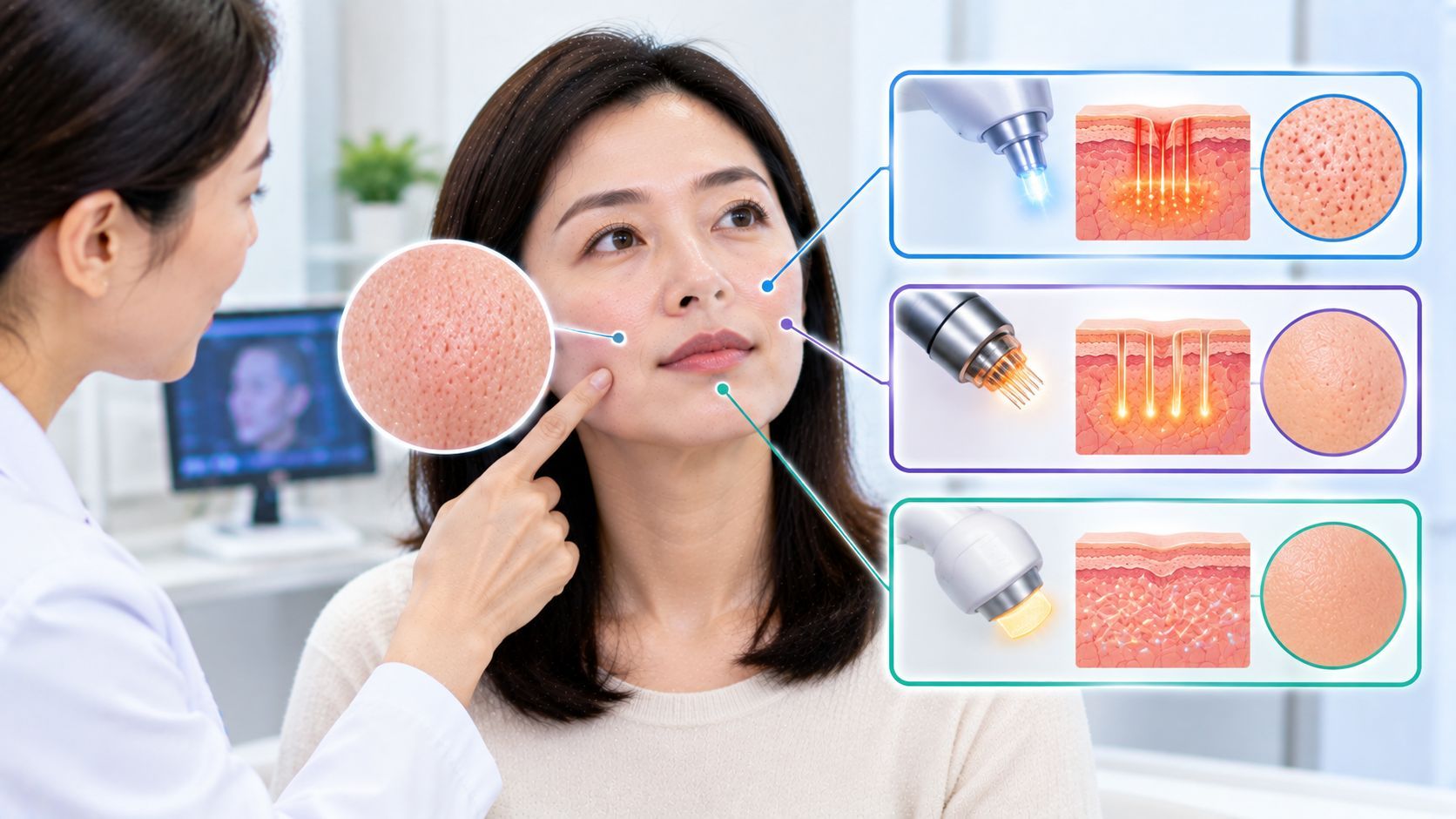
- RF microneedling creates controlled needle channels and delivers radiofrequency energy at selected depths.
- Ultherapy uses focused ultrasound energy.
- Thermage uses radiofrequency energy.
- Sofwave uses a different ultrasound-based approach.
Because these technologies are not identical, their treatment intervals should not automatically be treated as interchangeable.
What Factors Determine the Waiting Time?
Treatment Intensity
A higher-intensity procedure generally requires more recovery than a mild treatment.
For example, a light treatment designed mainly to improve superficial pigmentation may have a different recovery requirement from aggressive resurfacing.
Treatment Depth
Energy delivered to different tissue depths can influence how soon another procedure should be considered.
Treatment Area
The face, neck, jawline, and body may have different treatment considerations.
Your Skin's Response
Redness, swelling, tenderness, peeling, crusting, or prolonged sensitivity may indicate that your skin needs additional recovery time.
The Next Treatment
The appropriate interval also depends on what you plan to do next.
A second treatment using a different energy source may require a different interval from a repeat session of the same procedure.
Laser Treatments May Need Different Intervals
“Laser treatment” covers a very broad range of procedures.
Some laser treatments primarily target pigmentation, while others are used for resurfacing, acne scars, vascular concerns, or texture.
A dermatologist may recommend multiple sessions separated by several weeks, depending on the laser and treatment objective.
For patients prone to pigmentation, the provider may also take a conservative approach to avoid excessive inflammation.
This is particularly relevant when treating darker or pigment-prone skin.
What About RF Microneedling?
RF microneedling combines microneedling with radiofrequency energy.
The procedure can temporarily cause:
- Redness
- Swelling
- Warmth
- Sensitivity
- Small visible marks at the treatment sites
The skin should be allowed to recover according to the clinic's instructions before another intensive procedure is performed.
If you are considering RF microneedling together with laser, ultrasound, or another energy-based treatment, the sequence should be planned rather than simply performed as close together as possible.
What About Thermage and Ultherapy?
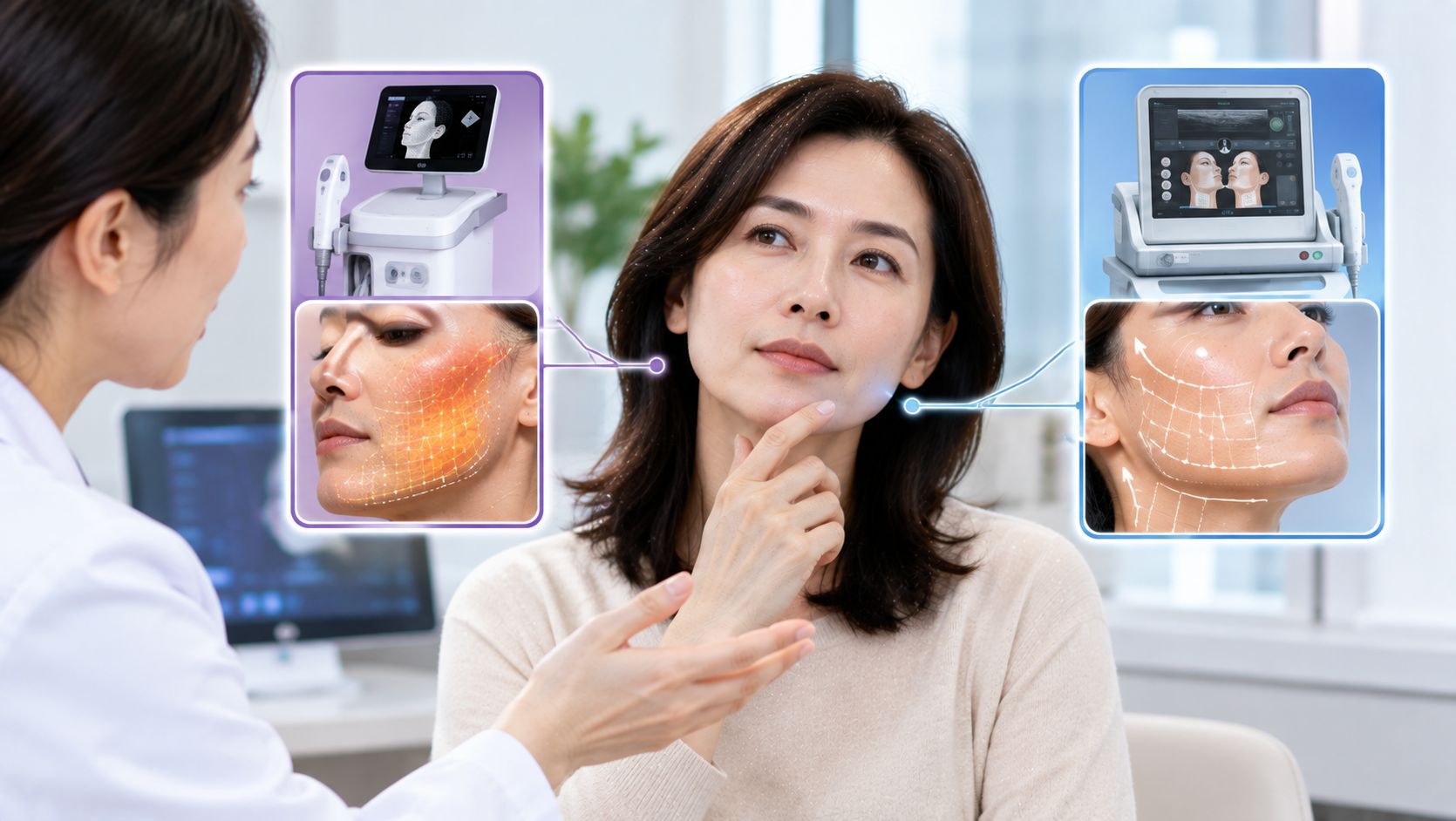
Thermage and Ultherapy are both used for nonsurgical skin tightening, but they use different energy technologies.
Because both are designed to create controlled tissue effects, combining or closely spacing them requires professional treatment planning.
If you have already undergone one tightening treatment, tell your provider exactly when it was performed and, if possible, provide the treatment details.
A dermatologist or qualified provider can then determine whether another treatment should be performed immediately, later, or not at all.
Can Two Different Energy Treatments Be Done on the Same Day?
Sometimes, but not automatically.
In selected treatment plans, different technologies may be used during the same appointment because they target different concerns or tissue depths.
However, combining multiple procedures can also increase:
- Total treatment intensity
- Inflammation
- Swelling
- Downtime
- Skin sensitivity
- Pigmentation risk in susceptible patients
Therefore, same-day treatment should be based on a specific protocol rather than the assumption that combining procedures will produce better results.
What If I Want to Treat Different Areas?
Treating different areas can sometimes change the planning considerations.
For example, one treatment might be performed on the cheeks while another is planned for a separate area of the face.
However, the fact that two treatments affect different areas does not automatically mean they can be performed without restrictions.
The provider should still consider your overall treatment burden and whether either procedure could influence healing or inflammation elsewhere.
Why Waiting Can Be Especially Important for Pigment-Prone Skin
Inflammation can sometimes trigger or worsen post-inflammatory hyperpigmentation.
This is particularly relevant for people who already develop dark marks easily after acne, irritation, or cosmetic procedures.
If the skin is still inflamed after one procedure, immediately adding another intensive treatment may not be appropriate.
Your dermatologist may therefore choose a more conservative interval and monitor how your skin responds.
What If I Have a Short Trip to Seoul?
International patients sometimes have only a few days in Korea and want to combine multiple treatments into one trip.
That can make treatment planning more complicated.
Instead of asking only:
“How many treatments can I fit into my trip?”
consider asking:
“Which treatment is most appropriate for my primary concern, and what recovery time does it require?”
Before traveling, ask the clinic:
- Can the treatments be combined?
- Should they be performed on the same day?
- If not, how far apart should they be?
- How much downtime should I expect?
- Will I need a follow-up visit?
- Could I safely fly home after treatment?
- What should I do if prolonged swelling or irritation occurs?
This is particularly important if your trip is only a few days long.
What About Doing Treatments in a Specific Order?
Treatment sequencing can be useful when multiple concerns are present.
For example, a plan might involve:
Step 1: Diagnosis
Identify whether the main concern is pigmentation, acne scars, pores, laxity, wrinkles, or another issue.
Step 2: Select the primary treatment
Choose the energy-based procedure most appropriate for the main concern.
Step 3: Allow recovery
Wait until the skin has recovered according to the provider's instructions.
Step 4: Reassess
Evaluate the response before adding another procedure.
Step 5: Continue or modify the treatment plan
A second procedure can then be considered if it remains appropriate.
This staged approach can reduce unnecessary treatment and make it easier to monitor your skin.
Signs You May Need More Recovery Time
Before another energy-based treatment, tell your provider if you still have:
- Significant redness
- Persistent swelling
- Burning or unusual warmth
- Pain or tenderness
- Peeling
- Crusting
- New pigmentation
- Blistering
- Unusual sensitivity
- Other unexpected skin changes
These symptoms do not automatically mean there is a complication, but they are important information for treatment planning.
Do not assume that another procedure should proceed simply because the originally scheduled date has arrived.
What About Combining Energy Treatments With Injectables?
Energy-based procedures may sometimes be combined with injectables such as Botox, fillers, or skin boosters, but the sequence depends on the specific combination.
The treatment provider should know about recent or planned injections before performing an energy-based procedure.
If you have recently received filler or another injectable, provide details about:
- Product used
- Treatment area
- Date of treatment
- Previous treatments
- Any complications or reactions
This information can influence treatment planning.
How Should I Plan Multiple Treatments?
A useful approach is to create a treatment calendar rather than scheduling every procedure at once.
Your plan may include:
Primary procedure → recovery → reassessment → secondary procedure → recovery → maintenance
The exact intervals should come from the treating clinician because there is no universal number of days that applies to every energy-based treatment combination.
For medical tourists, it is also useful to leave some flexibility in the itinerary rather than making every appointment back-to-back.
Questions to Ask Your Clinic
Before scheduling multiple energy-based treatments, ask:
- How long should I wait after my previous treatment?
- Does this procedure target the same tissue depth?
- Can the treatments be performed during the same visit?
- What is the expected recovery period?
- Should I wait until all redness or swelling disappears?
- Does my skin type increase pigmentation risk?
- Could combining these treatments increase irritation?
- Do you recommend staging the procedures?
- Will I need a follow-up examination?
Final Thoughts
There is no universal waiting period between different energy-based treatments. The correct interval depends on the technology, intensity, treatment depth, treatment area, your skin response, and the next procedure being considered.
For some combinations, treatments may be performed during the same treatment period. For others, separating them by an appropriate recovery interval may be more suitable.
If you are planning multiple procedures in Seoul, avoid choosing treatment dates based solely on how quickly you want to complete your trip. A dermatologist should assess your skin and determine whether the procedures can be combined, need to be staged, or should be reconsidered altogether.
The goal is not simply to fit more treatments into your schedule. It is to create a treatment sequence that gives your skin enough time to respond and recover while allowing each procedure to be evaluated appropriately.